In Defense of Pressed Vegetation

Our pal Bobby Tomorrowland recently posted a blog that lamented the passing of a time “when brainy little monographs flew off the shelves at independent bookstores, when information was shared and consumed en masse via organic materials, pressed vegetation, before we turned our economy over to the pixel and set fire to the past.” I know that Bob is a bibliophile: we’ve swapped (and stolen) books from each other for years (Bob lately moved north with my unread copy of The Wind-up Bird Chronicles, exchanging a book of anthropo-mythological film criticism in its place). Still, I was nonetheless a little perturbed by Tomorrowguy’s use of the past-tense verb “was.” Bob clarified his point in the comments thread, writing that “there’s a bittersweet realization that the ledgers, tracts and statements of the future will likely emerge in virtual — not vegetable — form.” Now, sure, “will likely” is still conditional, but it also translates to “probably.” Does Bob really believe that paper books are to be consumed by the “fire of the past”? And where does he locate the sweetness ratio of of this “bittersweet realization”?

Websites and blogs give people the ability to communicate a message to a wide audience without the annoying mediation of an editor or the complications of distributing a physical product. Just as 7″ records, once the currency of underground music, have been displaced by mp3s, zines and “little magazines” are giving way to blogs. American newspapers, in competition with both TV and the internet, increasingly find themselves in economic trouble. Writers of every stripe scramble to praise Amazon’s new e-book reader, the Kindle. Clearly, a new type of literacy based on interfacing with screen media, will certainly be a necessary skill for those seeking “professional” or “white collar” jobs in the West, in the now, and in the future (Greg Ulmer, one of my former professors at the University of Florida has dubbed this skill “electracy“). I will grant Tom Orrowland this much. But his line of logic is specifically teleological, presuming a technologically progressive future, a future shared by everyone. What are the limits of this kind of tomorrowland? Does its horizon extend indefinitely into a promised land, where everyone–that is to say, all members of all cultures, of any imposed tier or hierarchy–share access to this future? Is it not possible to imagine a future of social and technological collapse, where hand-cranked presses must serve where pixels have failed? Or, to be less dramatically eschatological–and to return to Bobby’s original vegetation metaphor –are not handbills and fliers and pamphlets the vital stuff of grassroots movements? To be sure, the internet exists as a profoundly important coeval to the print medium, but is access and exposure to such movements to be only available to those with screen media?Is it so inconceivable people without access to machines could exist fifty or a hundred or two hundred years from now? A thousand? Is electracy in fact an evolutionary threat to literacy? Will hypertext cannibalize pressed vegetation?

Maybe I react this way because I truly love books–not just their contents, but the physical objects themselves, and the thought of a future without books is ugly to me. I love my local independent book store, and I visit it at least twice a month. I love the dizzying smell of a library, the sweet slow-rot of millions of pages. I also have a fondness for several independent presses out there today, publishers who understand that their audiences are genuine bibliophiles. Earlier this month, I gave props to Ursula LeGuin for her insightful recent essay “Staying Awake” in Harper’s. She wrote, and I quoted, and here requote:

The book itself is a curious artifact, not showy in its technology but complex and extremely efficient: a really neat little device, compact, often very pleasant to look at and handle, that can last decades, even centuries. It doesn’t have to be plugged in, activated, or performed by a machine; all it needs is light, a human eye, and a human mind. It is not one of a kind, and it is not ephemeral. It lasts. It is reliable. If a book told you something when you were fifteen, it will tell it to you again when you are fifty, though you may understand it so differently that it seems you’re reading a whole new book.

I couldn’t agree more. Her argument is both simple and profound. To underscore its simplicity, would you be willing to take your laptop or Kindle into the bath with you? How about a sandy beach? Could you imagine poring over a digital version of your favorite Eric Carle book with your young child? What about all the brilliant annotations and ephemeral marginalia doodlers such as myself impose on the text? Again, I’m not presuming that there won’t be water-resistant, beach-friendly, child-friendly, doodler-savvy media interfaces in the future. I can conceive of such a thing. Only I’m dubious. With any number of futuristic fibers available, people still wear organic materials like cotton and leather. We still frame our homes with wood. Many of us prefer to eat real food instead of the edible food-like substances that abound in grocery stores and convenience marts. In short, I think that humans have an affinity and comfort with “naturalistic” products, and I’m not sure if an e-book reader or computer screen will ever be able to replicate the feeling of curling up the couch with a well-loved book stolen from a friend.

Maybe I’m just a Luddite (for the record, I still think my Sony Walkman sounds ten times better than my portable mp3 player). Maybe I’ll be proven wrong, maybe even in just a few short months. Who knows? But I’d rather be cranky and old-fashioned than accept a future without books.
Cannibalism and the Economy of Sacrifice in Olaudah Equiano’s Interesting Narrative

equiano.jpeg

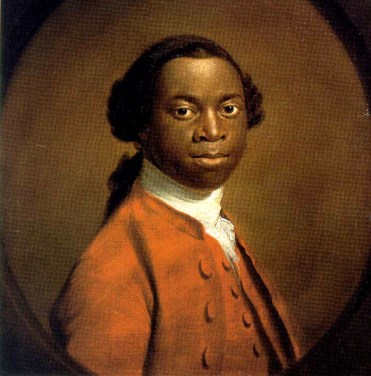
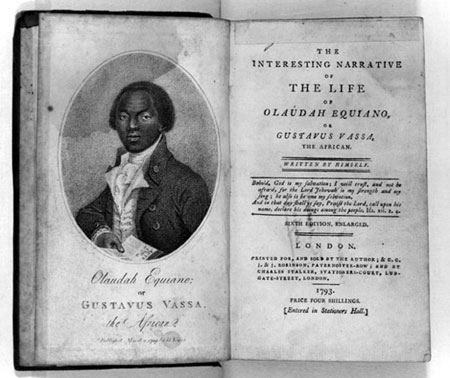
I’ve been re-reading Olaudah Equiano’s Interesting Narrative, a fascinating autobiography/travel book detailing Equiano’s experiences being kidnapped from West Africa at a young age and sold into slavery. During this time, Equiano migrates all around the world, earns and loses and earns again his freedom, and eventually comes to identify himself as an Englishman, replete with English values. Today, the book is widely regarded as a key abolitionist text; it remains a fascinating document of the cruelty and inhumanity of slavery. It’s also a pretty interesting adventure story.

The early part of the book is chock full of images of consumption and sacrifice. Prominent among these images, the threat of cannibalism looms as the ultimate horror at stake in an alien encounter between two different cultures. The first image of cannibalism, however, becomes a sort of baseline of the rhetoric of cannibalism. Equiano relates the following Ibo proverb concerning villagers with bitter tempers: “if they were to be eaten, they were to be eaten with bitter herbs,” noting that many Ibo “offerings [sacrifices] are eaten with bitter herbs.” This seemingly light-hearted proverb locates the consumption of the human body as a site of holy sacrifice, acknowledging that the cost of existence always figures as a displacement of one person’s access to resources in favor of another’s. Equiano later expresses a wish to sacrifice himself to gain his sister’s freedom—“happy should I have ever esteemed myself to encounter every misery for you, and to procure your freedom by the sacrifice of my own,” here echoing the Ibo proverb’s realization of a sacrificial economy. This sacrificial economy plummets into the taboo horror of cannibalism, as a terrified Equiano, kidnapped and dragged to the West African coast, first encounters Europeans. He asks his fellow Africans “if [he] were not to be eaten by those white men with horrible looks, red faces, and loose hair.” The terror of this alien-encounter is not abated when the Africans assure Equiano that he is not to be eaten; “I expected they would sacrifice me,” he writes.

equiano_frontispiece.jpg

As the horror of his sea voyage increases, so does his belief that he is to be voraciously consumed by his captors. While “all pent up together like so many sheep in a fold,” Equiano avers that “We thought […] we should be eaten by these ugly men.” Equiano here figures as a sacrificial lamb, consumed by brutal barbarians. The slave-traders tap into and exploit this fear, using it to manipulate the behavior of Equiano: “the captain and people told me in jest they would kill and eat me, but I thought them in earnest.” Equiano puts his horror even more bluntly: “I very much feared they would kill and eat me.” Equiano’s horror at the threat of cannibalism contrasts greatly with the captain’s playful attitude about the eating of human flesh. The captain “jocularly” threatens to “kill” and “eat” Equiano, and also threatens to eat his young friend as well. The captain then inquires about the cannibalistic practices of West Africans, jokingly averring that “black people were not good to eat,” thus implying he had tasted their flesh before. The captain’s rhetorical technique further destabilizes Equiano’s sense of safety as well as confounding any attempt to systematize knowledge of the ethics, morality, and diet of his new captors; in short, the captain further alienates Equiano’s experience. However, a future Equiano, reflective and knowledgeable, assesses these structures of consumption and sacrifice in terms of economy. “Must every tender feeling be likewise sacrificed to your avarice?” Equiano demands of the “nominal Christians” who participate in the slave trade. Equiano thus translates the literal consumption of enslaved labor into the spiritual, emotional consumption that occurs when people cannibalize each other. The captain’s humor—and indeed, the slight and humorous tone of the Ibo proverb—both serve as defense mechanisms to psychologically mask the taboo terror of cannibalism that figuratively underscores the enslavement of human beings.

Essential Short Story Collections: Jesus’ Son

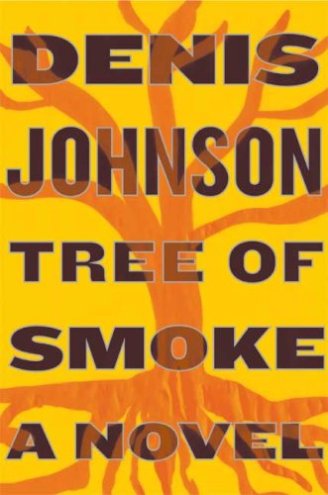
Welcome to a new feature at the Biblioklept, “Essential Short Story Collections,” in which we take a look at some, uh, short story collections that are essential (how’s that for a tautology?). Because we here at Biblioklept Headquarters USA always put Jesus first, and because his latest novel Tree of Smoke was so dang good, why not start with Denis Johnson’s 1992 collection Jesus’ Son?

jesusson.jpg

Jesus’ Son is almost a novel in short story form. The unnamed narrator of the stories is an alcoholic drug addict who manages to survive through a mix of petty thievery, odd odd jobs, and straight-up bumming it. The collection opens with “Car Crash While Hitchhiking.” The title of this story is in no way misleading. And although the first story winds up with the narrator hospitalized and blacking out (initiating a motif in Jesus’ Son), the next story, “Two Men” finds him reasonably healthy and up to no good. “Two Men” is a meditation on the bonds of friendship and an outstanding example of Johnson’s tight prose:

I was being taken out of the dance by my two good friends. I had forgotten my friends had come with me, but there they were. Once again I hated the two of them. The three of us had formed a group based on something erroneous, some basic misunderstanding that hadn’t yet come to light, and so we kept on in one another’s company, going to bars and having conversations. Generally one of these false coalitions died after a day or a day and a half, but this one had lasted more than a year. Later on one of them got hurt when we were burglarizing a pharmacy, and the other two of us dropped him bleeding at the back entrance of the hospital and he was arrested and all the bonds were dissolved.

Friends! Good stuff. Other stand-outs in the collection include “Work,” a story about stealing copper wire, and “Emergency,” a tale involving copping pills from an emergency room job. Reminiscent of Hunter S. Thompson, “Emergency” perfectly captures drug-addled paranoia overflowing into petty existential questing. An encounter with some normals:

A family in a big Dodge, the only car we’d seen in a long time, slowed down and gawked out the windows as they passed by. The father said, “What is it, a snake?”

“No, it’s not a snake,” Georgie said, It’s a rabbit with babies inside it.”

“Babies!” the mother said, and the father sped the car forward, over the protests of several little kids in the back.

Georgie came back to my side of the truck with his shirtfront stretched out in front of him as if he were carrying apples in it, or some such, but they were, in fact, slimy miniature bunnies. “No way I’m eating those things, ” I told him.

The last story in Jesus’ Son, “Beverly Home,” finds our narrator in a somewhat more stable position, working in a retirement home and attending NA and AA meetings. His one vice and indulgence is voyeurism; he takes to watching a Mennonite couple through their windows at night, progressing from deviant sex-obsession to pining for their mundane life:

I got so I enjoyed seeing them sitting in their living room talking, almost not talking at all, reading the Bible, saying grace, eating their supper in the kitchen alcove, as much as I liked watching her naked in the shower.

At the end of the book, moved by the strange spectacle of a man washing his wife’s feet, the narrator finds a kind of hope and redemption for the future:

All these weirdos, and me getting a little better every day right in the midst of them. I had never known, never even imagined for a heartbeat, that there might be a place for people like us.

200px-jesus_son_ver5.jpg

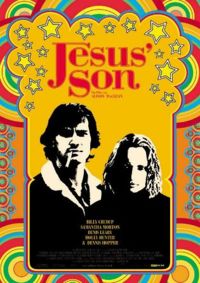
I mentioned above that Jesus’ Son can almost be read as a novel, but make no mistake–it is a collection of short stories, character sketches, vignettes that add up to something greater. The 2000 film adaptation of the movie makes this quite clear. Although the film, starring Billy Crudup as the unnamed narrator, is not half bad, the disconnected and fragmentary nature of the book–which reinforced the book’s themes of existential alienation and minor redemption–comes across as episodic and even whimsical in the movie.

I highly recommend Jesus’ Son, and I hope that people who “don’t have time to read” will make a little space in their day for this slim but substantial book. Most of the stories can be read in under half an hour, so why not pick up a copy?

Other People’s Lists: The Best Books of 2007

quad.jpg

Since we’ve already had our say about the best books of ’07, here’s what some other clowns thought:

The New York Times agreed with us that Denis Johnson’s Tree of Smoke was fantastic. They also give props to Roberto Bolaño’s The Savage Detectives, the reading of which is high on our “to do” list. In their non-fiction superlatives, they highlight music critic Alex Ross’s The Rest is Noise, as do the a couple of the folks over at Slate–although Slate‘s list fails to recognize Tree of Smoke (the book is seriously seriously good good good). The editors of Publisher’s Weekly also cite Johnson’s novel as one of ’07’s best, and they’re one of the few sites out there to mention Don DeLillo’s Falling Man. I’ve just started listening to the audiobook version of Falling Man, and I should be able to weigh in before ’07 is kaput. There’s a better-than-you-would-think-it-would-be write-up at Time of the top-ten graphic novels of 2007. The School Library Journal effectively organizes its list by grade level, a boon to teachers and parents everywhere. That bastion of literary criticism, The Economist, seems to think that Michael Chabon’s The Yiddish Policemen’s Union was something special, although we know better. The writers over at the Village Voice are sensible enough to append the adjective “favorite” instead of “best,” perhaps excusing them from also giving a nod to Chabon’s book (although their mistaking Miranda July for an author cannot be forgiven). When you get sick of reading other people’s list, head over to Book Covers and check out the Best Book Shelves of 2007 (the images in this post are from said list).

bookinist.jpg

Superlatives 2007

pig1.jpg

Not only does the end of each year bring ugly barefaced consumerism, nightmare traffic, and hellish stress, it invariably leads up to oodles of lists, hierarchies, rankings, and tabulations. We here at Biblioklept are not above marshaling the cultural detritus of the year into our own list, as follows. But before we even get to all that, I have to say that The Year of the Golden Pig (whether it was really a Golden Pig year or not) was a wonderful and special year for me, thanks to the birth of my lovely little girl. So: very good year.
Best Fiction Book I read in 2007

childrenshospital.jpg

This is really tough, because I read so many great books this year. Cormac McCarthy’s The Road really stuck with me, and although I thought the end was a cop-out, I found myself thinking about the book constantly and rereading it in bits and pieces. For sheer entertainment, I also really enjoyed Chris Bachelder’s US! I also read or reread most of James Joyce’s oeuvre, and I really did enjoy Ulysses, despite the torture it put me through, and I can’t leave it out of this group. Still, I have to give the award to a book published last year, Chris Adrian’s astounding and astonishing The Children’s Hospital, a book so good that I actually had to stand up to read it at times.

Best Nonfiction Book I read in 2007

consider.jpg

Although Consider the Lobster, David Foster Wallace’s “sequel” to his hilarious collection of essays A Supposedly Fun Thing I’ll Never Do Again, isn’t quite as funny as that earlier book of essays, it shows a maturation of scope and a control of language that I would’ve thought impossible ten years ago, simply because DFW has been such a master of words from the outset of his writing career. Great book.

Best Book Published in 2007 that I Read in 2007

tree-of-smoke.jpg

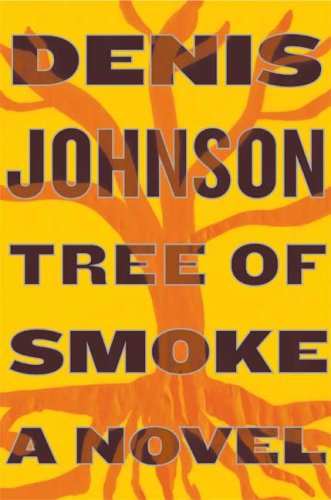
Denis Johnson’s Tree of Smoke was the best book I read all year, although it’s only fair to point out that I listened to the audiobook–maybe I should put quotation marks around read, or just use the verb listen instead. In fact almost all of the books published in 2007 that I…uh…”read” were audiobooks, including two of the bigger releases this year, Michael Chabon’s The Yiddish Policemen’s Union and Jonathan Lethem’s You Don’t Love Me Yet. Which brings us to…

Most Disappointing Book of 2007

Jonathan Lethem’s You Don’t Love Me Yet was pretty awful.

Best Movie I Saw in the Theater in 2007

childrenofmen.jpg

Tie: Children of Men (yeah, I know it came out in 2006–I saw it in 2007 though) and Superbad. If you were to make a graph of emotional matrices, these two films would probably fit quite comfortably at ends opposite of each other. Still, they have plenty in common–great stories, emotional impact, and most importantly, they meet the ultimate criterion for an excellent movie: they start out great and only get better.

superbad.jpg

Best Movie I Saw on DVD in 2007

David Lynch’s INLAND EMPIRE. Watch it at night in the dark, preferably alone, preferably in the cold.

Most Disappointing Movie of 2007

Although it was by no means bad, I was disappointed in the Coen’s adaptation of Cormac McCarthy’s No Country for Old Men. It was a good movie–Javier Badem was fantastic, great pacing and tone–but still it didn’t blow me away like, say, Fargo or Blood Simple or Miller’s Crossing did. Ditto Werner Herzog’s Rescue Dawn. Chalk it up to hyperbolic expectations, I guess. Maybe I need to watch these films again on DVD and reconsider.

Best Album of 2007

This is always a tough one, and there were plenty of great albums that came out this year. Late in the year I found myself unexpectedly in love with The National’s Boxer, a serious album that’s still growing on me like a weird moss. Battles’s Mirrored was superb; I found myself listening to James Blackshaw’s The Cloud of Unknowing whenever I wanted my mind to mush out; Menomena’s Friend and Foe was the perfect soundtrack for a long drive; the psychedelic progrock of Frog Eyes’s Tears of the Valedictorian made me itch in a good way; and with Strawberry Jam, Animal Collective finally let us know what they were singing. Fiery Furnaces, my favorite band, put out Widow City, their most “rock” album to date, a great collection of songs about widows and hieroglyphics and mysticism and bored Spanish royals and automatic husbands and perverts in Japanese slippers. But if I had to pick just one album of the year, it would have to be Panda Bear’s Person Pitch, a gorgeous pastiche of loveliness that I consistently put on repeat. Bring your own harmonies and sing along.

Best Single of 2007

Just when I’d given up on Outkast–what with Big Boi doing that awful Caddyshack ripoff and Andre busy with his silly cartoon–they show up on UGK’s “International Players Anthem,” easily the best track of the year. From Andre’s opening meditation on the virtues of commitment to the final verse’s warnings about Paul McCartney’s messy divorce, this song is pure magic. The death of Pimp C earlier this week adds a darker shade to the poignancy and sweet nostalgia of “International Players Anthem.”

…and of course, I can’t leave this out.

Most Disappointing Album of 2007

I haven’t been interested in Blonde Redhead in years, really–chalk it up to a sense of propriety stemming from following them since their earliest (and best) albums (and 7″s!)–but 23 was a dreadful bore. Ditto the Sea and Cake’s Everybody: even the addition of a few fuzzy edges couldn’t muddle the Chicago quartet’s vanilla smoothiness. But it was Smokey Rolls Down Thunder Canyon, Devendra Banhart’s follow up to 2005’s Cripple Crow that stood out as the biggest disappointment. Banhart’s unfocused, overblown, tossed-off collection of songs copped riffs left and right without adding anything new or inventive. My wife reviewed the album best while riding in the car with me: “Why are you listening to The Doors?”

Best Network TV Show of 2007

I love NBC’s 30 Rock so much that I wanna take it out behind the middle school and get it pregnant.

Best Cable TV Show of 2007

It’s Always Sunny in Philadelphia: bad awful people doing rotten awful things. Charlie is a personal hero of mine.

Best New TV Show of 2007

Flight of the Conchords is hilarious. That’s lousy writing/reviewing, but it’s true: the show is just really really funny. You should watch it. You’ll like it a lot (unless there’s a yawning abyss where your soul should be…)

Best Out of Control Local News Appearance of 2007

Two way tie: Tracy Morgan–

vs. Tracy Morgan–

Best Abs of 2007

With a body like that, Putin can curtail my civil liberties any time!

shirtlessputin3.jpg

Best Makeover of 2007

When he’s not terrorizing bands in the studio, making awesome Christmas albums, or just having a few tequila drinks with a lady friend, Phil Spector takes time out to make sure that he’s looking fine and dandy like cotton candy.

phil.jpg

Most Enjoyable Blog of 2007

I’ve looked forward to and greatly enjoyed each entry in Nathan Rabin’s ambitious project My Year of Flops over at the Onion AV Club. Is it too much to ask him to do this again in 2008?

Most Addictive WordPress Blog of 2007

I Can Has Cheezburger. Our lives were so empty before Lolcatz.

lolcat.jpg

Single Greatest/Worst Moment of 2007

Tree of Smoke–Denis Johnson

tree-of-smoke.jpg

I finished Denis Johnson’s sprawling Vietnam War epic Tree of Smoke the same weekend that I finished James Joyce’s Ulysses. I managed to do this thanks to BBC America’s fantastic audio book version of Tree of Smoke, read by Will Patton–there’s simply no other way I would’ve managed to read both books. After finishing Tree of Smoke, that special depression reserved for only the best of books set in (you know that feeling–where the book you looked forward to every day is now over, and you feel a little sad and want more). I immediately started listening to it again (after I finished Ulysses I simply felt exhausted–Molly Bloom’s infamous monologue was fantastic (and sexy!), and I read it in one sitting, but still…the book inspires a special fatigue. More on all of this in a future post. I only bring the two up together as they are both very long books I finished this weekend; without pretense or shame, I attest that I enjoyed Johnson’s book over Joyce’s).

I plan to buy and reread (not sure if reread is the right verb) Tree of Smoke as soon as soon as it comes out in paperback. For now, here’s a very brief review: go buy this book and read it immediately. If you don’t have time to read it, get the 18-disc, 24 hour audiobook. Will Patton’s reading is astounding. He manages to meet and express the expansive range of voices and viewpoints in Johnson’s novel–newbie CIA spooks, double agents, overwhelmed relief workers, nihilist GIs, zealous field operatives, and more–in a way that brings the appropriate depth and personality to each character without ever being obtrusive or obnoxious (as can sometimes happen with audiobooks). Patton’s reading is on par with the best audiobook readings I’ve ever heard, and those of you who frequently listen to audiobooks know the difference this can make. He seems to fully appreciate the scope and magnitude of Johnson’s piece on Vietnam (sidenote: Patton played a bit-part in the underrated and overlooked 1999 film adaptation of Johnson’s novel-in-stories collection, Jesus’ Son).

But I’m not really doing justice to Johnson’s novel here. To call it a Vietnam war novel is like calling Prince a simple R&B artist–a facile description that doesn’t capture the subject. To be sure, it is a Vietnam war novel, but one that self-consciously riffs off of both The Ugly American and The Quiet American–with shades of Apocalypse Now to boot. At the same time, Johnson deftly injects mythology and philosophy directly into his character’s voices, into their conversations and letters, into the books they read and the papers they write, without ever once clumsily forcing a theme or motif. Unlike lesser writers, Johnson never slaps the reader in the face with all his clever ideas. Instead, all his clever ideas–meditations on colonialism, war, the minotaur myth, self-sacrifice, religion, data and analysis, love and betrayal–are part of an enthralling plot propelled by the most realistic dialog I’ve heard in a long, long time. If a better book is published in 2007, please let me know. Highly highly highly recommended.

Historic Photos of Jacksonville

hpojacksonville.jpg

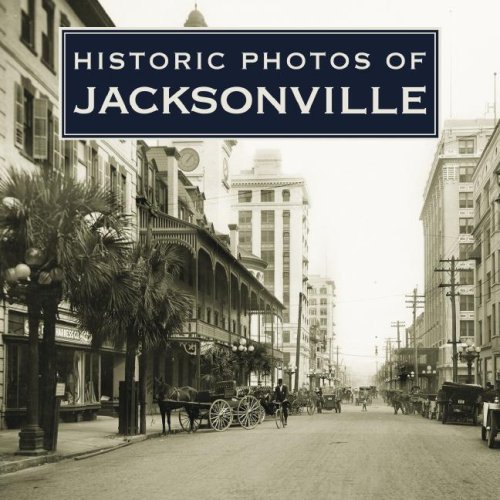
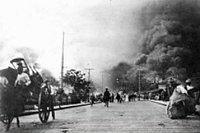
In just over 200 black and white archival photographs, Turner Publishing Company’s Historic Photos of Jacksonville depicts a vision of the Bold New City of the South that might surprise even native Jacksonvillians. The pictorial narrative begins around the same time as the advent of popular photography, before the Civil War (or, the War of Northern Aggression, as some old-school Jacksonvillian’s might say), and continues into the late 1960s. University of North Florida history professor Carolyn Williams’s captions provide insightful but never obtrusive explanations and commentary for the images, and her short essays before each section help to explicate the historical contexts of each of the particular periods of Jacksonville’s history into which the book. Particularly engaging are the smoke-hazed photos of the Great Fire of 1901, a devastating blaze that reduced much of the city to ashes.

200px-jacksonville_fl_fire_1901.jpg

Also fascinating are the post-fire/pre-WWI images of Jacksonville. These detail an overlooked period when the city was a major tourist destination boasting a burgeoning film industry. Northern travelers would flock to luxury resorts like the St. James Hotel, where native Jacksonvillian James Weldon Johnson‘s father worked. When looking at photos of the crowded streets of downtown and the busy industry of the shipyards and train stations, it’s easy to feel a twinge of nostalgia for a time that passed before you ever lived, a time before the strip malls and suburban sprawl, a time before Jacksonville looked more-or-less like Every Other Place in America.

Historic Photos of Jacksonville will look great on your coffee table or on your shelf, preferably next to James Weldon Johnson‘s outstanding autobiography, Along This Way.

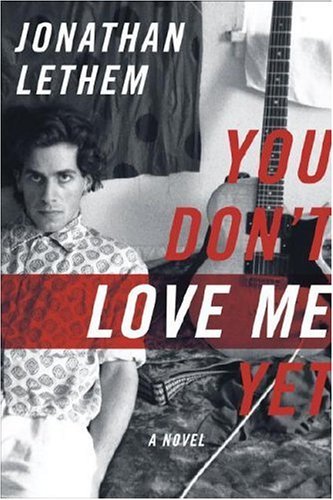
You Don’t Love Me Yet–Jonathan Lethem

you-dont-love-me-yet.jpg

I’ve loved everything I’ve read by Jonathan Lethem so far–Motherless Brooklyn, The Fortress of Solitude, Men and Cartoons, and his essay collection, The Disappointment Artist. So, while perusing the library’s excellent collection of audiobooks for the perfect aural accompaniment for the longish drive from/to Jacksonville to/from St. Pete Beach, I was excited to discover a copy of Lethem’s new novel, You Don’t Love Me Yet, read by Lethem himself. The six and a half hour unabridged recording was just the right length to get there and back. The prospect of hearing an author read his own work is always encouraging, and I didn’t imagine I’d have a chance to read the book any time soon.

So. Well. Anyway.

About halfway through You Don’t Love Me Yet, my darling lovely wife turned to me with the most charming of smiles and said: “This isn’t a very good book.” I agreed with her sheepishly. After all, I’d been toting Lethem as a pop genius. Unfortunately, she was right. I’d been secretly waiting for the book to get good: for the characters to charm me, for the plot to intrigue me, for the writing to wow me. Instead, I was repeatedly disappointed.

The dull plot of You Don’t Love Me Yet centers around Lucinda, bassist for an “alternative” band (Lethem’s words) in LA, trying to get their shit together. Improbably, Lucinda answers phones for a living as part of an art installation complaint line. A mysterious complainer intrigues Lucinda; she ends up falling in love. She also uses the complainer’s complaints (which she recorded as part of her job) as the basis for song lyrics that somehow magically transform the band from rank amateurs to rank amateurs with something. Unfortunately, that something, that kinetic potential, is never quite explained to the novel’s audience. Additionally, the band’s music is never really adequately described (I think that some of the generic “transition music” that precedes each new chapter is supposed to inform the reader that the band is kinda Pixiesish, maybe even a little White Stripesish). Most glaringly, the complainer’s lyrics that somehow stun the band and their audience–built around phrases like “Monster Eyes” and “Astronaut Food”–are really nothing special.

Other elements of the plot that only sound interesting include: kangaroo theft, a dance party where everyone listens to their own playlists on headphones, and lots of sweaty ugly sex (Lethem seems to want You Don’t Love Me Yet to be something of a sex novel). Lethem’s characters have a tendency to prattle about ephemera, often of the pop culture stripe; this was one of my favorite elements of The Fortress of Solitude, but it’s almost unbearably cloying in You Don’t Love Me Yet, with the single exception of the guitarist Bedwin’s fascinating analysis of obscured signs (like, literal signs, posted signs, advertisements, y’know) in the background of Fritz Lang’s Human Desire.

lethem.jpg

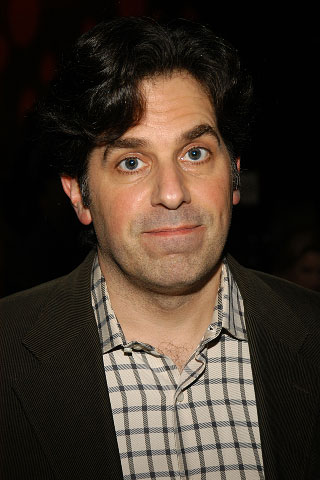
Plot has always been a secondary consideration to rhetoric in my critique of books, and Lethem here allows a number of awful lines–pure groaners–to infiltrate his text (the worst offender: a description of the complainer attesting to his “penisy glamor”). Lethem’s writing is in no way aided by his clipped, earnest delivery. The right reader can often imbue an audiobook with the perfect cadence, delivering the story with added dimension and depth. Lethem delivers each line in one of two different and exact rhythms; by the book’s end the effect is somewhere between numbing and grating.

So yes and well yes this is something of a negative review. But. My love for Lethem is still strong. So instead of ending with a “Not recommended” (and of course I can’t recommend that you spend your precious time on You Don’t Love Me Yet), I implore you to pick up Motherless Brooklyn or The Fortress of Solitude, or, if you’re pressed for time, The Disappointment Artist. And to prove that there are no hard feelings, I vow to read Lethem’s debut novel, Gun, with Occasional Music over the Christmas break. So there.

I dare you to watch Lethem talk about his new novel (in which he calls it a “deliberately silly book,” incidentally) for fifty minutes on Youtube. I dare you!

Tolkien, Xenophobia, and the New World Order

Last year, Rick Santorum made our list of the worst people of 2006 for, among other nefarious deeds, using imagery from J.R.R. Tolkien’s Lord of the Rings as a half-assed metaphor supporting the Iraq war. Apparently, Santorum’s literary criticism has sparked a whole new approach in conservative thinking.

The new issue of Harper’s Magazine contains a section from James P. Pinkerton’s essay, “The Once and Future Christendom” (click the link to read it in full at its original publication site, The American Conservative). In this essay (which, incidentally, I highly recommend reading for a larf), Pinkerton argues that, with its declining birthrates, “Old Europe” will become Muslimized, and hence a threat to the US. Pinkerton suggests that this Muslimization is akin to Sauron and his evil horde in the land of Mordor using the Ring of Power to unite all the creatures of Middle Earth as slaves to his dark power. Not one to point out a problem and offer no solution, Pinkerton recommends that, in order to “save” Western civilization, “poor children from such countries as Argentina [be brought] home to Europe.”

In Pinkerton’s analogy, Americans are like Hobbits–simple folk who “like to smoke and drink,” but on whom “all grander forms of world-girdling intoxication are lost.” “The Hobbits just want their Shire to return to normalcy,” writes Pinkerton. For Pinkerton, “normalcy” clearly means the Hibernian/Nordic values embodied by the Hobbits, an ideology starkly contrasted in Toklien’s Middle Earth with the bestial, murderous existence of the black-skinned orcs and the savage, dark-skinned Southrons. Although I love The Lord of the Rings trilogy and The Hobbit, I was somewhat bothered in my post-college reading of the books by their clearly xenophobic values. Pinkerton takes these values and suggests that a whole new foreign policy be created from them: “Tolkien offers a different sort of diversity–of genuine difference, with no pretense of similarity, let alone universal equality. In his world, it is perfectly natural that all creatures great and small–the Hobbits are indeed small, around three feet high–have their own place in the chain of being.” You’ve got to love any ideology that values the great chain of being.

The part of Pinkerton’s essay that bothers me the most–and I enjoyed it tremendously, as an application of literary criticism, I must admit–is that he’s dead serious. He’s not joking. He’s for real. Furthermore, taken in conjunction with Santorum’s comments, and everything the neo-cons have achieved over the past eight years, it’s more evident than ever that the modern conservative movement in America is quite willing to use a fantasy novel published in the 1950s as a basis for not just foreign policy, but also for its ideology as to just how America is to relate to the rest of the world. And that’s not just funny, it’s also scary.

Found Folktales

florida-folktales.jpg


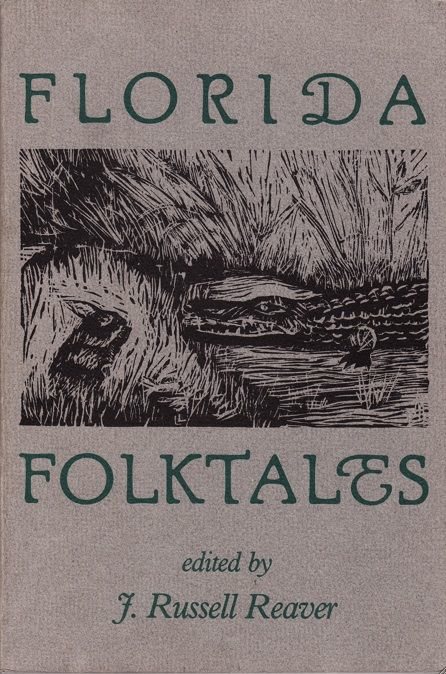
I found this little gem at the bottom of a cardboard box in a locked cabinet in an abandoned teacher’s lounge. I had to break the lock: hidden treasure. Florida Folktales collects a range of folklore, ranging from ghost stories and trickster tales, to modern urban legends. I was intrigued by the back cover blurb by my one of my old professors at the University of Florida, Dr. Robert Thomson (he was the instructor for a folklore class I took. My project: I collected stories told by people who claimed to have had supernatural experiences while on drugs. Lots of LSD angels-and-demons stuff. I think I got an A-). Lovely book, University of Florida Presses.


people.jpg

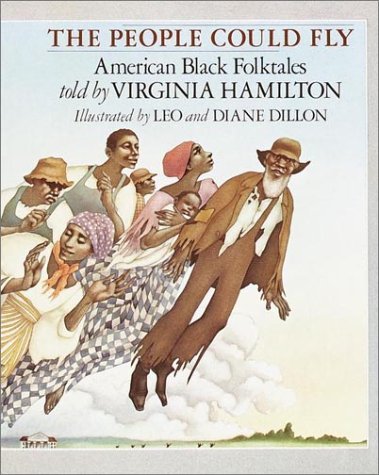
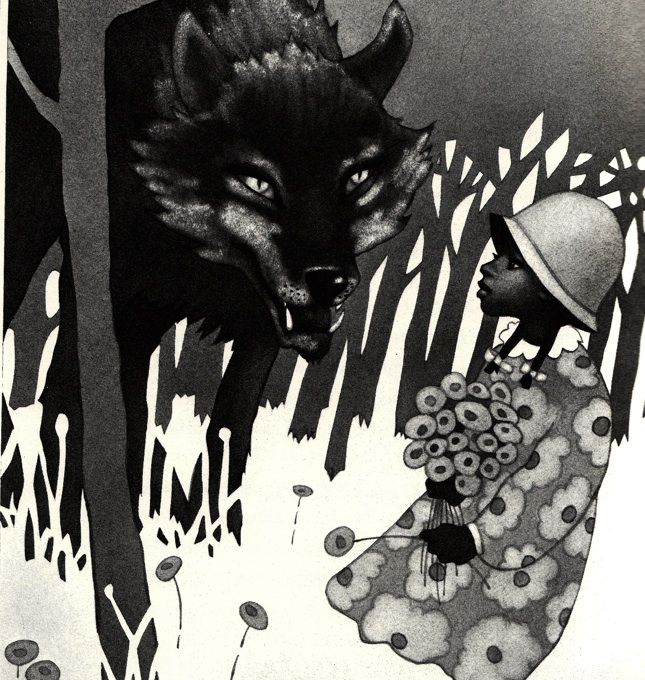
Under Florida Folktales I was pleased as punch (yes, punch: like this guy) to discover Virginia Hamilton’s retelling of traditional American Black folktales, The People Could Fly. I used a few of the tales the same day in class. Beautiful illustrations by Leo and Diane Dillon perfectly capture the axis of waking life and dreamworld these folktales express. Again, a lovely book.


wolfgirl.jpg

The Yiddish Policemen’s Union–Michael Chabon

chabon.jpg

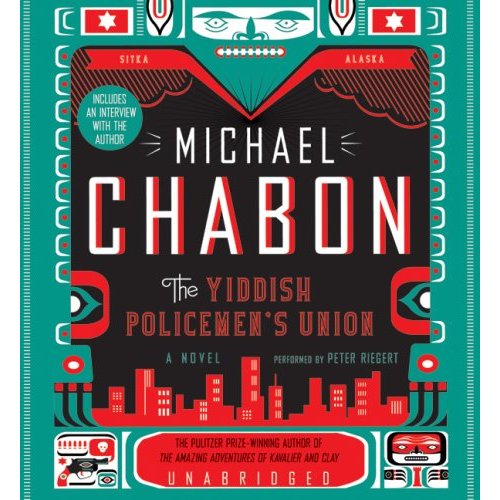
Yesterday afternoon, I finished listening to the audiobook version of Michael Chabon’s much heralded 2007 novel, The Yiddish Policemen’s Union, read quite competently by Peter Riegert.

I like audiobooks. They give me a chance to catch up with a lot of stuff that I otherwise wouldn’t have the time to read. Some people have a problem with audiobooks; apparently no one ever read a story to them. Or they’re just uptight. But that’s not what this is about. See, before I start picking at TYPU, I just want to preempt any Chabon fans saying: “Well, if you actually read the book, you would’ve liked it better.” No. I’m really good at listening to books on CD. Like, I can even make mental annotations. And I’ve enjoyed plenty of audiobooks in the past. This one, however? Nah.

I’m sure that many of you out there are staunch defenders of Chabon, and I won’t deny that he’s a “literary” writer, and one who, like one of my faves Jonathan Lethem, uses genre tropes and styles to great rhetorical effect. That said: this “detective story” is a completely overwritten, self-conscious barrage of hyperboles that rarely engaged me; worst of all,  the book leads nowhere. In Chabon’s alternate reality, the Jewish diaspora continues into the Alaskan frontier. On the eve of the Yiddish settlement of Sitka’s Reversion–and the attendant displacement of the Jews–Detective Landsman investigates the murder of a young man, the son of an Orthodox gangster, who may or may not have been the messiah. There are all sorts of other problems, too, of course. Lots of problems=good writing, right?

In short, Chabon takes a cool premise–(what he believes to be) a Chandleresque detective story set in an alternate universe (à la PK Dicks’ The Man in the High Tower)–and crams in far too many tertiary plots, red herrings, and awkward symbols. Although Chabon’s prose is often funny and sometimes moving, in TYPU, his love for his own exaggerated metaphors and overstuffed similes distracts from the pacing and rhythm in what should be a gripping murder-mystery full of intrigue and suspense. Instead, I found TYPU to be clunky, and at times down right dull, but I kept listening: this book had gotten rave reviews, right? It was at the end of the book, when Chabon suddenly shifts perspective and lazily dumps an entire plot-essential back story on the reader, that I began to realize that this book was not the detective story it was claiming to be. No, the detective story was, like, a ruse, a trope, a form for Chabon to utilize in telling a story of Jewish identity, loss (infanticide lurks at the heart of this novel), and the metaphysical significance of chess. Chabon doesn’t really care about telling a good detective story (compare to Lethem’s lovelier and leaner Motherless Brooklyn, a detective novel that succeeds in telling a good mystery story and being all deep and shit). Instead, Chabon is happy to deadpan pseudophilosophy and use dippy conspiracy theories to help resolve his dangling plot threads. Not recommended.

Ulysses, Typography, Potatoes

I was delighted to stumble across the design work of Itamar Lerner whilst looking for Joycean images on the web (I now give myself one demerit for using the execrable phrasal verb “stumble across” to describe a web search, two demerits for using the unforgivably pretentious and archaic conjunction “whilst,” a hundred demerits for not editing the original sentence in the first place, and a thousand demerits for this long-winded excuse).

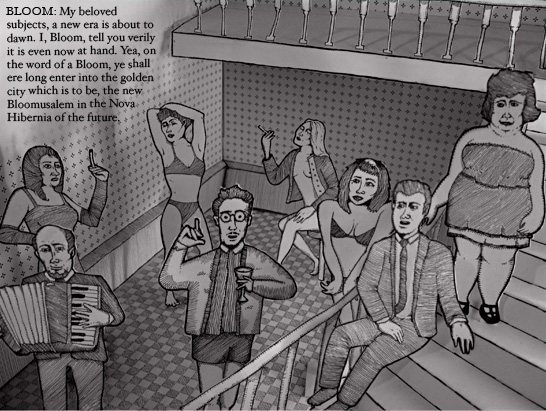
Lerner’s images of Ulysses do justice to both the humor and the pathos of Joyce’s complex episodes. Lerner’s self-described medium of “ink on cut out papers” creates a shaded depth that evokes comic strip art by way of a Punch and Judy show. I like it!

ulisses3.jpg

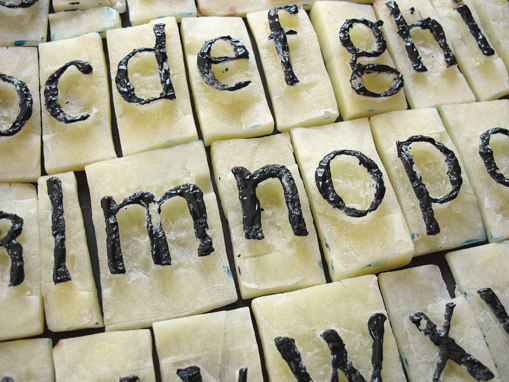
Lerner’s portfolio attests to his masterful fontsciousness: in addition to his original typefaces, he’s designed alphabets in wax, cement, and–my favorite–potatoes:

potatoes1.jpg

We Who Are Not as Others–Daniel P. Mannix

we1.jpg

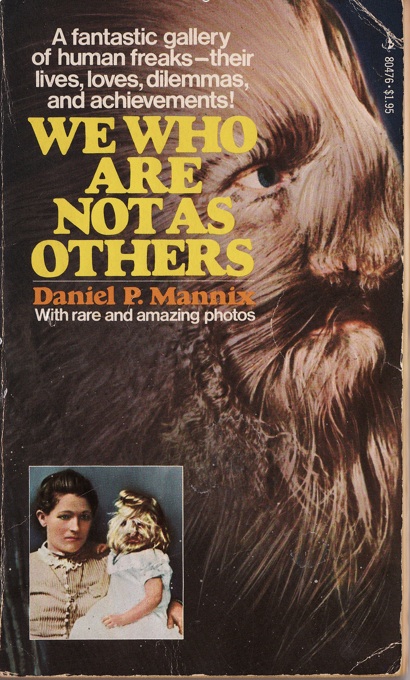
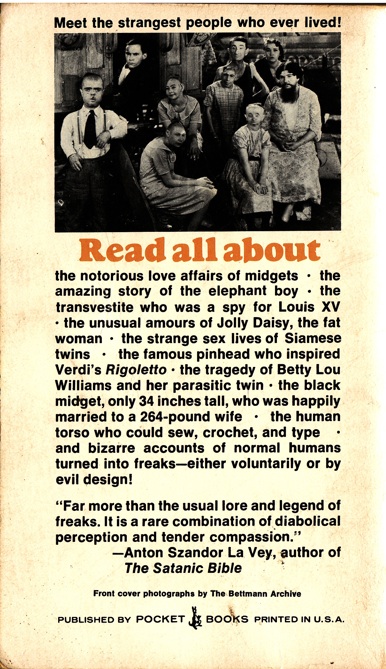
I’m not exactly sure if I stole Daniel P. Mannix’s immortal classic We Who Are Not as Others or if it was in a box of free books. I was in the eighth grade; it was the tail-end of a class trip to colonial Williamsburg, and I guess we had some time to kill, because they (they being the adults in charge) took us to a huge outdoor flea market. This was 1991 and Spike Lee’s Malcolm X had initiated a fad of wearing ball caps with a large solitary X emblazoned upon said cap. Some jokers at the flea market were selling hats emblazoned with a large solitary O, which the nimrod jocks in our class really thought was funny. They all bought the O hats; the counter-fad lasted about a fortnight after the Virginia trip. My love for We Who Are Not as Others, however, is immortal. My friend Tilford was rooting through a box of books: he claimed that the books were all free, although there was really nothing to indicate this. The mercenary setting of the flea market I now recall doesn’t seem to support Tilford’s assessment of the box. Nevertheless, we each wound up with a copy of We Who Are Not as Others. I read this book every year at some point. I implore you to read the back cover:

we2.jpg

Look, I can’t top that, and I’m not going to even try. The blurb is wholly accurate. Anton LaVey’s assessment (and the fact that the leader of the Church of Satan endorses the book also attests to its literary merit) is spot on: this is a tender, tender piece of literature. Although We Who Are Not as Others was withdrawn only a month after its initial 1976 publication, it was fortunately reprinted in 2000 by Juno books, and is still available.

we41.jpg

“[…] only one anus between them”–you must admire Mannix’s attention to detail. Good stuff.

Some Like it Joyce


marilynmonroereadsjamesjoyce.jpg

Eve Arnold’s famous photo of Marilyn Monroe reading Ulysses. Supposedly, she’s reading Molly Bloom’s sexy monologue at the end of Joyce’s novel. This pic is good too–

eve_arnold__marilyn_monroe_lit_ulysse02_4011.jpg

More info here. yes I said yes I will Yes.

Dialogism–Michael Holquist

dialogism.jpg

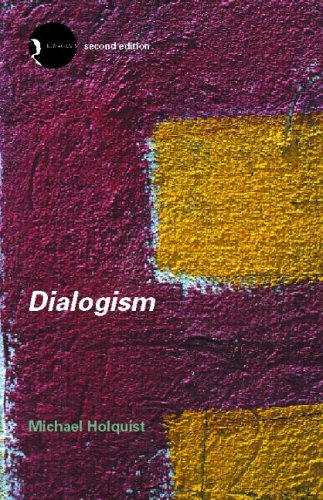
Michael Holquist’s Dialogism, a highly approachable introduction to the theory of Mikhail Bakhtin, is the most enjoyable book of literary theory I’ve wrapped my head around in quite a while. Bakhtin’s dialogism is–and I’m drastically paraphrasing here–a way of interpreting texts in terms of the way that they “speak” to other texts. In Bakhtinian dialogism, language exists in an endless play of call and response, of modulation and echo of all language that has come before and all language that is to come after. Written in short, concise bursts of information, Holquist’s Dialogism illuminates Bakhtin’s complex ideas; additionally, Holquist reads Bakhtin against heavyweights like Roman Jakobson, Kant, Saussure, and, uh, Albert Einstein. Most useful and enlightening of all are Holquist’s own dialogical readings, particularly his reading of Shelley’s Frankenstein. Dialogism is an essential introduction to an important philosopher, and, more importantly, a pretty good read.

Stuff You Can Buy/Stuff That Is Free

Fiery Furnaces latest, Widow City drops today. I love it. It’s really good rocknroll. It’s great. You should buy it. You’ll love it. Or maybe you hate music? You don’t hate music, do you? Then prove it, sucker.

widow-city.jpg

Also, read today’s Village Voice interview with chief-Furnace Matt Friedberger. Prove you’re cultured, damn it!

Also out today: the Vintage paperback edition of Dave Egger’s sorta fictionalized memoir What Is the What? I haven’t read this yet, but my copy should be showing up by next week via Amazon. So I can’t say if you should buy it or not. A lot of folks tend to hate on Eggers without having read his work (I’ve seen people on the net identify his writing as extremely ironic: all one has to do is read A Heartbreaking Work of Staggering Genius (an overrated, completely self-indulgent, but still enjoyable read) to see that this guy is completely earnest. But: many who have read Eggers hate on him as well. So. Granted: McSweeney’s tends to be pretty hipster-smartassed-ironic at times. Still. Earnest, people, earnest). I think it’ll be pretty good though. Will let you know.

eggers.jpg

If you’re ordering all this stuff online, you might as well pre-order the paperback printing of Chris Adrian’s The Children’s Hospital: it drops later this month. I read it and loved it, despite the fact that my edition was hardback (I find hardback books, particularly those of epic length, awfully difficult to read). You can read all about my love for The Children’s Hospital here.

And while I’m completely shilling for McSweeney’s, and championing capitalism in general, I should point out that the October issue of The Believer has a pretty cool interview with Animal Collective’s Panda Bear (or maybe he’s just Panda Bear’s Panda Bear, after the shining genius of Person Pitch) as well as a great essay weighing psychoanalysis against neuroscience. But this is really just a segue to an attempt to redeem my rapacious shilling for the industrial-military complex that is propped up on book and CD and magazine sales. Said segue:

You can read the aforementioned essay without shelling out eight bucks by simply going here, to The Believer‘s website. The current issue’s interview with Optic Nerve writer-artist Adrian Tomine is also up.

But “So what?” you say, “there are plenty of interviews and essays out there. Who cares? Give me something substantial!”

Something substantially funny: Clarke and Michael, the not-so-real-life (but-maybe-sort-of-real-life?) adventures of Clarke and Michael as they shop their screenplay around LA. I love this show.

Also, great archive of free e-books here, if you’re into permanent eye damage.

Finally, you probably don’t know about this yet: Biblioklept has a major scoop: British band Radio Heads plans to release their new album, In Rainbows, tomorrow, for free (technically, you can pay what you want to for it. Which, if you are like me, is probably nothing).

That’s right, folks: you can get music on the internet for free. More italics to emphasize this point. You can get that Radio Heads album here starting tomorrow October 10th.

Alphabet Soup: K

K is for King Richard III, the misanthropic Machiavellian megolomaniacal hero of Shakespeare’s Richard III. Marvel as cruel Richard psychotically removes all those who stand in between him and the throne of England, including his own little nephews. At the same time, sympathize for poor “deformed, unfinish’d” Richard, whose hunchedback and game leg have kept him from any saucy fun with the ladies. Throughout his ambitious quest, Richard wavers from a proto-Iago, devilishly–gleefully even–manipulating the hapless pawns around him, to a manic depressive unhorsed on the battlefield, less than half a man. Poor guy.

Check out Sir Ian McKellen (y’know, Gandalf) doing Richard III in the 1995 film version set in a fictional fascist England of the 1930s. Because, um, Shakespeare’s like, um, better when recontextualized.