F. Scott Fitzgerald’s College Slang, Including Some Amorous Vocabulary

Even more from F. Scott Fitzgerald’s Notebooks

Slang (collegiate)

A Jeep……………….Orchid Consumer

Floating……………….Long Dress

Drag……………….Main Street

Jelly……………….Small Date

Joe College……………….Collegiate

A drip……………….Bird<

” of the pt. water……………….Bird

Clapping……………….Cutting in.

Trucking……………….Walking like that.

Smooch)

Perch)                                    Necking

Pitch and Fling Woo)

“Notes of Childhood” — F. Scott Fitzgerald

More from F. Scott Fitzgerald’s Notebooks. Apparently young Scottie was into Hume against Lock [sic]—

Notes of Childhood:

Make a noise like a hoop and roll away
She’s neat ha ha
Grandfather’s whiskers
Aha, she laughed
Annex rough house
Hume against Lock
Changing Voice
Snow
Hot dogs
Hair oily and pumps from notes
Miss Sweet’s school
Folwell Paulson
Each Bath
Writing in class
Debates
It’s one thing to call a man
Story of dirty shirt
Trick show lemonade stand

“Ernest Taking Me to That Bum Restaurant” and Other References to Hemingway in F. Scott Fitzgerald’s Notebooks

F. Scott Fitzgerald’s Notebooks are crammed with little sketches, scenes, observations, and, uh, notes (obviously). Although they are brief, his notes on Ernest Hemingway reveal much about Fitzgerald’s agon with Papa.

Ernest—until we began trying to walk over each other with cleats.

Snubs—Gen. Mannsul, Telulah phone, Hotel O’Con­nor, Ada Farewell, Toulman party, Barrymore, Tal­madge, and M. Davies. Emily Davies, Tommy H. meeting and bottle, Frank Ritz and Derby, Univ. Chicago, Vallambrosa and yacht, Condon, Gerald in Paris, Ernest apartment.

Day with a busy man. Combine the day of Ernest’s pictures, the man of genius episode,

As to Ernest as a boy—reckless, adventurous, etc. Yet it is undeniable that the dark was peopled for him. His bravery and acquired characteristics.

Nevertheless value of Ernest’s feeling about the pure heart when writing—in other words the comparatively pure heart, the “house in order.”

That Willa Cather’s poem shall stand at beginning of Mediaval and that it shall be the story of Ernest.

Just as Stendahl’s portrait of a Byronic man made Le Rouge et Noir so couldn’t my portrait of Ernest as Phillipe make the real modern man.

Didn’t Hemmingway say this in effect:  If Tom Wolfe ever learns to separate what he gets from books from what he gets from life he will be an original. All you can get from books is rhythm and technique. He’s half-grown artistically—this is truer than what Ernest said about him. But when I’ve criticized him (several times in talk) I’ve felt bad afterwards. Putting sharp weapons in the hands of his inferiors.

Ernest Hemingway, while careful to avoid cliches in his work, fairly revels in them in his private life, his favorite being Parbleu (“So what?”) French, and “Yes, We Have No Bananas.” Contrary to popular opinion he is not as tall as Thomas Wolfe, standing only six feet five in his health belt. He is naturally clumsy with his body, but shooting from a blind or from adequate cover, makes a fine figure of a man. We are happy to announce that his work will appear in future exclusively on United States postage stamps.

Parallel of Ernest’s and French conversation as opposed to Gerald and me and U.S.A. emotional bankruptcy.

Do you know what your affair was founded on? On sorrow. You got sorry for each other. (Did Ernest borrow this one?)

Very strong personalities must confine themselves in mutual conversation to very gentle subjects. Everything eventually transpired—but if they start at a high pitch as at the last meeting of Ernest, Bunny and me their meeting is spoiled. It does not matter who sets the theme or what it is.

Ernest taking me to that bum restaurant. Change of station implied.

Ernest would always give a helping hand to a man on a ledge a little higher up.

Ernest Hemingway and Ernest Lubitsch—Dotty “We’re all shits.”

I talk with the authority of failure—Ernest with the authority of success. We could never sit across the table again.

People like Ernest and me were very sensitive once and saw so much that it agonized us to give pain. People like Ernest and me love to make people very happy, caring desperately about their happiness. And then people like Ernest and me had reactions and punished people for being stupid, etc., etc. People like Ernest and me————

Tom Fast’s story of Ernest.

Ernest and “Farewell to Arms”—producer story.

An inferiority complex comes simply from not feeling you’re doing the best you can—Ernest’s “drink” was simply a form of this.

It [For Whom the Bell Tolls] is so to speak Ernest’s ’Tale of Two Cities’ though the comparison isn’t apt. I mean it is a thoroughly superficial book which has all the profundity of Rebecca.

I want to write scenes that are frightening and inimitable. I don’t want to be as intelligible to my contemporaries as Ernest who as Gertrude Stein said, is bound for the Museums. I am sure I am far enough ahead to have some small immortality if I can keep well.

But there was one consolation:  They could never use any of Mr. Hemingway’s four letter words, because that was for fourth class and fourth class has been abolished—
(The first class was allowed to cheat a little on the matter.)
But on the other hand they could never use any two letter words like NO. They had to use three letter words like YES!

Bald Hemingway characters.

David Mitchell Discusses The Thousand Autumns of Jacob de Zoet

David Mitchell talks about the inspiration behind his novel The Thousand Autumns of Jacob de Zoet. (Read our review).

30 Seconds of Jonathan Franzen Hemming and Hawing

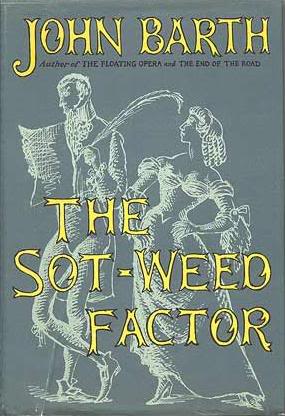
The Sot-Weed Factor — John Barth

I finished the audiobook version of John Barth’s novel The Sot-Weed Factor last week. I’d tried to read the novel a few times in the past, never getting past page 56 of my Bantam mass market edition, which runs to 819 pages. That’s a long book. The unabridged audiobook runs just over 36 hours. That’s a long time. Too long, really, for what Barth has to offer here, but before I get into that, I’ll give a tip of the hat to the excellent production values and the wonderful voice talent of Geoffrey Centlivre, who is by turns expressive, wry, pathetic, bathetic, or understated, depending on what Barth’s prose calls for. He understands the novel and does an estimable job translating it.

The Sot-Weed Factor enjoys the reputation of being Barth’s finest work (although let me just go ahead and disagree with this generalized assumption that I’ve attributed to no one in particular and say up front that the novel is ultimately a boring overlong drag and anyone interested in Barth is better off starting with Lost in the Funhouse). The novel parodies a number of literary styles — Bildungsromans, picaresques, Künstlerromans, adventure stories, histories, romances, and serialized narratives in general. Adopting the language (diction, tone, syntax, form and all) of 17th century prose, Barth tells the story of Ebenezer Cooke, a real historical figure whose 1708 poem “The Sotweed Factor, or A Voyage to Maryland, A Satyr” is considered by some literary historians to be the first American satire.

Barth’s Ebenezer is an innocent soul à la Voltaire’s Candide (hero of another picaresque that has the decency to be funnier, sharper, and, ahem, much, much shorter), a would-be poet whose spurious claims to being “Poet Laureate of Maryland” come constantly under fire. Ebenezer attributes his artistic powers (which are dubious at best) to the metaphysical virtue of his virginity; one of the major conflicts of the plot of The Sot-Weed Factor is poor Ebenezer defending his cherry from the various whores and ne’er-do-well who populate the book. And there are a lot of these whores and ne’er-do-wells: rascals and pirates and pimps and thieves and slavers and sluts of every stripe shuffle through The Sot-Weed Factor, underscoring several of Barth’s themes — innocence versus experience, perception versus reality, virtue versus vice, and stability versus flux.

In my reading, this last theme — the instability of identity, particularly American identity — is the major thrust of The Sot-Weed Factor. But before going into this idea, I suppose I should share at least some of the plot, or at least try to summarize it, which is almost impossible, as it shifts and slants and reverses in every chapter. In the interest of making a (very) long story short, dear reader, and making my job a bit easier, I’ll borrow from Don D’Ammassa’s summary (he’s got a great Barth page for those inclined)—

The story is set during the 17th Century.  Ebenezer Cooke is the son of a well-to-do British gentleman who owns property in the Maryland colony in the New World.  Ebenezer and his sister are tutored by Henry Burlingame until his sudden dismissal while they are in their late teens.  Ebenezer is sent off to boarding school, where he finds it difficult to form a bond between himself and his environment, eventually retreating into poetry.  He is also afflicted by an extreme form of indecisiveness in which he is literally frozen in place, some times for hours on end, incapable of making a decision.  His abstraction from the world is reminiscent of Jacob Horner and Todd Andrews, although exaggerated even further.

The plot grows rapidly more complicated.  Ebenezer is apprenticed in London, where he fails to prosper.  He becomes infatuated with a prostitute, despite his own militant virginity; his poor prospects are then conveyed to his father, who ships him off to the family holdings in the colonies.  Ebenezer decides to request a commission from Lord Calvert, governor of Maryland, to become its official Poet Laureate, believes that he has been awarded that honor, and sets out for the new world.  In the course of that journey, he rediscovers Henry Burlingame, who has taken on another identity, is kidnapped by pirates, walks the plank, and eventually reaches land.

The complexity and twisted humor that ensue cannot be adequately described in a few words.  Secret identities are revealed, coincidences flourish, absurd situations follow in rapid sequence.  Ebenezer is honored and disgraced, is captured by angry natives and threatened with death.  He discovers pieces of a secret journal of the adventures of John Smith and Pocahontas, and helps Henry Burlingame discover the truth about his own origins.  There is considerable bawdy content, much of it surrounding the mysterious process by which John Smith managed to sexually satisfy Pocahontas.

I’m impressed with D’Ammassa’s concision here—he neatly puts together the major elements of a sprawling, fat novel. As you may see from D’Ammassa’s summary, The Sot-Weed Factor is all about the instability of place, the lack of solid ground in swampy Maryland, the discontinuity of historical narrative, the inability of art to overcome reality, and the rapid reversals of fortune and identity that might occur in a New World. It’s all “assy-turvy,” to use one of the character’s terms. The Sot-Weed Factor here shows its post-modern bona fides; there’s a constant inconstancy, a doubling of people, places, things, and then a trebling. Ebenezer’s Old World romantic virtues—his insistence on the metaphysical value of his virginity and the power of his feeble poetry—are not just contested but obliterated (only poor Eb’s too blind to see this). Barth reworks American history, dismantling and satirizing the Pocahontas narrative, and emphasizing the plight of the native Americans, enslaved Africans, and indentured Europeans in this brave new world.

The book is also a dismantling of literary history, a jab at metaphysical poetry and identity narratives like Tom Jones or the work of Dickens. While Ebenezer spouts the loftiest supplications to his airy muse, Barth keeps his humor stuck sloppily in the toilet. The Sot-Weed Factor surpasses any ribald work I’ve ever read. The book is larded with dick jokes, fart jokes, jokes about diarrhea, jokes about sex and venereal diseases and so on—it culminates with (as D’Ammassa points out above) a riff on 17th century Viagra. In short, Bath focuses most of his keen literary powers on the kind of sophomoric japes that might keep Bevis and Butthead’s attention. Again, it’s all “assy-turvy.”

Barth’s toilet humor is at times funny, but it becomes tiresome over the book’s long duration, especially when it’s often the sole reward for long expanses of poorly-conceived exposition. I found myself bored to tears at times listening to The Sot-Weed Factor, and had to force myself to continue in its final third, a challenge that became easier when the narrative finally picked up a bit. Just a bit though. The book’s major problem is not its bloat though, or its saggy exposition, or even its redundant fart jokes. No, these feel more a symptom than a cause, and I think they are symptom of a too self-satisfied (or self-satisfying) author; over its 800+ pages (or 36+ hours), The Sot-Weed Factor reveals itself as the literary equivalent of a very bright writer jacking off to his own research. In what must be the worst case of unrestrained writing I’ve ever seen (or heard, I suppose), Barth allows two of his characters, catty women arguing, one English, one French, to trade insults with each other, all various euphemisms for “whore.” This process goes on for minutes in the audiobook version and for six goddamn pages in my Bantam edition and, like much of the details in this fat beast, does little or nothing to add to the narrative. It’s as if in his research Barth has dug up dozens and dozens of lovely little antiquated slurs and can’t bear to edit a single one. If  the process rewards Barth, it does little for the reader.

But if literary diarrhea is the mode of the book, then I guess it mirrors one of The Sot-Weed Factor’s many rude motifs. Personally, I wish I had my time back. There’s great value in reimagining the origin of America (I think immediately of Terence Malick’s The New World or Toni Morrison’s A Mercy or even some of William Blake’s work), but Barth’s narrative seems too self-indulgent and unrewarding to make any real claims to democratic (or, if I’m feeling harsh, artistic) insight. Perhaps The Sot-Weed Factor is the kind of novel that remains indivisible from its form, and perhaps to a contemporary reader like me this form is just too flabby and flaccid to spark spirit. As I’ve tried to communicate here, Barth has a sharp intellect and he’s more than capable of performing a wry, wise, and often funny analysis of early American history. But he indulges too much in his own sophomoric games and winks too often at the reader. It’s amazing that such a long book could feel so hollow.

“Notes on Accident Room” — F. Scott Fitzgerald

“Notes on Accident Room,” another fragment from F. Scott Fitzgerald’s Notebooks, which I am enjoying so very much—I know that The Notebooks are Fitzgerald’s sketches and ideas and quotes and anecdotes and dreams (etc.), but they read like some strange experimental novel.

Notes on Accident Room

Afternoon—Rolling table with splints, gauze bandages, rotten
Tiled floor—wall halfway
Tubes nitrous oxide (gas)
Deaf man—humble. Man with broken arm. Whether I took my coat off or not. Coat like intruding. Fireman’s child (make it wife) take wings, notices on door, smoking. Red headed conceited interne who took me other ward. Laughter of O’ O’Donovan’s nurse.
First Night—Thrice told story of the night before about the transfusion from the assailant to the victim. Why it was necessary. Crowding medical student. Barber. Barrel of fish. Souture with flap, the ordinary needle and black thin gut. The two lady dactors. “Externes” Blonde nurse. Bad cut of uniforms. Injections, pink disinfectant, needle and tweezers to draw it through, the flap. Negresses with gonorrhea probably. Zinder’s wife. Barber’s pretentiousness—wonderful. Oyster barrel from biggest sea food dealer in X. Can I work? Wiggles fingers. Straps on chair. Orderly and board washed; his morality. Big legs of doctoresses, petit bourgeousie manners of Zinder. Negroes by first name even by northerners. Discussion about dyes. Difference and relation between lady doctors one already the prom girl, her coat.
Second Night—Jamaica negro. His name. Writing it. Two wounds, one found. Drunk named Katy or Casey ( damn good name he says; hesitation saying it) Medical students in evidence. Princeton spies, Trimbles schedule (relatives, diet, time—other doctors’ rounds) Blood transference—won’t you have a chair? Not a wrinkle in the colored woman’s face—nor a flicker—her disease. How it sounded bad faucet, looked—wine sloshed around looking for vein, lost pump, elevators, close both doors, upstairs in biology laboratory. Previous memories “never mind how much” and “it’ll do you good” and joking while they do it and change of tone as if patient wouldn’t understand “Awful trouble getting this blood.” Little boy, fanning wet cast. Dirty feet. Miss Brady—her psychology. Miss Brady knowing everything. The stitches through the eyebrows, Niagara Falls, North Falls, Miss Brady kidding. The student who got fresh. The policeman. The sick negro kid with 103 degrees. The father with “six head of children” and the son with the dislocated arm that would have to be operated on.
He had other commission from outside. One of the nurses in the accident room, an abandoned movie fan, wanted to know if she was really going to marry a certain star. It was in all the magazines— all Bill had to ask her was yes or no.

“Two Dreams” — F. Scott Fitzgerald

“Two Dreams,” a fragment from F. Scott Fitzgerald’s Notebooks

(1) A trip to Florida with Howard Garrish and many bathing beauties. Asleep standing on the prow the beach and girls dancing. The one one skates like skiis. Like Switzerland, far castles and palaces. The horseman in the sea, the motor truck on sand, the horsemen coming ashore, the Bishop rears, falls, the horse saves him. My room, suits and ties, the view, the soldiers drilling under arcs in khaki, the wonderful water man is now Tom Taylor, I buy and ties wake in strange room. Blunder into Mother who nags me. My mean remarks.
(2) The colored burglar. Found clothes in hotel—underwear, suit; I discover pocket book, Echenard, my accusation.

New in the Stack: Werewolves and Angels and Faeries (Oh My)

As always, the stack overfloweth. Here are some of the more interesting looking titles to make their way to Biblioklept International Headquarters.

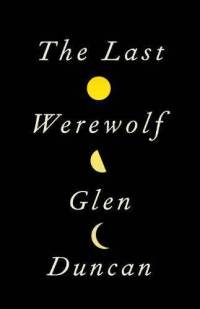
Glen Duncan’s new novel The Last Werewolf is a book about a werewolf. That’s kind of a terrible way to begin a write-up, but let’s state the obvious: you probably know if you want to read a werewolf book or not. Duncan’s hero Jake Marlowe skews more noir (as his name suggests) than twinky Twilight—he’s a hard-drinking , chain-smoking, 200-year-old rascal who’s just learned that the only other living werewolf has just died (hence, he’s like, the last werewolf, man); compounding matters, he’s more than ready to die himself. A sinister cabal called the World Organisation for the Control of Occult Phenomena is after Jake, testing the limits of his suicide wish. Duncan’s prose is harsh, visceral, and occasionally a bit purple, but horror genre fans looking for more, uh, bite (jeez, sorry) from their books may wish to check out The Last Werewolf, new in hardback from Knopf. You can read Justin Cronin’s (The Passage) take at The New York Times; in the meantime, a morsel—

Transformation woke me to the smell of rust and fuel and seaweed. I was lying on my spasming back on a metal table and the restraints were gone. So were my clothes. Shoulders, shins, head, hands and haunches shunted blood and hurried bone to meet the Curse’s metamorphic demand. My circus of consumed lives stirred. The world felt strangely undulant. I thought, Well, I hope you’re ready for this, kidnapping fuckers, whoever you are. Then, throbbing with hunger for living meat, I howled and rolled over onto my side.

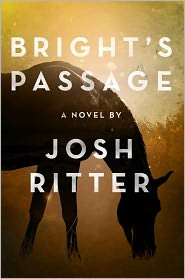
Bright’s Passage is the début novel from songwriter/musician Josh Ritter. This slim novel tells the story Henry Bright, a man who returns to the hills of West Virginia after the trauma of World War I only to have his wife (who is also his first cousin) die in childbirth. Bright buries her body and sets fire to their cabin, which sparks a massive forest fire. Bright then takes his infant son and flees, both from the fire and his unstable father-in-law, “The Colonel,” a vet of America’s adventures in the Philippines who still wears his uniform. The Colonel and his crazy sons pursue Bright, who is guided on the lam by the angel who talks to him—yeah, an angel directs Bright; in fact it was the angel’s idea that Bright marry his cousin, burn down his cabin, and run . . . also, the angel swears that Bright’s son is going to be, like, the new Messiah. Also, Bright’s horse talks. Ritter moves the action between Bright’s flight, his ordeal in WWI, and his youth in simple, concrete, declarative prose. There are echoes here of Chris Adrian’s angel stories (The Children’s Hospital and A Better Angel), and perhaps something of a Cormac McCarthy-lite vibe. Here’s an excerpt from obscure author Stephen King’s review in the Times

At its best, “Bright’s Passage” shines with a compressed lyricism that recalls Ray Bradbury in his prime. When Henry, his talking horse — a kind of holy Mr. Ed — and the Future King of Heaven leave the woods and enter a small town, Ritter writes: “It seemed a tidy place of dappled white houses and American flags. . . . Even the trees here seemed to have a kind of deep green and prepossessing prosperity that the trees of the forest could have no share in.” Recalling his mother’s death, Henry remembers “a windstorm that made the trees bow to one another like ballroom dancers.” More striking still are Henry’s memories of life in the trenches, some of which compare favorably to the prose in Mark Helprin’s “Soldier of the Great War”: “Artillery passed high above their heads in singsong trajectories that merged and lifted with one another into strange musical chords, like cats crossing pump organs.”

Bright’s Passage is new in hardback from Random House.

So we hit on the werewolves and angels, but what about those faeries? Honestly, that might have been a bit of a bait and switch, although David Liss’s new novel The Twelfth Enchantment does have faeries—but Romantic poets are slightly more prevalent in the book—only “Werewolves and Angels and Lord Byron and William Blake” sounds a bit clunky, doesn’t it? In any case, mea culpa. There are also Luddites and ghost dogs and alchemy and magic spells and all kinds of Gothic business going on in The Twelfth Enchantment, which gets a lot of mileage simply from its setting (the dawn of the Industrial Revolution), themes (the intersection of magick, alchemy, literature, and Gothic Romance), and characters (Byron, Blake, and Mary Crawford of Austen’s Mansfield Park). Our orphan heroine Lucy Derrick is in the clutches of her unsavory uncle who aims to marry her off until handsome, club-footed Lord Byron shows up at her house. He’s been hexed with a mystical curse and needs Lucy’s help; she soon finds herself snared in a web of dark intrigue, magic, and romance. The Twelfth Enchantment is a whimsical and lovingly crafted adventure story that will appeal to folks who dig literary mysteries (à la Jasper Fforde or pretty much any book that appropriates Jane Austen). The Twelfth Enchantment is new in hardback from Random House.

“I Want to Burn Every Novel I’ve Ever Written” — Read Richard Powers’s New Essay, “What Does Fiction Know?”

Places has published a new essay by novelist Richard Powers. “What Does Fiction Know” is kinda sorta about Berlin. A good read. From the essay—

Jane and I are in the aerospace hall, swept along from the 18th-century balloon fantasies to the Berlin Airlift, when I see it: the Rheintochter. I recognize it even before reading the tag. It’s a surface-to-air missile, one of the offspring of the V2, tested successfully but cancelled at the very end of the war in a power struggle between Göring, Speer, and Himmler. The romance of the name stops me: Wagner’s Rhine Maidens, guarding the gold that holds the secret to world dominion. The level of technology is stunning, years beyond the Allies’ similar efforts. But it’s the rocket’s gesamtkunstwerk — the total artwork of it — that does me in.

The thing is made of dark wood and bright chrome, shaped and polished like some loving piece of Amish furniture, as carefully crafted as anything out of the Museum of Decorative Arts: a lovely sculpture with a hint of Jugendstil. And it stands as just the simplest precursor to our infinitely more Wagnerian productions, those armed, unmanned drones right now winging through the Swat and Korengal valleys, the Predators and Reapers, controlled by satellite and coordinated by pilots at terminals on the far side of the planet. I stare at the Rhine daughter, seeing all the things she will yet grow up to become. Even a novelist can see that much; it does not take rocket science.

I feel like I’m having an asthma attack in a sealed coffin. Every guardedly optimistic, would-be redemptive human story I’ve ever shepherded into print has missed the point. We are built for this plot, shaped by evolution for it, and our steadily expanding mastery of the materials will not stop short of a magnum opus. No other craft that we put our hands to can hope to keep pace. By the time my wife and I find the exit through the labyrinth of machines, I want to burn every novel I’ve ever written.

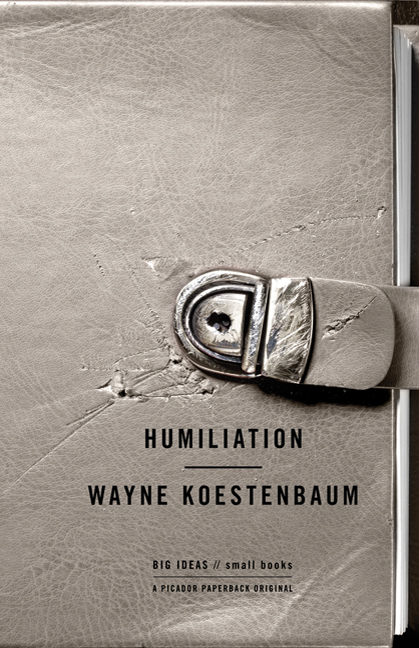
Humiliation — Wayne Koestenbaum

Wayne Koestenbaum’s Humiliation explores the ways that having a body (among other bodies, among a social body) might leave us humiliated or otherwise abject. To perform this exploration, Koestenbaum surveys a discursive range of subjects, including the humiliation of public figures, the sordid “private” lives of celebrities, the work of philosophers and cultural theorists, and the art, music, films, and writing of various artists and performers. The book’s central subject though is Koestenbaum himself, who shares his own humiliations in a way that surpasses ironic self-deprecation. The results are surprisingly moving, intelligent, and very funny. I’ll let Koestenbaum explain his project—

Not merely because I am tired, but because this subject, humiliation, is monstrous, and because it erodes the voice that tries to lay siege to its complexities, I will resign myself, in the fugues that follow, to set forth an open-ended series of paradoxes and juxtapositions. (I call these excursions “fugues” not only because I want the rhetorical license offered by invoking counterpoint but because a “fugue state” is a mentally unbalanced condition of dissociated wandering away from one’s own identity.) Some of my fugal juxtapositions are literal and logical, while others are figurative, meant merely to suggest the presence of undercurrents, sympathies, resonances shared between essentially unlike experiences. If there is any reward to be found in this exercise of juxtaposing contraries to detect the occasional gleam of likeness, that dividend lies in the apprehension of a singular prey: the detection of a whimpering beast inside each of us, a beast whose cries are micropitches, too faint for regular notation.

Koestenbaum composes these fugues, these thematized chapters of his book, in small blocks of text, numbered entries that range from single sentences to several pages. These are aphorisms, anecdotes, japes, jokes, riffs, prose poems, howls. The style recalls Nietzsche’s aphoristic work or Barthes’s short essays in Mythologies, although these comparisons seem inappropriately pretentious. In any case, Koestenbaum sets these short pieces against each other to achieve the fugue state he describes above, a willful wandering from topic to topic—all within the kingdom of humiliation.

So what is humiliation? Or, rather, how does Koestenbaum define humiliation? While the entire book addresses the subject, our author gives us a fairly succinct definition upfront—

Humiliation involves a triangle: (1) the victim, (2) the abuser, and (3) the witness. The humiliated person may also behold her own degradation, or may imagine someone else, in the future, watching it or hearing about it. The scene’s horror—its energy, its electricity—involves the presence of three. An infernal waltz.

Koestenbaum takes turns playing all three roles, both through personal, historical, and cultural memory, as well as through a profound imaginative capacity. It is worth remarking upon, or at least listing, some of his examples here: Joan of Arc, King Lear, Liza Minelli, Bill Clinton, Antonin Artaud, Jean Genet, Jean-Michael Basquiat, Larry Craig, American Idol, The Swan, Anita Bryant, Harriet Jacobs, Richard M. Nixon, various creeps trolling Craigslist for weird sex, the Marquis de Sade, Abu Ghraib, lynching postcards, Michael Jackson—and always Koestenbaum himself (as well as his family, his friends, his colleagues, his students . . . ).  Koestenbaum shuffles through his subjects, looking at the various ways that they might fall into his triangle of humiliation, and even when he tries on the hat of the abuser, he modulates this position by keeping his subject’s agency within his critical purview. Indeed, one of the great warnings that Koestenbaum has to offer concerns what he labels “the Jim Crow gaze” — the propensity and capacity that each person holds within himself at all times to look at another human without recognition that that person is a human being, an agent of his or her own desires, emotions, and intellect. Koestenbaum readily admits his own failings, times he has turned the Jim Crow gaze on others, a look that goes past “othering” to actually desubjectify the gaze’s object. Koestenbaum’s project pays great dividends here; by moving discursively from a range of subjects (including himself), he reveals the limitations of first-person consciousness when coming into contact with the social, the cultural, the political, the historical. Put another way, Humiliation is one of the few works of cultural studies I’ve ever read to actively show why cultural studies matters. Here’s Koestenbaum again—

The humiliation of a derided performer on American Idol is immeasurably different from the humiliation of a Palestinian under Israeli occupation. One plight is chosen, the other is not. But isn’t there present, in both situations, an underlying coldheartedness, a rock-bottom refusal to believe the worthiness of the person whose reputation (or house, or land, or ego, or self-esteem) is stolen, trashed, occupied, razed? Isn’t there present, in both situations, an underlying will to deracinate and desubjectify this other person? And, most insidiously—isn’t there an insistence on considering this process of desubjectification (with my laughter I take away your humanity) an entertaining process, even a cathartic exercise, therapeutic and energizing, like calisthenics?

This willingness to connect American Idol to the Israeli-Palestinian conflict dramatically highlights the underlying psychological conditions lurking under the phenomenological apparatuses we see (or choose not to see) on a daily basis. And just as ridicule or schadenfreude may be posited as cathartic for the victimizer, Koestenbaum also finds that “the aftermath of humiliation can be paradoxically relaxing. Tranquilizing to have undergone humiliation and then emerge on the other side.” Perhaps it is toward some sense of release or tranquility then that Koestenbaum shares so much of his own humiliation with us—snubbings, embarrassments, accusations, disavowals, and, of course, his penis (he even apologizes for the “phallic” nature of the book).

Koestenbaum is willing to consider other penises too. Humiliation is very much a study of bodies in general: what it means to have a body, what it means for others to look at your body, how what your body looks like (its shape, its color, its gender, its parts, its excess, its lack) matters to others. Working from Julia Kristeva’s theory of the abject (see: Powers of Horror), Koestenbaum writes—

Humiliation involves physical process: fluids , solids, organs, cavities, orifices, outpouring, ingestions, excrescences, spillages. Humiliation demands a soiling. Even if the ordeal is merely mental, the body itself gets dragged into the mess.

Our most abject moments then are when we realize that our body is not the impermeable fortress of self that we might imagine, but rather a dripping mess with ill-defined borders. We are constantly leaking. Private shame always lurks, is always susceptible to public scrutiny. Koestenbaum again—

An object that should be private and unseen is suddenly visible . . . My unseen experience has been forcibly ejected—thrust outside. The judge hears my secrets. My inner rottenness lies exposed. My skin has been turned inside out. This fold (the self become a seam) is the structure of revulsion.

Yet going through these trials is part of forming an individual, subjective identity. “Humiliation, an educating experience,  breeds identity,” writes Koestenbaum. Of course, this idea goes back to our oldest stories, yet it often remains unremarked (curiously, Koestenbaum does not write about Adam and Eve in Eden, that primal scene of triangular humiliation). And while Koestenbaum posits the educational (and even possibly therapeutic) dimensions of humiliation, he’s very clear about the deep pain repetitive, institutionalized humiliation can cause—

 I presume that as moral individuals we should work toward minimizing humiliation, toward not inflicting it. We should practice an ethics of abstention. Vow: I abstain from deliberately humiliating others. When I find myself involved in this abhorrent practice, I will immediately desist and try to reverse the process and remedy the crime. And yet is a world without humiliation possible.? It’s disenchanting to write about a horrible situation. About this subject, I can’t rhapsodize.

I’m happy to rhapsodize about Humiliation more, but I fear that this review teeters on becoming overlong any word now. I’ve yet to remark on Humiliation’s humor, which is abundant, weird, occasionally dark, but always warm and deeply human. In the interest of time, perhaps you’ll trust the director John Waters, who provides the following blurb for the book: “This literary ‘topping from the bottom’ is the funniest, smartest, most heartbreaking yet powerful book I’ve read in a long time.” I agree completely with Waters, and  looking over my review, I fear that I may have portrayed a very accessible, humorous, and loving book in terms that are too academic. Humiliation may be a work of philosophical inquiry, but it also functions as a sort of cultural memoir, and if it’s a narrative of pain and abjection, it also repeatedly offers solutions to this pain when it can, and consolation and sympathy when it cannot. Very highly recommended.

Humiliation, part of the BIG IDEAS // small books series, is new this month from Picador.

William Gaddis — A 1986 Filmed Interview

“God Makes Mistakes” — J.R.R. Tolkien Rambles About Elves


Nathaniel Hawthorne’s Book Burning

In his strange story “Earth’s Holocaust,” Nathaniel Hawthorne describes how “this wide world had become so overburdened with an accumulation of worn-out trumpery, that the inhabitants determined to rid themselves of it by a general bonfire.” What ensues is a horrific satire that seems more relevant than ever; the people burn liquor, money, guns, laws, and other sundry items before eventually turning on books—

The truth was, that the human race had now reached a stage of progress so far beyond what the wisest and wittiest men of former ages had ever dreamed of, that it would have been a manifest absurdity to allow the earth to be any longer encumbered with their poor achievements in the literary line. Accordingly a thorough and searching investigation had swept the booksellers’ shops, hawkers’ stands, public and private libraries, and even the little book-shelf by the country fireside, and had brought the world’s entire mass of printed paper, bound or in sheets, to swell the already mountain bulk of our illustrious bonfire. Thick, heavy folios, containing the labors of lexicographers, commentators, and encyclopedists, were flung in, and, falling among the embers with a leaden thump, smouldered away to ashes like rotten wood. The small, richly gilt French tomes of the last age, with the hundred volumes of Voltaire among them, went off in a brilliant shower of sparkles and little jets of flame; while the current literature of the same nation burned red and blue, and threw an infernal light over the visages of the spectators, converting them all to the aspect of party-colored fiends. A collection of German stories emitted a scent of brimstone. The English standard authors made excellent fuel, generally exhibiting the properties of sound oak logs. Milton’s works, in particular, sent up a powerful blaze, gradually reddening into a coal, which promised to endure longer than almost any other material of the pile. From Shakespeare there gushed a flame of such marvellous splendor that men shaded their eyes as against the sun’s meridian glory; nor even when the works of his own elucidators were flung upon him did he cease to flash forth a dazzling radiance from beneath the ponderous heap. It is my belief that he is still blazing as fervidly as ever.

“The Routine Things Around the House” — Stephen Dunn

“The Routine Things Around the House,” a poem by Stephen Dunn

When Mother died
I thought: now I’ll have a death poem.
That was unforgivable

yet I’ve since forgiven myself
as sons are able to do
who’ve been loved by their mothers.

I stared into the coffin
knowing how long she’d live,
how many lifetimes there are

in the sweet revisions of memory.
It’s hard to know exactly
how we ease ourselves back from sadness,

but I remembered when I was twelve,
1951, before the world
unbuttoned its blouse.

I had asked my mother (I was trembling)
if I could see her breasts
and she took me into her room

without embarrassment or coyness
and I stared at them,
afraid to ask for more.

Now, years later, someone tells me
Cancers who’ve never had mother love
are doomed and I, a Cancer,

feel blessed again. What luck
to have had a mother
who showed me her breasts

when girls my age were developing
their separate countries,
what luck

she didn’t doom me
with too much or too little.
Had I asked to touch,

perhaps to suck them,
what would she have done?
Mother, dead woman

who I think permits me
to love women easily,
this poem

is dedicated to where
we stopped, to the incompleteness
that was sufficient

and to how you buttoned up,
began doing the routine things
around the house.

Melville House Wants to Duel with You

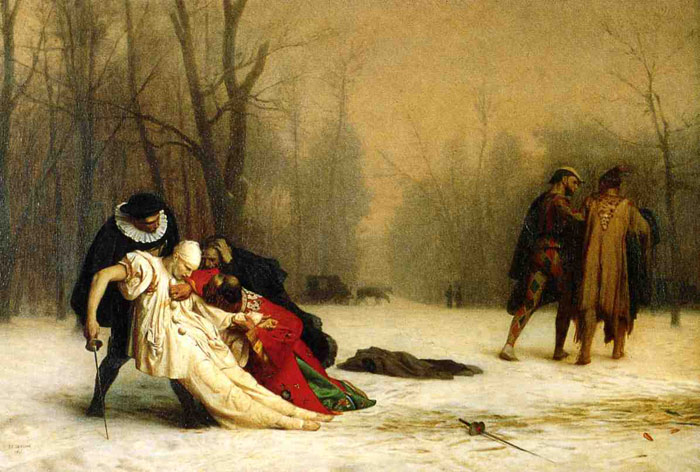
The good folks at Melville House want to duel with you. They’re publishing five novellas, all called The Duel, and they want you to make a trailer for the books. You can win books and “underground fame,” which I’m sure won’t be fleeting (in any case, winning all 42 titles in their Art of the Novella series is nothing to sneeze at). Full details at Moby Lives.

Some other duels we like:

A duel from Barry Lyndon

Jean-Léon Gérôme’s Duel After the Masked Ball—

“Duel” by Swervedriver—

I Have Writer’s Block (but I’ll Share a Vomit Story Anyway)

I have the writer’s block somethin’ terrible.

Everything was going so well, too—I seemed able to blather and drivel at will for a few weeks, dribbling out my noisome little posts on books or films or TV shows or what have you.

But now, nothing, which is terrible, because I have been reading up a storm—putting away half a Hemingway in a day (The Garden of Eden), flying through Donald Harrington’s epic comic masterpiece Architecture of the Arkansas Ozarks (still not finished), trudging through Breece D’J Pancake’s stories when I think I can take the sadness, and polishing off Wayne Koestenbaum’s Humiliation in three short sessions.

I kind of blame Koestenbaum’s book for the writer’s block. It’s always hard to write about a book that you love, that you think others should read too, but even harder when the book is about subjects and figures that most people would rather not think about, like abjection or vomit or gloryholes or the terrible pain of Liza Minelli or Antonin Artaud’s electroshock therapy or Jean Genet’s prison sex or lynching photographs or  Michael Jackson’s penis. Plus, Koestenbaum repeatedly points out that the act of writing itself, particularly writing for publication, writing for others to read is an abject, humiliating process. Here’s Koestenbaum—

Writing is a process of turning myself inside out: a regurgitation. I extrude my vulnerable inner lining. I purge. And then I examine the contents—my expulsed interior—and begin the bloody interrogation. I ask whether it is filthy or clean, valuable or deplorable.

Koestenbaum goes beyond metaphorical vomiting to consider the literal act of regurgitation in his book. There’s a lot of vomit in Humiliation—other bodily expulsions too, but Koestenbaum singles vomiting as a primary site of abjection (this seems a little less intense or mordant than theorist Julia Kristeva—whose work Koestenbaum is surely working from—who finds the corpse the ultimate abject object).

Maybe I’ll try to work through my writer’s block by telling a vomit story. The story is made more germane (to what, though?), perhaps, in light of the fact that I had just read some of Koestenbaum’s vomit theory (or vomit prose, if you prefer) the night previous.

Here is the setting: it is a pediatrician’s waiting room. I am waiting with my son, who is 13 months old, who is to receive shots on this visit to protect him from disease. The waiting room is packed and the progress is unusually slow. The woman across from me makes idle chit chat with me and with her own son who is maybe 13 or 14 years old; he’s in marching band; he needs new shoes for marching band; jazz band will be discontinued due to budget cuts, but the teacher (a man who shares my last name, I hear by eavesdropping although how can it be eavesdropping when their conversation is so public and the room so small) will teach jazz band after school. These details are unimportant to the vomiting story, although they perhaps signal the teenager’s mother’s caring, involved nature in her son’s life.

Here is the climax of the story: to my right, another man is at the doctor’s with his son, waiting; the son is perhaps 3 or 4 years old. He doesn’t look well—he looks queasy. In fact, when I look at him (not directly of course, but glancingly, the way that people might in a waiting room or other such place where direct eye contact is unspokenly shunned), when I look at him, I internally remark his queasiness, his ill gills, his distraught angle; I also internally remark his father’s concern, the way his father slowly strokes the son’s back in impotent consolation. And at the same moment I remark on these details, it occurs to me that this queasy looking boy is in the wrong section, that there is a clearly marked, smaller room (not so much a room but an alcove or adjoined large cubby—no door separates the two) for “sick” patients, for patients who are not attending a regular “well” visit (like my own son). My reaction though was not fear or disgust or anger, but more mild annoyance that the father was either flouting a convention of the office (one that I didn’t really care about, knowing that, hey, really, is that smaller room really going to protect my health or my child’s? Because, no it’s not), or that the father simply failed to read a clear sign (I feel a similar annoyance when people at the grocery store where I shop treat the clearly-marked entrance as an exit and vice-versa).

Anyway, I promised a climax, and failed to deliver. How humiliating. So here is the climax: the man’s son up and vomited all over the floor, all over the man’s leg. It was not the tidy vomit that we might sometimes manage—the short, projectile aimed mass that usually conforms to a strict element, mostly solid or mostly liquid. No, this was a messy, mucusy, ill affair, the kind of vomit that hangs from the vomiter’s mouth and sticks to the floor (for me, the most abject, threatening detail). It was foul. And yet I felt no abject horror or humiliation for the man or his child—in short, none of the vomit-horror that Koestenbaum describes in his book (a description I know I have not described for you, dear reader). Instead, I felt immediate empathy and compassion for the man. The mother of the teenager responded even more demonstrably. She immediately located a garbage bin for the boy to continue vomiting in, alerted the staff, went to the bathroom for paper towels, and helped the man while speaking consolingly to the son. She did what I wished that I had did. She behaved like a good human.

The point of this vomit story is to try to address what Koestenbaum does not address in his fantastic book. This is not meant to be a slight or an attack or even a criticism. A book should never be attacked for what it doesn’t aim to do. But what Koestenbaum, in his wonderful analyses of vomit, of expulsion, of all the ways our bodies, the material facts of our bodies humiliate us, make us abject, what Koestenbaum doesn’t consider is that the loving parent’s relation to a helpless child’s body’s expulsions bears the possibility (the strong possibility) of not being abject, but instead a site of abjection’s flipside: grace, love, empathy and all that jazz. In short, no one in the waiting room where the child vomited shrank in disgust or showed any visible sign of shared humiliation—quite the opposite. The child’s demonstrable illness became a moment not of horror but of empathy, of understanding the child’s illness and the father’s worry and care and love for his ill child, a love that transcends humiliation’s gaze.

So there’s my vomit story, or one of my vomit stories. But I still don’t know how to review the book right now.