There’s a silly little article at Slate today about “overrated” books. The article collects a decent survey of critics and writers discussing the “great books” that they find boring, difficult to read, or otherwise overrated. There are a few tomes I agree with on the list—I am proud that I read all of Tess of the D’Ubervilles in the 10th grade, unlike most of my peers who, undoubtedly wiser than I, resorted to Cliffs Notes, but Hardy’s book was the biggest chore of my young reading life. There are plenty of books targeted in the article that may be overrated, but that doesn’t mean that they are bad or terrible books. But Slate is always quick to post a catchy, “provocative” headline, no doubt intended to generate hits; indeed, they’re almost as bad as Huffington Post, which has published similar articles in the past, including this recent execrable example of “literary criticism,” “Bad Classics: Books We Think Are Overrated.” Huffington Post’s list is ridiculous, taking weak stabs at Waiting for Godot, Moby-Dick, and that most sacred of cows, Ulysses.
Joyce’s big book shows up on the Slate list too. I’ll be the first to admit that the book is likely overrated, held in perhaps too high esteem by those who haven’t read it, and the academic industry it has produced does its reputation no favors among a general reading public. But it’s not a “bad classic.” It’s a beautiful, moving, and, yes, important book, and because of its status, both in the academy and in popular culture, it has become yet another easy target for contrarians. From the Slate piece, here’s Daniel Mendelsohn of the NYRB, explaining why Ulysses is inauthentic and has never “persuaded” him —-
. . . it’s as if Joyce were both the author of his book and the future comp lit grad student who’s trying to decipher it. Indeed, it’s small wonder that Ulysses has become the bible of academic lit departments; it seems to have been practically written for literary theorists. (Dubliners, by contrast, is a book for “ordinary readers”—a term I use admiringly.)
I understand that Ulysses’ place in the academy can be terribly frustrating, but Mendelsohn’s critique strikes me as populist rubbish; it’s more an attack on the reputation of the book than the book itself. But I don’t really care; I mean, Mendelsohn is entitled to his opinion, which I’m sure is well-informed.
What I’m ultimately concerned about here is the potential effect that pieces like these at Slate and Huffington Post (and similar sites) can have on a reading public. How freeing to be told by the experts that Ulysses or Moby-Dick or Gravity’s Rainbow is not worth my time! I can get back to those Swedish crime novels now, or those vampire books written at a 4th grade reading level, or, better yet, fuck books. I’m sure there are spoiled rotten housewives throwing chardonnay at each other on TV.
Author Elif Batuman also didn’t care for Ulysses, but she offers the most sensible response in the entire article—-
Like many people, I enjoy learning which canonical books are unbeloved by which contemporary writers. However, I don’t think participants in such surveys ought to blame either themselves (“I’m so lazy/uneducated”) or the canonical books (“Ulysses is so overrated”). My view is that the right book has to reach you at the right time, and no person can be reached by every book. Literature is supposed to be beautiful and/or necessary—so if at a given time you don’t either enjoy or need a certain book, then you should read something else, and not feel guilty about it.
Canonical books I did not enjoy include The Iliad and The Sound and the Fury, and, although I did read Ulysses with some degree of technical interest, it wasn’t fun for me. I maintain that this doesn’t reflect badly on Homer, Faulkner, Joyce, or me.
I think Batuman’s tone and approach is perfect here; I also admire her complete avoidance of playing those favorite games of internet writers: swiping at sacred cows and trying to point out that the emperor is naked. Instead, Batuman acknowledges the inherent fun in articles like the one she’s participating in and then quickly points out that reading is not a contest. She saliently points out that “the right book has to reach you at the right time, and no person can be reached by every book.” To my shame, a younger version of myself wrote some nasty things about William Faulkner on this blog, suggesting that he was the most overrated American writer of all time. I took it all back, of course, and now would rate Light in August and Go Down, Moses as two of my favorite books. I am happy that I read Go Down, Moses at the right time—like Batuman says, timing is a huge factor in how a reader receives a book.
It seems to me that articles like the ones at Slate and HuffPo are symptomatic of an empty populism sweeping through much of America today. I am in no way suggesting that the writers and critics in the surveys are practitioners or purveyors of empty populism; rather, their estimable talents have been circumscribed by engines of culture-production (and culture-absorption) to absolve an increasingly distracted populace from even making a pretense of reading some really great and important books. Articles like these engender slapdash and shallow thinking, licensing poseurs to make claims about books they’ve failed to read. Even worse, these kinds of surveys provide ammunition to the those who hold the word “elite” as an insult. I am not suggesting that articles like these will undo the Western canon, or that they signal the death of the novel, or an end to complex reading — but they certainly don’t help.
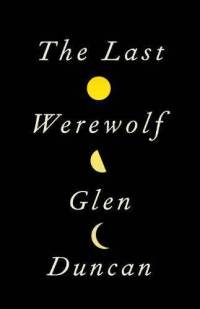 Glen Duncan’s new novel The Last Werewolf is a book about a werewolf. That’s kind of a terrible way to begin a write-up, but let’s state the obvious: you probably know if you want to read a werewolf book or not. Duncan’s hero Jake Marlowe skews more noir (as his name suggests) than twinky Twilight—he’s a hard-drinking , chain-smoking, 200-year-old rascal who’s just learned that the only other living werewolf has just died (hence, he’s like, the last werewolf, man); compounding matters, he’s more than ready to die himself. A sinister cabal called the World Organisation for the Control of Occult Phenomena is after Jake, testing the limits of his suicide wish. Duncan’s prose is harsh, visceral, and occasionally a bit purple, but horror genre fans looking for more, uh, bite (jeez, sorry) from their books may wish to check out The Last Werewolf, new in hardback from
 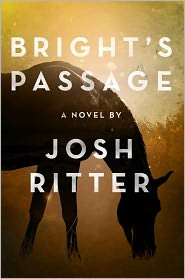 Bright’s Passage is the début novel from songwriter/musician Josh Ritter. This slim novel tells the story Henry Bright, a man who returns to the hills of West Virginia after the trauma of World War I only to have his wife (who is also his first cousin) die in childbirth. Bright buries her body and sets fire to their cabin, which sparks a massive forest fire. Bright then takes his infant son and flees, both from the fire and his unstable father-in-law, “The Colonel,” a vet of America’s adventures in the Philippines who still wears his uniform. The Colonel and his crazy sons pursue Bright, who is guided on the lam by the angel who talks to him—yeah, an angel directs Bright; in fact it was the angel’s idea that Bright marry his cousin, burn down his cabin, and run . . . also, the angel swears that Bright’s son is going to be, like, the new Messiah. Also, Bright’s horse talks. Ritter moves the action between Bright’s flight, his ordeal in WWI, and his youth in simple, concrete, declarative prose. There are echoes here of Chris Adrian’s angel stories (
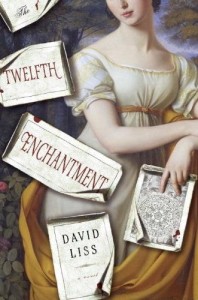 So we hit on the werewolves and angels, but what about those faeries? Honestly, that might have been a bit of a bait and switch, although David Liss’s new novel The Twelfth Enchantment does have faeries—but Romantic poets are slightly more prevalent in the book—only “Werewolves and Angels and Lord Byron and William Blake” sounds a bit clunky, doesn’t it? In any case, mea culpa. There are also Luddites and ghost dogs and alchemy and magic spells and all kinds of Gothic business going on in The Twelfth Enchantment, which gets a lot of mileage simply from its setting (the dawn of the Industrial Revolution), themes (the intersection of magick, alchemy, literature, and Gothic Romance), and characters (Byron, Blake, and Mary Crawford of Austen’s Mansfield Park). Our orphan heroine Lucy Derrick is in the clutches of her unsavory uncle who aims to marry her off until handsome, club-footed Lord Byron shows up at her house. He’s been hexed with a mystical curse and needs Lucy’s help; she soon finds herself snared in a web of dark intrigue, magic, and romance. The Twelfth Enchantment is a whimsical and lovingly crafted adventure story that will appeal to folks who dig literary mysteries (à la Jasper Fforde or pretty much any book that appropriates Jane Austen). The Twelfth Enchantment is new in hardback from