Sassafrass’ Rice Casserole #36, a recipe from Ntozake Shange’s novel Sassafrass, Cypress & Indigo

Sassafrass’ Rice Casserole #36

1 1/2 cups medium grain brown rice

3 ounces pimentos

1 cup baby green peas

1/2 cup fresh walnuts


2/3 pound smoked cheddar cheese

1/2 cup condensed milk

Diced garlic to taste

Cayenne to taste


Cook rice as usual. In an eight-inch baking dish, layer rice, cheese, pimentos, walnuts, and peas. Spread garlic and cayenne as you see fit. Pour milk along side of dish so it cushions rice against the edge. Bake in oven 20-30 minutes, or until all the cheese melts and the top layer has a nice brown tinge.

–From Ntozake’s Shange’s novel Sassafrass, Cypress & Indigo.

Sassafrass’ homemade banner hangs above her stove:

Allegory of Desire from the Fourth Freedom — Marc Dennis

marc-dennis-allegory-of-desire-from-the-fourth-freedom_2014_oil-on-linen_44x52inches

Allegory of Desire from the Fourth Freedom, 2015 by Marc Dennis (b. 1971)

Saint Reading the Scriptures — Bernardino Luini

Saint Reading the Scriptures — Bernardino Luini (c. 1480-1532)

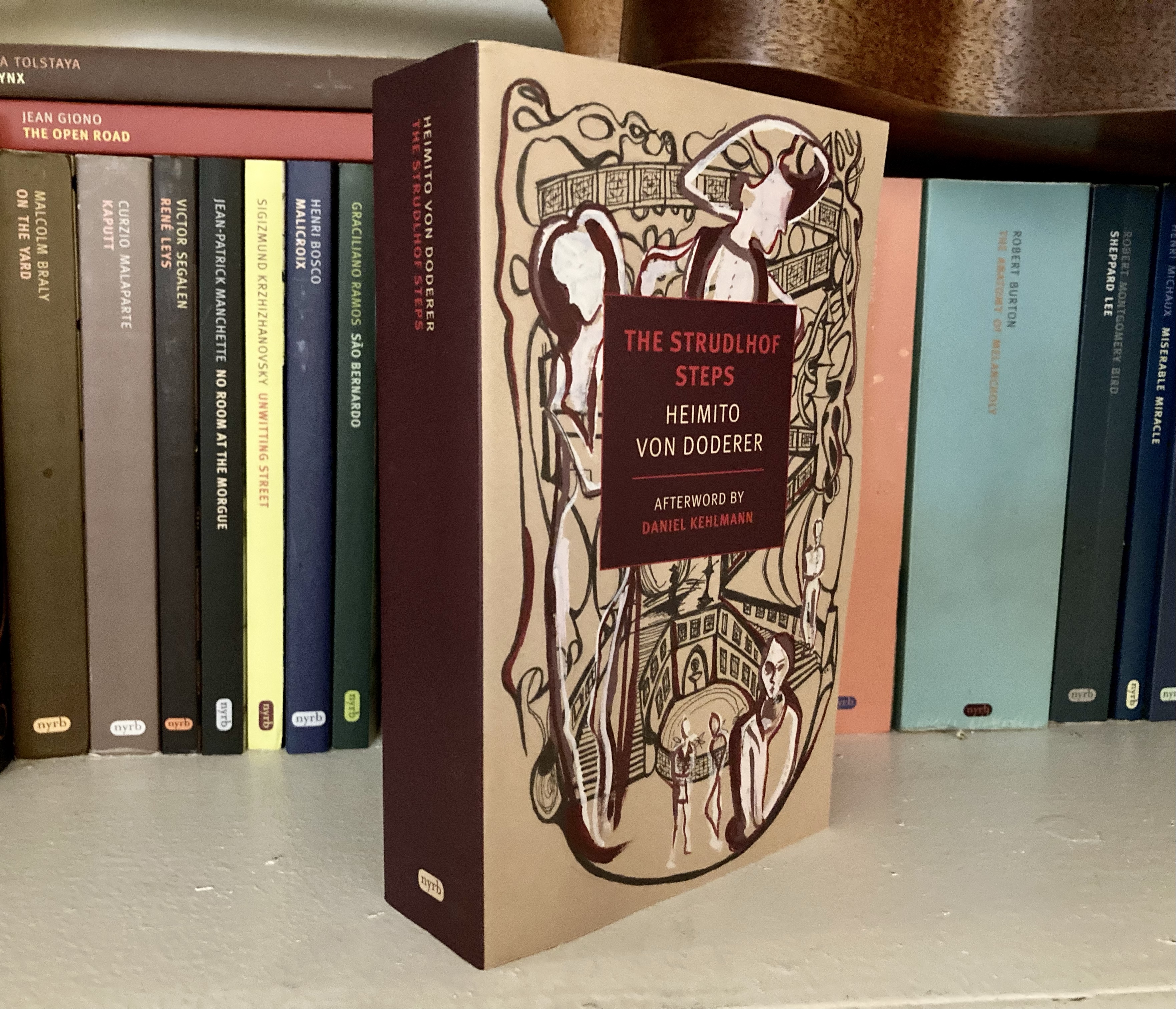
Heimito von Doderer’s The Strudlhof Steps (Book acquired, 15 Nov. 2021)

Heimito von Doderer’s The Strudlhof Steps is forthcoming in translation by Vincent Kling from NYRB. Their blurb:

The Strudlhof Steps is an unsurpassed portrait of Vienna in the early twentieth century, a vast novel crowded with characters ranging from an elegant, alcoholic Prussian aristocrat to an innocent ingenue to “respectable” shopkeepers and tireless sexual adventurers, bohemians, grifters, and honest working-class folk. The greatest character in the book, however, is Vienna, which Heimito von Doderer renders as distinctly as James Joyce does Dublin or Alfred Döblin does Berlin. Interweaving two time periods, 1908 to 1911 and 1923 to 1925, the novel takes the monumental eponymous outdoor double staircase as a governing metaphor for its characters’ intersecting and diverging fates. The Strudlhof Steps is an experimental tour de force with the suspense and surprise of a soap opera. Here Doderer illuminates the darkness of passing years with the dazzling extravagance that is uniquely his.

Friends I — Susanne Kühn 

OLYMPUS DIGITAL CAMERA

Friends I, 2021 by Susanne Kühn (b. 1969)

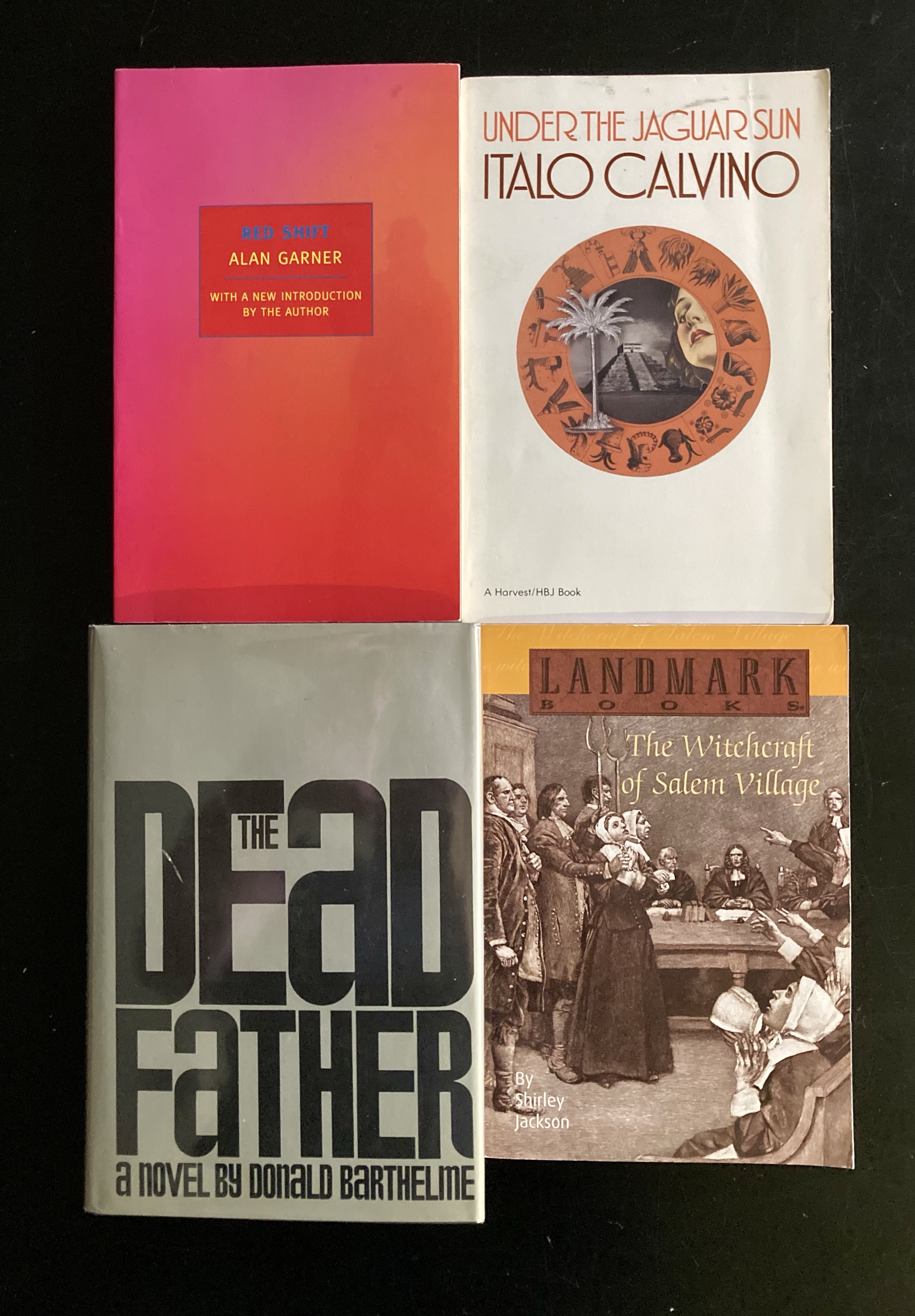
Barthelme/Calvino/Garner/Jackson (Books acquired, 19 Nov. 2021)

Spent a spare hour this afternoon at the local used bookshop.

A few months ago I found a first edition of Donald Barthelme’s collection Forty Stories. This afternoon I picked up a first edition of my favorite Barthelme novel, The Dead Father. The jacket design–by Ruth Ansel–is really cool, which doesn’t really come through in the photograph. The back cover simply reverses the silver-black set up of the front cover; the spine reads bottom to top instead of top to bottom, like most U.S. titles.

I’ve never read Under the Jaguar Sun by Italo Calvino, but I picked it up because I enjoyed rereading three by Calvino earlier this year (and it’s very short and has a cool cover by Malcolm Tarlofsky).

I’d never heard of Alan Garner’s 1973 novel Red Shift until today. I always pull NYRB spines out, and the novel’s description on the back caught my attention. Part of the description:

In second-century Britain, Macey and a gang of fellow deserters from the Roman army hunt and are hunted by deadly local tribes. Fifteen centuries later, during the English Civil War, Thomas Rowley hides from the ruthless troops who have encircled his village. And in contemporary Britain, Tom, a precocious, love-struck, mentally unstable teenager, struggles to cope with the imminent departure for London of his girlfriend, Jan.

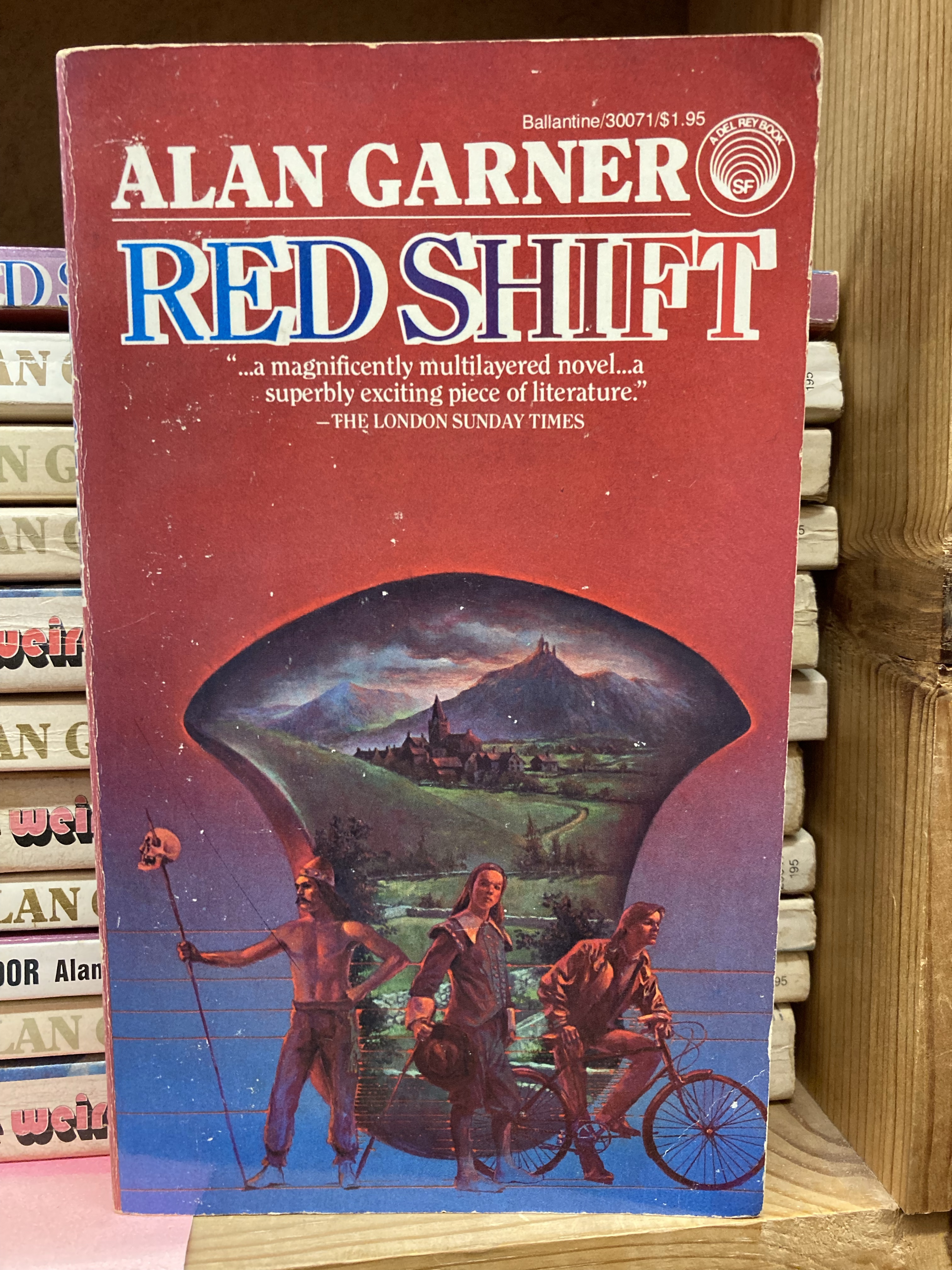
The blurb from Ursula K. Le Guin (“A bitter, complex, brilliant book”) made me pick it up. I love the NYRB cover, which has a My Bloody Valentine feeling to it, at least to me, but I also am a big proponent of genre covers–sci-fi/fantasy covers that might not be as “respectable” as the “literary” crossover covers that adorn works that live a second life. So I trekked over to the sci-fi/fantasy section to see if I could find another edition of Red Shift. This is what I found:

I regret not looking for the artist’s name now. I dig the Ballantine cover, but the NYRB edition was far more readable in the end.

From the sci-fi/fantasy section, I somehow wandered into U.S. history, staring at an endcap titled “Salem witchcraft.” I did not know that Shirley Jackson wrote a book about Salem—or Salem Village, as she points out in her initial note—a place that is not the same place as Salem—I did not know that Jackson wrote a book about the Salem (Village) witchcraft trials. I picked it up and started in and didn’t want to stop.

Apparently it’s a children’s book.

The Six — Axel Krause

The Six, 2007 by Axel Krause (b. 1958)

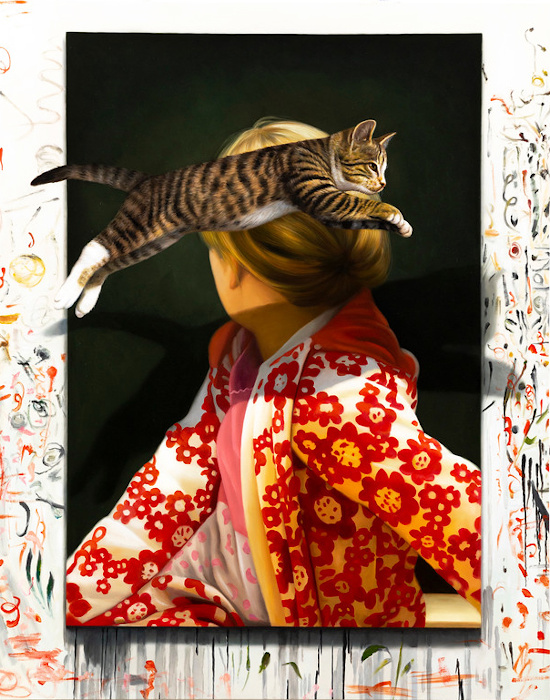
Richter’s Cat — Marc Denis

Richter’s Cat, 2021 by Marc Dennis (b. 1971)

“Oysters” — Anne Sexton

“Oysters”

by

Anne Sexton


Oysters we ate,
sweet blue babies,
twelve eyes looked up at me,
running with lemon and Tabasco.
I was afraid to eat this father-food
and Father laughed and
drank down his martini,
clear as tears.
It was a soft medicine
that came from the sea into my mouth,
moist and plump.
I swallowed.
It went down like a large pudding.
Then I ate one o’clock and two o’clock.
Then I laughed and then we laughed
and let me take note –
there was a death,
the death of childhood
there at the Union Oyster House
for I was fifteen
and eating oysters
and the child was defeated.
The woman won.

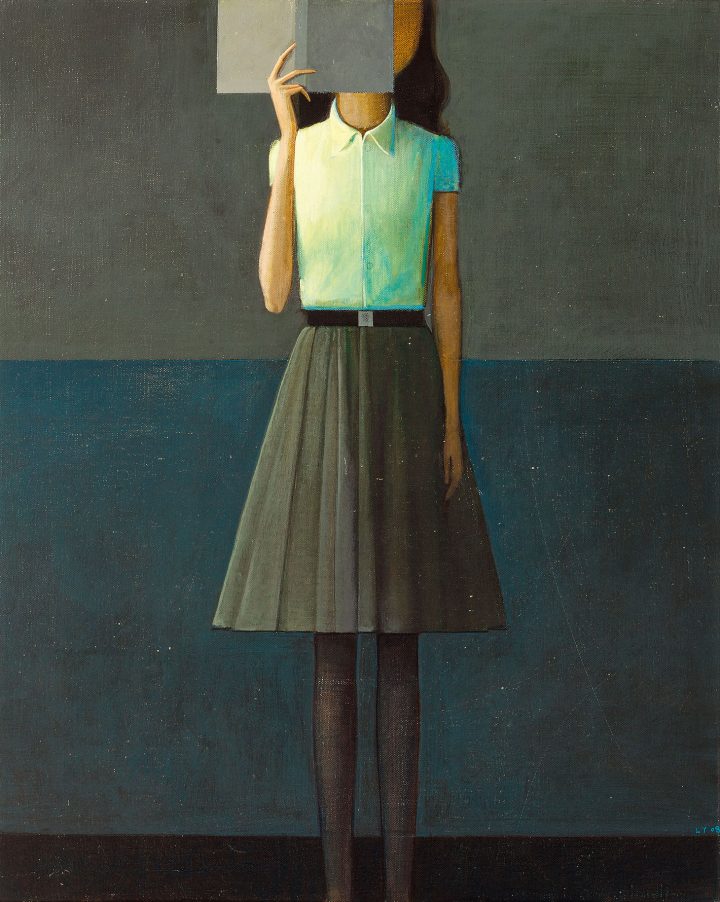
Reading Girl —  Liu Ye

Reading Girl, 2008 by Liu Ye (b. 1964)

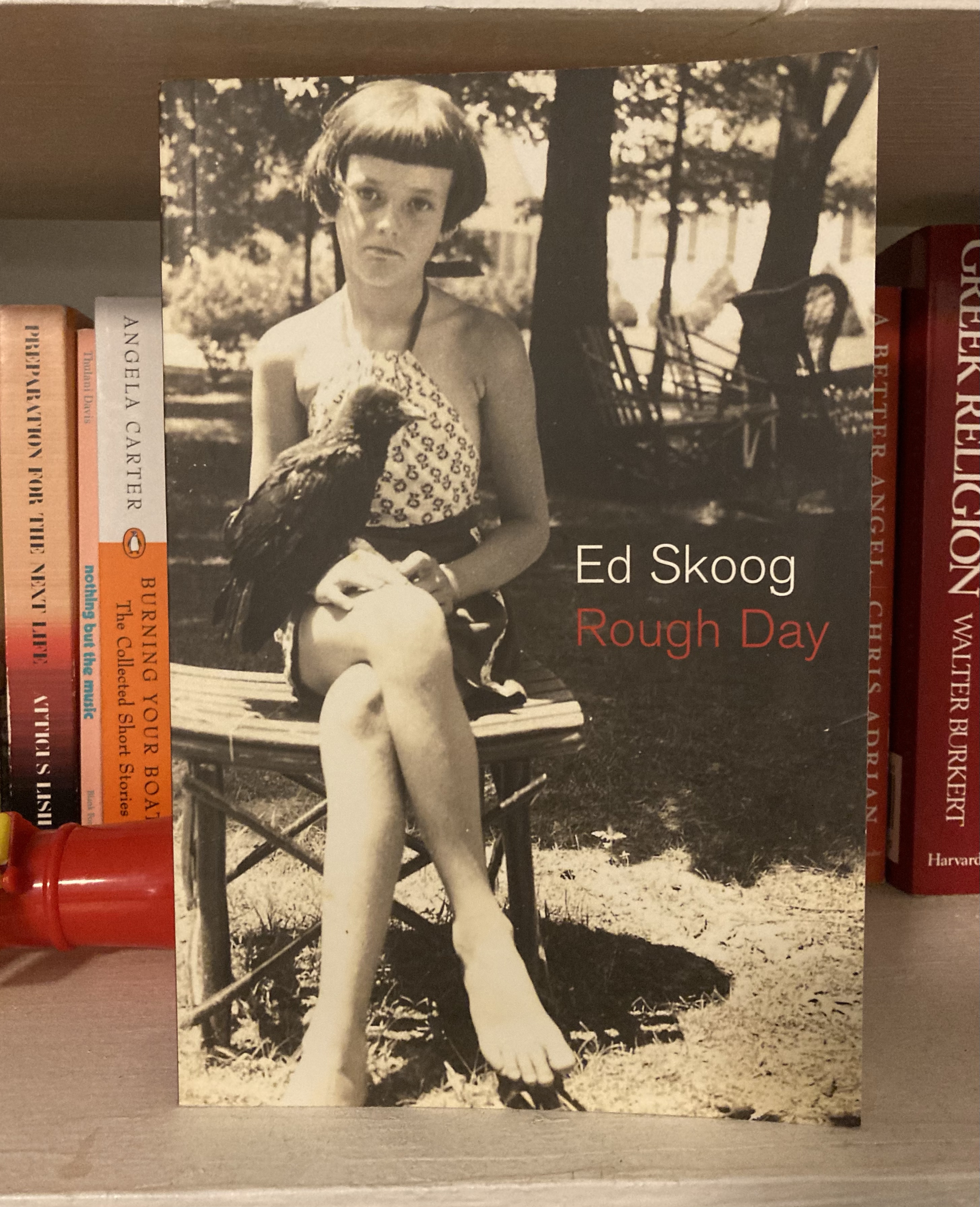
Ed Skoog’s Rough Day (Book acquired, 13 Nov. 2021)

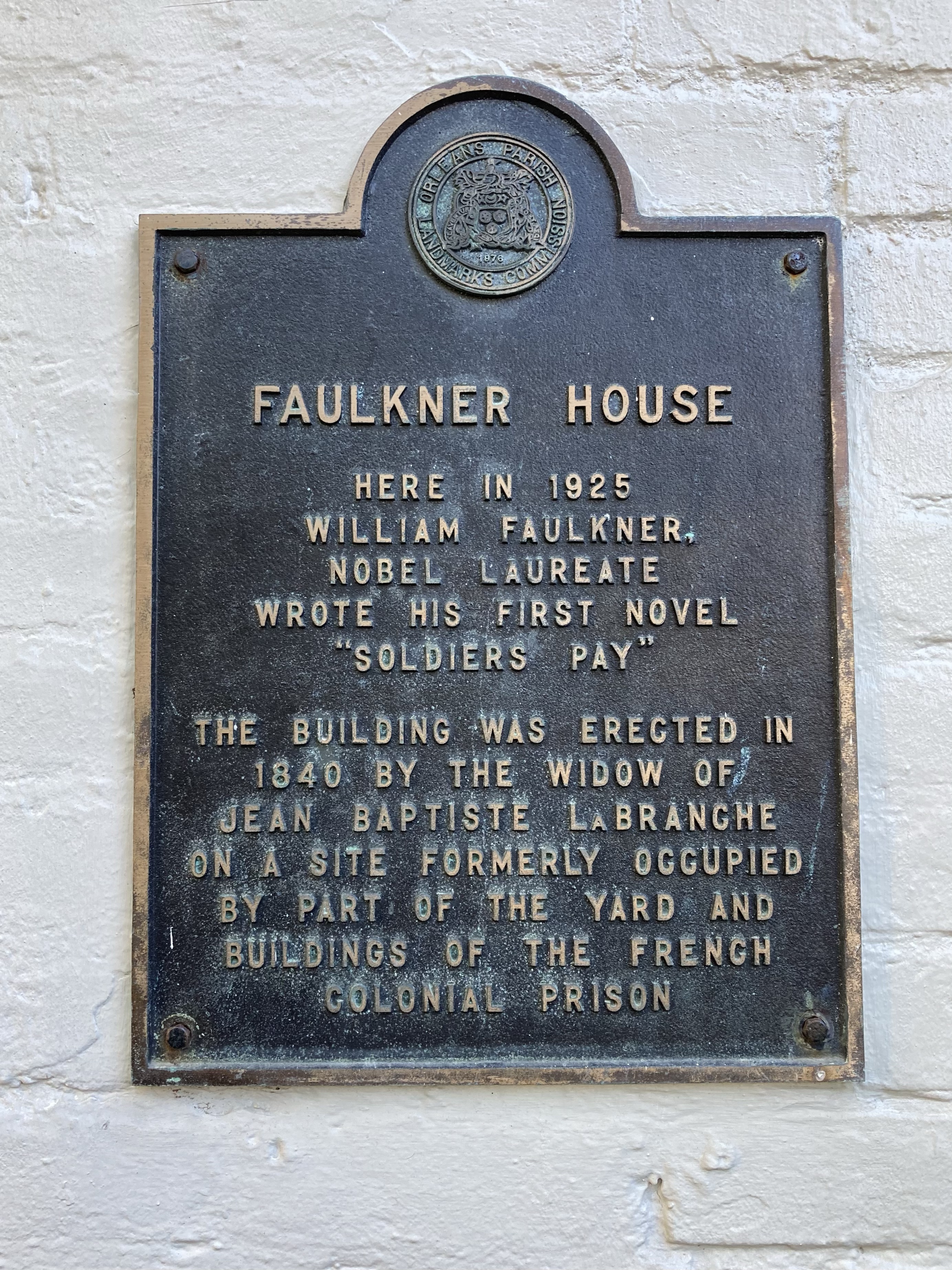
So we had a great long weekend with some friends in New Orleans. We stayed in Marigny—great food, great music, maybe too many drinks—but made it into the quarter for a few hours midday Saturday. I led our little group to Jackson Square where we respectfully finished our Bloody Marys before entering St. Louis Cathedral. My real aim though was Faulkner House Books on Pirate Alley right by the cathedral. Faulkner House imposed a strict four-guests-at-a-time policy, so my friends found a bar while I browsed. The stock in the small store is impeccable. Plenty of NYRB titles, a cadre of hardback Bolaños (including almost all of the poetry available in English), more Anne Carson than I’ve ever seen in a store. (I didn’t make it to Faulkner House when I visited NOLA in late 2016, but in 2012 I got some good stuff.) This time, I picked up a signed copy of Ed Skoog’s Rough Day, which seemed fitting—I’d scheduled a post that day of his poem “Run the Red Lights.”

After I finished up I headed to a bar on the outskirts of the Quarter to meet my friends, but first popped in to Arcadian Books & Prints on Orleans St.—perhaps the most chaotic bookstore I’ve ever been to. 

As always, I loved NOLA and look forward to returning sooner rather than later.

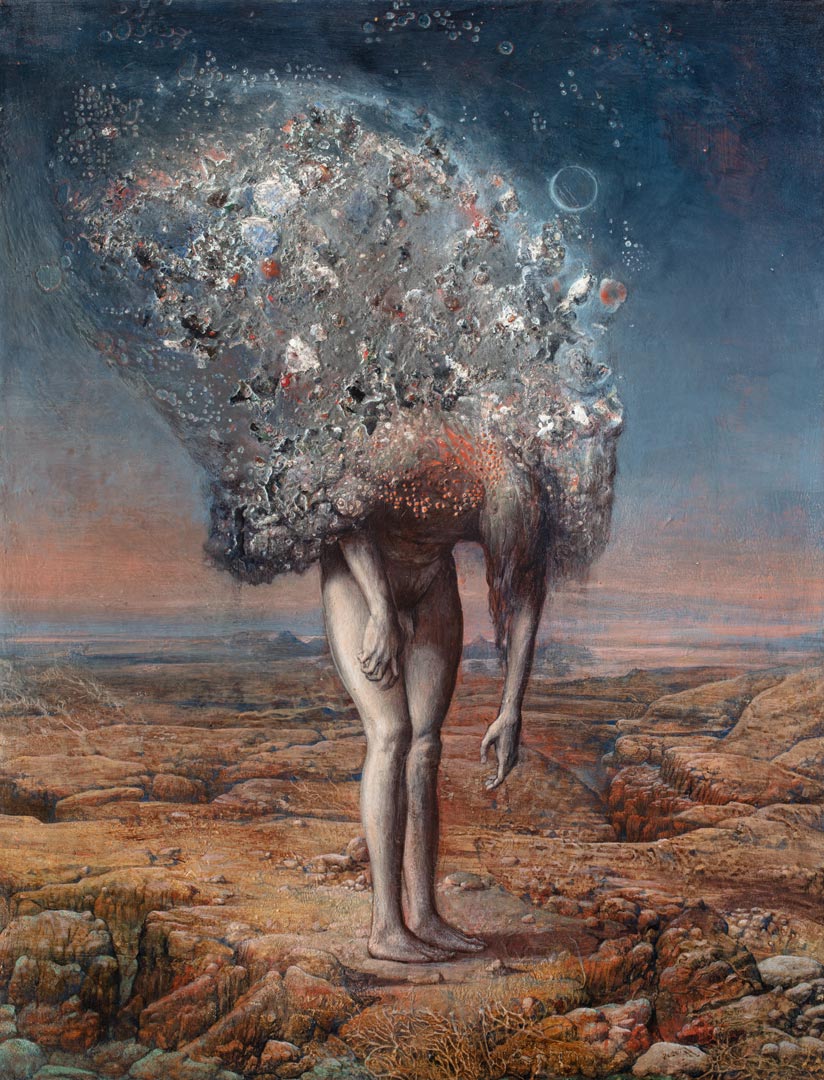
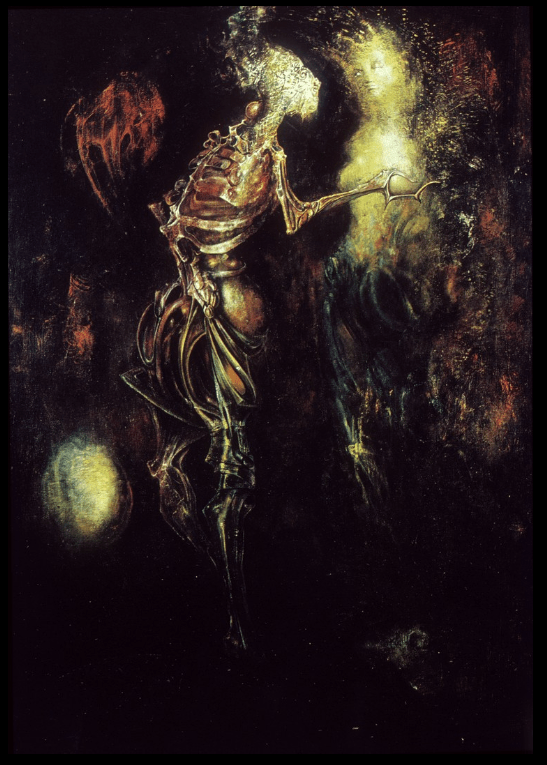
The Inaudible — Agostino Arrivabene

L’Inaudibile, 2020 by Agostino Arrivabene (b. 1967)

Economimesis — Nigel Cooke

Economimesis, 2008 by Nigel Cooke (b. 1973)

“Run the Red Lights” — Ed Skoog

“Run the Red Lights”

by

Ed Skoog

When my mother sent me for cigarettes
I’d buy a candy bar too, sign her name
to the book, and walk out with the green-
and-white carton, Virginia Slims 100s,
under my arm, the chocolate already gone.
Sugar, my god! like newspaper cartoon 
panels spread out on the kitchen table
where I’d pretend to smoke, imitating her.
After the corner store closed we made our groceries
at Dillon’s, joined the impersonal. A villain
snatched her purse there when I was away at college
and on the phone she told me, excitedly,
how Topeka police chased the culprit, and she named
each street, each intersection and landmark,
the whole adventure, just for her. 
I’m grateful now to the sedentary house
though I’ve grown as large on candy as John Candy. 
My older brothers left home and our meals stayed
the same, a skillet high with beef Stroganoff,
pot roast in broth, chili con carne,
cheese sandwiches with mayo, flocks of fried chicken. 
Then the whole house went on a diet of cold
tofu cubes, a broken disk of lemon in a water glass,
cottage cheese measured onto lettuce,
and then back to London broil the next night,
no questions asked—lovely. We were emotions
without form, and I carry it with me, 
not just in frame, arm and jowl and belly,
but here in the intergalactic space of written
thought, the infinite stage where we come
talk to each other. Sugar makes me curious.
After Katrina, I took the diet where you eat meat,
and lost almost a hundred pounds from a surfeit
of bacon, sautéed pork medallions, beef & lamb.
The weight fell away like a knight’s armor
after a joust. I bought shirts at a regular store.
I played softball and ran bases, bounded them,
as if on a new, more forgiving planet. And
I went crazy, evened out, broke down again,
inconsolable at the finale of Six Feet Under,
tears for my mother, postponed, and more
torrented for delay. Opening the book of grief
requires you read all the way to the end,
every time. Driving to work, I stopped
bewildered at a gas station, paid cash for two
Snickers providing more salvation
than I have ever known from religion’s acres.
I write about the West and the South and home,
their tenderness and trouble and the weird spirits
breaking the best days. Still I find myself down
by the river at twilight. On the bridge deliberate-
seeming people walk by like victorious aliens,
past the consequential palaces lit as before,
the faces turning in their rotisseries. 
In profile, my mother looked like Alex Chilton,
lead singer of the Box Tops, and then Big Star. 
I used to see Chilton around New Orleans, 
in line at the grocery store, walking down Esplanade.
My mother also had a solo career, playing
solitaire and watching her own TV in the kitchen
and dying before everyone else. Dying, Chilton
urged his wife to run the red lights, his last words,
and when I had to leave my mother in the hospital
that was hard, and then again at the funeral
I set a marble under her folded hands, 
don’t know why. It’s been ten years.
Ten fingers, the closed eye of each knuckle,
each nail its years’ fullest day moon.
Which shed the other? My scar from opening
a window, such force to move the wood frame,
so little to shatter glass it held. To be held so
again. Ten years, so forty seasons, eight endings
and beginnings, well, always a gust in them
which is the sigh of how she would note leaf and bird.
One hand to hold the coffee cup, one the cigarette. 
The red ember she became at midnight. Red light. Eye. 

Unconditional Love — Leonor Fini

Unconditional Love, 1958 by Leonor Fini (1908-1996)

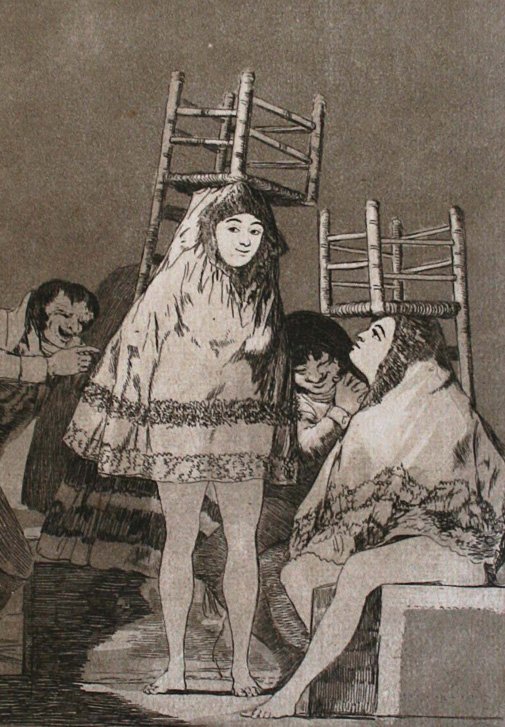
They Already Have a Seat — Francisco Goya


Ya tienen Asiento, (plate 26 from Los Caprichos), 1799 by Francisco Goya (1746-1828)

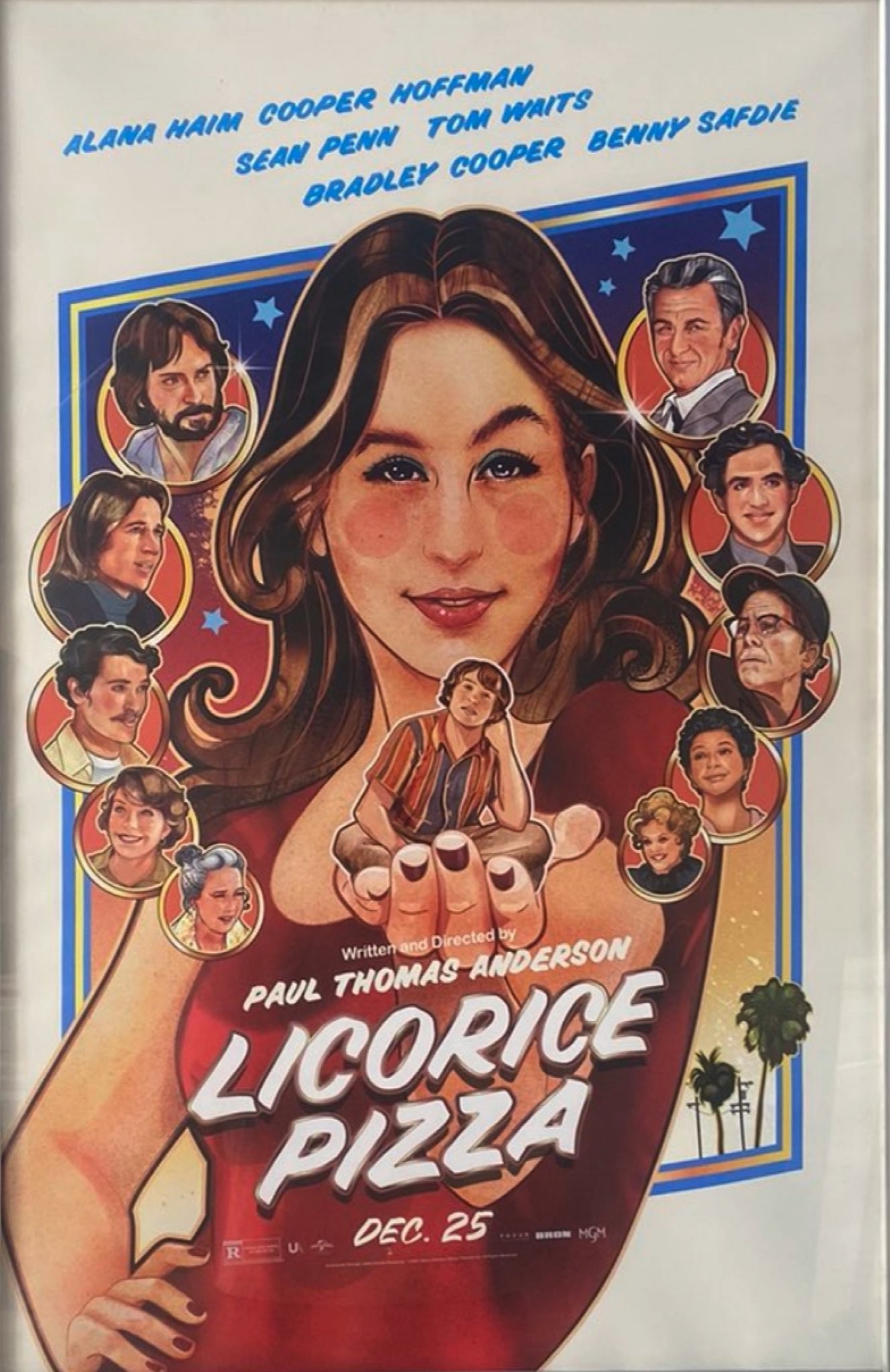
Paul Thomas Anderson talks Licorice Pizza, other stuff

Paul Thomas Anderson is interviewed in Variety about his new film, Licorice Pizza.

From the interview, on what inspired Licorice Pizza:

A very long time ago I was walking around my neighborhood, and I passed Portola Middle School. It was picture day, and I saw this very energetic teenager flirting with the girl who was taking pictures. It was an instantly good premise. What happens if you have a kid invite an older woman to dinner, and what if that girl against her better judgment says yes? That seemed ripe for humor. That didn’t go anywhere, but then I had a friend who grew up in the San Fernando Valley. He was a child actor who got involved in the waterbed business. And he told me all these stories, and each one was more wonderful than the last. Like there was this time he’d appeared in the movie “Yours, Mine and Ours” with Lucille Ball, and he was on his way to New York for a publicity tour and needed a chaperone. He ended up hiring a burlesque dancer who lived in his neighborhood to take him. And Lucille Ball was on her second marriage to Gary Morton, and she used to scream “Gary!” all the time. That was my friend’s name, so he’d think, ‘Holy shit, she’s yelling at me.” But she was screaming at her husband.