Stanley Elkin/Flann O’Brien (Book acquired and book not acquired, 23 May 2018)

img_9949

I went to my favorite local bookstore today to pick up my daughter’s sixth-grade required reading list and to offload some books I’ll never read again. I have far too many tasteful trade paperbacks that I don’t need. I try to bring three or four in on each trip and only come out with one for me (books for the kids don’t count). I picked up a copy of Stanley Elkin’s Criers and Kibitzers, Kibitzers and Criers (1966) entirely accidentally. The book was misshelved, stacked somehow on a pile of “Miscellaneous MU-” titles (I was looking for any book by Gerald Murnane, knowing that there were none there). I couldn’t pass it up—the cover, I guess, the cheap Pop appeal of its massmarketishness, and also the fact that I’m imbibing short stories like wine lately. (Murnane, Coover, Volodine).

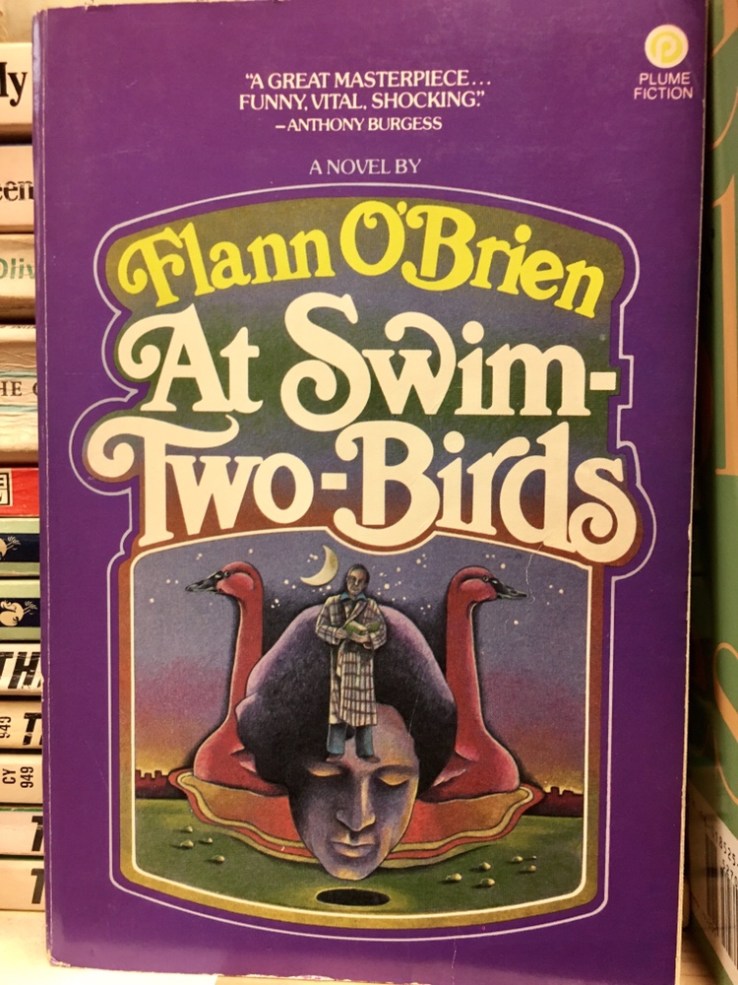
I also came across this lovely edition of Flann O’Brien’s At Swim-Two-Birds, but did not buy it, because I already own it. I love the book. The copy I have has an ugly-assed cover, unlike this beauty, which I hope some kid picks up and loses her mind over—-

img_9948

Tata and Katia in the Mirror — Zinaida Serebriakova

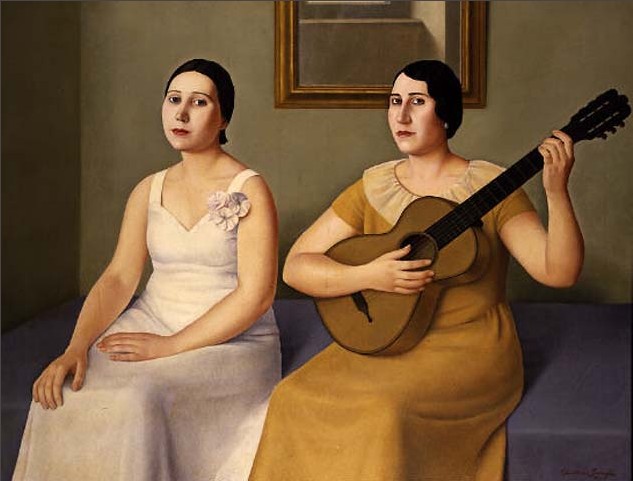
Before the Singing — Antonio Donghi

before-the-singing-1930

Before the Singing, 1930 by Antonio Donghi (1897-1963)

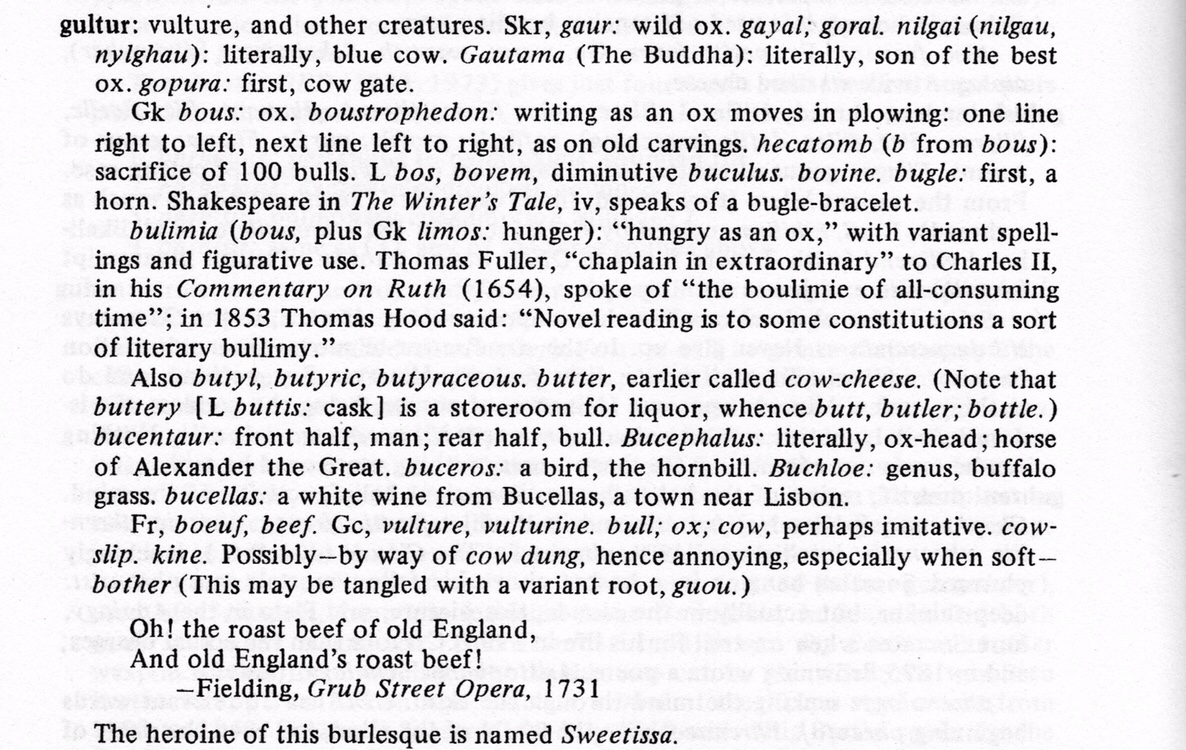
gultur: vulture, and other creatures

From Joseph T. Shipley’s The Origin of English Words: A Discursive Dictionary of Indo-European Roots.

Porco Rosso (Summer Film Log)

porco-rosso

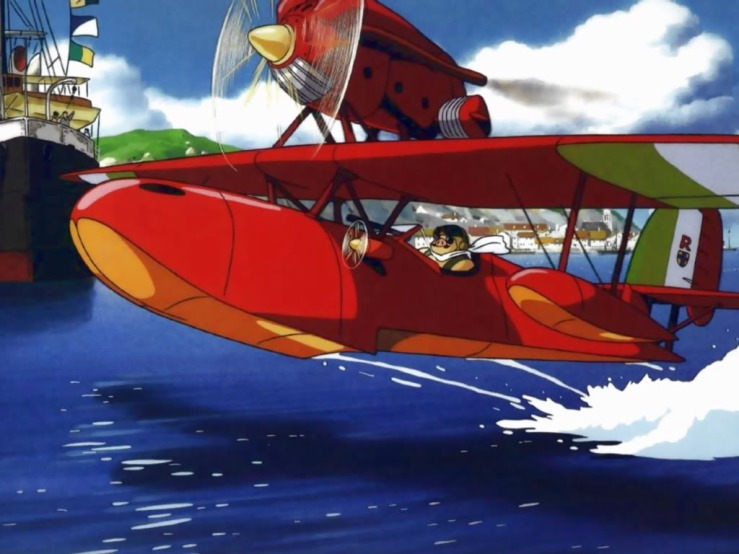
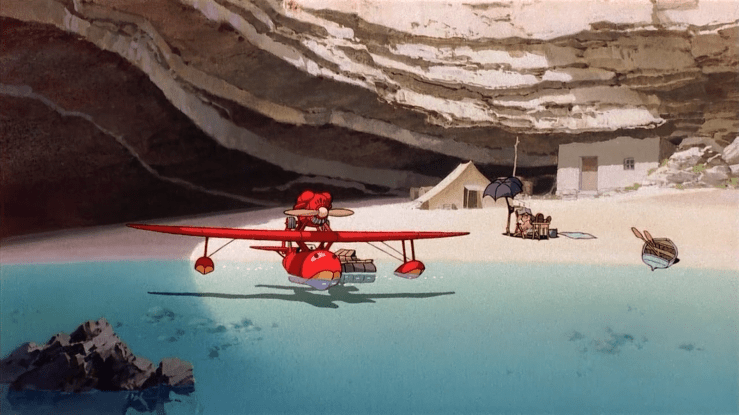
Hayao Miyazaki’s Porco Rosso (1992) is one of my favorite films, and I was able to see it last night for the first time on the big screen thanks to Studio Ghibli Fest 2018. Although I’ve seen Porco Rosso maybe a dozen times, seeing its rich, deep, bold animation on an enormous screen felt like seeing it for the first time (I also hadn’t watched the subtitled version in a while).

Porco Rosso takes place in and around various islands in the Adriatic Sea during the thin slice of years between the First and Second World Wars. Italy, like much of the world, is in the midst of a severe economic depression, and is slowly sliding into fascism. World War II is clearly on the horizon. Miyazaki pushes these problems to the margins of his film, conjuring instead a romanticized Mediterranean. However, this romantic space is always under the pressure of a coming disaster—fascism and a new war.

porcorosso5

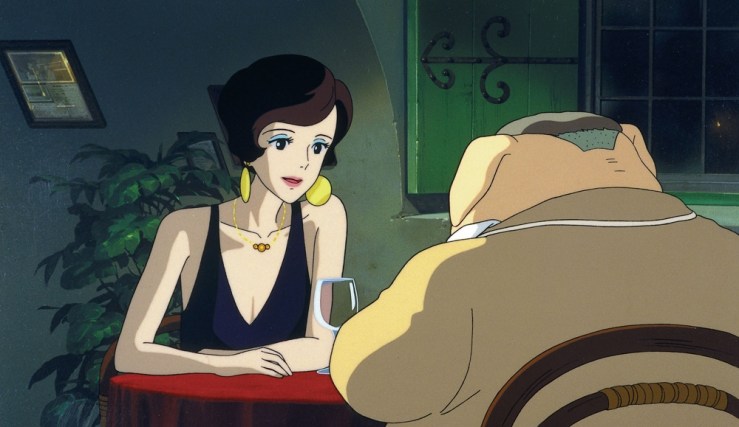
The hero of Porco Rosso is Marco Pagot (called Marco Rossolini in the American dub). Marco is an ex-military pilot, an aviation ace who fought with honor for the Italian air force in the Great War. He now spends his days drinking red wine and smoking cigarettes on a beautiful deserted island, occasionally taking jobs as a bounty hunter, retrieving hostages and other stolen goods from the nefarious and unwashed air pirates who plunder the ships of the Adriatic. Marco makes occasional concessions to civilization by taking a meal at the Hotel Adriano, a charming resort run by his oldest friend Gina. Gina is love with Marco and we come to realize Marco is in love with Gina, but he cannot come out and say this. Marco is a pig.

20130812-161255

Marco is, literally, a pig. He is the victim of a curse that the film never explicitly names or addresses, although a scene late in the film in which Marco essentially survives an attack that should have killed him—an event that gives him a dramatic glimpse of a heaven of pilots—may be a clue to the origins of Marco’s porcine curse. In any case, Marco’s pigman existence is the film’s only concession to the kind of mythical and magical fantasy that otherwise permeates Miyazaki’s canon (with the notable exception of The Wind Rises (2013), which in some ways is a sequel to Porco Rosso).

This isn’t to say that Porco Rosso isn’t a fantasy though. Miyazaki’s world of air pirates and bounty hunters, attractive hoteliers and hotshot engineers, and seaplanes dueling in a radiant sky, brims with an effervescent energy that counterbalances the grim specter of the Great War that preceded the film’s narrative action and the Second World War—and a Fascist Italy—that the narrative’s “real” time must eventually intersect. Ever the lone pig, Marco seeks to fly away from the social and historical forces that would constrain him.

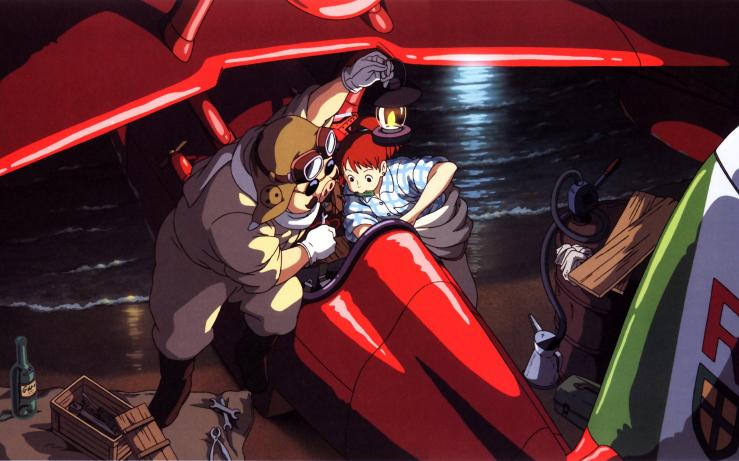
Unfortunately for Marco, luxurious isolation remains an impossibility. The air pirates hire a hotshot American to take out the damned Crimson Pig once and for all. Donald Curtis (hailing from Alabama in the Japanese version and Texas in the American) exemplifies American cockiness. His enormous jaw precedes the rest of his swaggering body, he falls in love at first sight with any beautiful woman he sees, and he’s brash and impetuous. He wants to transition to Hollywood and eventually become the President of the United States! Curtis shoots up Marco’s plane early in the film, but our porcine hero escapes to Milan, where he rebuilds his plane with the help of a whiskered mechanic named Piccolo and his charming granddaughter Fio. Fio redesigns the plane and eventually becomes Marco’s sidekick, traveling with him back to the Adriatic and helping him face Curtis and the air pirates.

2_porco_rosso

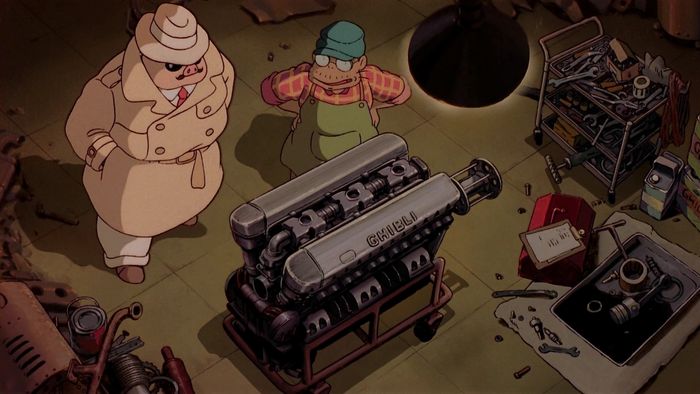
Fio, whose character design recalls Nausicaa of Nausicaä of the Valley of the Wind (1984), is another of Miyazaki’s prominent female protagonists. In some ways she is the secret hero of the film; she takes over the narration at the end, implicitly assuming Porco Rosso’s mantle. Fio has earned Marco’s trust after he is initially dubious of her ability because of her age and his sexism. Fio leads an all-female team of builders and engineers to recreate a superior version of Marco’s plane. This workshop sequence is one of the film’s finest. Miyazaki often foregrounds labor in his films, but Porco Rosso explicitly shows how a complex work—whether it’s a plane, or, y’know, a film—is never the singular work of a gifted genius, but rather the concentrated effort of a team. Miyazaki underscores the connection between the creative process of plane-building and film-making, stamping his studio’s name on Marco’s new engine. (Studio Ghibli was named after an Italian war plane, the Caproni Ca.309, which was nicknamed Ghibli—“Desert Wind”).

85268fc75512cda8cc331109c81ec95c

While in Milan, Marco realizes that the fascist secret police are after him. The Fascists in Porco Rosso (who want to conscript Marco—or take his plane) are far more ominous than Curtis. Curtis serves as an actual antagonist for Marco to face, and the fight between the two at the end of Porco Rosso, although violent, plays with a light comic touch. Miyazaki references the “gentlemen pilots” of World War I here. The Fascists, in contrast, are a spectral force lurking behind the narrative, threatening Marco’s individuality and autonomy. The film affirms itself as a comedy that resists encroaching fascism in a conclusion that sees Marco, Fio, Gina Curtis, the air pirates, and every other member of this strange Adriatic paradise working together to escape their approaching air force.

The film’s denouement is a retreat into the romantic Adriatic community, a kind of gauzy, rosy vision of an isolated paradise untouched by war or fascism. The fantasy reminds one of an island from some lost book of The Odyssey, a tranquil paradise unbothered by Trojans or Greeks. Marco—Porco—too feels like a figure from the margins of The Odyssey, a hero transfigured into a pig. The end of Porco Rosso refuses to give us a direct answer as to what happens to Porco. Does he regain his human form? Or, perhaps more importantly, is there a happy ending for Porco and Gina? The film offers a number of clues, some explicit and some implicit, but a first viewing may feel ambiguous for many viewers. However, subsequent viewings reveal a clearer picture as to what happens to Gina and Marco. Why the ambiguity then? Porco Rosso is (apart from The Wind Rises) the Miyazaki film with the strongest historicity. The historical reality of a looming World War II threatens to devour the romance of Gina and Porco—so Miyazaki and the inhabitants of his secret Adriatic world conspire to hide it. Lovely stuff.


How I watched itLast night with subtitles at my local indie cinema with full attention—and then again this afternoon, dubbed, on a large TV (via a USB drive with an .mkv file), with minor attention (I wrote this as I watched) with my daughter, who is home from school (poor dear has strep throat), and who was upset because we (that is, my family of four) were unable to watch the film as a family on Sunday afternoon, as it had sold out, and thus requested we watch it together, just now, which we did. Porco Rosso plays in select theaters one more time, by the way–on May 23rd, 2018.

Shipwreck — Carlo Maria Mariani

naufragio-2003large

Naufragio (Shipwreck), 2003 by Carlo Maria Mariani (b. 1931)

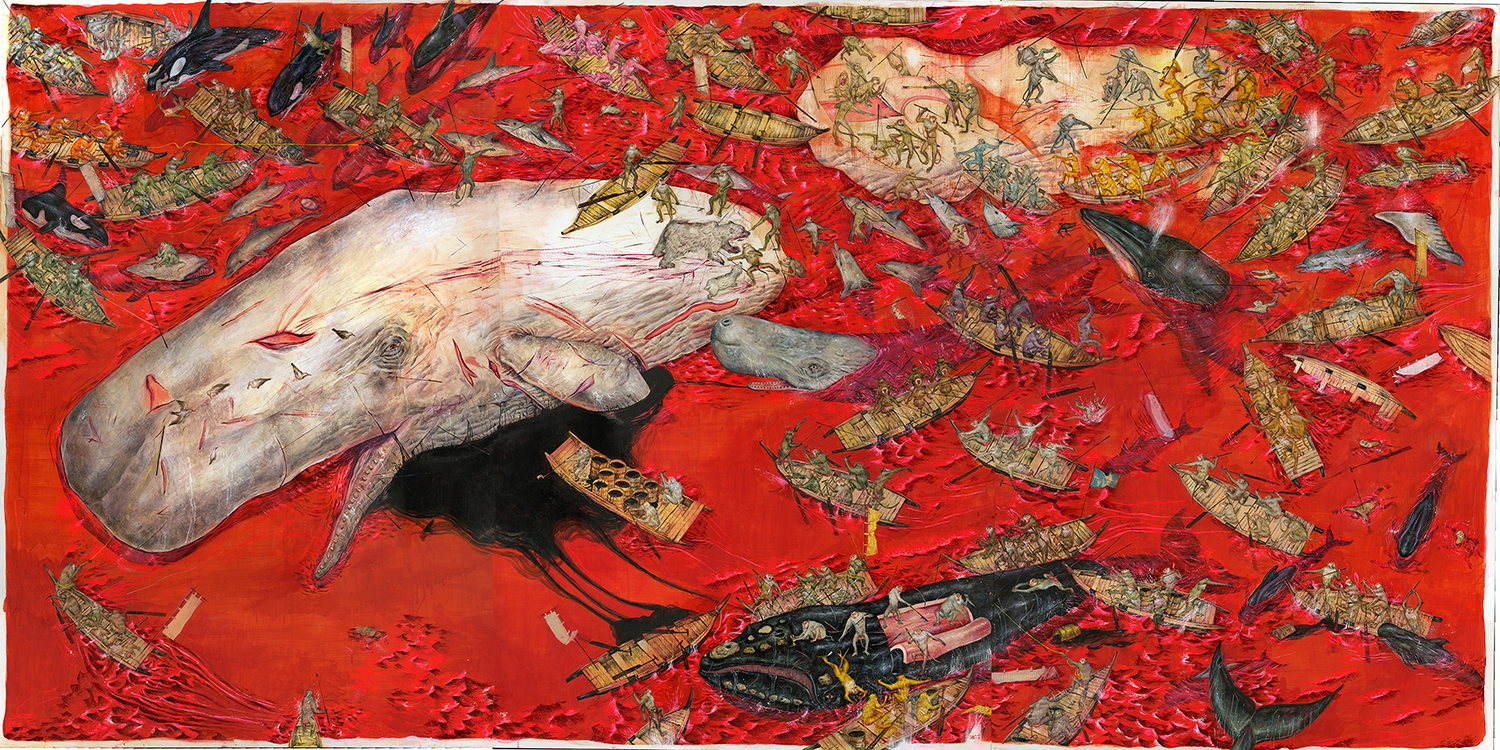
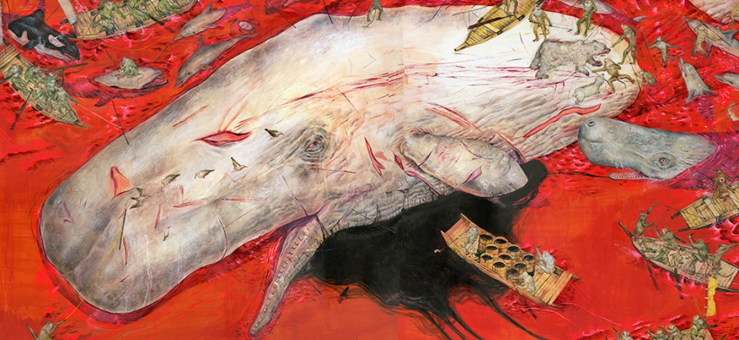
Big Whale — Mu Pan

dick_web

Big Whale, 2018 by Mu Pan (b. 1976)

Screenshot 2018-05-21 at 3.29.56 PM

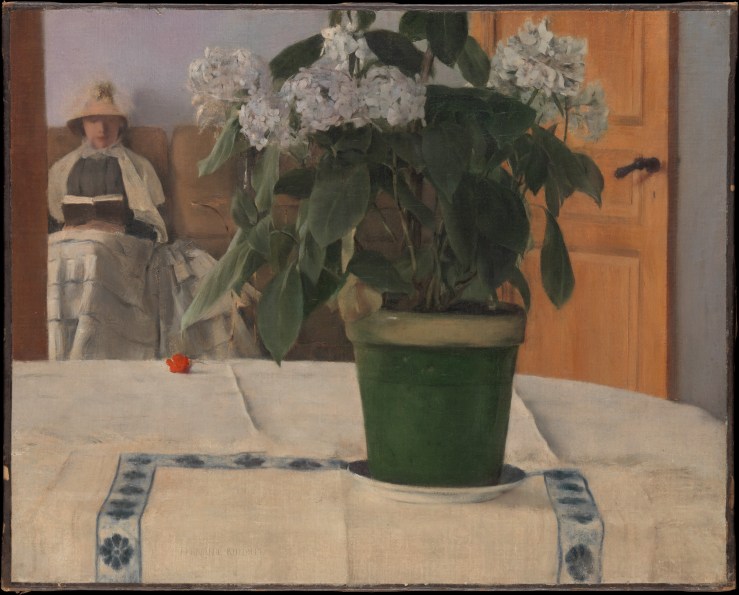
Hortensia — Fernand Khnopff

DP354135

Hortensia, 1884 by Fernand Khnopff (1858–1921)

Screenshot 2018-05-21 at 9.15.11 AM

Mary and the Witch’s Flower (Summer Film Log)

mary-and-the-witchs-flower-960x460

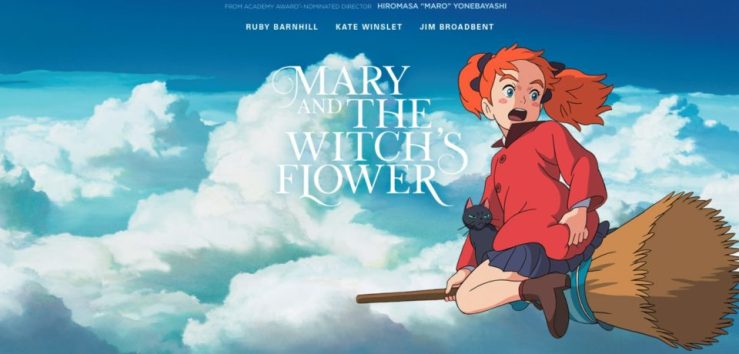
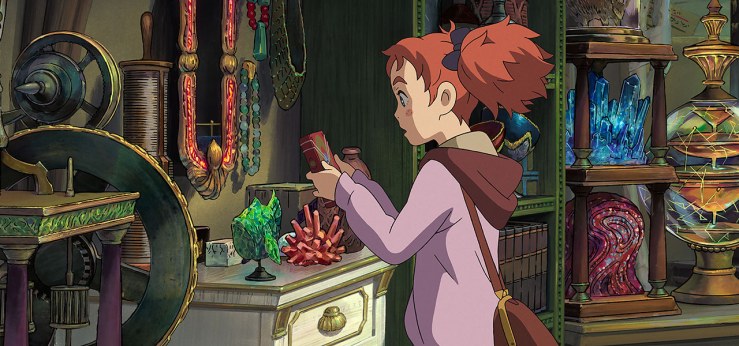
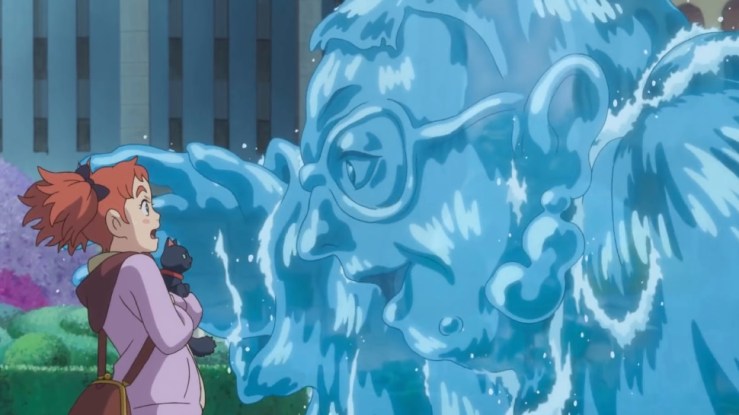
Mary and the Witch’s Flower (2017) tells the story of Mary Smith, a little girl whiling away her time in the English countryside home of her great aunt before school starts. Poor Mary is awfully bored—until she finds a rare flower called the “fly-by-night.” The fly-by-nights, which only bloom once every seven years, bestow magical properties on their user. Mary’s boredom is quickly cured when a flying broomstick whisks her away (black cat in tow) to a magical world above the clouds. She finds herself at the Endor College of Witches, where she’s taken on as a star pupil by the ominous headmistress Miss Mumblechook and her strange partner in scientific magic, Dr. Dee. They take Mary on a tour of Endor College, a visual highlight of a gorgeous film. The tour culminates in Miss Mumblechook’s office, which doubles as a museum of magical artifacts. Here, Mary—somewhat accidentally, but hey—becomes a biblioklept, stealing the headmistress’s book of master spells. Mary then reveals that her power comes from the fly-by-night flower. The film’s plot kicks into a higher gear here, as it becomes clear that Mumblechook and Dee will stop at nothing to get their clutches on the magical flowers.

marywitchesflower_gkids_launch

Mary and the Witch’s Flower is the first film from Studio Ponoc, a production company founded by Yoshiaki Nishimura, who previously worked as a producer for Studio Ghibli. Mary and the Witch’s Flower’s director Hiromasa Yonebayashi is another Studio Ghibli alum; he worked as a key animator on films like Spirited Away (2001), Howl’s Moving Castle (2004), and Ponyo (2008), before directing his own films for the studio—Arrietty (2010) and When Marnie Was There (2014).

Arrietty, while charming, felt like Miyazaki-lite—a small-scale exercise pulled off with aesthetic precision that ultimately lacked the grand emotion that underwrites all the master’s greatest films. In contrast, Mary and the Witch’s Flower isn’t so much Miyazaki-lite as Miyazaki-mega, a love letter composed under heavy anxiety of influence. The film teems with references to Miyazaki’s oeuvre, and Yonebayashi’s visual style is an homage on par with (if not surpassing) the master.

mary-witches-flower

The most immediate comparison viewers might make here is to Miyazaki’s Kiki’s Delivery Service (1989), which Yonebayashi’s film clearly echoes visually with its flying broomsticks and its prominent black cat. However, Mary and the Witch’s Flower has more in common (both in its plot, themes, tone, and visuals) with later Miyazaki films like PonyoHowl’s Moving Castle, and Spirited Away. I’m tempted to produce a laundry list here of specific comparisons, but there are simply too many—Yonebayashi delights in larding his film with characters and images that visually resemble Ghibli characters and images, painted in the bright shimmering colors of Miyazaki’s late period. There isn’t a shot in the film that doesn’t crib, even obliquely, from an earlier Ghibli film. (Hell, even composer Takatsugu Muramatsu’s soundtrack sounds like an homage to Joe Hisaishi’s work for Studio Ghibli).

These Easter eggs are most fun to find when Yonebayashi goes beyond the core films that his pastiche derives from, like when we get a shot of a city in the clouds that echoes Castle in the Sky (1986), or when a gray cat is transmuted into a creature resembling something like the gentle creatures from Totoro (1988), or when Yonebayashi’s frame lingers just a second too-long on a pigman chef who bears more than a passing resemblance to the titular hero of Porco Rosso (1992).

Yonebayashi’s melange of Miyazaki is hardly a patchwork of references though. Mary and the Witch’s Flower is rather a loving synthesis of the master’s greatest tendencies. Calling Yonebayashi a copycat simply will not do—he was a key artisan in Miyazaki’s workshop after all, and we see here the same level of technical craftsmanship that made the Ghibli films so special.

What’s missing from the film though is something harder to define. An auteur relies on a company, a workshop, a cohort of skilled artisans to help the auteur realize his or her vision. All auteurs borrow or outright steal from the artists that come before them, but the great artists conjure those ingredients into something new. They overcome their anxiety of influence and synthesize the masterworks that preceded them with their own visions, inspiriting the material with their own sense of soul. Yonebayashi’s film, as I wrote above, is a loving synthesis of Miyazaki’s most magical moments, but what’s missing is Yonebayashi’s own magic, his own vision.

And yet there’s so much promise in the young artist. Yonebayashi is only 44; Miyazaki was around the same age when he made Castle in the Sky, the first Ghibli film, and frankly one of his weakest. Castle in the Sky is best enjoyed now as a work in retrospect, after having traced the auteur’s major themes in grander works like Spirited Away or The Wind Rises (2013). With Mary and the Witch’s Flower, Yonebayashi composed a love letter to the workshop where he honed his craft, and the film will probably be most remembered (and enjoyed) as an homage to all things Ghibli. Let’s hope that Yonebayashi’s next effort sees the young director break free from the anxiety of influence to offer us his own original vision.


How I watched it: On a big TV, rented from iTunes, with full attention, with my family. My daughter gave it a B+; my son gave it a B-.

Gordon Lish on Tom Wolfe

Gordon Lish wrote a remembrance for The Paris Review of Tom Wolfe, who died last Sunday. A baseball mitt story, from the remembrance:

Back in the day when there was talk between Tom’s Sheila and my Barbara of the two squads going halvsies on a great big house in Hamptonia, we all were sitting around in said real estate after a Sunday brunchy fress—Tom’s sidekicks Eddie Hayes and Richard Merkin among the newspaperbound bagelbound boasters—and I just so happened to have launched myself into a rapsode bearing on my baseball-playing startlements, this before I was expelled from the school where I’d done the startling, and Tom said he had a couple of mitts, why didn’t we go on out onto the lawn and throw it around awhile, and I said, thanks but no thanks, I having been a catcher when I was doing my startling and would therefore require the glove worn by a catcher if I were to catch a ball thrown by a pitcher known to me to have been a farm-team pitcher for the Dodgers, unless it was the Yanks, whereupon Tom allowed as to how he had happened to have fetched out from the city to Hamptonia the very variety of mitt, and so he had and so we did, humping it out onto the lawn and just as humpily regrouping among the housebound, Tom mum as you’d want that no toss he’d lobbed at me could I, the be-mitted braggart, begin to handle.

Envy (Detail) — Paul Cadmus

img_9742

Avarice (Detail), 1947 by Paul Cadmus (1904–1999)

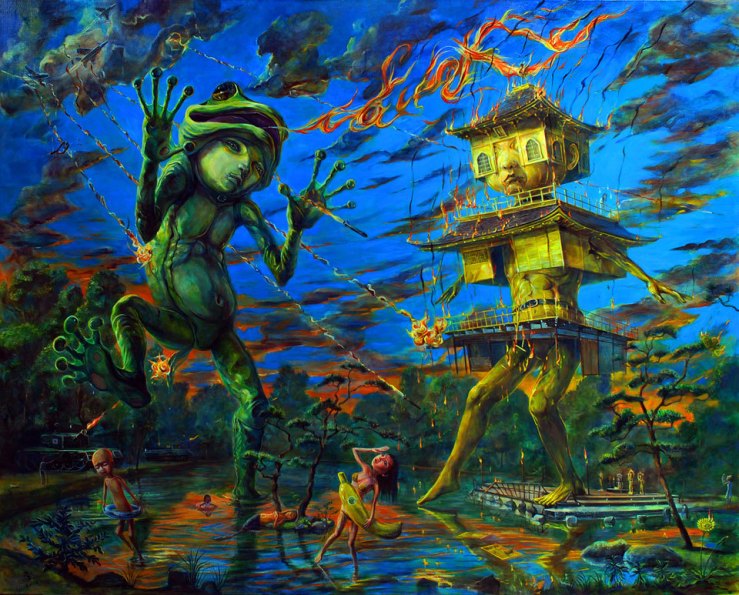
Battle of Kitayama — Tomohiro Takagi

tumblr_o862znlge71rv33k2o7_1280

Battle of Kitayama, 2010-13 by Tomohiro Takagi (b. 1972)

Pride (Detail) — Paul Cadmus

img_9739

Pride (Detail), 1945 by Paul Cadmus (1904–1999)

John Wick: Chapter 2 (Summer Film Log)

John Wick crashes his black SS Dodge Charger into a motorcyclist.

John Wick infiltrates a Russian mob base.

John Wick is the subject of much worried discussion about John Wick’s legendary prowess as a killer of men, as well as concern for what motivates John Wick to violent action.

John Wick garrottes a Russian mobster.

John Wick places a phone call.

John Wick retrieves his favorite car, a black 1969 Ford Mustang.

John Wick uses his favorite car to assault Russian mobsters.

John Wick’s favorite car is under assault by Russian mobsters.

John Wick sacrifices the driver-side door of his favorite car to assault a motorcyclist.

John Wick continues to use his car to assault Russian mobsters.

John Wick exits his car to enter into hand-to-hand combat with Russian mobsters.

John Wick is assaulted by a yellow taxi cab.

John Wick kicks a Russian mobster’s shins.

John Wick dodges a yellow taxi cab.

John Wick shoots a Russian mobster’s shins.

John Wick pours two neat vodkas, one for himself and one for the Russian mobster boss.

John Wick makes a toast to “Peace.”

John Wick leaves the Russian mob base in his favorite car.

John Wick parks his favorite car in the driveway of his beautiful home in New Jersey.

John Wick reads a birthday card.

John Wick lovingly recalls his beautiful dead wife.

John Wick greets his dog.

John Wick slumps in pain.

John Wick divests himself of weapons.

John Wick showers.

John Wick feels terrible emotional pain.

John Wick goes to sleep with his dog.

John Wick discusses the condition of his beloved favorite car with a mechanic who assures John Wick that he can repair the badly-damaged vehicle.

John Wick visits his secret stash of gold and weapons.

John Wick hides his secret stash of gold and weapons under fresh concrete.

John Wick receives an unexpected and well-dressed night time visitor.

John Wick offers his visitor coffee.

John Wick enters his beautiful kitchen.

John Wick receives polite condolences about the death of his beautiful wife.

John Wick attests that his dog has no name.

John Wick asks his guest not to give him a medallion.

John Wick receives a medallion from his guest.

John Wick regards his own blood on the medallion.

John Wick is warned of dire consequences.

John Wick sees his guest to the front door of his beautiful home.

John Wick gazes longingly at a photograph of his dead beautiful wife.

John Wick is attacked by his well-dressed night time visitor, who uses explosives to destroy John Wick’s beautiful home.

John Wick and his unnamed dog watch his beautiful home burn down.

John Wick sits on the back of a parked firetruck.

John Wick chats with a fireman whom he knows by first name.

John Wick and his unnamed dog walk from New Jersey to New York.

John Wick and his unnamed dog cross the Brooklyn Bridge.

John Wick goes to a hotel for assassins.

John Wick’s presence is announced.

John Wick interrupts a rooftop discussion.

John Wick is reminded of two important rules as well as the the consequences of not honoring the contract explicated in the medallion with his blood on it.

John Wick inquires about boarding his unnamed dog.

John Wick enters a fine arts museum.

John Wick walks through a gallery of marble statues, neglecting to pause and enjoy their beauty.

John Wick is instructed to halt by a mute henchwoman who works for John Wick’s well-dressed visitor of the previous night (the visitor who blew up John Wick’s beautiful home and to whom John Wick owes a work debt).

John Wick is groped by the mute henchwoman.

John Wick meets with his visitor of the previous night and sits with him to look at a large oil painting depicting a battle.

John Wick asserts that if he were to kill his visitor of the previous night, he would do so with his bare hands.

John Wick’s visitor of the previous night declares that he wishes for John Wick to kill his (the visitor of the previous night’s) sister.

John Wick’s visitor of the previous night expresses his desire to lead the Camorra mafia syndicate.

John Wick departs.

John Wick visits an especially secret safety deposit box.

John Wick opens his cache of items related to assassination, including a black suit, a black turtleneck, a pistol, a passport, and gold coins.

John Wick screams in anguish.

John Wick dons his black attire.

John Wick is now in Rome.

John Wick goes to a hotel for assassins.

John Wick rents a room.

John Wick is greeted by an old man who asks if John Wick plans to assassinate the Pope.

John Wick attests that he is not in Rome to kill the Pope.

Jon Wick enters a bookshop.

John Wick enters a secret passageway.

John Wick enters a sweat shop.

John Wick meets with the hotel’s sommelier.

John Wick is fitted for a new suit.

John Wick receives recommendations on gun purchases.

John Wick pores over maps of Rome, both old and new.

John Wick dons his new suit and arms himself with various and sundry weapons.

John Wick enters the catacombs beneath Rome.

John Wick is tailed by his former visitor’s mute henchwoman.

John Wick’s target, the sister of his former visitor who wishes to rule the Camorra mafia syndicate, attends a gala in the catacombs.

John Wick’s target adjusts her makeup in private in a luxurious underground bathroom.

John Wick confronts his target.

John Wick avers that he still considers himself to be friends with his target.

John Wick says the name of his dead wife.

John Wick’s target disrobes.

John Wick’s target enters a luxurious bath and slits her wrists.

John Wick grimaces.

John Wick questions suicide.

John Wick declares that he fears damnation.

John Wick holds his target’s hand.

John Wick shoots his target in the head.

John Wick and his former-target’s former-bodyguard shoot each other repeatedly.

John Wick bum rushes the stage at an underground rave.

John Wick shoots about a dozen security personnel in their faces and heads.

John Wick enters a crevice.

John Wick is attacked and pursued by the henchpeople of his former night visitor, the one who exploded his house and insisted that he (John Wick) kill his (the former night visitor’s) sister.

John Wick shoots various henchpeople with an assault rifle.

John Wick shoots various henchpeople with a rife.

John Wick shoots various henchpeople with a handgun.

John Wick exits the catacombs.

John Wick is hit by a car.

John Wick is attacked by his former-target’s former-bodyguard.

John Wick tumbles down stone steps.

John Wick is stabbed.

John Wick makes small noises from his mouth and nose while he fights.

John Wick arrives at his hotel, where management insists he and his former-target’s former-bodyguard stop fighting.

John Wick drinks a bourbon, neat.

John Wick reveals various plot details to the former-target’s former-bodyguard, who drinks gin on ice with lemon and soda water.

John Wick makes several threats and declarations.

John Wick receives a phone call on a rotary phone.

John Wick makes a phone call on a rotary phone.

John Wick checks out of his hotel for assassins in Rome.

John Wick’s former-visitor, who is now John Wick’s new target, puts a seven million dollar contract on John Wick’s life.

John Wick is now in New York City.

John Wick is the subject of dozens of text messages sent to various and sundry assassins across the world, text messages informing said assassins of the seven million dollar contract on John Wick’s life.

John Wick’s new target puts blood on a medallion.

John Wick is the subject of foreboding discussion about John Wick’s legendary prowess as a killer of men, as well as John Wick’s compelling motivations for violent retaliation.

John Wick is shot in the back by a violinist.

John Wick is attacked by a large man.

John Wick kills a man with a pencil.

John Wick kills another man with a pencil.

John Wick shoots a pistol at a fountain.

John Wick and the former-target’s former-bodyguard casually shoot at each other with silenced pistols in a crowded subway station.

John Wick kills two men on a train platform.

John Wick boards a crowded subway train.

John Wick is stabbed.

John Wick makes small noises with his mouth and nose.

John Wick stabs the former-target’s former-bodyguard.

John Wick deboards a subway train.

John Wick flees sanitation workers.

John Wick hides under a blanket.

John Wick receives medical attention in an underground tunnel.

John Wick visits a carrier pigeon coop.

John Wick makes a man laugh.

John Wick is given a gun.

John Wick laments that he only has seven bullets.

John Wick pops out of a hatch in the floor of the museum he was in earlier in the film.

John Wick makes eye contact with his target.

John Wick shoots all seven of his bullets.

John Wick secures a new gun.

John Wick shoot various and sundry henchpeople in their faces and heads.

John Wick tumbles down stairs.

John Wick fails to admire the beauty of the marble statues around him.

John Wick throws a gun at a man’s head.

John Wick continues to shoot henchpeople, mostly in their faces and heads, but in other parts of their body too.

John Wick visits the museum’s special exhibition “Reflections of the Soul,” which features “the interplay of lights and the nature of self-images” and lots of mirrors.

John Wick and his target and his target’s henchpeople badly damage the museum’s special exhibition, “Reflections of the Soul.”

John Wick stabs the mute henchwoman who had previously groped him.

John Wick exits the museum’s special exhibition, “Reflections of the Soul.”

John Wick returns to the hotel for assassins, where his target is enjoying a glass of red wine with a steak dinner.

John Wick shoots his target in the forehead.

John Wick retrieves his dog, and learns that his dog has been a good dog in his absence.

John Wick walks back to the charred remains of his once-beautiful home in New Jersey.

John Wick feels despair.

John Wick finds a piece of his beloved dead wife’s jewelry in the rubble of the charred remains of his once-beautiful home in New Jersey.

John Wick is summoned by an employee of the hotel for assassins.

John Wick is transported by car, along with his unnamed good dog, to Central Park in New York City.

John Wick learns that he has been excommunicated from the services of the hotel for assassins.

John Wick promises to kill everyone.

John Wick and his unnamed good dog run through Central Park.


How I watched it: On a big television via a streaming service, with something approximating near-full attention, and with several paused interruptions.
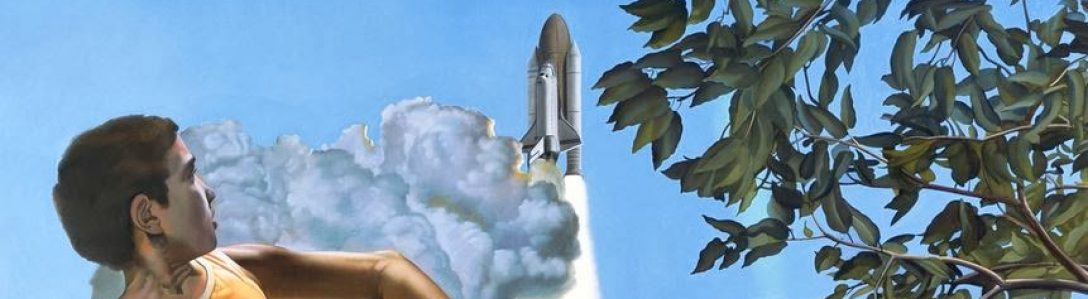
Edge of Reason (No. 2) — Huang Simao

1760984-nesylagf-7

Edge of Reason (No. 2, Series 2) by Huang Simao

Never a better way to break your arm