The Fostering — Patricia Traub

600_the_fostering

The Fostering, 2010 by Patricia Traub (b. 1947)

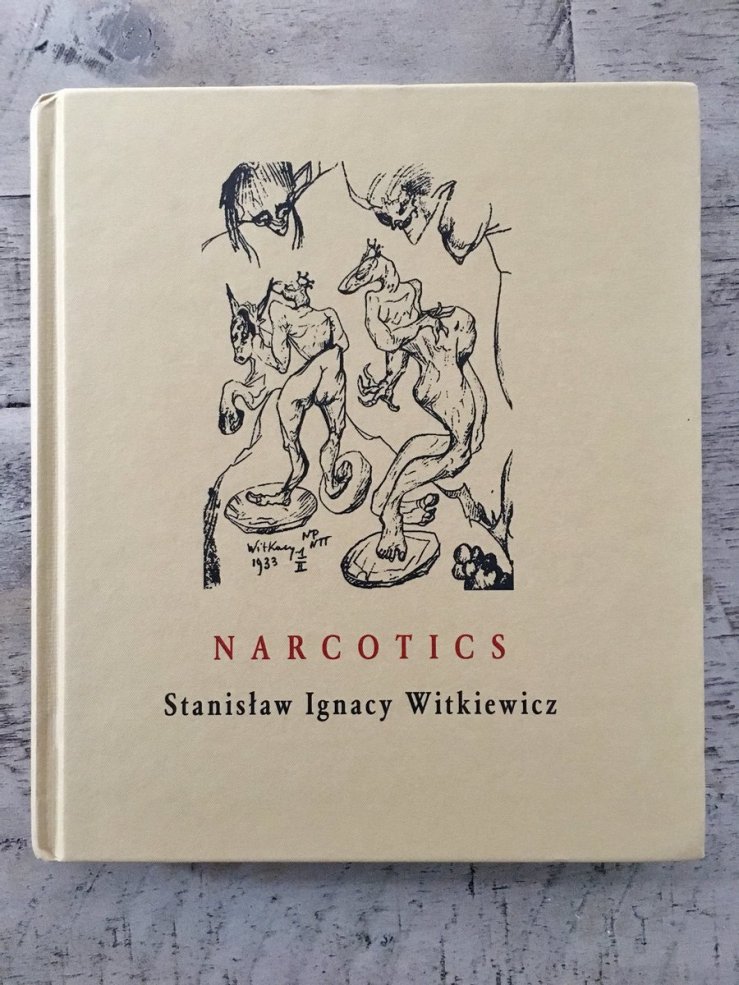
A review of Stanisław Ignacy Witkiewicz’s Narcotics

dvsfm7rvwaaoolo

“The main difficulty with Stanisław Ignacy Witkiewicz,” writes Soren Gauger in his translator’s note for Narcotics, “is that no matter what he was writing, it seems he wished he were writing something else.” Witkiewicz’s playful (and occasionally frustrating) discursive style is on vivid display in the six essays that comprise most of Narcotics (new in hardback from Twisted Spoon Press)Witkiewicz’s stylistic twists are one of the joys of Narcotics. A moralizing diatribe might veer into medical discourse; private anecdotes might shift into a rant on class theory or a patchy precis of a book about physiognomy. (All delivered in a semi-ironic-yet-wholly-sincere tone). In the case of Witkiewicz’s essay “Peyote,” we go from “Elves on a seesaw. (Comedic number)” to “A battle of centaurs turned into a battle between fantastical genitalia.” This last note is preceded by the observation that “Goya must have known about peyote.”
img_9138

“Peyote” is the most vivid and surreal of the essays in Narcotics. Unlike the other sections, this chapter most closely resembles a conventional drug diary. “Peyote” begins with Witkiewicz taking his first of seven (!) peyote doses at six in the evening and culminating around eight the following morning with “Straggling visions of iridescent wires.” In increments of about 15 minutes, Witkiewicz notes each of his surreal visions. The wild hallucinations are rendered in equally surreal language: “Mundane disumbilicalment on a cone to the barking of flying canine dragons” here, “The birth of a diamond goldfinch” there. Gauger’s translation conveys not just the wild imagery, but also the wild linguistic spirit of Witkiewicz’s prose.

img_9142

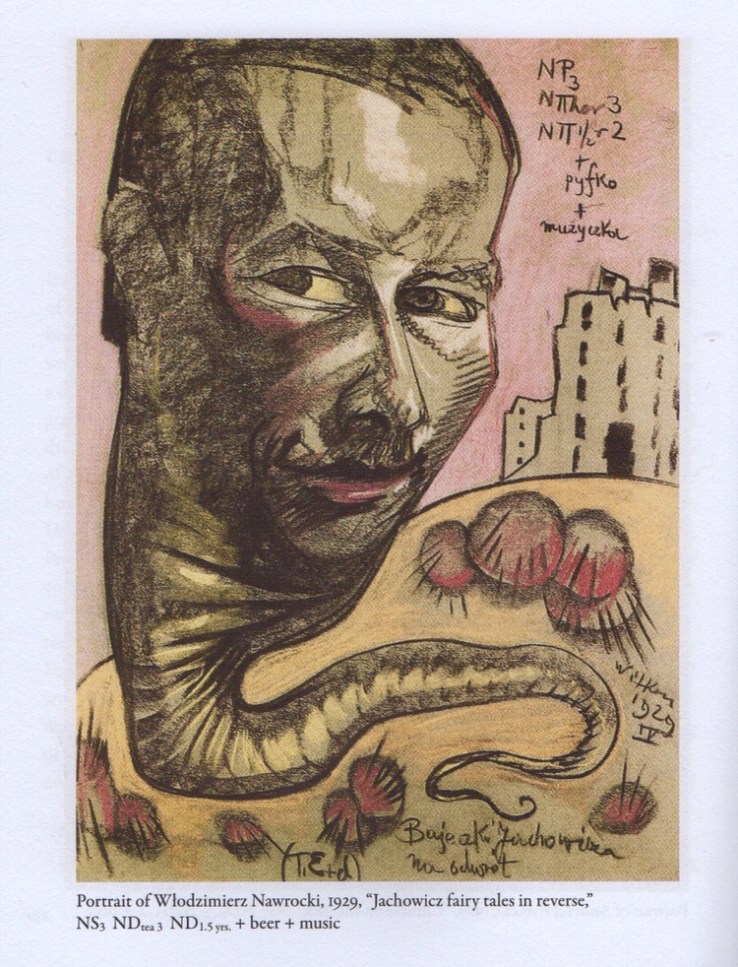
The prose in “Peyote” most closely approximates the spirit of Witkiewicz’s wonderful paintings. Narcotics includes 34 full-color reproductions of Witkiewicz’s art, which is reason enough to pick up this volume. According to Narcotics’ blurb, Witkiewicz (or Witkacy as he is commonly known) “established rules and types for his portrait work, marking the paintings and pastels with corresponding symbols and abbreviations of the substances he had either taken or, in the case of alcohol and nicotine, not taken at the time.”

For example, we see that Witkiewicz has noted that he had ingested cocaine and eucodal (a semi-synthetic opioid) in order to paint the Portrait of Michal Jagodowski (below). Narcotics includes a helpful “List of Symbols” as a glossary for the shorthand Witkiewicz used both in the text of his writings and in his paintings. (Although “her (herbata): tea” is included in the gloss, this vice regretfully does not merit its own essay).

img_9139

In addition to peyote, we get essays on nicotine, alcohol, cocaine, morphine, and ether (a list that may remind you of a certain Queens of the Stone Age jam). In “Nicotine,” Witkiewicz despairs that “A person deadened by tobacco and alcohol…seeks even more mind-numbing entertainment to relax,” whether that be the “utterly depraved cinema with its vacuous attempts at artistry,” or the “sensory narcotization through music” achieved by “station surfing” on the radio. (Even worse is “chronic and brainless dancing, that most monstrous of modern society’s unacknowledged plagues”).

In “Alcohol,” Witkiewicz concedes that “alcohol lets you perform actions at a particular moment that otherwise would not have been possible right then,” before launching into a sustained attack on alcohol as a creative crutch. His most convincing (and depressing) line here is “alcohol is boring. Anyone who has abused it even mildly knows this to be true.” (If this were a different sort of review, I might riff here a bit on the fact that I drank no fewer than three glasses of Cabernet Sauvignon while writing about Narcotics).

Witkiewicz, despite his exorbitant indulgences, is a bit of a snob—a modernist snob though. From frenzied, enthusiastic experience he warns us that “cocaine is one of the worst kinds of filth,” before plugging his cocaine novel Farewell to Autumn and offering a synopsis of one of the novel’s chapters, a so-called “cocaine orgy.” (The editors of Narcotics graciously include a brief selection from Farewell to Autumn, as well as additional essays by Witkiewicz on hygiene and other matters).

In the last two essays, Wietkiewicz hands the reins over to friends (designated drivers?). In “Morphine,” Bohdan Filipowski warns that, “before you can taste the sweets of narcotic paradises you must first be miserable, you must first travel through all manner of hell and suffering in life, only then to find yourself in addled stupefaction, which ultimately is all there is.” The essay “Ether” — a drug that packs a “powerful metaphysical wallop” is attributed to “Dr. Dezydery Prokopowicz,” a pseudonym for Wietkiewicz’s friend, poet Stefan Glass.

img_9141

The admonition that “before you can taste the sweets of narcotic paradises you must first be miserable” is pretty much the thesis for Narcotics, a book that simultaneously celebrates and reviles drug use. Misery is the byword here, a word we find repeated in in Henri Michaux’s 1956 collection Miserable Miracle. Published a quarter century after Narcotics, the two volumes share much in common. Too, Narcotics picks up some of the threads that we find in Thomas De Quincey’s Confessions of an English Opium-Eater(1821)–that foregrounding of suffering, even if it also anticipates the (exhaustive) drug literature of the 1960s, which wasn’t nearly so reticent about banging the narcotic gong. And yet Witkiewicz seems to wink at us through all the moralizing and apologia, suggesting that, yes, narcotics, are, like, bad—they are a crutch, a shortcut, a substitute for true artistic inspiration—but he also shows how utterly modern the process of consuming mind-and-body-altering substances is. Witkiewicz comprehends the dangers of narcotics. He’s out there on the ledge, dancing around a bit, his foot wagging over the precipice, while he grins and says, “Hey, don’t try this at home.”

Try this at home. Stanisław Ignacy Witkiewicz’s Narcotics, translated from the Polish by Soren Guager is new in hardback from Twisted Spoon Press. Just Say Yes.

Paul Thomas Anderson on writing Phantom Thread

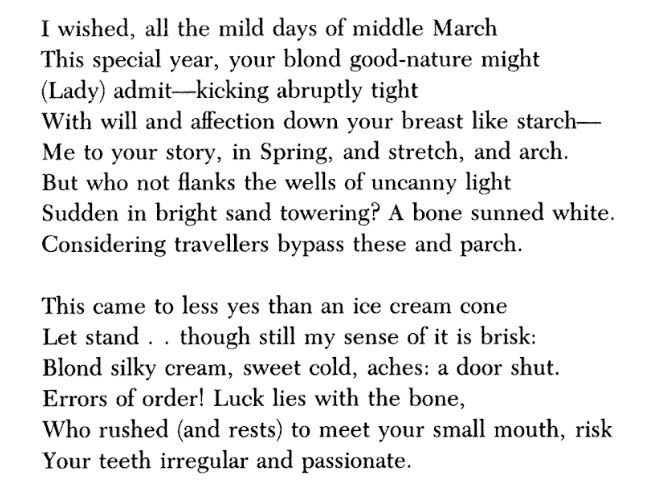
“I wished, all the mild days of middle March” — John Berryman

Capture

Night Wind — Sally Storch

b3f075b5c4c2af54c3f0fc8868a3266e

Night Wind, 2006 by Sally Storch (b. 1952)

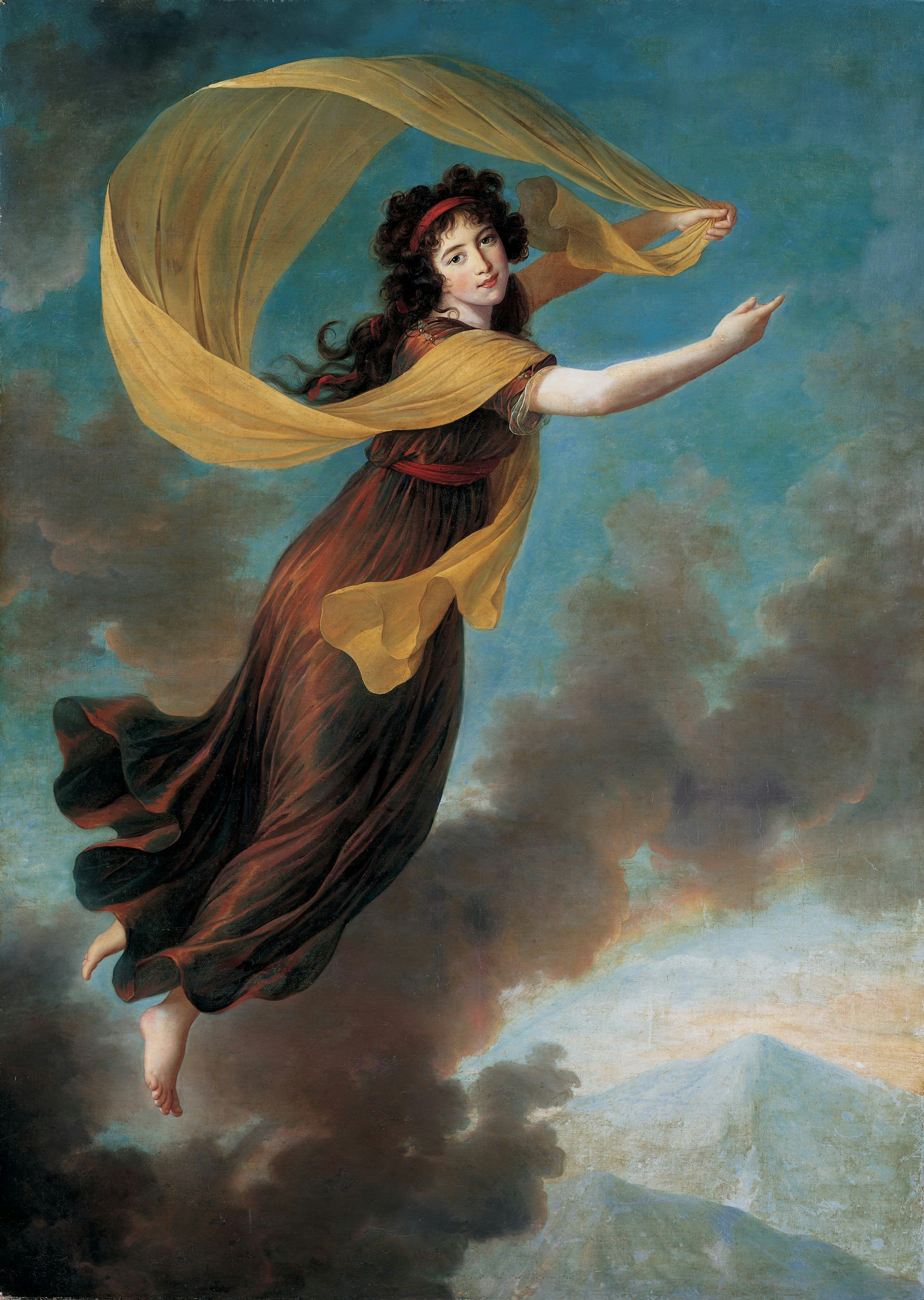
Princess Karoline of Liechtenstein — Élisabeth Vigée Le Brun

portrait_of_princess_karoline_of_liechtenstein_28179329_lebrun

Screenshot 2018-03-12 at 9.08.36 PMScreenshot 2018-03-12 at 9.08.20 PM

Princess Karoline of Liechtenstein, 1793 by Élisabeth Vigée Le Brun (1755—1842)

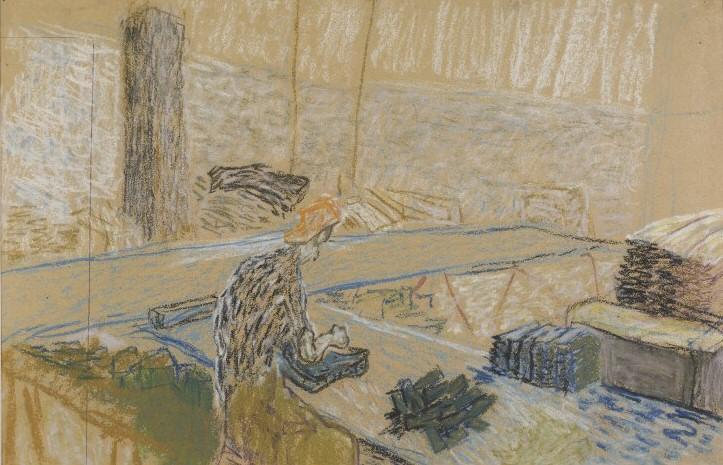
Woman at Work at a Table — Ilka Gedo

woman-at-work-at-a-table-1948

Woman at Work at a Table, 1948 by Ilka Gedo (1912-1985)

(Revisiting) Revisiting A Wrinkle in Time

[Ed. note: I originally wrote and posted this review in January of 2012. My kids were four and one at the time. This morning, my daughter finished the edition of A Wrinkle in Time I reviewed here, reading the last hundred pages or so in a marathon sitting so we would take her (and her brother) to see Ava DuVernay’s film adaptation today. I’ll try to post some thoughts on the film later today.]


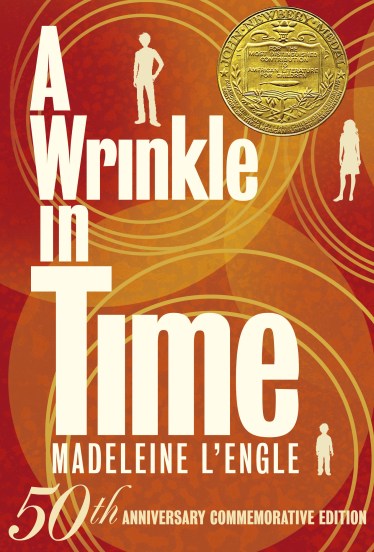
Madeleine L’Engle’s seminal fantasy novel A Wrinkle in Time turns 50 this year, and publisher Macmillan is celebrating by releasing a new anniversary edition with oodles of extras, including photos, manuscript pages, and new editorial content. They’ve also initiated a “50 Years, 50 Days,  50 Blogs Celebration Campaign” to promote the new book, and they asked Biblioklept to participate in the first week.

Here is the new cover:

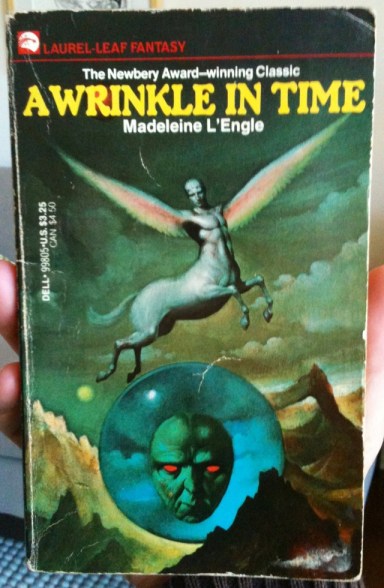
And here is the cover to my beloved, ragged edition:

20120115-162927.jpg

A Wrinkle in Time explores the strange intersections of space and time against a backdrop of adolescent angst. Our intrepid heroine Meg, her child genius brother Charles Wallace, and her would-be beau Calvin O’Keefe, go on a trans-dimensional quest to find her missing physicist father. They are aided (and initiated into) this quest by a trio of immortal women (shades of the Norns); their intergalactic mission finds them encountering angelic centaurs, motherly tentacled beasts, a red-eyed automaton, a disembodied brain, and more more more. Dr. Dad has disappeared while working on a mysterious project involving a tesseract.

Here’s a nifty visualization of the tesseract:

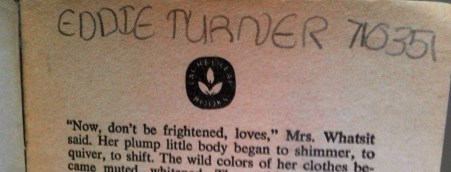
Like a lot of young people, as a child I was deeply fascinated by the concept of “tessering” away to a strange, marvelous, dangerous place, and it was surely this idea that most enthralled me as an early reader of the novel. I was probably ten when I first read the book, which I’m pretty sure was a gift from my aunt who brought it to me while our family was living in New Zealand. I actually wrote my name and our six-digit phone number into the book, which suggests that I loaned it out quite a bit.

20120115-162941.jpg

A Wrinkle in Time gelled with all of the stuff I was reading then: lots of Tolkien, C.S.Lewis, and Douglas Adams, but also plenty of crappy Dr. Who novels and lots of execrable fantasy novels. L’Engle’s novels (of course I read all of them after reading Wrinkle; to this day, Many Waters is probably the one that stands out the most, weird and sexy as it was) were of a piece with Tolkien and Lewis (especially Lewis’s oft-overlooked space trilogy)—but there was something distinctly American about L’Engle’s characters—her writing even—that intrigued me. I had spent my entire childhood expatriated and was constantly looking for avenues of American expression, ways “to be American” (yes, I realize how silly that sounds now).

In retrospect, it’s not the tesseract and its fantastical properties that I so recall from A Wrinkle in Time so much as it is L’Engle’s characters, especially mercurial Meg and her future-husband Calvin. While much of literature emphasizes the clash between individual desires and societal conventions, L’Engle’s particular tone and characterization is keenly sensitive to the difficulties adolescents face navigating this conflict. In a sense, L’Engle is working out the early blueprint for what would become the conventions of Young Adult literature. L’Engle wrote a specific brand of sci-fi/fantasy that, on the surface, sets her apart from S.E. Hinton and Robert Cormier—but what these writers share in common, what makes their work so enduring even as society changes, is the essential emotional reality their characters share with readers.

Wrinkle endures also because of its handling of complex themes of conformity, idealism, faith, and science. It’s a book that challenges a youngish audience to read in new ways. It’s also a frequently challenged book—always the sign of something good—suggesting that it’s not going anywhere soon. In this sense, Wrinkle’s literary legacy externally recapitulates its internal themes of nonconformity.

Of course, characterization and strong themes probably wouldn’t get too far with young readers if Wrinkle didn’t deliver the goods that YA readers demand: a good yarn. Wrinkle is spry and engaging at fifty, and while it’s not as bloody as new kid on the block The Hunger Games (the protagonist of which owes some small debt to Meg Murray) it nevertheless negotiates the dangers of existence (both physical and metaphysical) with greater emotional intensity.

But I’ve veered off course here, invoking a newer, more violent YA star at the end of my riff, when what I really want to do is encourage young people who haven’t read Wrinkle yet to pick it up (okay, especially young people who think that Collins’s trilogy is the bee’s knees). It’s a wise, endearing, and enduring classic, one that deserves attention on its golden anniversary.

Parachutist — Paul Fenniak

opt_parachutist

Parachutist, 2011 by Paul Fenniak (b. 1965)

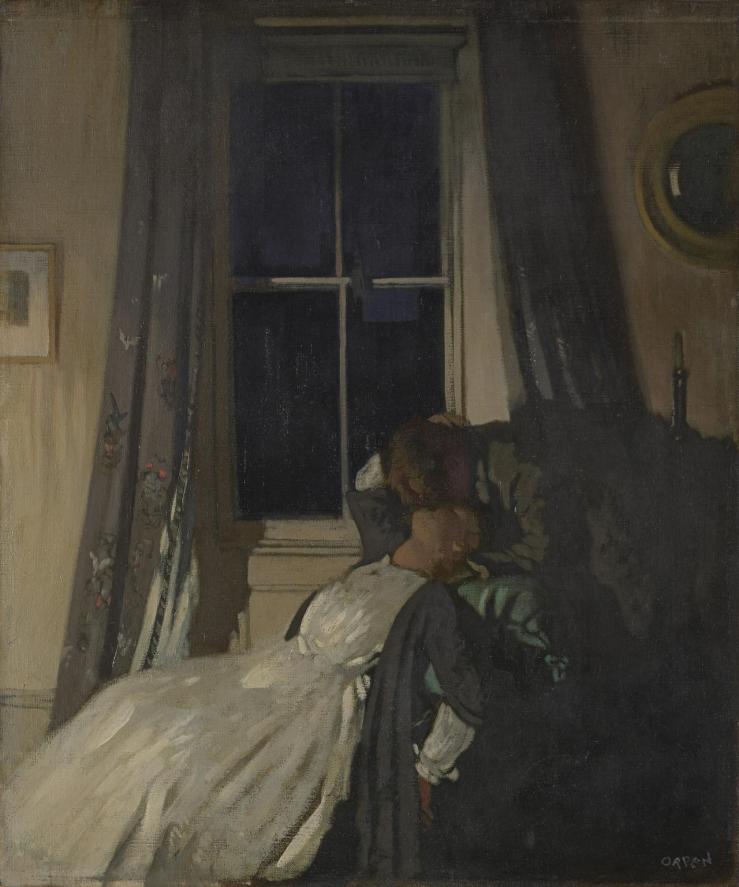
Night (No. 2) — William Orpen

Fd101968

Night (No. 2), 1907 by William Orpen (1878-1931)

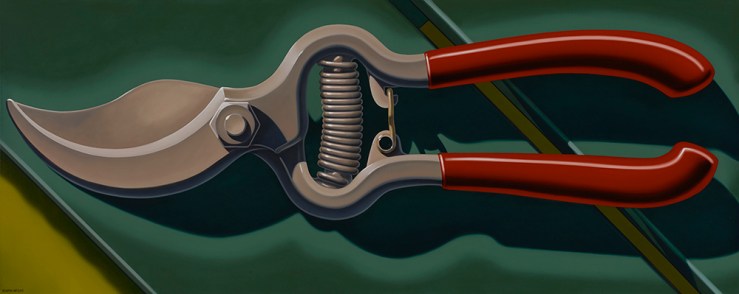
Shears — Kenton Nelson

kenton_nelson_shears

Shears by Kenton Nelson (b. 1954)

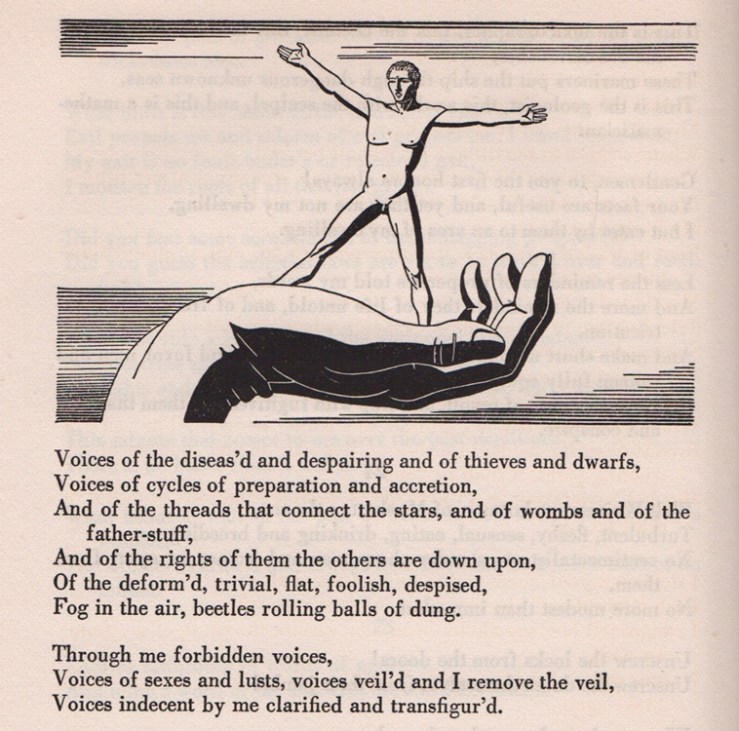
Clarified and transfigur’d

img_9018

From the Heritage Press edition of Walt Whitman’s Leaves of Grass, illustrated by Rockwell Kent, 1936.

Campamento y Madrigales — Julio Larraz

unnamed-2

Campamento y Madrigales, 2015 by Julio Larraz (b. 1944)

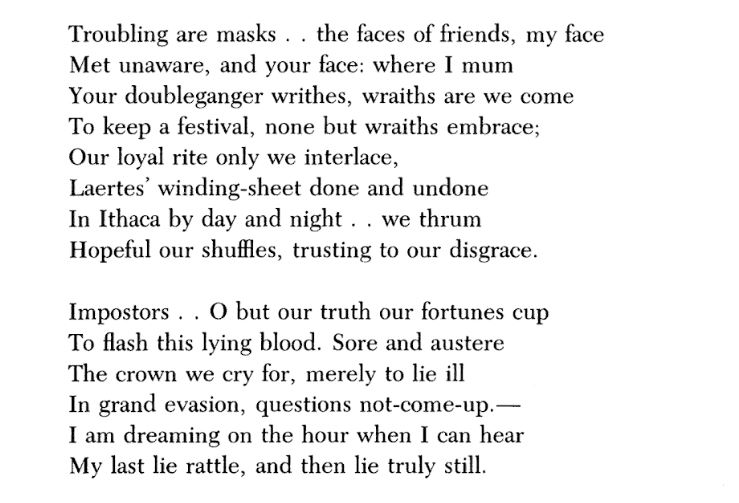
“Troubling are masks . . the faces of friends, my face” — John Berryman

Capture

From Early Italian Poets — Eduardo Paolozzi

From Early Italian Poets 1974-6 by Sir Eduardo Paolozzi 1924-2005

From Early Italian Poets 1974–6 by Eduardo Paolozzi (1924–2005)

No gnomon | Nathaniel Hawthorne’s journal entry for March 7th, 1855

March 7th.–J—– and I walked to Tranmere, and passed an old house which I suppose to be Tranmere Hall. Our way to it was up a hollow lane, with a bank and hedge on each side, and with a few thatched stone cottages, centuries old, their ridge-poles crooked and the stones time-worn, scattered along. At one point there was a wide, deep well, hewn out of the solid red freestone, and with steps, also hewn in solid rock, leading down to it. These steps were much hollowed by the feet of those who had come to the well; and they reach beneath the water, which is very high. The well probably supplied water to the old cotters and retainers of Tranmere Hall five hundred years ago. The Hall stands on the verge of a long hill which stretches behind Tranmere and as far as Birkenhead.

It is an old gray stone edifice, with a good many gables, and windows with mullions, and some of them extending the whole breadth of the gable. In some parts of the house, the windows seem to have been built up; probably in the days when daylight was taxed. The form of the Hall is multiplex, the roofs sloping down and intersecting one another, so as to make the general result indescribable. There were two sundials on different sides of the house, both the dial-plates of which were of stone; and on one the figures, so far as I could see, were quite worn off, but the gnomon still cast a shadow over it in such a way that I could judge that it was about noon. The other dial had some half-worn hour-marks, but no gnomon. The chinks of the stones of the house were very weedy, and the building looked quaint and venerable; but it is now converted into a farm-house, with the farm-yard and outbuildings closely appended. A village, too, has grown up about it, so that it seems out of place among modern stuccoed dwellings, such as are erected for tradesmen and other moderate people who have their residences in the neighborhood of a great city. Among these there are a few thatched cottages, the homeliest domiciles that ever mortals lived in, belonging to the old estate. Directly across the street is a Wayside Inn, “licensed to sell wine, spirits, ale, and tobacco.” The street itself has been laid out since the land grew valuable by the increase of Liverpool and Birkenhead; for the old Hall would never have been built on the verge of a public way.

Nathaniel Hawthorne’s journal entry for March 7th, 1855. From Passages from the English Note-Books.

The Fountains — Agnes Lawrence Pelton

large_2730ced075780266daa35173a72e331b

The Fountains by Agnes Lawrence Pelton (1881-1961)