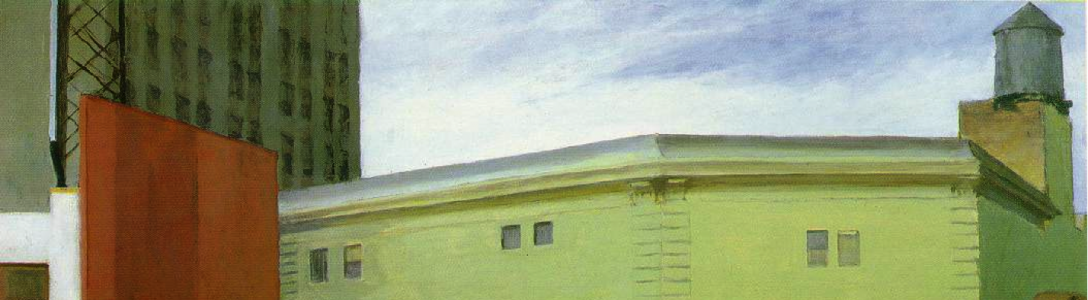
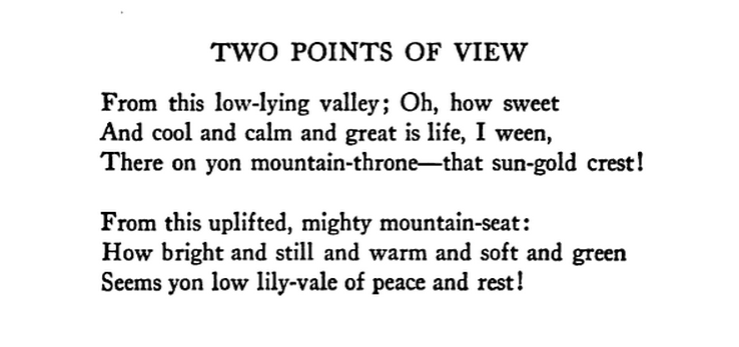
“Two Points of View” — Lucian B. Watkins

Screenshot 2015-06-22 at 5.22.04 PM

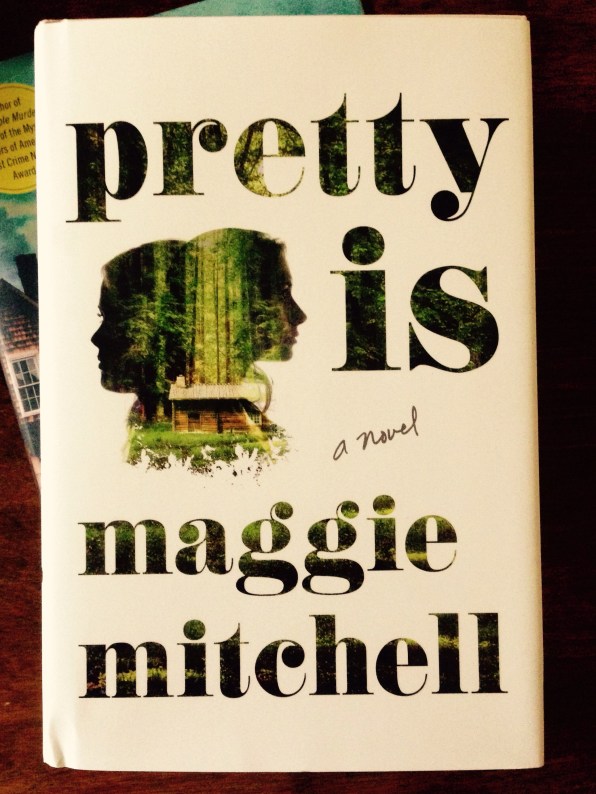
Pretty Is (Book acquired, 6.20.2015)

IMG_7124

Maggie Mitchell’s novel Pretty Is is new in hardback from Henry Holt. Their blurb:

The summer precocious Lois and pretty Carly May were twelve years old, they were kidnapped, driven across the country, and held in a cabin in the woods for two months by a charismatic stranger. Nearly twenty years later, Lois has become a professor, teaching British literature at a small college in upstate New York, and Carly May is an actress in Los Angeles, drinking too much and struggling to revive her career. When a movie with a shockingly familiar plot draws the two women together once more, they must face the public exposure of their secret history and confront the dark longings and unspeakable truths that haunt them still. Maggie Mitchell’s Pretty Is beautifully defies ripped-from-the-headlines crime story expectations and announces the debut of a masterful new storytelling talent.

“IIIIIIIIII.” — Gertrude Stein

“IIIIIIIIII.”
by
Gertrude Stein
from Geography and Plays (1922)

INCLINE.

Clinch, melody, hurry, spoon, special, dumb, cake, forrester. Fine, cane, carpet, incline, spread, gate, light, labor.

BANKING.

Coffee, cough, glass, spoon, white, singing. Choose, selection, visible, lightning, garden, conversation, ink, spending, light space, morning, celebration, invisible, reception, hour, glass, curving, summons, sparkle, suffering the minisection, sanctioning the widening, less than the wireless, more certain. All the change. Any counselling non consuming and split splendor.

Forward and a rapidity and no resemblance no more utterly. Safe light, more safes no more safe for the separation.

M—N H—.

A cook. A cook can see. Pointedly in uniform, exertion in a medium. A cook can see.

Clark which is awful, clark which is shameful, clark and order.

A pin is a plump point and pecking and combined and more much more is in fine.

Rats is, rats is oaken. Robber. Height, age, miles, plaster, pedal, more order.

Bake, a barn has cause and more late oat-cake specially.

Spend rubber, holder and coal, high, careful, in a pointed collar. A hideous south west is always a climb in aged seldom succeeded flavoring untimely, necessity white, hour in a glaze.

Break, sky blue light, obliquely, in a cut carpet, in the pack. A sound.

COO—GE.

Press in the ink and stare and cheese. Pick in the faint and feather and white. White in the plume.

M—N H—.

No noon back. No noon settler, no sun in the slant and carpet utterly surrounded.

No pressed plaster. None.

No pressing pan and pan cake. Not related exactly. Not related.

Matter in the center of single sand and slide in the hut.

No account of gibberish. No sky lark utterly.

Perfect lemon and cutting a central black. Not such clouding. A sugar, a lame sugar, certainly. No sobriety no silver ash tray. Continue reading ““IIIIIIIIII.” — Gertrude Stein”

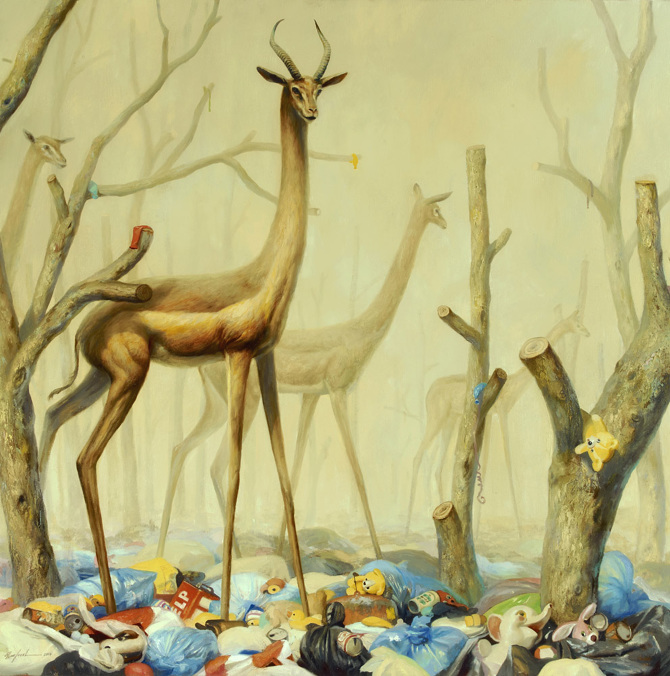
Stilts (Adaptation) — Martin Wittfooth

stilts_web

A Midsummer Night’s Dream — Giovanni Boldini

Why are works of art so socially important? (William H. Gass)

Why are works of art so socially important? Not for the messages they may contain, not because they expose slavery or cry hurrah for the worker, although such messages in their place and time might be important, but because they insist more than most on their own reality; because of the absolute way in which they exist. Certainly, images exist, shadows and reflections, fakes exist and hypocrites, there are counterfeits (quite real) and grand illusions – but it is simply not true for the copies are as real as their originals, that they meet all of the tests which I suggested earlier. Soybean steak, by God, is soybean steak, and a pious fraud is a fraud. Reality is not a matter of fact, it is an achievement; and it is rare – rarer, let me say – than an undefeated football season. We live, most of us, amidst lies, deceit, and confusions. A work of art may not utter the truth, but it must be honest. It may champion a cause we deplore, but like Milton’s Satan, it must in itself be noble; it must be all there. Works of art confront us the way few people dare to: completely, openly, at once. They construct, they comprise, our experience; they do not deny or destroy it; and they shame us, we fall so short of the quality of their Being. We live in Lafayette or Rutland – true. We take our breaths. We fornicate and feed. But Hamlet has his history in the heart and none of us will ever be as real as vital, as complex and living as he is – a total creature of the stage. 

–More from William H. Gass’s essay “The Artist and Society” (1968). Collected in Fiction and the Figures of Life.

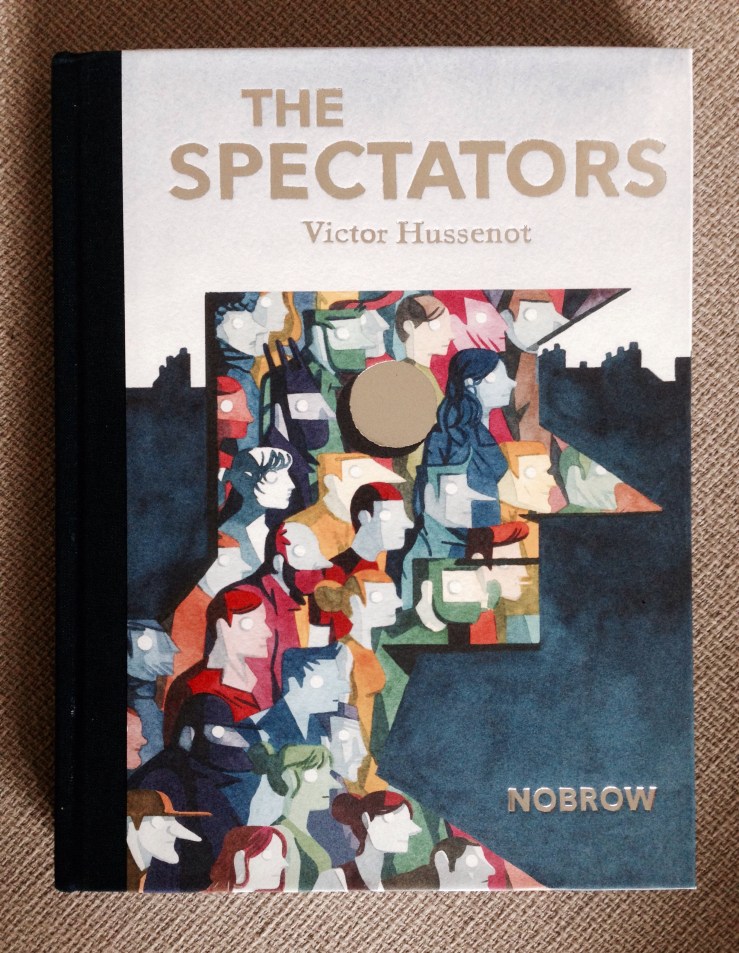
The Spectators (Beautiful book acquried 6.11.2015)

image

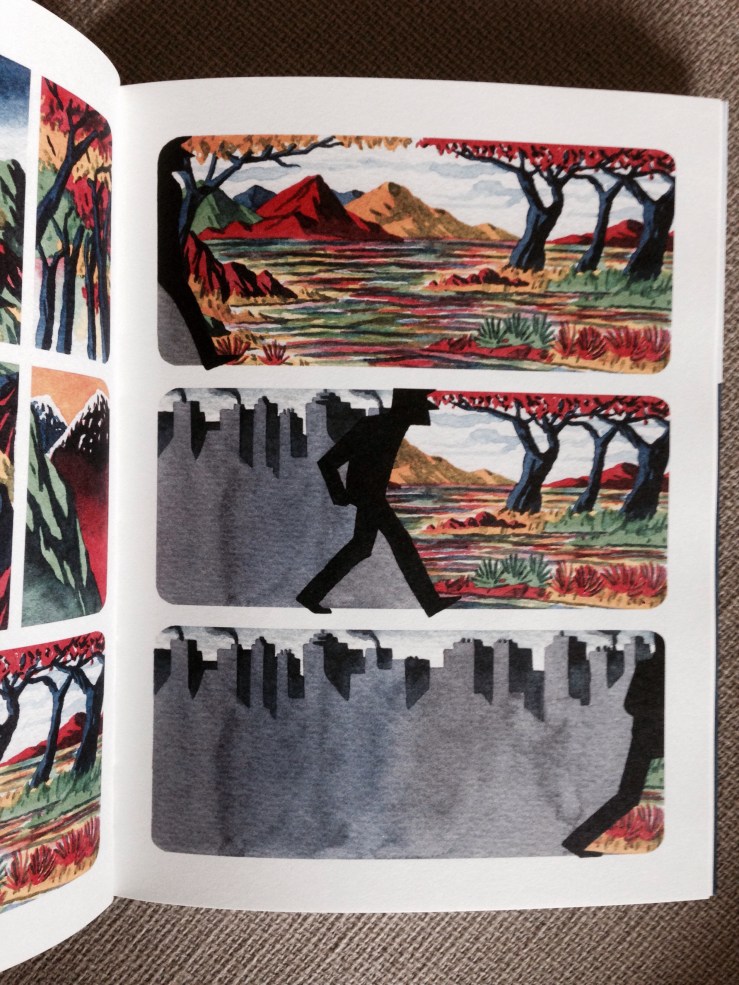
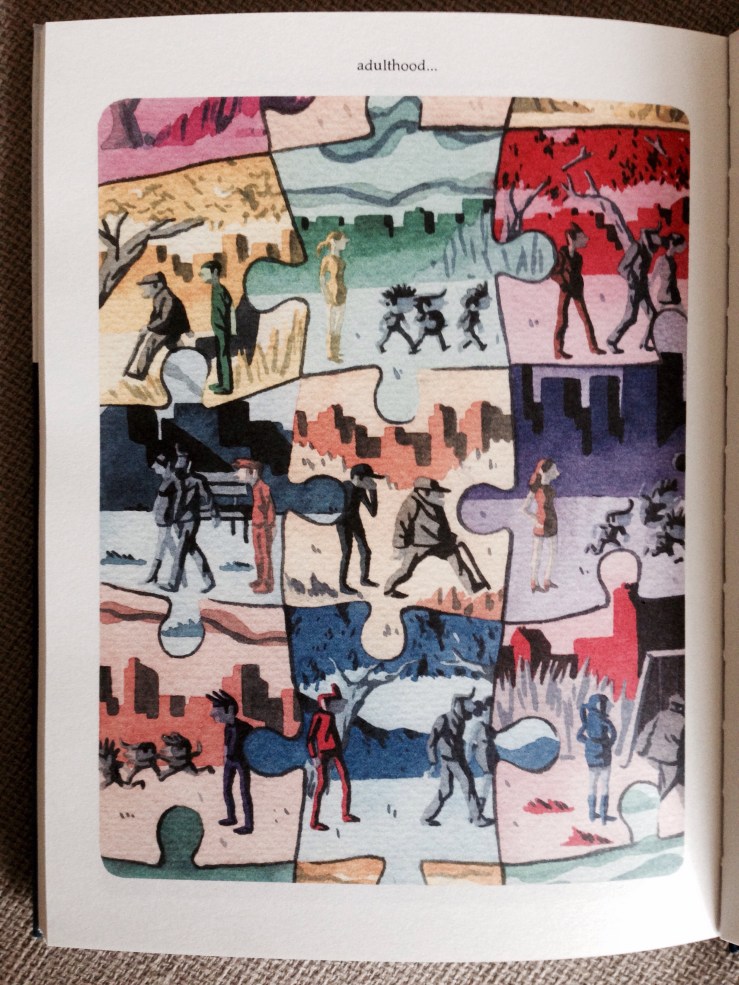
Victor Hussenot’s The Spectators is a gorgeous new graphic novel from Nobrow. I’ve read it twice now (“read” as a verb seems inadequate but—), and will get to a proper review later this week. Excellent stuff. Nobrow’s blurb:

What if we are merely shadows, our characters defined by a simple inflection of light? The realm of possibilities opens up, because in our world we are nothing but spectators.

The Spectators unfolds as a poetic and philosophical introspection on the nature of man. Victor Hussenot‘s palette is awash with subtle colour, gently carrying the narrative and allowing the reader to envelop themselves in the lyricism of the work. Reminiscent of French New Wave cinema with its clipped dialogue, gentle pacing and departure from a classic narrative structure, The Spectators is an exciting new graphic novel.

image image

Portrait of the Artist’s Father

Repin

Degas

Escher

Freud

Continue reading “Portrait of the Artist’s Father”

The Bus — Paul Kirchner

l3MHMNS - Imgur

Happy Father’s Day!

We create insanities (William H. Gass)

Put yourself in a public place, at a banquet—one perhaps at which awards are made. Your fork is pushing crumbs about upon you plate while someone is receiving silver in a bowler’s shape amid the social warmth of clapping hands. How would you feel if at this moment a beautiful lady in a soft pink nightie should lead among the tables a handsome poodle who puddled under them, and there was a conspiracy among the rest of us not to notice? Suppose we sat quietly; our expressions did not change; we looked straight through her, herself as well as her nightie, toward the fascinating figure of the speaker; suppose, leaving, we stepped heedlessly in the pools and afterward we did not even shake our shoes. And if you gave a cry, if you warned, explained, cajoled, implored; and we regarded you then with amazement, rejected with amusement, contempt, or scorn every one of your efforts, I think you would begin to doubt your senses and your very sanity. Well, that’s the idea: with the weight of our numbers, our percentile normality, we create insanities: yours, as you progressively doubt more and more of your experience, hide it from others to avoid the shame, saying “There’s that woman and her damn dog again,” but now saying it silently, for your experience, you think, is private; and ours, as we begin to believe our own lies, and the lady and her nightie, the lady and her poodle, the lady and the poodle’s puddles, all do disappear, expunged from consciousness like a stenographer’s mistake. 

–From William H. Gass’s essay “The Artist and Society” (1968). Collected in Fiction and the Figures of Life. I shared the paragraphs preceding this one yesterday.

Untitled — Alessandro Sicioldr

good_590_586_90

“Midsummer Day” — A. A. Milne

“Midsummer Day”

by

A.A. Milne

from Not That It Matters


There is magic in the woods on Midsummer Day—so people tell me. Titania conducts her revels. Let others attend her court; for myself I will beg to be excused. I have no heart for revelling on Midsummer Day. On any other festival I will be as jocund as you please, but on the longest day of the year I am overburdened by the thought that from this moment the evenings are beginning to draw in. We are on the way to winter.

It is on Midsummer Day, or thereabouts, that the cuckoo changes his tune, knowing well that the best days are over and that in a little while it will be time for him to fly away. I should like this to be a learned article on “The Habits of the Cuckoo,” and yet, if it were, I doubt if I should love him at the end of it. It is best to know only the one thing of him, that he lays his eggs in another bird’s nest—a friendly idea—and beyond that to take him as we find him. And we find that his only habit which matters is the delightful one of saying “Cuckoo.” Continue reading ““Midsummer Day” — A. A. Milne”

Diagram for Gesture Dance — Oskar Schlemmer

We nullify the consciousness of others. We make their experiences unreal. (William H. Gass)

You can measure the reality of an act, a man, an institution, custom, work of art in many ways: by the constancy and quality of its effects, the depth of the response which it demands, the kinds and range of values it possesses, the actuality of its presence in space and time, the multiplicity and reliability of the sensations it provides, its particularity and uniqueness on the one hand, its abstract generality on the other—I have no desire to legislate concerning these conditions, insist on them all.

We can rob these men, these acts and objects, of their reality by refusing to acknowledge them. We pass them on the street but do not see or speak. We have no Negro problem in our small Midwestern towns. If someone has the experience of such a problem, he is mistaken. What happened to him did not happen; what he felt he did not feel; the urges he has are not the urges he has; what he wants he does not want. Automatically I reply to my son, who has expressed his desire for bubble gum: Oh, Peppy, you don’t want that. Number one, then: we deny. We nullify the consciousness of others. We make their experiences unreal.

–From William H. Gass’s essay “The Artist and Society” (1968). Collected in Fiction and the Figures of Life.