“The Double” — Jorge Luis Borges

“The Double” by Jorge Luis Borges (From Book of Imaginary Beings)

Suggested or stimulated by reflections in mirrors and in water and by twins, the idea of the Double is common to many countries. It is likely that sentences such as A friend is another self by Pythagoras or the Platonic Know thyself were inspired by it. In Germany this Double is called Doppelgänger, which means ’double walker’. In Scotland there is the fetch, which comes to fetch a man to bring him to his death; there is also the Scottish word wraith for an apparition thought to be seen by a person in his exact image just before death. To meet oneself is, therefore, ominous. The tragic ballad ‘Ticonderoga’ by Robert Louis Stevenson tells of a legend on this theme. There is also the strange picture by Rossetti (‘How They Met Themselves’) in which two lovers come upon themselves in the dusky gloom of a wood. We may also cite examples from Hawthorne (‘Howe’s Masquerade’), Dostoyevsky, Alfred de Musset, James (‘The Jolly Corner’), Kleist, Chesterton (‘The Mirror of Madmen’), and Hearn (Some Chinese Ghosts).

The ancient Egyptians believed that the Double, the ka, was a man’s exact counterpart, having his same walk and his same dress. Not only men, but gods and beasts, stones and trees, chairs and knives had their ka, which was invisible except to certain priests who could see the Doubles of the gods and were granted by them a knowledge of things past and things to come.

To the Jews the appearance of one’s Double was not an omen of imminent death. On the contrary, it was proof of having attained prophetic powers. This is how it is explained by Gershom Scholem. A legend recorded in the Talmud tells the story of a man who, in search of God, met himself.

In the story ‘William Wilson’ by Poe, the Double is the hero’s conscience. He kills it and dies. In a similar way, Dorian Gray in Wilde’s novel stabs his portrait and meets his death. In Yeats’s poems the Double is our other side, our opposite, the one who complements us, the one we are not nor will ever become.

Plutarch writes that the Greeks gave the name other self to a king’s ambassador.


From A Week of Kindness — Max Ernst

“Reindeer discovered again their ancient powers of flight,” and other Tunguska effects (Pynchon’s Against the Day)

FOR A WHILE after the Event, crazed Raskol’niki ran around in the woods, flagellating themselves and occasional onlookers who got too close, raving about Tchernobyl, the destroying star known as Wormwood in the book of Revelation. Reindeer discovered again their ancient powers of flight, which had lapsed over the centuries since humans began invading the North. Some were stimulated by the accompanying radiation into an epidermal luminescence at the red end of the spectrum, particularly around the nasal area. Mosquitoes lost their taste for blood, acquiring one instead for vodka, and were observed congregating in large swarms at local taverns. Clocks and watches ran backward. Although it was summer, there were brief snowfalls in the devastated taiga, and heat in general tended to flow unpredictably for a while. Siberian wolves walked into churches in the middle of services, quoted passages from the Scriptures in fluent Old Slavonic, and walked peaceably out again. They were reported to be especially fond of Matthew 7:15, “Beware of false prophets, which come to you in sheep’s clothing, but inwardly they are ravening wolves.” Aspects of the landscape of Tierra del Fuego, directly opposite the Stony Tunguska on the globe, began to show up in Siberia—sea ernes, gulls, terns, and petrels landing in the branches of fir trees, swooping to grab fish out of the streams, taking a bite, screaming with distaste, and throwing them back. Granite cliffs rose sheer and unexpected out of the forest. Oceangoing ships unmanned by visible crews, attempting to navigate the shallow rivers and creeks, ran aground. Entire villages came to the conclusion that they were not where they ought to be, and without much advance planning simply packed up what they had, left behind what they couldn’t carry, and headed off together into the brush, where presently they set up villages no one else could see. Or not very clearly.

And from everywhere in the taiga, all up and down the basins of the Yenisei, came reports of a figure walking through the aftermath, not exactly an angel but moving like one, deliberately, unhurried, a consoler. Accounts differed as to whether the outsize figure was man or woman, but all reported having to look steeply upward when trying to make out its face, and a deep feeling of fearless calm once it had passed.

Some thought it might be some transfigured version of the shaman Magyakan, whose whereabouts had been puzzling folks along the Stony T. No one had seen him since the Event, his izba was empty, and the magical force that had kept it from sinking, like everyone else’s dwelling in Siberia, into the summer-thawed earth, had abated, so that the cabin now tilted at a thirty-degree angle, like a ship at sea about to slide beneath the waves.

None of the strange effects lasted long, and as the Event receded in memory, arguments arose as to whether this or that had even happened at all. Soon the forest was back to normal, green underbrush beginning to appear among the dead-white trunks, the animals fallen speechless again, tree-shadows again pointing in their accustomed directions, and Kit and Prance continued to make their way through it with no idea what this meant for their mission out here.

—Another citation from Thomas Pynchon’s Against the Day.

List with No Name #34

  1. Atwood
  2. Borges
  3. Calvino
  4. Dickinson
  5. Emerson
  6. Faulkner
  7. Gombrowicz
  8. Hawthorne
  9. Ibsen
  10. Joyce
  11. Kafka
  12. Lish
  13. Melville
  14. Nin
  15. O’Brien
  16. Poe
  17. Queneau
  18. Roth
  19. Sebald
  20. Twain
  21. Updike
  22. Vonnegut
  23. Walser
  24. Xenophon
  25. Yeats
  26. Zola

Marilyn — Allan D’Arcangelo

Vasiliy Luzhsky on Vacation in London’s Hyde Park — Boris Kustodiev

The Stone Operation (The Cure of Folly) — Hieronymus Bosch

“Your whole history in America has been one long religious war, secret crusades, disguised under false names” (Pynchon’s Against the Day)

“Not quite how it sorts out. Differences among the world religions are in fact rather trivial when compared to the common enemy, the ancient and abiding darkness which all hate, fear, and struggle against without cease”— he made a broad gesture to indicate the limitless taiga all around them— “Shamanism. There isn’t a primitive people anywhere on Earth that can’t be found practicing some form of it. Every state religion, including your own, considers it irrational and pernicious, and has taken steps to eradicate it.”

“What? there’s no ‘state religion’ in the U.S.A., pardner, we’ve got freedom of worship, it’s guaranteed in the Constitution—keeps church and state separate, just so’s we don’t turn into something like England and keep marching off into the brush with bagpipes and Gatling guns, looking for more infidels to wipe out. Nothing personal o’ course.”

“The Cherokee,” replied Prance, “the Apache, the massacre of the Sioux Ghost Dancers at Wounded Knee, every native Red Indian you’ve found, you people have either tried to convert to Christianity or you’ve simply killed.”

“I suggest it was about the fear of medicine men and strange practices, dancing and drug-taking, that allow humans to be in touch with the powerful gods hiding in the landscape, with no need of any official church to mediate it for them. The only drug you’ve ever been comfortable with is alcohol, so you went in and poisoned the tribes with that. Your whole history in America has been one long religious war, secret crusades, disguised under false names. You tried to exterminate African shamanism by kidnapping half the continent into slavery, giving them Christian names, and shoving your peculiar versions of the Bible down their throats, and look what happened.”

“The Civil War? That was economics. Politics.”

“That was the gods you tried to destroy, waiting their hour, taking their revenge. You people really just believe everything you’re taught, don’t you?”

Another passage from Thomas Pynchon’s enormous novel Against the Day. Context unimportant to content here.


I Vitelloni — Federico Fellini (Full Film)

Family Home from Vacation — Norman Rockwell

Seven Notes on Humanity from Samuel Butler’s Note-Books

  1. We are like billiard balls in a game played by unskilful players, continually being nearly sent into a pocket, but hardly ever getting right into one, except by a fluke.
  2. We are like thistle-down blown about by the wind – up and down, here and there – but not one in a thousand ever getting beyond seed-hood.
  3. A man is a passing mood coming and going in the mind of his country; he is the twitching of a nerve, a smile, a frown, a thought of shame or honour, as it may happen.
  4. How loosely our thoughts must hang together when the whiff of a smell, a band playing in the street, a face seen in the fire, or on the gnarled stem of a tree, will lead them into such vagaries at a moment’s warning.
  5. When I was a boy at school at Shrewsbury, old Mrs. Brown used to keep a tray of spoiled tarts which she sold cheaper.  They most of them looked pretty right till you handled them.  We are all spoiled tarts.
  6. He is a poor creature who does not believe himself to be better than the whole world else.  No matter how ill we may be, or how low we may have fallen, we would not change identity with any other person.  Hence our self-conceit sustains and always must sustain us till death takes us and our conceit together so that we need no more sustaining.
  7. Man must always be a consuming fire or be consumed.  As for hell, we are in a burning fiery furnace all our lives – for what is life but a process of combustion?

—From Samuel Butler’s Note-Books.

Girl Reading — Helene Schjerfbeck

Anatomy of a Murder (Full Film)

“You All Know the Story of the Other Woman” — Anne Sexton

as1

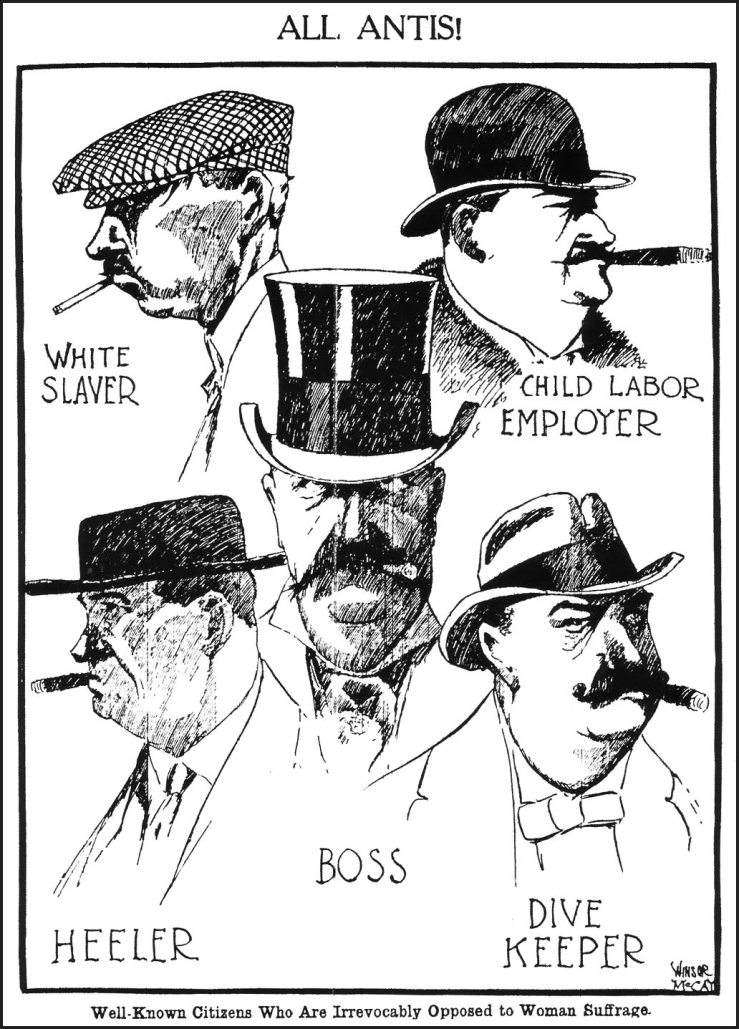
Well-Known Citizens (Winsor McCay)

1915_12_02_mccay_antis

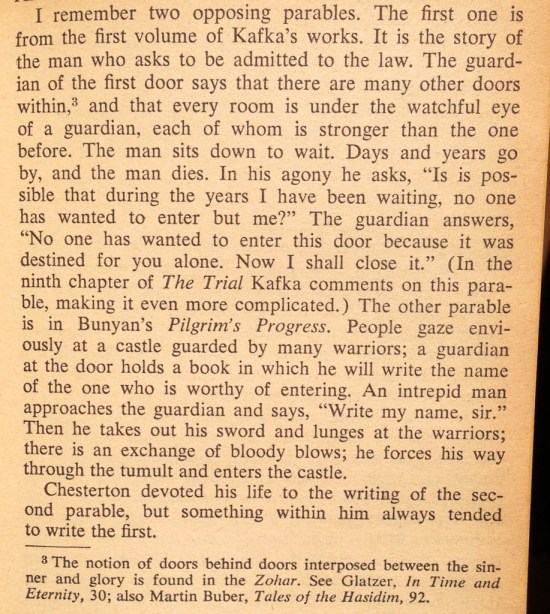
Two opposing parables (Borges citation)

20130802-110802.jpg