Fowl in a Damson Tree — Charles Tunnicliffe

https://i0.wp.com/uploads5.wikipaintings.org/images/charles-tunnicliffe/fowl-in-a-damson-tree%281%29.jpg

“Somebody Wants To Love You” — Redd Kross (Live in 1982)

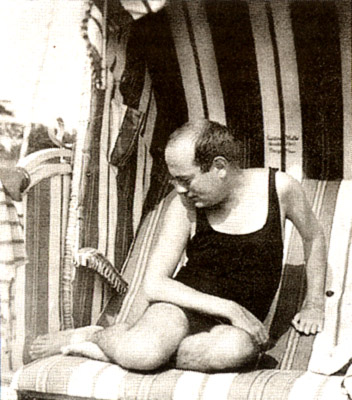
Theodor Adorno Shows Off His Sexy Legs

Three Beautiful Books For Children (and Adults)

As the season for giving arrives, Biblioklept reviews three beautiful books that children and adults alike will enjoy.
20121118-123043.jpg

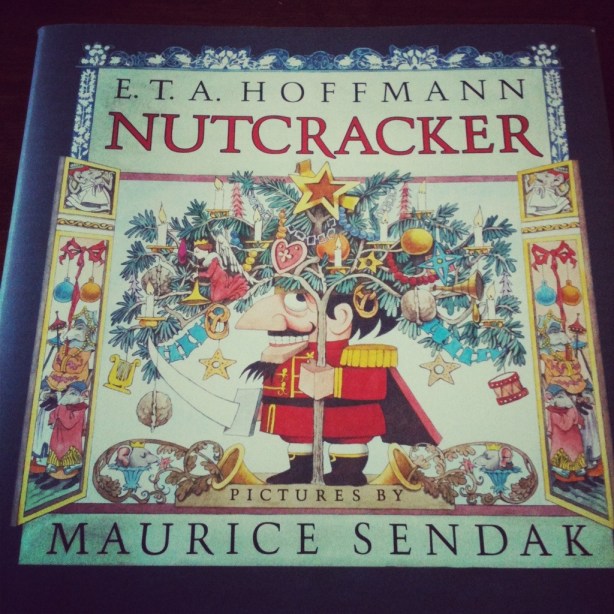
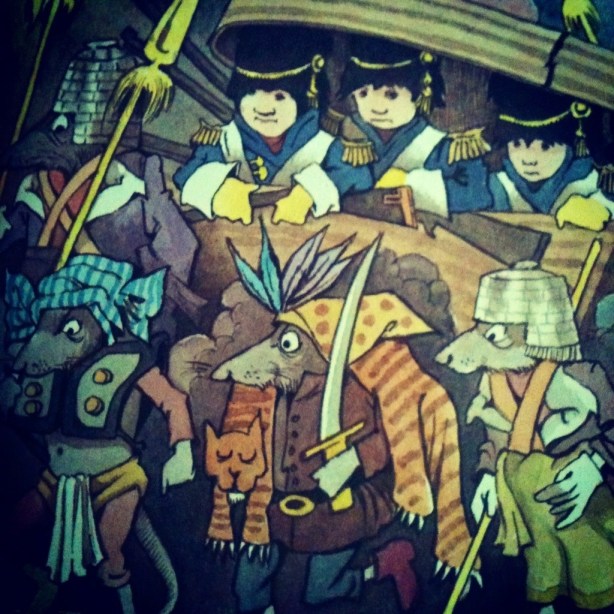
First up is E.T.A. Hoffman’s 1816 Christmas classic Nutcracker in translation by Ralph Manheim and beautifully illustrated by the late Maurice Sendak. In 1983, Sendak designed sets and costumes for the Pacific Northwest Ballet’s adaptation of Nutcracker and in 1984 he translated some of those designs into a book edition.
20121118-123123.jpg

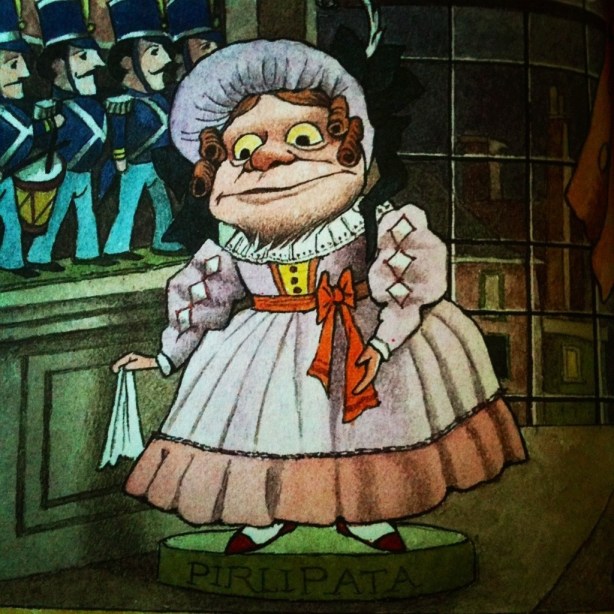
According to a 2001 profile with NPR, Sendak was initially unsure about working on what he considered “the most bland and banal of ballets.” However, upon reading Hoffman’s original text, Sendak discovered a work full of “weird, dark qualities that make it something of a masterpiece,” an observation he notes in his introduction to Nutcracker.

The NPR profile notes that Sendak intended to bring “Hoffmann’s original story back to audiences, especially by having the main character, a girl named Clara, brought back into the story.” Sendak believed

The whole ballet is about her and for the most part you get her in act one, and then she discreetly disappears for the rest of the work. My feeling is this has to be disturbing to children. . . . [She goes] where the wild things are . . . She is overwhelmed with growing up and has no knowledge of what this means. I think the ballet is all about a strong emotional sense of something happening to her, which is bewildering.
20121118-123102.jpg

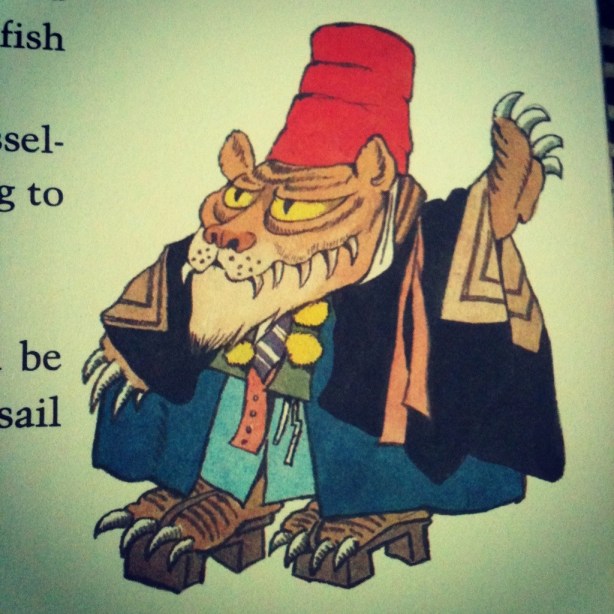
These “strange, weird” qualities—the same tones that made Sendak’s Where the Wild Things Are a classic of children’s literature—are on display in Nutcracker. Hoffman’s text in Manheim’s translation has a wonderfully episodic, even picaresque quality that restores a sense of adventure—and even peril—to the smooth play we might be familiar with sitting through each December.

Nutcracker’s reading level, length, and tone make it likely appropriate for children over eight or nine, but younger children will enjoy reading the story through Sendak’s marvelous and strange illustrations.

Nutcracker is available in a new hardback edition from Random House.
20121118-123054.jpg

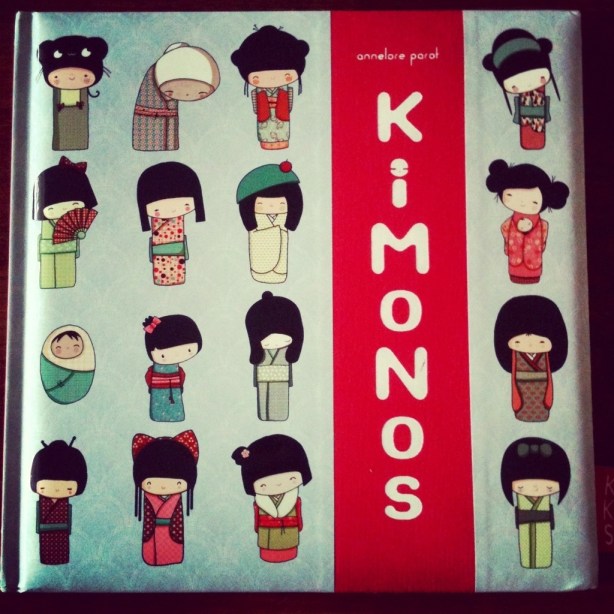
Next up is Annelore Parot’s Kokeshi Kimonos from Chronicle Books.
20121205-150255.jpg

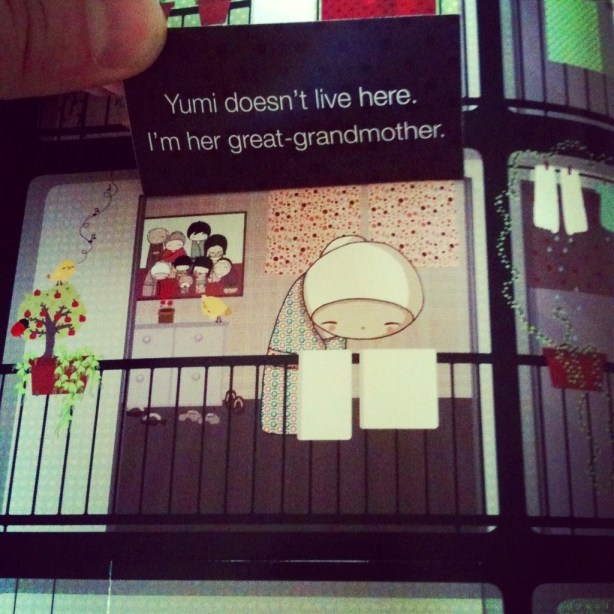
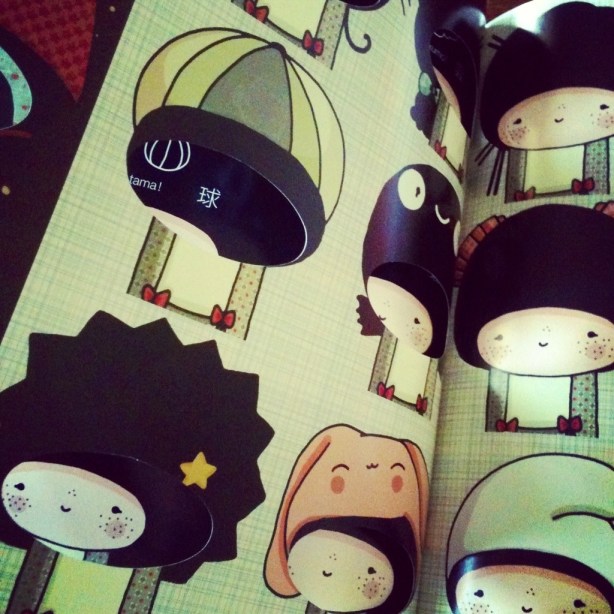
Koskeshi Kimonos is a fun and stylish book that uses kokeshi dolls to showcase facets of Japanese culture including attire and family life. The book features folding flaps, pull out sections, and other interactive features that will appeal to younger children. It’s the sort of aesthetically charming book that adults can enjoy as well.
20121205-150303.jpg

Kokeshi Kimonos will likely appeal to younger readers—five to nine—and seems particularly suited to girls (although this doesn’t mean boys wouldn’t enjoy it, of course). The cute kokeshis are a wonderful alternative to the sterile, plastic world of Barbie and other facile dolls.
20121205-150310.jpg

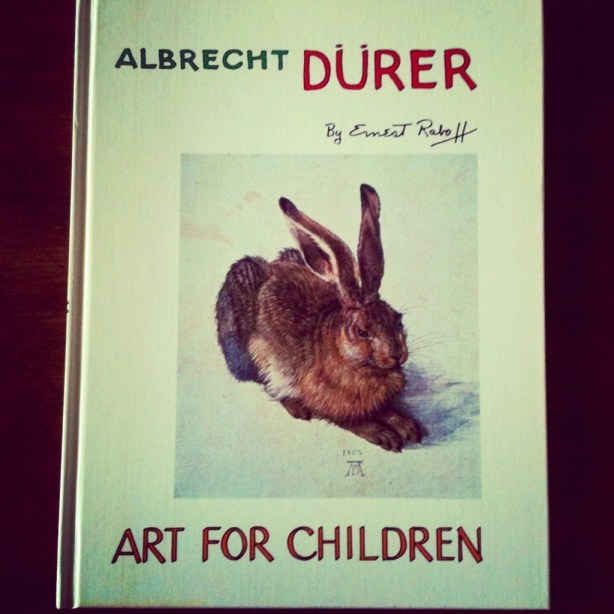
Finally, Ernest Raboff’s Albrecht Dürer, part of his Art for Children series. The book is out of print but not impossible to find.
20121205-150318.jpg

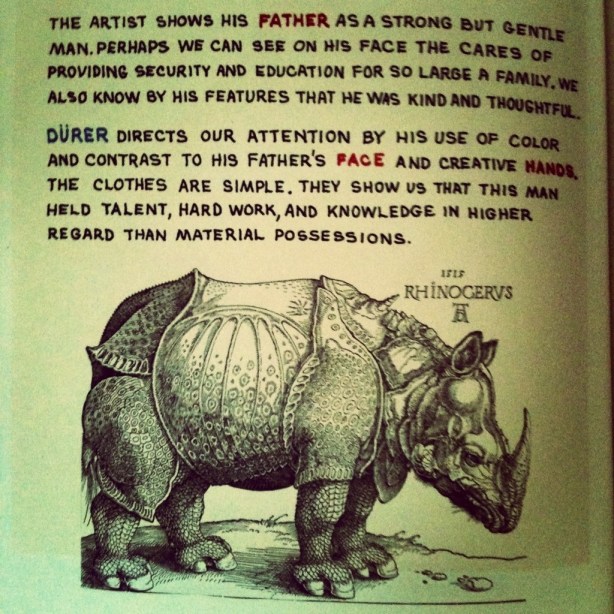
Raboff presents Dürer’s life simply and in clear context, using about a dozen beautiful  prints from the German master, as well as many of his etchings. Raboff also hand letters the book, and provides his own sketches and illustrations occasionally to clarify and explain Dürer’s work.
20121205-150327.jpg

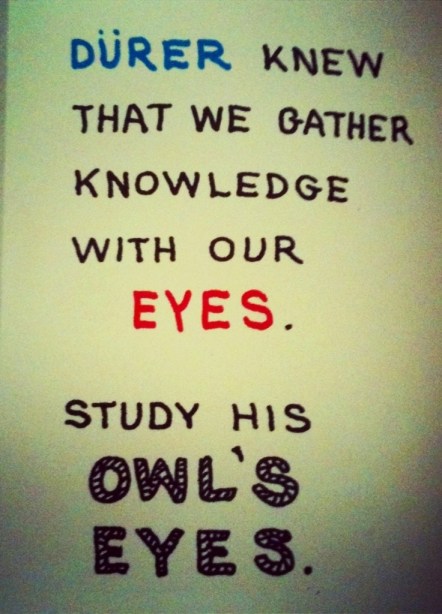
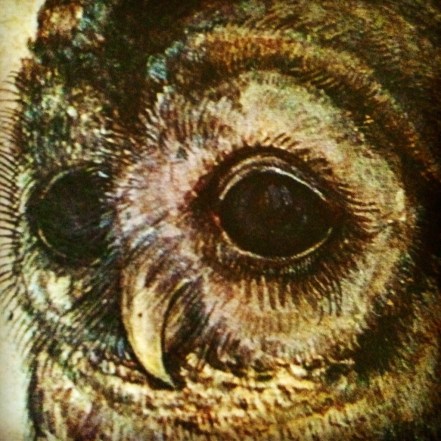
What I love most about Raboff’s book though is the way he integrates elements of art appreciation into his book in subtle, simple ways. Lovely:
20121205-150335.jpg

20121205-150343.jpg


“G-D” — Ben Marcus

gd

The Book — Utagawa Kunisada

https://i0.wp.com/uploads6.wikipaintings.org/images/utagawa-kunisada/not_detected_240346.jpg

Maurice Sendak’s In the Night Kitchen, Read by James Gandolfini

Roller Skate Dance (Heaven’s Gate)

Hermits — Egon Schiele

https://i0.wp.com/uploads4.wikipaintings.org/images/egon-schiele/hermits-1912.jpg

“Up in the Gallery” — Franz Kafka

If some frail tubercular lady circus rider were to be driven in circles around and around the arena for months and months without interruption in front of a tireless public on a swaying horse by a merciless whip-wielding master of ceremonies, spinning on the horse, throwing kisses and swaying at the waist, and if this performance, amid the incessant roar of the orchestra and the ventilators, were to continue into the ever-expanding, gray future, accompanied by applause, which died down and then swelled up again, from hands which were really steam hammers, perhaps then a young visitor to the gallery might rush down the long stair case through all the levels, burst into the ring, and cry “Stop!” through the fanfares of the constantly adjusting orchestra.

But since things are not like that—since a beautiful woman, in white and red, flies in through curtains which proud men in livery open in front of her, since the director, devotedly seeking her eyes, breathes in her direction, behaving like an animal, and, as a precaution, lifts her up on the dapple-gray horse, as if she were his grand daughter, the one he loved more than anything else, as she starts a dangerous journey, but he cannot decide to give the signal with his whip and finally, controlling himself, gives it a crack, runs right beside the horse with his mouth open, follows the rider’s leaps with a sharp gaze, hardly capable of comprehending her skill, tries to warn her by calling out in English, furiously castigating the grooms holding hoops, telling them to pay the most scrupulous attention, and begs the orchestra, with upraised arms, to be quiet before the great jump, finally lifts the small woman down from the trembling horse, kisses her on both cheeks, considers no public tribute adequate, while she herself, leaning on him, high on the tips of her toes, with dust swirling around her, arms outstretched and head thrown back, wants to share her luck with the entire circus—since this is how things are, the visitor to the gallery puts his face on the railing and, sinking into the final march as if into a difficult dream, weeps, without realizing it.

“Up in the Gallery” by Franz Kafka

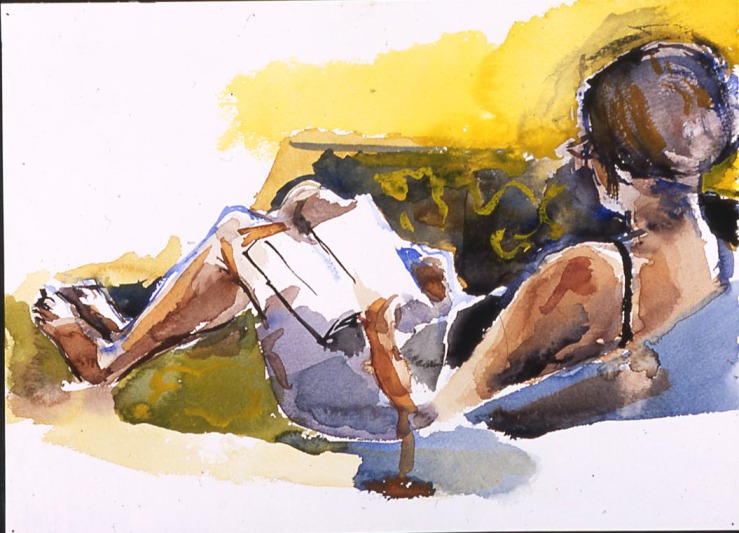
Reading — Dmitry Samarov

reading

Cave of Forgotten Dreams — Werner Herzog (Full Film)

Meadowland — Gerhard Richter

https://i0.wp.com/uploads5.wikipaintings.org/images/gerhard-richter/meadowland.jpg

“Paperhouse” (Live) — Can

Read “The Lady’s Maid,” a Short Story by Katherine Mansfield

“The Lady’s Maid” by Katherine Mansfield

Eleven o’clock. A knock at the door … I hope I haven’t disturbed you, madam. You weren’t asleep – were you? But I’ve just given my lady her tea, and there was such a nice cup over, I thought, perhaps …

… Not at all, madam. I always make a cup of tea last thing. She drinks it in bed after her prayers to warm her up. I put the kettle on when she kneels down and I say to it, “Now you needn’t be in too much of a hurry to say your prayers.” But it’s always boiling before my lady is half through. You see, madam, we know such a lot of people, and they’ve all got to be prayed for – every one. My lady keeps a list of the names in a little red book. Oh dear! whenever some one new has been to see us and my lady says afterwards, “Ellen, give me my little red book,” I feel quite wild, I do. “There’s another,” I think, “keeping her out of her bed in all weathers.” And she won’t have a cushion, you know, madam; she kneels on the hard carpet. It fidgets me something dreadful to see her, knowing her as I do. I’ve tried to cheat her; I’ve spread out the eiderdown. But the first time I did it – oh, she gave me such a look – holy it was, madam. “Did our Lord have an eiderdown, Ellen?” she said. But – I was younger at the time – I felt inclined to say, “No, but our Lord wasn’t your age, and he didn’t know what it was to have your lumbago.” Wicked – wasn’t it? But she’s too good, you know, madam. When I tucked her up just now and seen – saw her lying back, her hands outside and her head on the pillow – so pretty – I couldn’t help thinking, “Now you look just like your dear mother when I laid her out!”

… Yes, madam, it was all left to me. Oh, she did look sweet. I did her hair, soft-like, round her forehead, all in dainty curls, and just to one side of her neck I put a bunch of most beautiful purple pansies. Those pansies made a picture of her, madam! I shall never forget them. I thought to-night, when I looked at my lady, “Now, if only the pansies was there no one could tell the difference.”

 … Only the last year, madam. Only after she’d got a little – well – feeble as you might say. Of course, she was never dangerous; she was the sweetest old lady. But how it took her was – she thought she’d lost something. She couldn’t keep still, she couldn’t settle. All day long she’d be up and down, up and down; you’d meet her everywhere, – on the stairs, in the porch, making for the kitchen. And she’d look up at you, and she’d say – just like a child, “I’ve lost it, I’ve lost it.” “Come along,” I’d say, “come along, and I’ll lay out your patience for you.” But she’d catch me by the hand – I was a favourite of hers – and whisper, “Find it for me, Ellen. Find it for me.” Sad, wasn’t it? Continue reading “Read “The Lady’s Maid,” a Short Story by Katherine Mansfield”

Portrait of Dr. Hugo Koller — Egon Schiele

https://i0.wp.com/uploads5.wikipaintings.org/images/egon-schiele/portrait-of-dr-hugo-koller-1918.jpg

Other World — MC Escher

https://i0.wp.com/uploads1.wikipaintings.org/images/m-c-escher/other-world.jpg