Men Reading — Francisco Goya

A Lobster — Albrecht Dürer

Ralph Ellison Interview (Film, 1966)

Chris Ware on DFW’s Novel The Pale King

Crippled Robot painting by Chris Ware

Cartoonist/graphic novelist/chronicler of shame and despair Chris Ware wrote about his favorite books for Foyles bookstore. The list includes UlyssesMoby-Dick, and works by cartoonists like Lynda Barry and Ivan Brunetti. Here’s what Ware wrote about David Foster Wallace’s posthumous novel The Pale King:

The first great novel of the 21st century uses the sinister beauty of the American Tax Code as a springboard from which to launch into a genuinely serious discussion of the origins and importance of civic responsibility amidst the hazy, blurred stupidity of a country in quick decline. Contrary to many reviews, I don’t think it’s about boredom, and it’s certainly not boring. Another posthumous editor-to-manuscript resuscitation, the book hangs heavy with the clotted spectre of Wallace’s suicide, which makes the writing glow all the more painfully through it.

List with No Name #10

1. 2666, Roberto Bolaño

2. The Pale King, David Foster Wallace

3.  Train Dreams, Denis Johnson

4. The Last Novel, David Markson

5. Samuel Johnson Is Indignant, Lydia Davis

6. Agapē Agape, William Gaddis

7. C, Tom McCarthy

8. No Country for Old Men, Cormac McCarthy

9. Sandokan, Nanni Balestrini

10. Open City, Teju Cole

Book Acquired, 9.28.2012

20121002-170012.jpg

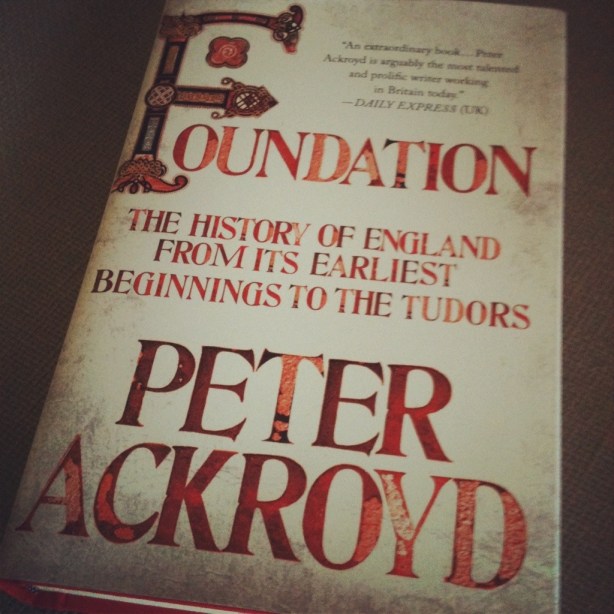
Foundation, a history of England from Peter Ackroyd. From a recent Guardian profile:

Ackroyd’s trademark insight and wit, and the glorious interconnectedness of all things, permeate each page. One thing that struck me was the realisation that history isn’t nearly as linear as we thought. Something is invented, or discovered, or philosophised, and we tend to think that that’s knowledge known from then on, but even in this single volume there are endless forgettings.

“Absolutely,” comes his fast answer, spoken, as ever, gently and with a strange mix of confidence and self-effacement. “One thing which most interested me was the fact that neglect, or our genius for forgetfulness, occurs at every level of social and political activity. The same mistakes, the same confusions, occur time and time again. It sometimes seems to me that the whole course of English history was one of accident, confusion, chance and unintended consequences – there’s no real pattern.”

What he discovered, or rediscovered, is that “what underlines that random happenstance are the deep continuities of national life that survive, uninfluenced by the surface events. In this book, I have little chapters on, say, medieval medicine, or punishment, or medieval humour, simply to convey the broad continuities that underlie this bewildering range of events. Continuities of the soil, the land, the earth.” And these help create human – English – sensibilities? “Yes. As I said in my London book, it’s a sort of territorial imperative, the landscape; the shape of the geology, almost, has a definite though not comprehended effect on human behaviour, human need. So that’s one of the things I was trying to explore I suppose.”

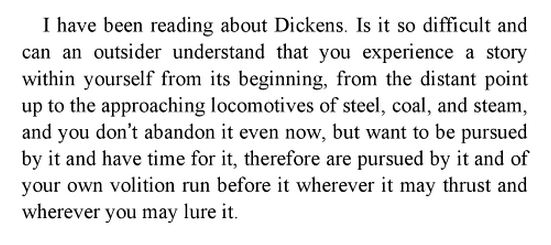
“I have been reading about Dickens” (Kafka)

(From Kafka’s Diaries).

Man Seated by Radiator — Norman Rockwell

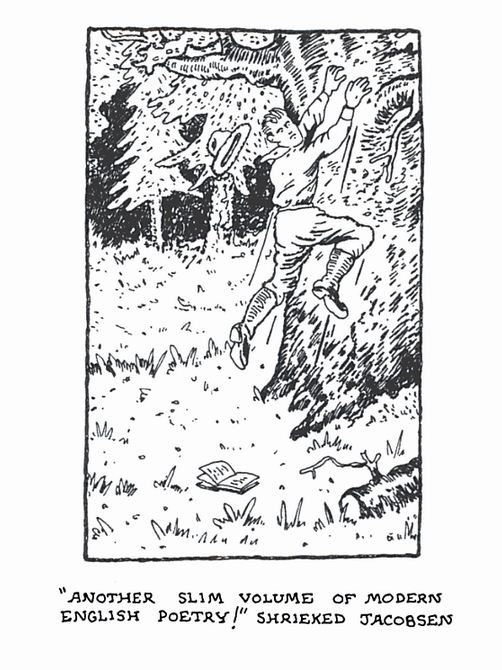
Glen Baxter Comic

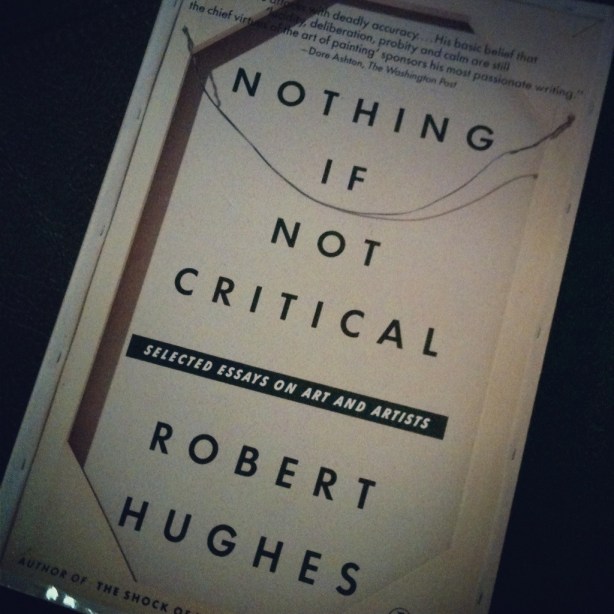
Robert Hughes’s Nothing If Not Critical (Book Acquired, 10.1.2012)

20121001-200452.jpg

Collection of Robert Hughes essays, Nothing If Not Critical.

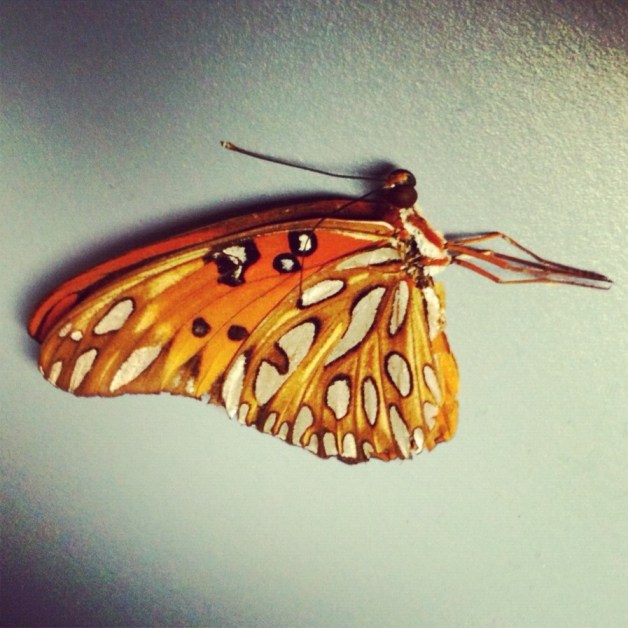
I also found this butterfly on the ground an hour before finding the book:

20121001-200501.jpg

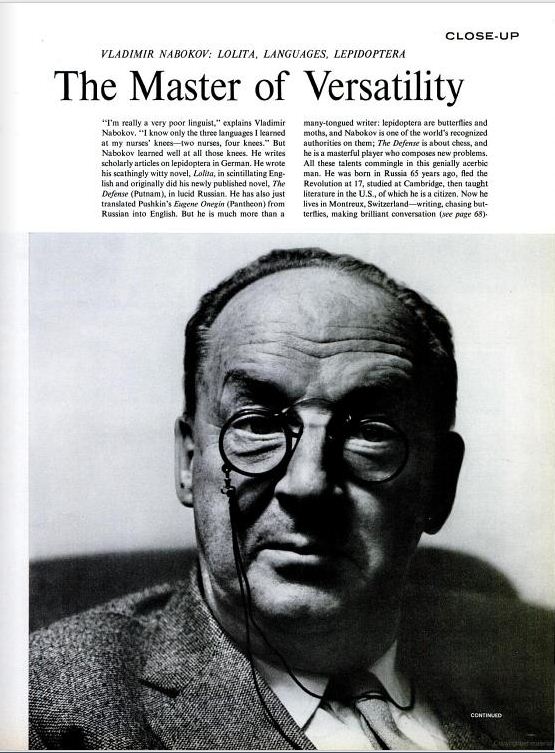
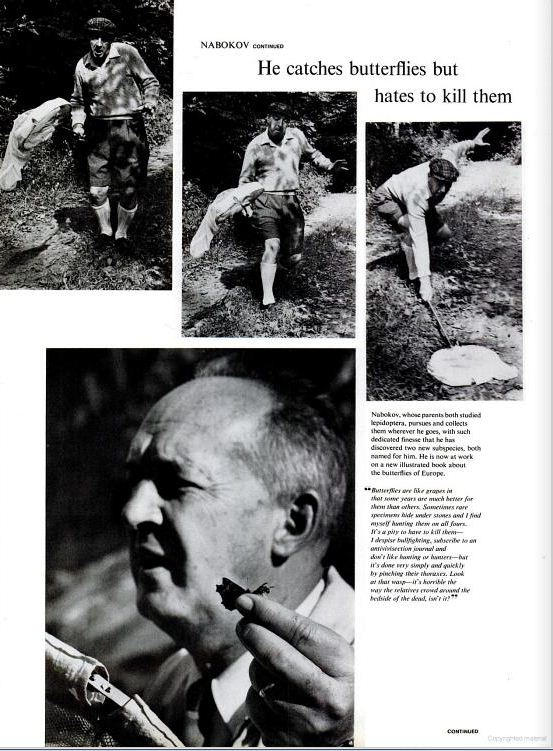
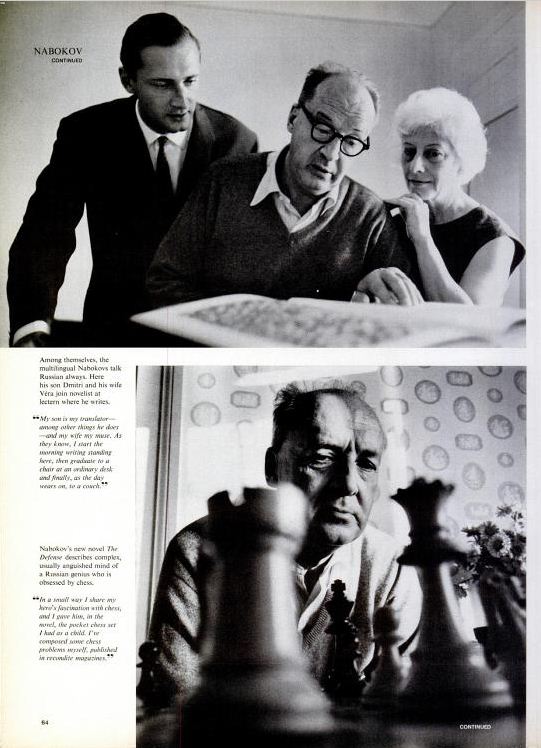
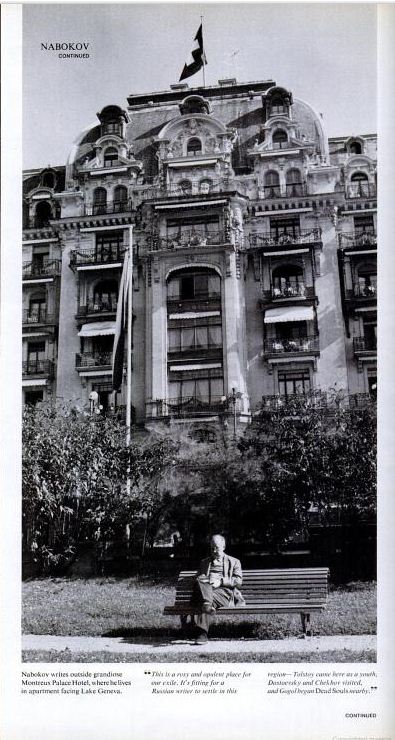
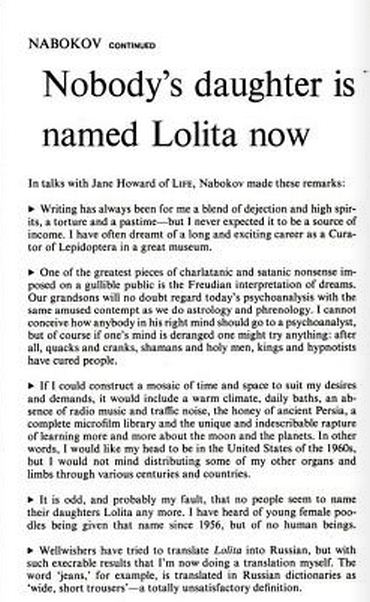
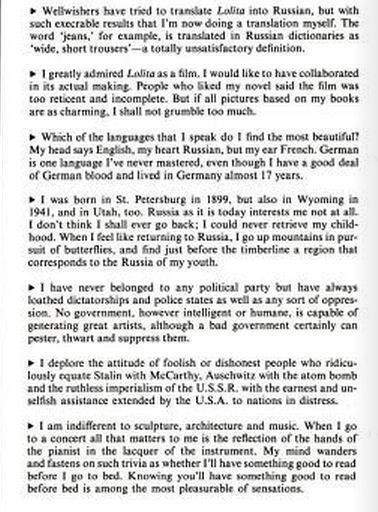
Vladimir Nabokov: Lolita, Languages, Lepidoptera (1964 LIFE Magazine Profile)

(From a 1964 LIFE profile; my favorite line: “It is odd, and probably my fault, that no people seem to name their daughters Lolita anymore. I have heard of young female poodles being given that name since 1956, but of no human beings.”)

Self-discovery (Kafka)


(From Kafka’s diaries).

In the Boat — Konstantin Korovin

BBC Documentary on Goya’s Third of May 1808

Dying Centaur — Giorgio de Chirico

Read “Bobok,” a Short Story by Fyodor Dostoevsky

“Bobok,” a short story by Fyodor Dostoevsky:

Bobok — From Somebody’s Diary

Semyon Ardalyonovitch said to me all of a sudden the day before yesterday: “Why, will you ever be sober, Ivan Ivano- vitch? Tell me that, pray.”

A strange requirement. I did not resent it, I am a timid man; but here they have actually made me out mad. An artist painted my portrait as it happened: “After all, you are a literary man,” he said. I submitted, he exhibited it. I read: “Go and look at that morbid face suggesting insanity.”

It may be so, but think of putting it so bluntly into print. In print everything ought to be decorous; there ought to be ideals, while instead of that…

Say it indirectly, at least; that’s what you have style for. But no, he doesn’t care to do it indirectly. Nowadays humour and a fine style have disappeared, and abuse is accepted as wit. I do not resent it: but God knows I am not enough of a literary man to go out of my mind. I have written a novel, it has not been published. I have written articles – they have been refused. Those articles I took about from one editor to another; everywhere they refused them: you have no salt they told me. “What sort of salt do you want?” I asked with a eer. “Attic salt?”

They did not even understand, For the most part I translate from the French for the booksellers. I write advertisements for shopkeepers too: “Unique opportunity! Fine tea, from our own plantations… ” I made a nice little sum over a panegyric on his deceased excellency Pyotr Matveyitch. I compiled the “Art of pleasing the ladies”, a commission from a bookseller. I have brought out some six little works of this kind in the course of my life. I am thinking of making a collection of the bons mobs of Voltaire, but am afraid it may seem a little flat to our people. Voltaire’s no good now; nowadays we want a cudgel, not Voltaire. We knock each other’s last teeth out nowadays. Well, so that’s the whole extent of my literary activity. Though indeed I do send round letters to the editors gratis and fully signed. I give them all sorts of counsels and admonitions, criticise and point out the true path. The letter I sent last week to an editor’s office was the fortieth I had sent in the last two years. I have wasted four roubles over stamps alone for them. My temper is at the bottom of it all.

I believe that the artist who painted me did so not for the sake of literature, but for the sake of two symmetrical warts on my forehead, a natural phenomenon, he would say. They have no ideas, so now they are out for phenomena. And didn’t he succeed in getting my warts in his portrait – to the life. That is what they call realism.

Continue reading “Read “Bobok,” a Short Story by Fyodor Dostoevsky”

Sebald’s After Nature (Book Acquired, 9.21.2012)

20120930-142202.jpg

W.G. Sebald’s poetry collection After Nature. Not really poetry. Or maybe it is poetry. I don’t know what poetry is.