
Thanks to Lucy Knisley, you never have to read the Twilight series.

From the latest Electric Literature—
For our new Single Sentence Animation, J. Robert Lennon has chosen a sentence from his story “Hibachi” that depicts a turning point in Phillip and Evangeline’s marriage: the night she reveals she is one furious Hibachi master.
The sentence: “And then, with a motion so swift and subtle it was hard to be certain that it had happened, she pulled a wooden match from a pocket, scraped it against the exhaust hood, and set the onion alight. ”
Single Sentence Animations are creative collaborations. The writer selects a favorite sentence from his or her work and the animator creates a short film in response.
Animation and sound by Benk.
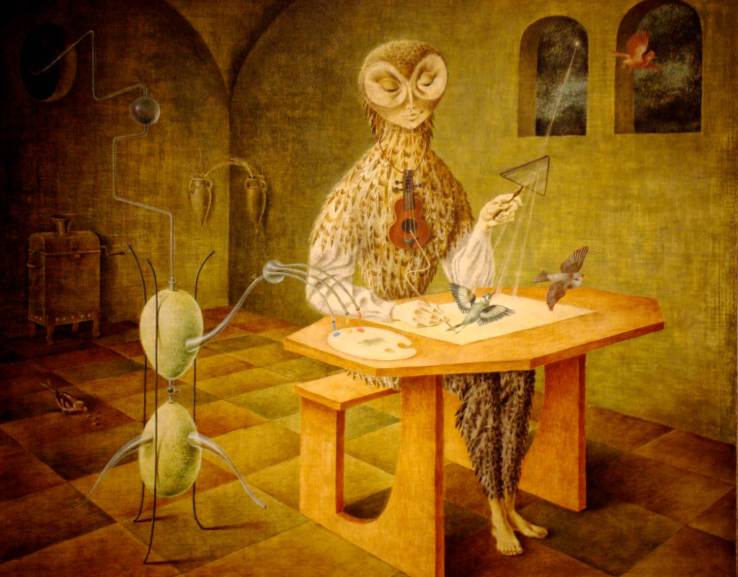
Even more from F. Scott Fitzgerald’s Notebooks—
Slang (collegiate)
A Jeep……………….Orchid Consumer
Floating……………….Long Dress
Drag……………….Main Street
Jelly……………….Small Date
Joe College……………….Collegiate
A drip……………….Bird<
” of the pt. water……………….Bird
Clapping……………….Cutting in.
Trucking……………….Walking like that.
Smooch)
Perch) Necking
Pitch and Fling Woo)
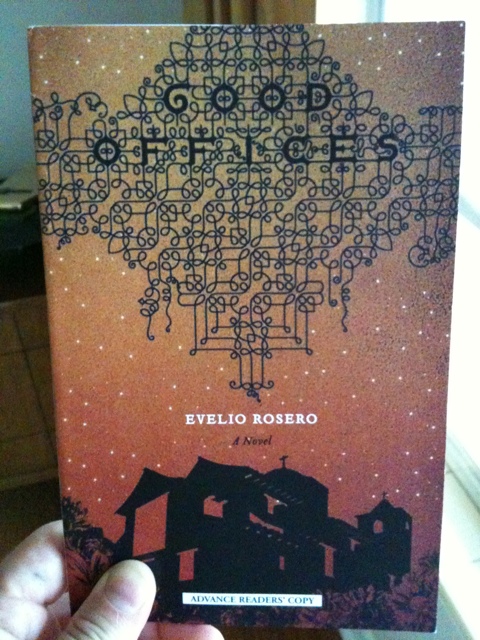
The good people at New Directions were kind enough to send me a copy of Colombian author Evelio Rosero’s novel, Good Offices, a satire of the Catholic Church in Latin America with a hunchback for a hero. I am intrigued. Anne McClean translates. Review forthcoming.
More from F. Scott Fitzgerald’s Notebooks. Apparently young Scottie was into Hume against Lock [sic]—
Notes of Childhood:
Make a noise like a hoop and roll away
She’s neat ha ha
Grandfather’s whiskers
Aha, she laughed
Annex rough house
Hume against Lock
Changing Voice
Snow
Hot dogs
Hair oily and pumps from notes
Miss Sweet’s school
Folwell Paulson
Each Bath
Writing in class
Debates
It’s one thing to call a man
Story of dirty shirt
Trick show lemonade stand

F. Scott Fitzgerald’s Notebooks are crammed with little sketches, scenes, observations, and, uh, notes (obviously). Although they are brief, his notes on Ernest Hemingway reveal much about Fitzgerald’s agon with Papa.
Ernest—until we began trying to walk over each other with cleats.
Snubs—Gen. Mannsul, Telulah phone, Hotel O’Connor, Ada Farewell, Toulman party, Barrymore, Talmadge, and M. Davies. Emily Davies, Tommy H. meeting and bottle, Frank Ritz and Derby, Univ. Chicago, Vallambrosa and yacht, Condon, Gerald in Paris, Ernest apartment.
Day with a busy man. Combine the day of Ernest’s pictures, the man of genius episode,
As to Ernest as a boy—reckless, adventurous, etc. Yet it is undeniable that the dark was peopled for him. His bravery and acquired characteristics.
Nevertheless value of Ernest’s feeling about the pure heart when writing—in other words the comparatively pure heart, the “house in order.”
That Willa Cather’s poem shall stand at beginning of Mediaval and that it shall be the story of Ernest.
Just as Stendahl’s portrait of a Byronic man made Le Rouge et Noir so couldn’t my portrait of Ernest as Phillipe make the real modern man.
Didn’t Hemmingway say this in effect: If Tom Wolfe ever learns to separate what he gets from books from what he gets from life he will be an original. All you can get from books is rhythm and technique. He’s half-grown artistically—this is truer than what Ernest said about him. But when I’ve criticized him (several times in talk) I’ve felt bad afterwards. Putting sharp weapons in the hands of his inferiors.
Ernest Hemingway, while careful to avoid cliches in his work, fairly revels in them in his private life, his favorite being Parbleu (“So what?”) French, and “Yes, We Have No Bananas.” Contrary to popular opinion he is not as tall as Thomas Wolfe, standing only six feet five in his health belt. He is naturally clumsy with his body, but shooting from a blind or from adequate cover, makes a fine figure of a man. We are happy to announce that his work will appear in future exclusively on United States postage stamps.
Parallel of Ernest’s and French conversation as opposed to Gerald and me and U.S.A. emotional bankruptcy.
Do you know what your affair was founded on? On sorrow. You got sorry for each other. (Did Ernest borrow this one?)
Very strong personalities must confine themselves in mutual conversation to very gentle subjects. Everything eventually transpired—but if they start at a high pitch as at the last meeting of Ernest, Bunny and me their meeting is spoiled. It does not matter who sets the theme or what it is.
Ernest taking me to that bum restaurant. Change of station implied.
Ernest would always give a helping hand to a man on a ledge a little higher up.
Ernest Hemingway and Ernest Lubitsch—Dotty “We’re all shits.”
I talk with the authority of failure—Ernest with the authority of success. We could never sit across the table again.
People like Ernest and me were very sensitive once and saw so much that it agonized us to give pain. People like Ernest and me love to make people very happy, caring desperately about their happiness. And then people like Ernest and me had reactions and punished people for being stupid, etc., etc. People like Ernest and me————
Tom Fast’s story of Ernest.
Ernest and “Farewell to Arms”—producer story.
An inferiority complex comes simply from not feeling you’re doing the best you can—Ernest’s “drink” was simply a form of this.
It [For Whom the Bell Tolls] is so to speak Ernest’s ’Tale of Two Cities’ though the comparison isn’t apt. I mean it is a thoroughly superficial book which has all the profundity of Rebecca.
I want to write scenes that are frightening and inimitable. I don’t want to be as intelligible to my contemporaries as Ernest who as Gertrude Stein said, is bound for the Museums. I am sure I am far enough ahead to have some small immortality if I can keep well.
But there was one consolation: They could never use any of Mr. Hemingway’s four letter words, because that was for fourth class and fourth class has been abolished—
(The first class was allowed to cheat a little on the matter.)
But on the other hand they could never use any two letter words like NO. They had to use three letter words like YES!Bald Hemingway characters.
David Mitchell talks about the inspiration behind his novel The Thousand Autumns of Jacob de Zoet. (Read our review).
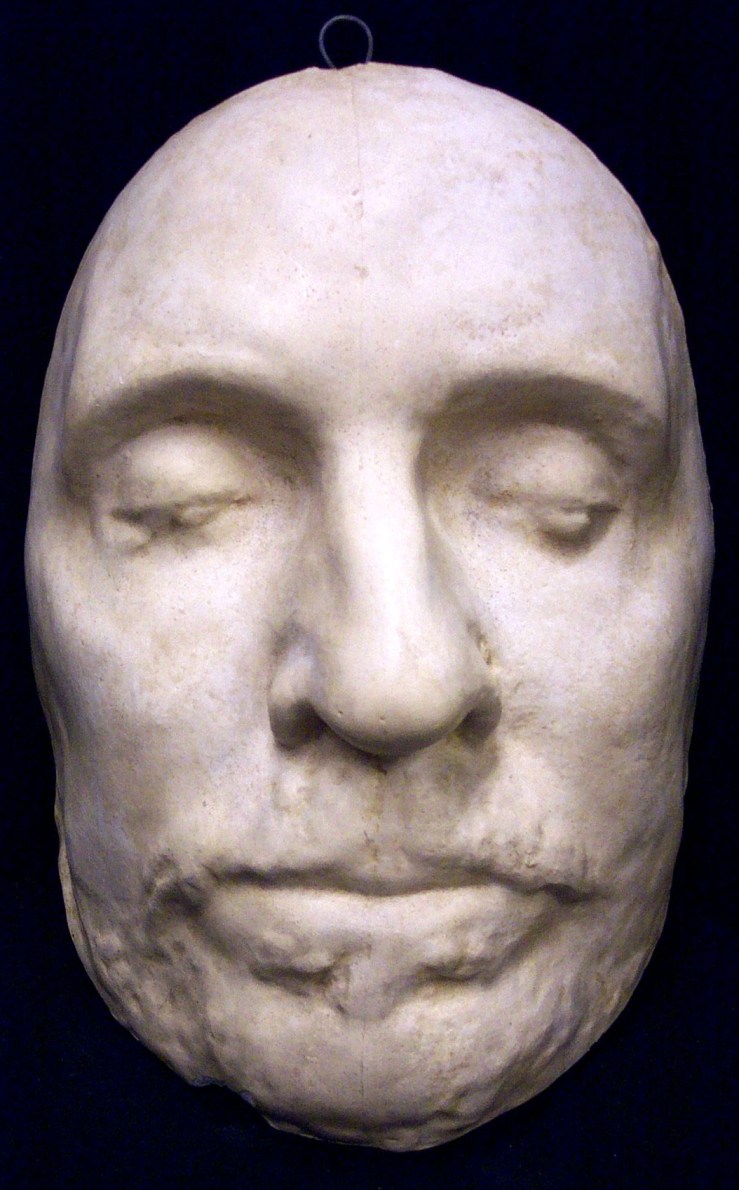

Orson Welles talks about acting and directing in a 1960 interview in Paris. The interviewer steers the conversation to Charlie Chaplin, who bought Orson Welles’s idea for the film Monsieur Verdoux—and then cut Welles out of the creative process.
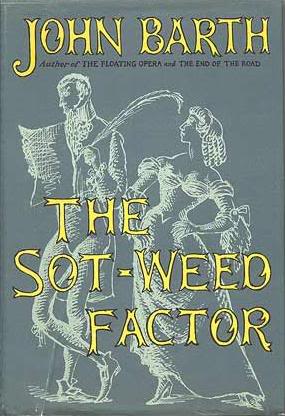
I finished the audiobook version of John Barth’s novel The Sot-Weed Factor last week. I’d tried to read the novel a few times in the past, never getting past page 56 of my Bantam mass market edition, which runs to 819 pages. That’s a long book. The unabridged audiobook runs just over 36 hours. That’s a long time. Too long, really, for what Barth has to offer here, but before I get into that, I’ll give a tip of the hat to the excellent production values and the wonderful voice talent of Geoffrey Centlivre, who is by turns expressive, wry, pathetic, bathetic, or understated, depending on what Barth’s prose calls for. He understands the novel and does an estimable job translating it.
The Sot-Weed Factor enjoys the reputation of being Barth’s finest work (although let me just go ahead and disagree with this generalized assumption that I’ve attributed to no one in particular and say up front that the novel is ultimately a boring overlong drag and anyone interested in Barth is better off starting with Lost in the Funhouse). The novel parodies a number of literary styles — Bildungsromans, picaresques, Künstlerromans, adventure stories, histories, romances, and serialized narratives in general. Adopting the language (diction, tone, syntax, form and all) of 17th century prose, Barth tells the story of Ebenezer Cooke, a real historical figure whose 1708 poem “The Sotweed Factor, or A Voyage to Maryland, A Satyr” is considered by some literary historians to be the first American satire.
Barth’s Ebenezer is an innocent soul à la Voltaire’s Candide (hero of another picaresque that has the decency to be funnier, sharper, and, ahem, much, much shorter), a would-be poet whose spurious claims to being “Poet Laureate of Maryland” come constantly under fire. Ebenezer attributes his artistic powers (which are dubious at best) to the metaphysical virtue of his virginity; one of the major conflicts of the plot of The Sot-Weed Factor is poor Ebenezer defending his cherry from the various whores and ne’er-do-well who populate the book. And there are a lot of these whores and ne’er-do-wells: rascals and pirates and pimps and thieves and slavers and sluts of every stripe shuffle through The Sot-Weed Factor, underscoring several of Barth’s themes — innocence versus experience, perception versus reality, virtue versus vice, and stability versus flux.
In my reading, this last theme — the instability of identity, particularly American identity — is the major thrust of The Sot-Weed Factor. But before going into this idea, I suppose I should share at least some of the plot, or at least try to summarize it, which is almost impossible, as it shifts and slants and reverses in every chapter. In the interest of making a (very) long story short, dear reader, and making my job a bit easier, I’ll borrow from Don D’Ammassa’s summary (he’s got a great Barth page for those inclined)—
The story is set during the 17th Century. Ebenezer Cooke is the son of a well-to-do British gentleman who owns property in the Maryland colony in the New World. Ebenezer and his sister are tutored by Henry Burlingame until his sudden dismissal while they are in their late teens. Ebenezer is sent off to boarding school, where he finds it difficult to form a bond between himself and his environment, eventually retreating into poetry. He is also afflicted by an extreme form of indecisiveness in which he is literally frozen in place, some times for hours on end, incapable of making a decision. His abstraction from the world is reminiscent of Jacob Horner and Todd Andrews, although exaggerated even further.
The plot grows rapidly more complicated. Ebenezer is apprenticed in London, where he fails to prosper. He becomes infatuated with a prostitute, despite his own militant virginity; his poor prospects are then conveyed to his father, who ships him off to the family holdings in the colonies. Ebenezer decides to request a commission from Lord Calvert, governor of Maryland, to become its official Poet Laureate, believes that he has been awarded that honor, and sets out for the new world. In the course of that journey, he rediscovers Henry Burlingame, who has taken on another identity, is kidnapped by pirates, walks the plank, and eventually reaches land.
The complexity and twisted humor that ensue cannot be adequately described in a few words. Secret identities are revealed, coincidences flourish, absurd situations follow in rapid sequence. Ebenezer is honored and disgraced, is captured by angry natives and threatened with death. He discovers pieces of a secret journal of the adventures of John Smith and Pocahontas, and helps Henry Burlingame discover the truth about his own origins. There is considerable bawdy content, much of it surrounding the mysterious process by which John Smith managed to sexually satisfy Pocahontas.
I’m impressed with D’Ammassa’s concision here—he neatly puts together the major elements of a sprawling, fat novel. As you may see from D’Ammassa’s summary, The Sot-Weed Factor is all about the instability of place, the lack of solid ground in swampy Maryland, the discontinuity of historical narrative, the inability of art to overcome reality, and the rapid reversals of fortune and identity that might occur in a New World. It’s all “assy-turvy,” to use one of the character’s terms. The Sot-Weed Factor here shows its post-modern bona fides; there’s a constant inconstancy, a doubling of people, places, things, and then a trebling. Ebenezer’s Old World romantic virtues—his insistence on the metaphysical value of his virginity and the power of his feeble poetry—are not just contested but obliterated (only poor Eb’s too blind to see this). Barth reworks American history, dismantling and satirizing the Pocahontas narrative, and emphasizing the plight of the native Americans, enslaved Africans, and indentured Europeans in this brave new world.
The book is also a dismantling of literary history, a jab at metaphysical poetry and identity narratives like Tom Jones or the work of Dickens. While Ebenezer spouts the loftiest supplications to his airy muse, Barth keeps his humor stuck sloppily in the toilet. The Sot-Weed Factor surpasses any ribald work I’ve ever read. The book is larded with dick jokes, fart jokes, jokes about diarrhea, jokes about sex and venereal diseases and so on—it culminates with (as D’Ammassa points out above) a riff on 17th century Viagra. In short, Bath focuses most of his keen literary powers on the kind of sophomoric japes that might keep Bevis and Butthead’s attention. Again, it’s all “assy-turvy.”
Barth’s toilet humor is at times funny, but it becomes tiresome over the book’s long duration, especially when it’s often the sole reward for long expanses of poorly-conceived exposition. I found myself bored to tears at times listening to The Sot-Weed Factor, and had to force myself to continue in its final third, a challenge that became easier when the narrative finally picked up a bit. Just a bit though. The book’s major problem is not its bloat though, or its saggy exposition, or even its redundant fart jokes. No, these feel more a symptom than a cause, and I think they are symptom of a too self-satisfied (or self-satisfying) author; over its 800+ pages (or 36+ hours), The Sot-Weed Factor reveals itself as the literary equivalent of a very bright writer jacking off to his own research. In what must be the worst case of unrestrained writing I’ve ever seen (or heard, I suppose), Barth allows two of his characters, catty women arguing, one English, one French, to trade insults with each other, all various euphemisms for “whore.” This process goes on for minutes in the audiobook version and for six goddamn pages in my Bantam edition and, like much of the details in this fat beast, does little or nothing to add to the narrative. It’s as if in his research Barth has dug up dozens and dozens of lovely little antiquated slurs and can’t bear to edit a single one. If the process rewards Barth, it does little for the reader.
But if literary diarrhea is the mode of the book, then I guess it mirrors one of The Sot-Weed Factor’s many rude motifs. Personally, I wish I had my time back. There’s great value in reimagining the origin of America (I think immediately of Terence Malick’s The New World or Toni Morrison’s A Mercy or even some of William Blake’s work), but Barth’s narrative seems too self-indulgent and unrewarding to make any real claims to democratic (or, if I’m feeling harsh, artistic) insight. Perhaps The Sot-Weed Factor is the kind of novel that remains indivisible from its form, and perhaps to a contemporary reader like me this form is just too flabby and flaccid to spark spirit. As I’ve tried to communicate here, Barth has a sharp intellect and he’s more than capable of performing a wry, wise, and often funny analysis of early American history. But he indulges too much in his own sophomoric games and winks too often at the reader. It’s amazing that such a long book could feel so hollow.

