The Believer’s 2009 Reader Survey: (What Some Jokers Thought Were) The Best Books of 2008

200903

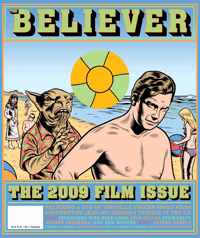
The new issue of The Believer showed up in my overstuffed mailbox today. It’s the film issue, featuring a DVD of short films about Jean-Luc Goddard’s travels in the U.S. My second favorite Jean-Luc! (Seriously, Alphaville is great, but it’s no ST:TNG). The issue also features The Believer‘s annual reader survey. Here are the results, from their website, with our parenthetical thoughts and links.

READER SURVEY RESULTS

  1. 2666—Roberto Bolaño (This seems pretty obvious. Go, read it, now. Not that awards mater, but it also just won the National Book Critics Circle Award for best fiction).
  2. Unlucky Lucky Days—Daniel Grandbois
  3. Lush Life—Richard Price (After hearing a great interview with Price on NPR, I really wanted to read this book–and I really don’t care for detective fiction. And I never got into The Wire. I guess it’s not really genre fiction though. I guess I should read it).
  4. The Lazarus Project—Aleksandar Hemon
  5. Netherland—Joseph O’Neill (Heard lots of good things about this, but neglected to solicit a copy).
  6. Vacation—Deb Olin Unferth (Haven’t read it. Like her short stories in McSweeney’s though).
  7. Unaccustomed Earth—Jhumpa Lahiri (Unsolicited promo copy of the new trade paperback edition showed up in the mail a few days ago. I will try to read it).
  8. Arkansas—John Brandon
  9. A Mercy—Toni Morrison (This topped my best of 2008 list only because I hadn’t read 2666 yet–to be fair, however, they’re both great, totally different books, so no real reason why one should top another).
  10. Indignation—Philip Roth (Jesus. Do people still read Philip Roth. Who knew?) Continue reading “The Believer’s 2009 Reader Survey: (What Some Jokers Thought Were) The Best Books of 2008”

Nancy Baker’s Surreal Arcadian Fantasies

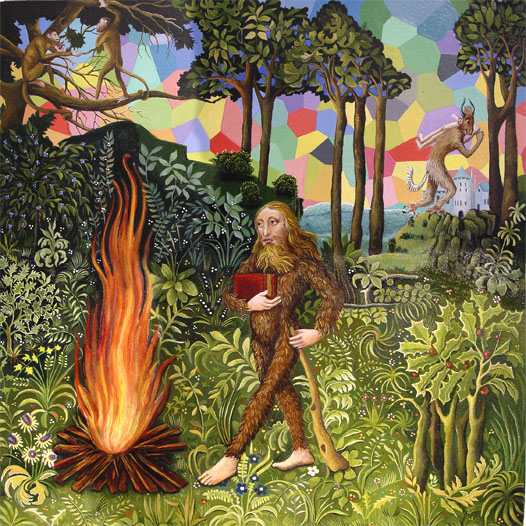
Wildman -- Nancy Baker

We are just loving the strangely disquieting art of Nancy Baker. Baker’s world–much of it a night world–teems with vibrant birds and manic jesters, spaceships and dissolving flowers. Paintings like Plato’s Revenge and Listening to Reason suggest achronistic landscapes, merging Arcadian fantasy, Renaissance tropes, and retrofuturism, while works such as In and Of Itself (below), Temptation, and Pokey both allude to–and at the same time puncture–the conflation of religious myths, fairy tales, and modern pop narratives that inform our culture.

In and Of Itself
In and Of Itself -- Nancy Baker

We love the playfulness at work in Baker’s paintings, an overt and primal innocence impinged by a looming sinister something. There’s an underlying tension here that everything might, in the briefest of moments, snap into incoherence and chaos. Yet each painting retains a core of displaced meanings, an invitation to the viewer to tell herself a story. Great stuff.

Passages From James Joyce’s Finnegans Wake — Mary Ellen Bute

finnegan

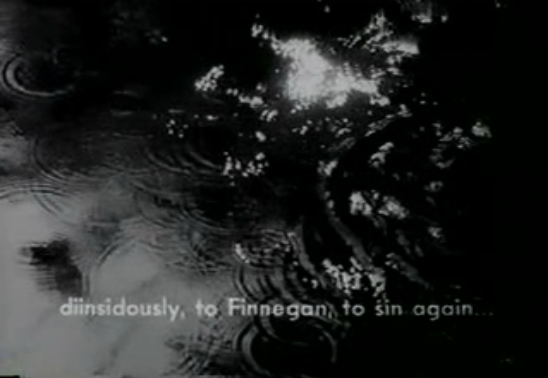
In the mid-sixties, Mary Ellen Bute made a surreal little film that kinda sorta illustrates James Joyce’s most inscrutable novel, Finnegans Wake. Watch the whole thing at UbuWeb Film. And you were going to celebrate St. Patrick’s Day by simply getting stinking drunk…for shame…for shame!

Bodies — Susie Orbach

bodies-front-2

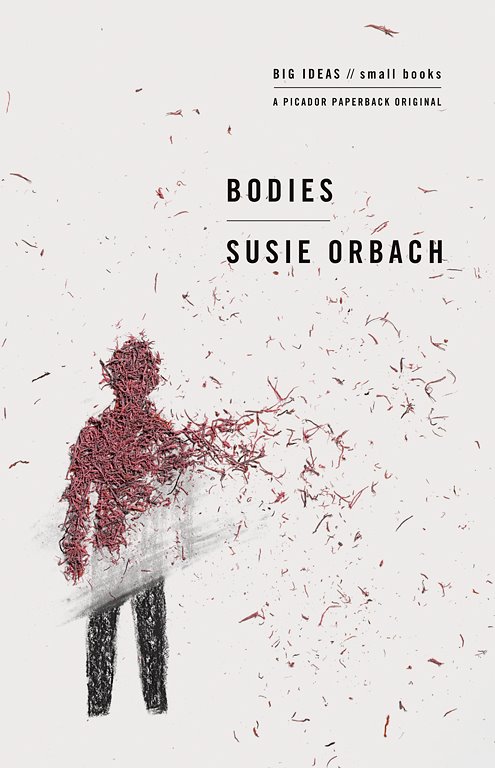
In Bodies, feminist psychoanalyst Susie Orbach explores contemporary body issues within a global culture, arguing that bodies are “not in any sense matter of fact, the simple outcome of DNA,” but rather are the products of social and cultural construction. Orbach writes that her work aims “to bolster our resilience in the face of unprecedented attack and to bring sustainability to our bodies so that we can live with and from them more peaceably.” This goal is, of course, no simple task, as the course of Bodies demonstrates.

As a psychoanalyst, Orbach of course takes many cues from Freud, but in her introduction she clearly states the need to move beyond Freud’s theories (it’s all in your head) to an understanding of “the impact of contemporary social practices” — predominantly, in her book, the influence of a media-saturated, image-fueled Western culture on the rest of the world. At stake, Orbach claims, “is a transgenerational transmission of anxious embodiment.” In layman’s terms: we imprint our own desires and fears and hangups about the body–feelings generated in large part from our culture–onto our children.

To explore these problems, Orbach–like Freud–presents a series of fascinating case studies, including a man who elects to have his legs amputated in order to paradoxically feel “whole,” transgendered persons, and abused and neglected children. Orbach is particularly concerned with the drive toward “choice” — the concept that one might actively “choose” how one’s body is shaped, and, as such, she repeatedly engages the discourses of elective plastic surgery, modern weight-loss dieting, and eating disorders. Orbach confronts the reality that many of our “choices” are actually the products of “the new visual grammar” of mass media, the iteration of Photoshopped and airbrushed bodies that bombard our senses hundreds, thousands of times daily. She extends this problem beyond the West, to show the ways in which mass culture affects the psyche of the rest of the world’s denizens.

von-hagens_bodyworlds
from Bodyworlds -- Gunther Von Hagen

For Orbach, a future of genetic alteration toward the perfecting of a culturally-constructed ideal is a horrible nightmare. Instead, she argues, our “sturggle is to recorporalise our bodies so that they become a place we live from rather than an aspiration always needing to be achieved.” In order to achieve this, Orbach avers that we “urgently need to curtail the commercial exploitation of the body and the diminution of body variety, so that we and our children can enjoy our bodies, our appetites, our physicality and our sexuality.” Orbach’s solution returns to her concept of “transgenerational transmission” — namely, parents need to understand their children’s needs for caring adult responses, and the myriad ways in which these responses will inform the child’s attitude about his or her own body.

In the U.S., Bodies has been published as part of Picador’s BIG IDEAS // small books series and it’s a perfect fit for the series: an engaging and relevant philosophical text rooted in a central academic argument, but written in a style that will appeal to a popular audience without dumbing down anything. Like the two books of the series we reviewed last year, Steven Lukes’s Moral Relativism and Slavoj Žižek’s Violence, we might not agree with everything the author has written here, but we cannot deny that this is an enthralling and important discussion. Highly recommended.

Bodies is now available from Picador books.

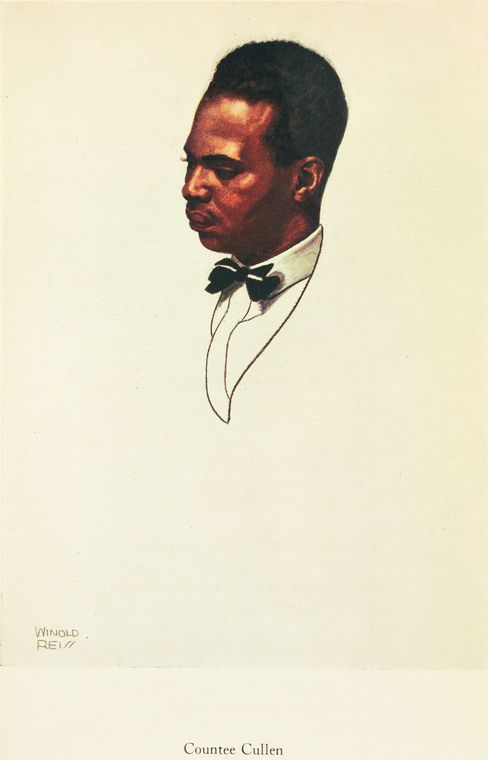
“Saturday’s Child” — Countee Cullen

counteecullen

We’d never read this poem until earlier today when a student brought it to our attention. We love all the double-edged wordplay, the caustic tone, and the recontextualization of a Mother Goose classic. Great stuff.

“Saturday’s Child” by Countee Cullen–

Some are teethed on a silver spoon,
With the stars strung for a rattle;
I cut my teeth as the black racoon–
For implements of battle.

Some are swaddled in silk and down,
And heralded by a star;
They swathed my limbs in a sackcloth gown
On a night that was black as tar.

For some, godfather and goddame
The opulent fairies be;
Dame Poverty gave me my name,
And Pain godfathered me.

For I was born on Saturday–
“Bad time for planting a seed,”
Was all my father had to say,
And, “One mouth more to feed.”

Death cut the strings that gave me life,
And handed me to Sorrow,
The only kind of middle wife
My folks could beg or borrow.

Men Are Mortal, Pictures Too

discs-avec-spirales
Discs avec Spriales -- Marcel Duchamp

We picked up a pretty cool book last weekend at the Friends of the Library Sale–Pierre Cabbanne’s Dialogues with Marcel Duchamp. Duchamp is way more straightforward than you would think, and also quite funny. He’s also, as his work would attest, often reflective and philosophical. Here, he waxes heavy on art, beauty, transience, and mediocrity:

I think painting dies, you understand. After forty or fifty years a picture dies, because its freshness disappears. Sculpture also dies. This is my own little hobbyhorse, which no one accepts, but I don’t mind. I think a picture dies after a few years like the man who painted it. Afterward it’s called the history of art. There’s a huge difference between a Monet today, which is black as anything, and a Monet sixty or eighty years ago, when it was brilliant, when it was made. Now it has entered history–it’s accepted as that, and anyway that’s fine, because that has nothing to do with what it is. Men are mortal, pictures too.

The history of art is something very different from aesthetics. For me, the history of art is what remains of an epoch in a museum, but it’s not necessarily the best of that epoch, because the beautiful things have disappeared–the public didn’t want to keep them. But this is philosophy…

So, I guess all those urinals Duchamp made aren’t so fresh today.

Historic Photos of the University of Florida

turner_cover_uoff

Full disclosure: not only am I a proud University of Florida graduate, but so is my wife, both of my parents, and most of my good friends. So, clearly, I am predisposed to a certain amount of interest in Turner Publishing’s Historic Photos of the University of Florida. This large, hardback coffee table book collects 200 black and white archival photos, arranged chronologically with accompanying text and captions by Steve Rajtar. The book spans over 150 years of UF history including the first fifty years when what was to become the University of Florida was still just an unrelated collection of military academies and agricultural institutes. For me, these pre-Gainesville years were the most interesting–I actually didn’t know that much about my alma mater’s history it turns out.

The black and white photos in the collection range from fascinating (turn of the century images of the first Gator football teams; early gatherings of Tomato Clubs) to humdrum (buildings! More buildings!), but all serve to tell the story of the foundation of the Gator Nation. Rajtar’s commentary is both informative and insightful, explicating the background of the photographs presented in the collection. Having lived in lovely Gainesville, I would’ve liked some color photographs to show off both the beautiful campus and the lush terrain, but the black and white does lend an air of consistency–and perhaps austerity–to the book. Although the book ends with a few photos of the past thirty years, the majority of the volume concentrates on the University’s early history–so sorry, no Tebow folks. Still, Historic Photos of the University of Florida is a must for any self-respecting Bull Gator (starving grad students can skip on this one, though).

Semi-related post-script: While you may not have attended the University of Florida, the institution has a great record when it comes to fiction writing. Padgett Powell is the current writer-in-residence (I remember him giving a reading involving some space aliens; this was about a decade ago); Biblioklept faves Chris Adrian and Chirs Bachelder are both proud UF grads (caveat: we can only assume they’re proud (they’re intelligent, why wouldn’t they be proud?)); Harry Crews was writer-in-res pre-Powell–he’s also a grad (in English education, of all things! (sidebar: he also shares The Biblioklept’s birthday (along with Prince, Michael Cera, Paul Gaugin, Gwendolyn Brooks, Nikki Giovanni, Damien Hirst, Bill Hader, and Allen Iverson))). So: plenty of great writers.

Historic Photos of the University of Florida is now available from Turner Publishing.

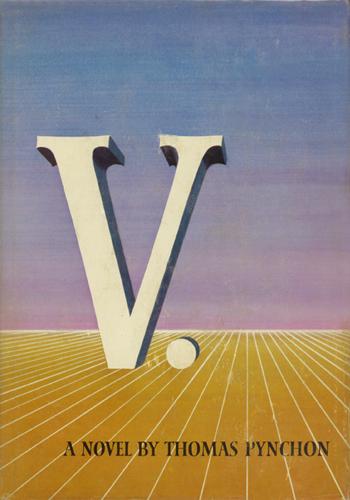
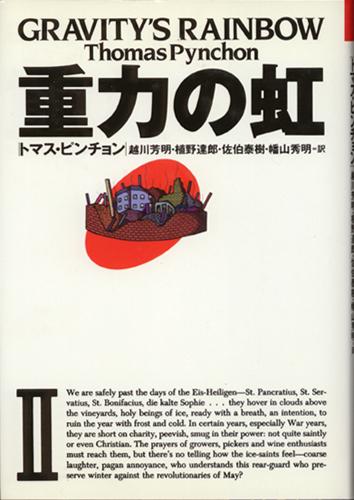
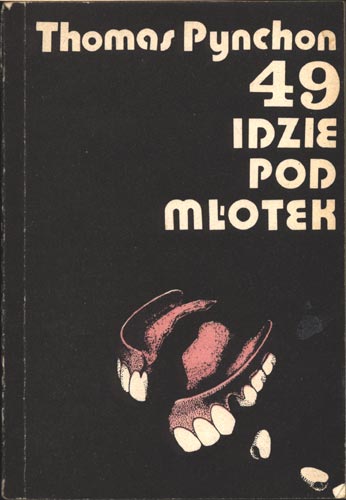
Thomas Pynchon Cover Gallery

Pynchon covers via thomaspynchon.com. The site also has a great collection of Pynchon articles and more, including the classic 1984 essay, “Is It O.K. To Be A Luddite?

v_hb

gr_jp2

lot49_pb_90_pol

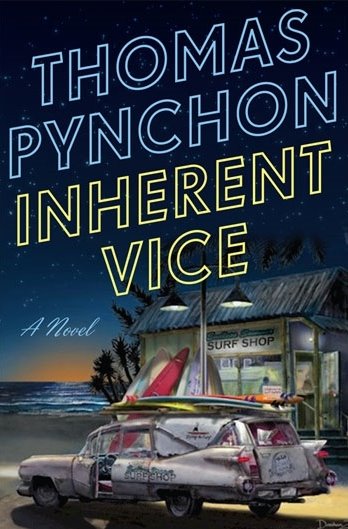
The site doesn’t have any covers for Vineland, Mason & Dixon, or Against the Day yet. Also, they skip over the horrendous cover for Pynchon’s forthcoming novel, Inherent Vice:

inherent-vice

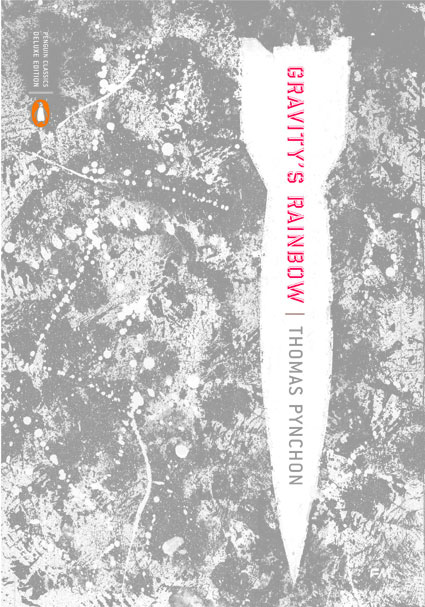
Also omitted: Frank Miller’s cover design for Gravity’s Rainbow:

gravitys-rainbow-722917

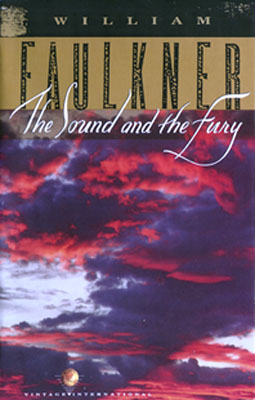
The Sound and the Fury — William Faulkner

tsatfwf

I don’t really know if there’s anything new I can say about Faulkner’s The Sound and the Fury in a blog post, and I’m not in the practice of writing term papers here, and you wouldn’t want to read one anyway. I’ll cop out and be vague but honest: the book was astounding and exhausting. I’ve read a number of Faulkner novels now, and The Sound and the Fury was easily my favorite. I’d attempted it a few times before, only to be thwarted by an inability to commit to the sustained concentration required to comprehend Faulkner’s stream-of-consciousness technique. The first section of the book, told from the perspective of Benjy, the seminal Faulknerian idiot man-child, is particulalry daunting, especially if you have no prior knowledge of the story of the Compson family, and I don’t think I would’ve made it through this reading if I didn’t arleady know the major themes and the trajectory of the plot. I’m actually kinda sorta shocked that the book was published at all, and I really wonder about its earliest audiences–how much context did they have? What guided them through the verbal detritus of the book’s first half?

I suppose that at the time of its publication in 1929, literary audiences were at least somewhat familiar–if not wholly intrigued by–the stream-of-consciousness technique pioneered in books like James Joyce’s Ulysses and Virginia Woolf’s Mrs. Dalloway. I read both of those books years before The Sound and the Fury, and I would make a subjective argument that they are quite a bit easier to enter into in terms of linearity and plot structure. Also, reading TSatF, I couldn’t help but feel the subtle resonance of Ulysses, particular in the constant use of omission. One of the things that makes Ulysses challenging is that Leopold Bloom frequently elides specific referents–we often get a “him” or a “he” or a “she” or an “it” without immediate context. Often, that context comes much, much later in the novel, with the net result that at times Bloom’s stream of consciousness is awfully ambiguous. Other times, Bloom seems unable to even think the words that would name the tragedies of his life (his dead son, his unfaithful wife, his outsider status in Dublin). Similarly, Faulkner’s Compsons are unable to directly name their own tragedies of promiscuity, suicide, alcoholism, madness, and financial decline. The effect is disarming and immediate, and while it can be very engaging, I can see how many readers would be alienated to the point that they can’t finish the book. I think there are a few simple solutions to the intrinsic problems of reading The Sound and the Fury, and at the risk of looking like a didactic asshole, I’ll share:

1) Read a brief plot summary first. I took a graduate seminar on Faulkner from which I gleaned the basic plot points and themes. (Ironically, the seminar assumed that any English major in grad school would have a working knowledge of the book, and instead focused on lesser-read volumes like Intruder in the Dust). Knowing the background of the Compson family did not ruin reading the book for me, nor did it replace an actual reading of Faulkner’s language–it simply gave me enough of a frame of reference not to throw up my hands in despair.

2) Read quickly and in long sittings. This is not a book that you can pick up and read a few pages of each night. Each chapter has a distinctive rhythm, and it takes a few pages to get into the pace and perspective of the chapter. I read the book in about eight sittings. I also found TSatF impossible to read at night before I was about to go to bed.

3) Don’t worry about getting everything in the first reading. Not possible. Enjoy the language, its strangeness. Marvel at Faulkner’s attempts–both successful and unsuccessful–to transcend time, space, and place. If you’re not enjoying it, why bother reading it?

Most of these suggestions could be applied to Ulysses as well. I brought up the possible influence of Joyce on Faulkner and I was interested enough to do a little research. The following text is from pages 208-209 of A William Faulkner Encyclopedia by Robert Hamblin and Charles Peek, and I think it neatly summarizes the issue:

When asked about the influence of Joyce on his own writing during the early years of his fame, following the publication of The Sound and the Fury and As I Lay Dying, Faulkner tended to be understandably evasive. In a 1932 interview with Henry Nash Smith, for example, Faulkner claimed, in fact, that he had never read Ulysses, invoking instead a vague aural source for his knowledge of Joycean methods: ” ‘ You know,’ he smiled, ‘sometimes I think there must be a sort of pollen of ideas floating in the air, which fertilizes similarly minds here and there which have not had direct contact. I had heard of Joyce, of course,’ he went on. ‘Some one told me about what he was doing, and it is possible that I was influenced by what I heard’ ” (LIG 30). In a moment of irony that may not have been lost on the interviewer, Faulkner reached over to his table and handed Smith a 1924 edition of the book. . . By 1947, Faulkner hardly needed to be so coy, telling an English class at the University of Mississippi that Joyce was “the father of modern literature” (1974 FAB 1230). By 1957, Faulkner’s pronouncements on Joyce had become fully classical: “James Joyce was one of the great men of my time. He was electrocuted by the divine fire” (LIG 280).

“Electrocuted by the divine fire” . . . very nice.
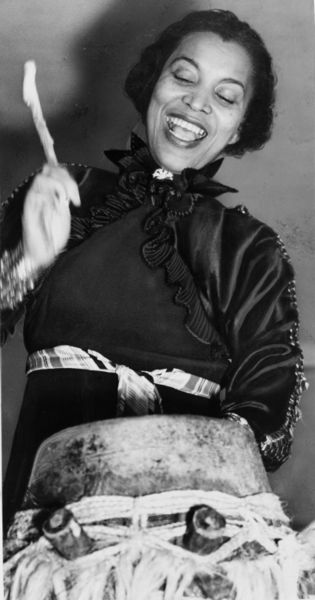
Zora Neale Hurston Sings “You May Go But This Will Bring You Back”

315px-zora_neale_hurston_nywts

Zora Neale Hurston sings folksong “You May Go But This Will Bring You Back,” and then explains how she learns her songs. More info here.

A Few Thoughts On DFW’s “Wiggle Room”

The New Critics’ biggest contribution to literary criticism was the dictum that analysis was to be applied strictly to the text itself, without the muddying impurities of biography or any other outside knowledge influencing the reader. A context-free reading is pretty hard to come by, though, isn’t it? School syllabi are arranged around era or genre, or both; our teachers preface each novel or poem or story or essay with a nod to its relevance; a friend hands us a book because it’s “good.” We furtively flip through Tropic of Capricorn, knowing its rep; we look down our noses at abstinence vampire novels. In short, it’s hard to get to that pure reading the New Critics favor. Still, I’ve always thought it’s a pretty good strategy to put aside biographical/author psychology, and just stick to a good close reading of the text. Today, reading David Foster Wallace’s “Wiggle Room,” I was completely unable to do that.The context of Wallace’s recentish suicide hung over each page, each sentence. It was a distraction that led to a (necessary) rereading, a distraction that colored the reading–and then the rereading. A strange little voice popped into Wallace’s dense narration that kept whispering, “posthumous, unfinished novel.” But now that I’ve complicated and contextualized and complained, perhaps I should simply comment a bit on the story now.

In dense, thick sentences, Wallace relates a work morning for Lane Dean, an IRS rote examiner who detests his Sisyphean job. Like many cubicle-dwellers, Lane spends much of his day trying not to look at the clock. He also tries to use an inspirational photo of his son sparingly, so that the effect might be more intense. However, the boredom on this particular day overwhelms Lane and he “had the sensation of a great type of hole or emptiness falling through him and continuing to fall and never hitting the floor. Never before in his life up to now had he once thought of suicide.” Trying to truck through it is no good: “Lane Dean summoned all his will and bore down and did three returns in a row, and began imagining different high places to jump off of.” These thoughts of suicide are mixed with a strange humor. As Lane’s depression becomes frantic, Wallace writes, “Unbidden came ways to kill himself with Jell-O.” As Lane becomes more and more anxious, it becomes apparent that–paradoxically–his boredom literally excites him. He gets all worked up about it, about the thought of having to devote a whole lifetime to such meaningless, boring work. The scene culminates in an horrific image:

When he started to see the baby’s photo face melting and lengthening and growing a long cleft jaw and aging years in just seconds and finally caving in from old age and falling away from the grinning yellow skull underneath, he knew he was half asleep and dreaming but did not know his own face was in his hands until he heard a human voice and opened his eyes but couldn’t see who it went with and then smelled the pinkie’s rubber right under his nose.

The “human voice” that wakes up Lane is a strange cyclopean figure, an older man who delivers a weird lecture on the origins of the word “bore.” The scene is pure Wallacian, filled with plenty of erudite references and jostling with a love for etymology. It literally zaps life-force back into the text, and punctuates Lane’s boring day–which Wallace has so expertly made the reader suffer as well–with some strange, frightening fun. Wallace’s narration makes clear that the appearance of this strange man is not simply Lane going crazy from his boredom–Lane clearly cannot understand half of what the man refers to. Instead, we are given this nugget: “The phantom of the hallucination of repetitive concentration held for too long a time, like saying a word over and over until it kind of melted and got foreign.” After philosophical reflection on why the need for a word for a condition like boredom might have arisen, the episode ends with the phantom leaving and Lane looking up to see that “no time had passed at all, again.”

The emphasis on the ways a person’s soul might be bored into, how one might become bored, and what that might mean, proliferates the short text, and perhaps evokes some of the themes we’ll find in the whole of The Pale King. As the quotes I pulled suggest, the idea that boredom might feed a suicidal impulse resonates strongly in light of Wallace’s unfortunate death. But there I go again, letting context color my analysis. But if we’re only left fragments, isn’t it natural to want to pull them together, to frame them–to give them order–context? Its hard to say and probably not worth guessing if Lane Dean and the phantom will be major parts of The Pale King or not, but as the text progressed, I found myself more and more interested. Apparently, The Pale King will be published with notes and outlines–some bits of context–perhaps giving readers a clue as to how the text was meant to progress. Who knows. A lot of readers felt that Infinite Jest didn’t have a proper ending (not me, though). While I think that the “Wiggle Room” episode stands well on its own, I’d certainly be happy to read more about the phantom. Still, Infinite Jest was larded with lots of little vignettes that added to the whole, but it’s important to point out that there was a whole to be added to–not just a series of vignettes. I’m really hoping that, even unfinished, Wallace has left us something of substance and depth, something that narrativizes–contextualizes–its themes into a meaningful work of art.

“Wiggle Room” — David Foster Wallace

david_foster_wallace_20080915

According to this morning’s New York Times, David Foster Wallace’s posthumous–and unfinished–novel The Pale King will be published next year by Little, Brown. The New Yorker has published an excerpt called “Wiggle Room.” Here’s the first three sentences, just in case you need your literary appetite whetted:

Lane Dean, Jr., with his green rubber pinkie finger, sat at his Tingle table in his chalk’s row in the rotes group’s wiggle room and did two more returns, then another one, then flexed his buttocks and held to a count of ten and imagined a warm pretty beach with mellow surf, as instructed in orientation the previous month. Then he did two more returns, checked the clock real quick, then two more, then bore down and did three in a row, then flexed and visualized and bore way down and did four without looking up once, except to put the completed files and memos in the two Out trays side by side up in the top tier of trays, where the cart boys could get them when they came by. After just an hour the beach was a winter beach, cold and gray and the dead kelp like the hair of the drowned, and it stayed that way despite all attempts.

The War of the Worlds Cover Gallery

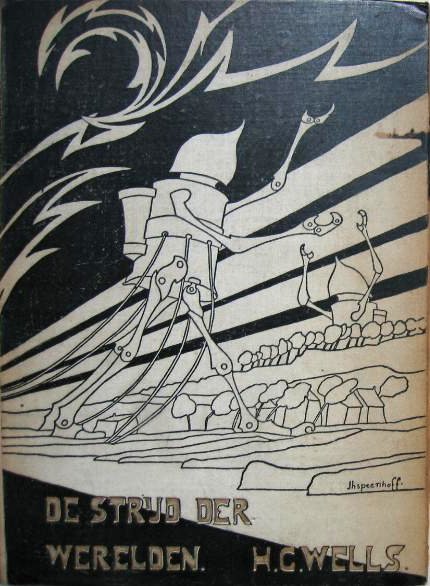
Chez Zeus has a very thorough and thoroughly fun cover gallery for H.G. Wells’s sci-fi classic The War of the Worlds. We’ve picked a few of our favorite covers here, but the full collection is great. For full artist credits and dates, check out Zeus’s complete gallery.

0003

Continue reading “The War of the Worlds Cover Gallery”

Three New Novels: Brothers, Amberville, and The Post-War Dream

The stack of promo copies and galleys at Biblioklept World Headquarters has built to an unmanageable and untenable tower of tasks that we are simply not up to of late. It’s not like we’re not reading, but we do have a day job! While we do request certain new books from publishers, most of what comes into our esteemed hallows is unsolicited, and a lot of it is honestly pretty dull stuff. However, we have a tidy little pile of new books that we’re going to read in full as soon as we can get to them, and it seems only right to share with our Esteemed Readers in a timely manner.

brothers

First up is Chinese author Yu Hua’s titanic Brothers, the engrossing and often ribald story of two step-brothers, Baldy Li and Song Gang. Brothers moves from the quiet village life of the brothers’ native Liu Town, through the Cultural Revolution, and into China’s contemporary economic and technological boom. At over 600 pages, the novel seemed a bit daunting, but we read the first 50 pages at a steady clip. Honestly, Yu Hua had us at the fourth page, when Baldy Li indulges in a bit of nasty voyeurism in a public restroom. Check the pithy wisdom:

Nowadays women’s bare butts aren’t worth much, since they can be found virtually everywhere. But back then things were different. It used to be that women’s bottoms were a considered a rare and precious commodity that you couldn’t trade for gold or silver or pearls. To see one, you had to go peeping in a public toilet . . .

We’re really enjoying Brothers so far, and the book seems destined to break Yu Hua’s funny and poignant voice to a Western audience. Here’s a pretty cool in-depth profile on Yu Hua by the New York Times. Full of weird vignettes, crude humor, and a frank look at a very different culture, we think this will be one of the highlights of 2009. Brothers is now available in hardback from Pantheon Books.

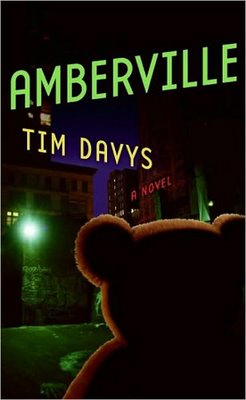
amberville

We’re not really big fans of detective noir, but Tim Davys’s Amberville seems to do the genre justice despite its big twist–the characters are all stuffed animals. In Davys’s debut novel, dark secrets from Eric Bear’s past come back to haunt him and challenge his legit prominence as a high-powered ad exec. The first two chapters were okay–Davys certainly has his noir tropes and rhythms down–but we had a hard time getting over the stuffed animal conceit. Still, readers who like their noir twisted–or fans of fantasy may get a kick out of Amberville, available now in hardback from HarperCollins.

postwardreampreview

New in paperback next month from Anchor Books, Mitch Cullin’s novel The Post-War Dream tells the story of two retirees in Arizona. After his wife Debra becomes gravely ill, Hollis finally confronts the trauma of his past, rooted in his experiences as a soldier in the Korean War. We have to admit that the plot description sounded a bit…hmmmm… “not our speed” would be a polite way to put it, we suppose (honestly, the idea of reading about an old married retired couple didn’t sound that interesting), but the first three chapters were very good, a bit strange, and intriguing enough to keep us going. Plus the book is dedicated to Howe Gelb–how weird is that? Those unfamiliar with Cullins might know his novel Tideland from its film adaptation a few years ago by Terry Gilliam. Those unfamiliar with Terry Gilliam have our permission to give up.

Zora Neale Hurston Sings “Uncle Bud”

A salty song about a ribald gentleman by the name of “Uncle Bud,” whose “nuts hangs down like a Georgia bull.” Great stuff. The accompanying video footage was shot by Hurston herself on one of her trips through south Florida, where she collected the folktales and songs of rural blacks. Many of these tales–often called “lies”–are found in Hurston’s Mules and Men, a hybrid work that novelizes these narratives into a cohesive whole, an afternoon spent on a porch telling stories and singing songs. Recommended.

mules

No Poets Don’t Own Words

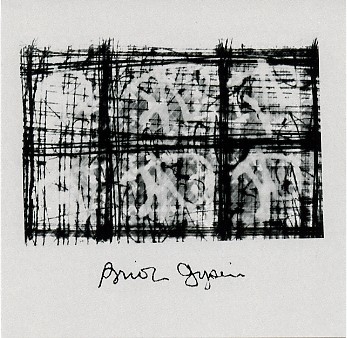
brion-gysin

No Poets Don’t Own Words” from Brion Gysin’s Recordings 1960-1981. A very cool record, featuring lots of tape manipulation, cut-ups, poetry, and interviews with Gysin on a variety of subjects including censorship, surrealism, and art. We like it much. Much we like. It. Like much it we.

There’s No Such Thing As Life Without Bloodshed

cormac-mccarthy1

Just finished this 1992 New York Times interview with Cormac McCarthy. I know, I know, hardly new, but still, it’s a rare insight into a reclusive writer–his 2007 interview with Oprah could politely be called awful, and I feel like this older piece is some kind of vindication. My favorite quote:

There’s no such thing as life without bloodshed [. . .] I think the notion that the species can be improved in some way, that everyone could live in harmony, is a really dangerous idea. Those who are afflicted with this notion are the first ones to give up their souls, their freedom. Your desire that it be that way will enslave you and make your life vacuous.

Great interview, even if it is almost 17 years old.