“Nothing in all the world is more dangerous than sincere ignorance and conscientious stupidity” — Martin Luther King, Jr.
For the past eight years, inspired by their own dangerous, sincere ignorance and conscientious stupidity, the Bush Gang has perpetuated myriad crimes against humanity and the planet. They didn’t do it alone, of course–the United States is, after all, a Democratic Republic, and its populace–us, we, I mean–stood by like inert zombies after the 9/11 attacks and let Bush and his cronies get away with an illegal war, openly spying on American citizens, detaining prisoners without charging them or giving them legal recourse, and even torturing prisoners. Walt Whitman said that there “is no week nor day nor hour when tyranny may not enter upon this country, if the people lose their roughness and spirit of defiance,” and surely many of us, most of us, were soft and complicit when we should have been rougher and more defiant. Not that many didn’t protest and fight, but the zeitgeist in America this decade was one of hushed zealotry, where the old American values of dissent, protest, and even curiosity were eschewed as the terrain of those awful liberal elitists who might actually, you know, ask questions.
The oughties, or the 2000s, or the noughties, or whatever we’ll call them, really began November 8, 2000, the day after one of the most contested elections in American history. A bad start, really, and many of us will always believe that the neocons stole the election. A year later, after the 9/11 attacks, it became evident that this would be a decade of fear and violence and repression and silence. By the time the neocons were ramping up their illegal war against Iraq–a war that they’d had planned for years before 9/11–many of us felt worn down to cynical little nubs, still in groggy disbelief at what was happening. A 2004 story in The Onion, “Nations Liberals Suffering From Outrage Fatigue,” perfectly captured how I felt, and also signaled that it would be satire and distance and cynicism that would communicate the extraordinarily dangerous ignorance and stupidity of this decade. Getting news of the Bush Gang’s malfeasance from satirical sources like SNL‘s “Weekend Update” or The Daily Show with John Stewart made the cruel realities of this decade somehow more palatable, but at the same time these sources underlined the disengagement that many of us allowed ourselves to fall into, the deep ironic defense reaction against a spirit of the age with which we felt unable to communicate. In short, many of us dropped out; our “Outrage Fatigue” could only last so long. Inertia and cynicism spiked with brief episodes of outrage slowly evolved (or, rather, devolved) into what I would call “The Bush Show,” a long, long cycle of events, each new episode topping the last in terms of its deviousness, ignorance, and stupidity. Am I just railing now, perhaps, recapping what you already know? Sorry.
Here’s my point: Right after the election, I stated in a post I wrote from my gut that the election of Obama shattered my cynical shell, that I felt open and happy and even positive about politics for the first time since I was a kid. I have not and never will lose my skepticism, but, as I pointed out in that post and repeat here, by simply choosing someone so different–and I refer here not to Obama’s dark skin but rather to his knowledge and intellect and openness (in contrast to Bush’s “sincere ignorance and conscientious stupidity”)–by choosing someone like Obama, we have signaled a shift in the spirit of the age. And here is what I propose: Let’s end the decade today, or at 11:59 a.m. tomorrow. Let’s agree that the awful oughties are over, and that a new decade has begun. We don’t have to change any physical documents–calendars, etc.–we just have to all know that a new zeitgeist has been initiated. The New Dark Age of the Bush Years has passed, but we can learn from it as negative example, as an abysmal signal of what not to do ever again.
Part travel guide, part almanac, The Nation Guide to the Nation aims to be the go-to resource for progressive liberals around the U.S. The editors of America’s oldest liberal organ, The Nation, have compiled their Guide to help you answer burning questions: Need to find a “100 percent vegetarian restaurant” in Bloomington, Indiana? Interested in checking out “The world’s only unionized, worker-owned peep show co-op” ? Want to “wear a hemp dress at your wedding”? ( “It’s a cool thing to do,” the text assures us). Look no further. Organized into six sections — Cultural, Social, Environmental, Organizations, Media, and Goods and Services — The Nation Guide to the Nation covers everything from fair trade coffee to anarchist film festivals to organic soul food. Interspersed throughout the book are sections labeled the “Left Heritage Trail,” a shot at attempting to institute a sort of “must-see” registry of sites in the history of the progressive left. The “Left Heritage Trail” sections also serve as a (very brief) history of labor, environmental, and Civil Rights movements in the United States. The editors attempt to further expand the scope of the book by adding sections like “25 Greatest Political Films” (a fairly successful list), “A Left Mystery Tour” (do we really need our mystery novels to have a liberal bent?), and “Anthems of the Left” (Ugh. Their (hopelessly out-of-touch) top ten list includes frat boy favorite “Get Up, Stand Up” by Bob Marley and U2’s “Pride (In the Name of Love)”).
The book’s entries are short and informative, providing addresses, numbers, and websites, and in this sense, it’s really quite successful. However, its overall tone veers into a sort-of “How to Be a Liberal for Dummies” territory. It seems that most progressive thinkers already have the resources or networks to discover this stuff on their own, if they don’t already know about it. For example, do we really need help finding progressive radio stations in Berkeley or San Francisco, and is it especially revelatory to note that New York City has some great bookstores? Still, I will concede that there is probably a young kid in Iowa who would be quite turned on to see what else is out there (no offense to Iowa; apparently the Cedar Falls Farmers’ Market is a great place “to chat, hug, cuddle babies” and just generally have a great Saturday). It is really the uninitiated (or, I suppose, the poseur) who will benefit the most from this guide. Hopefully, as our new President takes office, Americans will begin to see that “liberal” is not a dirty word, and that progressive ideas and radical movements have driven most of the positive social changes in this country, from ending slavery to instituting a 40 hour work week to extending suffrage to women. Those uninitiated in–or resistant to–these historical realities would be well-served by checking out The Nation Guide to the Nation.
Have you heard the gossip? Apparently, this past Friday, a certain young lady engaged in, as the French say (forgive me for being indelicate here) a ménage à trois. My ex-boyfriend was one of the participants, and, after the escapade, she reported that his sexual appendage was, well, smaller than average (he had a very small dick). Well, of course such spiteful calumny greatly agitated the young man, and, as for me, well, I must admit some measure of apathy (and perhaps distaste) for the whole matter. The young lady involved in the threesome had a boyfriend, and this young man has now turned his romantic–perhaps amorous–attentions in my direction; however, I declined his advances.”
I’m about 60 pages away from finishing Roberto Bolaño’s posthumous magnum opus, 2666, an astounding, shocking book that you should pick up right now and start reading, unless, of course, you hate the idea of getting hopelessly addicted to a book that coerces you to read it, that lingers in the back of your mind and gut, beckoning, calling you, even as you should be working or spending time with your family or doing errands or chores, etc. But otherwise: read it. A proper review forthcoming.
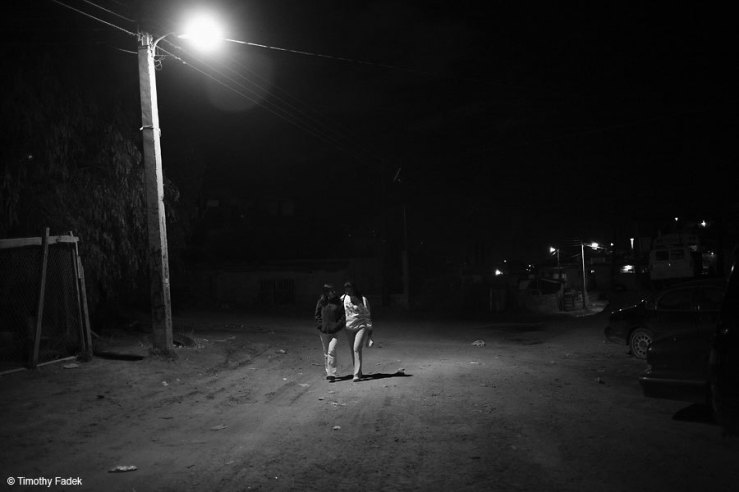
Anyway. The backbone of the plot, or, rather, the peripheral story that haunts the plot(s) of this massive, heavy novel, involves a seemingly endless string of largely unsolved murders in the fictional Mexican border city of Santa Teresa. An ugly industrial town in the Sonora Desert, Santa Teresa is a thinly disguised stand-in for Ciudad Juárez, where over the past 15 years over 400 young women have been raped and killed, their murders unsolved. While searching the gruesome real-life back story that informs Bolaño’s masterpiece, I came across Fadek’s eerie and sympathetic images of Juárez (this background story on Fadek and the Juárez photos is also quite good). Fadek aims clearly to draw attention to these underreported crimes, but his photographs also capture the doom and foreboding that looms in the blood of 2666. Those who’ve read the novel will no doubt find them evocative of the fourth book of 2666, “The Part About the Crimes,” and those who are flirting with undertaking Bolaño’s big book may find their interest redoubled. In any case, Fadek’s photojournalism is well worth a look. Great stuff.
Yesterday, CNN’s Political Ticker blog published a short piece on Joe “The Plumber” Wurzelbacher (you know, that dick who landed on our Worst People of 2008 list). Wurzelbacher is covering the Israeli attacks on the people of Gaza for a conservative website called Pajamas Media. In the report, Joe waxes philosophical on the nature of war and freedom of the press:
“I think media should be abolished from, you know, reporting,” Wurzelbacher said. “You know, war is hell. And if you’re gonna sit there and say, ‘well, look at this atrocity,’ well you don’t know the whole story behind it half the time, so I think the media should have no business in it.”
So, let’s figure out Joe’s line of reasoning: War is bad. We don’t know “the whole story” behind the situations and circumstance in which war occurs. Therefore, because we don’t know “the whole story,” we should cease from any “you know, reporting.” To simplify it further: We do not know certain things. News reporters, whose job it is is to determine and then report these certain things we do not know, do not know these certain things. Because reporters do not know these certain things (these certain things there job is to determine), they should be stopped from determining the truth of these unknown certain things.
We all owe Joe a debt of gratitude for demonstrating the rhetorical art of paradox so beautifully. A regular Xeno, this guy. Additionally, Joe here graces us with not only a demonstration of paradox, but also gives us a great model of irony–a reporter (okay, an unlicensed plumber pretending to be a reporter) ostensibly reporting a war calling for the abolishment of the reporting of war! Bravo! Now, if Joe could please give us a better demonstration of a prick by proceeding to fuck himself with a hat pin, I believe we would all be thrilled.
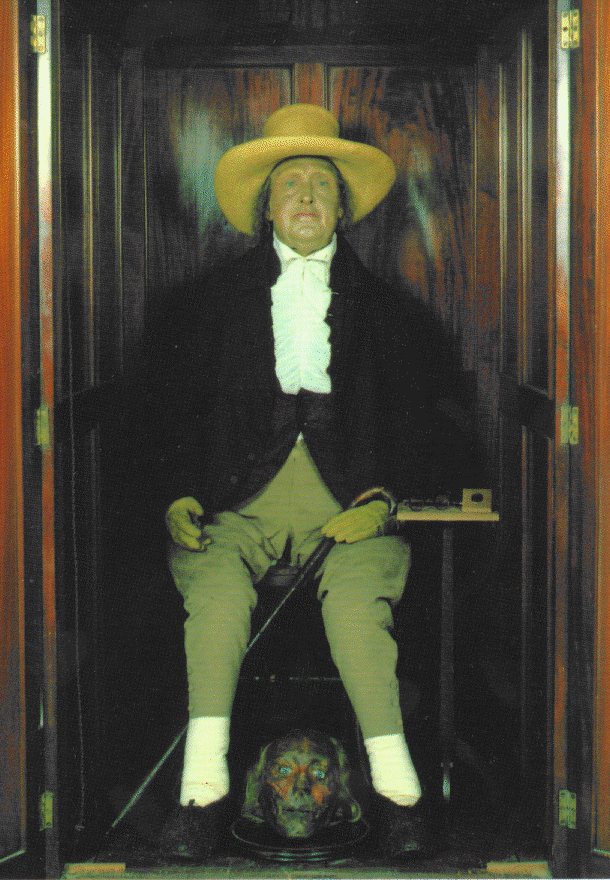
In a text called Auto-Icon: or, Farther uses of the dead to the living, Bentham gave careful instructions for the treatment of his corpse and its presentation after his demise. If an icon is an object of devotion employed in religious ritual, then Bentham’s “Auto-Icon” was conceived in the spirit of irreligious jocularity. The “Auto-Icon” is a godless human being preserved in their own image for the small benefit of posterity. [. . .] As such, Bentham’s body is a posthumous protest against the religious taboos surrounding the dead [. . .] Bentham’s body was dissected and his skeleton picked clean and stuffed with straw. [. . .] Sadly, the mummification process went badly wrong and a wax head was used as a replacement. The original, rotting and blackened head used to be kept on the floor of the wooden box between Bentham’s feet . However, the head became a frequent target for student pranks, being used on one occasion for football practice in the front quadrangle.
Biblioklept’s Chief Eco-Travel Correspondent Damon Noisette recently filed the following report about the earthquake last Thursday in Costa Rica. Don’t worry, gentle readers, Damon and his entourage are all fine and dandy, cotton candy. All of the following words are Damon’s, verbatim–
To survive a 6+ Richter Scale earthquake first you have to make sure you don’t fall down. Keep your balance. Once the initial earthquake is over make sure to run out of the structure you were in and get to a safe place. In an ideal situation the staff of the resort at which you are staying will direct you to a safe and covered place, triage, and distribute food and water to everyone.
If you are at a resort in Costa Rica you may have to do just a little more to make it through because the resort staff may just decide to say something to the effect of “screw those tourists”; things like scavenging through the wreckage of restaurants and rooms for food and water — and toilet paper — in the dark, carrying firewood to make your own fire, and using as much charm as possible to convince some other tourists to let you sleep in their rented van. That evening you should then try to make arrangements for a helicopter transport — at any price — with virtually no levels of cellular service. When that doesn’t work you should then try to sleep in the van parked on the side of the cliff while it rocks back and forth quite regularly from aftershocks.
Eventually the next day, after not sleeping and sitting in relative terror the entire night before, you should then wait patiently for your $850 helicopter to show up for half of the day. While you wait you should eat the pineapples you scrounged, drink the remaining water and Coca-Cola, enjoy a cold Hershey’s bar (kept cool in the small cooler you picked up in the destroyed restaurant), and watch as the helicopters continually take out other people and leave you at the defunct resort. By some stroke of luck or through sheer force of will you will find another resort-owner-provided helicopter that can seat three out of the four people in your group and you take advantage. The remaining person in your group should then get taken by four-wheeler across the ravaged countryside to meet up with the rest of the party.
The Croja Roja (Red Cross) should be in place by now, providing transportation for your party, sitting with luggage by the roadside, to a nearby refugee center. If your eyesight is good you should then accidentally bump into your travel agent’s driver and wrangle a ride back to San Jose where you then hook up with another driver to take you three hours to your next hotel on the Pacific coast.
When you return to the States you should then swear off eco-travel for at least a few years and stick to locations with minimal seismic activity.
When Biblioklept’s Chief Science Reporter Nicky Longlunch sent us this article about coked-up bees from The New York Times, we knew we had to give it the old Dada treatment, or in this case, the new Dada treatment. In 1920, Tristan Tzara gave the following directions:
TO MAKE A DADAIST POEM
Take a newspaper.
Take some scissors.
Choose from this paper an article of the length you want to make your poem.
Cut out the article.
Next carefully cut out each of the words that makes up this article and put them all in a bag.
Shake gently.
Next take out each cutting one after the other.
Copy conscientiously in the order in which they left the bag.
The poem will resemble you.
And there you are—an infinitely original author of charming sensibility, even though unappreciated by the vulgar herd.
Of course, scissors and cutting and actual papers and bags can be messy and tiresome, not to mention terribly old fashioned. Luckily for us, there’s a hypertext version, and we used this Dada poem generator to make our own poem out of the NYT article. Here is our poem:
liquefied brain so backs, it
liquefied brain so backs, it
scientists Australia dropped freebase cocaine
freebase liquefied brain so in
in Australia freebase cocaine bees’
circulatory backs, dropped it brain
freebase on bees’ backs, so
much judgment, their behavior makes
like stimulates their behavior and
humans much their enthusiastic them
much humans cocaine judgment, their
much like alters their their
react bees makes like enthusiastic
its odor exhibit plummets syrup
exhibit coked-up bee cold turkey
bees symptoms stop test of
bee its score standard test
turkey its test associate syrup
exhibit turkey test of bee
The real article’s actually kinda sorta better. Try this (any of it) at home.
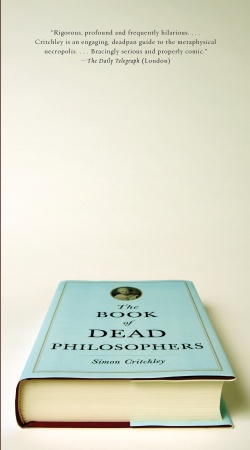
A cursory glance at Simon Critchley’s skinny new work, The Book of Dead Philosophers, might lead one to misjudge the book as an ephemeral, superfluous, and even downright jokey sort of “Philosophy for Dummies.” That would be a mistake. While The Book of Dead Philosophers does aim for a broad, popular appeal, Critchley’s wily cataloging of the deaths of nearly 200 philosophers is hardly insubstantial reading. Working from Cicero’s maxim that “To philosophize is to learn how to die,” Critchley sets out to contextualize these philosophers’ writings on death against the very deaths of those philosophers. Ranging from the sophists of ancient Greece to the Classical Buddhists of China to post-modern gadflies like Foucault and Derrida, Critchley’s writing evokes both humor and pathos, and works in some ways as an overview of the history of philosophy without ever becoming didactic or overreaching its central goal.
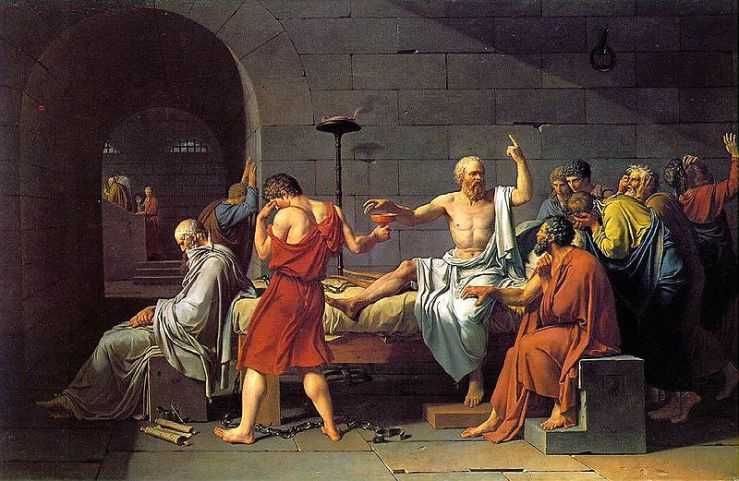
The Death of Socrates - Jacques-Louis David
While Critchely’s main purpose in Dead Philosophers seems to be to entertain and perhaps enlighten, he doesn’t shy from injecting his own attitude about his subject. In his introduction he addresses philosophies that emphasize an afterlife, arguing “that they cultivate the belief that death is an illusion to be overcome with the right spiritual preparations. However, it is not an illusion, it is a reality that has to be accepted. I would go further and argue that it is in relation to the reality of death that one’s existence should be structured.” Later, Critchley condemns the metaphysical, Platonist tradition further, and, at the same time, provides a greater rationale for his book: “I hope to show the material quality of the many lives and deaths that we will review disrupts the move to something like “Spirit” and places a certain way of doing philosophy in question. To that extent, there is something intensely arrogant, even hubristic, about a philosopher’s disregard for the lives and deaths of other philosophers.” Critchley’s materialist philosophy leads to an occasionally snarky–and quite humorous–tone when writing about the likes of Anslem, Thomas Aquinas, or even Heidegger and Schopenhauer. His sympathies are more earnestly apparent when he addresses the death of someone whose outlook he shares. Critchley on Bertrand Russell: “Any conception of the immortality of the soul is therefore both iniquitous, because it is untrue, and destructive of the possibility of happiness, which requires that we accept our finitude.”
Derrida Queries DeMan -- Mark Tansey
Arranged both chronologically and geographically into short sections ranging from a few sentences to a few pages, Dead Philosophers encourages jumpy, discontinuous, and episodic readings. Still, despite his caveat that he is presenting a “messy and plural ragbag of lives and deaths that cannot simply be ordered into a coherent conceptual schema,” Critchley nonetheless manages to create nuance, layer, and perhaps even a touch of narrative to this work. In one of the final entries of the book, a touching tribute to Jacques Derrida (at three pages, one of the longest in the book–twice as long as the section on Plato), Critchley writes, “the dead live on, they live on within us in a way that disturbs any self-satisfaction, but which troubles us and invites on us to reflect on them further. We might say that wherever a philosopher is read, he or she is not dead. If you want to communicate with the dead, then read a book.” Lovely.
The American publication of The Book of Dead Philosophers is available February 10th, 2009 from Vintage Books.
From Mark Twain’s January 1st, 1863 column in the Territorial Enterprise:
Now is the accepted time to make your regular annual good resolutions. Next week you can begin paving hell with them as usual. Yesterday, everybody smoked his last cigar, took his last drink, and swore his last oath. To-day, we are a pious and exemplary community. Thirty days from now, we shall have cast our reformation to the winds and gone to cutting our ancient short comings considerably shorter than ever. We shall also reflect pleasantly upon how we did the same old thing last year about this time. However, go in, community. New Year’s is a harmless annual institution, of no particular use to anybody save as a scapegoat for promiscuous drunks, and friendly calls, and humbug resolutions, and we wish you to enjoy it with a looseness suited to the greatness of the occasion.
We liked the first act of Nolan’s second Batman movie very much. In fact, nothing in the whole movie could top the robbery scene at the beginning. Yes, we loved Heath Ledger’s Joker. He wasn’t in it enough. But we were getting pretty bored by the end of the second act, and by the time it became clear that Two Face would be a villain in this Batman film and not the next sequel, well, we were downright exhausted. The clunky editing, clumsy fight scenes (you really couldn’t see anything in the film), and convoluted plot turns didn’t help a film where the hero endorses the Bush administration’s methods (torture; spying on its citizens). And don’t even get us started on Bale’s silly “Batman voice.” Worst of all was all the praise this film garnered, as if everyone had been primed to love it and had no other choice. The Dark Knight is a crushing fascist vision; that its true hero is the Joker will be lost on all.
Hancock
An interesting premise and a funny opening scene quickly devolve into an incoherent mythology and a superhero story absent of any real villain. We usually like our films short, but Hancock felt thin at under 90 minutes. What was cut?
Speed Racer
Speed Racer, a psychedelic cartoon blur of flat characters and unfun nonsense should be the nail in the Wachowski’s brother-sized coffin. We’re beginning to think that The Matrix was just a matter of the right William Gibson rip-off at the right time (right time here = right technology). Ugh.
Indiana Jones and the Kingdom of the Crystal Skull
Shyamalan owes us the ninety minutes he stole from us. We suggest he show up at Biblioklept World Headquarters (shamefaced, of course) prepared to work–there’s always some caulking and mowing and painting that needs doing. On second thought, we’re sure he’d figure out a way to fuck up even the simplest chore. Possibly the worst movie we’ve ever seen.
THE BEST
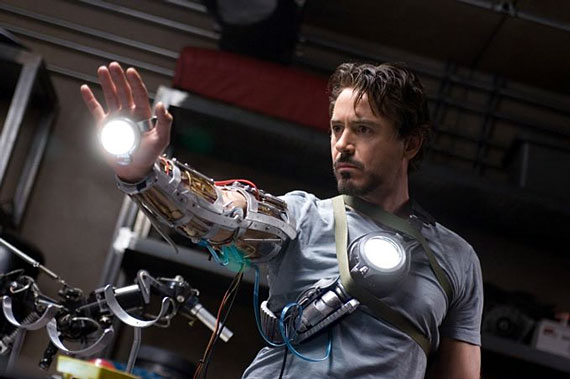
Iron Man
Where The Dark Knight plumbed the worst aspects of human nature, Iron Man gave us a hero with a truly redemptive arc, and did so in a way both moving and humorous. Iron Man also looked great, and featured the best origin story of any of the big superhero movies of the past decade. In fact, we’re calling it: Iron Man is the best superhero movie of the decade.
Coming after No Country for Old Men, the Coen brothers’ shaggy dog comedy felt light and even superfluous at times. Still, elements of the story stuck with us long after the viewing, and, as usual, the Coen’s get great performances out of their cast.
In Bruges
We don’t want to give away too many details from In Bruges, but it’s worth pointing out that the trailers and ads totally missed–or misrepresented–the tone of the movie. In Bruges is funny, but it’s hardly a buddy film–at it’s core it’s a sad, even philosophical, reflection on loss and guilt. Great stuff.
Pineapple Express
Enough has been written at this point on Judd Apatow’s crew and the successes they’ve had in recent years that we don’t need to comment, except to point out that we loved Freaks and Geeks when it originally aired and it’s great to see what all these kids have done since then. Seth Rogen is hilarious, but James Franco steals the show here as a dope dealing loser who just needs a friend. Great action scenes too. Forgetting Sarah Marshall, also featuring Apatow cohorts, was pretty good too, of course.
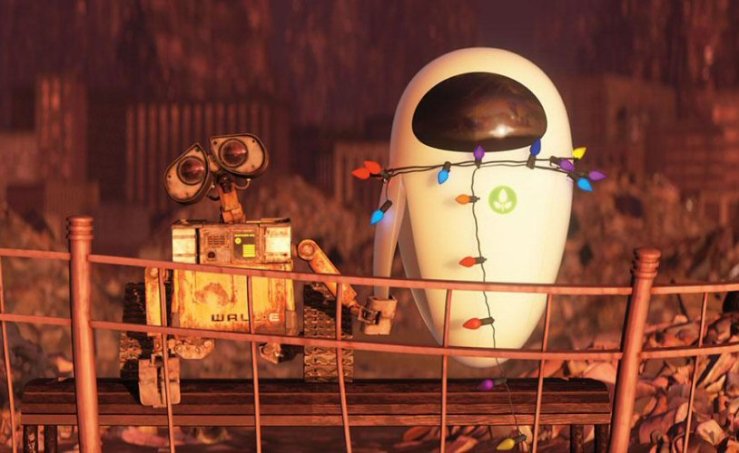
Wall-E
Who knew a post-apocalyptic film criticizing consumerist culture and our ever-increasing loss of connection to both the natural world and our own bodies would be so good? We loved, loved, loved Wall-E. Best film of 2008.
Films we still haven’t seen but in which we have interest: Rachel Getting Married, Synecdoche, New York, Hamlet 2, Hellboy 2, The Wrestler, Quantum of Solace, Let the Right One In.
I had a (very, very minor) Kafkaesque moment when Mark Harman’s new translation of Franz Kafka’s unfinished first novel, Amerika first arrived at Biblioklept International Headquarters. Wanting to compare the style of Harman’s translation to Edwin and Willa Muir’s work, I searched for my old copy of Amerika. I figured I’d re-read the first chapter, “The Stoker,” the only part of the novel that Kafka reworked (it was published as a short story). So I looked and looked and it turns out that I don’t own Amerika, despite the obligatory Kafka phase I went through in high school (followed by a post-bac Kafka phase years later). But I knew I’d read “The Stoker,” or at least it seemed likely that I’d read “The Stoker,” and it turned up in a collection of Kafka’s short stories that I own–only it was the Donna Freed translation. So I re-read it, only I’m not sure that I was re-reading it. I didn’t remember any of it, other than the famous opening image of a Statue of Liberty armed with a sword. I’m still not sure that I ever read it before now; that is, I’m not sure that I read the Muir translation that Harman seeks to amend. I guess it doesn’t matter, and it seems appropriate that a Kafka review begin with a meandering false start. Where were we?
Yes. Harman’s translation. With Amerika, Harman continues a project he initiated with his translation of another unfinished Kafka novel, The Castle. (This book was published in 1998, and I listened to the audio book last summer, incidentally, and it was really, really good). Harman’s translations aim to restore some of the humor, ambiguity, and modernism that the Muirs’ early translations occlude in favor of their own religious readings. Harman also takes great pains to remove Max Brod’s editorial interventions, even going as far as to keep many of Kafka’s consistent solecisms (“Oklahoma” is restored to Kafka’s original – and consistent – “Oklahama”). Now, my Kafkaesque confusion over whether or not I’ve read the Muirs’ translation of Amerika prevents me from commenting here on Harman’s apparent restoration of Kafka’s humor, but I do think that Amerika is often funny, and often terrifying. Its protagonist Karl finds himself in a parallel-universe America (one constructed wholly from Kafka’s imagination, and announced in its surreal glory from the opening image of a Statue of Liberty armed with sword), one where he’s consistently misled, swindled, cornered, cramped, and generally mistreated by various enigmatic authority figures (yes, its Kafkaesque, if you’ll allow the tautology). As noted, Kafka never finished writing the book (or any of his three novels, for that matter), and Harman makes no attempt to reconcile the plot, opting instead to simply reproduce (in frank English, of course) the words Kafka wrote.
Amerika is not the starting place for those new to Kafka’s work–I would suggest readers who weren’t turned off by their high school English teacher’s inept bungling of The Metamorphosis start with a collection of the short stories. However, I think Harman’s translation is not only essential for fans who wish to rediscover an old favorite, I also believe that it will quickly become the definitive translation. It’s modern and terse and funny, and it also pays subtle respect to the dialogic interplay between Karl’s point of view and that of the omniscient narrator, often creating moments of intense and delicious irony. Reading a translation of Kafka focusing on his oft-neglected humor brought to mind the late great David Foster Wallace’s essay, “A Series of Remarks on the Funniness of Kafka, from Which Not Enough Has Been Removed” (read it here or get the mp3 of DFW reading it here). Here is Wallace, explaining why American undergrads don’t get Kafka’s humor:
And it is this, I think, that makes Kafka’s wit inaccessible to children whom our culture has trained to see jokes as entertainment and entertainment as reassurance. It’s not that students don’t “get” Kafka’s humor but that we’ve taught them to see humor as something you get — the same way we’ve taught them that a self is something you just have. No wonder they cannot appreciate the really central Kafka joke — that the horrific struggle to establish a human self results in a self whose humanity is inseparable from that horrific struggle. That our endless and impossible journey toward home is in fact our home.
Wallace’s observation stealthily acknowledges why the heroes of Amerika and The Trial and The Castle never get to where they’re going, why Kafka could never wrap up his big stories. Kafka, the first modern writer, embraced the “horrific struggle” of humanity and never sought easy reconciliation or pat conclusions. Harman’s new translation brings this critical aspect of Kafka’s writing to the fore, and he achieves this in the most simplistic manner: unobtrusively letting Kafka’s words stand on their own. Recommended.
Joseph Wurzelbacher, as manipulated by the McCain campaign, somehow came to stand for the “common man,” the “everyday” American (from real America, of course) who would just totally get dicked-over by a pinko like Obama. If Joe the Plumber does represent the average, everyday common American, that basically means the average, everyday common American is kinda dimwitted, slovenly, and prone to saying stupid stuff. And around Biblioklept Headquarters in Real America, we’re too patriotic to suggest such a thing. Olbermann takes down Joe:
9. Michael Phelps
Okay. We get it. You can swim fast. But please. Please. Don’t be such a smug dick–you’re not charming, as your awkward, unfunny appearances on SNL and The Colbert Report attest. Also, your skanky new girlfriend hardly lends you class. Thank god the Olympics only happen every four years.
8. Elisabeth Hasselback
Hasselback’s yapping maw jibber-jabbered at such a consistently shrill pitch for most of 2008, that even those of us who avoid The View like the special little plague it is were subject to take some notice. Someone has thoughtfully distilled Hasselback’s 25 most annoying moments into one dandy poisonous clip:
7. FOX News
6. Voters who voted for anti-gay ballot measures in California, Florida, Arkansas, and Arizona this year.
Evangelical leaders–many who claim to “love” everyone–consistently attempt to turn this fight into a matter of semiotics, into the meaning of the word “marriage.” Hogwash. Years from now–hopefully not too many–we, as a country, will look back on these anti-gay measures with the same sense of shame that now surrounds opposition to the Civil Rights movement. Anyone who claims that the issue is simply about what the word “marriage” means is being dishonest with themselves and everyone else. At least the loonies who follow Fred Phelps are openly and honestly bigoted.
5. John McCain
Dear Maverick McCain,
We used to like you, a little bit, way back in 2000, but yeah, we really did see you as an outsider for awhile, and sure, you’re a war hero (if getting shot down and surviving as a prisoner-of-war makes one a hero)–But–
Don’t you think the campaign you ran against Obama was kinda sorta most definitely shameful? I mean, like, aren’t you literally ashamed of the tacit and not-so-implicit and sometimes downright violent xenophobia and (yes) racism that you guys incited in your mobs? Aren’t you worried that any goodwill capital you built over you last 25 years in politics has been more or less spent? And Palin? Jesus! Seriously? Palin? Don’t get me wrong, your choice was truly a delight to watch, but come on, man. Show some sense.
4. Wall Street Investment Bankers
You oily pricks get what you deserve. Never have so many done so little for so much money. Also: Anyone who still believes that unregulated laissez-faire capitalism just “works.” Look around you.
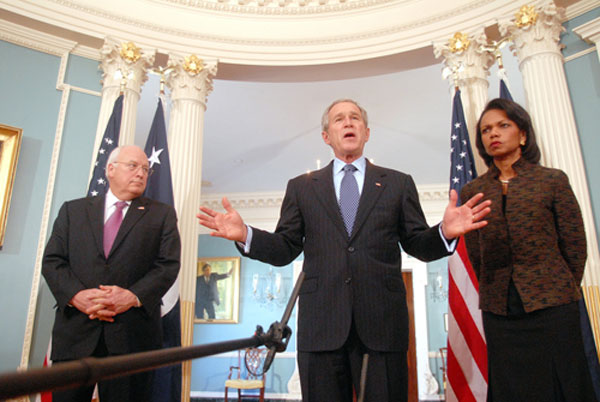
3. The Bush Gang
Let’s lump them all together and let God sort them out. Or, better yet, let’s prosecute them. Or, better yet, tar-and-feather them, and run them out of town on a pole.
2. Sarah Palin
This year, Biblioklept is doling out a first: a special “Cunt of the Year” award, just for Palin. Aw, that’s kind of mean. Actually, it was really entertaining to watch Palin fumble through interviews (she reads “everything”!), wink and consistently drop the word-final “g” sound from her every utterance, and destroy any hopes that the GOP had of winning the ’08 election. And for every time she infuriated us (insinuating that there is a “real America,” one we are not a part of), she always made up for it with some comic gold. (The infamous turkey-pardoning-while-turkeys-get-slaughtered-in-the-background-video is a particular gem from 2008; (How, oh how, can Palin not see the irony here?)):
Of course, had McCain-Palin won–which is to say, if Americans had yet again made a bad, poor, ignorant, stupid, willfully stupid decision about who should lead them–we would not make light of Palin’s idiocy. But they lost. They lost! Ha ha, they lost! So, it’s perfectly fine and dandy to recall all of Palin’s flubs (Remember when that morning shock jock pranked her? Remember the debate?!) With a little luck, the Republican leadership will continue to stand behind Palin (literally!) and ruin any chances the party has to ascend to power again in 2010 or 2012.
1. George Bush
As of this writing, there are only 25 days left in the Bush presidency (keep track here if you want), yet it seems probable that he’ll manage to fuck something else up for the incoming administration. I say the decade officially ends this January. Let’s move on.
“And there were shepherds living out in the fields nearby, keeping watch of their flocks at night. An angel of the Lord appeared to them, and the glory of the Lord shone around them, and they were terrified. But the angel said to them, ‘Do not be afraid. I bring you good news of great joy that will for all the people. Today in the town of David a Savior has been born to you; he is Christ the Lord'” — Luke 2:8-11














 Biblioklept