Feist on Leno

feist.jpg

For those of you who can stay up past eleven, lovely-voiced Leslie Feist is scheduled to perform tonight (5.8.07) on The Tonight Show with Jay Leno. For the rest of us, I’m sure Youtube will provide. If you’re not sure that you’re interested, check out the video for “1 2 3 4” here (WARNING! In all likelihood this song will get stuck in your head for the next few days).

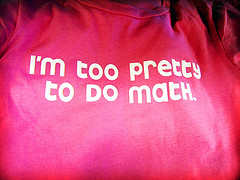
The New Feminism

Yay! Girl power!

Read this hilarious article from The Onion, “Women Now Empowered By Everything A Woman Ever Does.” It neatly sums up all of my feelings on the current national/pop cultural understanding of what feminism is in America today.

Every time a discussion of feminism comes up in any of my graduate courses, I always manage to come off like a caveman jerk as I try to explain how I think that the term “feminism”–much like “punk”–has been completely co-opted by mainstream patriarchal commercial culture, and thus etiolated of life, its original power sucked dry. There is of course an easy solution for this, which involves a re-appraisal of feminist objectives and a general re-education of young girls and boys (okay, easy in theory, not in practice). The concern  in academia with gender studies over the past two decades has done a remarkable job of re-framing the problematics of identity, sexuality, culture, etc. beyond just “women’s issues,” but the trickle-down of second-wave feminism seems to be, well, diluted at best and completely misunderstood at worst . And as recent attacks on Roe v Wade show, these aren’t battles that were neatly finished thirty years ago–there is still much at stake today. Get empowered, yo.

math.jpg

G is for…

G is for Gandalf the Gray (later, Gandalf the White), the archetypal wizard of Tolkien’s Middle Earth. Geeks who need to know can find an exhaustive biography of the fictional mage here (or perhaps you are a true geek who is already well versed in the lore of the Istari); however, it’s not Tolkien’s overly-detailed-to-the-point-of-insanity backgrounding that I love so much about Gandalf. It’s that Gandalf, like the hobbits of Lord of the Rings, is a complex and not-so-obvious hero. Despite his appearance as a frail old man, Gandalf is a actually a total bad-ass swordsman and magician. He’s also the mastermind behind all of the action, but it also seems evident that he’s not really sure what he’s doing at times. Repeatedly throughout LOTR, his faith in the silly little hobbits is questioned by kings and warriors and elves who don’t get why the wizard would put the fate of the world into the hands of child-sized halflings who don’t even wear shoes.

Gandalf was brought to life earlier this decade in an obscure series of low-budget film versions of LOTR; savvy readers may be able to find DVD versions of these movies from their favorite online boutiques that cater to such eccentric tastes. For the record, I thought Ian McKellen, who starred in these indie gems, was perfect as Gandalf. To learn more about Gandalf the Gay, check out this short essay from McKellen.

G is also for the Glass children, the protagonists of many of reclusive author J.D. Salinger’s short stories and novellas. The seven Glass children (Glass being the last name: the children are not made out of glass, dummy) all were recurring contestants on a radio-quiz show called It’s a Wise Child, a program which earned them both mild fame and some money. The eldest of the Glass children is Seymore, is central to many of Salinger’s stories, but my absolute favorite is “A Perfect Day for Bananafish.” It’s hard to properly describe the emotional impact of the story without spoiling the ending, but “Bananafish” contains themes that are relevant today and will probably always relevant: the psychological damage of warfare, the inability of humans to adequately express their thoughts and desires, the breakdown of the modern family. Everyone should read it–do yourself a favor and go pick up a copy of Nine Stories. You can get one mailed to your house for under five bucks. No excuses.

Leviathan–Jens Harder

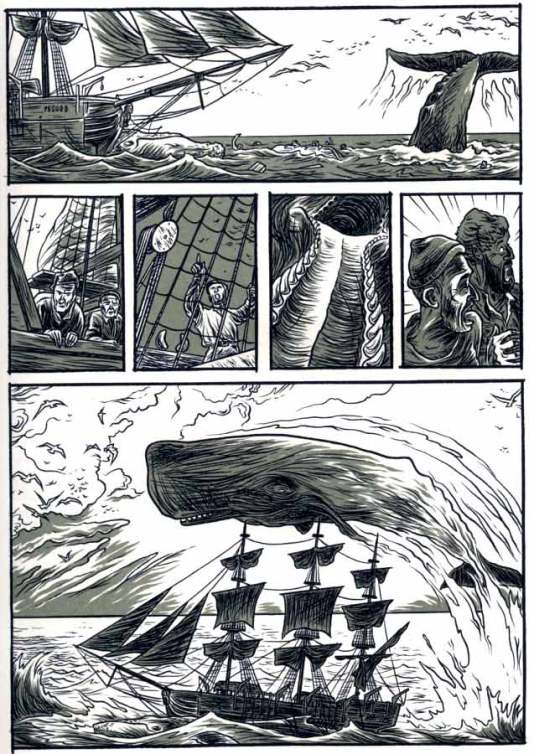
Jens Harder’s Leviathan is a graphic novel in the truest sense. Harder uses scratchy but fluid images to tell the story of a mystical whale who battles a giant squid, saves Noah’s ark, attacks the Pequod, wreaks havoc on a cruise ship, and eventually battles an armada of anachronisms. The only text Harder employs in Leviathan are excerpts and quotes from a variety of sources including the Bible and a host of philosophers; the bulk of quotes come from Melville’s Moby-Dick. Just as that novel begins with an “Etymology” followed by a section called “Extracts,” Harder begins with a section called “Leviathanology,” a collection of quotes about leviathans from the likes of Hobbes, Milton, and the book of Job. These quotes inform the story of Leviathan, connecting the whale to a sublime and unknowable mystery that Harder will explore. Harder’s surreal images often invert notions of “proper” space and time, giving the whale an awesome significance, but also positing the beast as something that denies signification. By eschewing the traditional forms of graphic storytelling, which rely on speech bubbles and clear-cut panel transitions, Harder is able to capture something that is essentially too large to capture. This book works. Highly recommended.

leviathan.jpg

More Soup

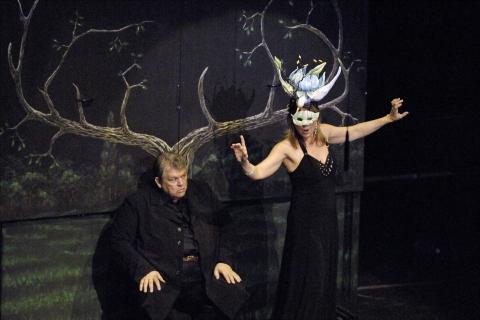
F is for Falstaff, Shakespeare’s knavish knight. Part rascally gnoff, part philosopher, this fat rascal appears in three of the bard’s plays. In Henry IV parts 1 and 2 he advises young Prince Hal (the future king) on matters of honor and drinking. In the comedy The Merry Wives of Windsor, Falstaff tries to cuckold some country farmers and steal their cash; the scalawag’s plans go awry and he ends up wearing the horns. Falstaff is one of Shakespeare’s most verbose characters–only Hamlet has more lines. And despite his fun-loving and roguish nature, Falstaff, like Hamlet, also provides several meditations on human nature, death, and the seeming futility of the individual’s ability to change social order.

falstaff605.jpg

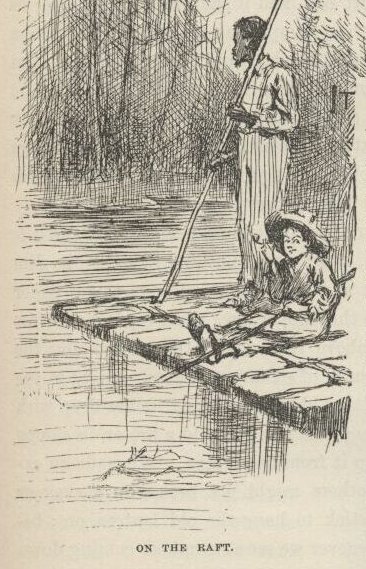
F is also for Finn, Huckleberry. Like Falstaff, Huck Finn is something of a rogue, albeit he is just a child. As the white trash double to middle class Tom Sawyer, Huck is one of Twain’s keenest tools for social satire. Huck escapes the Widow Douglas’s aspirations to give him a moral education, in turn helping her slave Jim make his own escape via the Mississippi River. While navigating the river, Huck must also navigate the perplexing and paradoxical moral codes of the strange South. Despite the happy ending of The Adventures of Huckleberry Finn, the novel remains controversial over a hundred years after its publication, still appearing frequently on lists of challenged books.

huck-and-jim-on-raft.jpg

End of the Century–The Heartbreaking Story of the Ramones

If you love the Ramones, you really shouldn’t watch the 2003 documentary film End of the Century–it will only break your heart.

logo_ramones1.jpg

I love the Ramones; I’ve loved the Ramones since I was a kid. I was lucky enough to see them in concert about twelve years ago (even then we were hip to the fact that the Ramones without Dee Dee–the C.J. version of Ramones–was not really the real Ramones). My favorite memory of the show was Joey saying that the venue of the show was built on top of a pet cemetery. Then they played “Pet Cemetery.” Genius.

So well and anyway. End of the Century. This is an excellent music documentary, a standout in a genre which is generally hit or miss. Unlike weaker films that rely on narrators or musicians influenced by the subject*, End of the Century is composed entirely of interviews (both archival and original to the film) with the Ramones themselves (Dee Dee, Tommy, Joey, Johnny, Marky, Richie (Richie wears a conservative suit in his interview, and mostly complains about not getting a taste of “that T-shirt money”) and C.J. (C.J. comes across as naive, energetic, and wholly endearing, making me feel kind of bad about my previous opinions of him). In addition to the Ramones’ first-hand accounts, there are plenty of interviews with managers and friends and family and roadies and so on–eyewitnesses who candidly relate the good, the bad, and the ugly in excruciating detail (there is plenty of ugly). Raw live footage dating back to the early 70s brings to life the sheer volume and bizarre intensity of a Ramones show.

So why so heartbreaking? Well, here’s the deal. We know that the John and Paul didn’t like each other. We know that Mick and Keith bicker. We know that bands have “creative differences” and egos get bruised and so and so on. But with the Ramones, well, I guess I always thought of them, as well, cartoons of themselves. But End of the Century makes it very clear that these guys were very, very serious about themselves and what they did. They were in no way cultivating an image: the Ramones really were what you thought they were. And they hated each other. Like, years-of-not-talking-to-each-other hatred, right up until their retirement. They were bitter–they really wanted to be successful. Now, I always thought of the Ramones as legendary, as huge, as the original punk band. But they wanted to be huge, huge like the Beach Boys or the Beatles. Hits on the radio huge (a quick aside: the accounts of working with Phil Spector on the 1980 album End of the Century, in the hopes of gaining a top 10 hit, are hilarious. Apparently Phil held the band plus entourage at gunpoint, threatening to shoot them if they returned to the hotel. The reason for Phil’s hostage-taking: he wanted them to hang out and watch movies. But I’m sure Spector’s like, totally not guilty of murdering that chick in his house). So a lot of the movie is the Ramones lamenting that they “never made it” (again, to me this was ludicrous). But really it’s the hatred, the meanness of their interviews, their complete dismissal of each other that I found most disconcerting (particularly heartbreaking is hearing Johnny’s non-affected nonchalance over Joey’s relatively recent (to the time of the movie’s shooting) death from lymphoma). Maybe I’m just a foolish fan who wanted my cartoons.

The film ends by noting that Dee Dee died of a heroin overdose two months after the film finished shooting. Johnny Ramone died in 2004. The principal members of the band all died within a few short years of each other, like married folks often do.

To end on a lighter note, check out this footage from the film, featuring Dee Dee’s rap project, Dee Dee King’s “Funky Man” (listen for this embarrassing nugget: “I’m a Negro too!”)

* There are one or two very brief interviews (like one or two sentences) with famous fans, including, of course, Thurston Moore, who is contractually obligated to appear in any film about any musician. Check out his prolific (and incomplete–unless my memory fails me he’s also in the 1995 Brian Wilson documentary I Just Wasn’t Made for These Times) filmography here.

Another Serving of Alphabet Soup

Dis for Daedalus, kid Icarus’s papa. From Joseph Shipley’s The Origin of English Words: A Discursive Dictionary of Indo-European Roots, a book that has given me more joy than is probably normal or healthy :

“del II: cut; carve; harm. GK daidalos: cut with art; Daedalus, the inventor who built the labyrinth for Minos, king of Crete, to confine the Minotaur. This monster—half man, half bull—was conceived by Minos’s wife Pasiphae with Poseidon’s sacred bull, which Minos had refused to return to Poseidon. Imprisoned, Daedalus made wings for himself and his son Icarus; they few away; but the son flew too near the sun, the wax fastening his wings melted, and he fell and drowned in what was thereafter called the Icarian Sea. Hence daedalian: skillful; Icarian: rash and ruinous” (Shipley 58).

D is also for Dedalus, Stephen, James Joyce’s semi-autobiographical stand-in in Portrait of an Artist as a Young Man. Stephen Dedalus also is prominent in the first couple of chapters of Ulysses, before Leopold Bloom’s journey through Dublin becomes the novel’s focus. Despite the heroic help of my college roommate’s Ritalin prescription, I never finished Ulysses, but I’m enrolled in a Joyce seminar commencing this fall (should be good). I did however read Portrait a number of times; I can’t think of a better example of an experimental writing style that evolves and adapts as its main character grows, learns, and rebels.

E is for Ebdus, Dylan, the hero of one of my all-time favorites, Jonathan Lethem’s The Fortress of Solitude. Like Portrait of the Artist as a Young Man, Fortress is a bildungsroman, a novel that details the development of its main character from childhood to maturity. To this end, each chapter of the first section of Fortress covers approximately a year in the life of young Dylan as he tries to make meaning out of his strange Brooklyn neighborhood and race-relations in the seventies.

E is also for Essrog, Lionel, the would-be detective who narrates Jonathan Lethem’s 1999 novel Motherless Brooklyn. Lionel Essrog is afflicted with Tourette’s syndrome, and his tics and yelps punctuate the novel with a weird and fascinating rhythm, a play of re-signification that would make Derrida proud. This is one of those Sunday afternoon books, the kind that you sit down to read with a glass (or four) of sangria and pretty much finish. Japanese monks, Brooklyn mobsters, hot dogs and papaya juice, plenty of verbal tics. And orphans. Lots and lots of orphans.

Alphabet Soup–Our Favorite Literary Characters (Part One)

A is for Antigone, the incestuous product of Oedipus and his mama Jocasta. In Sophocles’ play of the same name, Antigone is punished for burying the body of her exiled brother Polynices. Like her papa Oedipus, Antigone pushes the limits of cultural boundaries and the conflicts that duty to one’s family and the gods present to social order. Good, tragic stuff.

A is also for Alice, the heroine of not one but two Lewis Carroll classics, Alice’s Adventures in Wonderland and Through the Looking-Glass, and What Alice Found There. Full of logic puzzles, cryptic satire, and good old fashioned nonsense, Alice’s adventures work on a range of levels that appeal to both children and adults. She explores altered states and missing signifiers while flirting with death and madness in a surreal dreamworld. (Fans of Carroll’s twisty logic will surely delight in Douglas Hofstadter’s Gödel, Escher, Bach: an Eternal Golden Braid).

B is for Bartleby the scrivener, the eponymous non-hero of my favorite Herman Melville short story. Bartleby is hired by a wealthy lawyer to copy texts, a job at which he excels. But whenever Bartleby is asked to do something other than copy letters, he always replies “I would prefer not to.” This answer incenses the other employs and bewilders the lawyer. Eventually Bartleby stops doing any task, but somehow always remains around the office, almost like a ghost. Just what exactly Bartleby is meant to symbolize is up for grabs–Melville’s text is rich with possible interpretations. Every time I read this one, I get a new perspective. Read the full text here.

B is also for Billy Budd, yet another Melville character. Maybe you read Billy Budd in high school (it made me scratch my head quite a bit my Junior year). Billy Budd is a foundling who grows into the type of man admired by all. When he joins the crew of a ship, he is lovingly called “Baby Budd” by his fellow sailors. However, when he encounters his embittered superior Claggart, his innocence is put to the test; Claggart accuses young Budd of plotting mutiny. Billy is literally struck dumb by the accusation, and he responds by striking Claggart, inadvertently killing him. For this crime he is put to death and revered as a Christ-like figure by the crew. Like the story of Bartleby, Billy Budd resists easy decoding. Simply put, this is a great novella to come back to more than once.

C is for Chinaski. Henry Chinaski was the alter-ego Charles Bukowski used to represent himself in his books. Chinaski was a macho coward, a drunken gambler who was always chasing ladies and losing jobs. Chinaski was (bizarrely) the ideal imagined self for Bukowski, full of faults and shortcomings and egotistical brutality. I recently watched the documentary Bukowski: Born into This. One memorable scene goes something like this: the filmmaker (this is in the early 70s, when the filmmaker first begins shooting the footage that becomes Born into This) follows Bukowski from L.A. to San Francisco, where he’s giving a poetry reading. Bukowski gets drunk on the plane, makes an ass of himself, is a moron at the reading, is a bumbling idiot, etc, etc. However Bukowski writes up the whole event very differently in his Open City column, “Notes of a Dirty Old Man”–he paints a picture of himself having to help this idiot camera guy out; he says the filmmaker is a lost fool. When the filmmaker runs into Bukowski, he’s upset; he says: “Don’t you realize that I have film of the whole thing? I’ve got you drunk on film, looking like a fool!” Bukowski replies: “Fuck you! When I write, I’m the hero of my shit!” So that’s Chinaski: the hero of Bukowski’s shit.

C is also for Calliope, the protagonist of Jeffrey Eugenides’ 2002 novel Middlesex. To be honest, I thought the second half of the novel was weak (in fact I thought the end was downright awful), and Eugenides’ writing was surprisingly rote, even hackneyed at times (I use the adverb “surprisingly” as I was under the impression that he was something different based on friends’ reviews of The Virgin Suicides, which I never read). Nevertheless, poor cursed Calliope is a complex and at times enthralling character to follow. No one realizes Calliope is a hermaphrodite until she (Cal is raised as a girl) turns fourteen and shit gets weird. The gender study implications are interesting here, but what I found truly fascinating about the novel was the way that Eugenides used Calliope as a muse for genetic history; the character is essentially a complex and conflicting comment on the clashing paradigms of different ages and different spaces. Boys and girls, Turks and Greeks, blacks and whites, rich and poor, hippies and squares–as the name of the novel implies, there is never a definite and simple space where identity can rest.

Berkeley Breathed at the AV Club

Three things we love at the ‘klept: people dishing on their musical taste, The Onion’s AV Club, and Bloom County creator Berkeley Breathed. Check out this week’s “Random Rules” feature at the AV Club, where Breathed owns up to all his guilty listening pleasures. My favorite line concerns the Moody Blues’ “Knights in White Satin”: “I keep the song like women might keep their baby hair in a locket around their necks, or guys might keep their foreskins in lumps of amber.” Priceless.

(Incidentally, I am the proud owner of the original Billy and the Boingers flexi-disc 7″ that was included in the Bloom County collection Billy and the Boingers Bootleg. So there).

opus.jpg

The Sunday Comics

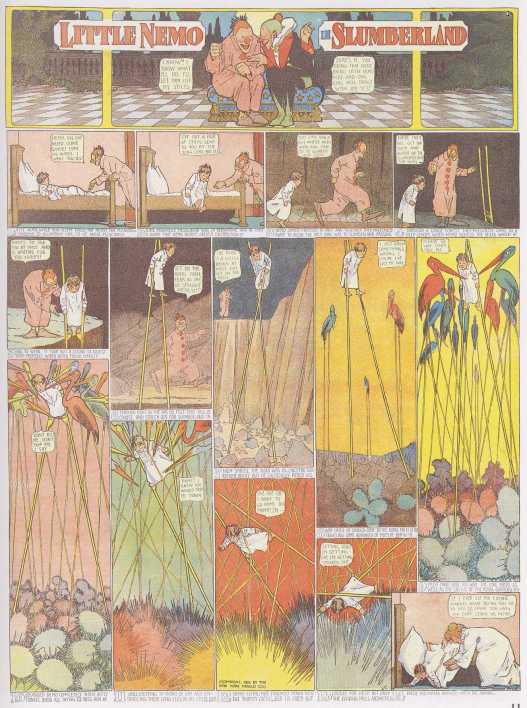
I’ve spent hours adoring the first volume of The Complete Little Nemo in Slumberland by Winsor McKay instead of grading my Seniors’ research papers or writing my own final paper for my theory class. And who wouldn’t want to get absorbed and distracted by McKay’s lush and fantastical world? It’s both sad and silly that the comics page nowadays has been compressed into a minute fraction of the massive broadsides that used to grace each Sunday edition of the paper. Calvin & Hobbes creator Bill Watterson has lamented the incredible shrinking comics page in the introductions to several of the C & H collections, and Art Spiegelman paid tribute to the glory days of the broadside in In the Shadow of No Towers. Still, even as comics creators draw attention to this downsizing, it seems that the trend in newspapers will be to continue to dwarf creativity, to literally minimize (pop) art. This marks a serious social regression over the past century. But why? If I knew that something on the scale of the broadside below–both in terms of physical size and imagination–was waiting for me each Sunday, I’d be excited to get a subscription to the local rag. For now, enjoy this episode of Little Nemo (image links to a full page, but you still might need to use the magnifying glass!)–

littlenemo02.jpg

Placentophagy 101

About eight years ago, I read an article in Harper’s Magazine detailing, if I recall correctly, the script of an English cooking show where the host and his guests cooked and ate fresh placenta. This has always been intriguing to me for some reason; a little research revealed that almost all mammals, including primates, eat the placenta, which provides all kinds of unique nourishment to a nursing mother.

As I’ve mentioned before, my wife is currently pregnant with our first child, a girl, due in early June. We’ve been attending birthing classes once a week at night, and last night we watched a video of a “real” (i.e. not computer simulated) birth. I had seen video of live birth before; I hadn’t witnessed the discharge of afterbirth. The afterbirth looked to be a big blue and black balloon of goo, twice as big as the baby. My word. One man in our group lost some Dr. Pepper through his nose. I wasn’t shocked or disgusted, but the placenta didn’t really seem very appetizing (I had tentative plans to eat it).

Well, so and anyway, after the video our birthing coach submitted to the class that most animals and some cultures practiced the eating of the placenta. This drew a mixed response from the crowd: incredulous horror, baffled humor, grade-school disgust, and, most interestingly, nationalism. Yes. Nationalism: “Not in America, they don’t!” exclaimed (yes, he exclaimed) one young man in jean shorts, to the information that some people made a stew of the afterbirth. He was immediately backed up: “Maybe they do that in foreign countries, but not in America!” “Maybe in Afghanistan! Maybe in Iraq!” Once these admonitions were voiced, it seemed necessary for the group to repeat, to reinforce these dietary restrictions. Just about everybody grumbled in bemused agreement.

So, at the risk of coming off as un-American, I provide a couple of links to recipes for placentas:

From Twilight Headquarters, a couple of recipes, including a cocktail recipe and a lasgane.  Also contains pictures!

A number of recipes from Mothers 35 Plus. Also includes tips on dehydrating the placenta (mmm…jerky!)

Feel free to write in with your own recipes, serving suggestions, and culinary tips.

Koinonia, Praxis, Heterotopia, and Other Ten Dollar Words

Lacking the lexicon to describe your aporia? Need the right words to negotiate a particularly difficult text? Try the Dictionary of Postmodern Terms then. Fun for solipsists, sophists, and psychoanalysts of all ages.

A Short History of America Courtesy Of Robert Crumb

Progress!

From Terry Zwigoff’s fantastic 1994 documentary Crumb.

A Unique Brand of Despondent Leftism?

In case you need another reason to hate Fox News:

I find it amazing that despite Vonnegut’s lifetime of art and achievement, the schmuck-reporter takes the time to mention that the celebrated writer “failed at suicide 23 years ago” in a two minute segment.

God Bless You, Mr. Vonnegut

Like many of you I’m sure, I cut my literary teeth on Kurt Vonnegut, who died early this morning. My dad gave me three of Vonnegut’s books–Breakfast of Champions, Slaughterhouse Five, and The Sirens of Titan–when I was about eleven or twelve. It’s a cliché, but these books really did change my life forever. In the next couple of years, I devoured everything Vonnegut wrote. My favorite book of his was and is Cat’s Cradle, which I think surpasses both Mother Night and Slaughterhouse Five as his most important work. As I grew older, I began to reject Vonnegut, to see him as not as serious or profound as the authors I was reading. His later books like Hocus Pocus and the truly-lamentable Timequake didn’t help either. Nevertheless, I read them as soon as they came out in paperback. I had to. I had to read everything he wrote. Celebrate Vonnegut’s life by reading one of his books, and remember what got you into reading in the first place.

0kv1orgonpink.jpg

This Is Why

After my rant the other day, friend of the ‘Klept RP sent me a link to a Village Voice article in which Rob Harvilla dissects Mim’s smash hit “This Is Why I’m Hot.” Harvilla does a great job of deconstructing the (il)logic behind Mim’s inexplicable hit, employing a variety of charts and graphs to this end. Highly recommended.

harvilla4-dia.jpg