Book Shelves #7, 2.12.2012

20120210-203625.jpg

Book shelves series #7, seventh Sunday of 2012: In which I photograph a coffee table.

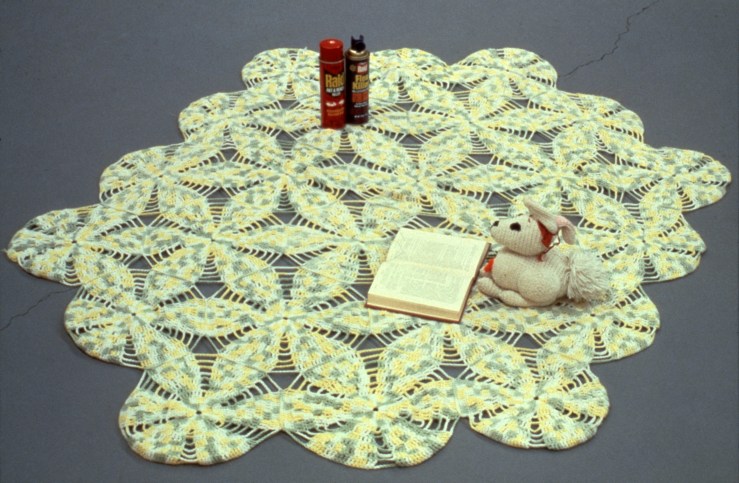
We have three coffee tables. This is one of them (it’s next to the unit I photographed last week). Like many folks’ coffee tables, I suppose, it gets littered with books; the books on this one tend to rotate. Pictured above: lots of recent books acquired, including the Aira on top and Stuart Kendall’s new translation of Gilgamesh. There’s also the new issue of Lapham’s Quarterly and, for some reason (can’t remember) George Saunders’s Pastoralia. The Kindle is also there: my daughter and I read the first three comics in a colorized version of Jeff Smith’s epic graphic novel Bone—amazing stuff, and the color adds depth and beauty to an already beautiful book. I took this photo on a Friday afternoon, or maybe Friday evening (or night). I was drinking wine.

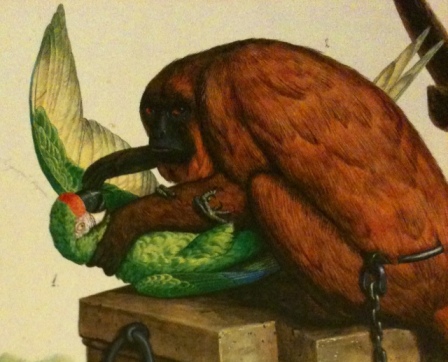
The big book is Walton Ford’s Pancha Tantra, which my lovely wife gave me for Christmas. Some images:

20120210-203648.jpg

20120210-203656.jpg

20120210-203704.jpg

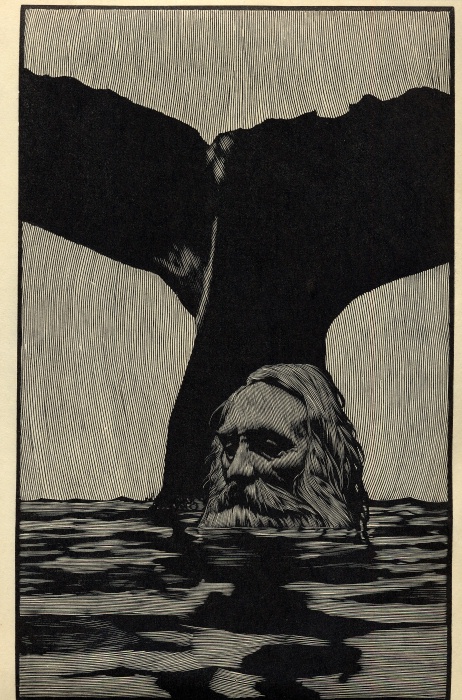
Jonah — Barry Moser

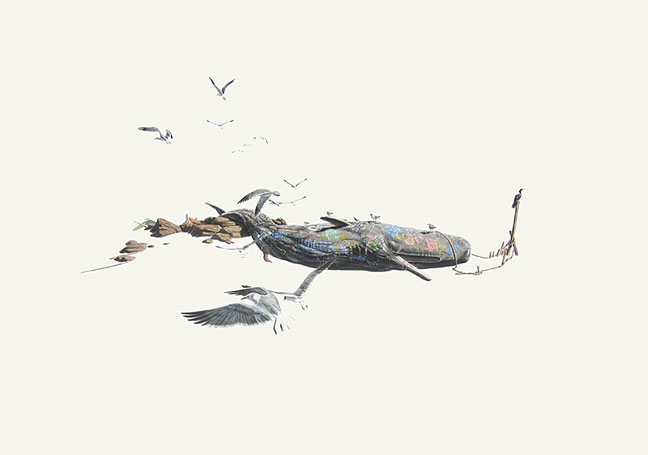
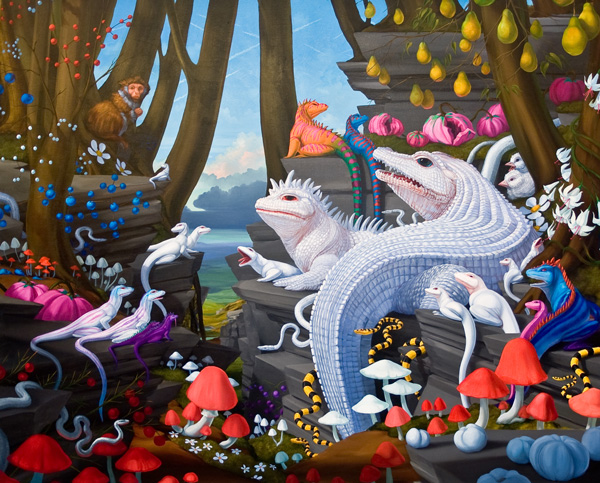
Flotsam — George Boorujy

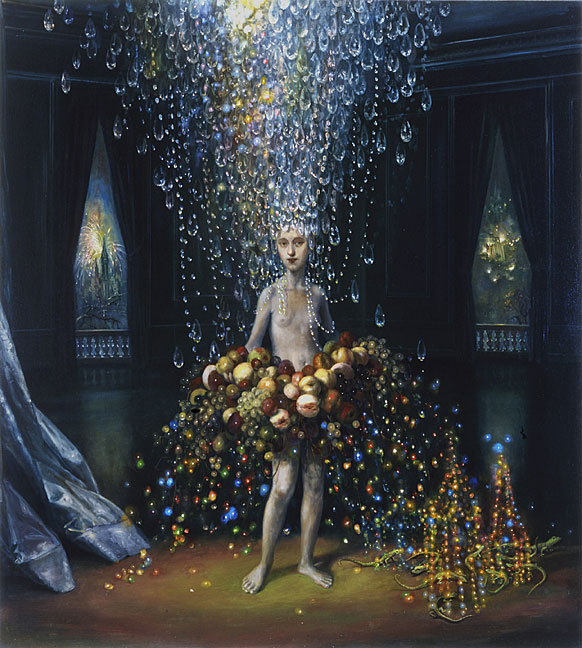
Self-Portrait as Gorgeous Tumor — Julie Heffernan

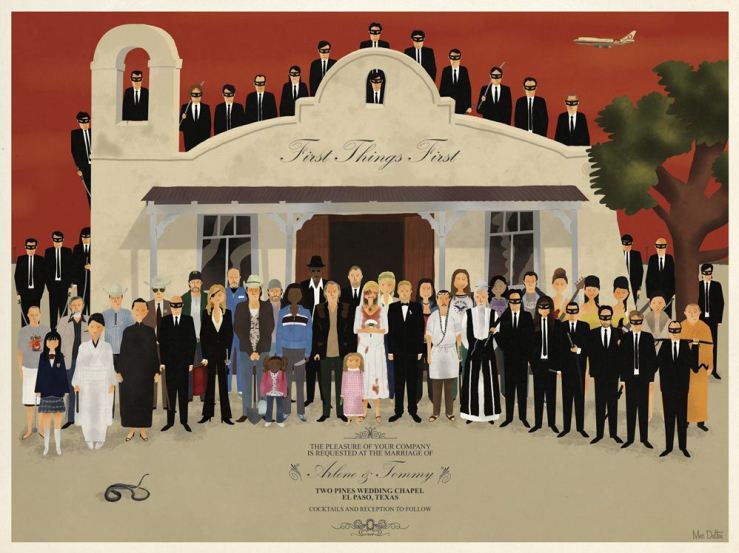
First Things First — Max Dalton (Kill Bill Wedding Invitation)

Love this poster by Max Dalton. (More/via).

You Used To Be Alright, What Happened — Kristine Moran

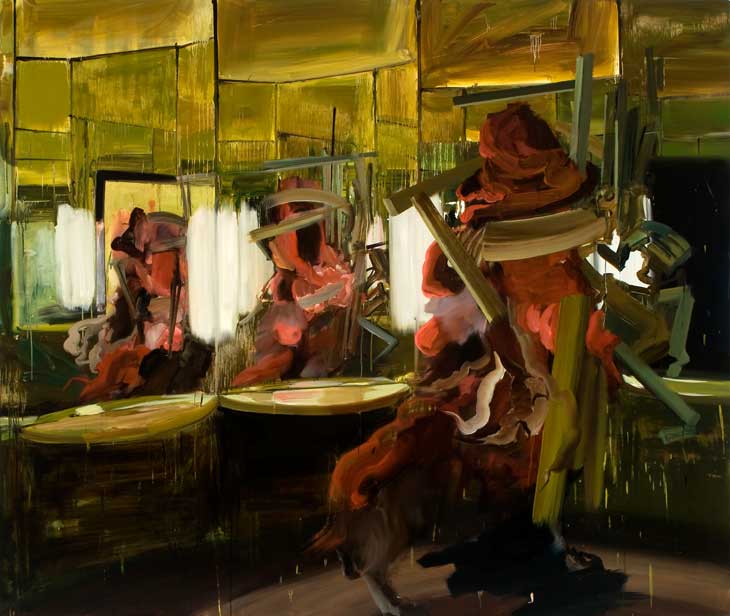
Diorama with Gasoline, Dopamine and Adrenaline — Laurie Hogin

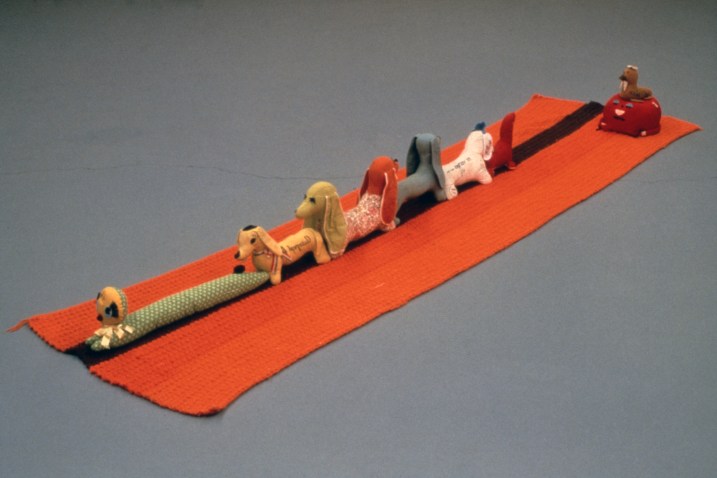
Arena #10 (Dogs) — Mike Kelley

(Via/more).

RIP Mike Kelley

RIP artist/musician Mike Kelley. (Obit/more).

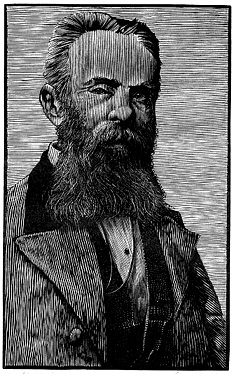
Herman Melville (Portrait) — Barry Moser

Detail from The Triptych of the Mystical Marriage of Saint Catherine — Hans Memling

“A Well-Meaning, Sincere Hypocrite” — William Gaddis on His Title Character, JR (And Capitalism)

More from William Gaddis’s 1986 Paris Review interview:

INTERVIEWER

Is JR’s story something you extrapolated from life only, or did you rely on sociologies devoted to how the corporate world works upon social values, human qualities, and relationships in American culture?

GADDIS

The boy himself is a total invention, completely sui generis. The reason he is eleven is because he is in this prepubescent age where he is amoral, with a clear conscience, dealing with people who are immoral, unscrupulous; they realize what scruples are, but push them aside, whereas his good cheer and greed he considers perfectly normal. He thinks this is what you’re supposed to do; he is not going to wait around; he is in a hurry, as you should be in America—get on with it, get going. He is very scrupulous about obeying the letter of the law and then (never making the distinction) evading the spirit of the law at every possible turn. He is in these ways an innocent and is well-meaning, a sincere hypocrite. With Bast, he does think he’s helping him out. As for the corporate world, I do read the newspapers, clip things, ideas, articles, and just use them as fodder. But all that hardly requires a text in sociology. And this may be the place to make a further point. I’m frequently seen in the conservative press as being out there on the barricades shouting: Down with capitalism! I do see it in the end as really the most workable system we’ve produced. So what we’re talking about is not the system itself, but its abuses, I don’t mean criminal but the abundant abuses just within the letter of the law. The essential question is whether it can survive these abuses given free rein and whether these abuses are inherent in the system itself. I should think it is perfectly clear in my work—calling attention, satirizing these abuses—that our best hope lies in bringing things under better and more equitable control, cutting back the temptations to unmitigated greed and bemused dishonesty . . . in other words that these abuses the system has fostered are not essential, but running out of moral or ethical control can certainly threaten its survival.


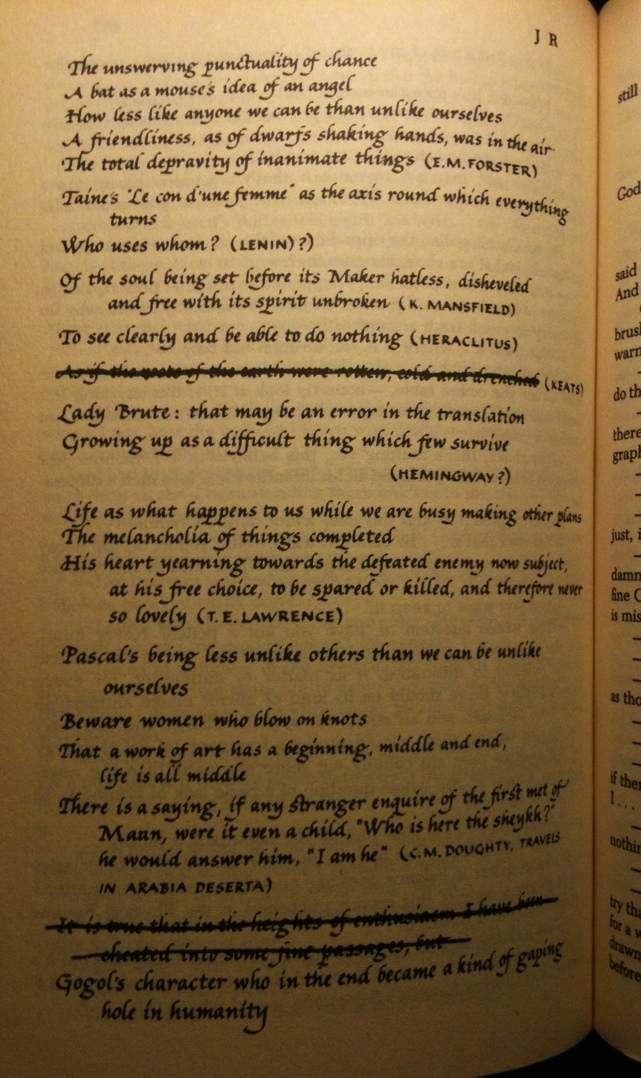
“The Unswerving Punctuality of Chance” (And Other Citations from William Gaddis’s Novel JR)

20120128-185406.jpg

In JR, the sprawling novel of capitalism and art by William Gaddis, Jack Gibbs loads his pockets with crumpled newspaper clippings, racing forms, and citations for a book he’s working on. “More trash,” he mutters about this list (which appears on page 486 of my Penguin Twentieth Century Classics Edition).

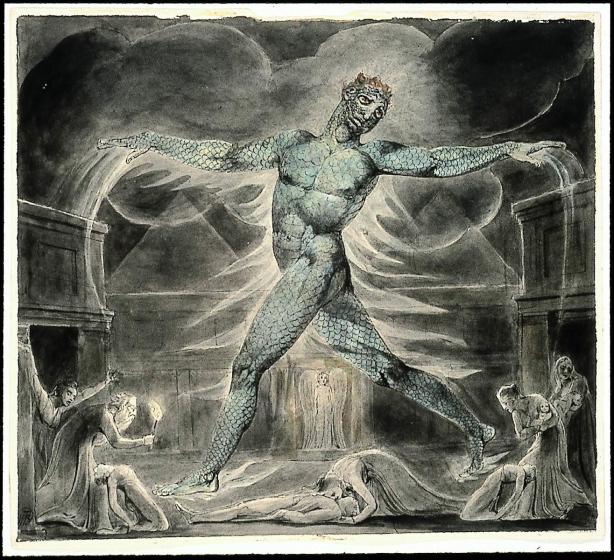
Pestilence: Death of the First-Born — William Blake

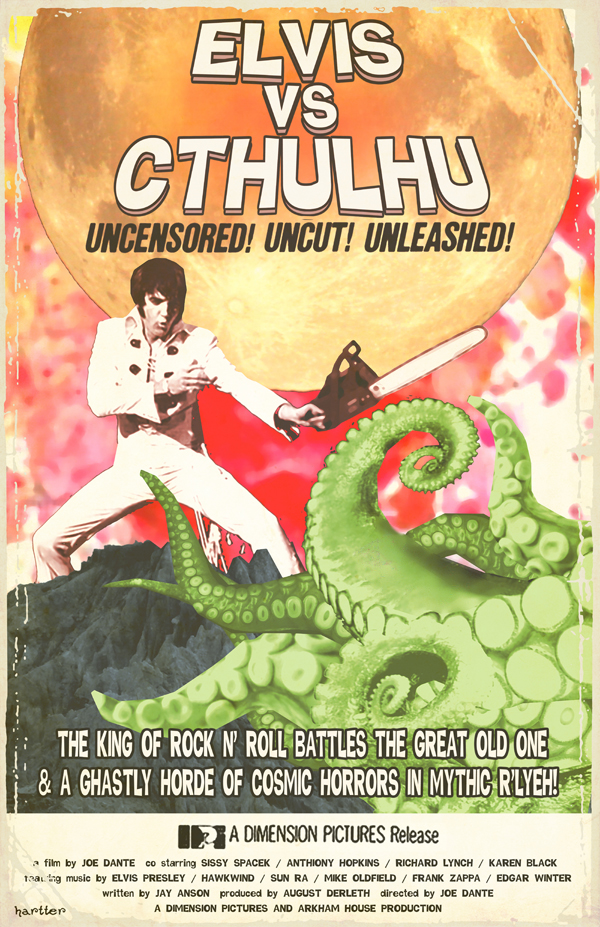
Elvis Vs. Cthulhu (And Other Alternate Universe Movie Posters by Sean Hartter)

Sean Hartter’s fantabulous collection of movie poster designs from an alternate dimension relay such a precise aesthetic that they almost make me sad that these movies don’t exist. Still, I find some consolation by imagining scenes from, say, a Jodorowsky-helmed Star Wars or  Vincent D’Onofrio in an x-rated version of Avatar. (Thanks to Tilford for the tip).

As studios increasingly rely on franchises—and rebooting those franchises every decade—it makes sense that franchise titles will continue to evolve like comic books have, with new artists (directors, producers, writers, etc.) doing their “take” on the property.

A few of Hartter’s images, but I suggest getting lost in his site:

Morning in a City — Edward Hopper

Wonder Woman (Bondage) — Bill Sienkiewicz

(Via).