Sam Shepard Talks About Working with Terrence Malick on Days of Heaven

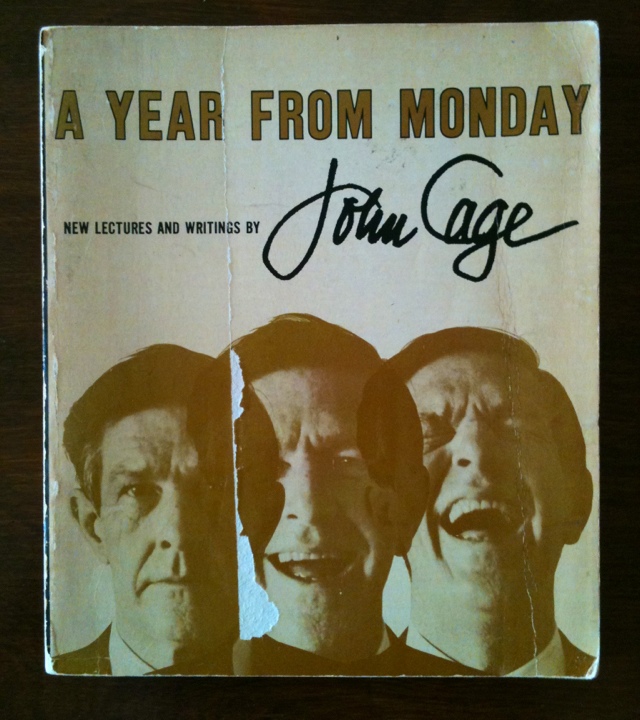
John Cage’s A Year from Monday (Book Acquired 2.21.2012)

20120228-172910.jpg

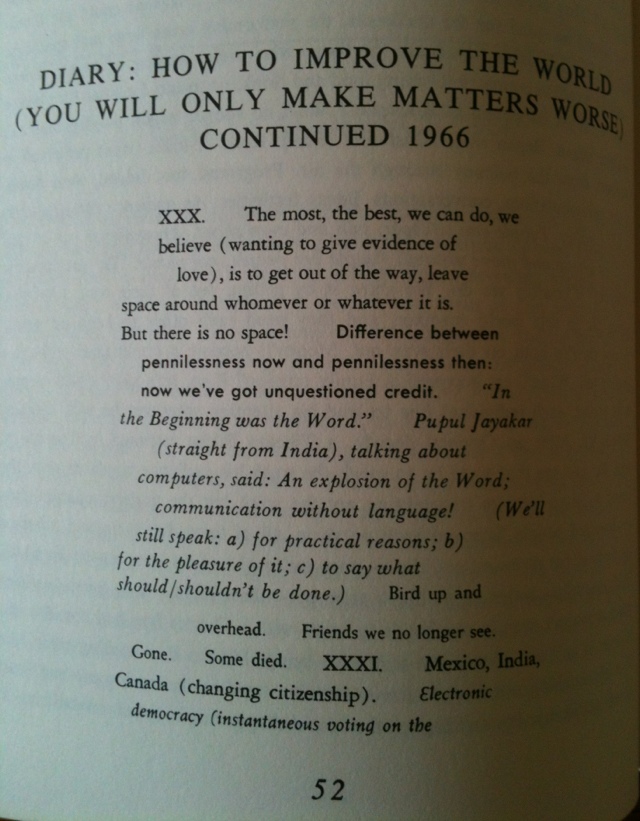
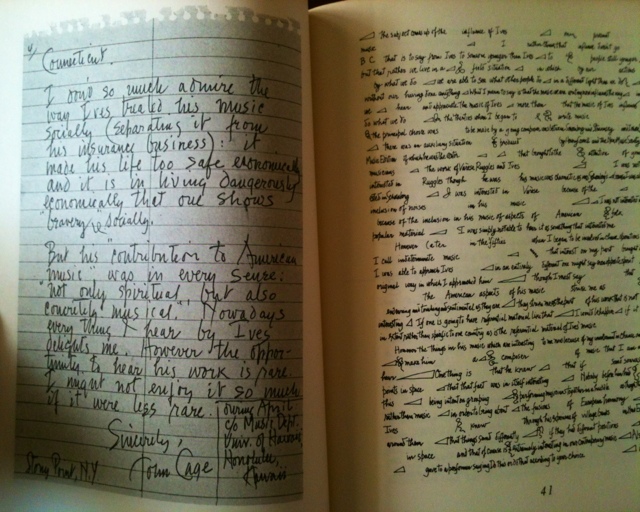
I found this one at random in my favorite used bookshop last week. Had never heard of it before, but it’s really neato—Cage’s lectures, notes, letters, etc. on  a range of subjects, including Charles Ives, Marcel Duchamp, and making the world better. Cover’s in rough shape, but it’s a first edition paperback, so all’s well &c.

A few pics from the strange interior (no worries, I will be plundering the book for posts in the months to come):

20120228-172941.jpg

20120228-172951.jpg

Ladybird Beetle Near Three Mile Island — Cornelia Hesse-Honegger

(More/about)

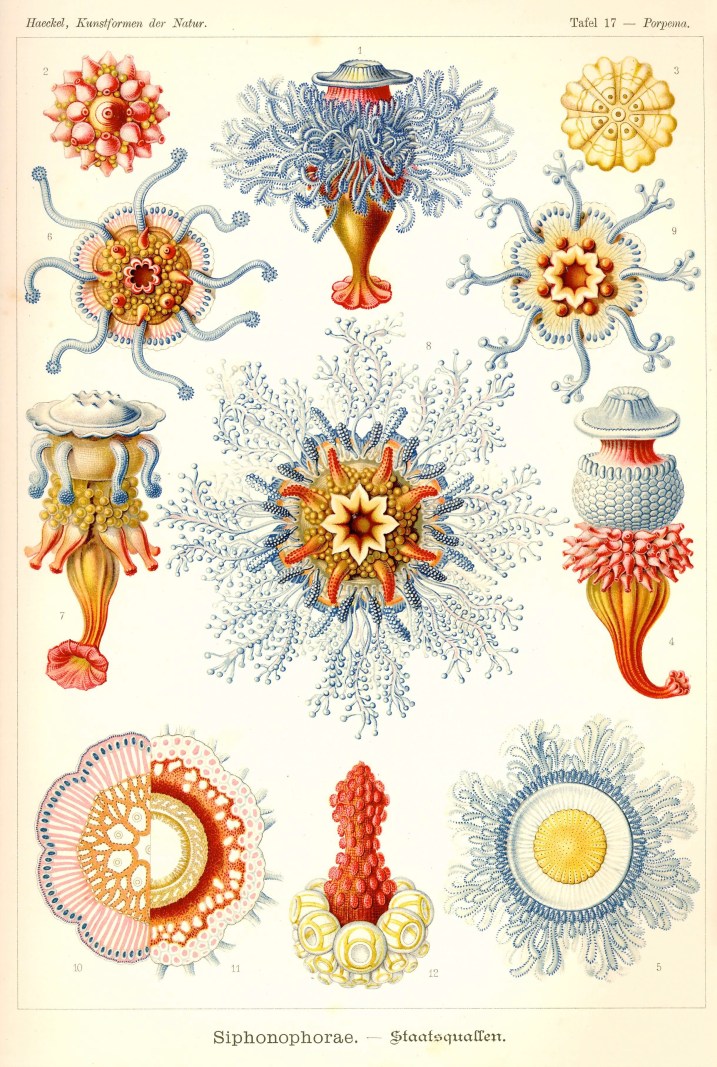
Siphonophorae — Ernst Haeckel

“My Tone Is Not Meant to Be Obnoxious. I Am in a State of Shock” — Flannery O’Connor Responds to an English Professor

From a 1961 letter by Flannery O’Connor to an English professor, who wrote her asking for an interpretation of her story “A Good Man Is Hard to Find.” In his letter, the professor concludes that the second half of the story is imaginary, an interpretation that seems to give Ms. O’Connor the vapors:

   The interpretation of your ninety students and three teachers is fantastic and about as far from my intentions as it could get to be.  If it were a legitimate interpretation, the story would be little more than a trick and its interest would be simply for abnormal psychology.  I am not interested in abnormal psychology.

There is a change of tension from the first part of the story to the second where the Misfit enters, but this is no lessening of reality.  This story is, of course, not meant to be realistic in the sense that it portrays the everyday doings of people in Georgia.  It is stylized and its conventions are comic even though its meaning is serious.

Bailey’s only importance is as the Grandmother’s boy and the driver of the car.  It is the Grandmother who first recognized the Misfit and who is most concerned with him throughout.  The story is a duel of sorts between the Grandmother and her superficial beliefs and the Misfit’s more profoundly felt involvement with Christ’s action which set the world off balance for him.

The meaning of a story should go on expanding for the reader the more he thinks about it, but meaning cannot be captured in an interpretation.  If teachers are in the habit of approaching a story as if it were a research problem for which any answer is believable so long as it is not obvious, then I think students will never learn to enjoy fiction.  Too much interpretation is certainly worse than too little, and where feeling for a story is absent, theory will not supply it.

My tone is not meant to be obnoxious.  I am in a state of shock.
St. George and the Dragon — Raphael

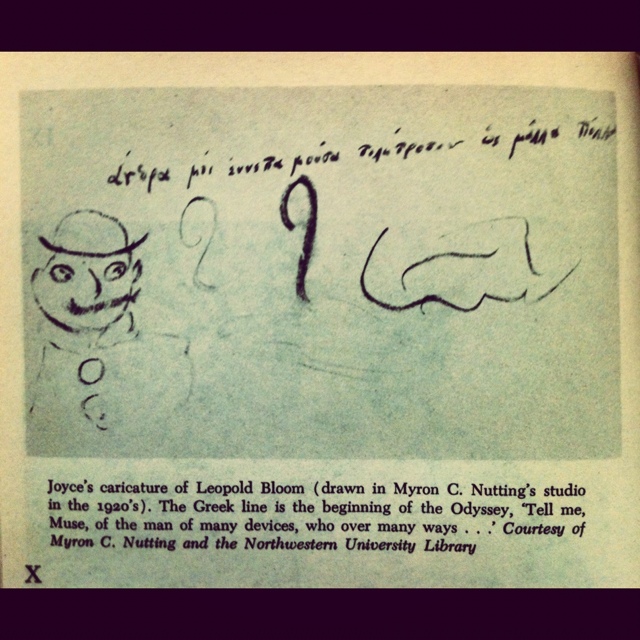
James Joyce’s Caricature of Leopold Bloom

20120216-173233.jpg

From Richard Ellman’s great big bio James Joyce.

Self-Portrait as Ishmael — Bo Bartlett

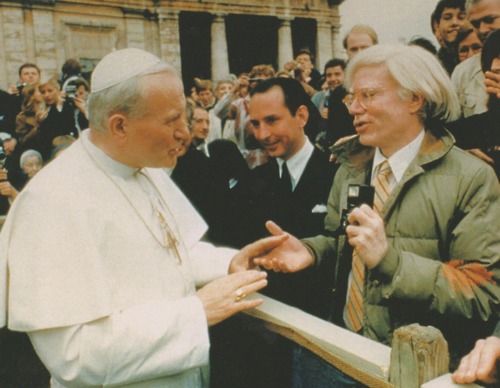
Andy Warhol Meets Pope John Paul II

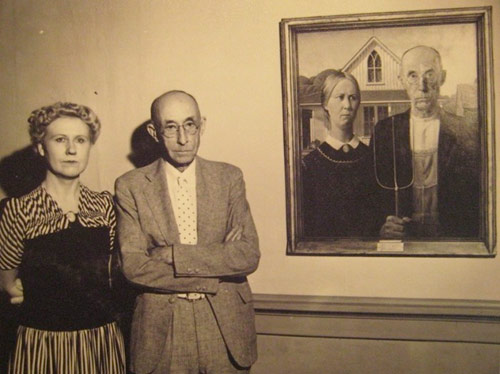
In Which the Models Stand Thin-Lipped Next to Wood’s American Gothic

Book Shelves #7, 2.12.2012

20120210-203625.jpg

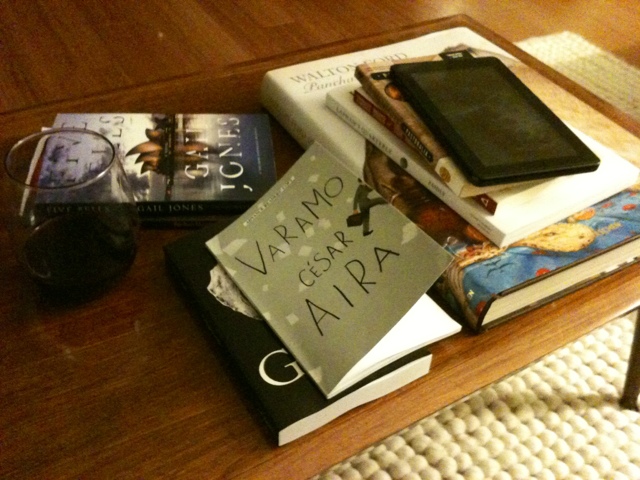
Book shelves series #7, seventh Sunday of 2012: In which I photograph a coffee table.

We have three coffee tables. This is one of them (it’s next to the unit I photographed last week). Like many folks’ coffee tables, I suppose, it gets littered with books; the books on this one tend to rotate. Pictured above: lots of recent books acquired, including the Aira on top and Stuart Kendall’s new translation of Gilgamesh. There’s also the new issue of Lapham’s Quarterly and, for some reason (can’t remember) George Saunders’s Pastoralia. The Kindle is also there: my daughter and I read the first three comics in a colorized version of Jeff Smith’s epic graphic novel Bone—amazing stuff, and the color adds depth and beauty to an already beautiful book. I took this photo on a Friday afternoon, or maybe Friday evening (or night). I was drinking wine.

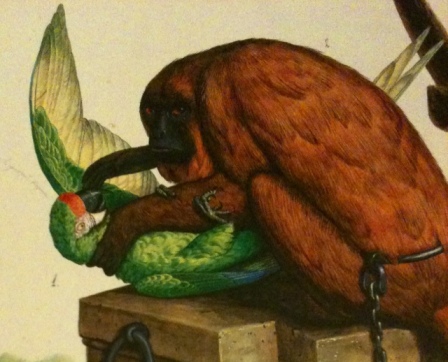
The big book is Walton Ford’s Pancha Tantra, which my lovely wife gave me for Christmas. Some images:

20120210-203648.jpg

20120210-203656.jpg

20120210-203704.jpg

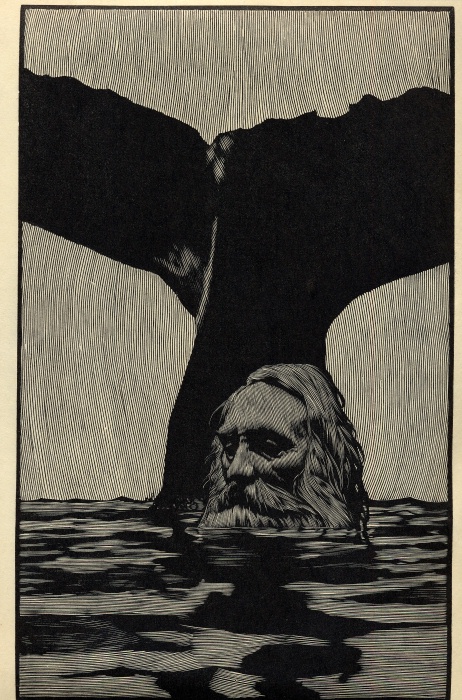
Jonah — Barry Moser

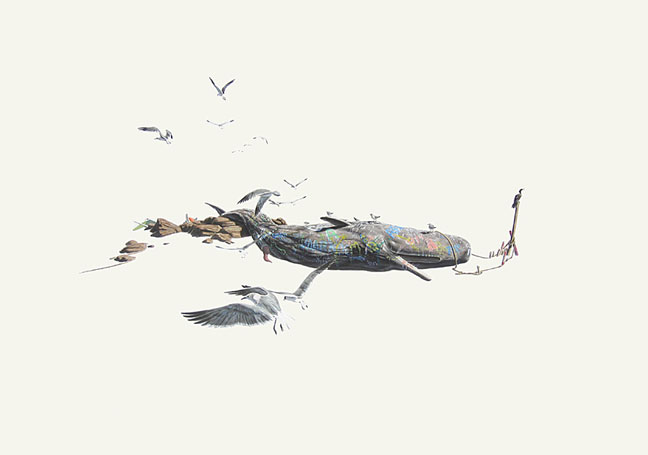
Flotsam — George Boorujy

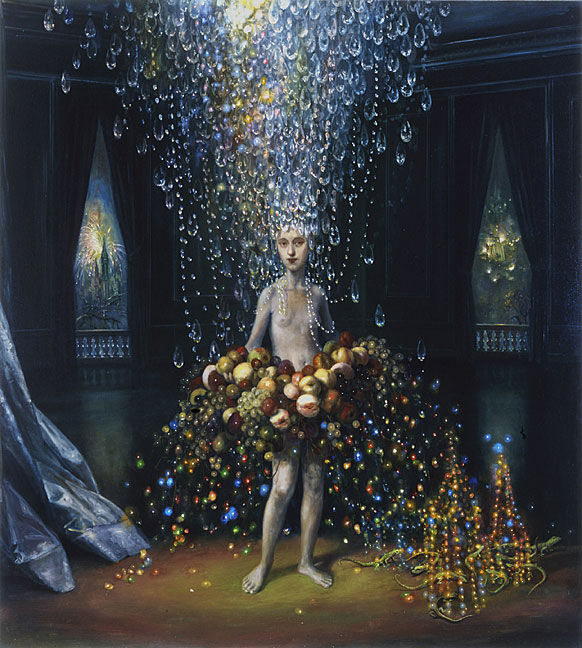
Self-Portrait as Gorgeous Tumor — Julie Heffernan

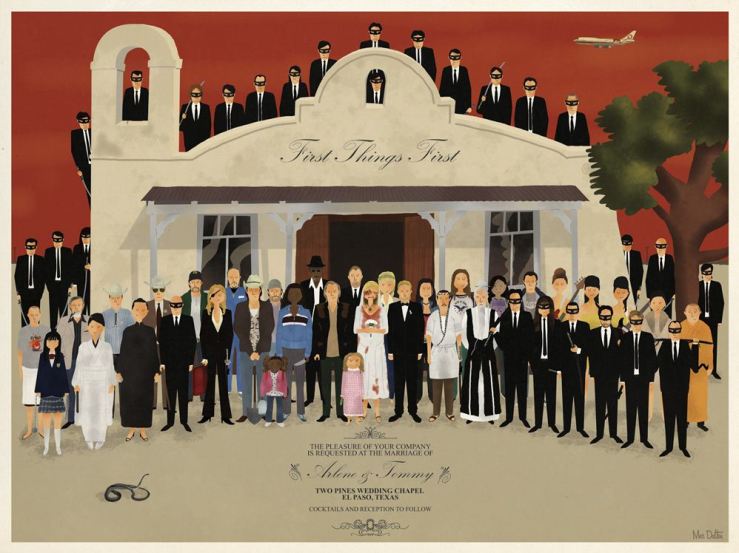
First Things First — Max Dalton (Kill Bill Wedding Invitation)

Love this poster by Max Dalton. (More/via).

You Used To Be Alright, What Happened — Kristine Moran

Diorama with Gasoline, Dopamine and Adrenaline — Laurie Hogin