
Biggie Smalls is basically a metaphor for America. This painting is by Kehinde Wiley. We love it.
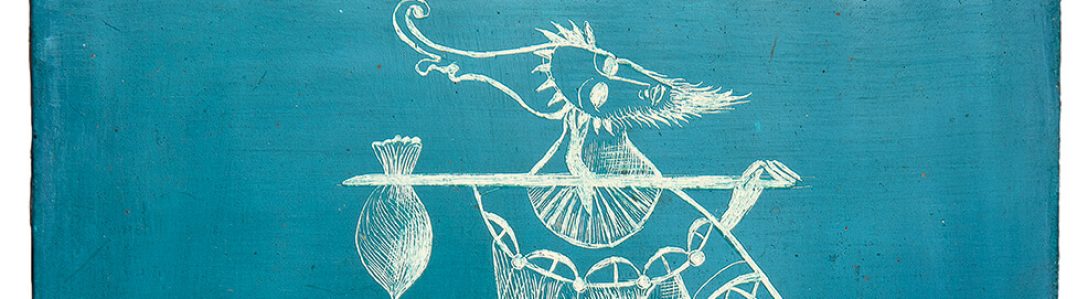
Biggie Smalls is basically a metaphor for America. This painting is by Kehinde Wiley. We love it.
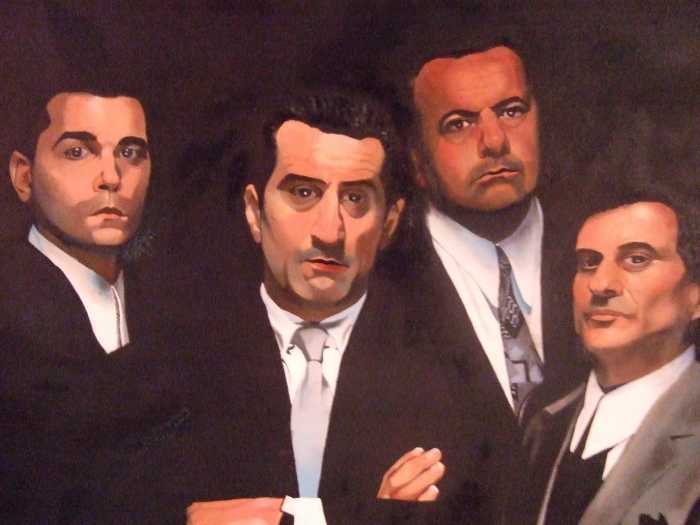
Who is more heroic or more American than Henry Hill, Jimmy Conway, Paulie Cicero, or Tommy DeVito? No
one, that’s who! Also, for that matter, is there anyone more American than Joe Pesci? No way, Jose! Painting by William Parsons.
Okay well so, we’re more or less “off” this week, because we love America sooooooooo much that we’re going on vacation. Still, because we are totally American, which is to say totally industrious, and because “the U.S. is the greatest, best country god has ever given man on the face of the Earth,” we’ll be leaving you with a series of fantastic images of great American heroes over the next week, starting with this stunning portrait of Superman himself, Christopher Reeve, by talented painter Adam Brooks. Great stuff.

“Landscape with the Fall of Icarus” by William Carlos Williams
According to Brueghel
when Icarus fell
it was spring
a farmer was ploughing
his field
the whole pageantry
of the year was
awake tingling
near
the edge of the sea
concerned
with itself
sweating in the sun
that melted
the wings’ wax
unsignificantly
off the coast
there was
a splash quite unnoticed
this was
Icarus drowning

“Musée de Beaux Arts” by W.H. Auden
About suffering they were never wrong,
The Old Masters: how well, they understood
Its human position; how it takes place
While someone else is eating or opening a window or just walking dully along;
How, when the aged are reverently, passionately waiting
For the miraculous birth, there always must be
Children who did not specially want it to happen, skating
On a pond at the edge of the wood:
They never forgot
That even the dreadful martyrdom must run its course
Anyhow in a corner, some untidy spot
Where the dogs go on with their doggy life and the torturer’s horse
Scratches its innocent behind on a tree.
In Brueghel’s Icarus, for instance: how everything turns away
Quite leisurely from the disaster; the ploughman may
Have heard the splash, the forsaken cry,
But for him it was not an important failure; the sun shone
As it had to on the white legs disappearing into the green
Water; and the expensive delicate ship that must have seen
Something amazing, a boy falling out of the sky,
had somewhere to get to and sailed calmly on.

If you had a million years to do it in, you couldn’t rub out even half the ‘Fuck you’ signs in the world. It’s impossible. –Holden Caulfield in The Catcher in the Rye
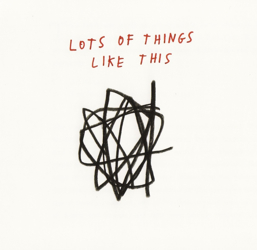
Royal Art Lodge piece from Lots of Things Like This, a slim volume of pictures with words (or words with pictures?) included with McSweeney’s #27 (two other books comprise the issue: a volume of short stories including pieces by Jim Shepard and Stephen King, and a really cool notebook of weird doodles and crazy thoughts by Art Spiegelman). Other artists represented in Lots of Things Like This include Magritte, Goya, Warhol, Raymond Pettibon, Jeffrey Brown, Leonard Cohen, David Mamet, David Berman, Basquiat, and more.
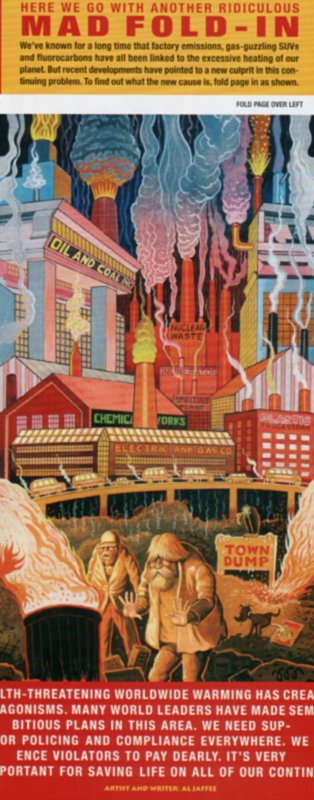
I’ve already documented my love of MAD magazine when I was younger. It pretty much was my cultural currency, and, perhaps unfortunately, much of my understanding of pop culture was warped through the lens of MAD. Anyway, I was psyched when Longlunch sent me this fun, playful link to the New York Times‘s “Fold-In Feature.” You remember Al Jaffee’s fold-ins, right? They always got all messed up after one or two folds…but they were fun. Interactive. I like that. More fold-ins here. Bleechh!


Hey.
Sorry for the long delays between posts lately. I’ve been really, really busy, and I’m trying to resist the “hey, look at this cool shit” type of posting so common in Blogworld. I promise to come back soon with regular updates with (hopefully) meaningful content. In the meantime: Hey, look at this cool shit–
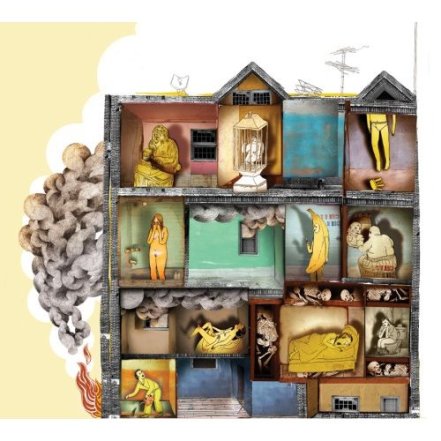
The new Man Man album, Rabbit Habits is set to drop next week. Raucous and ramshackle, yet paradoxically tight as a snare, Rabbit Habits works in the same post-Beefheart idiom as their last album, Six Demon Bag, refining some of the rough edges without losing the rawness. Good for some occasions.
Pirates with good taste probably know by now that Animal Collective’s Water Curses has leaked. The EP is as delicious and warped as fans might expect, and has been on repeat around Biblioklept Central Headquarters for the past two weeks. Great for most occasions.
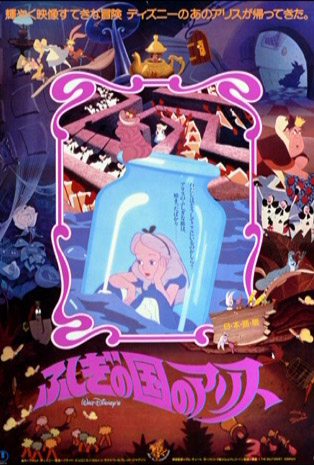
Incidentally, according to AC’s Wikipedia page: “It has been said that the Animal Collective album Strawberry Jam can be synchronized with the Disney animated clasic [sic] Alice in Wonderland [sic].” See folks, this is why we discourage writing in the passive voice. Who has said that Strawberry Jam syncs with Alice in Wonderland? When was this said? Where, and in what context? Sophomores getting stoned somewhere in Wisconsin? Oh, Wikipedia! See, this is why so many people regard you as the ugly stepchild of legitimate encyclopedias…Anyway…has anyone tried this?
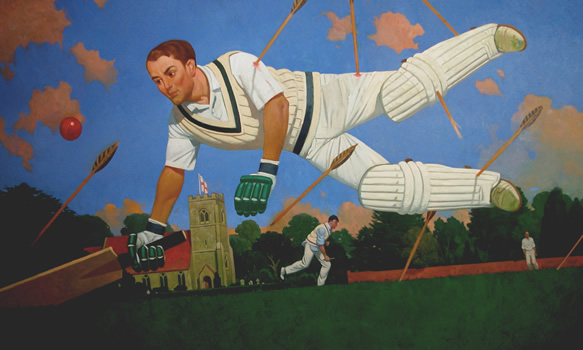
On a visual tip, I’m in love with Paul Slater’s collection at the Medici Gallery. Fun, smart, and very British. Tastefully irreverent for assorted occasions.
And, in the grand tradition of lazy blogging, I refer you to the very awesome blog, Crystalpunk.
Go in peace.
Art Spiegelman’s Maus, released as a graphic novel over twenty years ago, did more to legitimize the comic as an art form than any other work I can think of. It won a Pullitzer Prize Special Award in 1992 (the Pullitzer committee found it hard to classify…perhaps they didn’t want to admit that they were giving a prestigious award to a comic book!), and today Maus is a standard on many college English syllabi.
After Maus, Spiegelman worked for The New Yorker for over ten years, quitting in early 2002 after the September 11th attacks to work on a series of broadsheets entitled In the Shadow of No Towers. These broadsheets were collected in 2004 in an unwieldy 15″ x 10″ book.
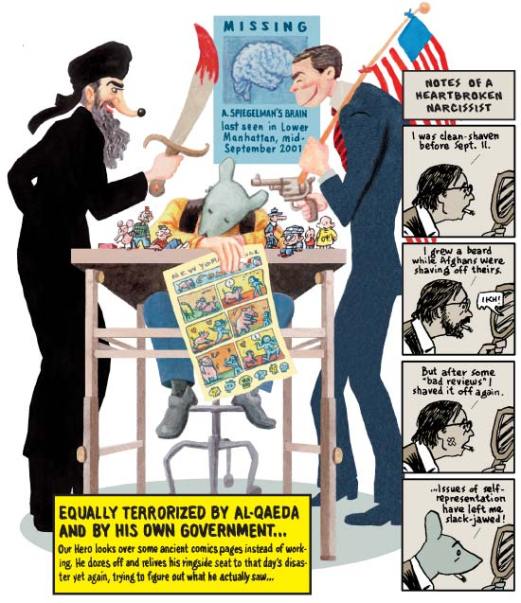
Spiegelman lived in downtown Manhattan, right by the towers; his daughter attended school a few blocks away. He saw the towers collapse in person, fleeing for his life with his family. Spiegelman attempts to capture this raw, unmediated, and very personal experience in In the Shadow of No Towers (Sonic Youth’s 2002 album Murray Street works to the same end–only much more abstractly): the narrative is discontiguous, fluctuating from bitter satire to earnest inquiry. Spiegelman’s choice of the broadsheet as his medium (the broadsheets were published monthly by different newspapers as Spiegelman produced them) is tremendously affective: just like the 9/11 attacks, the broadsheets are larger than life, hard to grasp, hyperbolically resisting easy, singular readings. Spiegelman balances bitter attacks against the conformist mentality spurred by the Bush administration with pathos and humor; In the Shadow of No Towers recalls the good-natured satire of broadsheet comics from a hundred years ago, bittersweetening the content. The 2004 collection wisely contextualizes Spiegelman’s work by reprinting broadsheets of “The Yellow Kid” and “The Katzenjammer Kids.”
Like Maus, In the Shadow of No Towers is a fascinating exploration of how disaster confronts and transforms identity. And reflecting its heinous subject, In the Shadow of No Towers ends without concluding: as the foolish Iraq war begins, Spiegelman can no longer shape any meaning or sense from his work. This isn’t a graphic novel–don’t look for a cohesive narrative structure here; instead, In the Shadow of No Towers explores the loose ends, the detritus, the psychic remnants of disaster.
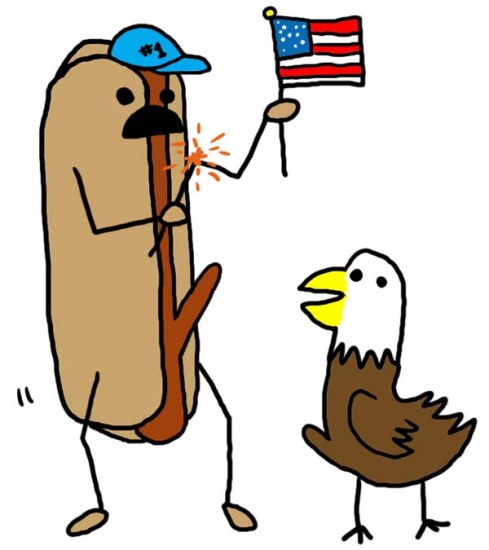
“America Is Awesome” by Natalie Dee

