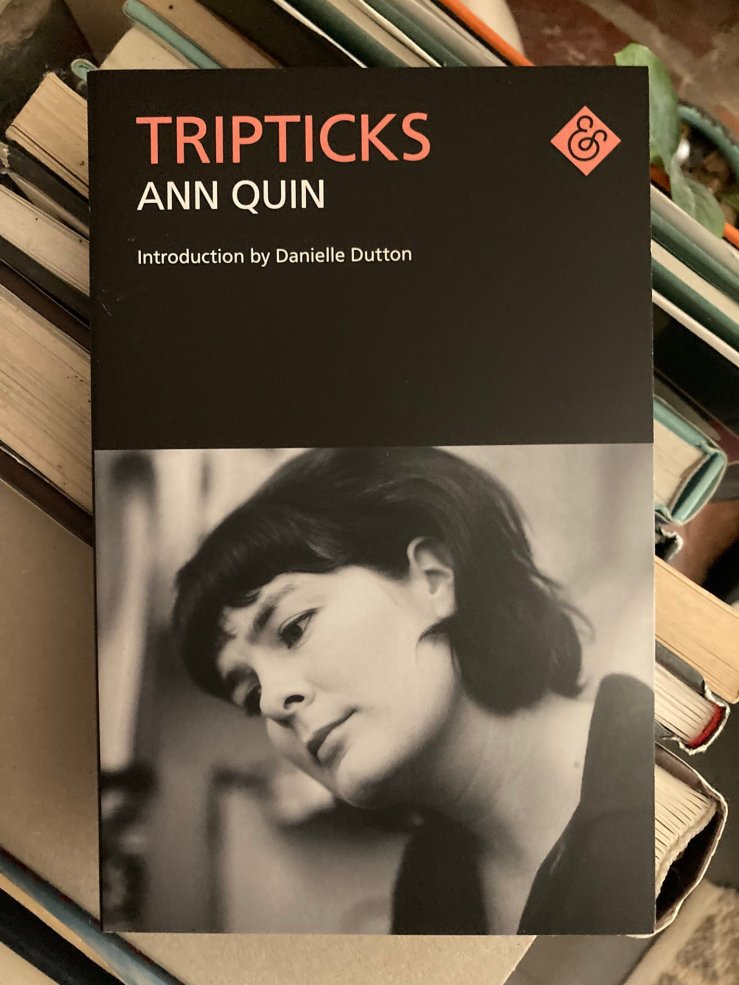
Ann Quin’s Tripticks (Book acquired, 15 Aug. 2022)

I’m a big fan of Ann Quin. Her last novel, Tripticks, is reissued this month from the good folks of And Other Stories. Here is their blurb:

First published in 1972, Ann Quin’s fourth and final novel was a radical break from the introspective style she had developed in Three and Passages: a declaration of independence from all expectations.

Brashly experimental, ribald, and hilarious, Tripticks maps new territories for the novel – aspiring to a form of pop art via the drawings of the artist Carol Annand and anticipating the genre-busting work of Kathy Acker through collage and gory satire.

Splattering its pages with the story of a man being chased across a nightmarish America by his ‘first X-wife’ and her ‘schoolboy gigolo’, Tripticks was ground zero for the collision of punk energy with high style.

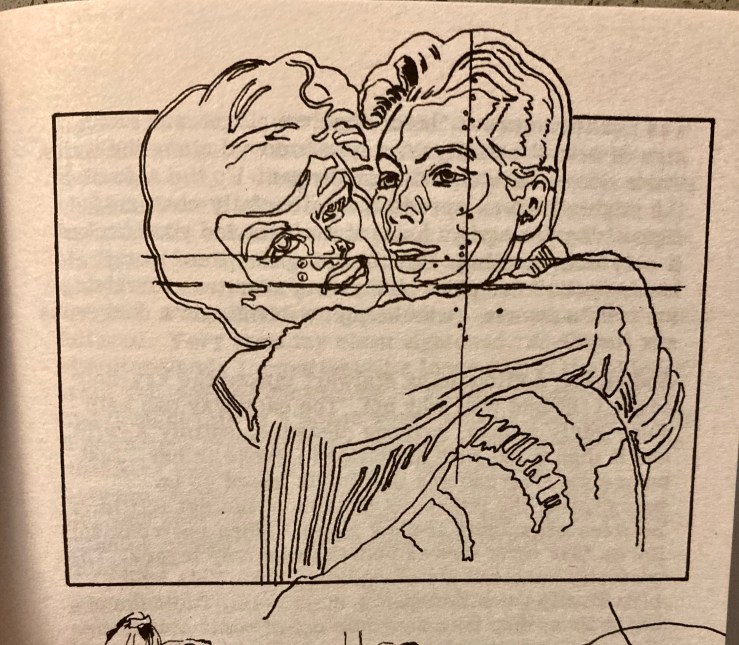
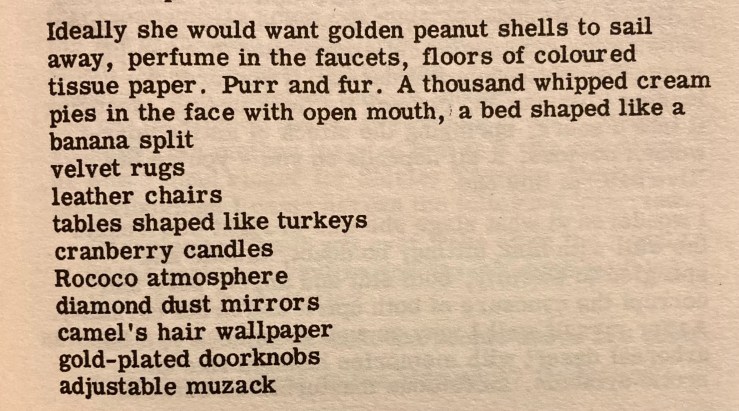
And Other Stories seem to have preserved the original style of Tripticks—it has the look and feel of a punk zine—mimeographed, collage-oriented, pasted together: little surreal comic strips and Pop Art explosions juxtaposed against lists and riffs.

Here’s one of Carol Annand’s illustrations:

And a little list:

Read an excerpt here.

My review of Quin’s first novel Berg.

My review of Quin’s third novel Passages.

Last Friday of no-school summer blog

Our air conditioner broke this week. Specifically, the fan motor broke, after a big power surge that left us without electricity for about six hours.

I read most of Fernanda Melchor’s novel Paradais (in Sophie Hughes’ translation) that day. While it’s not as rich and full (and really, just long) as her novel Hurricane Season, it’s cut from the same abject cloth. Two kids working towards becoming full-time alcoholics in an upscale development somewhere in Mexico ruin their lives. It’s a grimy glowing postmodern gothic, part of the Nothing Good Happens genre of what I think of as the Nothing Good Happens genre, reminiscent of Handke’s Funny Games, Bolaño’s myth crimes, and Nicolas Winding Refn’s neon romance terrors. Good stuff.

But our air conditioner is still broken, and school starts for the kids this Monday, and Florida is burning hot, like a lot of the northern hemisphere. It’s pretty bad! I taped foil to the skylights, where the infrared thermometer was hitting over a hundred today, even though it was cloudy. It’s likely that the twenties might offer some of the best years this century will yield,. Dour thought.

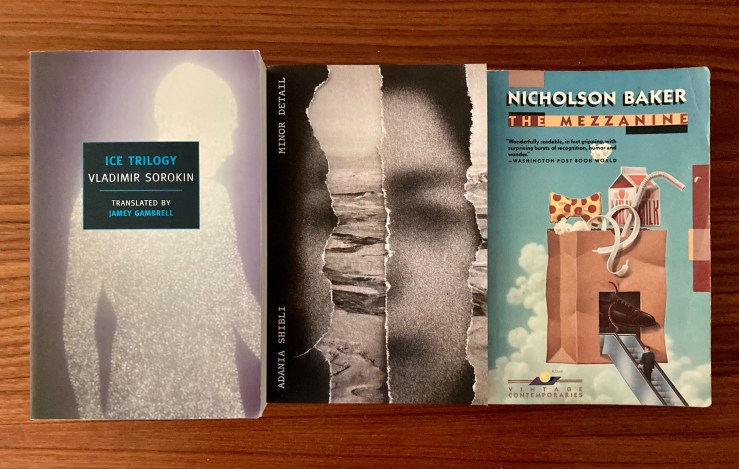
I had covid for a nice-not-nice chunk of July. I still have a cough from it, although I never got really sick. I went to the used bookstore maybe a week ago. It was the first place I went to after I recovered and cleared quarantine. I  picked up Vladimir Sorokin’s Ice “trilogy” (BroIce, and 23,000), in translation by Jame Gambrell. I also picked up a Vintage Contemporaries edition of Nicholson Baker’s The Mezzanine. I didn’t read those this week; I read Vladimir Sorokin’s Blue Lard (trans. Max Lawton), a true mindfuck, and Melchor’s Paradais. 

Some dirty motherfucker stabbed Salman Rushdie today. Antarctic heatwave. The US DOJ is investigating a former president of the United States of America for espionage related to selling nuclear secrets. I went to the bookstore again.

I picked up a thin novel published by New Directions, Adania Shibli’s Minor Detail, in translation by Elisabeth Jaquette. Here is ND’s jacket copy:

Minor Detail begins during the summer of 1949, one year after the war that the Palestinians mourn as the Nakba—the catastrophe that led to the displacement and exile of some 700,000 people—and the Israelis celebrate as the War of Independence. Israeli soldiers murder an encampment of Bedouin in the Negev desert, and among their victims they capture a Palestinian teenager and they rape her, kill her, and bury her in the sand.

Many years later, in the near-present day, a young woman in Ramallah tries to uncover some of the details surrounding this particular rape and murder, and becomes fascinated to the point of obsession, not only because of the nature of the crime, but because it was committed exactly twenty-five years to the day before she was born. Adania Shibli masterfully overlays these two translucent narratives of exactly the same length to evoke a present forever haunted by the past.

I ran into a former student today at the bookstore. Always feels good. So I guess I’ll end on that, a positive note, a little hope.

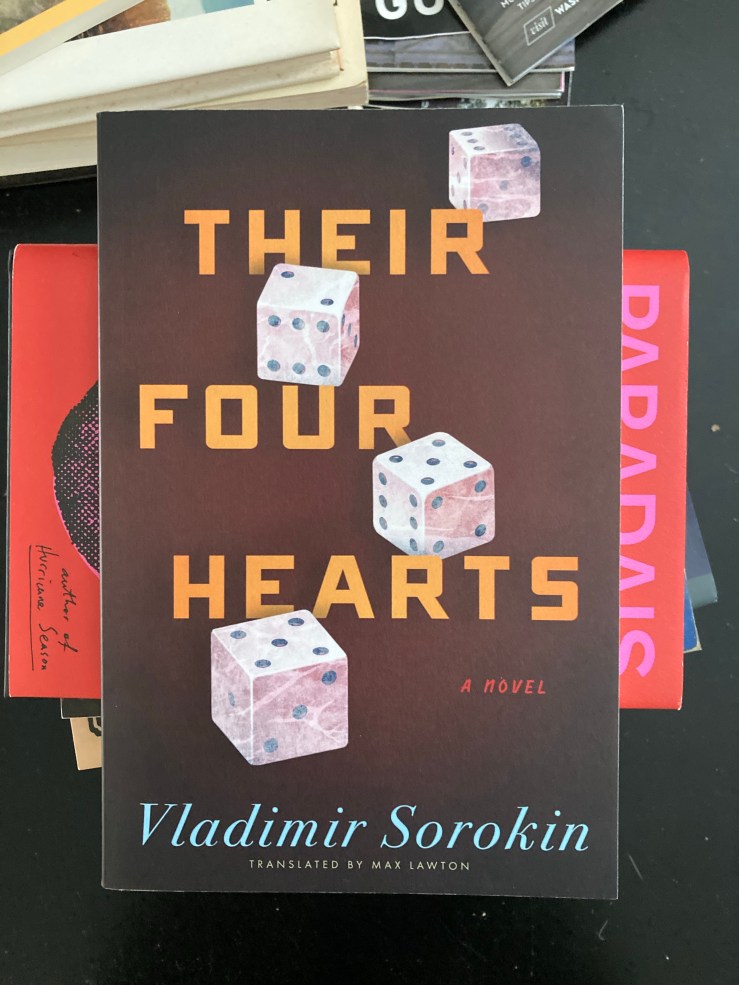
Vladimir Sorokin’s Their Four Hearts (Book acquired, 30 July 2022)

I ordered a copy of Vladimir Sorokin’s 1991 novel Their Four Hearts in translation by Max Lawton a couple of weeks ago when I was interviewing Max about his translation of Sorokin’s latest (in English), Telluria. In our discussion, Max told me,

I recommend any new reader of Sorokin to immediately chase TELLURIA with THEIR FOUR HEARTS: those two combined give something like a complete picture of the master at work.

Here’s the back copy, which Max might’ve written:

In many respects, Their Four Hearts is a book of endings and final things. Vladimir Sorokin wrote it in the year the Soviet Union collapsed and then didn’t write fiction for ten years after completing it––his next book being the infamous Blue Lard, which he wrote in 1998. Without exaggerating too much, one might call it the last book of the Russian twentieth century and Blue Lard the first book of the Russian twenty-first century. It is a novel about the failure of the Soviet Union, about its metaphysical designs, and about the violence it produced, but presented as God might see it or Bataille might write it.

Their Four Hearts follows the violent and nonsensical missions carried out by a group of four characters who represent Socialist Realist archetypes: Seryozha, a naive and optimistic young boy; Olga, a dedicated female athlete; Shtaube, a wise old man; and Rebrov, a factory worker and a Stakhanovite embodying Soviet manhood. However, the degradation inflicted upon them is hardly a Socialist Realist trope. Are the acts of violence they carry out a more realistic vision of what the Soviet Union forced its “heroes” to live out? A corporealization and desacralization of self-sacrificing acts of Soviet heroism? How the Soviet Union truly looked if you were to strip away the ideological infrastructure? As we see in the long monologues Shtaube performs for his companions––some of which are scatological nonsense and some of which are accurate reproductions of Soviet language––Sorokin is interested in burrowing down to the libidinal impulses that fuel a totalitarian system and forcing the reader to take part in them in a way that isn’t entirely devoid of aesthetic pleasure.

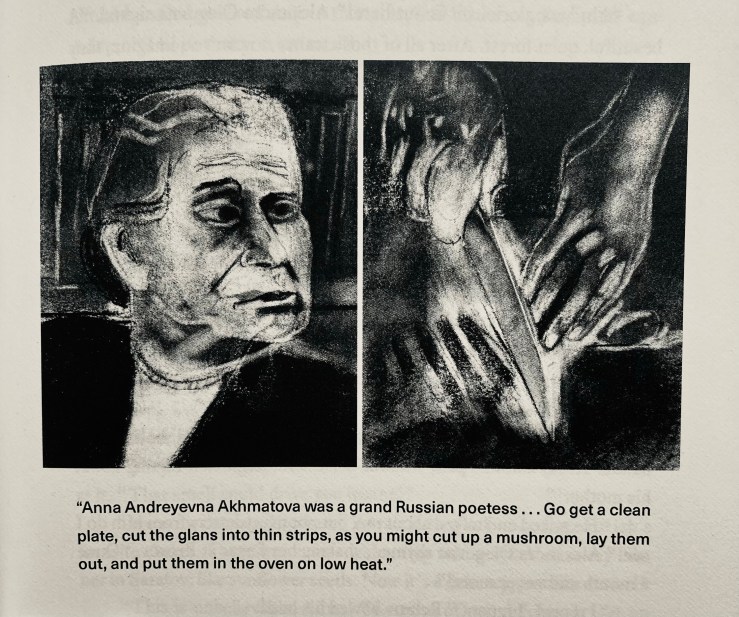
As presented alongside Greg Klassen’s brilliant charcoal illustrations, which have been compared to the work of Bruno Schulz by Alexander Genis and the work of Ralph Steadman as filtered through Francis Bacon by several gallerists, this angular work of fiction becomes a scatological storybook-world that the reader is dared to immerse themselves in.

And here’s one of Greg Klassen’s illustrations:

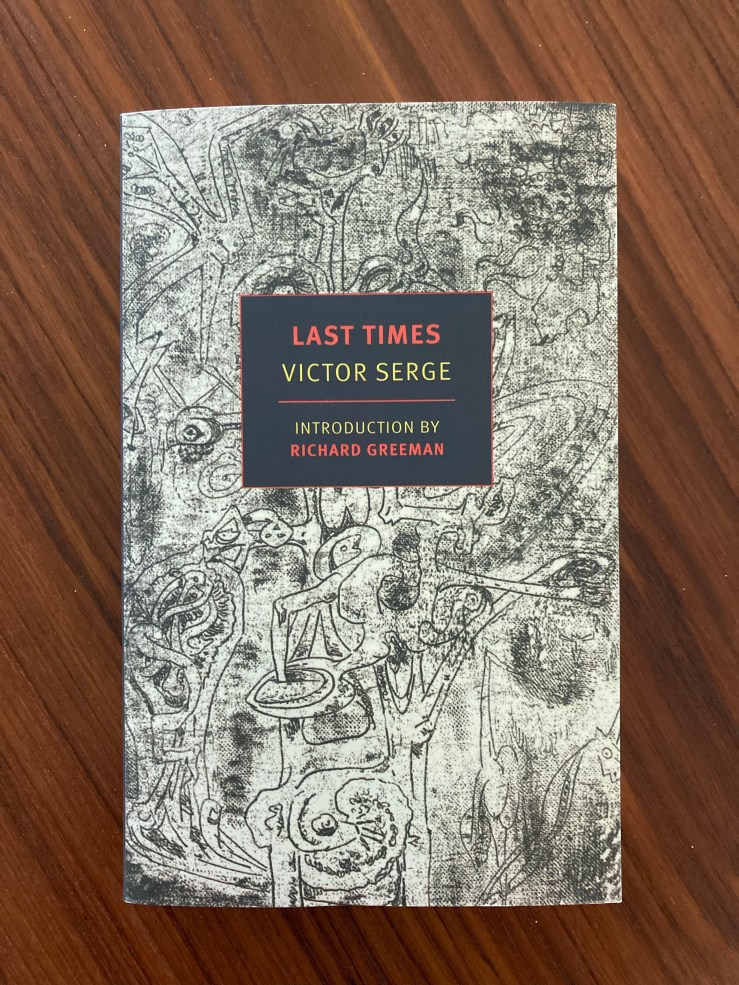
Victor Serge’s Last Times (Book acquired, late July 2022)

Victor Serge’s Last Times is out later this month from NYRB, in the original translation Ralph Manheim. NYRB’s blurb:

Last Times, Victor Serge’s epic novel of the fall of France, is based—like much of his fiction—on firsthand experience. The author was an eyewitness to the last days of Paris in June 1940 and joined the chaotic mass exodus south to the unoccupied zone on foot with nothing but his manuscripts. He found himself trapped in Marseille under the Vichy government, a persecuted, stateless Russian, and participated in the early French Resistance before escaping on the last ship to the Americas in 1941.

Exiled in Mexico City, Serge poured his recent experience into a fast-moving, gripping novel aimed at an American audience. The book begins in a near-deserted Paris abandoned by the government, the suburbs already noisy with gunfire. Serge’s anti-fascist protagonists join the flood of refugees fleeing south on foot, in cars loaded with household goods, on bikes, pushing carts and prams under the strafing Stukas, and finally make their way to wartime Marseille. Last Times offers a vivid eyewitness account of the city’s criminal underground and no less criminal Vichy authorities, of collaborators and of the growing resistance, of crowds of desperate refugees competing for the last visa and the last berth on the last—hoped-for—ship to the New World.

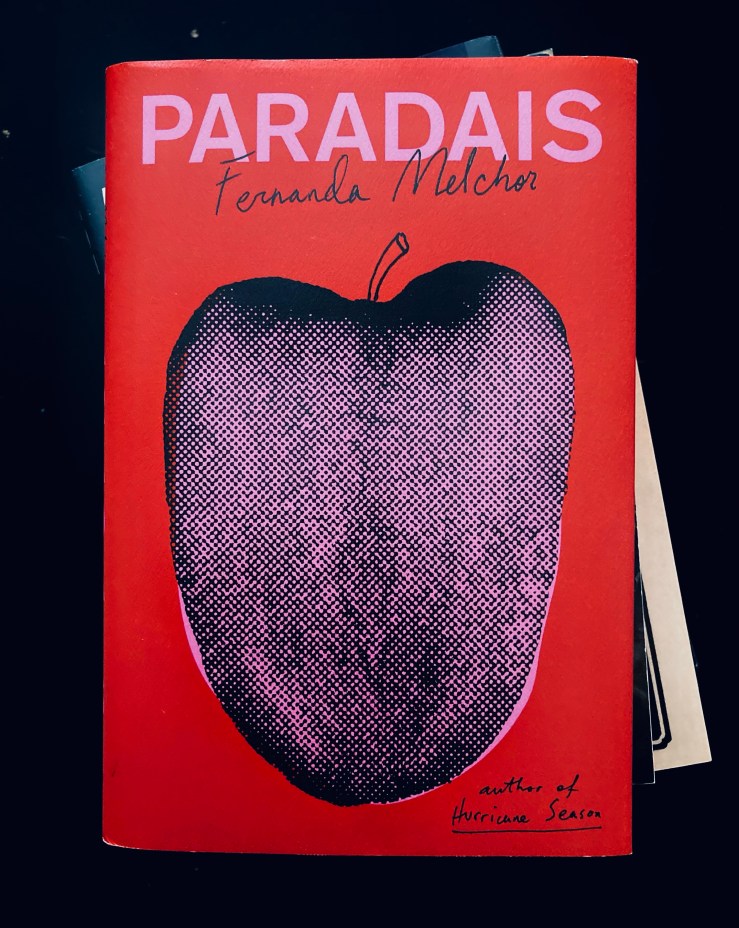
Fernanda Melchor’s Paradais (Book acquired, 20 July 2022; also, a few notes on a week in DC)

I picked up a copy of Fernanda Melchor’s Paradais last week, in translation by Sophie Hughes, who also translated Melchor’s novel Hurricane Season, possibly my favorite contemporary read of last year. Here’s publisher New Directions’ blurb:

Inside a luxury housing complex, two misfit teenagers sneak around and get drunk. Franco, lonely, overweight, and addicted to porn, obsessively fantasizes about seducing his neighbor—an attractive married woman and mother—while Polo dreams about quitting his awful job as the gated community’s gardener and fleeing his overbearing mother and their narco-controlled village. Faced with the impossibility of getting what they think they deserves, Franco and Polo hatch a mindless and macabre scheme.

I picked up Paradais at East City Bookshop in Washington, D.C., where I spent a humid, often-aggravating week with my family, or most of my family. My daughter was attending a sleep-away camp there, so my wife and son and I took on that week as a vacation; he lost his fifth-grade trip to D.C. in 2020, one of so many things cancelled by  Covid.

East City was the best of the handful of bookshops I got to go to in D.C. — clean and well-curated with a nice contemporary selection. All new, no used, but cool stuff. I went there after visiting Capitol Hill Books, which has a nice selection of second-hand stuff, but I’ve been spoiled by the place right by my house. I also enjoyed lunch at the Busboys and Poets on K Street, and browsed their small but-well-curated inventory without purchasing anything. I also walked a block out of my way to go to Reiter’s Books, which seemed to be more of a coffee stand/passport photo booth with some used economics books strewn about. 

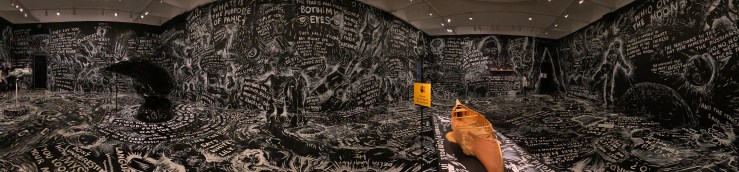
I didn’t expect the bookstores to be a highlight of D.C. and they weren’t. It was the museums we spent most of our time at, our son making most of the calls. My favorite thing was Laurie Anderson’s exhibit The Weather at the Hirschorn: immersive, bold, moving, the right mix of playfulness and pretension. I got to see it twice, the second time in the morning as we waited to view the Yayoi Kusama exhibit, and this time it was mostly empty, and I could really “see” it and feel it.

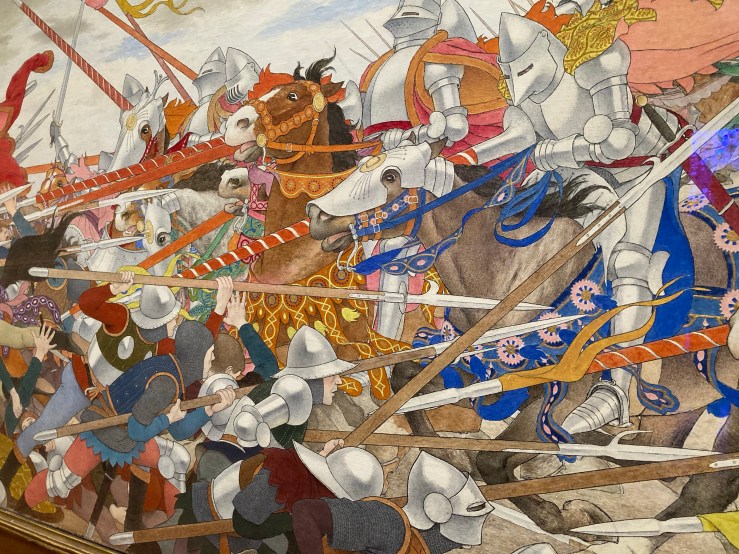
I also enjoyed my visit to the National Gallery of Art, which was chock full of great stuff, but a strange highlight were the huge, scrolling Joan of Arc paintings by Louis-Maurice Boutet de Monvel, which stood out, so-called “children’s illustrations” in a gallery full of fine art where nothing else looked like them.

There were plenty of other highlights, as well as wonderful little moments of revelation, like seeing a Jacob Lawrence hanging in the White House, or a random Whistler in the Freer, but as everyone who tries to attend to art museums overmuch, one’s sensitivity becomes dulled.

This was by my reckoning my seventh trip to D.C. and the city seems more blocked up than ever—the vibe is stifled, stuck, barriers literal and figurative everywhere. Along with Las Vegas, D.C. is the only major American city I can think of that I am happy to leave in contrast to, say, L.A. or NYC or Key West or Atlanta or New Orleans, where I always want just one more day. 

At the end of it all I finally got Covid, which has fortunately passed over my family. I’ve been fine, just a little sick, mostly bored of being quarantined in my bedroom. Today was the first day I actually felt able to, like, write, although I’ve had a hard time reading anything to be honest (I pass my eyes over the words, but nothing attaches). But finally getting Covid feels like the appropriate conclusion to a week in the capital at the end of the awful summer of 2022.

I’ll end with a quote that’s always stuck in my head from an obscure Pavement song, “Brink of the Clouds”: “And the capital sucks / Like a capital should.”

(Another copy of) Vladimir Sorokin’s Telluria (Book acquired, 23 July 2022)

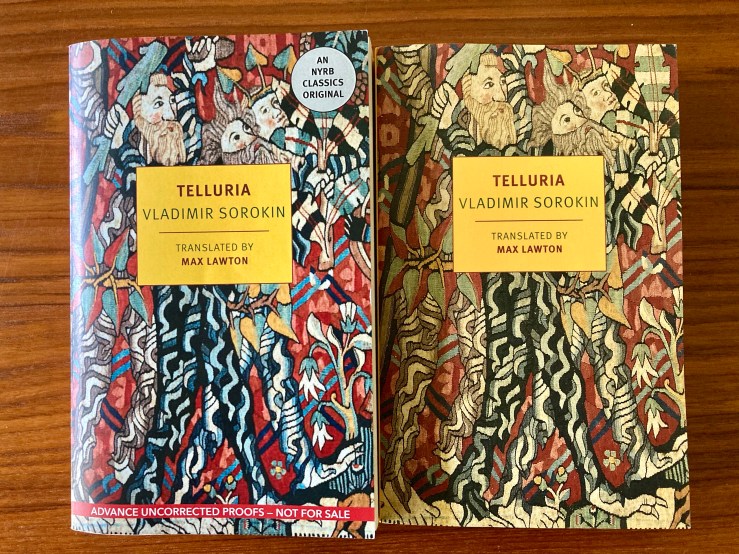
A finished copy of Vladimir Sorokin’s novel Telluria arrived at Biblioklept World Headquarters yesterday. The novel, in translation by Max Lawton, has been my favorite read so far this year. It’s on sale in a few weeks from the good people at NYRB. I would normally share their copy from the back of the book, but I have something better. I’ve got an interview with translator Max Lawton forthcoming, and here’s his description of Telluria:

TELLURIA is “Oxen of the Sun” as sci-fi novel, without any notion of a language’s generation—without any notion of “progress.” It is fractal and rhizome, scattered out over 50 chapters, with the only hint of redemption coming in a narcotic vision of Christ. TELLURIA is about pushing one’s mastery of style to the point where it begins to break down—in the mode of late Miles. It is at these moments of breaking down that something new begins to come into being. On the level of content, TELLURIA suggests that the small is always more charming—more desirable—than the master narrative. Nationalism, he suggests, can only be cute if it’s a doll-sized state that’s doing the nationalizing. Anything bigger is monstrous. The book, then, is an ode to difference. And a challenge to land-grabbing, logos-hijacking imperialists who believe in a single story. For Sorokin, the world is a million different textures, a million different languages, and no ONE can be said to triumph.

Ivan Turgenev’s Fathers and Children (Book acquired, 6 July 2022)

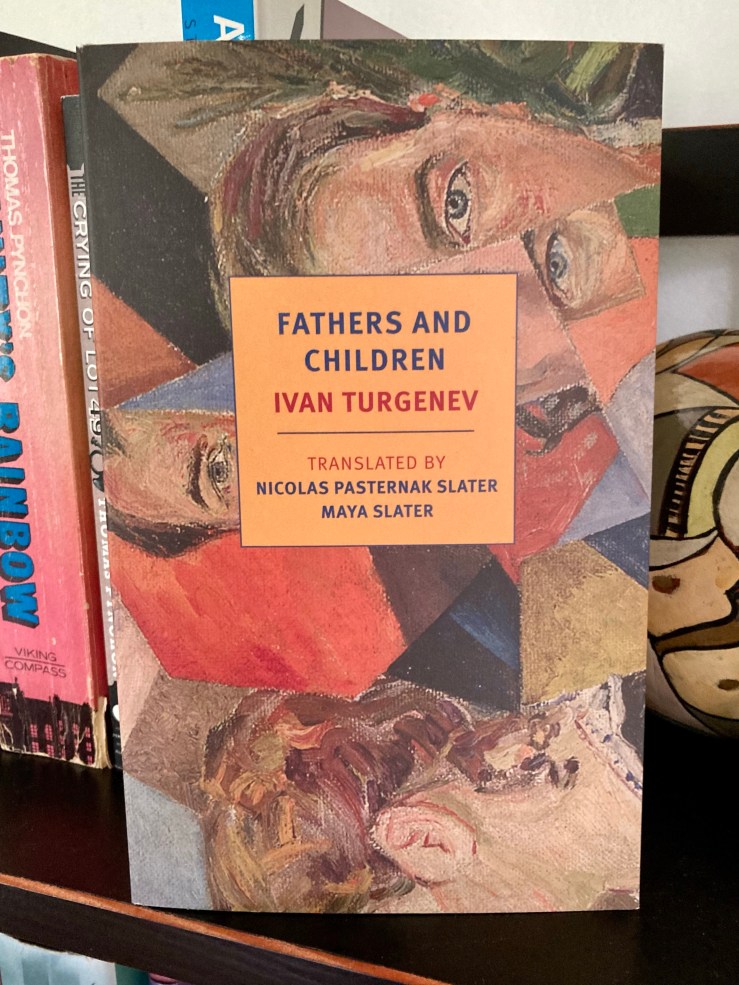
NYRB is publishing Ivan Turgenev’s novel Fathers and Children next month, in English translation by Nicolas Pasternak Slater and Maya Slater. NYRB’s blurb:

Ivan Turgenev’s Fathers and Children is a masterpiece not only of the nineteenth century but of the whole of Russian literature, a book full to bursting with life. It is a novel about the relationships between the young and the old; about love, families, politics, religion; about strong beliefs and heated disagreements, illness and death. It is about the clash between liberals and conservatives, revolutionaries and reactionaries. At the time of its publication in 1862, the book aroused indignation in its critics who felt betrayed by Turgenev’s refusal to let his novel serve a single ideology; it also received a spirited defense by those who saw in his diffuse sympathies a greater service to art and to humanity. Fathers and Children is not a practical manifesto but a lasting work of art and a timely book for our present age, newly and ably translated by Nicolas Pasternak Slater and Maya Slater.

E.E. Cummings’ The Enormous Room ( Book acquired, mid-June 2022)

E.E. Cummings’ autobiographical novel The Enormous Room is forthcoming in a new edition from NYRB in July. Their blurb:

In 1917, after the entry of America into World War I, E. E. Cummings, a recent graduate of Harvard College, volunteered to serve on an ambulance corps in France. He arrived in Paris with a new friend, William Slater Brown, and they set about living it up in the big city before heading off to their assignment. Once in the field, they wrote irreverent letters about their experiences, which attracted the attention of the censors and ultimately led to their arrest. They were held for months in a military detention camp, sharing a single large room with a host of fellow detainees. It is this experience that Cummings relates in lightly fictionalized form in The Enormous Room, a book in which a tale of woe becomes an occasion of exuberant mischief. A free-spirited novel that displays the same formal swagger as his poems, a stinging denunciation of the stupidity of military authority, and a precursor to later books like Catch-22 and MASH, Cummings’s novel is an audacious, uninhibited, lyrical, and lasting contribution to American literature.

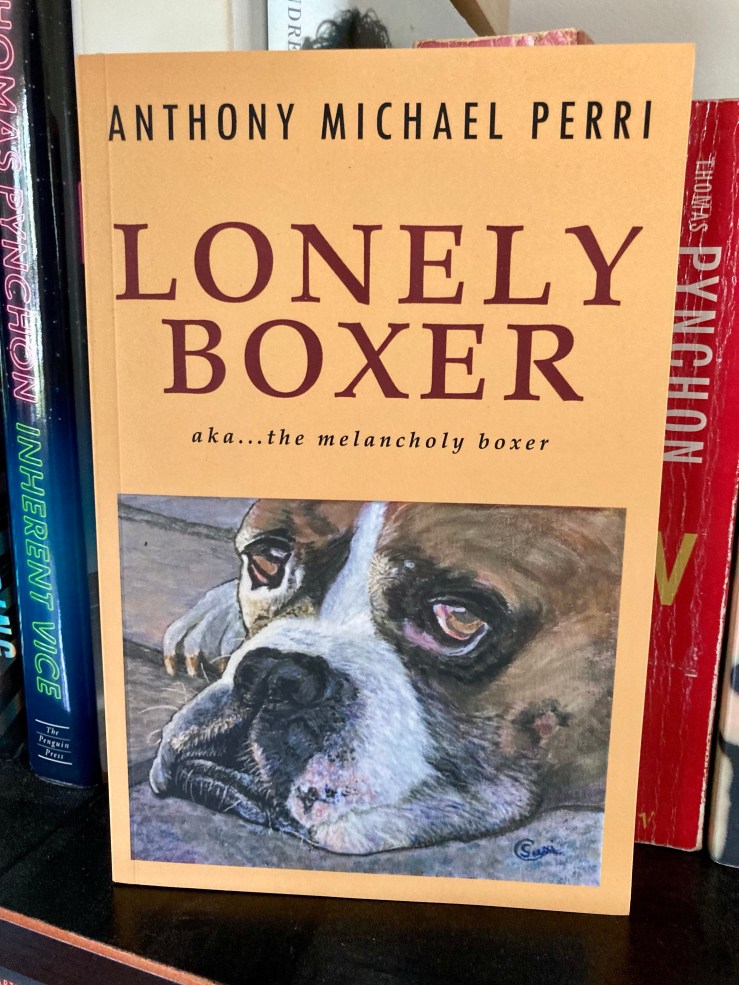
Anthony Michael Perri’s Lonely Boxer (Book acquired, 7 June 2022)

Anthony Michael Perri’s Lonely Boxer is good stuff—a terse, dark (and often funny) boxing story packed with punchy sentences. Jacket copy:

Lonely Boxer is a novella in vignettes. It deals with the themes of depression, loneliness, violence and morals. Recently released from jail, Lonely Boxer resumes his training regime. After all, this is the only place he feels comfortable – in the ring. And when a title fight between himself and the world’s most popular boxer, Famous Rafael, is announced, Lonely asks himself; will he be able to overcome his opponent? Along the way he’ll have to contend against an indifferent psychologist, an unreliable best friend, and an abusive mother. Will he be able to overcome all of these challenges and become the World Champ?

Trey Ellis’s Platitudes (Book acquired, 6 June 2022)

I had a full 90 minutes to browse the second, downtown location of my favorite bookshop today, while my daughter completed onboarding at City Hall for her summer job. I picked up assigned summer reading for both of my kids, and came across a Vintage Contemporaries edition I’d never seen before: Trey Ellis’s debut novel PlatitudesThe blurb on the back by Ishmael Reed sold me on Platitudes:

I was zapped by Trey Ellis’s humongous talent. His book, Platitudes, is delightfully rad. He dares to have the gumption to write comically about American literary politics.

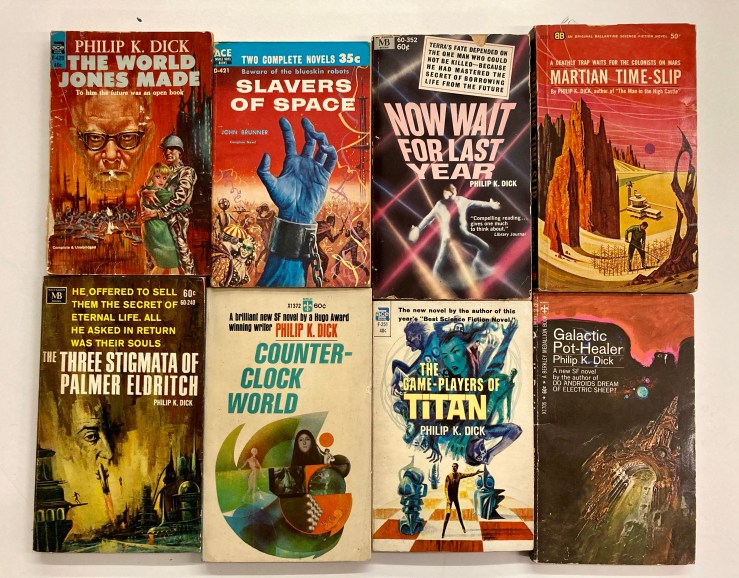
I also managed to avoid leaving with a bunch of massmarket paperbacks by Philip K. Dick—but here’s a pic of all their covers: 

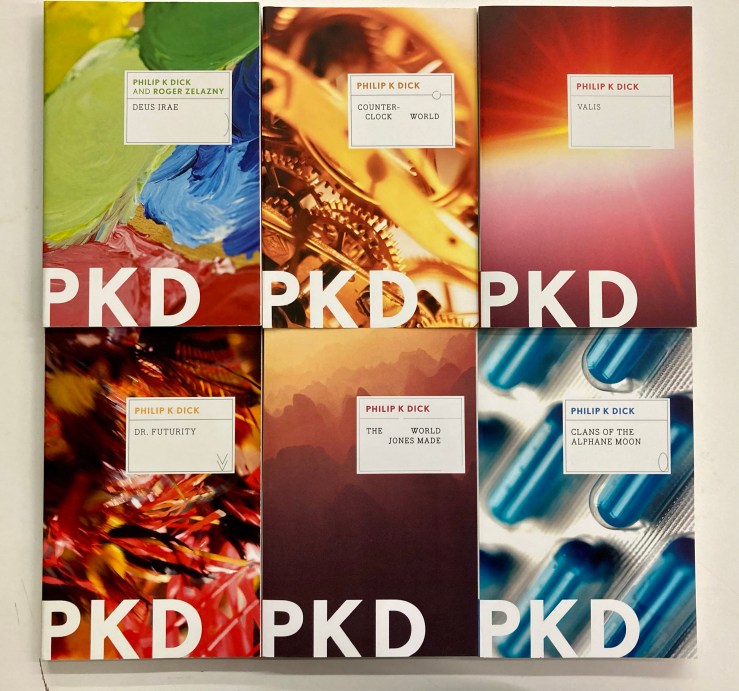
—which I think are so much more interesting than these handsome, respectable, uniform contemporaries:

Last day of school

Today was the last day of school for my kids. They both started new schools this year (high school and middle school). It’s been a weird few years and a bad few days. My son chose not to attend the last two days but my daughter wanted to see her friends. My mother called me the afternoon of the Ulvade murders to ask if my kids were okay and I didn’t even know how to answer. My daughter has been in two active-shooter lockdowns already in her life and she’s not even 15. They’ve spent their entire life fully inscribed in this nightmare. One of the worst memories of my early parenthood was my daughter coming home from kindergarten and describing her first active-shooter practice drill: “Some of us were weeping,” she said. It was the word weeping that really stuck with my wife and me—the odd precision of it.

I don’t want to rant on here; that’s not what this blog is for, and not what I imagine those who check in on it want to read or see. I expressed my own sense of horror and despair obliquely on here the other day, in any case.

I spent too much of today staring at screens, reading, horrified and angry, still stunned by the stupidity of the world we’ve botched together. I tried to pick up the book I’ve been trying to read, but I found I couldn’t press into it, couldn’t focus on a sentence let alone a paragraph. I ended up playing a lot of internet chess, on the smaller screen.

And then I found myself exhausted, needing to get out of the house. So I pulled the same Friday trick I always do, which sometimes works and sometimes doesn’t. I went to the used bookstore down the road.

I like to browse and handle the material there, looking for oddities and weird scores. I ended up with a hardback ex-library copy of Vladimir Sorokin’s Day of the Oprichnik (trans. Jamey Gambrell, RIP). It’s in the stack below, a stack of books I’ve read or am (ostensibly) reading:
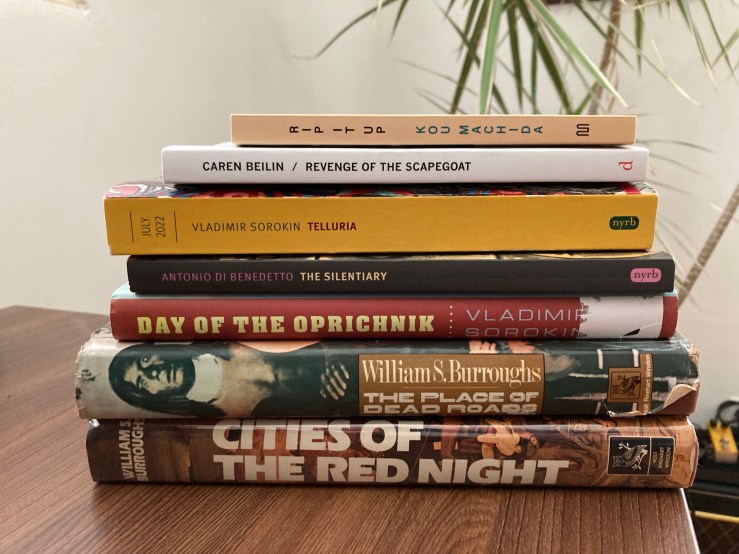
And so some mini-not-reviews, top to bottom:

Kou Machida’s Rip It Up (trans. Daniel Joseph): Read it back in April when I was finishing up the semester—it was a wonderful punk-psych antidote to final essay doldrums. Short, kinetic, caustic, and surreal. I wrote about the first part here.

Caren Beilin’s Revenge of the Scapegoat: This is the novel I attempted to start a few days ago, after finishing William Burroughs’s The Western Lands. I am having a hard time reading anything right now, let alone writing any proper review. I hope the thing I once had comes back.

Vladimir Sorokin’s Telluria (trans. Max Lawton): The best contemporary novel I’ve read in a long time—a polyglossic satirical epic pieced together in vital miniatures. Rich and dense but also loose and funny, Sorokin’s post-collapse world doesn’t seem all that bad.

Antonio di Benedtto’s The Silentiary (trans. Esther Allen): The narrator of this understated Kafkaesque novel cannot abide the increasing cacophony of 20th-century life. His resistance to noise is futile though, and comes at great cost to both himself and his family. The Silentiary is good stuff, but not as achieved as Di Benedetto’s novel Zama.

I bought Sorokin’s Day of Oprichnik today.

(Parenthetically: I went to the bookstore, as I stated above, to try to decompress, get away from screens, news, etc.—but I could not.

There was a young woman standing near the “RE” area in General Fiction having the loudest possible conversation one can have on a phone without actually yelling. She was talking at her mother about all the strife she has with her brother, who is also her roommate, and her father (who is divorced from the mother). The young woman cursed in almost every sentence she spoke, damning her brother for not taking out the trash, for not doing the dishes, etc. She near-shouted about her father’s siding with her brother, and about how the whole situation necessitates more therapy for her, and how she is the sane responsible one, while her brother is not. Her brother refuses to engage with her when she addresses him, claiming that he claims he can’t talk to her when she shouts, but how can she not be emotional when she’s angry? And how does that mean that she’s not rational, just because she’s yelling? And isn’t he really the abusive one, for shutting down on her and not responding when she, a grown-ass adult, is simply trying to confront him about not doing what he should be doing?

I put this information together in waves over 45 minutes. It was like running up a caustic radio show that tuned in and out depending on my proximity to its signal. Vile.)

William S. Burroughs’s final trilogy: I haven’t read WSB in ages, but I finished up his last novel, The Western Lands a few days ago (not pictured because it’s still in my car; I’d been rereading bits during carpool pick-up).. The final three books in Burroughs’s oeuvre are maybe his best (and most-overlooked), and The Place of Dead Roads is particularly fantastic.

Okay, I’m out of juice. I hope the summer is better for most of us, although there’s not much force in that verb, hope.

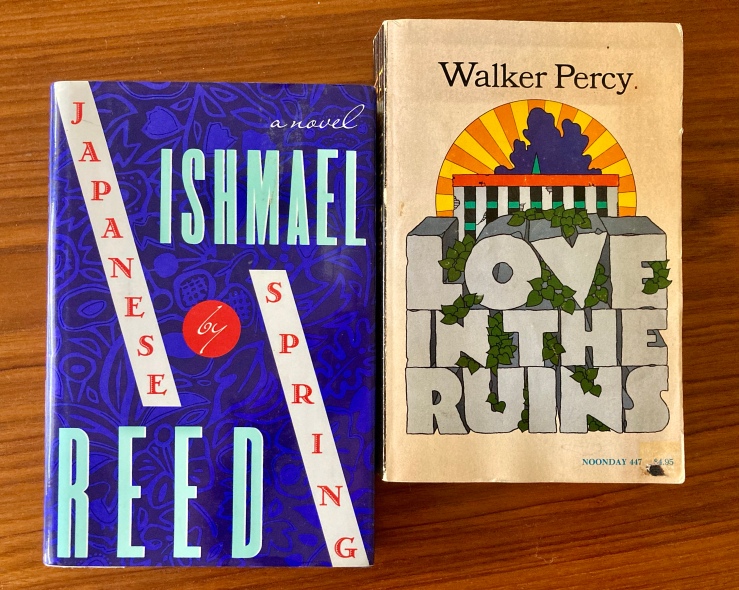
Percy’s Ruins, Reed’s Spring (Books acquired, 5 May 2022)

A few years ago I passed up on a hardback first-edition copy of Walker Percy’s weird dystopian Southern Gothic Love in the Ruins, and have regretted it ever since, or at least ever since I read a run of his novels back in 2020. I wound I’m reading a digital copy of Love from my local library, loved it, and would put it up there with Lancelot as his best, knowing damn well I still haven’t read The Last Gentleman or The Thanatos Syndrome. (The Thanatos Syndrome sounds like the name of a bad novel in a dystopian parody novel or film.) The cover for this edition of Love in the Ruins is by Janet Halverson.

I’ve read nine of Ishmael Reed’s first ten novels, but I still haven’t read Japanese by Spring, his ninth work, a campus novel that parodies America’s ever-ongoing culture wars. I picked up this first-edition hardback today. Before I even opened the copy, I wondered if it belonged to the same dude who I’ve managed to cop so many used postmodern novels of the past three decades. This guy—I won’t write his name out here—this guy put stamps or stickers of his name and address in the books he bought, I guess, and I ended up picking up a lot of them used over the years: Ishmael Reed, Stanley Elkin, Don DeLillo…I was thinking about maybe writing the guy? Anyway, sure enough, this copy of Japanese by Spring included a sticker bearing this guy’s name and the same address. I did a basic internet search and it looks like he’s moved, but not far, and that he’s (probably) eighty years old. I guess I’d just want to say Thanks is all.

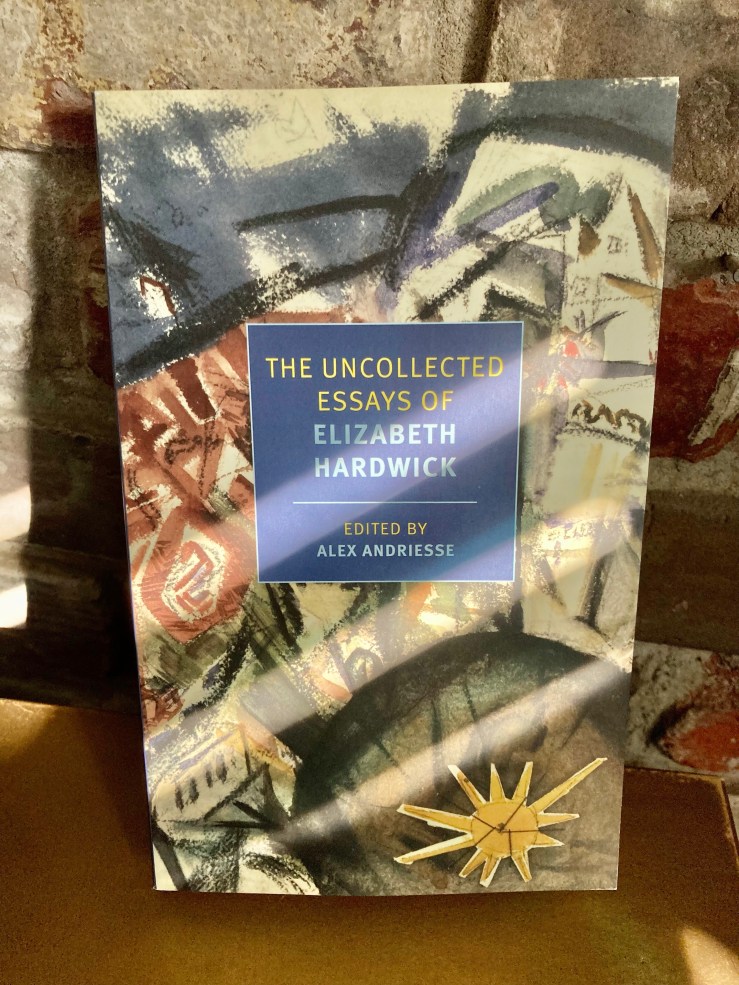
The Uncollected Essays of Elizabeth Hardwick (Book acquired, 25 April 2022)

NYRB has collected the uncollected essays of Elizabeth Hardwick and published it as The Uncollected Essays of Elizabeth Hardwick. Thirty-five essays, out in late May. NYRB’s blurb:

The Uncollected Essays of Elizabeth Hardwick is a companion collection to The Collected Essays, a book that proved a revelation of what, for many, had been an open secret: that Elizabeth Hardwick was one of the great American literary critics, and an extraordinary stylist in her own right. The thirty-five pieces that Alex Andriesse has gathered here—none previously featured in volumes of Hardwick’s work—make it clear that her powers extended far beyond literary criticism, encompassing a vast range of subjects, from New York City to Faye Dunaway, from Wagner’s Parsifal to Leonardo da Vinci’s inventions, and from the pleasures of summertime to grits soufflé. In these often surprising, always well-wrought essays, we see Hardwick’s passion for people and places, her politics, her thoughts on feminism, and her ability, especially from the 1970s on, to write well about seemingly anything.

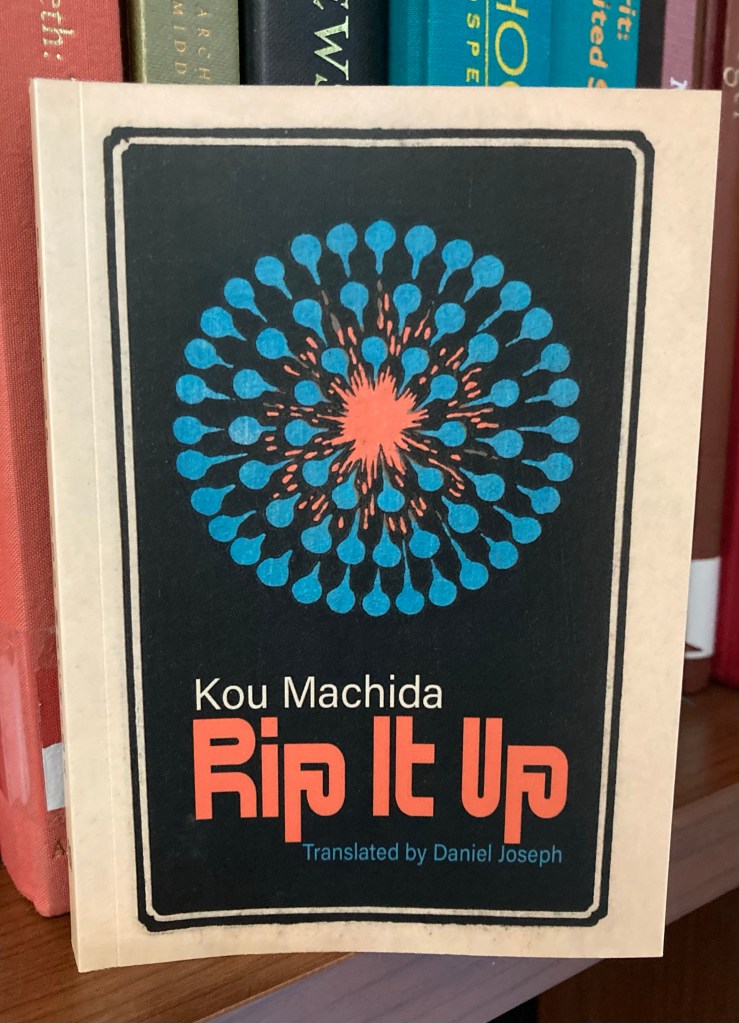
Kou Machida’s Rip It Up (Book acquired, 15 April 2022)

So I got into Kou Machida’s short novel Rip It Up last night. This Japanese novel (original title, きれぎれ [Kiregire]) gets its first English translation, via Daniel Joseph and Mercurial Editions, a new translation imprint from Inpatient Press. This is how the publisher describes Rip It Up:

Set in a kaleidoscopic hyperreal Japan circa Y2K, Rip It Up catalogues the misdeeds and misgivings of a down-and-out wannabe debonair who ekes out a meager living at the fringes of the art world, wracked by jealousy at his friend’s success and despondency of his own creative (and moral) bankruptcy. In turn hilarious and also horrifying, Machida’s pyrotechnic prose plumbs the discursive depths of the creative spirit, a head-spinning survey of degeneration and self-sabotage.

Machida’s psychedelic punk prose takes a few pages to tune into. The (as-yet?) unnamed narrator’s voice is tinged with madness and soaked with vitriol for the conformist society he can’t seem to get out of. He’s a rich kid, a lout, and a bum, obsessed with Satoe the horse-headed girl. Her head isn’t really a horse’s head; rather, it’s a mask she’s wearing when he first runs into her at a drunken Setsubun party at the “panty bar” where she works. He’s stumbled in after getting drunk at his friend’s funeral. The scene Machida conjures is simultaneously vile, hallucinatory, and hilarious, with salarymen and “little people gotten up to look like Fukusuke dolls” crashing about the place in a bizarre karaoke showdown. The narrator takes the mic, belting out malapropisms that synthesize and parody the lyrics of Western pop songs:

It’s not unusual to hi-de hi-de hi-de-hi

You’re as chaste as ice

And baby we were born to nun

Rollin’, rollin’, rollin’ on Moon River

Any way the lunch grows, doesn’t really matter

A few pages later, the narrator still pines for the horse-headed girl, spending all his money at the panty bar. He has to go visit his rich mother for a “loan,” but she makes him embark on a stolid omiai, a marriage interview, which he torpedoes by declaring to the prospective partner and her dour mother “exactly what kind of person I am”:

That I spend all my free time at the panty bar. That I dropped out of high school. That I’m a spendthrift. That I’ve got my head in the clouds and I’ve never done an honest days work in my life because I despise hard work. That’s all.

I’m digging Rip It Up so far; it’s alienating, self-indulgent stuff. Daniel Joseph’s translation conveys a desperate, stuffy world, and shows how linguistic resistance might puncture stifling conformity. More thoughts to come. Check out Kou Machida’s seminal punk band Inu,


Elizabeth Sewell’s The Orphic Voice (Book acquired, 12 April 2022)

Elizabeth Sewell’s 1960 work The Orphic Voice is getting a new edition this summer from NYRB. Their blurb:

Taking its bearings from the Greek myth of Orpheus, whose singing had the power to move the rocks and trees and to quiet the animals, Elizabeth Sewell’s The Orphic Voice transforms our understanding of the relationship between mind and nature. Myth, Sewell argues, is not mere fable but an ancient and vital form of reflection that unites poetry, philosophy, and natural science: Shakespeare with Francis Bacon and Giambattista Vico; Wordsworth and Rilke with Michael Polanyi. All these members of the Orphic company share a common perception that “discovery, in science and poetry, is a mythological situation in which the mind unites with a figure of its own devising as a means toward understanding the world.” Sewell’s visionary book, first published in 1960, presents brilliantly illuminating readings of A Midsummer Night’s Dream and Rilke’s Sonnets to Orpheus, among other masterpieces, while deepening our understanding not only of poetry and the history of ideas but of the biological reach of the mind.

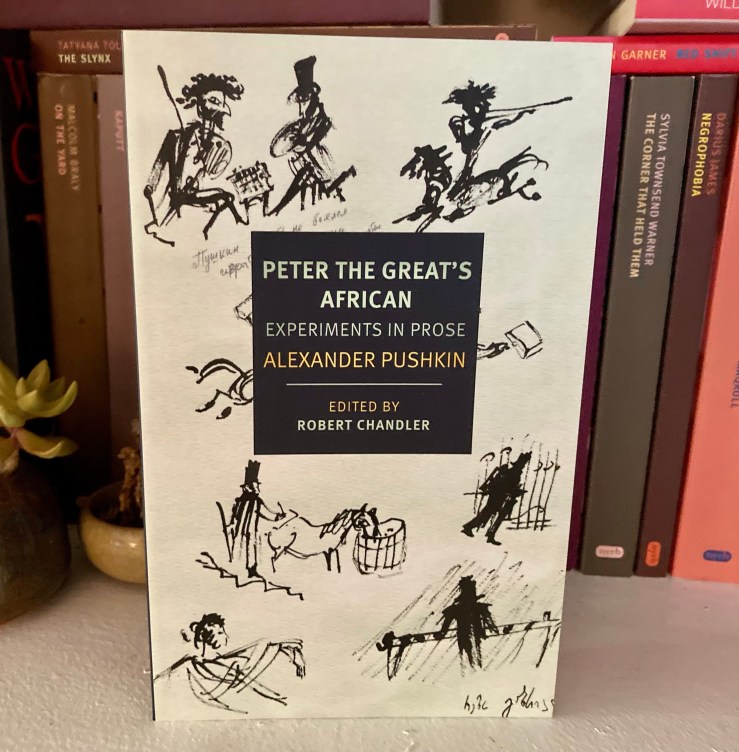
Pushkin’s Peter the Great’s African (Book acquired, sometime in the last week of March 2022)

NYRB has a new collection of Alexander Pushkin stories called Peter the Great’s African out later this month. The long short stories are translated by by Robert Chandler (who also provides the afterword), Elizabeth Chandler, and Boris Dralyuk. NYRB’s blurb:

Alexander Pushkin, Russia’s foundational writer, was constantly experimenting with new genres, and this fresh selection ushers readers into his creative laboratory. Politics and history weighed heavily on Pushkin’s imagination, and in “Peter the Great’s African” he depicts the Tsar through the eyes of one of his closest confidantes, Ibrahim, a former slave, modeled on Pushkin’s maternal great-grandfather. At once outsider and insider, Ibrahim offers a sympathetic yet questioning view of Peter’s attempt to integrate his vast, archaic empire into Europe. In the witty “History of the Village of Goriukhino” Pushkin employs parody and self-parody to explore problems of writing history, while “Dubrovsky” is both a gripping adventure story and a vivid picture of provincial Russia in the late eighteenth century, with its class conflicts ready to boil over in violence. “The Egyptian Nights,” an effervescent mixture of prose and poetry, reflects on the nature of artistic inspiration and the problem of the poet’s place in a rapidly changing and ever more commercialized society.


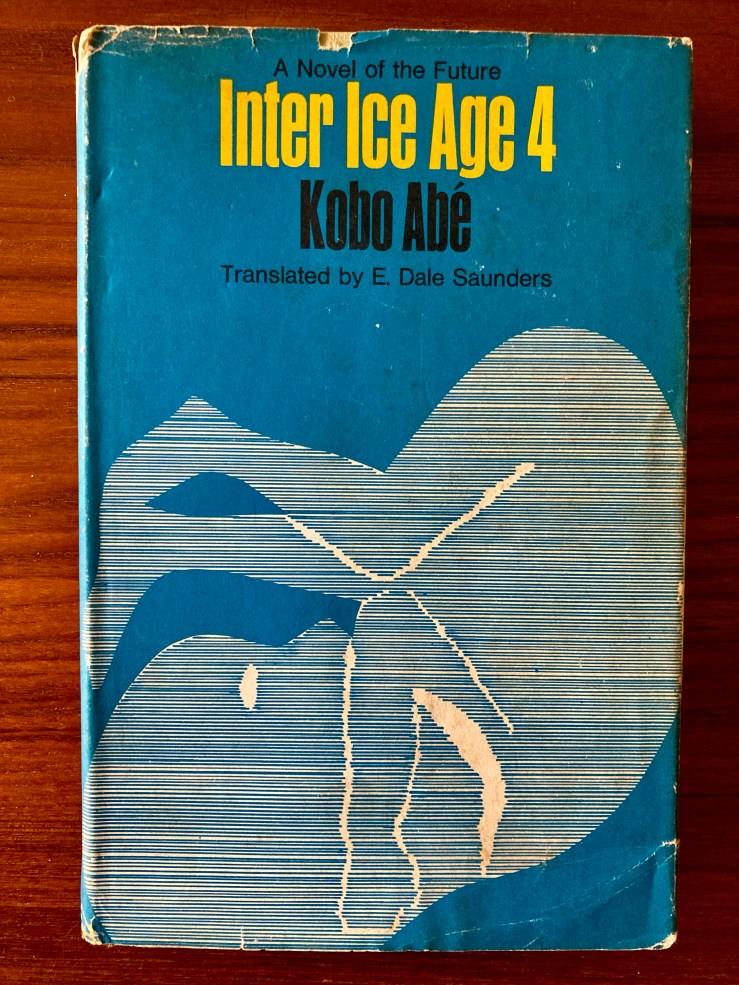
Kobo Abe’s Inter Ice Age 4 (Book acquired, 1 April 2022)

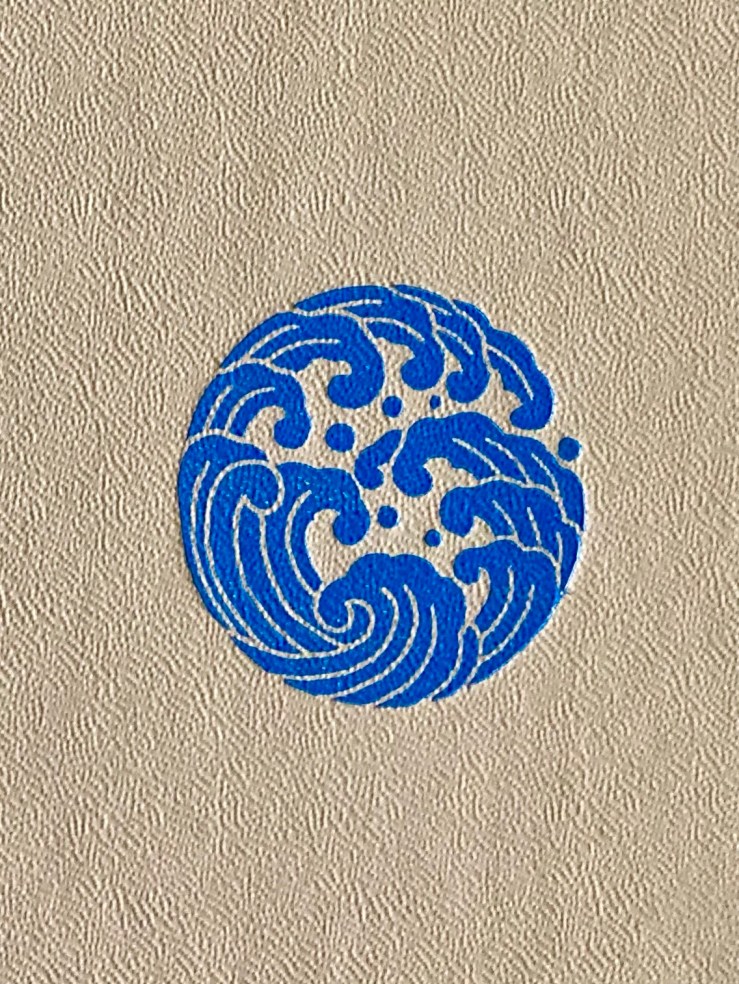
I was thrilled to find a first-edition U.S. hardback (Knopf, 1970, Book Club Edition) of Kobo Abe’s novel Inter Ice Age 4. The translation is by E. Dale Saunders, and is the only English translation of the novel that I am aware of. The jacket design is by Joseph del Gaudio; I’m not sure if he is responsible for this lovely little embossed image that takes up the bottom-right corner of the cover:

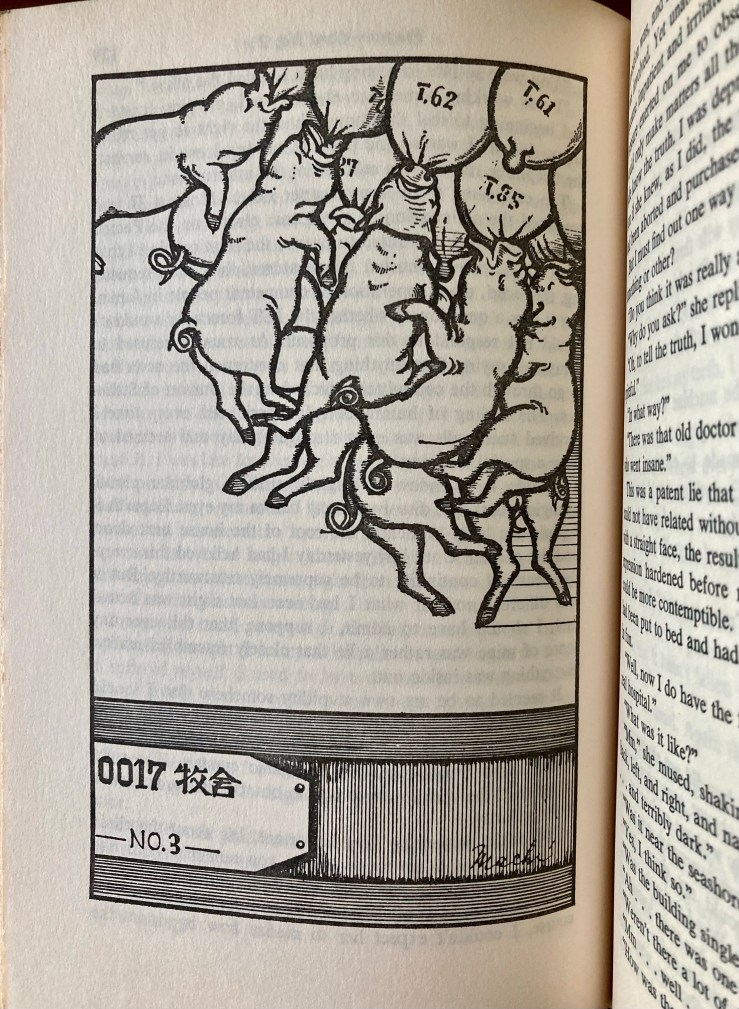
This edition includes five line drawings by Abe’s wife, the artist Machi Abe. Here is one of those drawings:

I’ve had a samizdat e-copy of Inter Ice Age 4 for ages now, but haven’t made it past the first 20 or so pages, but the intriguing, prescient plot has always intrigued me. First composed and published in serialization at the end of the 1950s, Inter Ice Age 4 is set in a world where the polar ice caps are rapidly melting. Scientists genetically modify gilled children to survive this new reality. A proto-AI, a computer that can tell the future is the novel’s central antagonist. Thank god nothing like that’s shaking down these days!