A Short Riff on They Might Be Giants’ Album Flood (Book Acquired, 11.18.2013)

20131123-125515.jpg

In the seventh grade, my friend Tilford gave me a copy of They Might Be Giant’s album Flood. This was in 1991, back when “alternative” music was far more varied than it is now. What I mean by this is that back in those halcyon days, we listened to anything we could get our ears to—and really listened. This meant TMBG, R.E.M, RHCP, KMFDM, Sonic Youth, The Pixies, Fugazi, the Dead Kennedys, The Dead Milkmen, The Meat Puppets, The Meatmen, The Minutemen—just anything different than what was on the radio. Lack of access to music meant that we listened to a wider diversity of bands than maybe Kids Today do. (These are all crotchety claims. Get off my lawn).

Anyway, Flood—the album, its freewheeling zaniness, its nasal vibe, its silliness, its diversity, its poppiness—so much of it is still imprinted on my brain. “Birdhouse in Your Soul” is probably the only TMBG song that I’ll still put on a mix CD (okay, that and “Minimum Wage”), but Flood is rich in its strange pop vibes. Songs like “Road Movie to Berlin” (later covered by Frank Black) and “They Might Be Giants” played on a loop in my brain in the early nineties. Other songs like the jokey cover “Istanbul (Not Constantinople)” and “Particle Man” pointed the way to the kind of kid-friendly skewed pop that would define the second half of TMBG’s career. “You Racist Friend” is one of the most direct protest songs I’ve ever heard.

I’ve never forgiven TMBG for quitting two songs in to their set when I saw them in 1996. John Linnell was too ill to continue, and called the show off. In retrospect, I understand why—dude was sick, really sick (I can remember his face)—but for me it was an easy break with a band that lacked the art rock verve that I found more interesting in the late nineties. I could write They Might Be Giants off as kid music. That’s undoubtedly an unfair assessment though.

S. Alexander Reed and Philip Sandifer have written a new book (in the 33 1/3 series) on Flood. In the blurb, below, we get a clear overview of how important this record was—even if it isn’t discussed along with Sonic Youth’s Goo and Dirty, R.E.M.’s Green, or The Pixies’ last record (not to mention all the “grunge” bands that exploded after those records). Here’s the blurb:

For a few decades now, They Might Be Giants’ album Flood has been a beacon (or at least a nightlight) for people who might rather read than rock out, who care more about science fiction than Slayer, who are more often called clever than cool. Neither the band’s hip origins in the Lower East Side scene nor Flood’s platinum certification can cover up the record’s singular importance at the geek fringes of culture.

Flood’s significance to this audience helps us understand a certain way of being: it shows that geek identity doesn’t depend on references to Hobbits or Spock ears, but can instead be a set of creative and interpretive practices marked by playful excess—a flood of ideas.

The album also clarifies an historical moment. The brainy sort of kids who listened to They Might Be Giants saw their own cultural options grow explosively during the late 1980s and early 1990s amid the early tech boom and America’s advancing leftist social tides. Whether or not it was the band’s intention, Flood’s jubilant proclamation of an identity unconcerned with coolness found an ideal audience at an ideal turning point. This book tells the story.
 

More Tom Clark (Books Acquired, 11.16.2013)

20131123-125447.jpg

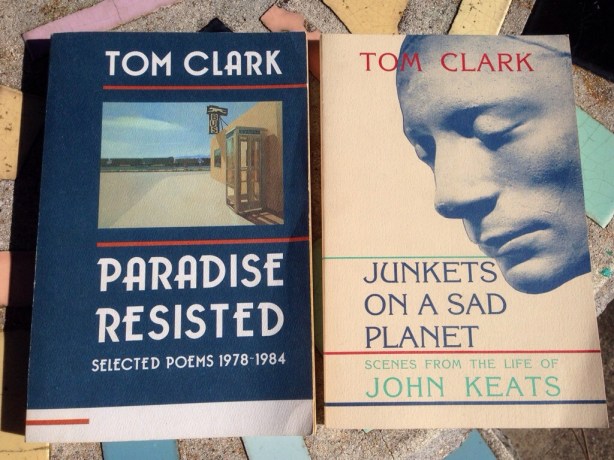
Last week I picked up more Tom Clark books. Devouring these things. I lied to myself that I was buying Paradise Resisted for a friend (I didn’t give it to him; I did give him a copy of Blood Meridian though). Junkets on a Sad Planet is a Very Strange Book.

A poem from Paradise:

20131123-125456.jpg

A German Picturesque (Book Acquired, 11.14.2013)

20131122-123857.jpg

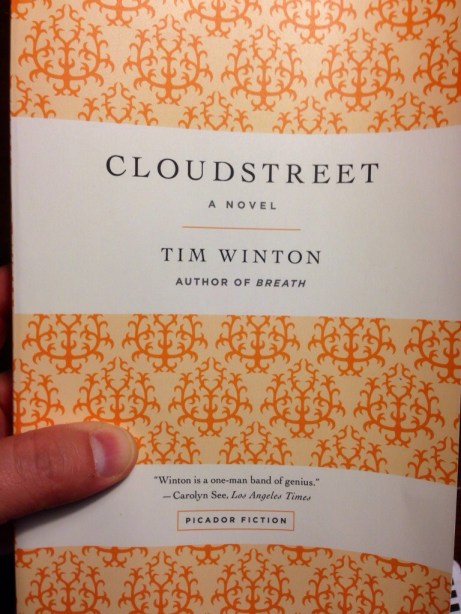
Cloudstreet (Book Acquired, 11.12.2013)

20131118-162531.jpg

Tim Winton’s Cloudstreet. Publisher’s blurb:

After two separate catastrophes, two very different families leave the country for the bright lights of Perth. The Lambs are industrious, united, and—until God seems to turn His back on their boy Fish—religious. The Pickleses are gamblers, boozers, fractious, and unlikely landlords.

Change, hardship, and the war force them to swallow their dignity and share a great, breathing, shuddering house called Cloudstreet. Over the next twenty years, they struggle and strive, laugh and curse, come apart and pull together under the same roof, and try as they can to make their lives.

Winner of the Miles Franklin Award and recognized as one of the greatest works of Australian literature, Cloudstreet is Tim Winton’s sprawling, comic epic about luck and love, fortitude and forgiveness, and the magic of the everyday.

This Coming Fall (Book Acquired, Some Time at the End of October, 2013)

20131027-125350.jpg

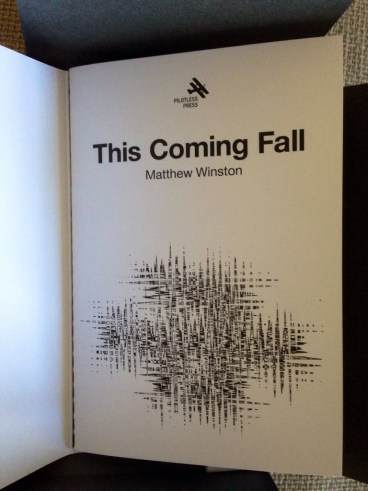
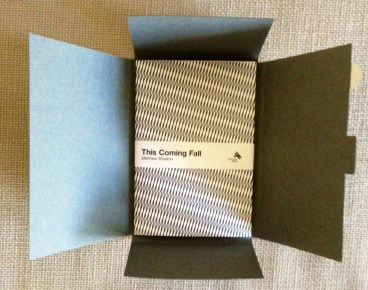
Matthew Winston’s This Coming Fall. 

Another beautiful little book from Pilotless Press.

Their blurb:

These days it feels like we are living inside a failing machine. Enter the two-room apartment of This Coming Fall, though, and you begin to see just how far things could spin out of control. Walk from one room to the next and back again. Hear each room’s voice. You will soon realize these are the voices not of some dismal future, but of a present still obscured under the noise of our daily lives. But listen closely to the dialogue between them and one starts to resemble the voice of god, the other the voice of the faithful. Listen for long enough, and you will see that it could be the same voice after all, echoing from room to room and back again.

20131027-125343.jpg

Read my review of the first Pilotless Press project, The Mundane History of Lockwood Heights.

Robert Walser/Robert Burton (Books Acquired, 11.01.2013)

20131108-153438.jpg

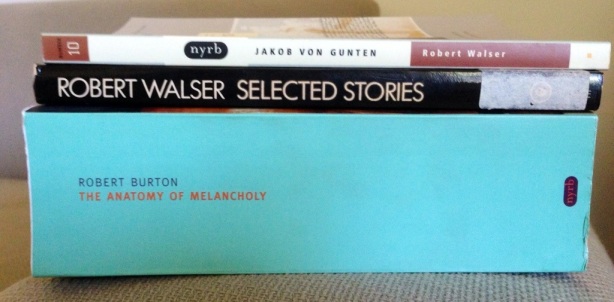
I think this NYRB edition of Burton’s The Anatomy of Melancholy is the biggest paperback in the house.

20131108-153540.jpg

Robert Walser shorty:

20131108-153807.jpg

In These Times the Home Is a Tired Place (Book Acquired, Some Time in Late October)

20131027-125420.jpg

Jessica Hollander’s story collection In These Times the Home Is a Tired Place is good stuff. It came in last month with several other books I was psyched about, so I’ve only gotten to the first three stories here, along with the title story (I’m a sucker for anything resembling a list), but they’ve made me want to read the other fifteen stories. Full review forthcoming.

Here’s Katherine Dunn (Geek Love) on In These Times the Home Is a Tired Place:

These are human tales of vigorously individual characters living with intensity. The author’s ear for revealing dialogue and double-edged humor ground these stories in a reality worth enduring. The characters connect despite suspicion and betrayal, beyond blood, circumstance or embarrassment at their own ridiculous humanity. Each piece is powered by a deep, slow boiling jubilation in the moment-to-moment, line-by-line fact of taking breath.

And here’s the first part of the title story (you can and should read the rest of it at Conjunctions):

1. Only one dream the mother remembered: driving, dead bodies on the road, the word PAPER large and black on a billboard. Sometimes she made up different dreams when she woke panicked in the gray morning, imagining an airport chase, a lake drowning—but they weren’t really hers, only dreams she believed she should have instead of always the one: driving through death and the urge to pull over.

2. The girl spent a Saturday morning cutting snowflakes from a pile of paper she’d found on her mother’s desk. The snowflakes were peppered with sliced negotiations, diamond-pierced words like child and property and alimony, and when the girl finished she strung the flakes together and hung them from her window so they trailed to the berry bush and flapped in the stirred summer wind.

3. Screamed in the kitchen one night. Too many cooks in the saucepan. Too little wine. Granite counters crusted with crushed tomato, sea salt, sausage casing, but no food besides the steaming meal bleeding over the bin. The girl sent to her room— Now. The father’s recipes stacked and chopped to pieces and confettied across the tile. Division always makes less unless one was a fraction to begin with. “Divide by me,” the father said. “Then we both come out ahead.”

Jonathan Littell’s Latest, The Fata Morgana Books (Book Acquired, 10.21.2013)

20131027-130105.jpg

The Fata Morgana Books collects four novellas from Jonathan Littell and is forthcoming from Two Line Press, a new indie specializing in publishing English language translations of some of the world’s best literature. Here is their blurb about The Fata Morgana Books, Littell’s follow up to The Kindly Ones:

Ranging from swimming pools to art galleries, from beds to battlefields, and a few mythical places, these novellas are narrated by hermaphrodites, ghosts, wanderers, and wonders. Littell here once again mixes his love of the grotesque with time-twisting narratives and ethereal protagonists. Like an Italo Calvino or a Clarice Lispector, Littell channels the emotions of loss and desire to illuminate the shadowy depths of solitude, reflection, longing, and lust.

With fleet prose and Proustian self-reflection, these stories range from chaotic airlifts to a series of bullfights under the hot sun, fatal negotiations resolved as mathematical equations, and the nine circles of Hell. Commanding and beguiling, The Fata Morgana Books rings with depth and mystery, always pushing through to explore the in-between spaces: between thoughts, between bodies, between hungers and their satisfactions, between eyes and the things they look at.

I was psyched to get a review copy of The Fata Morgana Books; Littell’s previous novel about an SS officer’s depraved undertakings, The Kindly Ones, stuck with me in a weird, gross, foul way. In my review I suggested that it was “a novel that might as well take place in the asshole, or at least the colon.”

I read the first novella in The Fata Morgana BooksEtudes, which is comprised of four stories that read like an overture for what will come. The first piece, “A Summer Sunday,” sets an unnerving and estranging tone, where pleasure seems to mingle with ennui and dread:

That Sunday, then, after the beer near the cemetery, I accompanied B. to meet our friend A. and we went out to lunch at a beautiful, somewhat isolated restaurant with a terrace only half enclosed, which allowed one to stay out in the open air without breaking police regulations too much. We ate slowly, all afternoon, lamb chops with an onion salad, and drank a bottle of red wine. Afterward, B. and I shared a cigar, too dry but a great pleasure nonetheless. Then we bought some cakes and went over for drinks on my balcony, opposite the cemetery, with the two towers at our feet. It wasn’t till the next day, reading the papers, that we realized just how bad the weekend had been. But the summer had been like that for six weeks already, and it seemed likely it would continue that way.

By “The Wait,” the next chapter of Etudes, we’ve descended into Littell’s abject terrain. More to come in a full review.

Nature’s Nightmare, A Study of David Foster Wallace’s Oblivion (Book Acquired, 10.12.2013)

20131013-093333.jpg

I was psyched when Greg Carlisle’s Nature’s Nightmare: Analyzing David Foster Walalce’s Oblivion showed up in the mail. (You might recall Carlisle as the author of Elegant Complexity, a study of Infinite Jest). Blurb from publisher Slideshow Media Group:

Carlisle gives an in-depth narrative analysis of each story: “Mr. Squishy,” “The Soul is Not a Smithy,” “Incarnations of Burned Children,” “Another Pioneer,” “Good Old Neon,” “Philosophy and the Mirror of Nature,” “Oblivion,” and “The Suffering Channel.” Carlisle’s methodical approach walks readers through Wallace’s thematic interests and situates Oblivion in the broader arc of Wallace’s career. Every passage of each story is analyzed in terms of 1) interrelation of narrative form and content, 2) relation of story to the theme of oblivion, 3) recurring thematic motifs in Wallace’s work, and 4) assessment of content in relation to Infinite Jest and The Pale King. The book includes nine charts that illustrate narrative devices Wallace employs throughout the stories. Jason Kottke called Elegant Complexity the reference book for Infinite Jest and now Nature’s Nightmare is the primary reference work for Oblivion.

I read the introduction and first chapter, covering “Mr. Squishy,” this weekend, and Carlisle’s perceptive analysis made me want to reread the story. Of course, I had to scan over the chapter for “Good Old Neon,” maybe my favorite Wallace story and arguably his best piece of writing. Here’s the diagram from that chapter (did I neglect to mention that there are diagrams?):

20131013-093341

Full review forthcoming.


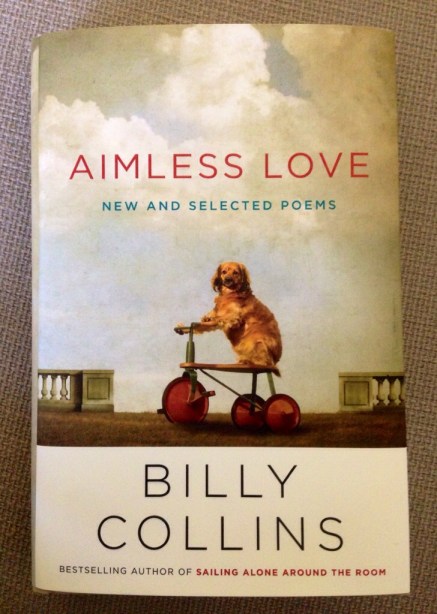
Billy Collins’s Aimless Love (Book Acquired, 10.08.2013)

20131013-093256.jpg

Aimless of Love, new from Billy Collins this month. Blurb:

From the two-term Poet Laureate of the United States Billy Collins comes his first compilation of new and selected poems in twelve years. Aimless Love combines more than fifty new poems with selections from four previous books—Nine Horses, The Trouble with Poetry, Ballistics, and Horoscopes for the Dead. Collins’s unmistakable voice, which brings together plain speech with imaginative surprise, is clearly heard on every page, reminding us how he has managed to enrich the tapestry of contemporary poetry and greatly expand its audience. His work is featured in top literary magazines such as The New YorkerPoetry, and The Atlantic, and he sells out reading venues all across the country. Appearing regularly in The Best American Poetryseries, his poems appeal to readers and live audiences far and wide and have been translated into more than a dozen languages. By turns playful, ironic, and serious, Collins’s poetry captures the nuances of everyday life while leading the reader into zones of inspired wonder. In the poet’s own words, he hopes that his poems “begin in Kansas and end in Oz.” Touching on the themes of love, loss, joy, and poetry itself, these poems showcase the best work of this “poet of plenitude, irony, and Augustan grace” (The New Yorker).

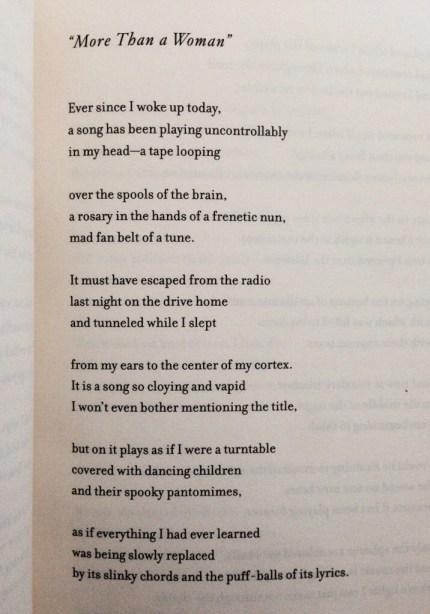
Sample:

20131013-093309.jpg


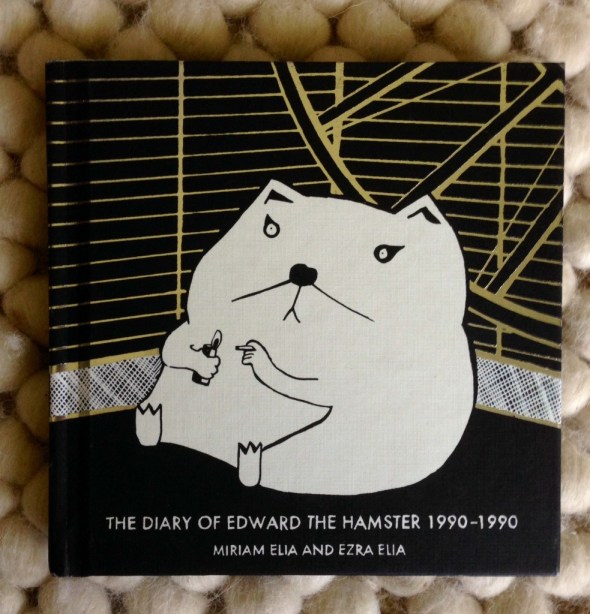
The Diary of Edward the Hamster 1990-1990 (Book Acquired, Some Time Last Month)

20131006-154358.jpg

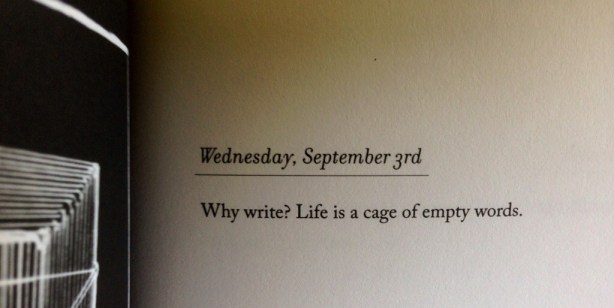
“What’s this cute little book?” my wife asked, picking up Miriam Elia and Ezra Elia’s short hardback novelty The Diary of Edward the Hamster 1990-1990. I’m sure this is the hoped-for reaction from the publishers and producers: the reader, attracted to the aesthetics of this small, square (and shiny!) picture book will pick it up and then laugh at its content—see, this hamster thinks, he feels, he writes. And he experiences ennui, existential boredom. Here is the book neatly summed up:

20131006-154406.jpg

The Diary of Edward the Hamster 1990-1990 is a one-note affair that delivers the same joke over 80 pages. The art is nice and the packaging is lovely, but the premise isn’t really that funny—certainly not funny enough to sustain over the book’s length (which is already pamphlet-short).

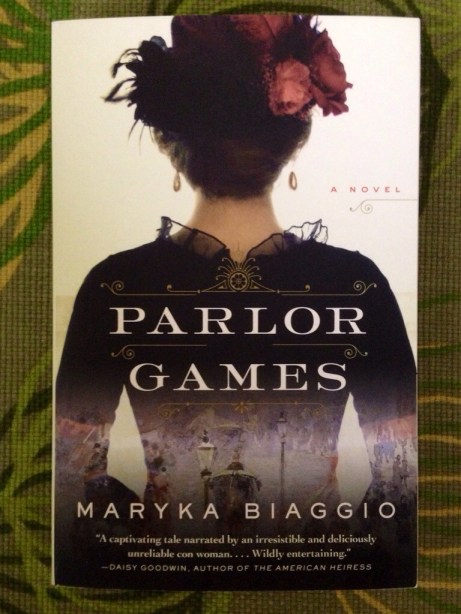
Parlor Games (Book Acquired, 9.15.2013)

20131006-154302.jpg

Parlor Games by Maryka Biaggio. Publisher Random House’s blurb:

It’s 1887, and eighteen-year-old May Dugas has ventured to Chicago in hopes of earning enough money to support her family. Yet when circumstances force her to take up residence at the city’s most infamous bordello, she chooses to use her feminine wiles to extract not only sidelong looks but also large sums of money from the men she encounters. Insinuating herself into high society, May lands a well-to-do fiancé—until, that is, a Pinkerton detective named Reed Doherty intervenes.

Reed has made it his mission to bring May to justice, and he pursues her across the world, from Shanghai to London and back, until he makes one last daring attempt to corner her. But May still has a few tricks up her sleeve, tricks that just might prove she’s one tough woman to catch.

Three Books with Stickers on Them (Books Acquired, Sometime Last Month)

My daughter, six, brought home some books from the library a few weeks ago. “These are good,” she reported, showing them to me. “They have medals on them.”

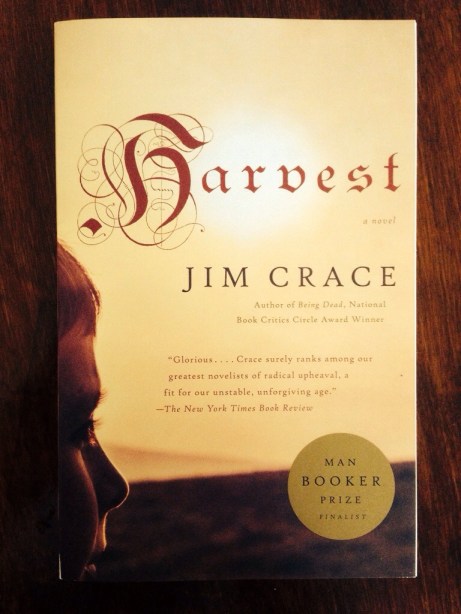
In the last weeks of last month, I got behind three bemedaled or bestickered books (okay, these aren’t really stickers anymore, but I don’t know what to call the stickers—blazons? Emblems? Medals?)—here they are:

20131006-154010.jpg

Jim Crace’s Harvest, beblazoned with a Man Booker Finalist blazon. From The New York Times’s review earlier this year:

In its poetry of the precarious hereafter, “Harvest” calls to mind J. M. Coetzee’s finest and most allegorical novel, “Waiting for the Barbarians.” Like Coetzee, Crace asks large questions: How will ordinary people behave when ripped from their mundane routines, cut adrift from comforting old verities? What suppressed capacity for cruelty may surface? What untested gift for improvised survival?

20131006-154019.jpg

Next: Ayana Mathis’s The Twelve Tribes of Hattie, bemedaled with an Oprah’s Book Club 2.0 medal. I don’t know what 2.0 means here, but the sticker I’ll admit is immediately off-putting. I also originally read the title as The Twelve Tribes of Hottie, also off-putting. The actual premise of the book seems really good though. From The New York Times again:

When the country was too distracted to notice, caught up as it was with two world wars and the Depression, a great movement of people, of some six million African-Americans fleeing the Jim Crow South, was upending the social geography of the country itself. The Great Migration would figure into much of the literature and music of 20th-century urban life — Wright, Ellison, Baldwin and Coltrane — and, decades after it ended, it still lives in myth and shadow, casting a spell upon race relations to this day and captivating the lives and imaginations of its descendants.

Still, there has been no novel like “The Grapes of Wrath” that looks squarely at this migration, which might have been the promise and yet not the purpose of so raw and intimate a book as “The Twelve Tribes of Hattie,” the debut novel of ­Ayana Mathis. The story it tells works at the rough edges of history, residing not so much within the migration itself as within a brutal and poetic allegory of a family beset by tribulations. The narrative opens in 1925, as Hattie Shepherd, a 17-year-old wife and mother newly ­arrived in Philadelphia from Georgia, ­administers mustard poultices and droplets of ipecac to save her infant twins from the pneumonia that has crept into their limp bodies. Because of her desperate circumstances in the cold of the North, she loses her twins “in the order in which they were born.”

20131006-154027.jpg

Finally, Olen Steinhauer’s An American Spy, bestickered with A New York Times Notable Book sticker. You know what? Im just gonna go ahead and borrow from The New York Times review again:

Not since John le Carré has a writer so vividly evoked the multilayered, multifaceted, deeply paranoid world of espionage, in which identities and allegiances are malleable and ever shifting, the mirrors of loyalty and betrayal reflecting one another to infinity. In this intensely clever, sometimes baffling book, it’s never quite clear who is manipulating whom, and which side is up.

So three books, all from major houses, all garnering accolades (in the form of stickers!), and all prominently and favorably reviewed by The New York Times. I’m sure there’s nothing troubling in this at all.


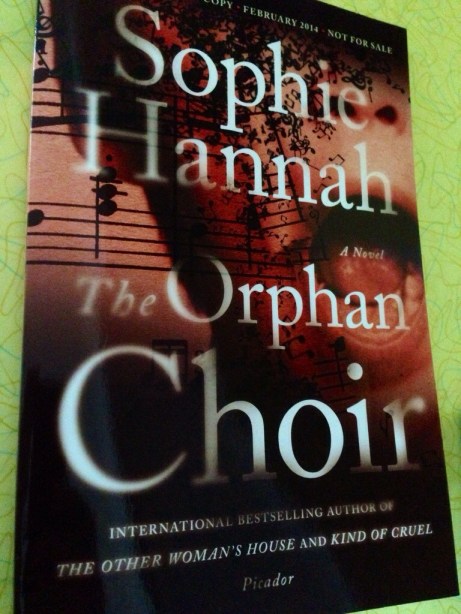
The Orphan Choir (Book Acquired, 9.17.2013)

20130924-200511.jpg

Sophie Hannah’s The Orphan Choir gets a U.S. release from Picador next year, so I grabbed the Australian blurb (Picador’s site doesn’t even list the book yet):

Louise is bereft. Her seven-year-old son Joseph has been sent away to boarding school against her wishes, and she misses him desperately. And the neighbour from hell is keeping her awake at night by playing loud, intrusive music. So when the chance comes to move to the country, she jumps at it as a way of saving her sanity. Only it doesn’t. Because the music seems to have followed her. Except this time it’s choral music, sung by a choir of children that only she can see and hear…

Never read Sophie Hannah but I’ve seen many of the spines of her books at the used bookstore I go to when I’m looking for Barry Hannah books.


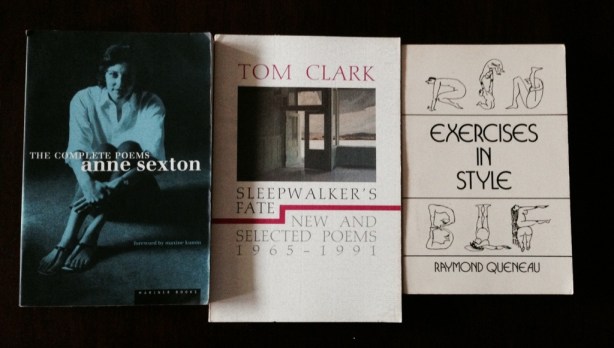
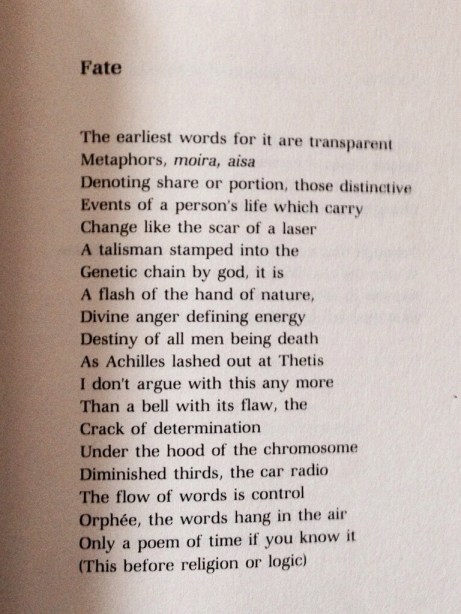
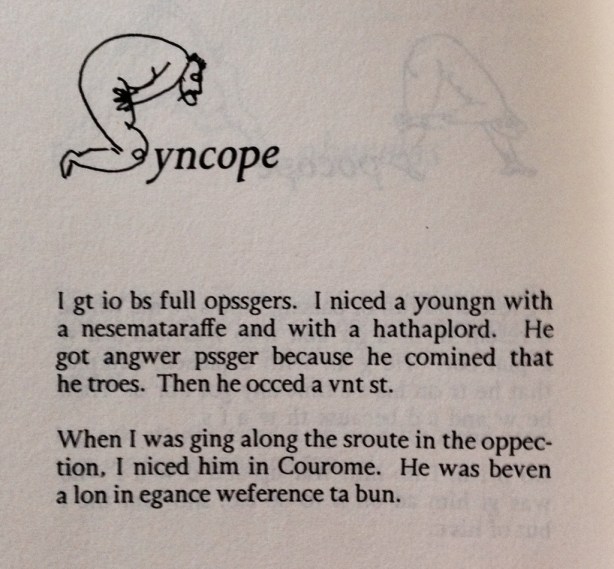
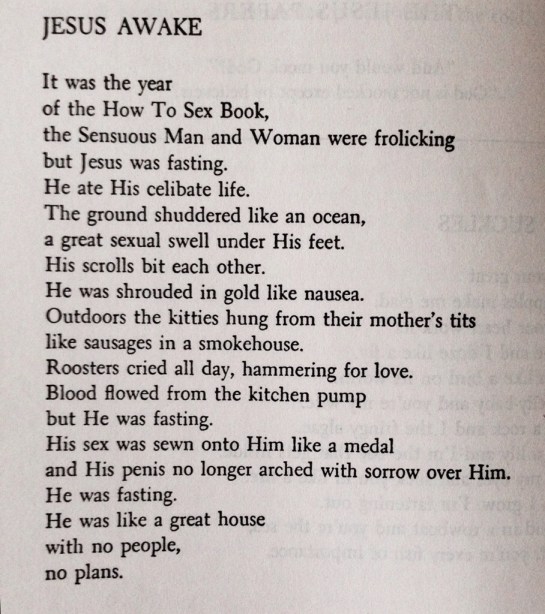
Clark/Queneau/Sexton (Books Acquired, 9.27.2013)

20130928-173447.jpg

“Fate,” Tom Clark:

20130928-173505.jpg

“Syncope,” Raymond Queneau:

20130928-173513.jpg

“Jesus Awake,” Anne Sexton:

20130928-173456.jpg

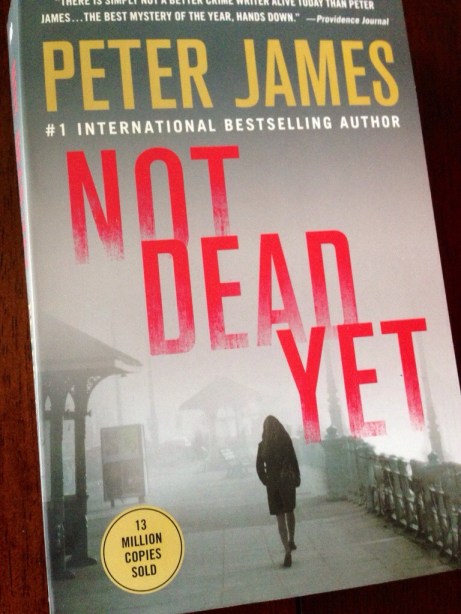
Not Dead Yet (Book Acquired, 9.19.2013)


20130924-200519.jpg

Peter James’s Not Dead Yet. Publisher’s blurb:

For LA producer Larry Brooker, this is the movie that could bring the fortune that has so long eluded him . . .

For rock superstar, Gaia, desperate to be taken seriously as an actor, this is the role that could get her an Oscar nomination…

For the City of Brighton and Hove, the publicity value of a major Hollywood movie being filmed on location, about the city’s greatest love story – between King George IVth and Maria Fitzherbert – is incalculable.

For Detective Superintendent Roy Grace of Sussex CID, it is a nightmare unfolding in front of his eyes. An obsessed stalker is after Gaia. One attempt on her life is made days before she leaves her Bel Air home to fly to Brighton. Now, he has been warned, the stalker may be at large in his city, waiting, watching, planning.


The Séance Society (Book Acquired, 9.18.2013)

20130924-200501.jpg

Michael Nethercott’s The Séance Society. Blurbish review from Publisher’s Weekly:

Nethercott’s first full-length novel, a classically styled Holmesian whodunit set in 1956, introduces Lee Plunkett, an underemployed PI following reluctantly in his late father’s detective footsteps, and Mr. O’Nelligan, a charmingly low-key and literary-minded Irishman. Together they investigate the death of Trexler Lloyd, a rich eccentric, egomaniac, and patron of the arts of spirit communication, who appears to have been electrocuted at a private demonstration of “the Spectricator,” a device for speaking with the dead, at his home in Braywick, Conn. The plot manages to be twisty while proceeding logically, though the unanalyzed clues are often obvious enough that the reader must assume that Plunkett is none too clever and the smarter O’Nelligan is holding his cards close before the grand gathering and reveal. The household’s collection of psychics, servants, and ghosts are a colorful lot, but in the end are merely quirky where they could have been hilariously bold. Agent: Susan Gleason, Susan Gleason Literary Agency