
Friedrich Nietzsche famously wrote that “There are no facts, only interpretations.” David Mitchell takes this idea to heart in his 2004 novel Cloud Atlas, using six nested narratives to mull over Nietzschean matters of truth and perspective, the will to power, what it means to be a slave or a master, and the different methods by which one might narrativize one’s life. At its core, Cloud Atlas works to illustrate Nietzsche’s hypothesis of eternal recurrence, the idea that we live our lives again and again. To wit, each of the central characters in Cloud Atlas‘s six sections seems to be a reincarnation of a previous one. Mitchell arranges his narrative like a matryoshka doll, interrupting the first five stories with Scheherazade-style cliffhangers. Each narrative propels the book’s chronology forward a century or more until reaching a crescendo in a post-apocalyptic world, the only section that remains uninterrupted. Mitchell then resumes each narrative, working backward through time to his starting point in 1850, with The Pacific Journal of Adam Ewing.
The Pacific Journal of Adam Ewing features a naïve American’s tour of the South Pacific, focusing roughly on his trek from New Zealand to Hawaii. The journal’s style readily and purposefully recalls Herman Melville; indeed, Ewing himself professes to be a fan of Melville. Early in Ewing’s journal–which is to say, early in the novel Cloud Atlas–we are treated to (or subjected to) a somewhat lengthy description of the enslavement and slaughter of the pacifist Moriori tribes of the Chatham Islands at the hands of the Māori. Here, Mitchell introduces his novel’s dominant theme of slavery and civilization. Again and again in Cloud Atlas, we find groups of people preying upon other people, enslaving them and decimating their cultures. The Pacific Journal reiterates this theme when Ewing helps to rescue an enslaved Moriori who has escaped his slavers by stowing away; the episode also echoes the relationship between Ishmael and Queequeg, of course.
The next episode, Letters from Zedelghem, features a young bisexual composer named Frobisher; his narrative comprises letters he sends to his best-friend (and sometime lover) Rufus Sixsmith. Frobisher’s robust voice is one of the great achievements of Cloud Atlas; he finds music everywhere and in everything, and even though he repeatedly gets himself into terrible situations (which are always entirely his own fault) it’s hard not to feel for him. In debt and on the lam, he finds work as an amanuensis in Belgium, laboring under an aged, sometimes-despotic composer named Ayrs. Ayrs enlists Frobisher’s talents in creating a work named “Eternal Recurrence,” but ends up stealing most of his ideas. The Frobisher narrative is the only section to explicitly name Nietzsche and his ideas. Given the setting–Belgium, 1931, Europe precariously dangling before the precipice of another war–there’s a certain ambivalence toward Nietzsche perhaps, or at least a tacit acknowledgment that ideas like the Will to Power might be radically misapplied. Letters also most openly alludes to the structure of Cloud Atlas. In its second part–which is to say its conclusion, which is to say near the end of Cloud Atlas–Frobisher writes the following–
Spent the fortnight gone in the music room, reworking my year’s fragments into a “sextet for overlapping soloists”: piano, clarinet, ‘cello, flute, oboe, and violin, each in its own language of key, scale, and color. In the first set, each solo is interrupted by its successor: in the second, each interruption is recontinued, in order. Revolutionary or gimmicky?
Frobisher’s question perhaps reflects Mitchell’s own reticence over his complicated structure; in any case, it amounts to a post-modern wink. Frobisher’s narrative also initiates the book’s process of connecting the narratives, as each protagonist finds a copy of the earlier principal’s story. Frobisher finds Ewing’s Journal and devours it; in one of the book’s funnier moments, he scolds Ewing’s naïvety, comparing him to Captain Delano in Melville’s Benito Cereno. Frobisher’s criticism is apt. With its themes of slavery and mastery, truth and representation, and exterior and interior, there is probably no book that Cloud Atlas echoes as strongly as Benito Cereno.
Mitchell moves from a wonderful and witty approximation of the epistolary novel into a dull exercise in boilerplate fiction with the next narrative. Half-Lives: The First Luisa Rey Mystery follows the adventures of a plucky newspaper reporter in the 1970s as she tries to reveal a multinational corporation’s evil doings to the public. Aided by the report of a scientist named Rufus Sixsmith (yes, that Rufus Sixsmith), Luisa plunges into a world of intrigue and mystery and blah blah blah. Half-Lives intends to comment on airport novels, but Mitchell outdoes himself with the bad writing–it’s easily the weakest section of Cloud Atlas, and although it plays with the novel’s overarching themes it does little to enlarge or invigorate them. It does, however, introduce the comet-shaped birthmark that connects the heroes of these tales as they are born and reborn.
Mitchell seems more at home in the amplified voice that propels The Ghastly Ordeal of Timothy Cavendish. Set in and outside of London in the near future–that is to say, our near future–The Ghastly Ordeal is probably the funniest section of Cloud Atlas. Cavendish, the aging publisher of a small vanity press, finds success (and trouble) when one of his authors openly murders a critic. A dispute over royalties finds him hitting the road and fleeing for safety outside the urbane confines of London. Soon, he’s held prison in a home for the elderly somewhere in the barbaric north. Cavendish is scowling, imperious, overeducated, and arch; his racism and classism seem to belong to a different age and he’s prone to hyperbole (scratch that–he’s all hyperbole). Cavendish’s narrative is deeply reactionary: early in, he relates being mugged by a group of school girls, and the episode seems to come from A Clockwork Orange. How honest he is here, of course, is under suspicion, but that’s kinda sorta the whole point of Cloud Atlas. Cavendish’s narrative is the hardest to place stylistically–it doesn’t immediately resonate with any of the genre tropes that characterize the other section–but I suppose that there’s something of the post-Modernist (as opposed to postmodernist, of course) white-male-reactionary flavor to his Ordeal–hints of Saul Bellow, Updike, Roth perhaps? I’m not sure. The Ghastly Ordeal is the most contemporaneous episode of Cloud Atlas, so its tropes may be harder to spot.
The dystopian tropes of An Orison of Sonmi-451 are more readily apparent. Orison jumps centuries ahead, pointing to a future where an imperial Korean dominates what’s left of the non-burned Earth. Corporations have replaced government and consumerism has replaced religion. The rigid class structure that has developed relies on a slave class of fabricants–genetically modified clones–who perform dangerous jobs and manual labor. The narrative unfolds as an interview with Sonmi-451, a fabricant who “ascends,” positioning her in a level of unprecedented self-awareness that positions her to become the signal in a revolution to end slavery. There’s more to Orison than I can possibly unpack here, an observation that cuts both ways for Cloud Atlas. On one hand, Mitchell’s dystopia is repellent and enchanting, grimy and brightly lit, a world of fascinating extrapolations that mirror and satire contemporary society. On the other hand, Orison is overstuffed; its seams show the strains of containment. One gets the sense that Mitchell’s had to restrain an entire novel here, and the frequent need to dump exposition on his readers undercuts his otherwise nimble prose. (Alternately, the clunky exposition dumping might be a reference to Philip K. Dick). Mitchell is clearly comfortable working in the idiom of Orwell and Huxley (Sonmi explicitly references both writers, by the by), but the second half of Orison–the descending half, if you will–cannot reclaim the energy of its first part. Beyond Orison, a sense of contraction rules the second half of Cloud Atlas.
Perhaps the deflation in the novel’s second half results from its triumphant middle passage, Sloosha’s Crossin’ an’ Ev’rythin’ After. Dystopia moves to post-apocalypse, and maybe a thousand years after the time of Ewing, we are back in the Pacific, in the Hawaiian islands, where a man named Zachry spins one of the better adventure yarns I’ve heard in some time. Mitchell writes Sloosha’s Crossin’ in an invented argot that readily (and purposefully) recalls Russell Hoban’s post-apocalyptic masterpiece Riddley Walker. Like that book, Sloosha’s Crossin’ showcases an environment removed from the apocalypse–the narrative is more about how civilizations might reform after a fall. When a woman named Meronym from a “tribe” called the Prescients comes to stay with Zachry’s family, the stress between civilization and savagery comes to a head. The Prescients seem to be the last group of people on earth with any vestige of command over prelapsarian technology. Meronym (who bears a comet-shaped birthmark) does her best not to intervene in the day-to-day life of the family, but when the Kona, an aggressive tribe of slavers attack, she finds her self unable not to act. As the central, unbroken narrative of Cloud Atlas, Sloosha’s Crossin’ must both climax the novel as well as tie its disparate ends to its organizing themes. It doesn’t disappoint, both encapsulating, repeating, and commenting on the various slave-slaver narratives that run through the rest of the text. When the Kona attack Zachry’s Valleysmen, we see eternal recurrence–Māori slaughtering Moriori, Christian colonials ousting aboriginals, corporations using their fabricants for slave labor. A dialogue between Zachry and Meronym (delivered in Zachry’s argot, of course) spells out the novel’s concerns. Zachry asks Meronym if it’s “better to be savage’n to be Civ’lized?” She replies–
What’s the naked meanin’ b’hind them two words?
Savages ain’t got no laws, I said, but Civ’lizeds got laws.
Deeper’n that it’s this. The savage sat’fies his needs now. He’s hungry, he’ll eat. He’s angry, he’ll knuckly. He’s swellin’, he’ll shoot up a woman. His master is his will, an if his will say soes “Kill” he’ll kill. Like fangy animals.
Yay, that was the Kona.
Now the Civ’lized got the same needs too, but he sees further. He’ll eat half his food now, yay, but plant half so he won’t go hungry ‘morrow. He’s angry, he’ll stop’n’ think why so he won’t get angry next time. He’s swellin’, well, he’s got sisses an’ daughters what need respectin’ so he’ll respect his bros’ sisses and daughters. his will is his slave, an’ if his will say soes, “Don’t!” he won’t, nay.
What we see here is, I believe, a subtle reading of Nietzsche’s famous, infamous, and not-so-well understood concept of the will to power. Meronym’s solution to save endangered humanity is not blind adherence to conventional morality but rather an individual’s ability to overcome his or her animal instincts to thrive. The Übermensch enslaves his own will, his id, and preserves his ego.
As Sloosha’s Crossin’ concludes and Cloud Atlas moves outward and back into the past, there’s a twin sense of deflation and redemption. Orision does not have the room it needs to breathe; although Sonmi’s inevitable martyrdom follows a narrative logic that Sloosha’s Crossin’ more than justifies, it feels undercooked. The second half of the Cavendish narrative is more fulfilling. No spoilers. Mitchell manages to shoehorn a strange missive by a physicist into the second half of Luisa Rey; it’s only a page and a half, it doesn’t really belong there, and it’s the most interesting thing about the whole narrative. Like Frobisher’s description of his sextet, it functions as one description of the book. Luisa gets to hear that sextet, by the way; she special orders one of only fifty pressings. Frobisher’s narrative I’ve remarked upon at some length, so I will leave it alone by saying that it’s one of the finer points of Cloud Atlas and noting that it ends with a specific invocation of Nietzsche’s idea of eternal recurrence. The Journal of Adam Ewing is also very satisfying; in many ways it has to be, for it is the beginning and the end and the second end (and thus new beginning) of the novel. Ewing’s experiences–which, to leap right through the chain of protagonists, must also be Meronym’s experiences–lead him to reject the common morality of his time. As the novel concludes, he elects to return to the United States as a committed abolitionist, his stated mission in life to fight slavery in all its forms.
Cloud Atlas is a postmodern novel through and through. It riffs on genre and style with a keen awareness of textuality, an overt reliance on intertextuality, and a formally experimental schema that, as one of its principals puts it, might be “Revolutionary or gimmicky.” It lovingly pairs the high with the low, the philosophical with the vulgar, the musical with the mud, and its best moments do so seamlessly and gracefully. It’s a very good read–a fun read–and readers daunted by its structure need not be: Mitchell has created a book that they in many ways probably already know–they just don’t know that they know it like this. Highly recommended.










 The
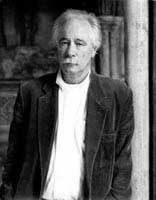
The  In W.G. Sebald: Image, Archive, Modernity, J.J. Long posits that the work of the late German author W.G. Sebald is best understood as the struggle for autonomous subjectivity in a world conditioned by the power structures of modernity. If the term “power structures” wasn’t a big enough tip-off, yes, Long’s analysis of Sebald is largely Foucauldian, and although he cites Foucault more than any other theorist (Freud is a distant second), the book is not a dogged attempt to make Sebald’s prose stick to Foucault’s theories. Rather, Long uses Foucault’s techniques to better understand Sebald’s works. As such, Long examines the ways that modernity affects power on the human body in Sebald’s work, tracing his protagonists’ encounters with modern institutions that exert power via archive and image.
 Long’s study of Sebald is very much a description of modernity; in particular, of modernity as a series of affects of power and discipline upon the subject (again, very Foucauldian). It’s not particularly surprising then that Long, after locating so many Sebaldian traumas in the 19th and early 20th centuries, asserts that Sebald is a modernist and not a postmodernist. He bases this claim not on the formal elements of Sebald’s prose, which he readily concedes can just as easily be read as postmodernist, but rather on the way his “texts respond to the specific historical constellation” of modernity. Long continues–
 Biblioklept