My Zenith Doth Depend upon a Most Auspicious Star — Edmund Dulac

If he does not love solitude, he will not love freedom (Schopenhauer)

All society necessarily involves, as the first condition of its existence, mutual accommodation and restraint upon the part of its members. This means that the larger it is, the more insipid will be its tone. A man can be himself only so long as he is alone; and if he does not love solitude, he will not love freedom; for it is only when he is alone that he is really free. Constraint is always present in society, like a companion of whom there is no riddance; and in proportion to the greatness of a man’s individuality, it will be hard for him to bear the sacrifices which all intercourse with others demands, Solitude will be welcomed or endured or avoided, according as a man’s personal value is large or small,—the wretch feeling, when he is alone, the whole burden of his misery; the great intellect delighting in its greatness; and everyone, in short, being just what he is.

From Schopenhauer’s Counsels and Maxims, translated by T. Bailey Saunders.


Jug with Yellow Primroses — Felix Vallotton

Balestrini’s Tristano (Book Acquired, 12.16.2013)

20131224-000725.jpg

I’m just two chapters shy of finishing Nanni Balestrini’s Tristano—I’ve kind of lax about these “book acquired” posts lately—so full review forthcoming. But here’s the blurb:

This book is unique as no other novel can claim to be: one of 109,027,350,432,000 possible variations of the same work of fiction.

Inspired by the legend of Tristan and Isolde, Tristano  was first published in 1966 in Italian. But only recently has digital technology made it possible to realise the author’s original vision. The novel comprises ten chapters, and the fifteen pairs of paragraphs in each of these are shuffled anew for each published copy. No two versions are the same. The random variations between copies enact the variegations of the human heart, as exemplified by the lovers at the centre of the story.

The copies of the English translation of Tristano  are individually numbered, starting from 10,000 (running sequentially from the Italian and German editions). Included is a foreword by Umberto Eco explaining how Balestrini’s experiment with the physical medium of the novel demonstrates ‘that originality and creativity are nothing more than the chance handling of a combination’.

I’ll write a proper review in the next week or two, but the quick version is that This Is Not for Everyone, but you can probably already tell that from the blurb, right? The prose is also Not for Everyone, which is what I suspect most people who come to Tristano, interested in the concept, will be most disappointed in. Balestrini isn’t delivering a plot driven story that “recombines” into new versions for the reader. This is something closer to Donald Barthelme’s disruptions and displacements—poetic, strange, occasionally funny, moving.
 

Kill Anything That Moves (Book Acquired Sometime in December 2013)

20131219-100411.jpg

Blurb for Nick Turse’s Kill Anything That Moves, new in paperback:

Americans have long been taught that events such as the notorious My Lai massacre were isolated incidents in the Vietnam War, carried out by just a few “bad apples.” But as award-winning journalist and historian Nick Turse demonstrates in this groundbreaking investigation, violence against Vietnamese noncombatants was not at all exceptional during the conflict. Rather, it was pervasive and systematic, the predictable consequence of official orders to “kill anything that moves.”

Drawing on more than a decade of research into secret Pentagon archives and extensive interviews with American veterans and Vietnamese survivors, Turse reveals for the first time the workings of a military machine that resulted in millions of innocent civilians killed and wounded—what one soldier called “a My Lai a month.” Devastating and definitive, Kill Anything That Moves finally brings us face-to-face with the truth of a war that haunts America to this day.

Library Rules of the Insane Asylum of California (1861)

1. The Library of the male department shall be under the charge of the Supervisor. Every volume taken therefrom shall be charged to the borrower, except for the use of the patients, when it shall be charged to the Attendant, into whose ward it is taken, who will be responsible for its being used with ordinary care and returned in proper time.

2. If a volume shall be lost or destroyed, by any patient, the Attendant, having charge of the patient, will report the fact to the Supervisor, and, if practicable, exhibit the fragments. If lost or destroyed, by any other person, it must be replaced.

3. No one will be permitted to take from the library more than one volume at a time, or to keep a volume more than two weeks, without permission from the Superintendent or Assistant Physician, except Bibles, Testaments and Prayer books placed in the hands of the patients for daily reading.

4. The Supervisor will be responsible for books taken from the library and not charged.

5. The Library of the female department will be under the charge of the Matron, who, in its management, will be governed by the above rules, prescribing the duties and responsibilities of the Supervisor.

From Rules and Regulations of the Insane Asylum of California (1861).

Private Conversation — Felix Vallotton

Reading, rereading, trying to read

20131226-142706.jpg

Woman Reading — Will Barnet

56635

Christmas Morning — Carl Larsson

Christmas in the Brothel — Edvard Munch

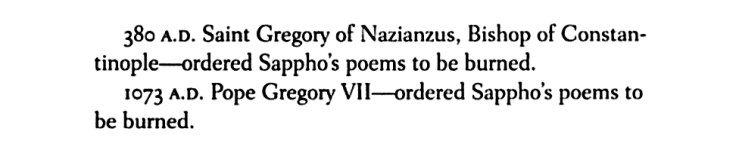
Burning Sappho (David Markson)

dm

Escape — Glen Baxter

baxter

Morning Sunshine — Karoly Ferenczy

Bingo’s Run (Book Acquired, 12.16.2013)

20131219-100419.jpg

Bingo’s Run by James A. Levine is new in hardback from Random House in January of 2014. Their blurb:

Meet Bingo, the greatest drug runner in the slums of Kibera, Nairobi, and maybe the world. A teenage grifter, often mistaken for a younger boy, he faithfully serves Wolf, the drug lord of Kibera. Bingo spends his days throwing rocks at Krazi Hari, the prophet of Kibera’s garbage mound, “lipping” safari tourists of their cash, and hanging out with his best friend, Slo-George, a taciturn fellow whose girth is a mystery to Bingo in a place where there is never enough food. Bingo earns his keep by running “white” to a host of clients, including Thomas Hunsa, a reclusive artist whose paintings, rooted in African tradition, move him. But when Bingo witnesses a drug-related murder and Wolf sends him to an orphanage for “protection,” Bingo’s life changes and he learns that life itself is the “run.”

A modern trickster tale that draws on African folklore, Bingo’s Run is a wildly original, often very funny, and always moving story of a boy alone in a corrupt and dangerous world who must depend on his wits and inner resources to survive

Hotel by a Railroad — Edward Hopper

New Gordon Lish

There’s a new Gordon Lish rant in this month’s issue of Harper’s. The selection, titled “The Boys on the Block,” is collected in the forthcoming Goings: In Thirteen Sittings, out early next year from O/R Books.

First paragraph:

There was a game we played. Maybe it wasn’t a game in and of itself. Is a ball a game? A ball is not a game. But you can make a game with it, can’t you? What can’t you make a game with or of? You just have to decide you’re going to do it, is all. Or not even make up your mind and go ahead and decide as such. All you have to do is take the thing and start doing something with it and then say to a boy on the block, Can you do this? and then you show the boy that you can, and then the next thing is that that particular boy has to see if he can do it too or even if he can’t, well, I ask you, is there or is there not already enough of a game going from just that much of it already? Or even better, let’s say he can’t do it, the boy, that particular boy, then even better, even better that he can’t, except who can say, maybe before you know it you’re the boy who’s sorry you started the whole thing in the first place, because maybe the boy we’re talking about, maybe he can go ahead and do it better than you can do it, and then you wish you had never even taken the reins and started the game and could instead of any of that just stop playing it, but you can’t stop playing it, because every time that particular boy on the block comes around he’s got the thing you need for the game with him and he says to you, Hey look, can you do this, can you, can you? even if all you have to do is do it as many times as he can, or do it a little farther than he can, or do it faster than he can, or, you know, more times, or do it some other way different like that.