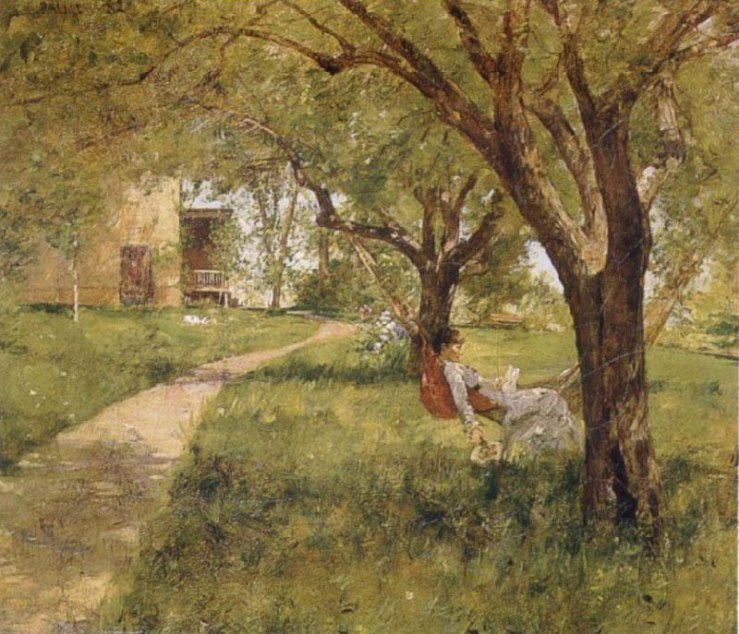
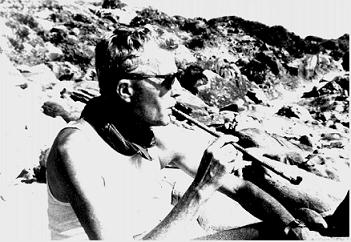
Afternoon in a Hammock — Walter Laurent Palmer

Palmer-Walter-Launt

Enormous Norm Sibum Novel (Book Acquired, 6.06.2013)

20130610-135947.jpg

A reader copy of Norm Sibum’s enormous (like, 700 page) debut novel The Traymore Rooms arrived last week. I’d normally be wary of a 700-page debut novel but Sibum, a poet, has been publishing for years, and the blurb intrigued me. Here is publisher Biblioasis’s blurb:

A place: the Traymore Rooms, downtown Montreal, an old walk-up. Those who live there and drink at the nearby café form the heart of Traymorean society. Their number includes: Eggy, red-faced, West Virginian, a veteran of Korea; Eleanor R (not Eleanor Roosevelt); Dubois, French-Canadian, optimist; Moonface, waitress-cum-Latin-scholar and sexpot inexpert; and, most recently, our hero Calhoun. A draft dodger and poetical type.

For a time all is life-as-usual: Calhoun argues with Eggy and Dubois, eats Eleanor’s cobblers, gossips of Moonface, muses on Virgil and the Current President. With the arrival of a newcomer to Traymore, however, Calhoun’s thoughts grow fixated and dark. He comes to believe in the reality of evil. This woman breaks no laws and she inflicts no physical harm—yet for the citizens of Traymore, ex-pats and philosophers all, her presence becomes a vortex that draws them closer to the America they dread.

Intelligent and frighteningly absurd, with a voice as nimble as Gass’s and satire that pierces like Wallace’s, The Traymore Rooms is a sustained howl against libertarianism under George W. Bush.

I read the first book of the first book of this book on Saturday, in a hammock—great start. Dude can write.

Here’s an excerpt of an excerpt:

Now Edward Sanders, aka Fast Eddy, hatless in winter, beetle-browed and barrel-chested, shows up in the Blue Danube, the left side of his face inflamed. He is not happy; deep-set eyes accuse. Silent, he joins us at our table. A round of greetings. He raises his hand to check our effusions. He will make the most of this moment, encased in layers of sweatshirts, nylon coat, baggy denims. His pale blue eyes flirt with woe and misery. His eyes are absolutes, so complete is his revulsion for all accidents of time and space, he claiming a sparrow flew into his mug. Well, how? He was turning a corner at the back of his duplex just as a bird endeavoured to do the same, its flight path minimizing the possibilities of attack from predators. Chicago school of physics: two solid objects cannot, at one and the same time, inhabit the same space, unless one was to speak of hand-to-hand combat or acts of passion.

Eggy, old and decrepit, snorts, octogenarian bravado and envy asserting: ‘She must’ve squeezed too hard.’ Yes, there it is, what explains Fast Eddy’s wounded pride. But his love of Moonface is pure, as the girl is a noble creature, she our waitress. Eggy’s hand begins its journey to his glass. Eventually, the glass secured, wine is consumed. And the world, like Fast Eddy, might have cause to complain of what has been seemingly inadvertent, all the world gobsmacked by phantom dominion. ‘Oh well,’ says Eggy, ‘just trying to cheer you up. Effing hell.’ The old man would sow the wild oats he had failed to sow, his Ebenezer, willie, Priapus now inert. One day, perhaps, Fast Eddy may declare to Moonface his love of her, and she grant him the justice of his argument; and she reward him with some tender ministration, her smile daffy. Fast Eddy blinks, frowns and suffers. He might have to see a doctor, his left ear shiny red, grown enormous.

I have been a Traymorean for some time. Congratulations are in order, I think. It is to say I reside in the Traymore Rooms – along with Eggy, Moonface, Dubois and Eleanor R, Mrs Petrova our live-in landlady – and they have not yet turfed me into the street. What has been more spectacular than spectacular failure, than the truths that did not quite endure, than the lies that all too often succeeded? In any case, snow is falling. It settles on fur hats and tuques and caps. Wind drives it against scarved shoulders. I observe what, beyond the cold café window, has all the attributes of a dream: the afternoon commute, its sounds muffled

Reader on a Black Background — Henri Matisse

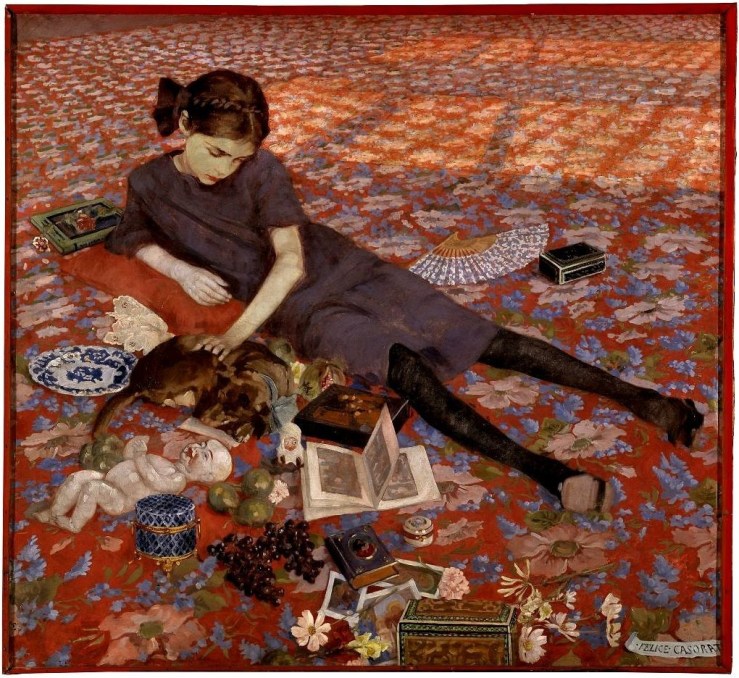
Girl On a Red Carpet — Felice Casorati

girl

Untitled — Bridget Tichenor

el_maravilloso_surrealismo_de_bridget_tichenor_3948_641x427

Hotel Room — Edward Hopper

Nude from the Rear, Reading — Edgar Degas

Leontine Reading — Pierre-Auguste Renoir

“Hawthorne and His Mosses” — Herman Melville

“Hawthorne and His Mosses” by Herman Melville

A papered chamber in a fine old farm-house–a mile from any other dwelling, and dipped to the eaves in foliage–surrounded by mountains, old woods, and Indian ponds,–this, surely is the place to write of Hawthorne. Some charm is in this northern air, for love and duty seem both impelling to the task. A man of a deep and noble nature has seized me in this seclusion. His wild, witch voice rings through me; or, in softer cadences, I seem to hear it in the songs of the hill-side birds, that sing in the larch trees at my window.

Would that all excellent books were foundlings, without father or mother, that so it might be, we could glorify them, without including their ostensible authors. Nor would any true man take exception to this;–least of all, he who writes,–“When the Artist rises high enough to achieve the Beautiful, the symbol by which he makes it perceptible to mortal senses becomes of little value in his eyes, while his spirit possesses itself in the enjoyment of the reality.”

But more than this, I know not what would be the right name to put on the title-page of an excellent book, but this I feel, that the names of all fine authors are fictitious ones, far more than that of Junius,–simply standing, as they do, for the mystical, ever-eluding Spirit of all Beauty, which ubiquitously possesses men of genius. Purely imaginative as this fancy may appear, it nevertheless seems to receive some warranty from the fact, that on a personal interview no great author has ever come up to the idea of his reader. But that dust of which our bodies are composed, how can it fitly express the nobler intelligences among us? With reverence be it spoken, that not even in the case of one deemed more than man, not even in our Saviour, did his visible frame betoken anything of the augustness of the nature within. Else, how could those Jewish eyewitnesses fail to see heaven in his glance.

It is curious, how a man may travel along a country road, and yet miss the grandest, or sweetest of prospects, by reason of an intervening hedge, so like all other hedges, as in no way to hint of the wide landscape beyond. So has it been with me concerning the enchanting landscape in the soul of this Hawthorne, this most excellent Man of Mosses. His “Old Manse” has been written now four years, but I never read it till a day or two since. I had seen it in the book-stores–heard of it often–even had it recommended to me by a tasteful friend, as a rare, quiet book, perhaps too deserving of popularity to be popular. But there are so many books called “excellent,” and so much unpopular merit, that amid the thick stir of other things, the hint of my tasteful friend was disregarded; and for four years the Mosses on the Old Manse never refreshed me with their perennial green. It may be, however, that all this while, the book, like wine, was only improving in flavor and body. At any rate, it so chanced that this long procrastination eventuated in a happy result. At breakfast the other day, a mountain girl, a cousin of mine, who for the last two weeks has every morning helped me to strawberries and raspberries,–which like the roses and pearls in the fairy-tale, seemed to fall into the saucer from those strawberry-beds her cheeks,–this delightful crature, this charming Cherry says to me–“I see you spend your mornings in the hay-mow; and yesterday I found there ‘Dwight’s Travels in New England’. Now I have something far better than that,–something more congenial to our summer on these hills. Take these raspberries, and then I will give you some moss.”–“Moss!” said I–“Yes, and you must take it to the barn with you, and good-bye to ‘Dwight.'” Continue reading ““Hawthorne and His Mosses” — Herman Melville”

By the River — John Singer Sargent

The Night School — Gerrit Dou

Married Life — Roger de La Fresnaye

A Scholar Seated at a Table with Books — Rembrandt

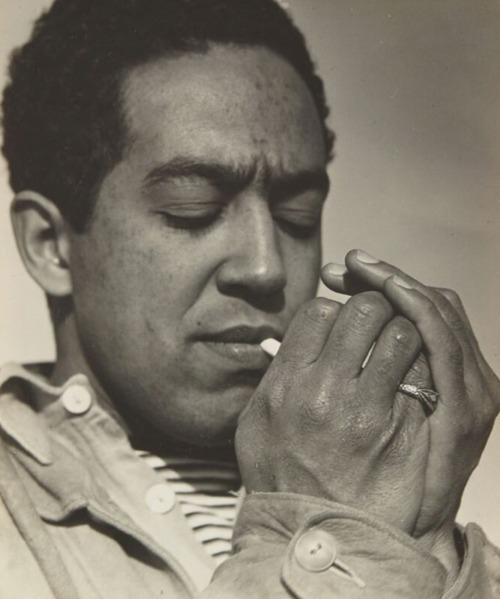
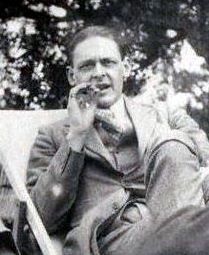
Smoking Makes You Look Cool (Part III)

Clarice Lispector
Clarice Lispector
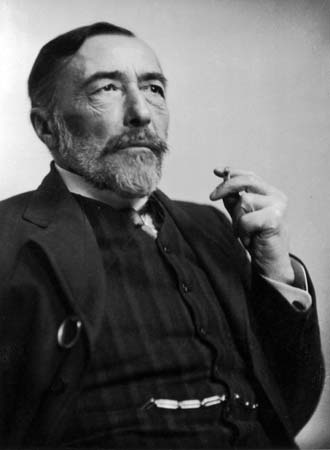
conrad
Joseph Conrad
james baldwin
James Baldwin
Barry Hannah
Barry Hannah
art spiegelman
Art Spiegelman
paul bowles
Paul Bowles
langston hughes
Langston Hughes
images (1)
Patricia Highsmith
T.S._Eliot,_1923
T.S.Eliot

(Parts I and II (don’t worry, everyone already yelled at me re: “smoking unhealthy,” etc., and yes, whole post was probably just an excuse to run that pic of Lispector)).


The Misses Vickers — John Singer Sargent

Barry Hannah/Stanley Elkin (Books Acquired, 5.29.2013)

20130529-164927.jpg

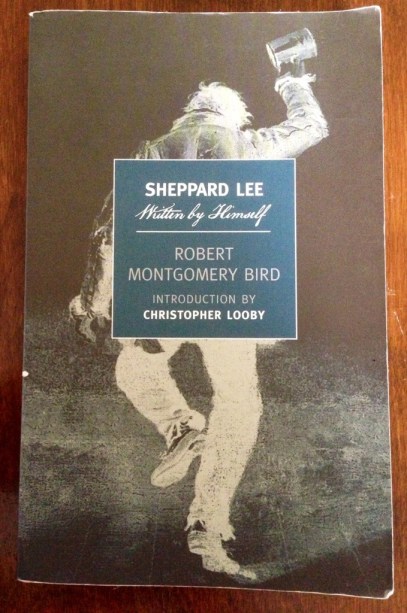
I was thrilled to find a somewhat tattered copy of Barry Hannah’s Geronimo Rex, after trolling the [huge, unorganized] “HA” section of my favorite used bookstore. Years ago, I found like seven of Hannah’s books used there and picked up only one. I devoured it, returned, the rest were gone. Regrets, regrets. I will review this maybe at the end of the summer (?) — until then:  reviews of Hannah’s AirshpsHey Jack!, and Ray.

I’ve never read Stanley Elkin, but sort of feel like I should. Mr. BLCKDGRD (-a, -o, -e) suggested The Franchiser as a good starting point (although he said that The Magic Kingdom is his pers. fav. {disney fan?}). Some dude named Billy Gass wrote the forward. 

Also pictured: Two weird black gourds that grew in my garden, right in the midst of my cucumber patch. Also: Kodiak Ridge Lager, a weak lager with a beautiful blue an’ gold can.

The Bible Lesson, or Anne and Tobias — Gerrit Dou