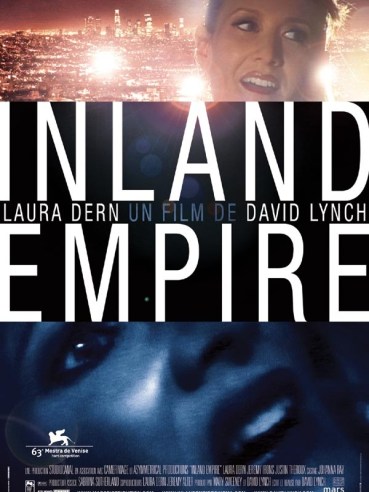
“I Will Burn Away the Sickness,” Says the Baron’s Doctor


A List of Things Roberto Bolaño Discussed with His Friend Rodrigo Fresán

From the entry “All Subjects with Fresán,” in Bolaño’s collection Between Parentheses, a list of stuff the late writer talked about with his good friend, which includes (as usual) plenty of references to writers, poets, directors—and some funny jokes as well. Read part of Fresán’s essay “The Savage Detective” — it was the piece that first got me to go pick up a Bolaño. Here’s the list—

1) The Latin American hell that, especially on weekends, is concentrated around some Kentucky Fried Chicken or McDonald’s.

2) The doings of Buenos Aires photographer Alfredo Garofano, childhood friend of Rodrigo and how a friend of mine and of anyone with the least bit of discernment.

3) Bad translations.

4) Serial killers and mass murders.

5) Prospective leisure as the antidote to prospective poetry.

6) The vast number of writers who should retire after writing their first book or their second or their third or their fourth or their fifth.

7) The superiority of the work of Basquiat to that of Haring, or vice versa.

8 ) The works of Borges and the works of Bioy.

9) The advisability of retiring to a ranch in Mexico near a volcano to finish writing The Turkey Buzzard Trilogy.

10) Wrinkles in the space time continuum.

11) The kind of majestic women you’ve never met who come up to you in a bar and whisper in your ear that they have AIDS (or that they don’t).

12) Gombrowicz and his conception of immaturity.

13) Philip K. Dick, whom we both unreservedly admire.

14) The likelihood of a war between Chile and Argentina and its possible and impossible consequences.

15) The life of Proust and the life of Stendhal.

16) The activities of some professors in the United States.

17) The sexual practices of titi monkeys and ants and great cetaceans.

18) Colleagues who must be avoided like limpet mines.

19) Ignacio Echevarria, whom both of us love and admire.

20) Some Mexican writers liked by me and not by him, and some Argentine writers like by me and not by him.

21) Barcelonan manners.

22) David Lynch and the prolixity of David Foster Wallace.

23) Chabon and Palahniuk, whom he likes and I don’t.

24) Wittgenstein and his plumbing and carpentry skills.

25) Some twilit dinners, which actually, to the surprise of the diner, become theater pieces in five acts.

26) Trashy TV game shows.

27) The end of the world.

28) Kubrick’s films, which Fresán loves so much that I’m beginning to hate them.

29) The incredible war between the planet of the novel-creatures and the planet of the story beings.

30) The possibility that when the novel awakes from its iron dreams, the story will be there.

“It Was this Truly Epiphantic Experience” — David Foster Wallace Describes the First Time He Saw Blue Velvet

From his 1997 interview with Charlie Rose (which Jesus yeah I know you’ve seen before, but hey, it’s worth reading this anecdote from the transcript), David Foster Wallace describes seeing David Lynch’s Blue Velvet

The screen gets all fuzzy now as the viewer’s invited to imagine this. Coming out of an avant garde tradition, I get to this grad school and at the grad school, turns out all the teachers are realists. They’re not at all interested in post-modern avant garde stuff. Now, there’s an interesting delusion going on here — so they don’t like my stuff. I believe that it’s not because my stuff isn’t good, but because they just don’t happen to like this kind of esthetic.

In fact, known to them but unknown to me, the stuff was bad, was indeed bad. So in the middle of all this, hating the teachers, but hating them for exactly the wrong reason — this was spring of 1986 — I remember — I remember who I went to see the movie with — “Blue Velvet” comes out. “Blue Velvet” comes out.

“Blue Velvet” is a type of surrealism — it may have some — it may have debts. There’s a debt to Hitchcock somewhere. But it is an entirely new and original kind of surrealism. It no more comes out of a previous tradition or the post-modern thing. It is completely David Lynch. And I don’t know how well you or your viewers would remember the film, but there are some very odd — there’s a moment when a guy named “the yellow man” is shot in an apartment and then Jeffrey, the main character, runs into the apartment and the guy’s dead, but he’s still standing there. And there’s no explanation. You know, he’s just standing there. And it is — it’s almost classically French — Francophilistically surreal, and yet it seems absolutely true and absolutely appropriate.

And there was this — I know I’m taking a long time to answer your question. There was this way in which I all of a sudden realized that the point of being post-modern or being avant garde or whatever wasn’t to follow in a certain kind of tradition, that all that stuff is B.S. imposed by critics and camp followers afterwards, that what the really great artists do — and it sounds very trite to say it out loud, but what the really great artists do is they’re entirely themselves. They’re entirely themselves. They’ve got their own vision, their own way of fracturing reality, and that if it’s authentic and true, you will feel it in your nerve endings. And this is what “Blue Velvet” did for me.

I’m not suggesting it would do it for any other viewer, but I — Lynch very much helped snap me out of a kind of adolescent delusion that I was in about what sort of avant garde art could be. And it’s very odd because film and books are very different media. But I remember — I remember going with two poets and one other student fiction writer to go see this and then all of us going to the coffee shop afterwards and just, you know, slapping ourselves on the forehead. And it was this truly epiphantic experience.

Alejandro Jodorowsky on David Lynch’s Dune (and Other Matters)

The AV Club’s Noel Murray interviews Chilean director Alejandro Jodorowsky, he of Holy Mountain and apocalypse-Western El Topo fame. Jodorowsky famously almost adapted Frank Herbert’s Dune before David Lynch picked up that gauntlet. Here’s Jodorowsky on Lynch’s adaptation–

AVC: For a long time, you were involved with developing Dune into a feature film, before the project fell through. Did you ever see David Lynch’s Dune?

AJ: Yes, I’ve seen it. I was very scared when I saw it, because Dune was for me very important in my life. I was very sad I could not do it. When I saw that David Lynch would do it, I was very scared, because I admire him as a moviemaker, and I thought he would do well. But when I see the picture, I realize he never understood this picture. It’s not a David Lynch picture. It’s the producer who made that picture, no? Who made this horror. For David Lynch, it was a job. A commercial job. It never was that for me.

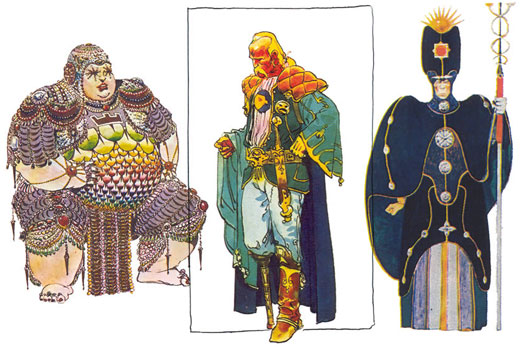
Jodorowsky’s version of Dune had entered pre-production, including early art from Jean Giraud (French comics artist Moebius). You can see some of Giraud’s character designs and storyboards here.

Jodorowsky famously wanted Salvador Dali to play the Emperor and Mick Jagger to play Feyd Rautha (a role that went to Sting in Lynch’s version).

“It Sounds Like the Title of a David Lynch Film” — A Passage from Roberto Bolaño’s 2666

A passage from Roberto Bolaño’s opus 2666

The card for the Santa Teresa cybercafe was a deep red, so red that it was hard to read what was printed on it. On the back, in a lighter red, was a map that showed exactly where the cafe was located. He asked the receptionist to translate the name of the place. The clerk laughed and said it was called Fire, Walk With Me.

“It sounds like the title of a David Lynch film,” said Fate.

The clerk shrugged and said that all of Mexico was a collage of diverse and wide-ranging homages.

“Every single thing in this country is an homage to everything in the world, even the things that haven’t happened yet,” he said.

After he told Fate how to get to the cybercafe, they talked for a while about Lynch’s films. The clerk had seen all of them. Fate had seen only three or four. According to the clerk, Lynch’s greatest achievement was the TV series Twin Peaks. Fate liked The Elephant Man best, maybe because he’d often felt like the elephant man himself, wanting to be like other people but at the same time knowing he was different. When the clerk asked him whether he’d heard that Michael Jackson had bought or tried to buy the skeleton of the elephant man, Fate shrugged and said that Michael Jackson was sick. I don’t think so, said the clerk, watching something presumably important that was happening on TV just then.

“In my opinion,” he said with his eyes fixed on the TV Fate couldn’t see, “Michael knows things the rest of us don’t.”

“We all know things we think nobody else knows,” said Fate.

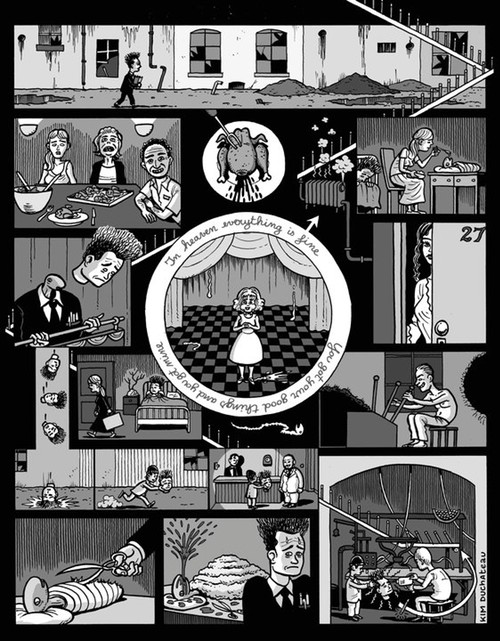
“Eraserhead on One Page” — Kim Duchateau

Cartoonist Kim Duchateau distills David Lynch’s Eraserhead down to one page. (Via via via).

And, as a creepy Friday bonus–

David Foster Wallace on Book Tour Sex, Blue Velvet, and Bandanas

Flavorwire has compiled a fantastic collection of David Foster Wallace quotes from David Lipsky’s new book, Although Of Course You End Up Becoming Yourself. A few excerpts:

On book tour sex:
“I didn’t get laid on this tour. The thing about fame is interesting, although I would have liked to get laid on the tour and I did not….People come up, they kind of slither up during readings or whatever. But it seems like, what I want is not to have to take any action. I don’t want to have to say, ‘Would you like to come back to the hotel?’ I want them to say, ‘I am coming back to the hotel. Where is your hotel?’ None of ‘em do that….I just can’t stand to look like I’m actively trading on this sexually. Even though of course that’s—I would be happy to do that.”

On Blue Velvet:
“I remember going to see Blue Velvet. . . . It absolutely made me shake. And I went back and saw it again the next day. And there was somethin’ about…it was my first hint that being a surrealist, or being a weird writer, didn’t exempt you from certain responsibilities. But it in fact upped them. . . . David Lynch, Blue Velvet coming out when it did, I think saved me from droppin’ out of school. And saved me maybe even from quittin’ as a writer. ‘Cause I’d always—if I could have made a movie, right at that time? That would have been it. I mean, I vibrated on every frequency.”

On the origin of the trademark bandana:
“I started wearing bandannas in Tucson because it was a hundred degrees all the time. When it’s really hot, I would perspire so much that I would drip on the page. Actually, I started wearing it that year, and then it became a big help in Yaddo in ’87 because I would drip into the typewriter, and I was worried that I would get a shock. And then I discovered that I felt better with them on. And then I dated a woman who…said there were these various chakras, and one of the big ones was what she called the spout hole, at the very top of your cranium. And in a lot of cultures, it was considered better to keep your head covered. And then I began thinking about the phrase, Keeping your head together, you know? …. It’s a security blanket for me. . . . It makes me…feel kind of creepy that people view it as an affectation or trademark or something. It’s more just a foible, it’s the recognition of a weakness, which is that I’m just kind of worried my head’s going to explode.”


Hotel Iris — Yoko Ogawa

Seventeen-year-old Mari, the narrator and subject of Yoko Ogawa’s new novel Hotel Iris, is something of a Cinderella figure. Her dad dies a violent death when she is only eight years old and her grandparents soon pass on as well, leaving her in the sole custody of her money-grubbing mother who works poor Mari like a slave in the upkeep of their shabby hotel. The titular Iris is a crumbling structure with only one seaside view, frequented in the off-season by prostitutes and only bustling in the sweltering summer months. It’s in the off-season when Mari first spies the transformative figure in her life–a man fifty years her senior who gets into a raucous fight with a hooker in the hotel. Transfixed by his commanding voice, Mari follows the man the next day as he performs banal errands. When he confronts her, the two strike up a strange friendship (very strange, it will turn out). The man lives on a small island where he works translating mundane Russian texts like tourist pamphlets–although he is hard at work at a passion project, translating a strange Russian novel. The translator begins writing Mari letters and she eventually sneaks away to meet him. In the seaside town he treats her with quiet deference, but when Mari visits his small, austere home on the island she undergoes a bizarre, sadistic sexual awakening. To continue a proper review of Hotel Iris will necessitate some mild spoilers. I won’t reveal any major plot points, but those intrigued may wish to stop reading here. Otherwise, on to the aforementioned bizarre, sadistic sexual awakening.

It’s pretty simple, really. The translator, a sexual sadist, has found in Mari a perfect masochist, a young girl so alienated and lonely that she can only find pleasure in extreme pain, beauty in brutal ugliness, and freedom in bondage. Her initial attraction to the translator, his commanding voice, goes to extremes in his isolated house on the island, where he strips her naked, ties her up, and forces her into all sorts of sexual humiliations. In a strange mirror of her Cinderella-life at Hotel Iris, he forces her to clean his house while strapped to a chair. He takes thousands of degrading photographs of her. In a scene reminiscent of “Bluebeard” he hangs her from the ceiling of a tiny pantry and whips her with a riding crop. He never engages in direct coitus with her; in fact, he never even removes the suit and tie he wears even in the sweltering summer. In each scenario Mari expresses the true happiness and pleasure she finds in the translator’s torture. “Only when I was brutalized, reduced to a sack of flesh, could I know pure pleasure,” she tells us.

That young, naïve Mari should narrate the novel is the genius of Ogawa’s program. Her first-person immediacy communicates the confusion and despair of a neglected, overworked teen trapped in a dead-end job in a Podunk town. As the plot spirals it tempts the reader to endorse the “love” that Mari feels for the old man who tortures her. Just as Nabokov manipulates his readers via the charms of Humbert Humbert, Ogawa, writing her reverse-Lolita, repeatedly cons us into normalizing the relationship, in viewing it only from Mari’s perspective. It’s through the slipped, oblique details of Mari’s past that we construct a more coherent image of a long pattern of abuse. Her mother, always bragging about Mari’s beauty, tells the story of a sculptor who used Mari as a model (Mari, of course, believes herself ugly). “The sculptor was a pedophile who nearly raped me.” The only maid in the hotel repeatedly claims to be “like a mother” to Mari, yet she attempts to blackmail and humiliate the poor girl, and even tells her that she was Mari’s father’s “first lover.” Late in the novel, a drunken hotel guest gropes Mari’s breast and her mother brushes the abuse off, blaming implicitly on her daughter. The focused, purposeful sadism of the translator–a result of the man’s own painful past–is thus a form of love for Mari. Yet we see what Mari can’t see, even as we accept the savage doom of their romance.

Hotel Iris recalls the dread creepiness of David Lynch, as well as that director’s subversion of fairy tale structures (perhaps “subversion” is not the right word–aren’t fairy tales by nature subversive?). There are also obvious parallels between Mari’s story and The Story of O and Peter Greenaway’s fantastic film The Cook, the Thief, His Wife, & Her Lover. But these are perhaps lazy comparisons–I should talk about Ogawa’s deft writing, her supple, slippy sentences, her sharpness of details, the exquisite ugliness of her depictions of sex and eating. She’s a very good writer, and translator Stephen Snyder has done a marvelous job rendering Ogawa’s Japanese into smooth, rhythmic sentences that resist idiomatic placeholders. Hotel Iris is not for everyone, but if you’ve read this far you’ve probably figured that out already. Readers who venture into Ogawa’s dark world will find themselves rewarded with a complex text that warrants close re-reading. Recommended.

Hotel Iris, a Picador trade paperback original, is available today.

Rabbits — David Lynch

Happy Easter!

Continue reading “Rabbits — David Lynch”

When Lynch Met Lucas

What if David Lynch had directed Return of the Jedi? Oh the possibilities… YouTube user sciezata77 (I’d love to credit her/his real name) has made a really cool little film using only an iPhone and Lynch’s original audio, detailing Lynch’s meeting with George Lucas. Best line: “We went to a restaurant . . . not that I don’t like salad, but that’s all they had, was salad.”

Reading Kafka and Watching Lynch Will Make You Smarter

We knew it. Reading Kafka’s The Metamorphosis and watching David Lynch’s Blue Velvet at such a young, tender age, didn’t screw us up for nothing. According to a joint study to be published this month in the journal Psychological Science, researchers Proulx and Heine have linked engaging in non-linear, non-traditional narratives with improved ability to recognize patterns. Proulx: “People feel uncomfortable when their expected associations are violated, and that creates an unconscious desire to make sense of their surroundings. That feeling of discomfort may come from a surreal story, or from contemplating their own contradictory behaviors, but either way, people want to get rid of it. So they’re motivated to learn new patterns.” Cool.

Full press release after the jump, or, just try to make sense of this clip from one of our favorite Lynch films, INLAND EMPIRE

Continue reading “Reading Kafka and Watching Lynch Will Make You Smarter”

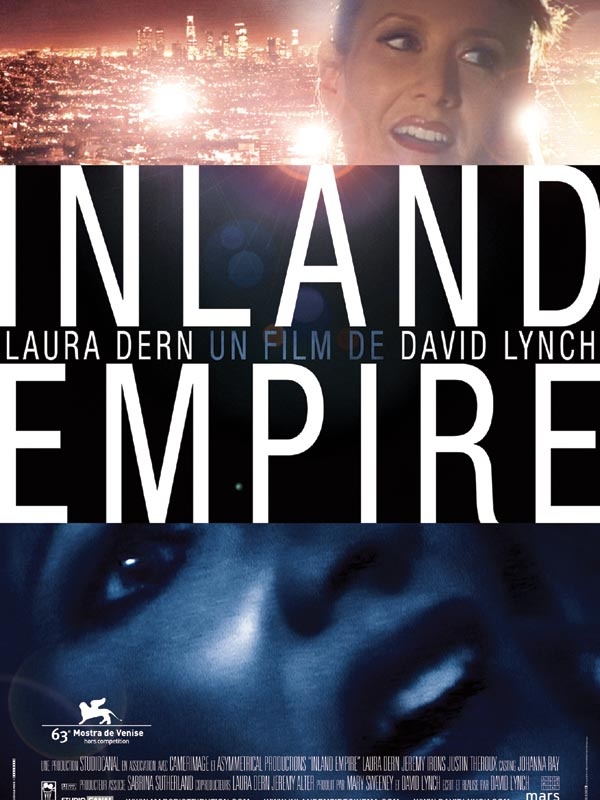
INLAND EMPIRE–David Lynch

inland-empire.jpg

There’s so much going on in David Lynch’s INLAND EMPIRE that I’ll give you the quick review up front: if you like David Lynch films (I do), you’ll love this film (I did)–it’s arguably his most ambitious to date and belongs in the canon of great Lynch films along with Blue Velvet and Mulholland Dr. Get a hold of it and watch it right away. If you don’t like David Lynch films, you won’t like INLAND EMPIRE–but you already knew that, didn’t you?

Contrary to some of the internet rumors and poorly conceived reviews out there, INLAND EMPIRE actually does have a plot, complete with an honest-to-goodness resolution full of redemption and love. However, the fragmentary and elliptical nature of the film will no doubt confound anyone who tries to actively resist it: like Mulholland Dr. before it, this is one you need to just let happen to you. Attempts to impose your own system of narrative logic will probably result in headaches and frustration. You see, INLAND EMPIRE is really a time-travel movie, and time-travel movies–the good ones–are always resistant to narrative logic (see the Grandfather Paradox, etc.).

The story begins with a gypsy-witch’s curse: she visits actress Nikki Grace (played by Laura Dern who appears in almost every scene of the movie, and is truly fantastic) and warns her about the coveted film role she’s about to land. It turns out that the film, On High in Blue Tomorrows, is a remake of a Polish film called 49 that was never finished because the two leads were murdered. “If it was tomorrow,” the gypsy croaks, pointing across the room, “you would be sitting over there. Do you see?” And Nikki does see: the rest of the film may or may not be a vision prompted by the gypsy. However, my phrase “The story begins” at the beginning of this paragraph was not entirely accurate: before we even meet Dern’s character, we see a light projection and a phonograph needle, a weeping woman trapped in a room watching a chilling sitcom starring bunny people (INLAND EMPIRE thus gets to go on a special list of movies featuring scary rabbits, including favorites Donny Darko and Sexy Beast), and a strange scene with a Polish prostitute.
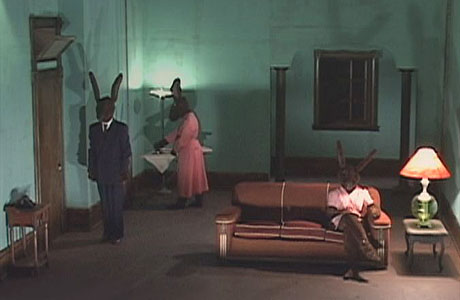
inland460.jpg

So there are plenty of frames to this frame-tale, and the narrative only continues inland as the movie progresses, exploring a multiplicity of spaces and times. Dern’s Nikki morphs into new and different characters–housewives and hookers–even as she passively stands on the wall, a frightened voyeur robbed of all agency. And in many ways this is the major theme of the movie: how to find agency and self-determination in a world where time and place–context–are the main components and constituents of identity. INLAND EMPIRE breaks down the lines between actors and prostitutes and really any other job, suggesting that perhaps we all have some identity as a whore, an identity thrust on us by location and time, an identity that we are always struggling against.

But this is really just one of many themes in the movie. The usual Lynch tropes are here: pop nostalgia with a sinister tinge, stilted dialog, lush red curtains, characters that seem of vital importance who never show up again, cryptic symbols that may or may not be symbols at all, etc. etc. etc. Despite its three hour running time, INLAND EMPIRE never lags or sags, in large part because so much weird stuff is going on, but also because in many ways this movie is a distillation of every other Lynch film: we get the murder mystery of Twin Peaks, the abuse-of-women theme inherent in Blue Velvet, the Wizard of Oz riffing from Wild at Heart, the voyeur-terror of Lost Highway, the Haunted Hollywood and doppelganger mindfuck of Mulholland Dr., and the general creepy weirdness that’s underscored every Lynch film since Eraserhead.

gross_lynch.jpg

INLAND EMPIRE is shot entirely on digital video, a format that Lynch swears is the future of cinema. I’m not sure about that–although his movie is a beautiful masterpiece of textured light and composition, not all directors are painters like Lynch; in someone else’s less-gifted hands this movie could’ve been, visually speaking, a muddled mess. Still, it seems for now Lynch is determined to continue shooting on DV.

A couple of days before I saw INLAND EMPIRE, I heard most of an interview with Lynch on NPR’s Talk of the Nation. Neil Conan asked him what the last great movie he saw in the theaters was, and, to my surprise, he said that it was The Bourne Ultimatum, a movie he touted as being “excellent” or “perfect” or something like that. At first this struck me as odd–Lynch going to see a pretty straightforward–albeit smart–action movie? But on further reflection there’s nothing odd about this. I think that Lynch sees his films not as outsider films or art films per se, but as something more akin to the Hollywood tradition–I’m sure he’s not deceived that his films are as accessible as the Bourne films, but I do believe that he is a pop artist (or Pop Artist, if you prefer)–he had a huge hit television show, didn’t he? And INLAND EMPIRE not only fits in with Lynch’s growing pop art legacy, it could be the masterpiece of his oeuvre. Let’s hope that that legacy continues to grow; INLAND EMPIRE suggests an artist in his prime who will continue making great films.
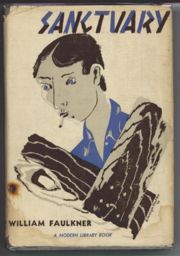
Sanctuary–William Faulkner

sanctuary.jpg

So I’ve been reading William Faulkner’s Sanctuary over the past few days. This was Faulkner’s breakthrough novel, the one that made him famous when it was published in 1931. He claimed that it was pot-boiler pulp fiction, written purely to make money, but who knows. I mean, we’re talking about a guy who chose to start spelling his name with a ‘u’ for some obscure reason–an author who worked from day one at creating the myth of himself as author. So who knows–maybe he actually thought he was writing a great piece of literature when he produced this lurid drivel.

Sanctuary is most famous for the rape of Southern debutante Temple Drake. She is raped with a corn cob. There you go. That’s pretty much all you need to know about this book. However, if you’re into elliptical and confusing depictions of violence, drunken debauchery, creepy voyeurism, and post-lynching sodomy, Sanctuary just might be the book for you.

There are two film adaptations of Sanctuary–1933’s The Story of Temple Drake, and 1961’s Sanctuary. Neither are readily available on VHS or DVD, and for good reason. They’re both pretty terrible. Still, the early sixties take on Sanctuary manages to capture the backwoods grotesque that saturates the novel. Actually, David Lynch could make a pretty decent film out of this.

My final analysis: I’m very very happy that I only have one more novel of Faulkner’s to read–Intruder in the Dust. Sanctuary did nothing but help consolidate my prejudice against Faulkner and my belief that the notion of Faulkner as an American Great is nothing but a scam.