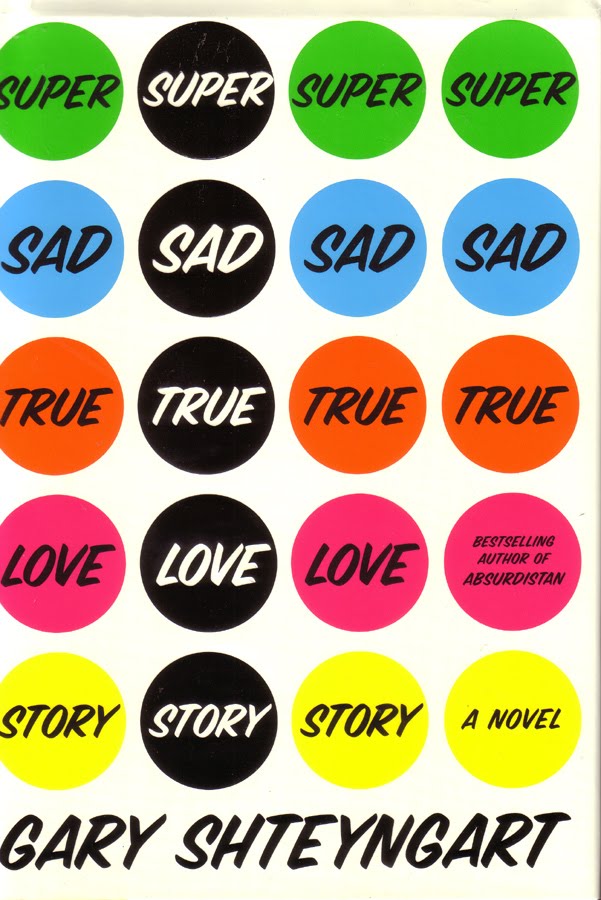
Three Literary Lists for 10-10-10

You may have noticed (and probably don’t care) that today is October 10, 2010, 0r 10/10/10 (or 10.10.10, or 10-10-10, or whatever iteration you prefer). But some people like lists. So, with very little thought put into the process, here are three literary lists to celebrate 10 Oct. 10–

Ten Ridiculous Character Names

1. Stephen Dedalus (A Portrait of the Artist as a Young Man and Ulysses, James Joyce. Even Stephen ponders how ridiculous and overdetermined his name is)

2. Major Major Major Major (Catch-22, Joseph Heller)

3. Bilbo Baggins (The Hobbit and The Lord of the Rings, J.R.R. Tolkien. Sure, he’s a hobbit, but “Bilbo Baggins” is still pretty much off the silly scale)

4. Brackett Omensetter (Omensetter’s Luck, William Gass)

5. Horselover Fat (VALIS, Philip K. Dick)

6. Milkman Dead (Song of Solomon, Toni Morrison)

7. Humbert Humbert (Lolita, Vladimir Nabokov)

8. Lionel Essrog (Motherless Brooklyn, Jonathan Lethem)

9. Tie:  Wang-Dang Lang/Peter Abbott/Candy Mandible/Judith Prietht/Biff Diggerance (David Foster Wallace suffers from Pynchon-fever in his début novel, Broom of the System)

10. Tie: Benny Profane/Oedipa Maas/Tyrone Slothrop/Zoyd Wheeler/Rev. Wicks Cherrycoke et al. — (Various novels by Thomas Pynchon. Yes, Pynchon should probably get his own list)

Ten Excellent Dystopian/Post-apocalyptic Novels That Aren’t Brave New World or 1984

1. Riddley Walker, Russell Hoban

2. Camp Concentration, Thomas Disch

3. A Clockwork Orange, Anthony Burgess

4. Oryx and Crake and The Year of the Flood, Margaret Atwood

5. The Hospital Ship, Martin Bax

6. Naked Lunch, William S. Burroughs

7. VALIS, Philip K. Dick

8. Ronin, Frank Miller

9. Ape and Essence, Aldous Huxley

10. The Road and Blood Meridian, Cormac McCarthy

Ten Movies Better Than or Equal to the Books On Which They Were Based

1. The Godfather

2. The Shining

3. The Thin Red Line

4. Children of Men

5. Harry Potter and the Prisoner of Azkaban

6. Trainspotting

7. No Country for Old Men

8. The Grapes of Wrath

9. There Will Be Blood

10. Jaws

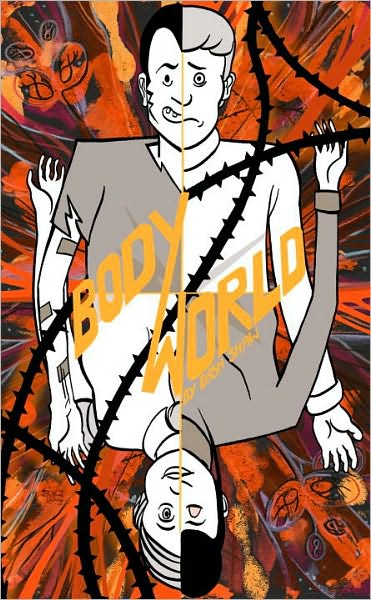
BodyWorld — Dash Shaw

In the future Dash Shaw proposes in his graphic novel BodyWorld, the Second Civil War and rapid industrial growth have left most of America a concrete sprawl by 2060. An exception is Boney Borough, a (literal) green zone somewhere on the Atlantic seaboard. This small secluded town is a new Eden in an otherwise gray world. Enter Professor Paulie Panther, a fuck-up par excellence. He goes to Boney Borough as part of a freelance mission to find out about a new, strange plant he’s found there via the internet. Professor Panther, you see, is a botanist and poet, a would-be scientist who finds out about the psychopharmacological properties of plants by smoking them up in big fat joints (when he’s not too busy trying to commit suicide or stumbling around on one or more of the various drugs to which he’s addicted). Professor Panther is the perfect acerbic foil to the homogeneous folk of Boney Borough. He gets hot for teacher Jem Jewel, turns-on Peach Pearl, the small town girl who wants to go to the big city, and pisses off and confuses her dumb jock boyfriend Billy-Bob Borg. The alliterative names (along with Shaw’s sharp, cartoonish style) recall–and subvert–the classic all-Americanism of Archie comics. Professor Panther soon discovers that the mystery plant, when smoked, grants the user strange telepathic abilities–namely, users sense the “body-mind” of the bodies of others around them.

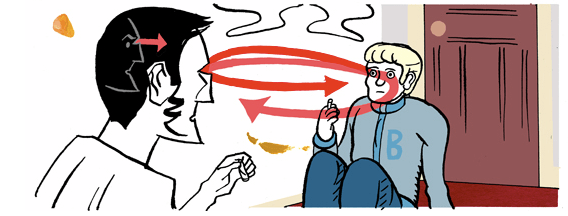
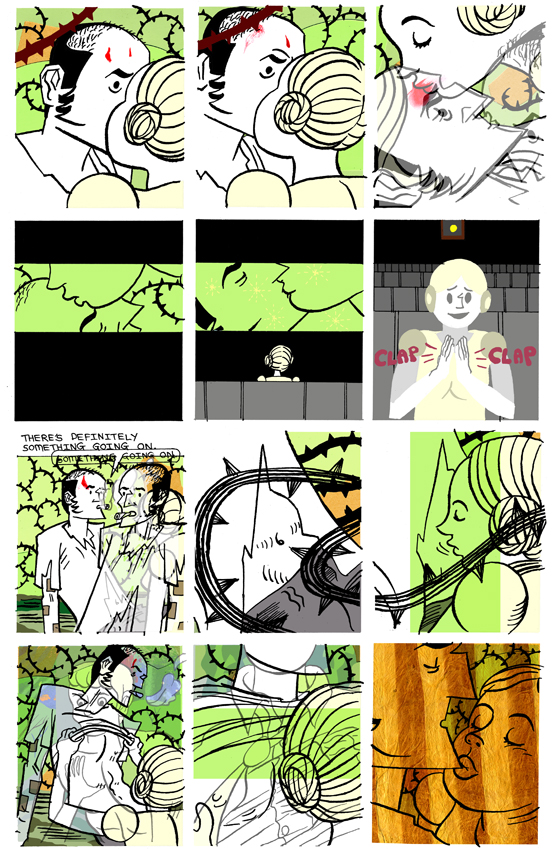
The plant’s telepathic effects allow Shaw to explore what happens within a literalized I-see-you-seeing-me-seeing-you-seeing-me (seeing-y0u-seeing-me . . .) structure. His bright Pop Art goes Cubist in psychedelic trip scenes, superimposing images to show a surreal conflation of not just the melding of two people’s pasts and presents, but those people’s perceptions of past and present. Very heady stuff–but seeing Shaw’s work is superior to my description, of course. Observe, as Panther sees Pearl seeing Panther seeing Pearl idealizing their attempt at romance:

BodyWorld is sardonically humorous in its psychoanalytic visions, guided in no small part by Professor Panther’s hilarious outsider perspective, but also tempered by Shaw’s larger project, a sci-fi satire of American exurbanist insularity. We wrote earlier this month about science fiction’s tendency to work within the dichotomy of wastelands and green zones, and Shaw’s work is no exception. His marvelous trick is to keep us within the green zone of Boney Borough the whole time and to make us identify with a waster, Panther. The greatest irony is that in this futurist vision, the zombies are the ones in the green zone.

Not everyone’s a conformist though. There are exceptions, of course, especially in the seedy Outer Rim where Panther takes up transient residence. We meet a psychotic latter-day Johnny Appleseed who certainly shares Panther’s weirdo proclivities. The episode is a marvelous spoof on the corny “origin stories” standard in Golden and Silver Age comics, with Shaw’s treatment more loving than mocking. To tell more about this weirdo might spoil the climax of Shaw’s graphic novel, and we don’t want to do that, of course, because you’re going to want to read it, aren’t you? Suffice to say that it’s part and parcel of Shaw’s program, a sweet and sour subversion of the 1950s comics and contemporary conformist groupthink politics. Shaw owes some debt to the neat precision, spacing, and rhythm of Chris Ware, as well as the haunting inks and sharp wit of Charles Burns but it would be a mistake to see this young talent as anything but original. Still, while we’re making comparisons: Richard Kelly could make a messy, sprawling treasure of a film out of BodyWorld.

You can read all of BodyWorld now at Shaw’s website, or you can do what I did and read Pantheon’s new graphic novel version (Pantheon, you will remember, brought us the David Mazzucchelli’s outstanding graphic novel Asterios Polyp). Either way, you should read it. Highly recommended.

Two Visions of Apocalypse: Margaret Atwood’s The Year of the Flood and Martin Bax’s The Hospital Ship

I finished Martin Bax’s surreal dystopian romance The Hospital Ship last night and then finished the audiobook version of Margaret Atwood’s hyperreal dystopian anti-romance The Year of the Flood today. Both books take their cues from that first apocalypse story, the story of Noah and his ark, and continue that tradition imagining a version of the end of the world. Despite their mythical-biblical origins, such books tend to get ghettoized into a certain genre of science fiction — let’s call it apocalypse fiction — despite the artistic power or literary merit of the author’s prose itself. Apocalypse books like Kurt Vonnegut’s satire Cat’s Cradle, Cormac McCarthy’s The Road, and Aldous Huxley’s Ape and Essence diverge in style, tone, and execution. It’s their subject that compels us, each vision a proposition, a promise of some kind of future, a future after the future. Many of these apocalypse books remain prescient today. However, others feel dated simply because so much of what the author wrote twenty or fifty or more years ago more or less came true. For instance, is the homogenized, greenzoned aristocracy of Brave New World who lavish in the trivial culture of the feelies and centrifugal bumblepuppy all that different from contemporary exurbanites who basically live in walled-off compounds, little homogenized townships that strive to exist outside of civic reality and history? Robert Siegel’s recent report for NPR on the The Villages, an eerie Florida compound for senior citizens, illustrates how willing people are to buy into a company-owned, company-governed greenzone. The Villages even has its own whimsical fake “history,” complete with markers and plaques. It’s like The Prisoner or something. But enough about real life. We have apocalypse lit to tell us about the present.

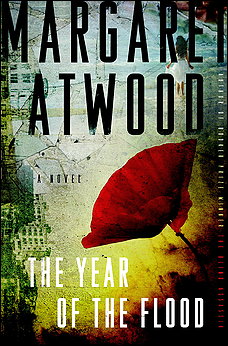
The heroes of Atwood’s The Year of the Flood are not, for the most part, from the corporate-controlled compounds that keep the rest of the world at bay. There’s Toby, the orphan who grows up tough yet learns the healing arts. There’s Ren, a young girl trying to find her identity wherever she can. There’s their would-be spiritual guide, Adam One, and his lieutenant/rival Zeb. They are outsiders, members of an eco-cult called The Gardeners who worship saints like Rachel Carson, Ernest Shackleton, and Sojourner Truth. Flood is the sprawling companion to Atwood’s 2003 novel, Oryx and Crake, which I enjoyed very much. Both take place in a world where the “Waterless Flood,” a SARS/mega-flu type virus brought about via genetic tinkering, has turned most people into zombie-goo. I could go and on about the world Atwood shapes here, one full of genetic modification, eco-terrorism, religious fervor, and radical disparity, but other folks have already done it. So, in the grand tradition of internet laziness, I point you to excellent reviews here and here, which do a better job explicating the plot than I’m willing to do now (and it was an audiobook, remember, so I don’t exactly have it in front of me. Mea culpa). Apocalypse lit isn’t so much predictive as it is descriptive of the contemporary world, and Atwood’s dystopian vision is no exception. Viscerally prescient, Flood paints our own society in bold, vibrant colors, magnifying the strange relationships with nature, religion, and our fellow humans that modernity prescribes. Atwood ends her book in media res, with Toby and a handful of other characters somehow still alive, ready, perhaps, to become stewards of a new world. Flood concludes tense and, in a sense, unresolved, but Atwood implies hope: Toby will lead her small group to cultivate a new Eden. Despite all the ugliness and cruelty and devastation, people can be redeemed. The audiobook rendition of The Year of the Flood is very good, employing three actors to play the three principal roles, Ren, Toby, and Adam One. There are also terribly cheesy full-band versions of the hippy-dippy songs the Gardeners like to sing on certain Saint Days that are witty as parody but ultimately distracting. Atwood’s prose sometimes relies on placeholders and stock expressions common to sci-fi and YA fiction, and her complex plot (disappointingly) devolves to a simple adventure story in the end, but her ideas and insights into what our society might look like in a few decades are compelling reading (or, uh, listening in this case). Recommended.

The doctors, specialists, sailors, and patients of the titular vessel in Martin Bax’s The Hospital Ship are afloat in their own greenzone of sorts, a moving compound that seeks to treat the troubled world. What’s the trouble with the world? No one’s sure, exactly–there’s permanent all-out-war, of course, famine perhaps, insanity for sure. There’s also a bizarre army of bureaucrats going from continent to continent crucifying men and raping women for no clear reason. The ship’s psychiatrists diagnose it “The Crucifixion Disease.” Euan, Bax’s erstwhile lead, tries to figure out how to love and how to heal in the middle of hate and extinction. Aided by the eccentric, Falstaffian Dr. Maximov Flint, Euan conducts an experimental therapy between a Moi prostitute named V and a suicidal Wall Street broker named W. He also finds a lover and partner in an American girl named Sheila. About half of The Hospital Ship comprises citations from a variety of non-fiction texts, including medical textbooks, psychiatric studies, sociology texts, travelogues, war diaries, and more. The technique is bizarre and jarring, and Bax often imitates the style of such texts, most of which linger on sex or death. There’s also an obsession with the Vietnam War, which makes sense as the book was published in 1976. There’s a lovey-hippie type vibe to the hospital ship’s personnel, and like Atwood with her Gardeners, Bax is satirical and loving to his heroes at the same time. He mocks some of the silly idealism of the movement even as he finds solace in their vision of love and healing in an apocalyptic world. Bax’s book is wholly weird, disconnected, lurching and farcical, a madcap dystopian Love Boat on peyote. I spotted it at my favorite used bookstore, intrigued first by the (now retro-)futurist font, then the name, echoing Chris Adrian’s The Children’s Hospital, another book about a hospital-as-ark. If the black-and-white collage cover art didn’t seal the deal, then the blurb from J.G. Ballard comparing Bax favorably to William Burroughs did. Burroughs is an appropriate reference point, with the sexual alienation and the medical flavor and the cut-up technique and all, but Bax’s writing is utterly Ballardian (he even directly cites Ballard among other authors–like, you know APA style in-text citations). The Hospital Ship is a cult novel which might not have a big enough cult. It definitely belongs in print again; until then, pick up a copy if you can find one.

Infinite Infanticide (Aldous Huxley’s Ape and Essence)

A few weeks ago, I saw (and loved) Children of Men, and it reminded me of one of my favorite books of all time, Ape and Essence by Alduous Huxley.

Ape and Essence

If you’ve only read one book by Huxley, chances are it was Brave New World, an incredibly prescient novel that really “got it right” so to speak–especially when compared to George Orwell’s vision of a dystopian future, 1984. In 1984, Orwell assumes that a totalitarian regime will hide and distort information from a suppressed public, that a Big Brother will watch our every move. Huxley’s BNW posits a future where the public could care less about information at all, a public that willingly cedes an antiquated ideal of “privacy.” In 1984, books are banned; in BNW no one wants to read (and who would want to read when a trip to the feelies provides a total synesthetic experience?)
But where was I…

So. Yes. Hmmm. Ape and Essence. This is a fantastic book, thoroughly entertaining–blackly sardonic, acidic and biting, yet funny and moving, full of pathos and dread and the possibility of loss, extinction, the end of beauty. I have forced this book on just about everyone I know, to the point that it is now Duck-taped together. Ape and Essence is a frame tale of sorts: it begins (significantly, on the day of Gandhi’s assassination) with two Hollywood types discovering the screenplay for an unmade movie called Ape and Essence. Intrigued by the strange story, the two head out to the desert to meet the writer, only to find that he’s recently died. The surreal and imagistic screenplay is then presented uncut as the remainder of the book. Ape and Essence presents an illiterate, post-apocalyptic world where grave-robbing is the primary profession. The hero of the story is one Dr. Poole, a scientist from New Zealand (New Zealand was isolated enough to resist nuclear holocaust) who arrives with a team of scientists to the West Coast of America. Poole is quickly separated from the other scientists and forced into slave labor, excavating graves. He finds a world where people worship the satanic god Belial, who they believe, in his anger, is responsible for the high numbers of genetically deformed children. These children are ritualistically slaughtered in purification rites that frame the social discourse of this New America. Additionally, procreation is proscribed to a two week ritual-orgy; other than this fortnight of lust and blood, sex and love are completely forbidden. The rest of the book details Poole’s infatuation with a woman named Loola, and their plan to escape to a rumored colony of “hots,” outsiders who don’t accept Belial and orgies and book burning and so on.


bosch-trittico-carro-fieno-3-inferno-2-bassa_jpg.jpg

Like Children of Men, Ape and Essence presents infanticide as the ultimate negation of progress. In both stories, people are both root and agent of their own destruction. But playing against this self-destructive death drive is the drive for life, for beauty, for sex. Neither story is willing–or able, perhaps–to make a definitive statement on which drive will prevail. Both stories resist “happy endings,” or can only be said to have “happy” endings in the simplest of senses. Ultimately, the endings are inconclusive, unsure, tentative at best. Will the human race die out? Are simple gestures of human fellowship, of poetry, of love, are these enough to conquer the infinite infanticide recapitulated within the narrative framework? We leave the theater feeling some hope, we close the book praying (to who?) that the characters will make it to a (never) Promised Land, but somewhere in the margins of our consciousness lurks the possibility of extinction–the predicate of loss that drives any story worth telling.

Nursing Gorilla