“Were he my brother, why then I’d have murdered poor Werther” (Goethe)

Ask whomever you will but you’ll never find out where I’m lodging,

High society’s lords, ladies so groomed and refined.

“Tell me, was Werther authentic? Did all of that happen in real life?”

“Lotte, oh where did she live, Werther’s only true love?”

How many times have I cursed those frivolous pages that broadcast

Out among all mankind passions I felt in my youth!

Were he my brother, why then I’d have murdered poor Werther.

Yet his despondent ghost couldn’t have sought worse revenge.

That’s the way “Marlborough,” the ditty, follows the Englishman’s travels

Down to Livorno from France, thence from Livorno to Rome,

All of the way into Naples and then, should he flee on to Madras,

“Marlborough” will surely be there, “Marlborough” sung in the port.

Happily now I’ve escaped, and my mistress knows Werther and Lotte

Not a whit better than who might be this man in her bed:

That he’s a foreigner, footloose and lusty, is all she could tell you,

Who beyond mountains and snow, dwelt in a house made of wood.

From Section I of Goethe’s Erotica Romana.

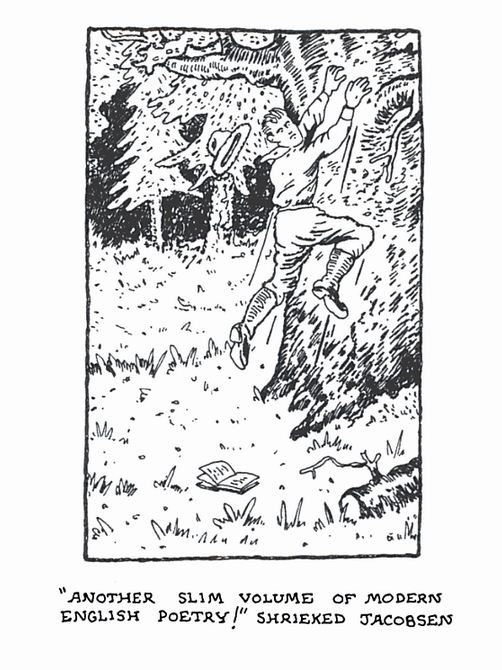
Glen Baxter Comic

Sebald’s After Nature (Book Acquired, 9.21.2012)

20120930-142202.jpg

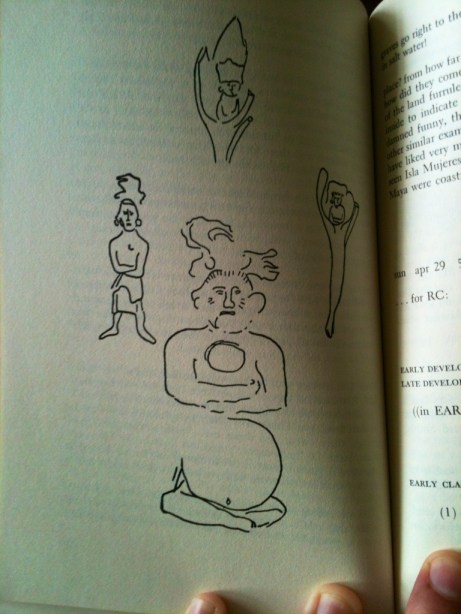
W.G. Sebald’s poetry collection After Nature. Not really poetry. Or maybe it is poetry. I don’t know what poetry is.

Tests and Composition Exercises for Young Writers — Ezra Pound

“Little Is Known of the Life of Matthias Grünewald of Aschaffenburg” — W.G. Sebald

Little is known of the life of

Matthias Grünewald of Aschaffenburg.

The first account of the painter

In Joachim von Sandrart’s German Academy

of the year 1675 begins with the notice

that the author knows not one person living

who could provide a written or oral

testimony of that praiseworthy hand.

We may trust the report by Sandrart,

for a portrait in Würzburg museum

has preserved him, aged eighty-two,

wide awake and with eyes uncommonly clear.

Lightly in grey and black,

he writes, Mattheus had painted the outer

wings of an altarpiece made by Dürer

of Mary’s ascension in the

Preachers’ convent in Frankfurt and

thus had lived at around 1505.

Exceedingly strange was the transfiguration

of Christ on Mount Tabor

limned in watercolours, especially

one cloud of wondrous beauty, wherein

above the Apostles convulsed

with awe, Moses and Elijah appear,

a marvel surpassed.

Then in the Mainz cathedral

there had been three altar panels

with facing fronts and reverse

sides painted, one of them

showing a blind hermit who, as he crosses

the frozen Rhine river with a boy

to guide him, is assaulted by two murderers

and beaten to death. Anno 1631 or ’32,

this panel in the wild war of that era

had been taken away and sent off to Sweden

but by shipwreck beside many other

such pieces of art had perished

in the depths of the sea.

At Isenheim, Sandrart had not been,

but had heard of the altar-work there,

which, he writes, was so fashioned that

real life could scarce have been other

and where, it was said, a St. Anthony with

demons meticulously drawn was to be seen.

Except for a St. John with hands clasped

of which he, Sandrart, when at one time in Rome

he was counterfeiting the pope, had caught sight,

with certainty this was all that was not lost

of the work of Aschaffenburg

painter of whom, besides, he knew only

that most of the time he had

resided in Mainz, led a reclusive

melancholy life and been ill-married.

—W.G. Sebald. Chapter II of “…As Snow on the Alps.” From After Nature.
Bukowski: Born Into This (Full Film)

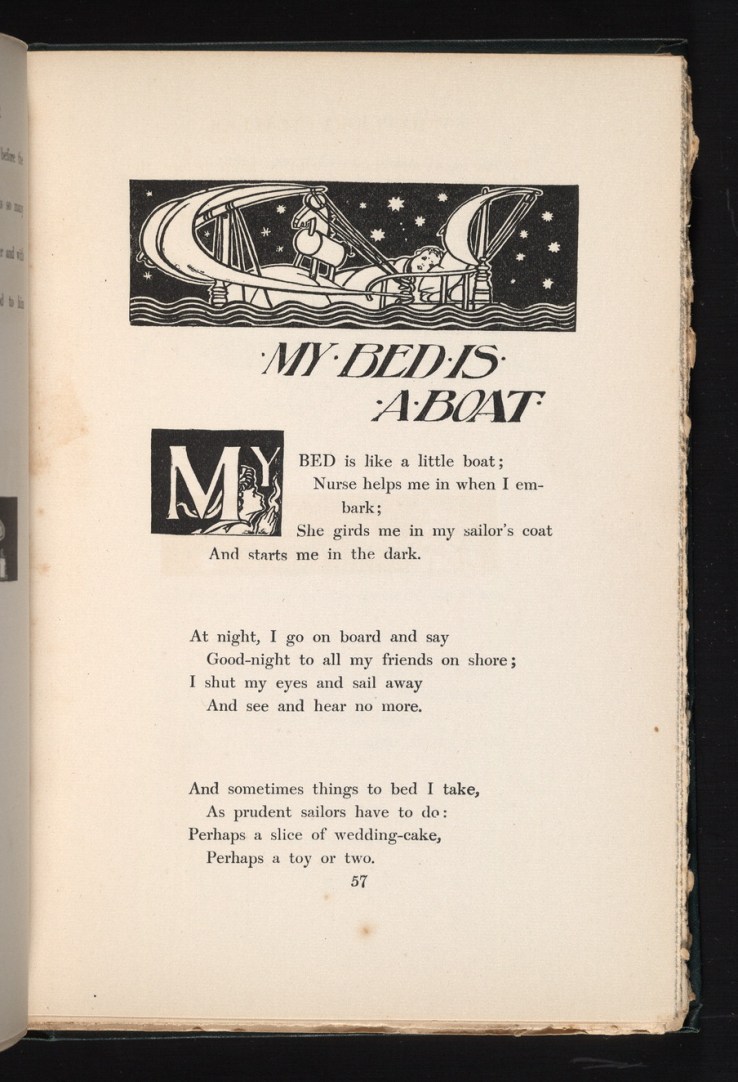
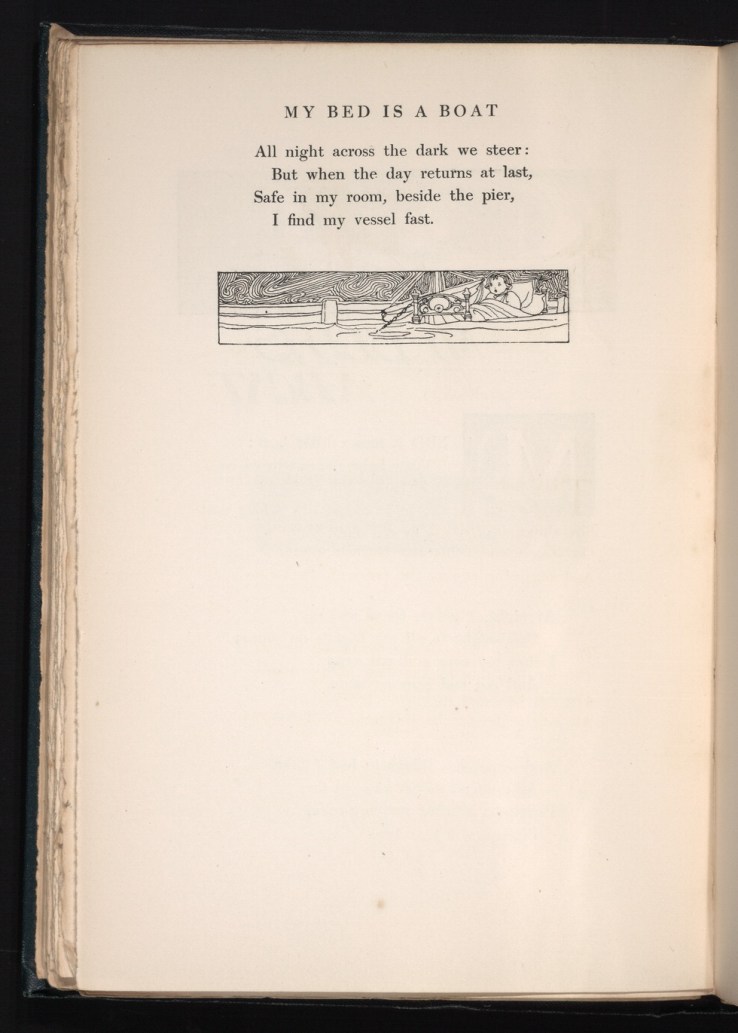
“My Bed Is a Boat” — Robert Louis Stevenson

Charles Olson/Conrad Aiken (Books Acquired, 6.09.2012)

20120611-143045.jpg

Charles Olson’s Selected Writing (New Directions): In all seriousness, why don’t more publishers go for simple covers like this one? Love it.

A scribbling:

20120611-143050.jpg

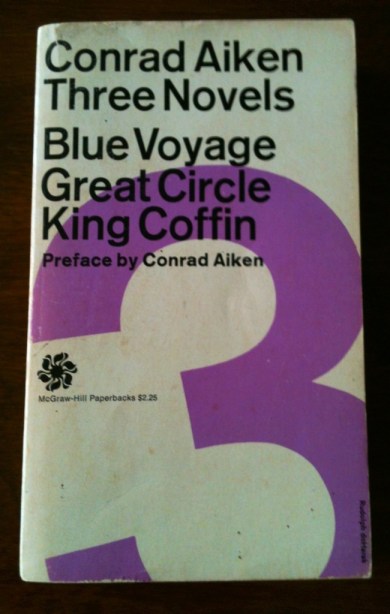
Also, had to pick up something by Conrad Aiken after reading about his influence on Malcolm Lowry:

20120611-143056.jpg

“Give me half a bottle. Justice reigns” — Charles Olson in The Paris Review

Charles Olson’s interview with The Paris Review is one of the best things I’ve read in ages. Here’s a nice big chunk from the beginning:

CHARLES OLSON

Get a free chair and sit down. Don’t worry about anything. Especially this. We’re living beings and forming a society; we’re creating a total, social future. Don’t worry about it. The kitchen’s reasonably orderly. I crawled out of bed as sick as I was and threw a rug out the window.

INTERVIEWER

Now the first question I wanted to ask you. What fills your day?

OLSON

Nothing. But nothing, literally, except my friends.

INTERVIEWER

These are very straight questions.

OLSON

Ah, that’s what interviews are made of.

INTERVIEWER

Why have you chosen poetry as a medium of artistic creation?

OLSON

I think I made a hell of a mistake. That’s the first confidence I have. The other is that—I didn’t really have anything else to do. I mean I didn’t even have enough imagination to think of something else. I was supposed to go to Holy Cross because I wanted to play baseball. I did, too. That’s the only reason I wanted to go to Holy Cross. It had nothing to do with being a priest.

INTERVIEWER

Are you able to write poetry while remaining in the usual conditions of life—without renouncing or giving up anything?

OLSON

That’s the trouble. That’s what I’ve done. What I’ve caused and lost. That describes it perfectly. I’ve absolutely.

INTERVIEWER

Are the conditions of life at the beginning of a work . . .

OLSON

I’m afraid as well at the end. It’s like being sunk in a cockpit. I read the most beautiful story about how Will Rogers and Wiley Post were lost; they stomped onto a lake about ten miles from Anchorage, Alaska, to ask an Indian if Anchorage was in that direction and when they took off, they plunged back into the lake. The poor boy was not near enough to rescue them, so he ran ten miles to Anchorage to get the people to come out. He said one of the men had a sort of a cloth on his eye and the guy then knew Post and Rogers were lost. Wiley Post put down on pontoons; so he must have come up off this freshwater lake and went poomp. Isn’t that one of those great national treasures. I’ll deal you cards, man. I’ll make you a tarot.

INTERVIEWER

Does poetry constitute the aim of your existence?

OLSON

Of course I don’t live for poetry; I live far more than anybody else does. And forever and why not. Because it is the only thing. But what do you do meanwhile? So what do you do with the rest of the time? That’s all. I said I promised to witness. But I mean I can’t always.

INTERVIEWER

Would you say that the more you understand what you are doing in your writing, the greater the results?

OLSON

Well, it’s just one of those things that you’re absolutely so bitterly uninterested in that you can’t even live. Somehow it is so interesting that you can’t imagine. It is nothing, but it breaks your heart. That’s all. It doesn’t mean a thing. Do you remember the eagle? Farmer Jones gets higher and higher and he is held in one of the eagle’s claws and he says you wouldn’t shit me would you? That’s one of the greatest moments in American poetry. In fact, it is the great moment in American poetry. What a blessing we got.

INTERVIEWER

Does Ezra Pound’s teaching bear any relevance to how your poems are formed on the page?

OLSON

My masters are pretty pertinent. Don’t cheat your own balloon. I mean—literally—like a trip around the moon—the Jules Verne—I read that trip . . . it is so completely applicable today. They don’t have any improvements yet.

INTERVIEWER

Do you write by hand or directly on the typewriter? Does either method indicate a specific way in which the poem falls on the page?

OLSON

Yeah. Robert Duncan is the first man to ask me the query. He discovered when he first came to see me that I wrote on the machine and never bothered to correct. There’s the stuff. Give me half a bottle. Justice reigns.

“Blind, loving, wrestling touch! sheath’d, hooded, sharp-tooth’d touch!” — Walt Whitman

Blind, loving, wrestling touch! sheath’d, hooded, sharp-tooth’d touch!
Did it make you ache so, leaving me?

Parting, track’d by arriving—perpetual payment of perpetual loan;
Rich, showering rain, and recompense richer afterward.

Sprouts take and accumulate—stand by the curb prolific and vital:
Landscapes, projected, masculine, full-sized and golden

Section 29 of Walt Whitman’s Song of Myself.

Anne Sexton Reads “Wanting to Die”

Portrait of William Butler Yeats by His Father John Butler Yeats

“cruelty. don’t talk to me about cruelty” — Lucille Clifton

A poem by Lucille Clifton—

cruelty. don’t talk to me about cruelty
or what i am capable of.

when i wanted the roaches dead i wanted them dead
and i killed them. i took a broom to their country

and smashed and sliced without warning
without stopping and i smiled all the time i was doing it.

it was a holocaust of roaches, bodies,
parts of bodies, red all over the ground.

i didn’t ask their names.
they had no names worth knowing.

now i watch myself whenever i enter a room.
i never know what i might do.

“to sex brawl and dare” — A Poem from Surrealist Ghérasim Luca

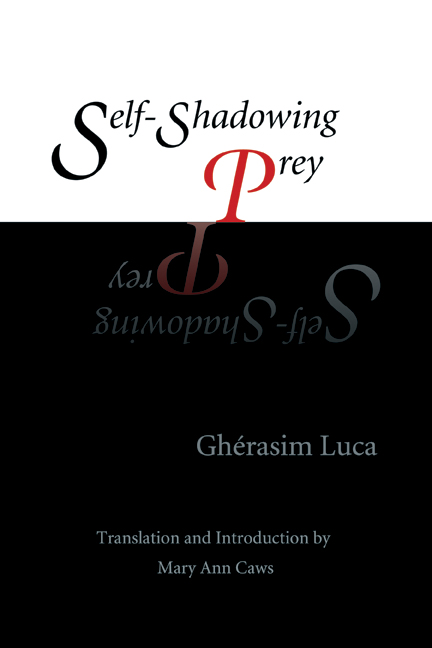
The good people at Contra Mundum Press are putting out the first English language translation of Romanian surrealist Ghérasim Luca’s Self-Shadowing Prey. Mary Ann Caws translates. Here’s the first poem in the book:

at the edge of a forest

whose trees are slender ideas

and each leaf a thought at bay

the vegetal reveals to us

the damned depths of an animal sect

or more precisely

an old insect anguish

waking up as man

the only way

the only basic weapon

to animate a mental state

that I hurry to write mantil

like a mantis

if only to mark

with a dry warning laugh

the devouring word

Entity and antithesis of the bush

a sort of wild and organic brush

grows in the head of that man

ravaged

by the heresy of parks and greenhouses

like the orgasm of a key

a lovely door

So the legendary passivity

the famous and ample passivity of plants

changes here to idle hate

to mad rage

to sex brawl and dare

luring by sap blood lava . . .

as rapid as the passage of woman

to beast

she empties us of a foul ancestral

wound

which in a spurt relieves us

of these fixed plaints

and these false death rattles plumbing us

our calm gestures of the interred

Now only terror

is still able to insert

in the tropism of body and of guilty

spirit

this prism as doubled echo

where brains and senses capture

the violent innocence

of a flora and a fauna

whose marriage is a long seizure

and a rape as slow as gold

in the implacable lead

And it’s around the mental equator

in the space delimited by the tropics

of a head

at the angle of the eye and what surrounds it

that the myth of a kind of utopian

jungle surges into the world

As virgin as the unknowable

or the other “face” of the moon

and never in the reach of a gun

or an axe

its prey is the snow

sand ball hip if not the trap

that the diffuse breath of a dream

lights up

For tangled

soldered to massive corkscrew keys

the vines

the branches stoves and rituals

fuse

around the forms placed

as if by miracle

at the crossroads of dryads

of druids and of man

So many points to aim at

all these yes and nos that

outside outside of time

of space and weight

select a sort of coupled oasis

and hamlet

to descend in these gods

from before the ages

the gods-place-beast-island-ash-fire

come forth as from the coupling of bird

and branch

and those exiled from the center

and from the shade of a golden foliage

will adore one day

between the walls of their somber cities

“The Land of Nod” — An Illustrated Poem by Robert Louis Stevens

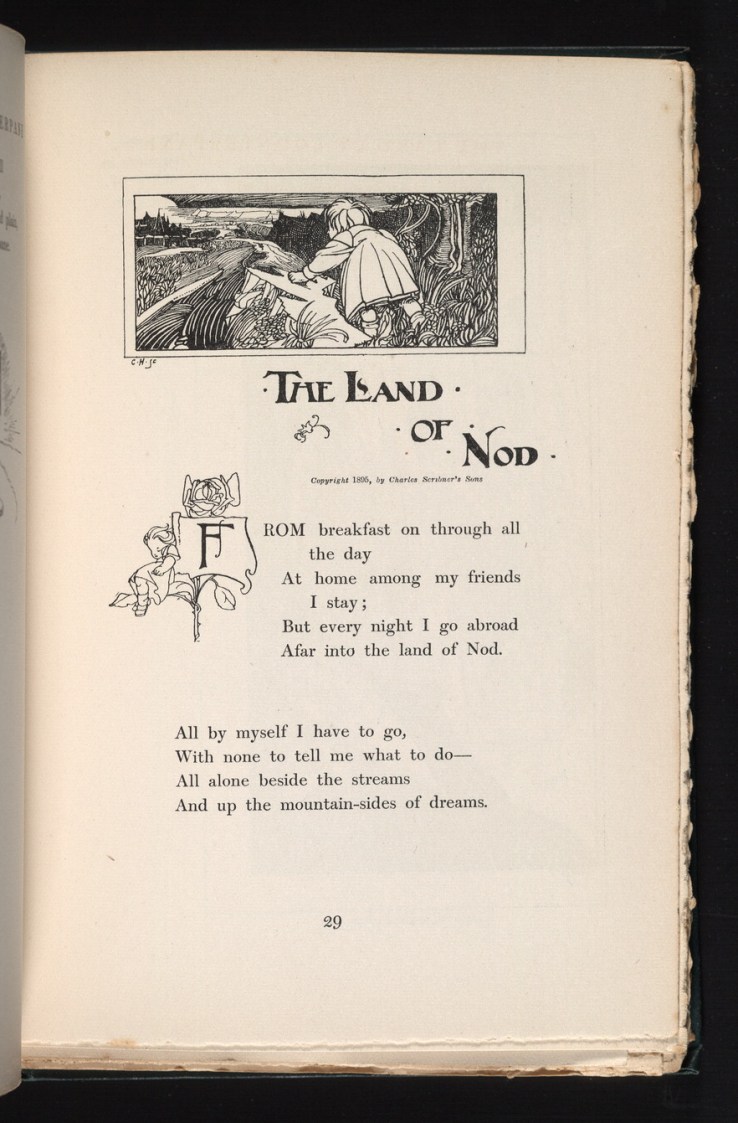
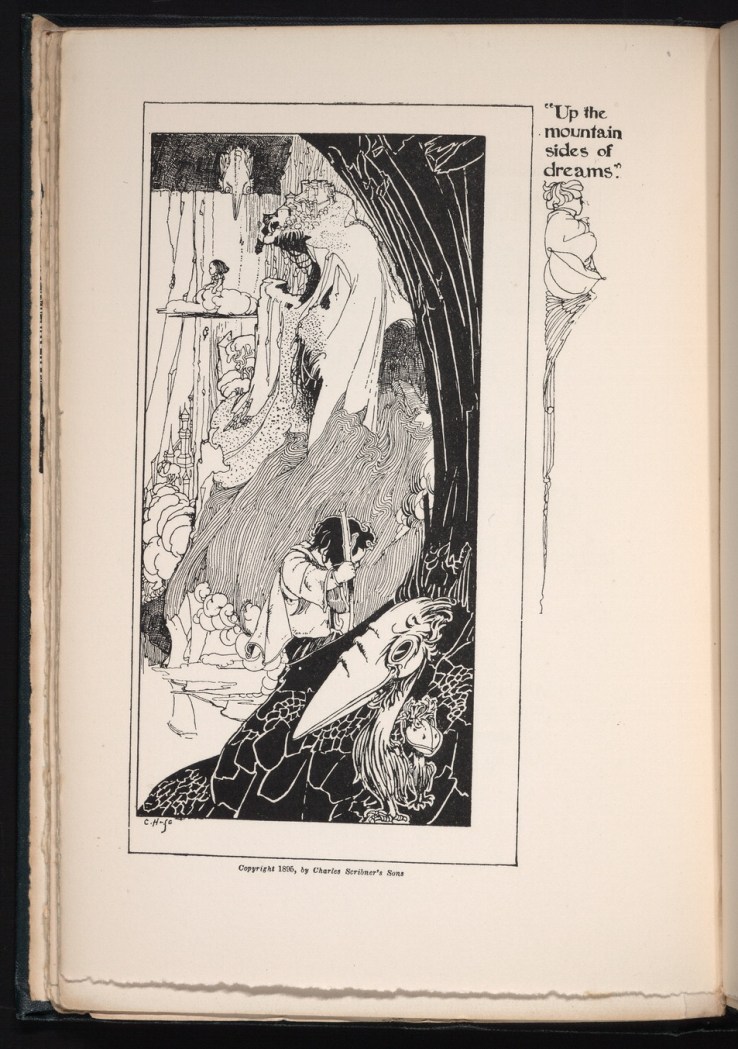
(From A Child’s Garden of Verses by Robert Louis Stevenson; illustrated by Charles Robinson, 1895. Via the LOC’s rare books collection.)

Ezra Pound Shares Poetry Tips from Hardy, Yeats, Ford, and Bridges

Ezra Pound’s poetry tips; from The Paris Review interview:

INTERVIEWER

You once wrote that you had four useful hints from living literary predecessors, who were Thomas Hardy, William Butler Yeats, Ford Madox Ford, and Robert Bridges. What were these hints?

POUND

Bridges’s was the simplest. Bridges’s was a warning against homophones. Hardy’s was the degree to which he would concentrate on the subject matter, not on the manner. Ford’s in general was the freshness of language. And Yeats you say was the fourth? Well, Yeats by 1908 had written simple lyrics in which there were no departures from the natural order of words.

Handwritten Draft of Auden’s “Musée des Beaux Arts”

(Via the Library of Congress).