Hotel Iris — Yoko Ogawa

Seventeen-year-old Mari, the narrator and subject of Yoko Ogawa’s new novel Hotel Iris, is something of a Cinderella figure. Her dad dies a violent death when she is only eight years old and her grandparents soon pass on as well, leaving her in the sole custody of her money-grubbing mother who works poor Mari like a slave in the upkeep of their shabby hotel. The titular Iris is a crumbling structure with only one seaside view, frequented in the off-season by prostitutes and only bustling in the sweltering summer months. It’s in the off-season when Mari first spies the transformative figure in her life–a man fifty years her senior who gets into a raucous fight with a hooker in the hotel. Transfixed by his commanding voice, Mari follows the man the next day as he performs banal errands. When he confronts her, the two strike up a strange friendship (very strange, it will turn out). The man lives on a small island where he works translating mundane Russian texts like tourist pamphlets–although he is hard at work at a passion project, translating a strange Russian novel. The translator begins writing Mari letters and she eventually sneaks away to meet him. In the seaside town he treats her with quiet deference, but when Mari visits his small, austere home on the island she undergoes a bizarre, sadistic sexual awakening. To continue a proper review of Hotel Iris will necessitate some mild spoilers. I won’t reveal any major plot points, but those intrigued may wish to stop reading here. Otherwise, on to the aforementioned bizarre, sadistic sexual awakening.

It’s pretty simple, really. The translator, a sexual sadist, has found in Mari a perfect masochist, a young girl so alienated and lonely that she can only find pleasure in extreme pain, beauty in brutal ugliness, and freedom in bondage. Her initial attraction to the translator, his commanding voice, goes to extremes in his isolated house on the island, where he strips her naked, ties her up, and forces her into all sorts of sexual humiliations. In a strange mirror of her Cinderella-life at Hotel Iris, he forces her to clean his house while strapped to a chair. He takes thousands of degrading photographs of her. In a scene reminiscent of “Bluebeard” he hangs her from the ceiling of a tiny pantry and whips her with a riding crop. He never engages in direct coitus with her; in fact, he never even removes the suit and tie he wears even in the sweltering summer. In each scenario Mari expresses the true happiness and pleasure she finds in the translator’s torture. “Only when I was brutalized, reduced to a sack of flesh, could I know pure pleasure,” she tells us.

That young, naïve Mari should narrate the novel is the genius of Ogawa’s program. Her first-person immediacy communicates the confusion and despair of a neglected, overworked teen trapped in a dead-end job in a Podunk town. As the plot spirals it tempts the reader to endorse the “love” that Mari feels for the old man who tortures her. Just as Nabokov manipulates his readers via the charms of Humbert Humbert, Ogawa, writing her reverse-Lolita, repeatedly cons us into normalizing the relationship, in viewing it only from Mari’s perspective. It’s through the slipped, oblique details of Mari’s past that we construct a more coherent image of a long pattern of abuse. Her mother, always bragging about Mari’s beauty, tells the story of a sculptor who used Mari as a model (Mari, of course, believes herself ugly). “The sculptor was a pedophile who nearly raped me.” The only maid in the hotel repeatedly claims to be “like a mother” to Mari, yet she attempts to blackmail and humiliate the poor girl, and even tells her that she was Mari’s father’s “first lover.” Late in the novel, a drunken hotel guest gropes Mari’s breast and her mother brushes the abuse off, blaming implicitly on her daughter. The focused, purposeful sadism of the translator–a result of the man’s own painful past–is thus a form of love for Mari. Yet we see what Mari can’t see, even as we accept the savage doom of their romance.

Hotel Iris recalls the dread creepiness of David Lynch, as well as that director’s subversion of fairy tale structures (perhaps “subversion” is not the right word–aren’t fairy tales by nature subversive?). There are also obvious parallels between Mari’s story and The Story of O and Peter Greenaway’s fantastic film The Cook, the Thief, His Wife, & Her Lover. But these are perhaps lazy comparisons–I should talk about Ogawa’s deft writing, her supple, slippy sentences, her sharpness of details, the exquisite ugliness of her depictions of sex and eating. She’s a very good writer, and translator Stephen Snyder has done a marvelous job rendering Ogawa’s Japanese into smooth, rhythmic sentences that resist idiomatic placeholders. Hotel Iris is not for everyone, but if you’ve read this far you’ve probably figured that out already. Readers who venture into Ogawa’s dark world will find themselves rewarded with a complex text that warrants close re-reading. Recommended.

Hotel Iris, a Picador trade paperback original, is available today.

Rabbits — David Lynch

Happy Easter!

Continue reading “Rabbits — David Lynch”

Hoax, Italian Style

In this week’s issue of The New Yorker Judith Thurman reports on the literary hoaxes of Tommaso Debenedetti, an Italian “journalist” who has apparently fabricated dozens of interviews with famous authors in the paper Il Piccolo. Authors–so far–include Philip Roth, John Grisham, Gunter Grass, Toni Morrison, Herta Müller, Nadine Gordimer (Thurman is continuing to investigate Debedenetti’s archival interviews).

Thurman contacted Debenedetti, who denied that he faked the interviews. From the article:

Debenedetti said he was completely “shocked and saddened” that all these writers would have denied the veracity of his reporting. When I asked him about the interviews with Roth and Grisham, he flatly denied having invented them, and told me that Roth and Grisham were lying for “political” reasons—because their views on Obama would make them unpopular with left-leaning intellectuals. Roth, he added, might have decided that it was impolitic to express hostility toward Obama because it might spoil his chances for the Nobel.

I then read the list of other writers who had denied or questioned his conversations with them. In every case, Debenedetti asserted that he had invented nothing. When I asked if he could produce any recordings or notes from his interviews, he laughed and, admitting that it sounded like a “tired” excuse, told me that he had lost the tapes in some cases, and in others had “thrown them away.”

April Fools: Seven Literary Hoaxes

J.T. LeRoy, James Frey, Herman Rosenblat, Margaret Seltzer . . . recent years have seen an explosion of memoirists lying, faking, or otherwise hoaxing the public–but this is hardly anything new. In honor of April Fool’s Day we present seven April Fools.

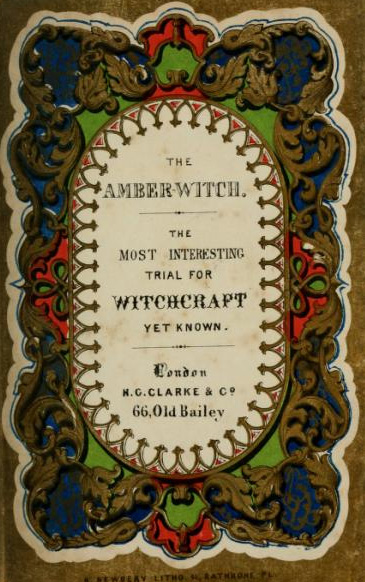
The Amber Witch — Johannes Wilhelm Meinhold (1844)

Meinhold pretended that The Amber Witch was the true story of a seventeenth-century minister’s daughter falsely accused of witchcraft. Meinhold claimed he found the minister’s manuscript in the refuse of an old church. When the book received critical attention, Meinhold admitted to the hoax, but audiences didn’t believe him at first.

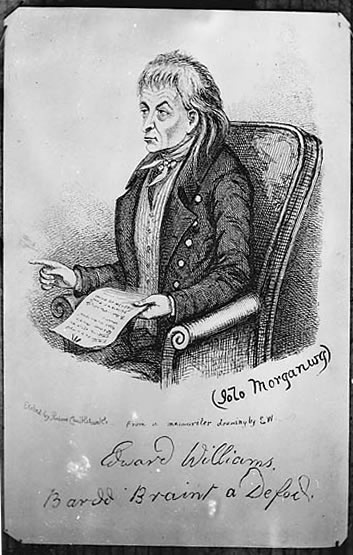
“Geraint the Blue Bard” aka Iolo Morganwg aka Edward Williams (1747-1826)

Welshman Edward Williams was widely considered a leading antiquarian and expert on the antiquities of the British Isles. After his death, however, many of his manuscripts were revealed to have been forgeries, including those produced by “Geraint the Blue Bard,” supposedly a ninth-century composer. Oh well.

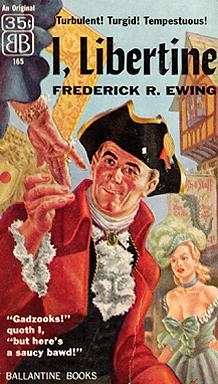
I, Libertine — Frederick R. Ewing  (1956)

Proto-shock jock Jean “Shep” Shepherd perpetrated I, Libertine as a purposeful hoax. He told his radio audience to demand the (non-existent) book by the (non-existent) author “Frederick R. Ewing” from their local booksellers, and even fabricated a basic plot for listeners to in turn relate (he even included the salacious detail that the book had been banned in Boston). Publisher Ballantine hired sci-fi scribe Theodore Sturgeon to write the book from Shepherd’s outline, and the book was published very soon after. All proceeds went to charity.

Naked Came the Stranger — Penelope Ashe (1969)

To prove that American culture was smutty and degraded, Newsday columnist Mike McGrady enlisted 24 of his fellow writers to write a smutty and degraded novel that they believed would top the bestseller list in spite of its lack of literary value. By the time “Penelope Ashe” had put out Naked Came the Stranger, the hoax had linked, and it was unclear if this is what led to the book actually topping the New York Times bestseller list (for one slim week). The book later became the basis of a porno film.

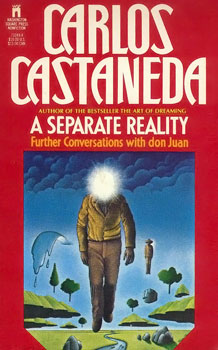
A Separate Reality — Carlos Castaneda (1971)

The debate around Castaneda’s series of “memoirs” in some ways gets to the heart of the problems of truth and invention, facts and authenticity, experience and memory. Castaneda claimed that he trained under Don Juan Matus, a Yaqui Indian sorcerer. Part of that training included taking massive amounts of psychotropic drugs like peyote as a means to “see” the energy of the universe. Don Juan Matus’s actual existence is questionable at best, but hey, when you’re doing large quantities of peyote, who knows what, like, truth is, man.

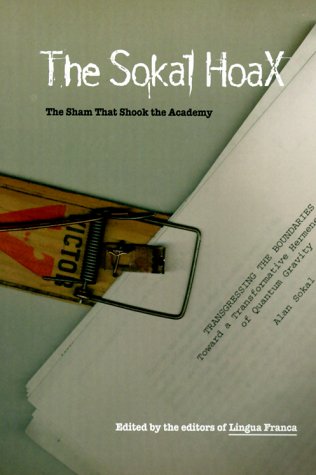
“Transgressing the Boundaries: Towards a Transformative Hermeneutics of Quantum Gravity”– Alan Sokal (1996)

Disgusted with a perceived slackness and ineptitude in modern academia, Dr. Alan Sokal published a paper full of nonsensical gibberish in Duke University’s cultural studies journal Social Text. The same day the essay was published, he announced the hoax in the journal Lingua Franca. Ouch. Biblioklept wrote a post about the incident a few years ago, if you’re interested.

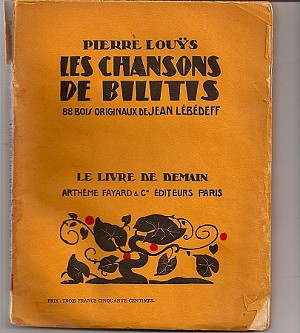
The Songs of Bilitis Pierre Louÿs (1894)

Louÿs claimed that the erotic poems he fabricated were the work of “Bilitis,” one of Sappho’s lovers; he even invented a biography of the woman, citing a fictional archaeologist named Herr G. Heim with discovering her tomb. (“Herr G. Heim” translates roughly to “Lord S. Ecret”). Despite the hoax, many critics consider it a work of literary merit, and it’s become something of a cult book among queer theory enthusiasts.

“Two Views of a Cadaver Room” — Sylvia Plath

(1)
The day she visited the dissecting room
They had four men laid out, black as burnt turkey,
Already half unstrung. A vinegary fume
Of the death vats clung to them;
The white-smocked boys started working.
The head of his cadaver had caved in,
And she could scarcely make out anything In that rubble of skull plates and old leather.
A sallow piece of string held it together. In their jars the snail-nosed babies moon and glow.
He hands her the cut-out heart like a cracked heirloom.
(2)
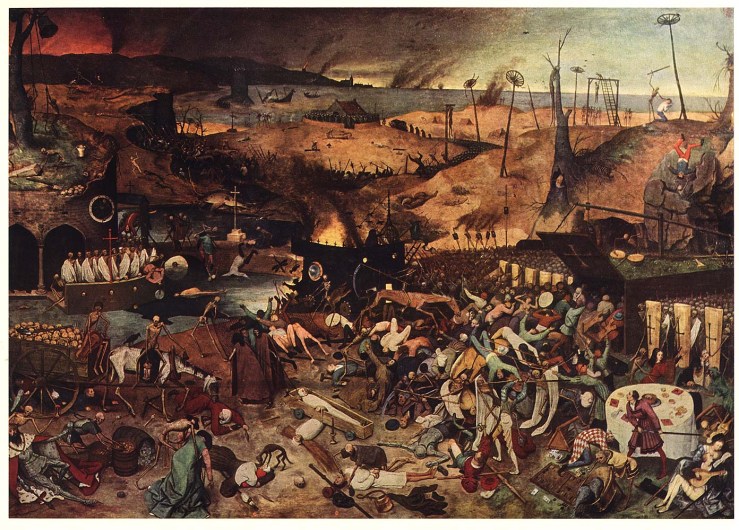
In Brueghel’s panorama of smoke and slaughter
Two people only are blind to the carrion army:
He, afloat in the sea of her blue satin
Skirts, sings in the direction Of her bare shoulder, while she bends,
Finger a leaflet of music, over him, Both of them deaf to the fiddle in the hands
Of the death’s-head shadowing their song.
These Flemish lovers flourish; not for long.
Yet desolation, stalled in paint, spares the little country
Foolish, delicate, in the lower right hand corner.

Size Matters

I went to my favorite local bookstore this afternoon and for reasons beyond me I was compelled to pick up Jonathan Littell’s divisive 2009 novel The Kindly Ones, a massive tome running to almost 1000 pages in its trade paperback edition. Okay. The reasons I bought it are not completely beyond me: they mostly stem from Paul La Farge’s essay “A Scanner Darkly,” published in the May, 2009 issue of The Believer. Previous Believer feature essays have led to me picking up excellent books by writers I’d never heard of, including 2666 and The Rings of Saturn. Anyway, the book is massive, and I don’t really have time to read it any time soon. There is a hobbit-sized stack of review copies lingering by my nightstand, more arriving all the time, not to mention the books I habitually pick up weekly. Which, more often than not, tend to be pretty big like, uh, The Kindly Ones.

Why is this? Why the attraction to big books? In his essay included at the end of Bolaño’s 2666, Ignacio Echevarría cites a passage from the book where literature professor Amalfitano wonders that:

Now even bookish pharmacists are afraid to take on the great, imperfect, torrential works, books that blaze paths into the unknown. They choose the perfect exercises of the great masters. Or what amounts to the same thing: they want to watch the great masters spar, but they have no interest in real combat, when the great masters struggle against something that terrifies us all, that something that cows us and spurs us on, amid blood and mortal wounds and stench.

The “bookish pharmacist” in question has explained that he favors the preciseness of “Bartleby” over Moby-Dick, the polish of The Metamorphosis over The Trial. Amalfitano, Bolaño’s stand-in, points out that it takes “the great, imperfect, torrential works” to “blaze paths into the unknown.” Put another way, the masters need space; space to overflow, make errors, experiment, joust with other masters, play in and with time. Obviously, the passage (as Echevarría and a million other critics have noted) is a defense for the sprawl of 2666 itself, but I think it speaks to why many readers are drawn to the big books. They can be ragged and overflowing but they also have more room to take the measure of spirit, soul, life. They can evoke this world and others. They can be grand.

Not to say that the smaller books can’t do this in turn. Denis Johnson’s Jesus’ Son is masterful in its precision and humor. But Tree of Smoke is the better book. David Foster Wallace’s Infinite Jest trumps everything else the man wrote. White Noise is more manageable than (and perhaps superior to) Underworld, but the bigger book allows Don DeLillo the space he needs to explore so much of American history and American psyche. And these are just contemporary examples. There’s James Joyce and Marcel Proust, Dostoevsky and Tolstoy. Sterne. Cervantes. Supply your own names.

But I also love novellas and those long short stories of strange size like Joyce’s “The Dead” or, yes, “Bartleby” (sidebar: Really, what is “Bartleby”? A long short story? A short novella? What is it?). There’s something pure and refreshing about them, especially when consumed quickly, especially when consumed between a few of those long books. And a confession: I love it when review copies come in that hover around 200 pages, particularly when the novel is the writer’s first or second. There’s a glut, a horrendous, miserable glut, of first-time novelists who feel they must say everything about everything in 380 or 450 or, God forbid, 500+ pages. It’s really too much. I suppose the rule, if there has to be a rule (there doesn’t) is impossibly simple (and perhaps just impossible): if you’re going to write a really, really big book, make sure it’s addictive, compulsive reading. I’m not sure if The Kindly Ones is great art or a potboiler posing as art, but I am pretty certain that its length alone, for whatever reason, is part of its attraction.

Reviews in Brief: All the Living, The Winter Vault, and Jenniemae & James

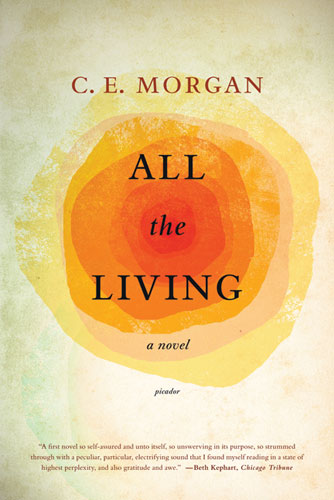
In her debut novel, All the Living, C.E. Morgan tells the story of Aloma, a would-be pianist who forgoes her dreams of artistic freedom to play wifey to her young lover Orren who must take sole responsibility of running the family tobacco farm after his family dies in a car accident. Aloma knows nothing about farming and even less about the grief Orren suffers. She’s an orphan herself, but with no memory of her own parents, she finds it hard to connect to overworked Orren as he slowly slips away. A nearby minister who hires her to play church services paradoxically relieves and exacerbates Almoa’s despair when he enters her life. Morgan’s novel is a slow-burn, often painful, sometimes slow, but also guided by a poetic spirituality that resists easy interpretations. (Oh, and she’ll also make you run for a thesaurus every few pages). All the Living is new in trade paperback from Picador, available now.
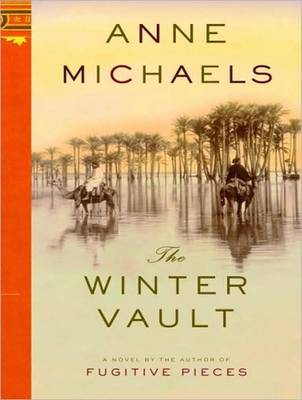
Anne Michaels’s The Winter Vault begins in Egypt, in 1964, where Canadian engineer Avery Escher is part of a team trying to help the Nubians who will be displaced by the Aswan High Dam. He and his wife Jean share a houseboat on the Nile, but what might have been a year of romantic adventure devolves into the tragedy of a culture displaced and a family eroded. The pair separate and return to Canada, where Jean takes up with Lucjan whose stories of Nazi-occupied Warsaw inform the novel’s second half. The Winter Vault is poetically dense and often overly-lyrical, sometimes offering self-important and ponderous dialogues in place of concise plotting. And while Michaels treats the tragedies of the occupied Poles and Nubians with a certain sensitivity, her engagement veers awfully close to what Lee Siegel has termed Nice Writing.The Winter Vault is new in trade paperback from Vintage on April 6, 2010.

Jenniemae & James is Brooke Newman‘s new memoir about her father’s unlikely relationship with the family maid. James Newman was a brilliant mathematician (he coined the term “googol”); Jenniemae Harrington “was an underestimated, underappreciated, extremely overweight woman who was very religious, dirt poor, and illiterate.” Newman wants us to see a unique–and deep–friendship between the pair that defies 1940s/50s norms in Washington D.C., but it’s hard not to think that there’s at least some whitewashing going on here. Undoubtedly the two shared an affinity and connected through a love of numbers, but it’s hard to see more in this than an employer-employee relationship–and one still colored by the politics of the pre-Civil Rights era. Jenniemae, black mammy, sassy, Southern, larger-than-life, quick with folk wisdom and colorful quips–it all seems like a one-sided vision, a take on the Magical Negro trope that resists human complexity. Still, Newman’s tone is sincere, her pacing is swift, and the book reads with the pathos that memoir lovers demand. Jenniemae & James is new in hardback from Harmony/Random House March 30, 2010
Wag’s Revue Issue 5 Out

The newest issue of the stylish and savvy online literary magazine, Wag’s Revue is out new this week. In addition to art, poetry, audio clips, and short fiction, the issue features a really cool essay by Robert Moor about Robert Coover’s groundbreaking hypertext exercise, The Hypertext Hotel. Fittingly, the essay is itself an exercise in ludic hyperlinked indeterminancy. Good stuff.

The Speed and Violence of Our Age

The Delighted States — Adam Thirlwell

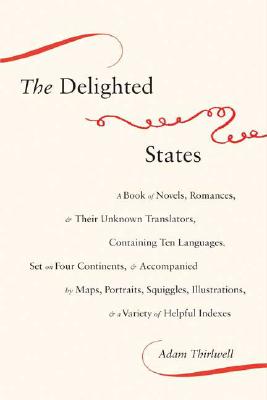
This weekend, I read and thoroughly enjoyed the first volume of Adam Thirlwell’s The Delighted States (new in a handsome trade paperback edition from Picador at the end of this month). The word “volume” seems to imply multiple, discrete editions, but really the term has more to do with Thirlwell’s sense of humor. Like an 18th century novel, The Delighted States comprises chapters, books, and volumes. That playfulness also echoes in the book’s subtitle: “A Book of Novels, Romances, & Their Unknown Translators, Containing Ten Languages, Set on Four Continents, & Accompanied by Maps, Portraits, Squiggles, Illustrations, & a Variety of Helpful Indexes.” Despite the mock-serious tone there, the subtitle is a pretty accurate description of the book. Not that Thirlwell is pompous or long-winded. Rather, he’s the rare literary critic who manages to show authority without being didactic, who balances scholarly insight with playful humor and a willingness not to answer to every little detail.
But what is it about? From Thirlwell: “This book — which I sometimes think of as a novel, an inside-out novel, with novelists as characters — is about the art of the novel. It is also, therefore, about the art of translation.” Thirlwell, a translator himself (the book flips over to his version of Vladimir Nabokov’s short story “Mademoiselle O”) uses translation (of books, of styles, of ideas) to relate a history of the rise of literary modernism. The first volume finds heroes in Gustave Flaubert and his would-be mistress, James Joyce and his French translator, Denis Diderot, Marcel Proust, and Balzac. There’s Gogol and Nabokov, Tolstoy and Borges–not to mention their characters, major and minor. It’s a lot of fun, but even better, it’s the kind of performance to which every literary critic should aspire. It makes you want to read the books you haven’t yet read and re-read the ones you already have.

Thirlwell, like any good avid reader, reads his books (and authors) in dialog with each other, and I can’t help but do the same. The hardback edition was published in 2008, but I can’t help read in Thirlwell’s work a response to David Shields’s new “manifesto” Reality Hunger. Both authors recognize that novelists attempt to represent or even re-enact “reality” in their works (despite Plato’s claim that mimesis was not the business of the poets). However, where Shields for some unclear reason nihilistically argues for the death of the novel, Thirlwell repeatedly demonstrates why a novelist’s depiction of reality is important. Thirlwell realizes that “The more a sign looks as if it’s real, the more it will have to be artificial,” citing Joyce’s interior monologues as an example. “The less artificial a sign is, the less likely it is to be convincing,” Thirlwell writes. Put another way, novels — and by proxy other narrative art forms — must use artifice to achieve reality. Like Shields, Thirlwell cites Joyce’s famous quote — “I am quite content to go down to posterity as a scissors and paste man” — but the effect is far more satisfying in The Delighted States, where it is contextualized evidence used to bolster a point, and not mere solipsistic indulgence. But maybe I’m still holding a grudge against Shields. And maybe it’s not fair to use Thirlwell’s work to rap at his (metaphorical) knuckles. Unlike the sensationalism, negativity, and gimmicks of Reality Hunger, Thirlwell’s argument for the novel is measured, patient, well-researched–and thus far less likely to cause as big a stir. In a single parenthetical aside he reveals more about his critical subjectivity than Shields is ever willing to admit in an entire book: “Good novelists (or, maybe more honestly, the novelists I like) are often not just avant-garde in terms of technique; they are also morally avant-garde as well.” It’s a good thesis on its own, but what’s really wonderfully refreshing is Thirlwell’s honesty about bias in criticism–that “Good novelists” are really “the novelists I like.” Fantastic stuff so far, and I’m itching to read more.

Kakutani (and The Onion) on Sustained, Analytical Reading

In her recent essay “Texts Without Context,” New York Times book critic Michiko Kakutani argues that web two-point-oh innovations have led to a world where–

More people are impatient to cut to the chase, and they’re increasingly willing to take the imperfect but immediately available product over a more thoughtfully analyzed, carefully created one. Instead of reading an entire news article, watching an entire television show or listening to an entire speech, growing numbers of people are happy to jump to the summary, the video clip, the sound bite — never mind if context and nuance are lost in the process; never mind if it’s our emotions, more than our sense of reason, that are engaged; never mind if statements haven’t been properly vetted and sourced.

Kakutani’s piece seems to be prompted by David Shields’s recent “manifesto” Reality Hunger, which she points out is a symptom of “a culture addicted to speed, drowning in data and overstimulated to the point where only sensationalism and willful hyperbole grab people’s attention.” She continues–

Given the constant bombardment of trivia and data that we’re subjected to in today’s mediascape, it’s little wonder that noisy, Manichean arguments tend to get more attention than subtle, policy-heavy ones; that funny, snarky or willfully provocative assertions often gain more traction than earnest, measured ones; and that loud, entertaining or controversial personalities tend to get the most ink and airtime.

Kakutani keenly points out the stakes of such a facile media-land, even as she posits the real good that can come from technologies. In short, we seem to be heading into a future obsessed with immediacy to the point that sustained, analytical reading will not only no longer have place or merit with the general public, it will also be increasingly difficult as we learn to “read” new media in new ways. Put another way, we are becoming shallow.

I see this first-hand every day. I teach Advanced Placement high school English courses, mostly to kids aged 16-18. I’ve noticed that in the past seven years my students are less and less able to sustain concentration on challenging–or even particularly unchallenging pieces of rhetoric or literature in the classroom. My current students are less likely to read for pleasure than the kids I taught at the beginning of the last decade. They have all bought into the fiction of multitasking, the belief that one can frequently interrupt one’s reading of Shakespeare or Henry David Thoreau (or hell, even Stephen King or a Harry Potter book) with a quick text message, or, worse, a change of the channel (I have to literally begin each year by explaining to students that it is basically impossible to read something by a writer like Herman Melville or Cynthia Ozick with one eye on the television screen). You can imagine what how these shallow reading habits affect their research abilities. It’s not just my students though. Nationwide, the NCES reports that almost a third of high school graduates need reading remediation courses in college and that remediation classes are necessary for those students to earn college degrees. It’s pretty much an open secret in education that these numbers are drastically under-reported, with remedial classes often given euphemistic names to hide the appearance of shared institutional/student inadequacies. As Kakutani points out in her article, shallow attention spans, weak readers, and poor research skills could lead to drastic balkanization, cultural inertia, and just plain ole stupidity.

Kakutani’s article points to a future where “the blurring of news and entertainment” is normalized, so what better way to end than with an article from The Onion, published a week before “Texts Without Context.” The headline: “Nation Shudders At Large Block of Uninterrupted Text.” The first paragraphs:

Unable to rest their eyes on a colorful photograph or boldface heading that could be easily skimmed and forgotten about, Americans collectively recoiled Monday when confronted with a solid block of uninterrupted text.

Dumbfounded citizens from Maine to California gazed helplessly at the frightening chunk of print, unsure of what to do next. Without an illustration, chart, or embedded YouTube video to ease them in, millions were frozen in place, terrified by the sight of one long, unbroken string of English words.

“Why won’t it just tell me what it’s about?” said Boston resident Charlyne Thomson, who was bombarded with the overwhelming mass of black text late Monday afternoon. “There are no bullet points, no highlighted parts. I’ve looked everywhere—there’s nothing here but words.”

“Ow,” Thomson added after reading the first and last lines in an attempt to get the gist of whatever the article, review, or possibly recipe was about.

HTMLGIANT’s Kindle Post

Marvelous post from Jimmy Chen at HTMLGIANT.

“A Strange Kind of Vibration” — Chris Andrews on Translating Roberto Bolaño

The Australian is running a new article about one of Roberto Bolaño’s English translators, Chris Andrews. Reporter Bernard Lane reveals that

Andrews had been badgering publishers for translation work. In 2001 he badgered the right publisher, Christopher MacLehose of Harvill Press in London, at the right time. MacLehose had just bought the first English rights to Bolano and his translator had fallen by the wayside. Andrews knew and admired Bolano’s [sic] writing, thanks to his acquisition of Spanish at the universities of Melbourne and La Trobe. He got the job and out came By Night in Chile.

Andrews on Bolaño–

“I think of him as a pan-American author, as an author of the western hemisphere,” says Andrews. Bolano’s reception in Britain had been slow at first, not that his prose was a problem.

“There are a lot of important features of Bolano’s style that can be transferred from one language to another,” Andrews says, “The big syntactic patterns, the patterns of repetition, the long sentences, the bursts, the parenthetical remarks; that comes across.”

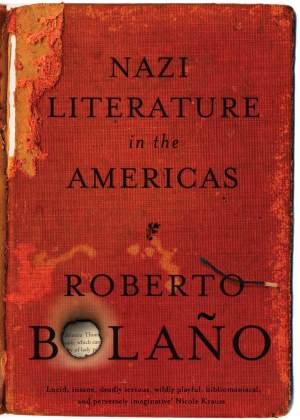
The article centers around Andrews’s translation of Nazi Literature in the Americas. We absolutely love the Picador edition’s cover for the UK, Australia, and similar markets. It captures the book’s apocryphal tone, its violence–and also its sharp sense of humor. On that book specifically (and Bolaño’s work in general)–
In a sea of allusion, English readers may feel adrift. “I don’t think it matters very much,” says Andrews. “It’s probably going to be read by people who have already got an interest in Bolano.

“One of the nice things about those bits of Bolano that are full of references and allusions is that it is hard to draw the line between the historical characters and the fictional ones.

“In different literary cultures, there are different norms about what you need to explain. In the French translation of Bolano, there are footnotes.”

Wouldn’t readers halfway familiar with Bolano suspect they were dealing with yet another level of artifice? “I think they would,” Andrews says, “even if it said ‘translator’s note’.”

The article details what techniques Andrews employs when stuck, particularly with regional dialects and slang. Andrews also talks about his correspondence with Bolaño himself,  in the last few years of the Chilean’s life. Here’s Andrews describing his attraction to Bolaño:

The prose has a mesmerising quality that intrigues Andrews.

“There’s a character in one of the stories I’ve just been translating who’s an actor called El Pajarito [Little Bird] Gomez. He’s a skinny, unimpressive-looking guy, but as soon as he appears on camera he vibrates in a weird way that almost hypnotises the viewer.

“When I read that, I thought, that’s a bit like what happens with Bolano’s prose for many readers, that it has a strange kind of vibration.”

Reality Hunger — David Shields

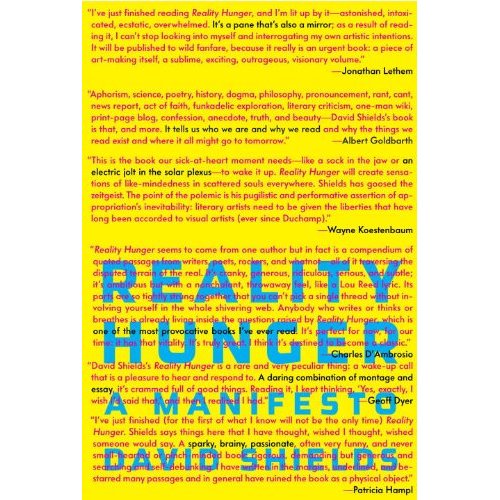
Just what, exactly, is David Shields’s Reality Hunger supposed to be about? He’s brazen enough to slap the subtitle “A Manifesto” right there under the title, suggesting a work of sustained principles calling for something to change or happen for some reason, but after reading the damn thing, I still have no real idea what he really wants or why I should care. If I had to venture a guess, it seems that Shields is suggesting that we quit reading, writing, and publishing “standard novels” and that “realism” in letters can only be located in lyric essays and other works free from genre constraint (even the memoir is too artificial for Shields, and autobiography ultimately represents facts without truth).

I think what he really wants is authenticity, which repeatedly gets called “reality,” a term he (repeatedly) fails to satisfactorily define. Reality Hunger seems to argue that authenticity in the 21st century must take the form of synthesis, must chop up and recombine disparate elements, genres, cultural artifacts. To that end, Shields’s book is a tour-de-force of citation and appropriation. Aspiring toward an aphoristic tone, Shields organizes the book into 618 short sections over 200 or so pages; most of the sections are not his work, but come rather from myriad sources across different cultures and eras. I have no problem with this (c’mon, this is Biblioklept!) and Shields clearly demonstrates that the practice is hardly new in the history of story-telling, rhetoric, or philosophy.

My real problem is the self-seriousness of it all. Shields aspires to “break” reality into his text by reapportioning and recombining varied citations, but this bid for authenticity is, of course, utterly artificial, often stolid, and not nearly as fun as such a playful medium would suggest. Even worse, it’s not really a proper synthesis; that is, in stacking bits of other people’s work together with some of his own thin connective tissue, Shields hasn’t achieved an authentic blend or, to use a term he’d hate, anything novel, anything new. The jarring stylistic shifts between sections will lead serious readers repeatedly to the book’s appendix to find out who originated the words Shields is copping.

If Reality Hunger approaches having a point, it comes in the book’s penultimate chapter, “Manifesto.” Here, he attacks “standard novels.” The term is appropriated from W.G. Sebald, a writer of marvelous and strange novels that Shields would love to be essays. In one of the few original lines in the book, Shields dismissively writes that “Novel qua novel is a form of nostalgia.” He goes on to argue that the personal/lyric essay is more closely aligned with philosophy, history, and science than novels, and that novels no longer have any legitimate response to these more “real” concerns. Which is utter bullshit, really, and seems more than anything to prove that Shields is probably not that well-read, despite his massive cut and paste catalog. Not that I think that he’s not that well-read. He just picks and chooses, according to his taste, what novels get to escape being “standard.” How can one read contemporary masterpieces like The Rings of Saturn or Infinite Jest or 2666 or Underworld and honestly say that they don’t hold value? Shields, of course, does/would presumably find room for these in his “manifesto.”

The most embarrassing chapter of Reality Hunger, “Hip-hop,” also reveals the most about Shields’s program. It’s also one of the few chapters to feature long sections of Shields’s own original prose. In a turgid, humorless, overly-analytical “defense” of hip-hop and “sampling culture,” Shields describes how hip-hop works, riffing on the function of “realness” in hip-hop, and grasping at the larger implications of a normalized recombinant art form within modern culture. And though I agree with pretty much everything that Shields has to say about piracy and copyright laws, the drastic artificiality of his style and tone is really too much here. It’s like someone trying to explain why a joke is funny.

The worst though is Shields’s assertion that “Our culture is obsessed with real events because we experience hardly any.” The sentence itself is a clever bit of sophistry that falls apart under any real scrutiny. I can name a dozen “real events” that I experienced in the last few hours alone, including eating dinner with my family, talking with my wife, and putting my daughter to bed. Complaining that we are denied “real events,” like the mopes Shields cites from Douglas Coupland’s Generation X who lament their “McLives,” is a way of excusing ourselves from the intensity of being present–at all times–in our own lives. The vapid philosophy of the spoiled whiners in Reality Bites wasn’t attractive back in the early nineties and it’s downright repellent now.

So what does it all add up to? I think that Reality Hunger works well as a description of post-postmodernity. And as much as I’ve ranted against it here it’s actually quite enjoyable as a compendium of clever quotations. As a manifesto though, it’s an utter failure. To be fair, he had no shot of convincing me that the novel is or should be dead. There’s just too much evidence to the contrary.

Reality Hunger is now available in hardback from Knopf.

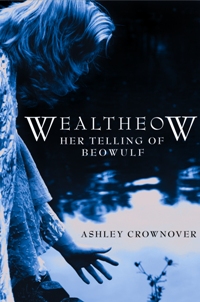
Wealtheow — Ashley Crownover

In her novel Wealtheow, author Ashley Crownover retells Beowulf from Queen Wealtheow’s point of view. In the original epic poem, Wealtheow doesn’t have much of a voice. Her marriage to King Hrothgar is more a matter of politics than love, and her role in the poem is largely limited to an episode where she speaks up to secure her own genealogical futurity. Adopting a first-person voice, Crownover portrays Wealtheow as a young, somewhat naive bride thrown into a political marriage arranged to prevent war between the Danes and the Helmings. Wealtheow tries to fit into her new role as wife and queen, as well as her new culture, and strives to produce an heir for Hrothgar, suffering miscarriages and other adversities. Crownover parallels Wealthow’s plighted road to motherhood in the tale of Grendel and his mother (called Ginnar here). When Grendel is born deformed, his father rejects him and he is bound for infanticide–only Ginnar’s motherly instinct resists custom, and the pair become fugitives. Crownover’s technique here builds sympathy for Ginnar in echoing the narrative proper of Wealtheow. Ginnar in many ways is a far more sympathetic (and interesting) character than Wealtheow, and the counter-plot of her and her monster-spawn/beloved boy Grendel is the highlight of the book.

Inevitably, Wealtheow must invite comparison to John Gardner’s masterpiece Grendel, the 1971 cult novel that retells the story from the monster’s point of view. Unlike that work, which is densely poetic, ambiguous, and often lyrically experimental, Crownover relates Wealtheow in a simple, straightforward style. The writing is thrifty and competent, and propels the narrative forward with ease. It’s tempting to pigeonhole Crownover’s effort as a feminist revision of an overtly-masculine text, and there’s of course merit in such a description–she does, after all, take a woman’s viewpoint here (or, arguably, the viewpoints of two women). But Crownover’s depiction of Wealtheow–and the men in the narrative–never unravels into gender politics (or, worse, tempting revisionist caricatures). Instead, she keeps the narrative upfront. It’s not as subtle (or ironic) as The Penelopiad, Margaret Atwood’s marvelous retelling of The Odyssey from Penelope’s perspective, but it does adhere to the same complex view of male-female relations. Fans of Marion Zimmer Bradley’s Avalon series and Beowulf enthusiasts in general will want to check this out.

Wealtheow is available now from Iroquois Press.

Marginalia in the Digital Age

In her article in yesterday’s New York Times, Patricia Cohen reports on Emory University’s efforts to preserve Salman Rushdie’s archive. In addition to the regular files, folders, books, and other paper materials one might expect, Rushdie gave Emory four Apple computers. The school decided to create an emulator that would allow visitors to see–and play with–Rushdie’s work:

At the Emory exhibition, visitors can log onto a computer and see the screen that Mr. Rushdie saw, search his file folders as he did, and find out what applications he used. (Mac Stickies were a favorite.) They can call up an early draft of Mr. Rushdie’s 1999 novel, “The Ground Beneath Her Feet,” and edit a sentence or post an editorial comment.

Pretty neat. I love the idea of interaction and it’s great how technology has allowed for wider audiences to access archival materials. I’ve really been enjoying looking over the David Foster Wallace archive at the Harry Ransom Center, for instance, something made entirely possible through digital archiving. But Cohen’s article also details some of the problems and limitations of the “digital-born” material:

Electronically produced drafts, correspondence and editorial comments, sweated over by contemporary poets, novelists and nonfiction authors, are ultimately just a series of digits — 0’s and 1’s — written on floppy disks, CDs and hard drives, all of which degrade much faster than old-fashioned acid-free paper. Even if those storage media do survive, the relentless march of technology can mean that the older equipment and software that can make sense of all those 0’s and 1’s simply don’t exist anymore.

This got me thinking, again, about all the rosy-toned optimism surrounding e-readers like the Kindle and iPad. Marginalia, annotation, and scholia, whether from the quills of medieval monks, enlightenment scientists, or prickly book reviewers, has long served as a conduit of information and criticism often rivaling the importance of the document being marked. Kindle users can highlight, dog-ear, and annotate their e-texts now, but how permanent are these marginalia–especially when Amazon has already shown how easily the books can be removed from their owners (along with those owners’ notes!)? Given Apple’s penchant for DRM, it’s likely that you won’t be able to trust the iPad to secure your annotations either. And while my own paltry scribblings in the volumes I own are hardly on par with Coleridge’s annotations, the books that I have most heavily annotated are also those dearest to me. At best, my marginalia might call attention to some notable aspect of a great text; at least, they record something about the person I was when I saw fit to write in the book at that moment.

Biblioklept Interviews Melville House’s Dennis Johnson

Dennis Johnson, along with wife Valerie Merians, heads Melville House Publishing, an independent book house putting out some of the best stuff on the market today. They also have a bookstore in Brooklyn that regularly hosts all kinds of neat literary-type events. Melville House is the outgrowth of Johnson’s literary blog MobyLives, an insightful source of reportage on the literary world today. In 2007, the Association of American Publishers awarded Melville House the Miriam Bass Award for Creativity in Independent Publishing and in 2009 The Village Voice declared Melville House “The Best Small Press of the Year.” I talked to Johnson by phone last week and he answered my questions with patience and humor. We discussed how Johnson finds the marvelous books he publishes, translation, novellas, and upcoming releases from Melville House. After the interview he was kind enough to ask me about my own blog and offer me some encouraging words. Just a few days after our talk it was announced that one of Melville House’s recent publications, The Confessions of Noa Weber by Gail Hareven had won the 2010 Best Translated Book Award for fiction.

Biblioklept: I want to begin by congratulating Melville House on Hans Fallada’s novel, Every Man Dies Alone. It’s done really well both critically and commercially. The book is something of a “recovered classic,” published just last year for the first time in English. Can you tell us a little bit about how Melville House came to publish the book?

Dennis Johnson: Well, it was a search it’s a real saga about hunting down that book. I’m always interested in finding material from that part of the world and that time of history because I think a good deal of very good literature was lost between the two wars. And it’s just writing that I like a lot. So a friend of mine, the fashion designer Diane von Furstenberg had family that came through that part of the world at that time and I asked her if she had any recommendations and she told me I should look into Hans Fallada, who I’d never heard of. So I tracked down a couple of his titles that had been translated–because he was a bestselling writer here in the 1930s–and it took a while but I found some of those books which had been out of print for a long time and I really loved them. And then, von Furstenberg told me that his best one had never been translated. That was Every Man Dies Alone. And so we set about going after it and acquiring it. And, at that point, once we’d discovered it, it was pretty easy sailing. But tracking down his stuff that had been translated and finding out more about him was really kind of a fun bit of detective work.

B: Did Michael Hoffman translate it specifically for Melville House?

DJ: Yeah, he did. We hired him to do it.

B: Is that normally how you go about with these works–like Nanni Balestrini’s Sandokan or Imre Kertész’s The Union Jack? Hiring a translator?

DJ: Well, there’s a couple of things you can do. You can find the translator, or you can reprint things that have been translated already, if you think it’s already a good translation–that’s a less expensive way to do a translated book. So for example, with the Fallada, I bought some old translations of his other books and published them simultaneously with the new translation of Every Man. There was, you know, there was no old translation to buy. But two of his other books, two great books, one called The Drinker and one called Little Man, What Now? I thought were pretty well translated so we just bought those old translations. They were out of print, they were available [for publication].

B: It seems like a lot of the books you guys put out are–I don’t know how to put it–recovered classics or cult books or just books that English-reading audiences just aren’t necessarily exposed to. Is that purposeful with Melville House?

DJ: I think we have a fairly mixed list. The names you were citing a minute ago . . . Balestrini, he’s only been translated once, I think, thirty or forty years ago. But he’s a very prominent writer in Italy. And it wasn’t exactly a “discovery,” it was just someone that we thought American audiences should know about. Imre Kertész on the other hand is extremely famous, he’s a Nobel Prize winner and he’s published by Knopf. We were thrilled when he wanted to come to Melville House. So, you know, some of these writers are here, some are not. We publish some well known writers, some very obscure writers. We try to mix it up. You know, there’ s no rule, just good literature.

B: Can you talk a little bit about the Contemporary Art of the Novella series? How did it come about?

DJ: Well, we originally had a series called just the Art of the Novella. It’s classics, many of them translated, classics from around the world, lots of European classics, and some of those are new translations that we did it, some are old translations that we reprinted. And that series did really, really well and people really seemed to love it so we decided that we would do a contemporary version of that series and try to mix it up the same way. And so the new series has new discoveries in it, some old reprints, things from around the world, we’re expanding beyond Europe and Russia, we’ve got a native Japanese author named Banana Yoshimoto in it coming out, we’ve got African writers, South American writers . . . It’s been off to a very good launch. I think we’ve done about fourteen or fifteen books in that series so far and it’s going really well. You know, it’s very hard to publish translation in the United States. It doesn’t . . . it doesn’t sell. It’s hard to keep it in store for a long time. And it’s expensive to do translated books because you have to pay your translator. In the Contemporary series we often use new translations because it’s new work that’s never been translated before and that can get very expensive because you’ve got two authors, you know, you have to pay the author, the translator, and that’s why a lot of people are cutting back on doing translations. But we wanted to keep doing translations and we had to figure out a way to keep doing it and one idea we had was, if we had this series of short novels . . . well, one, they’re just cheaper to do, they cost less to buy from another publisher, they cost less to make because they’re less paper and they cost less to translate because they’re shorter. And you know, you pay by how long. So, it suddenly became a more economical way for us to publish translated books. The booksellers, they like the Contemporary series. They get the whole series and they keep it in the store. So, for example, we’re about to do a deal with a new book store in Fort Greene called Greenlight where they would do a whole wall of these books. Other stores do a spin-rack of these books. And they just keep them. And what usually happens with new books is you just get a few weeks in the bookstore and if it doesn’t sell they return it. And so we would get really creamed on the translated work because it wouldn’t have very long in the store and it’s hard to get publicity for them and then they just didn’t have enough time to sell. But, if they’re taking the whole series and keeping them on display, forever, well, then these books have a real chance of surviving. So there were a lot of good reasons for us to do a Contemporary series. And in the end, the reason was that it allowed us to keep doing really good, serious, translated work.

B: What do you think about “rock star” writers like Haruki Murakami and Roberto Bolaño whose English translations sell very well? Does that help the prospects of translated books at all?

DJ: Well, every year there are one or two books that are translated that do very well. But they’re the exception to the rule. At any given point in the year, you look at the New York Times bestseller list for fiction, there’s almost never a translated book on it. Or if there is, it’s some, you know, Scandinavian murder mystery or something. It’s very rare it’s a serious work of literature. So I would say those writers are the exception to the rule. But it’s certainly does help those of us selling translated fiction to be able to point to those things. It encourages booksellers to give us a chance.

B: Can you tell us a little bit about upcoming titles and authors you’re excited about?

DJ: Well, we’re doing another Fallada–

B: Wolf Among Wolves, right?

DJ: We’re doing Wolf among Wolves in May. And we’re doing the paperback for Every Man Dies Alone at the end of this month, as a matter of fact. So those are two that I’m really excited about. We have some really great nonfiction coming out. We just published a book about North Korea called The Cleanest Race. It’s about understanding North Korea through its propaganda. It’s got a lot of really wild art showing the propaganda posters and movie stills and things. And then we’ve got some novels coming out, one from a young British writer named Lee Rourke. It’s the first novel. It’s called The Canal and I think it’s one of the very best novels we’ve ever published. It’s generating a lot of excitement. We’re doing another one with Kertész next year, which is a big novel called Fiasco. He wrote a trilogy years ago about his experience in the camps. What was he, fifteen or something, when he was sent to Auschwitz-Birkenau, working in a Nazi factory trying to turn coal into gasoline? And he wrote a novel called Fatelessness about that and another one called Kaddish for an Unborn Child. And Knopf published Kaddish and Fatelessness but they never published Fiasco. So we’re really excited about that.

B: Something I enjoy about MobyLives is your perspective as a publisher covering real news about book selling.

DJ: Thanks. It’s a labor of love. If you look at the historic arc of the website, you can see that we became more informed by being a publisher. I wasn’t a publisher when I started it and it was much more general-interest reader kind of thing. I try to get help. I try to make the staff here participate, I think it makes it a little more wide-ranging.

B: So, have you ever stolen a book?

DJ: Sure, yeah. I used to steal a lot of books from my brother. I remember stealing Gore Vidal’s Burr. My big brother’s a lot older than me and he left the house when I was a kid and I remember stealing a lot of his books. So Burr yeah, a novel Vidal wrote about Aaron Burr. Fantastic book. I still have it. He hasn’t asked for it back. I don’t think he knows.