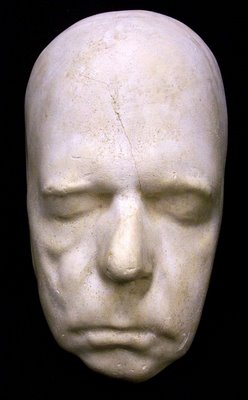
Osceola’s Death Mask

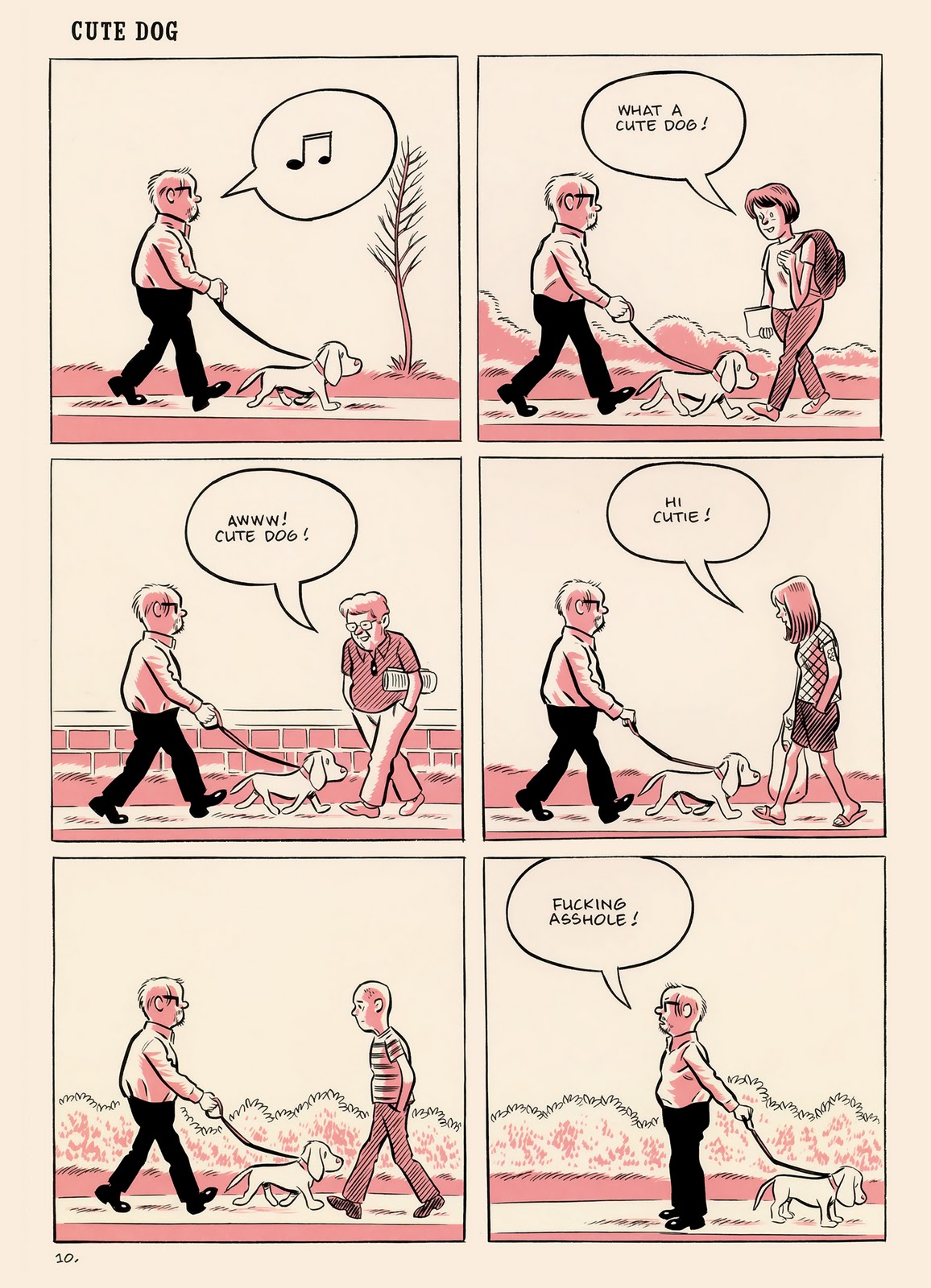
“Cute Dog” — Daniel Clowes

Read our review of Daniel Clowes’s Wilson, or buy the book from Drawn & Quarterly..

William Burroughs’s Advice to Young People

“Why Read the Classics?” — Italo Calvino

From Italo Calvino’s The Uses of Literature

  1. The classics are the books of which we usually hear people say, “I am rereading . . . ” and never “I am reading . . . “
  2. We use the words “classics” for books that are treasured by those who have read and loved them; but they are treasured no less by those who have the luck to read them for the first time in the best conditions to enjoy them
  3. The classics are books that exert a peculiar influence, both when they refuse to be eradicated from the mind and when they conceal themselves in the folds of memory, camouflaging themselves as the collective or individual unconscious.
  4. Every rereading of a classic is as much a voyage of discovery as the first reading.
  5. Every reading of a classic is in fact a rereading.
  6. A classic is a book that has never finished saying what it has to say.
  7. The classics are the books that come down to us bearing the traces of readings previous to ours, and bringing in their wake the traces they themselves have left on the culture or cultures they have passed through (or, more simply, on language and customs).
  8. A classic does not necessarily teach us anything we did not know before. In a classic we sometimes discover something we have always known (or thought we knew), but without knowing that this author said it first, or at least is associated with it in a special way. And this, too, is a surprise that gives much pleasure, such as we always gain from the discovery of an origin, a relationship, an affinity.
  9. The classics are books which, upon reading, we find even fresher, more unexpected, and more marvelous than we had thought from hearing about them.
  10. We use the word “classic” of a book that takes the form of an equivalent to the universe, on a level with the ancient talismans. With this definition we are approaching the idea of the “total book,” as Mallarmé conceived of it.
  11. Your classic author is the one you cannot feel indifferent to, who helps you to define yourself in relation to him, even in dispute with him.
  12. A classic is a book that comes before other classics; but anyone who has read the others first, and then reads this one, instantly recognizes its place in the family tree.
  13. A classic is something that tends to relegate the concerns of the moment to the status of background noise, but at the same time this background noise is something we cannot do without.
  14. A classic is something that persists as a background noise even when the most incompatible momentary concerns are in control of the situation.


Bill and Tony — A Short Film with William Burroughs

William Burroughs looks a little like Captain Picard in this one—

Will Ferrell on Raymond Carver

Will Ferrell talks to the AV Club about his new film, Everything Must Go, which is based on Raymond Carver’s short story “Why Don’t You Dance?” From the interview—

AVC: Your character in Everything Must Go is a persistent alcoholic who loses his job and his wife in one fell swoop, so the film could have been much darker than it is, especially considering the source. Raymond Carver isn’t known for being quirky and lighthearted.

WF: I probably shouldn’t admit, but I will, that I had never read Raymond Carver prior to this. When Dan gave me the short story, the collection it was in, I read it cover to cover, and I loved the starkness of his writing. But it’s true, it’s pretty dark and alcoholic. It just depends on your filter and where you’re coming from. You mentioned that it could be a lot darker. Other people have said to me, “Wow, this is really dark, especially for you to do.” I was fearful of the shot of the shaky hand reaching for the can, like, “That’s going to come off terrible.” A more skilled actor maybe could do it, but for me, and Dan agreed, we just made sure that everything was underplayed, if anything.

AVC: Actors often say that playing drunk is one of the hardest things to do, and the secret is acting like you’re trying not to look drunk. 

WF: Totally. I actually had a buddy of mine come over and film me getting drunk one night, just as an excuse to drink 18 beers, but also to see if there was anything I could glean from that.

“The Man Who Shouted Teresa” — Italo Calvino

“The Man Who Shouted Teresa,” a very short story by Italo Calvino. From Numbers in the Dark.

I stepped off the pavement, walked backwards a few paces looking up, and, from the middle of the street, brought my hands to my mouth to make a megaphone, and shouted toward the top stories of the block: “Teresa!”
My shadow took fright at the moon and huddled at my feet.
Someone walked by. Again I shouted: “Teresa!” The man came up to me and said: “If you do not shout louder she will not hear you. Let’s both try. So: count to three, on three we shout together.” And he said: “One, two, three.” And we both yelled, “Tereeeesaaa!”
A small group of friends passing by on their way back from the theater or the café saw us calling out. They said: “Come on, we will give you a shout too.” And they joined us in the middle of the street and the first man said one to three and then everybody together shouted, “Te-reee-saaa!”
Somebody else came by and joined us; a quarter of an hour later there were a whole bunch of us, twenty almost. And every now and then somebody new came along.
Organizing ourselves to give a good shout, all at the same time, was not easy. There was always someone who began before three or who went on too long, but in the end we were managing something fairly efficient. We agreed that the “Te” should be shouted low and long, the “re” high and long, the “sa” low and short. It sounded fine. Just a squabble every now and then when someone was off.
We were beginning to get it right when somebody, who, if his voice was anything to go by, must have had a very freckled face, asked: “But are you sure she is home?”
“No,” I said.
“That is bad,” another said. “Forgotten your key, have you?”
“Actually,” I said, “I have my key.”
“So,” they asked, “why dont you go on up?”
“I don’t live here,” I answered. “I live on the other side of town.”
“Well, then, excuse my curiosity,” the one with the freckled voice asked, “but who lives here?”
“I really wouldn’t know,” I said.
People were a bit upset about this.
“So, could you please explain,” somebody with a very toothy voice asked, “why you are down here calling out Teresa.”
“As far as I am concerned,” I said, “we can call out another name, or try somewhere else if you like.”
The others were a bit annoyed.
“I hope you were not playing a trick on us,” the freckled one asked suspiciously.
“What,” I said, resentfully, and I turned to the others for confirmation of my good faith. The others said nothing.
There was a moment of embarrassment.
“Look,” someone said good-naturedly, “why don’t we call Teresa one more time, then we go home.”
So we did it one more time. “One two three Teresa!” but it did not come out very well. Then people headed off for home, some one way, some another.
I had already turned into the square when I thought I heard a voice still calling: “Tee-reee-sa!”
Someone must have stayed on to shout. Someone stubborn.

Wilson — Daniel Clowes

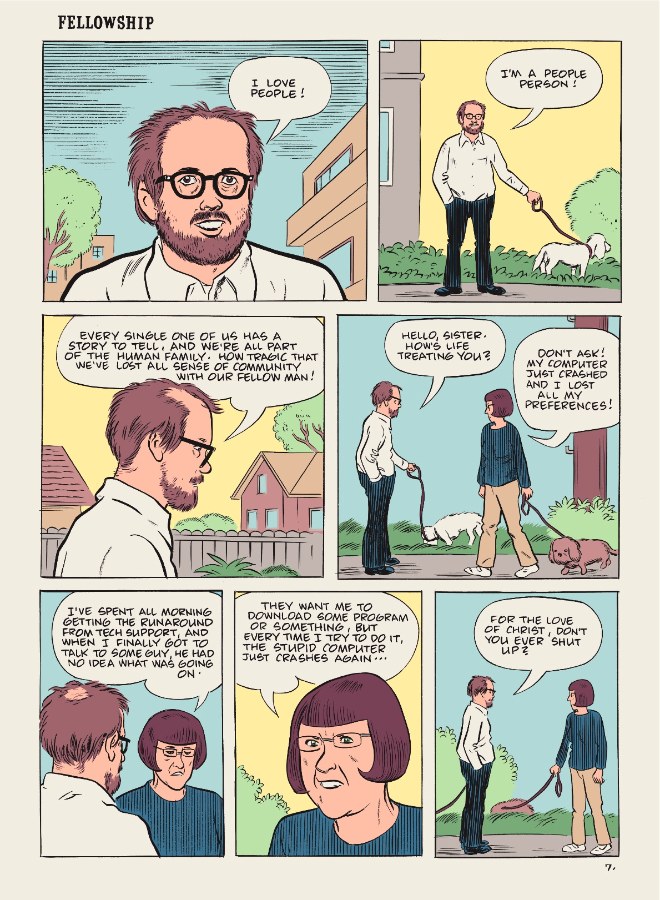
In the first line of the first panel of the first strip in Daniel Clowes’s graphic novel Wilson, the eponymous character, looking directly at the reader, claims, “I love people!” The statement is both ironic and strangely true. Our hero Wilson loves the idea of loving people, and goes about his daily business (walking his dog, drinking coffee, mailing boxes of shit to his former in-laws) in a way that maximizes human contact. With no real family of his own, Wilson reaches out to every person he passes by, addressing them as “brother” or “sister” in an embracing, Emersonian spirit. The problem is that, as much as he loves the idea of loving humanity, Wilson pretty much hates every person he meets. Here’s the opening episode—

Wilson comprises about 70 one-page episodes, each with six or seven panels, each essentially self-contained yet part of a loose plot. The episode above is indicative of the structure of each chapter: a build-up, a monologue, often delivered to disinterested stranger, and then an anti-punchline in which Wilson reveals the ironic cognitive dissonance at the core of his being. The effect can be hard to process, and Clowes’s acerbic humor is clearly not for everyone. Although Clowes uses a traditional Sunday comic page structure, his technique is unsettling: the humor is drawn not so much from the deflationary punchlines that end each chapter, but the overall disconnect between perception, desire, and reality that those punchlines reveal.

Clowes uses this method consistently throughout Wilson, but alternates styles and color palettes, moving from a classic-Clowes style familiar to anyone who’s read Eightball or Ghost World, to a bouncy, cartoony style (see: “Marriage”). The choice to change up the styles calls back, again, to the Sunday comic pages of yore; it also underscores Wilson’s unstable identity, as the narrative slips through gradations of more realistic to more cartoony representations. It is a consistent inconsistency.

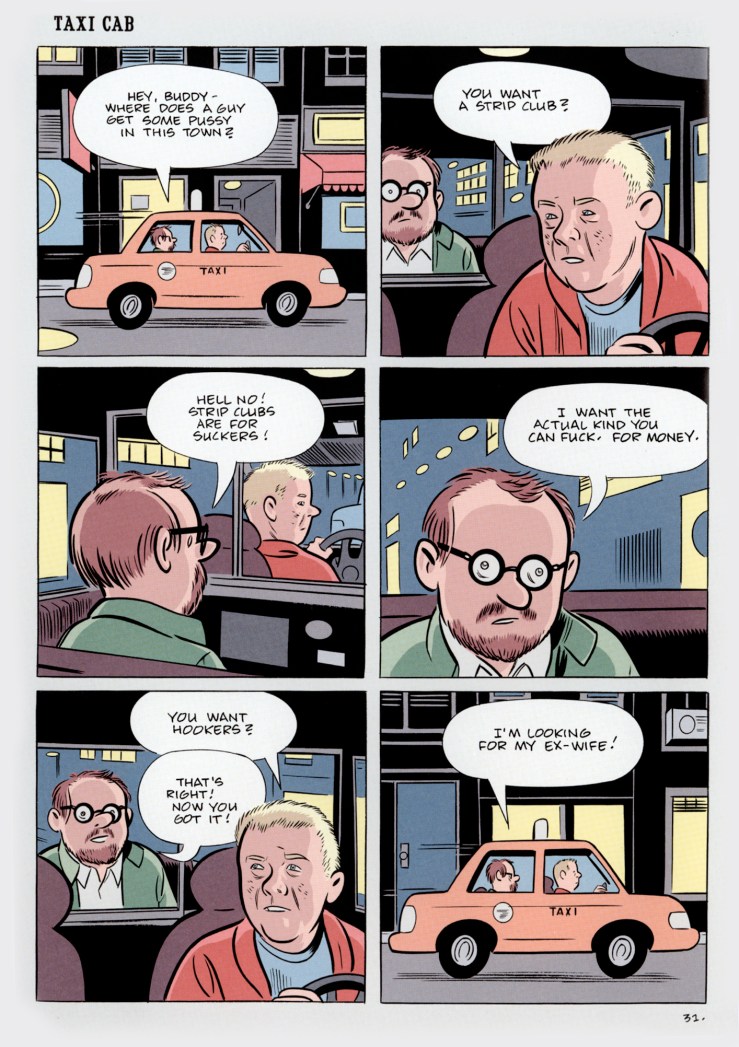
Surprisingly, Wilson has a cohesive plot. After the death of his father, Wilson seeks to reunite with his ex-wife, whom he believes to be a drug-addicted hooker. He also hopes to meet the child she was pregnant with when she left him—

Wilson does find his wife. And then he finds his teenage daughter. And then he kinda sorta kidnaps her, or at least doesn’t bother to return her to her adoptive parents. And then he goes to prison. But maybe I’m spoiling the plot now. In any case, Wilson’s adventures are hardly zany. They are poignant and sad and pathetic and cringe-worthy. Clowes is willing to punish his already-tortured protagonist, and yet there’s a payoff for pour Wilson. Throughout the graphic novel, Wilson yearns for human connection, yet is always disappointed by the humans around him who can never measure up to his ideals. Like any sociopath, Wilson lacks a meaningful emotional core; throughout the narrative he longs to experience an epiphany, staring at the ocean, for example, in the hopes illumination. He finally earns this epiphany near the close of his life. The moment is unexpectedly touching, and provides the kind of balance that proves Wilson a work of art and not merely a collection of funny strips. Recommended.

Wilson is available now from Drawn & Quarterly.

Aldous Huxley Talks About Drugs, TV, and Threats to American Freedom

Mike Wallace interviews Aldous Huxley (1958)—

\

Ezra Pound Weighs Chaucer and Shakespeare

Ezra Pound’s ABC of Reading, hardly short on strong opinions, contains a fantastic chapter on Chaucer, who Pound submits is superior in some ways to Shakespeare. A taste—

Sloth is the root of much bad opinion. It is at times difficult for the author to retain his speech within decorous bounds.

I once heard a man, how has some standing as writer and whom Mr. Yeats was wont to defend, assert that Chaucer’s language wasn’t English, and that one ought not to use it as basis of discussion, ETC. Such was the depth of London in 1910.

Anyone who is too lazy to master the comparatively small glossary necessary to understand Chaucer deserves to be shut out from the reading of good books for ever.

As to the relative merits of Chaucer and Shakespeare, English opinion has been bamboozled for centuries by a love of the stage, the glamour of the theatre, the love of bombastic rhetoric and of sentimentalizing over actors and actresses; these, plus the national laziness and unwillingness to make the least effort, have completely obscured values. People even read translations of Chaucer into a curious compost, which is not modern language but which uses a vocabulary comprehended of sapheads

Wat se the kennath

Chaucer had a deeper knowledge of life than Shakespeare.

Let the reader contradict that after reading both authors, if he chooses to do so.

Sir Walter Scott’s Death Mask

Five Favorite Fictional Mothers

Happy Mother’s Day! Sure, it’s a marketing scam, but we all love moms, right?

Fascinating moms populate literary fiction, and there’s no shortage of great baddies, evil stepmothers, and distant headcases in our favorite literature—but we thought we’d focus instead on some of the moms that seem to be, you know, really great moms.

(See also: Five Favorite Fictional Fathers, Five Favorite Fictional Sons (the daughters list is surely round the bend)).

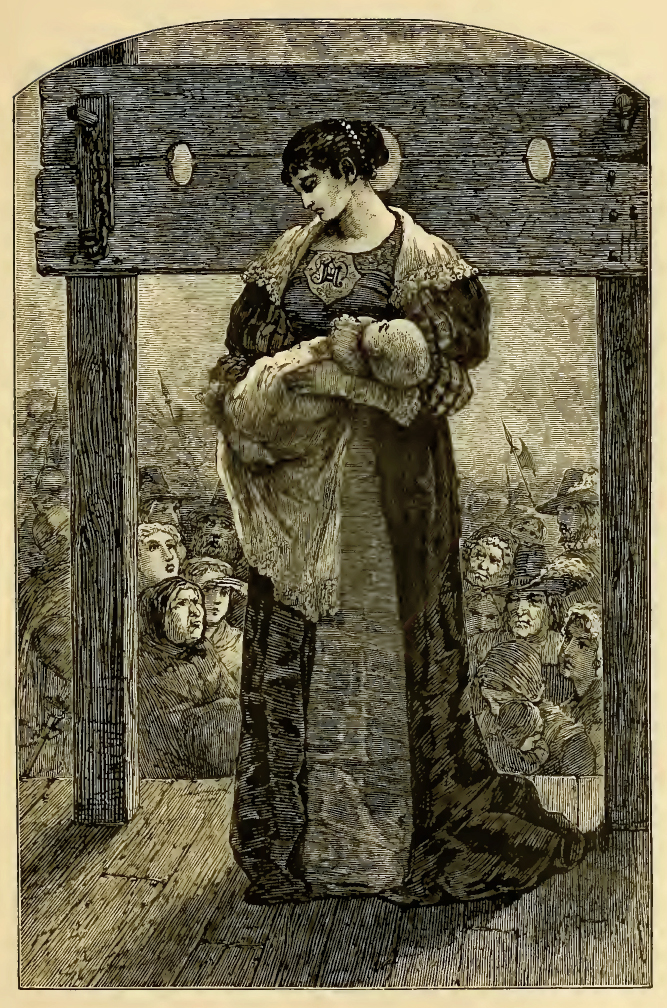
"Hester Prynne & Pearl before the stocks", an illustration by Mary Hallock Foote from an 1878 edition of The Scarlet Letter

1. Hester Prynne, The Scarlet Letter (Nathaniel Hawthorne)

Hester Prynne is a bundle of contradictions—sin and salvation, radical freedom and reactionary repression, hope and despair—all bound to a deeply patriarchal society that had to control women’s bodies at all turns. Fortunately, there’s no analog for the Puritans’ judgmental, shame-based behavior in our own society (har har). Hester and her daughter Pearl, living in a cottage outside of Boston, are outside the dominant social order. It’s a form of punishment that paradoxically frees the pair, allowing Pearl to grow into a kind of nature spirit—impish and willful, to be sure, but also artistic and able to express herself. Although Pearl is the human doubling of Hester’s titular letter, she’s ultimately no badge of shame, but rather a treasure in her mother’s eyes.

2. Penelope, The Odyssey (Homer et al.)

Patient Penelope weaving and unweaving her husband’s shroud—is she the faithful wife, waiting for Odysseus who’s having adventures asea? Or is she cunningly keeping her son safely alive from the predatory suitors who would certainly want to get him out of the way ASAP. Penelope is an extraordinary and ambiguous figure, but one thing is clear: she loves her son Telemachus.

3. Molly Bloom, Ulysses (James Joyce)

Speaking of Penelope . . . Molly might not be the most faithful wife, but damn if she isn’t a hot mama.

4. Ma Joad, The Grapes of Wrath (John Steinbeck)

Ma Joad never gets a first name in Grapes—she’s an elemental matriarchal force that keeps the family together against every kind of pain. The final scene of this novel is utterly amazing. When Rose of Sharon’s daughter dies in childbirth, Ma Joad directs the mother to nurse a man dying from hunger. All the while, a flood of epic proportions looms. Ma Joad’s determination to live transcends Darwinian impulses here; against the backdrop of infanticide, economic and social genocide, and natural disaster, she still directs her family to a loving, Emersonian course of action.

5. Grendel’s mother, Grendel (John Gardner)

In John Gardner’s fabulous retelling of the Beowulf saga from Grendel’s POV, we find a deeply alienated young man who, try as he might, cannot communicate with the plants and animals around him. Grendel should be a thing of nature, but he is a thinking thing, a thing with a conscience, a soul. He can understand men but they cannot understand him. In one of the book’s saddest conceits, Grendel cannot communicate through speech with his mother, who in many senses seems a creature apart from him. Gardner here dramatizes the radical alienation that all children must feel at some point for their mothers, an alterity grounded in the paradox that, hey, your mom gave birth to you—you came out of her, metaphorically, sure, but also, like, really. Even though Mama Grendel can’t speak to her son, she protects and lovingly cares for him, splitting a few skulls here and there in the process. Motherhood is tough.

Marshall McLuhan Talks Motherhood

W.H. Auden Reading at the 92nd St. Y in 1972

Audio of W.H. Auden reading at the 92nd St. Y in 1972.

Ezra Pound’s Composition Exercises for Young Writers

From Ezra Pound’s literary study, ABC of Reading

1. Let the pupil write the description of a tree.

2. Of a tree without mentioning the name of the tree (larch, pine, etc.) so that the reader will not mistake it for the description of some other kind of tree.

3. Try some object in the classroom.

4. Describe the light and shadow on the school-room clock or some other object.

5. If it can be done without breach of the peace, the pupil could write descriptions of some other pupil. The author suggests that the pupil should not describe the instructor, otherwise the description might become a vehicle of emotion, and subject to more complicated rules of composition than the class is ready to cope with.

In all these descriptions the test would be accuracy and vividness, the pupil receiving the other’s paper would be the gauge. He would recognize or not recognize the object or person described.

Rodolfo Agricola in an edition dating from fifteen hundred and something says one writes: ut doceat, ut moveat, ut delectet, to teach, to move or to delight.

A great deal of bad criticism is due to men not seeing which of these three motives underlies a given composition.

The converse processes, not considered by the pious teachers of antiquity, would be to obscure, to bamboozle or mislead, and to bore.

The reader or auditor is at liberty to remain passive and submit to these operations if he so choose.

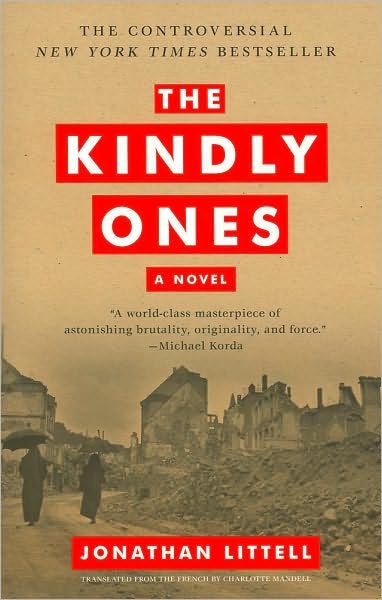
Jonathan Littell’s The Kindly Ones Is Lurid Abject Art

Yesterday, I finished listening to the unabridged audiobook version of Jonathan Littell’s 900+ page novel The Kindly Ones, the plot of which is too long and complex and detailed (and frankly, often boring) to unpack here. To make a very long story short (after which I’ll talk about the book’s scandalous and (deservedly) tawdry reputation), Maximilien Aue is an SS officer of mixed Franco-Germanic parentage, who, amazingly, seems to be present at an unlikely number of key events during WWII. These events include time at the eastern front, orchestrating mass killings in Ukraine and holing up during the battle of Stalingrad, where he gets shot through the head yet miraculously survives. After this, Aue convalesces in Berlin, and later visits his mother and stepfather in Antibes. He soon takes up the project of improving conditions for concentration camp prisoners, visiting camps like Auschwitz, all the while meeting and working with Nazi bigwigs like Albert Speer, Adolf Eichmann, and Heinrich Himmler. After an intense illness (the book is full of illness–more on that in a moment), Aue seeks his twin sister (uh, yeah, more on her shortly) at her husband’s house in Pomerania, where, finding her absent, he indulges in a psychotic wine-fueled masturbation binge (yes, more presently). The end of the novel ups the psycho-ante, detailing the last days of the Third Reich in Berlin, a period Littell depicts as dripping in decadent nastiness. Aue survives via murder murder murder.

This is a very brief outline of a very long book, the kind of book that dares to be important, and Littell surely knows his history. In fact, the book is often incredibly dry, dusty even, constipated by historical facts that Aue and other characters frequently reveal in long, clunky passages of exposition. Indeed, one of the great weaknesses of The Kindly Ones is Littell’s tendency to use his characters as mouthpieces, little pawns who will discourse on politics or linguistics or music or whatever for a few pages. At the same time, it’s clear that Littell wants certain passages to bore the reader. A lengthy episode in the Ukraine concerns the fate of a group of Caucus mountain people of whom the SS wish to determine a “racial origin.” Littell presents the process of deciding whether or not these people should be exterminated or not in excruciatingly bureaucratic (bureaucratically excruciating?) detail. One of the novel’s core points is an observation of the Nazi Reich as a lurching machine, a sick machine whose various limbs were often at bureaucratic war with each other.

If The Kindly Ones is often dry, its wetness is all the more foul. This is a novel that might as well take place in the asshole, or at least the colon. Our hero (?!) Aue spends much of his time describing his alternate diarrhea and vomiting; indeed, emetic purging seems to be his only form of absolution from the constant sin he’s wallowing in. It’s as if the entire Nazi project—its racial purging, its mass murder, its bureaucratic domination, its lies that were obvious to any person with eyes—is a constant stream of shit and vomit that Aue is forced to (yet unable to) process. The Nazis worked to elevate their unnatural sins to a kind of weltanschauung, yet Aue is unable to reconcile this world view with the visceral reality of the organized mass murder he daily helps orchestrate. This hardly absolves him; indeed, Aue seems to engage in every perversion and sin imaginable as a means to release the metaphysical pressure valve that’s pushing down on him all the time.

And this is the core of The Kindly Ones, and certainly why the novel is so infamous. The Nazis were an abject regime, a force that sought to “cleanse” Europe and the world of a perceived filth, and set about doing so in the most paradoxical way imaginable—by engaging in genocide, the worst kind of moral filth. Littell’s novel explores the bureaucratic nature of these abject sins in detail, but Aue is the very (tortured) soul of abjection. He is a paradoxical figure, a “true” SS party member who nevertheless idealizes Greek culture—an ironic twist, given the book’s title, a not-so-subtle nod to Aeschylus’ Oresteia. Quick warning: spoilers ahead—although, given Littell’s potboileresque structure, you’d have to be a blind Oedipus to miss these twists.

Yes, young Max Aue is a thoroughly Greek figure. He’s a homosexual who longs to be a woman so he can feel the “pleasure” that only women can feel, yet he’s obsessively in love with his twin sister, whom he buggered regularly in their pre-teen days (and perhaps a few times afterwards). He fights Nazi bureaucracy to improve the living conditions of doomed concentration camp victims, yet he periodically murders the people around him, for no discernible reason. He delights in his own illnesses, his own filth and shit. He facilitates child murder. He fantasizes about coprophagiac feasts, sticks bottles up his ass while wet-daydreaming about Edgar Rice Burroughs novels, and pays starving boys a few marks for a dirty fuck. And, like Orestes, pursued by the Furies, he kills his mother and step-father. The novel’s greatest concession to Greekness is its reveling in horror, horror, horror.

The Kindly Ones is a bizarre book, one that asks its readers to sympathize with the lowest of low-lifes, and yet somehow nevertheless succeeds, at least in a marginal sense. Littell requires tremendous patience from his readers—and strong stomachs as well, perhaps. In short, I don’t know who The Kindly Ones is for. It’s a bit of a potboiler, yet hardly a genre novel, and certainly not the kind of thing most people would want to read on the beach. I’m not sure if most folks who read historical WWII fiction want theirs served up with so much psycho sickness. To call The Kindly Ones an oddity is an understatement. There are stunning (and I don’t use that word loosely here) passages in the book, moments of overwhelming psychosis, dream sequences that might match the verity of war, including its utter spiritual despair. There’s also a fine tawdriness to The Kindly Ones, an overwhelming sense of the lurid and grotesque, overcompensated, as I mentioned earlier, with the dry crust of historical detail. The result is messy and brutal and uneven, but nonetheless compelling, like a foul, open wound that attracts even as it repels.

Book Xylophone

[Via Ebert].