Feast of the Redeemer — Maurice Prendergast

Teorema — Pier Paolo Pasolini (Full Film)

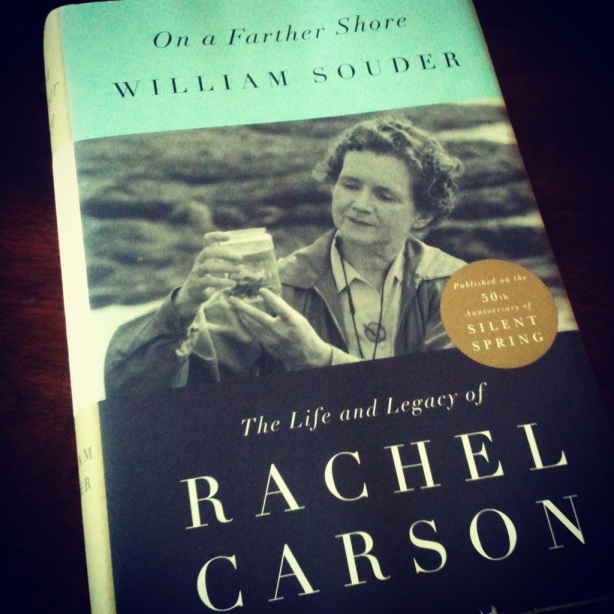
New Rachel Carson Biography (Book Acquired, 11.13.2012)

20121118-123008.jpg

On a Farther Shore is William Souder’s big, bold biography of Rachel Carson, whose long (and often poetic) essay Silent Spring changed the way many people thought about humanity’s changing relationship with the environment. Here’s publisher Crown/Random House’s blurb:

She loved the ocean and wrote three books about its mysteries, including the international bestseller The Sea Around Us. But it was with her fourth book, Silent Spring, that this unassuming biologist transformed our relationship with the natural world.

Rachel Carson began work on Silent Spring in the late 1950s, when a dizzying array of synthetic pesticides had come into use. Leading this chemical onslaught was the insecticide DDT, whose inventor had won a Nobel Prize for its discovery. Effective against crop pests as well as insects that transmitted human diseases such as typhus and malaria, DDT had at first appeared safe. But as its use expanded, alarming reports surfaced of collateral damage to fish, birds, and other wildlife. Silent Spring was a chilling indictment of DDT and its effects, which were lasting, widespread, and lethal.

Published in 1962, Silent Spring shocked the public and forced the government to take action-despite a withering attack on Carson from the chemicals industry. The book awakened the world to the heedless contamination of the environment and eventually led to the establishment of the EPA and to the banning of DDT and a host of related pesticides. By drawing frightening parallels between dangerous chemicals and the then-pervasive fallout from nuclear testing, Carson opened a fault line between the gentle ideal of conservation and the more urgent new concept of environmentalism.

Elegantly written and meticulously researched, On a Farther Shore reveals a shy yet passionate woman more at home in the natural world than in the literary one that embraced her. William Souder also writes sensitively of Carson’s romantic friendship with Dorothy Freeman, and of her death from cancer in 1964. This extraordinary new biography captures the essence of one of the great reformers of the twentieth century.

Elizabeth Royte gave Shore a good review in The New York Times; excerpt:

Souder is at his best when he places Carson’s intellectual development in context with the nascent environmental movement. The storm over “Silent Spring,” he notes, was a “cleaving point” in history when the “gentle, optimistic proposition called ‘conservation’ began its transformation into the bitterly divisive idea that would come to be known as ‘environmentalism.’” (Souder isn’t shy about expressing his own disappointment with what he views as a permanent wall between partisans, with nature and science pitted against an “unbreakable coalition of government and industry, the massed might of the establishment.”)

I’ll let Lucy have the last word:

20121118-124420.jpg

Thomas Jefferson’s Recipe for Vanilla Ice Cream

Manuscript from the Library of Congress, transcript (below) via Monticello’s website:

2. bottles of good cream.
6. yolks of eggs.
1/2 lb. sugar

mix the yolks & sugar
put the cream on a fire in a casserole, first putting in a stick of Vanilla.

when near boiling take it off & pour it gently into the mixture of eggs & sugar.

stir it well.

put it on the fire again stirring it thoroughly with a spoon to prevent it’s sticking to the casserole.

when near boiling take it off and strain it thro’ a towel.

put it in the Sabottiere*

then set it in ice an hour before it is to be served. put into the ice a handful of salt.

put salt on the coverlid of the Sabotiere & cover the whole with ice.

leave it still half a quarter of an hour.

then turn the Sabottiere in the ice 10 minutes

open it to loosen with a spatula the ice from the inner sides of the Sabotiere.

shut it & replace it in the ice

open it from time to time to detach the ice from the sides

when well taken (prise) stir it well with the Spatula.

put it in moulds, justling it well down on the knee.

then put the mould into the same bucket of ice.

leave it there to the moment of serving it.

to withdraw it, immerse the mould in warm water, turning it well till it will come out & turn it into a plate.


See the First Trailer for Wong Kar Wai’s New Film, The Grandmasters

Land of Cockaigne — Pieter Bruegel the Elder

Book Shelves #47, 11.18.2012

20121118-095349.jpg

Book shelves series #47, forty-seventh Sunday of 2012

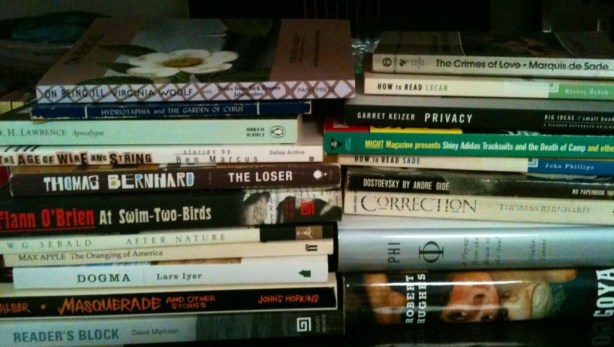
So this is what happens—books pile up. Okay, maybe that sentence is missing a clear subject: I pile books up.

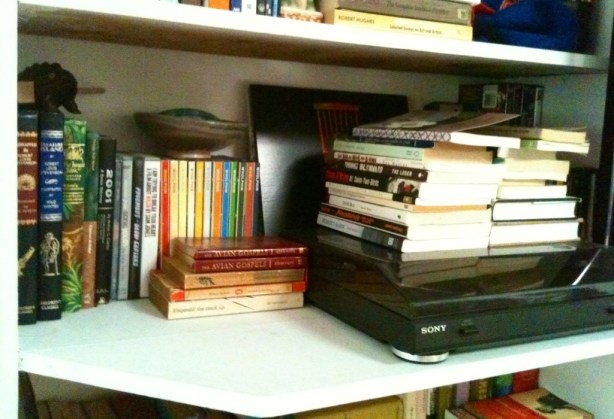
This stack mounded on my record player over the last week; I intended to shelve about half of these:

20121118-095356.jpg

My shelving solution is woefully short-term (more double stocked shelves).

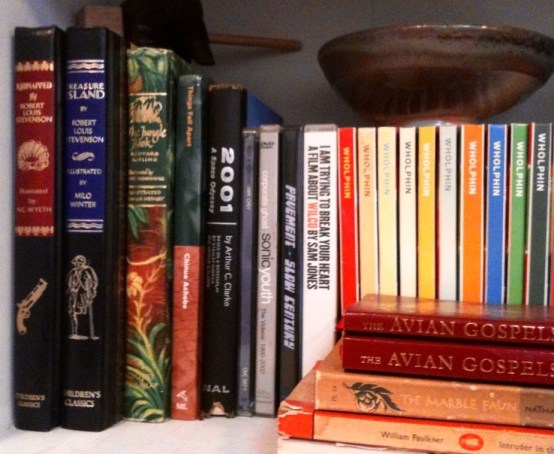
Anyway, this shelf is mostly other media, including DVDs, a few records, and playing cards.

Of note (perhaps) are the three illustrated volumes on the left that I’ve had forever.

20121118-095404.jpg

The illustrated Kidnapped features art by N.C. Wyeth:

20121118-095421.jpg

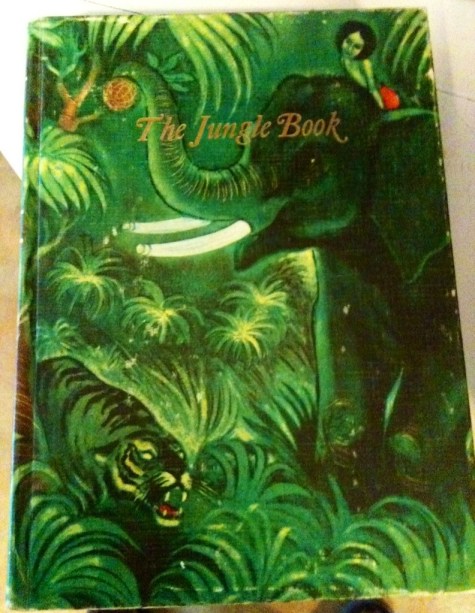
The illustrated Kipling was actually my father’s:

20121118-095431.jpg

Have you read Adam Novy’s novel The Avian Gospels? It’s good stuff.

20121118-095438.jpg

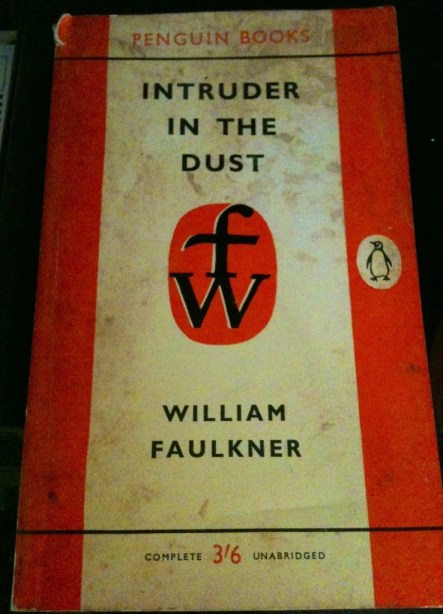
Like many bibliophiles, I’m a sucker for plain Penguins:

20121118-095445.jpg

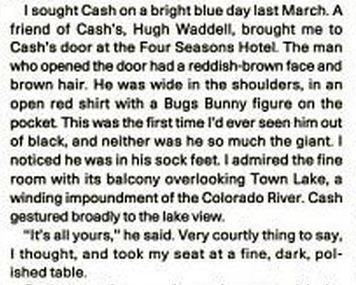
Read Barry Hannah’s Profile of Johnny Cash (SPIN, 1994)

Read all of Barry Hannah’s 1994 SPIN magazine profile of Johnny Cash via Google Books.


Bookshop — Ben Shahn