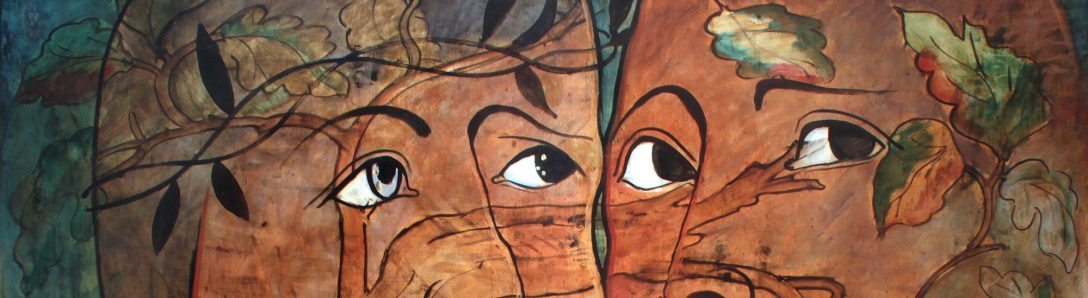
Valerie and Her Week of Wonders (Full Film)

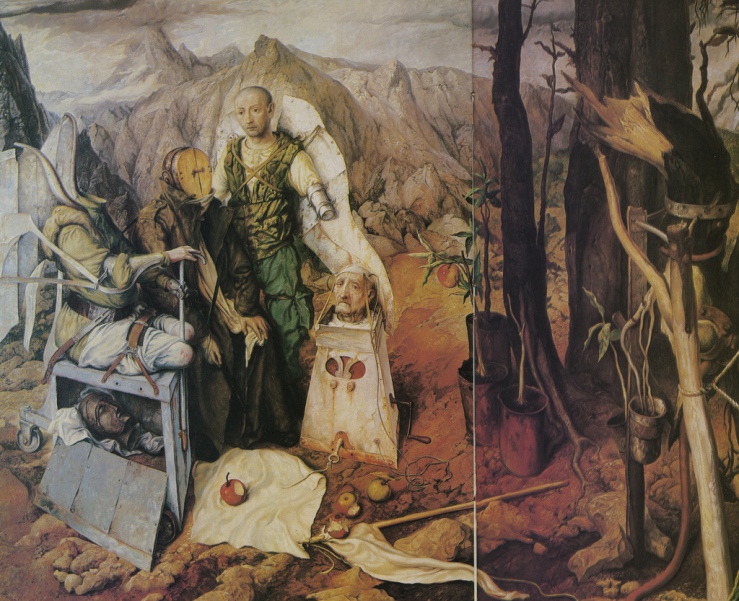
Eternal Return — Samuel Bak

3371402293_4e45d342dd_b

“ESP” (Live) — Matmos Covers The Buzzcocks

“Ahab never thinks; he only feels, feels, feels” (Moby-Dick)

“D’ye see him?” cried Ahab; but the whale was not yet in sight.

“In his infallible wake, though; but follow that wake, that’s all. Helm there; steady, as thou goest, and hast been going. What a lovely day again! were it a new-made world, and made for a summer-house to the angels, and this morning the first of its throwing open to them, a fairer day could not dawn upon that world. Here’s food for thought, had Ahab time to think; but Ahab never thinks; he only feels, feels, feels; THAT’S tingling enough for mortal man! to think’s audacity. God only has that right and privilege. Thinking is, or ought to be, a coolness and a calmness; and our poor hearts throb, and our poor brains beat too much for that. And yet, I’ve sometimes thought my brain was very calm—frozen calm, this old skull cracks so, like a glass in which the contents turned to ice, and shiver it. And still this hair is growing now; this moment growing, and heat must breed it; but no, it’s like that sort of common grass that will grow anywhere, between the earthy clefts of Greenland ice or in Vesuvius lava. How the wild winds blow it; they whip it about me as the torn shreds of split sails lash the tossed ship they cling to. A vile wind that has no doubt blown ere this through prison corridors and cells, and wards of hospitals, and ventilated them, and now comes blowing hither as innocent as fleeces. Out upon it!—it’s tainted. Were I the wind, I’d blow no more on such a wicked, miserable world. I’d crawl somewhere to a cave, and slink there. And yet, ’tis a noble and heroic thing, the wind! who ever conquered it? In every fight it has the last and bitterest blow. Run tilting at it, and you but run through it. Ha! a coward wind that strikes stark naked men, but will not stand to receive a single blow. Even Ahab is a braver thing—a nobler thing than THAT. Would now the wind but had a body; but all the things that most exasperate and outrage mortal man, all these things are bodiless, but only bodiless as objects, not as agents. There’s a most special, a most cunning, oh, a most malicious difference! And yet, I say again, and swear it now, that there’s something all glorious and gracious in the wind. These warm Trade Winds, at least, that in the clear heavens blow straight on, in strong and steadfast, vigorous mildness; and veer not from their mark, however the baser currents of the sea may turn and tack, and mightiest Mississippies of the land swift and swerve about, uncertain where to go at last. And by the eternal Poles! these same Trades that so directly blow my good ship on; these Trades, or something like them—something so unchangeable, and full as strong, blow my keeled soul along! To it! Aloft there! What d’ye see?”

“Nothing, sir.”

From “The Chase—The Third Day,” Chapter 135 of Melville’s Moby-Dick.


“Bluebeard” — Edna St. Vincent Millay

“Bluebeard” by Edna St. Vincent Millay—

This door you might not open, and you did;
So enter now, and see for what slight thing
You are betrayed… Here is no treasure hid,
No cauldron, no clear crystal mirroring
The sought-for truth, no heads of women slain
For greed like yours, no writhings of distress,
But only what you see… Look yet again—
An empty room, cobwebbed and comfortless.
Yet this alone out of my life I kept
Unto myself, lest any know me quite;
And you did so profane me when you crept
Unto the threshold of this room to-night
That I must never more behold your face.
This now is yours. I seek another place.

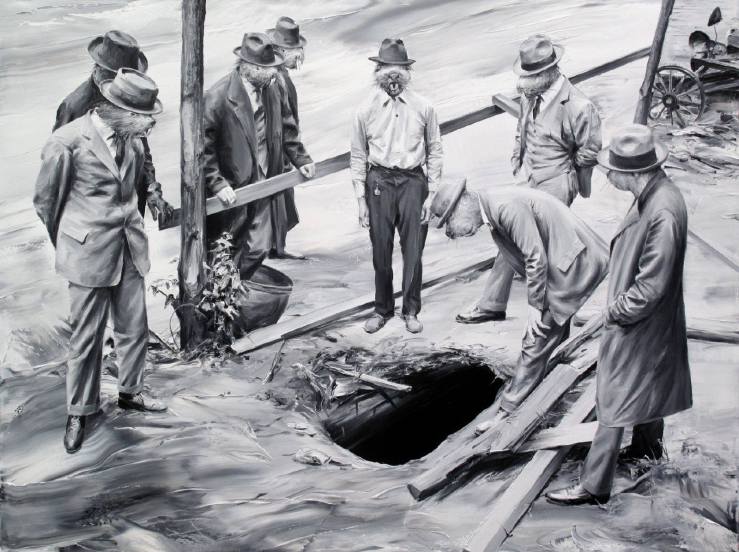
Nostalgia — Paco Pomet

Paco_Pomet_Nostalgia_2011_1938_412

(More/via)

“The Blind Man” — Guy de Maupassant

“The Blind Man” by Guy de Maupassant

How is it that the sunlight gives us such joy? Why does this radiance when it falls on the earth fill us with the joy of living? The whole sky is blue, the fields are green, the houses all white, and our enchanted eyes drink in those bright colors which bring delight to our souls. And then there springs up in our hearts a desire to dance, to run, to sing, a happy lightness of thought, a sort of enlarged tenderness; we feel a longing to embrace the sun.

The blind, as they sit in the doorways, impassive in their eternal darkness, remain as calm as ever in the midst of this fresh gaiety, and, not understanding what is taking place around them, they continually check their dogs as they attempt to play.

When, at the close of the day, they are returning home on the arm of a young brother or a little sister, if the child says: “It was a very fine day!” the other answers: “I could notice that it was fine. Loulou wouldn’t keep quiet.”

I knew one of these men whose life was one of the most cruel martyrdoms that could possibly be conceived.

He was a peasant, the son of a Norman farmer. As long as his father and mother lived, he was more or less taken care of; he suffered little save from his horrible infirmity; but as soon as the old people were gone, an atrocious life of misery commenced for him. Dependent on a sister of his, everybody in the farmhouse treated him as a beggar who is eating the bread of strangers. At every meal the very food he swallowed was made a subject of reproach against him; he was called a drone, a clown, and although his brother-in-law had taken possession of his portion of the inheritance, he was helped grudgingly to soup, getting just enough to save him from starving. Continue reading ““The Blind Man” — Guy de Maupassant”

Bibliothèque — Maria Helena Vieira da Silva

biblioth-que-1949