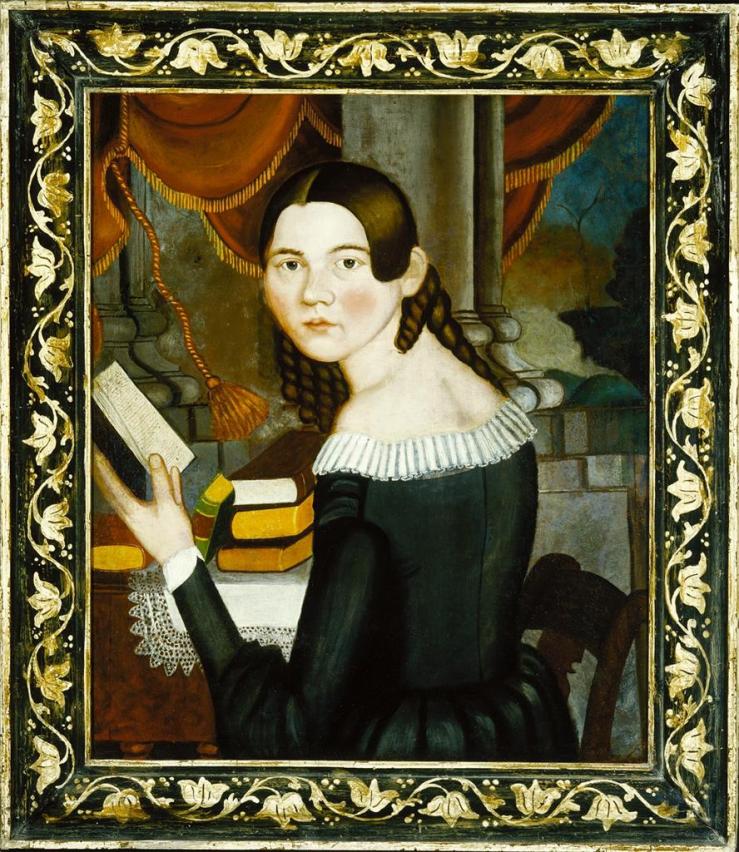
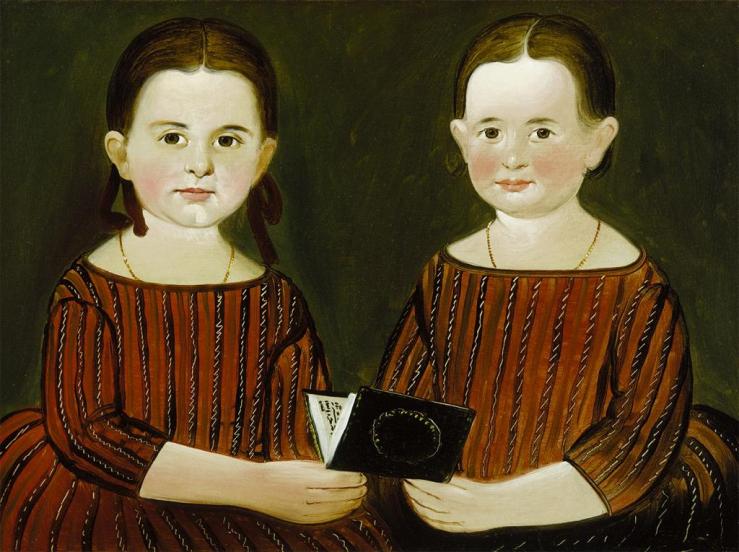
Portrait of Harriet — Jonathan Adams Bartlett

TERRA_DB_103997200

Scott and Zelda Fitzgerald Apply for a Passport

f-scott-fitzgerald

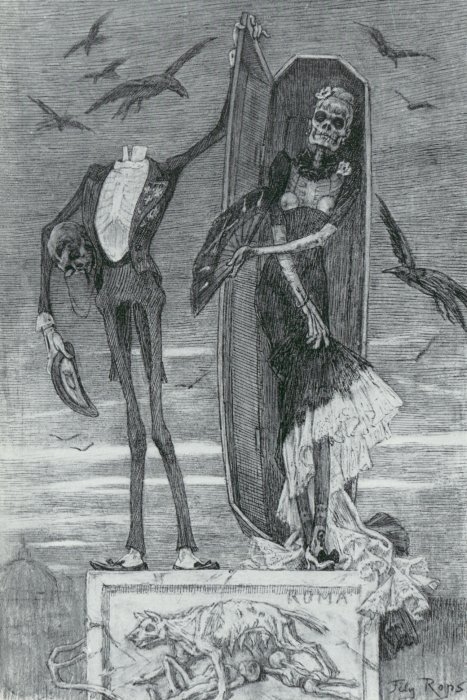
The Supreme Vice — Felicien Rops

the-supreme-vice

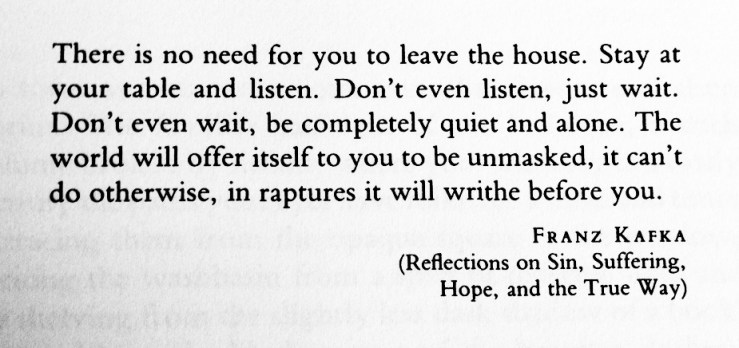
No Need (Kafka)

kafka

Dream #7 — David Lynch (Very Short Film)

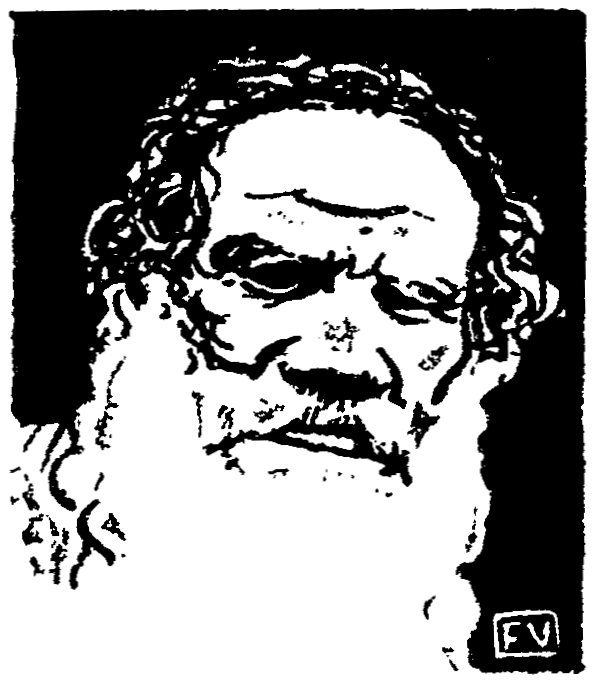
Leo Tolstoy — Felix Vallotton

leo-tolstoy-1895

“A Defence of Ugly Things” — G.K. Chesterton

“A Defence of Ugly Things” by G.K. Chesterton

There are some people who state that the exterior, sex, or physique of another person is indifferent to them, that they care only for the communion of mind with mind; but these people need not detain us. There are some statements that no one ever thinks of believing, however often they are made.

But while nothing in this world would persuade us that a great friend of Mr. Forbes Robertson, let us say, would experience no surprise or discomfort at seeing him enter the room in the bodily form of Mr. Chaplin, there is a confusion constantly made between being attracted by exterior, which is natural and universal, and being attracted by what is called physical beauty, which is not entirely natural and not in the least universal. Or rather, to speak more strictly, the conception of physical beauty has been narrowed to mean a certain kind of physical beauty which no more exhausts the possibilities of external attractiveness than the respectability of a Clapham builder exhausts the possibilities of moral attractiveness.

The tyrants and deceivers of mankind in this matter have been the Greeks. All their splendid work for civilization ought not to have wholly blinded us to the fact of their great and terrible sin against the variety of life. It is a remarkable fact that while the Jews have long ago been rebelled against and accused of blighting the world with a stringent and one-sided ethical standard, nobody has noticed that the Greeks have committed us to an infinitely more horrible asceticism—an asceticism of the fancy, a worship of one aesthetic type alone. Jewish severity had at least common-sense as its basis; it recognised that men lived in a world of fact, and that if a man married within the degrees of blood certain consequences might follow. But they did not starve their instinct for contrasts and combinations; their prophets gave two wings to the ox and any number of eyes to the cherubim with all the riotous ingenuity of Lewis Carroll. But the Greeks carried their police regulation into elfland; they vetoed not the actual adulteries of the earth but the wild weddings of ideas, and forbade the banns of thought.

It is extraordinary to watch the gradual emasculation of the monsters of Greek myth under the pestilent influence of the Apollo Belvedere. The chimaera was a creature of whom any healthy-minded people would have been proud; but when we see it in Greek pictures we feel inclined to tie a ribbon round its neck and give it a saucer of milk. Who ever feels that the giants in Greek art and poetry were really big—big as some folk-lore giants have been? In some Scandinavian story a hero walks for miles along a mountain ridge, which eventually turns out to be the bridge of the giant’s nose. That is what we should call, with a calm conscience, a large giant. But this earthquake fancy terrified the Greeks, and their terror has terrified all mankind out of their natural love of size, vitality, variety, energy, ugliness. Nature intended every human face, so long as it was forcible, individual, and expressive, to be regarded as distinct from all others, as a poplar is distinct from an oak, and an apple-tree from a willow. But what the Dutch gardeners did for trees the Greeks did for the human form; they lopped away its living and sprawling features to give it a certain academic shape; they hacked off noses and pared down chins with a ghastly horticultural calm. And they have really succeeded so far as to make us call some of the most powerful and endearing faces ugly, and some of the most silly and repulsive faces beautiful. This disgraceful via media, this pitiful sense of dignity, has bitten far deeper into the soul of modern civilization than the external and practical Puritanism of Israel. The Jew at the worst told a man to dance in fetters; the Greek put an exquisite vase upon his head and told him not to move. Continue reading ““A Defence of Ugly Things” — G.K. Chesterton”

Two Girls Sharing a Book — William Matthew Prior

TERRA_DB_103997185

The Dreamer — Caspar David Friedrich

Videodrome — David Cronenberg (Full Film)

“There are in English often long trains of words allied by their meaning and derivation” (Samuel Johnson)

There are in English often long trains of words allied by their meaning and derivation; as, to beata batbatoona battlea beetlea battledoreto batterbatter, a kind of glutinous composition for food, made by beating different bodies into one mass. All these are of similar signification, and perhaps derived from the Latin batuo. Thus taketouchtickletacktackle; all imply a local conjunction from the Latin tangotetigitactum.

From two are formed twaintwicetwentytwelvetwinstwinetwisttwirltwigtwitchtwingebetweenbetwixttwilighttwibil.

The following remarks, extracted from Wallis, are ingenious but of more subtlety than solidity, and such as perhaps might in every language be enlarged without end.

Sn usually imply the nose, and what relates to it. From the Latin nasus are derived the French nez and the English nose; and nesse, a promontory, as projecting like a nose. But as if from the consonants ns taken from nasus, and transposed that they may the better correspond, sn denote nasus; and thence are derived many words that relate to the nose, as snoutsneezesnoresnort,snearsnickersnotsnivelsnitesnuffsnufflesnafflesnarlsnudge.

There is another sn which may perhaps be derived from the Latin sinuo, as snakesneaksnailsnare; so likewise snap and snatchsnibsnubBl imply a blast; as blowblastto blastto blight, and, metaphorically, to blast one’s reputation;bleatbleak, a bleak place, to look bleak, or weather-beaten, blackblaybleachblusterblurtblisterblabbladderblewblabber lip’tblubber-cheek’tblotedblote-herringsblastblazeto blow, that is, blossombloom; and perhapsblood and blush.

In the native words of our tongue is to be found a great agreement between the letters and the thing signified; and therefore the sounds of the letters smaller, sharper, louder, closer, softer, stronger, clearer, more obscure, and more stridulous, do very often intimate the like effects in the things signified.

Thus words that begin with str intimate the force and effect of the thing signified, as if probably derived from στρωννυμι, or strenuous; as strongstrengthstrewstrikestreakstrokestripestrivestrifestrugglestroutstrutstretchstrait,strictstreight, that is, narrow, distrainstressdistressstringstrapstreamstreamerstrandstripstraystrugglestrangestridestradale.

St in like manner imply strength, but in a less degree, so much only as is sufficient to preserve what has been already communicated, rather than acquire any new degree; as if it were derived from the Latin sto; for example, standstay, that is, to remain, or to prop; staffstay, that is, to oppose; stopto stuffstifleto stay, that is, to stop; a stay, that is, an obstacle; stickstutstutterstammerstaggersticklestickstake, a sharp, pale, and any thing deposited at play; stockstem,stingto stingstinkstitchstudstuncheonstubstubble, to stub up, stump, whence stumblestalkto stalkstepto stamp with the feet, whence to stamp, that is, to make an impression and a stamp; stowto stowto bestowsteward, orstowardsteadsteadystedfaststablea stablea stallto stallstoolstallstillstallstallagestagestill, adjective, and still, adverb: stalestoutsturdysteadstoatstallionstiffstark-deadto starve with hunger or cold; stonesteel,sternstanchto stanch blood, to staresteepsteeplestairstandard, a stated measure, stately. In all these, and perhaps some others, st denote something firm and fixed.

Thr imply a more violent degree of motion, as throwthrustthrongthrobthroughthreatthreatenthrallthrows.

Wr imply some sort of obliquity or distortion, as wryto wreathewrestwrestlewringwrongwrinchwrenchwranglewrinklewrathwreakwrackwretchwristwrap.

Sw imply a silent agitation, or a softer kind of lateral motion; as swayswagto swayswaggerswervesweatsweepswillswimswingswiftsweetswitchswinge.

Nor is there much difference of sm in smoothsmugsmilesmirksmite; which signifies the same as to strike, but is a softer word; smallsmellsmacksmothersmart, a smart blow properly signifies such a kind of stroke as with an originally silent motion, implied in sm, proceeds to a quick violence, denoted by ar suddenly ended, as is shown by t.

Cl denote a kind of adhesion or tenacity, as in cleaveclayclingclimbclamberclammyclaspto claspto clipto clinchcloakclogcloseto closea cloda clot, as a clot of blood, clouted cream, a cluttera cluster.

Sp imply a kind of dissipation or expansion, especially a quick one, particularly if there be an r, as if it were from spargo or separo: for example, spreadspringsprigsproutsprinklesplitsplinterspillspitsputterspatter.

Sl denote a kind of silent fall, or a less observable motion; as in slimeslideslipslipperslysleightslitslowslackslightslingslap.

And so likewise ash, in crashrashgashflashclashlashslashplashtrash, indicate something acting more nimbly and sharply. But ush, in crushrushgushflushblushbrushhushpush, imply something as acting more obtusely and dully. Yet in both there is indicated a swift and sudden motion not instantaneous, but gradual, by the continued sound, sh.

Thus in flingslingdingswingclingsingwringsting, the tingling of the termination ng, and the sharpness of the vowel i, imply the continuation of a very slender motion or tremor, at length indeed vanishing, but not suddenly interrupted. [31]But in tinkwinksinkclinkchinkthink, that end in a mute consonant, there is also indicated a sudden ending.

If there be an l, as in jingletingletinkleminglesprinkletwinkle, there is implied a frequency, or iteration of small acts. And the same frequency of acts, but less subtile by reason of the clearer vowel a, is indicated in jangletangle,spanglemanglewranglebrangledangle; as also in mumblegrumblejumble. But at the same time the close u implies something obscure or obtunded; and a congeries of consonants mbl, denotes a confused kind of rolling or tumbling, as in ramblescamblescramblewambleamble; but in these there is something acute.

In nimble, the acuteness of the vowel denotes celerity. In sparklesp denotes dissipation, ar an acute crackling, k a sudden interruption, l a frequent iteration; and in like manner in sprinkle, unless in may imply the subtilty of the dissipated guttules. Thick and thin differ in that the former ends with an obtuse consonant, and the latter with an acute.

In like manner, in squeeksqueaksquealsquallbrawlwraulyaulspaulscreekshriekshrillsharpshrivelwrinklecrackcrashclashgnashplashcrushhushhisse,  fisse,  whistsoft,  jar,  hurl,  curl,  whirl,  buz,  bustlespindledwindletwinetwist, and in many more, we may observe the agreement of such sort of sounds with the things signified; and this so frequently happens, that scarce any language which I know can be compared with ours. So that one monosyllable word, of which kind are almost all ours, emphatically expresses what in other languages can scarce be explained but by compounds, or decompounds, or sometimes a tedious circumlocution.

(From Samuel Johnson’s A Grammar of the English Tongue).

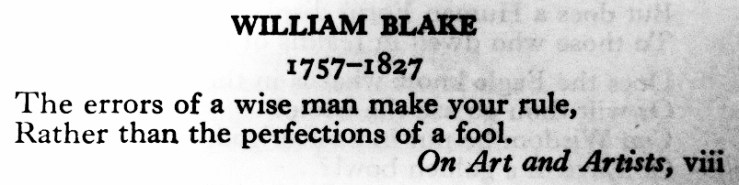
Perfections of a Fool (Blake)

blake

Fox And Rabbit — Yuri Norstein (Short Animated Film)

Still Points North (Book Acquired, 3.02.2013)

20130304-154858.jpg

Still Points North is Leigh Newman’s new memoir about growing up in Alaska. Publisher Random House’s blurb:

Part adventure story, part love story, part homecoming, Still Points North is a page-turning memoir that explores the extremes of belonging and exile, and the difference between how to survive and knowing how to truly live.

Growing up in the wilds of Alaska, seven-year-old Leigh Newman spent her time landing silver salmon, hiking glaciers, and flying in a single-prop plane. But her life split in two when her parents unexpectedly divorced, requiring her to spend summers on the tundra with her “Great Alaskan” father and the school year in Baltimore with her more urbane mother.

Navigating the fraught terrain of her family’s unraveling, Newman did what any outdoorsman would do: She adapted. With her father she fished remote rivers, hunted caribou, and packed her own shotgun shells. With her mother she memorized the names of antique furniture, composed proper bread-and-butter notes, and studied Latin poetry at a private girl’s school. Charting her way through these two very different worlds, Newman learned to never get attached to people or places, and to leave others before they left her. As an adult, she explored the most distant reaches of the globe as a travel writer, yet had difficulty navigating the far more foreign landscape of love and marriage.

In vivid, astonishing prose, Newman reveals how a child torn between two homes becomes a woman who both fears and idealizes connection, how a need for independence can morph into isolation, and how even the most guarded heart can still long for understanding. Still Points North is a love letter to an unconventional Alaskan childhood of endurance and affection, one that teaches us that no matter where you go in life, the truest tests of courage are the chances you take, not with bears and blizzards, but with other people.


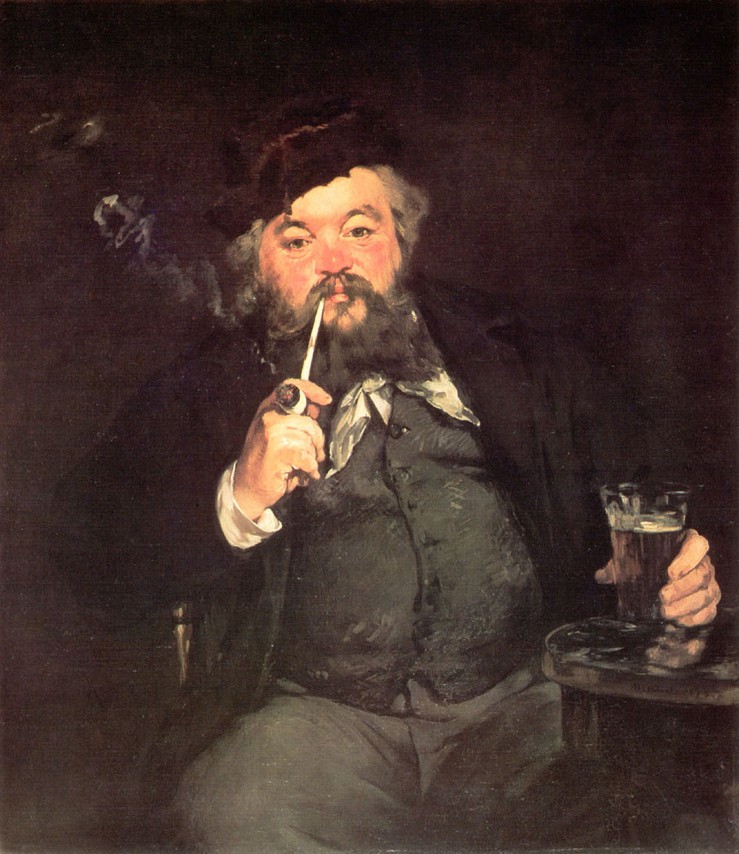
A Good Glass of Beer — Edouard Manet

a-good-glass-of-beer-1873

Woman Reading — Pablo Picasso

“The Masters of Cubism” — César Vallejo

“The Masters of Cubism” by César Vallejo (translated by Jason Weiss) is part of a forthcoming collection Selected Writings by César Vallejo, edited by Joseph Mulligan. You can read more selections translated by Weiss at Itineraries of a Hummingbird.

The Masters of Cubism
The Pythagoras of Painting

The greatest contemporary painter is a Spaniard from Málaga:  Picasso.  Next to Picasso and embracing a no less powerful artistic personality is another Spaniard from Madrid:  Juan Gris.  In Paris, the fame of both, at least among the elites of the vanguard, has helped in large part to impose the new painting which under the name of Cubism offers now figures so towering as Braque, Derain, Matisse, Marcoussis, whose works are being celebrated far and wide, that they can almost be considered classics already.  I’ve just now finished reading an article by Sabord where he tells of his surprise on seeing how the cubist revolutionaries are starting to enjoy a popular and absolute consecration, as if they weren’t such revolutionaries.  Every show of decorative models from Parisian shops is currently dominated by the motifs and drawings of Braque, Matisse, Gris, and naturally, Picasso himself.  Generally, starting with the International Exposition of Decorative Arts in 1925, cubism has invaded the world of commerce to a resounding degree.  Cubism has spread to furniture design, luxury goods, architecture, posters, the theater, etc.  The famous and dazzling concert hall the Salle Pleyel has the most old-school polygons.  The ads for the Cook Agency on locomotives haul along entire squads of geometry from les fauves.  People get all caught up trying to locate the characters from Doctor Caligari among the truncated pyramids and the loony bin’s lack of perspective, etc, etc.  The year 1923 marks the apex of Muscovite influence on decorative art in Paris.  Upon this Russian prevalence of taste and heights followed the cubist prevalence of taste and depth, which has now reached its greatest scope.   Okay, fine.  To this irradiation of a new art, profoundly human and, above all, of its time, Picasso and Gris have contributed with ideas and works of the highest order.  An overly patriotic Spaniard might claim that the current cubist prevalence in the Paris fashion industry is in the end a Spanish triumph, since cubism has Picasso and Gris for leaders.

But that’s not why one could think that cubism, on getting around and put within reach of commercial taste, is on the threshold of passing into the domain of the vulgar, that is, by that road it’s on the point of going up in smoke and disappearing, due to the superficiality and coarseness of its trajectory.  The spread of cubism proves only that there breathes a broadly human content, a universal vitality.  This spread is, at the same time, natural and logical.  The great esthetic currents of history have had equal luck and the same consecration.  The works of Picasso and his friends, like the marvels of the Renaissance, will pass into the category of celebrities, not for having descended to the majority of people but rather for having educated those people to the point of making them ascend toward the works and for enclosing there a cosmic rhythm.  We must not forget that there is celebrity and celebrity.  One thing is Paul de Kock and another is Victor Hugo.

Among the first creators of cubism, Gris has toiled away heroically.  Hero against the recalcitrant public and hero against many sectarians of the school itself.  Since his first paintings, Gris has shown a rigorous, mathematical sense of art, against the reigning celestinesque metaphysics.  Gris paints in numbers.  His canvases are real top-grade creations, brilliantly resolved.  Beside other cubists more or less wavering from capitulation or disbelief, Gris preaches and carries out, from the dawn of the new esthetic, around 1908, an intransigent, red, vertical belief.  Nothing of Bergsonism nor of empirical rationalism.  Gris preaches and carries out a conscientious and scientific knowledge of painting.  He wants the painter to know conscientiously what he is painting and to avail himself of a wise technique and vigilant practice, by which he may properly make use of his natural gifts.  His work, in this way, is made of precision, of pure certainty, of Goethean infallibility.  Without sinking in any narrow scholasticism.  Gris always adjusts himself, like the sainted hermit Popes, to the severe and apostolic numbers.  Because of that, the critics have called him the Pythagoras of painting and proclaimed him the initiator of what could be called “pure painting,” like the “pure poetry” of abbé Brémond.  Such appreciations spring up of their own from the serene contemplation of his work, where he strictly practiced the doctrine upheld, shortly before his death, in his conference at the Sorbonne.

Gris has been perhaps the most rebellious painter in Paris.  He was not the sort of artist who compromises out of hunger, or love of fame, or out of “lousy doubts,” as Apollinaire would say.  Gris is always Gris, against aces and queens, even against time and against himself.  And through this rigorous spirit of artistic austerity and through the scientific possession of his creative forces, without unconfessable fog or elaborate and complicit mysteries, Juan Gris will remain the most representative painter of our time.

[Variedades 1069.  Lima, 25 August 1928.]