“People have bones so insects won’t flood their limbs and inflate their bodies to normal size” (Ben Marcus)

People have bones so insects won’t flood their limbs and inflate their bodies to normal size. A person who is insect-controlled often sits and drinks tea, though an insect fluid called blood flows quickly beneath her skin. She has an accurate walking style and can converse in one or more languages. She sleeps lying down, and uses a filter called hair to attract her mates. The small people in her house call her “Mom,” and she answers them by collapsing the tension in her face, a surrendering of control that passes for listening. When she pursues an upper-level-difficulty slalom run of housekeeping throughout her house, she has most likely failed to seal her bones from escape with fixatives called clothing. Her actions become commanded for the good of something larger, such as a naked man who resembles her father, although he might be younger and smaller and weaker, as if playing the part of her husband, though not convincingly. Her motion is voice-activated. When he addresses her, she stands on her toes and lets her arms raise up at her sides. She does a forward bend in the morning to be sure her blood pools at the top of her head. If you sliced her arm open, you would hear a faint buzzing. She has one pair of eyes, and they are often tired and red. When she uses her arms to prop up a document of regret known as a book, her bones form an ancient shape, and a brief, flashing signal is sent out through the window into the fields beyond her house, where the hive is.

From Ben Marcus’s story “Origins of the Family.” Collected in Leaving the Sea.

Boy Reading A Book — Paritosh Sen

If…. — Lindsay Anderson (Full Film)

(Read my review).

Sheet with Studies after Antique Sculpture — Jan Gossaert

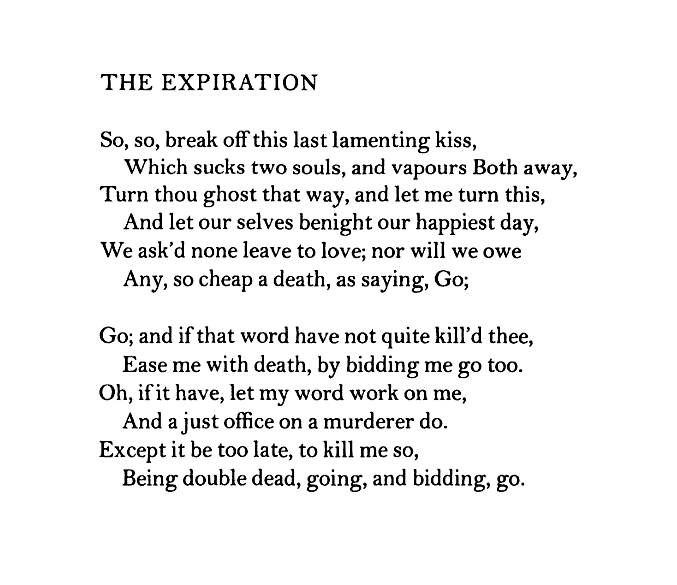
“The Expiration” — John Donne

Capture

Charlie Brown and His Dog Snoopy, As Rendered by Tony Millionaire

charlie millionaire

Hollywood at Night — Alexis Rockman

“A Worn Path” — Eudora Welty

“A Worn Path”

by

Eudora Wlety

It was December—a bright frozen day in the early morning. Far out in the country there was an old Negro woman with her head tied red rag, coming along a path through the pinewoods. Her name was Phoenix Jackson. She was very old and small and she walked slowly in the dark pine shadows, moving a little from side to side in her steps, with the balanced heaviness and lightness of a pendulum in a grand-father clock. She carried a thin, small cane made from an umbrella, and with this she kept tapping the frozen earth in front of her. This made a grave and persistent noise in the still air, that seemed meditative like the chirping of a solitary little bird.

She wore a dark striped dress reaching down to her shoe tops, and an equally long apron of bleached sugar sacks, with a full pocket: all neat and tidy, but every time she took a step she might have fallen over her shoelaces, which dragged from her unlaced shoes. She looked straight ahead. Her eyes were blue with age. Her skin had a pattern all its own of numberless branching wrinkles and as though a whole little tree stood in the middle of her forehead, but a golden color ran underneath, and the two knobs of her cheeks were illumined by a yellow burning under the dark. Under the red rag her hair came down on her neck in the frailest of ringlets, still black, and with an odor like copper.

Now and then there was a quivering in the thicket. Old Phoenix said, “Out of my way, all you foxes, owls, beetles, jack rabbits, coons and wild animals!. . . Keep out from under these feet, little bob-whites…. Keep the big wild hogs out of my path. Don’t let none of those come running my direction. I got a long way.” Under her small black-freckled hand her cane, limber as a buggy whip, would switch at the brush as if to rouse up any hiding things.

On she went. The woods were deep and still. The sun made the pine needles almost too bright to look at, up where the wind rocked. The cones dropped as light as feathers. Down in the hollow was the mourning dove—it was not too late for him.

The path ran up a hill. “Seem like there is chains about my feet, time I get this far,” she said, in the voice of argument old people keep to use with themselves. “Something always take a hold of me on this hill— pleads I should stay.” Continue reading ““A Worn Path” — Eudora Welty”

Hermia and Helena — Washington Allston

HermiaandHelena

Ingmar Bergman’s Persona (Full Film)

Melancholy — Lucas Cranach

Theory (Pessoa)

theory

Maps of Hell

Continue reading “Maps of Hell”

Polish Film Poster for The Big Lebowski — Andrzej Krajewski

Polish Poster

“Only the useless is pleasurable” and other notes from Chekhov

* * * * *

The hen sparrow believes that her cock sparrow is not chirping but singing beautifully.

* * * * *

When one is peacefully at home, life seems ordinary, but as soon as one walks into the street and begins to observe, to question women, for instance, then life becomes terrible. The neighborhood of Patriarshi Prudy (a park and street in Moscow) looks quiet and peaceful, but in reality life there is hell.

* * * * *

These red-faced young and old women are so healthy that steam seems to exhale from them.

* * * * *

The estate will soon be brought under the hammer; there is poverty all round; and the footmen are still dressed like jesters.

* * * * *

There has been an increase not in the number of nervous diseases and nervous patients, but in the number of doctors able to study those diseases.

* * * * *

The more refined the more unhappy.

* * * * *

Life does not agree with philosophy: there is no happiness which is not idleness and only the useless is pleasurable.

* * * * *

The grandfather is given fish to eat, and if it does not poison him and he remains alive, then all the family eat it.

* * * * *

A correspondence. A young man dreams of devoting himself to literature and constantly writes to his father about it; at last he gives up the civil service, goes to Petersburg, and devotes himself to literature—he becomes a censor.

* * * * *

–From Anton Chekhov’s Note-Books.

Gottfried Keller — Valerio Adami

Movies-Canton Island — Paul Sample