Morning Sun — Edward Hopper

The Painter in his Workshop — Gerrit Dou

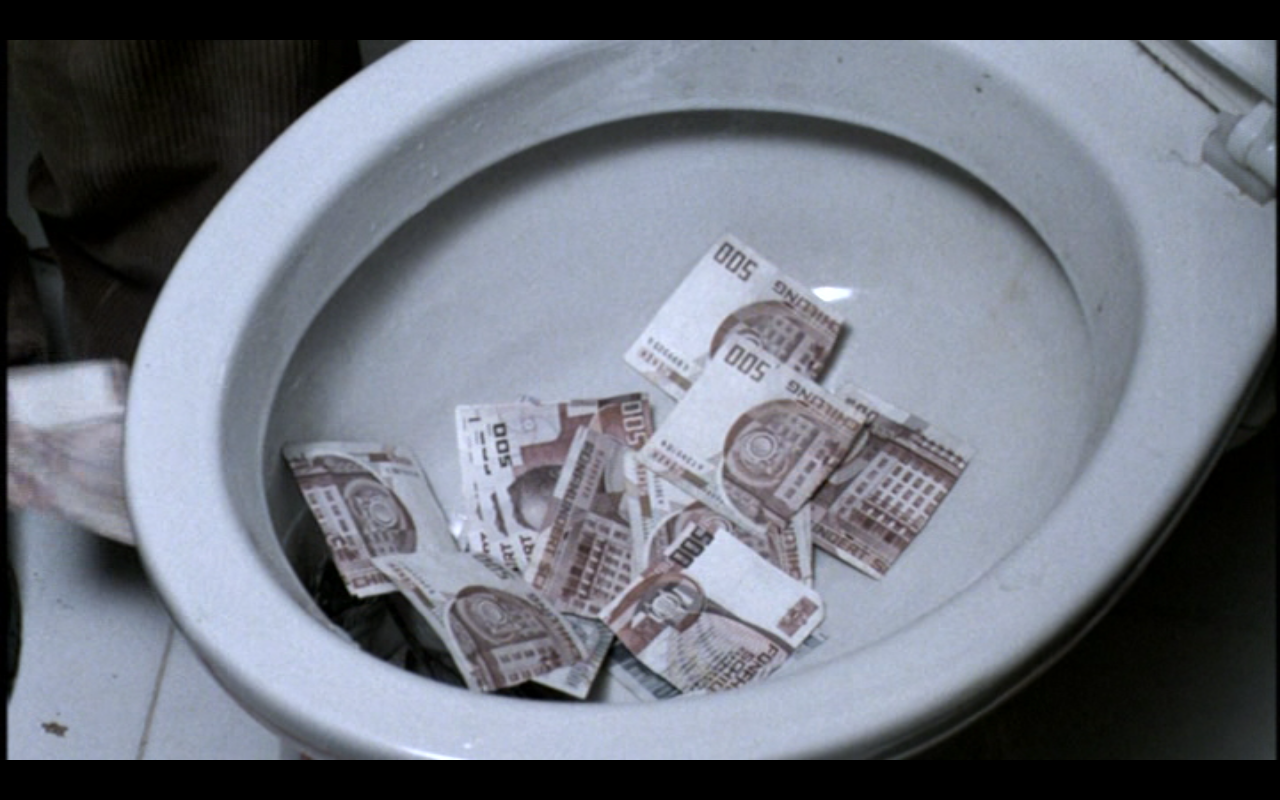
The Seventh Continent — Michael Haneke (Full Film)


Foolishness of the Fools — Francisco Goya

David Lynch Interview from 1979

“I Love This White and Slender Body” — Heinrich Heine

Capture

A Study of ‘The Room’ — Hisaji Hara

“Lily Daw and the Three Ladies” — Eudora Welty

“Lily Daw and the Three Ladies”

by Eudora Welty

Mrs Watts and Mrs Carson were both in the post office in Victory when the letter came from the Ellisville Institute for the Feeble Minded of Mississippi. Aimee Slocum, with her hand still full of mail, ran out in front and handed it straight to Mrs Watts, and they all three read it together. Mrs Watts held it taut between her pink hands, and Mrs Carson underscored each line slowly with her thimbled finger. Everybody else in the post office wondered what was up now.

“What will Lily say,” beamed Mrs Carson at last, “when we tell her we’re sending her to Ellisville!”

“She’ll be tickled to death,” said Mrs Watts, and added in a guttural voice to a deaf lady, “Lily Daw’s getting in at Ellisville!”

“Don’t you all dare go off and tell Lily without me!” called Aimee Slocum, trotting back to finish putting up the mail.

“Do you suppose they’ll look after her down there?” Mrs Carson began to carry on a conversation with a group of Baptist ladies waiting in the post office. She was the Baptist preacher’s wife.

“I’ve always heard it was lovely down there, but crowded,” said one.

“Lily lets people walk over her so,” said another.

“Last night at the tent show—-” said another, and then popped her hand over her mouth.

“Don’t mind me, I know there are such things in the world,” said Mrs Carson, looking down and fingering the tape measure which hung over her bosom.

“Oh, Mrs Carson. Well, anyway, last night at the tent show, why, the man was just before making Lily buy a ticket to get in.”

“A ticket!”

“Till my husband went up and explained she wasn’t bright, and so did everybody else.”

The ladies all clucked their tongues.

“Oh, it was a very nice show,” said the lady who had gone. “And Lily acted so nice. She was a perfect lady–just set in her seat and stared.”

“Oh, she can be a lady–she can be,” said Mrs Carson, shaking her head and turning her eyes up. “That’s just what breaks your heart.”

“Yes’m, she kept her eyes on–what’s that thing makes all the commotion?–the xylophone,” said the lady. “Didn’t turn her head to the right or to the left the whole time. Set in front of me.”

“The point is, what did she do after the show?” asked Mrs Watts practically. “Lily has gotten so she is very mature for her age.”

“Oh, Etta!” protested Mrs Carson, looking at her wildly for a moment.

“And that’s how come we are sending her to Ellisville,” finished Mrs Watts.

“I’m ready, you all,” said Aimee Slocum, running out with white powder all over her face. “Mail’s up. I don’t know how good it’s up.”

“Well, of course, I do hope it’s for the best,” said several of the other ladies. They did not go at once to take their mail out of their boxes; they felt a little left out.

The three women stood at the foot of the water tank.

“To find Lily is a different thing,” said Aimee Slocum.

“Where in the wide world do you suppose she’d be?” It was Mrs Watts who was carrying the letter.

“I don’t see a sign of her either on this side of the street or on the other side,” Mrs Carson declared as they walked along.

Ed Newton was stringing Redbird school tablets on the wire across the store. Continue reading ““Lily Daw and the Three Ladies” — Eudora Welty”

Mrs. Carl Meyer and Her Children — John Singer Sargent

“Some worm or other lay squirming before being devoured by the hen that humans were going to eat” (Clarice Lispector)

Daddy’s typewriter was tapping out tac-tac..tac-tac-tac… The clock chimed brightly ting-ting… ting-ting… The silence dragged out zzzzzzz. The wardrobe was saying what? clothes — clothes — clothes. No, no. Between the clock, the typewriter and the silence there was an ear listening out, large, flesh-pink and dead. The three sounds were connected by the light of day and by the rustling of tiny leaves on the tree as they joyfully rubbed against each other.

Resting her head against the cold, shiny window-pane, she looked into the neighbour’s yard, at the great world of the chickens-that-did-not-know-they-were-about-to-die. And as if it were right under her nose, she could smell the warm, beaten earth, so fragrant and dry, where she knew perfectly well, she knew perfectly well that some worm or other lay squirming before being devoured by the hen that humans were going to eat.

There was a grand moment, motionless and quite hollow inside. She opened her eyes wide and waited. Nothing happened. Blank. But suddenly with a shudder they wound up the day and they began to function once again, the typewriter tapping, father’s cigarette giving off smoke, silence, tiny leaves, plucked chickens, brightness, things restored to life and as impatient as a kettle on the boil. All that was missing was the ting-ting of the clock which gave so much pleasure. She closed her eyes, pretended to hear it chime, and to the rhythm of that imaginary music, she went up on the tips of her toes. She executed three dance steps, so light and ethereal.

Then suddenly she looked at everything with displeasure, as if she had eaten far too much of that concoction. ‘Hey, hey, hey…’, she murmured wearily and then thought to herself: what will happen now now now? And in the fraction of time that followed, nothing ever happened if she went on waiting for something to happen if you get my meaning? She pushed away this awkward thought, distracting herself with a movement of her bare foot on the dusty wooden floor. She rubbed her foot, looking sideways at her father, awaiting his impatient and nervous smile. But nothing happened. Nothing. It’s difficult to suck in people like the vacuum cleaner does.

— Daddy, I’ve invented a poem.

The first five paragraphs of Clarice Lispector’s novel Near to the Wild Heart.

Woman Drinking Wine — Gerard Terborch

Language becomes a compromised ideology

20140406-123125.jpg

No one ever suffers but you.

20140410-104232.jpg

“Beside Schopenhauer’s Corpse” — Guy De Maupassant

“Beside Schopenhauer’s Corpse”

by

Guy de Maupassant

He was slowly dying, as consumptives die. I saw him each day, about two o’clock, sitting beneath the hotel windows on a bench in the promenade, looking out on the calm sea. He remained for some time without moving, in the heat of the sun, gazing mournfully at the Mediterranean. Every now and then, he cast a glance at the lofty mountains with beclouded summits that shut in Mentone; then, with a very slow movement, he would cross his long legs, so thin that they seemed like two bones, around which fluttered the cloth of his trousers, and he would open a book, always the same book. And then he did not stir any more, but read on, read on with his eye and his mind; all his wasting body seemed to read, all his soul plunged, lost, disappeared, in this book, up to the hour when the cool air made him cough a little. Then, he got up and reentered the hotel.

He was a tall German, with fair beard, who breakfasted and dined in his own room, and spoke to nobody.

A vague, curiosity attracted me to him. One day, I sat down by his side, having taken up a book, too, to keep up appearances, a volume of Musset’s poems.

And I began to look through “Rolla.”

Suddenly, my neighbor said to me, in good French:

“Do you know German, monsieur?”

“Not at all, monsieur.”

“I am sorry for that. Since chance has thrown us side by side, I could have lent you, I could have shown you, an inestimable thing—this book which I hold in my hand.”

“What is it, pray?”

“It is a copy of my master, Schopenhauer, annotated with his own hand. All the margins, as you may see, are covered with his handwriting.”

I took the book from him reverently, and I gazed at these forms incomprehensible to me, but which revealed the immortal thoughts of the greatest shatterer of dreams who had ever dwelt on earth. Continue reading ““Beside Schopenhauer’s Corpse” — Guy De Maupassant”

The Shining — Murat Palta

(More; via).

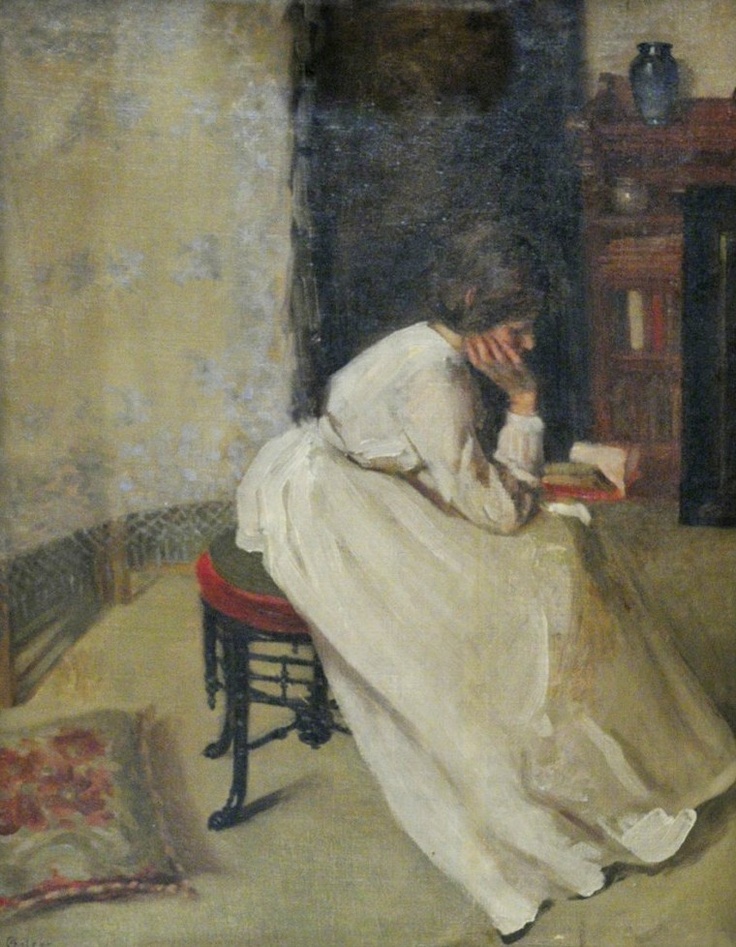
Girl Reading a Book — Emma Eilers

GIRL