“Kisses” — Robert Herrick

kisses

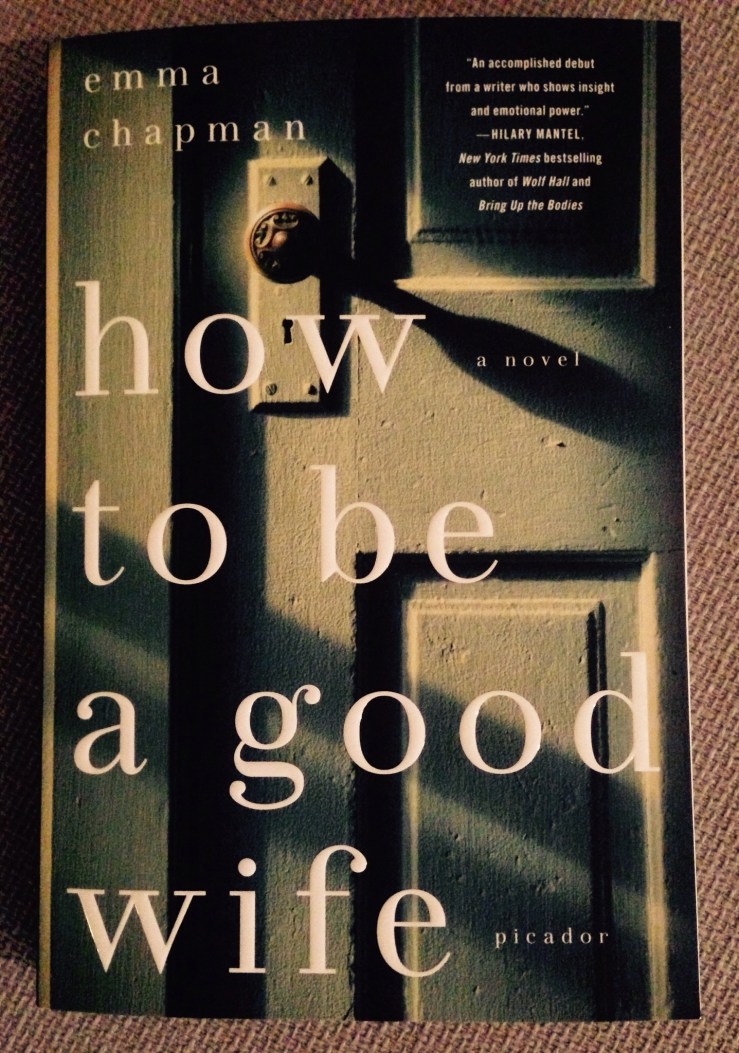
How to Be a Good Wife (Book Acquired, Some Time in October, 2014)


IMG_3591.JPG

Emma Chapman’s novel How to Be a Good Wife is new in trade paperback from Picador. Their blurb:

Marta and Hector have been married for a long time. Through the good and bad; through raising a son and sending him off to life after college. So long, in fact, that Marta finds it difficult to remember her life before Hector. He has always taken care of her, and she has always done everything she can to be a good wife—as advised by a dog-eared manual given to her by Hector’s aloof mother on their wedding day.

But now, something is changing. Small things seem off. A flash of movement in the corner of her eye, elapsed moments that she can’t recall. Visions of a blonde girl in the darkness that only Marta can see. Perhaps she is starting to remember—or perhaps her mind is playing tricks on her. As Marta’s visions persist and her reality grows more disjointed, it’s unclear if the danger lies in the world around her, or in Marta herself. The girl is growing more real every day, and she wants something.

New Will Oldham Interview in BOMB

The controlling idea, I think, is not supposed to be about the performer, but the listener. The performer is always going to dominate and control the whole experience, but as much as you drain expression out of the performance, it’s still going to be completely dominated by the performer. You can get people to sand off those portions of the performance that maybe allow the individual more access and the listening experience to have more to it. If it’s all about the performer’s idiosyncrasies and emotions, then there is no room for the audience. Some audience members might like that kind of music, but take something hyper-emotive, like Janis Joplin, and I’ll think, Ok, Janis, there is no room for me in these songs, so I’ll just turn this off and listen to something else.

From an interview with Will Oldham (Bonnie ‘Prince’ Billy) in the new issue of BOMB.

And Oldham’s latest video, which I would probably totally hate if I didn’t love it so goddamn much:

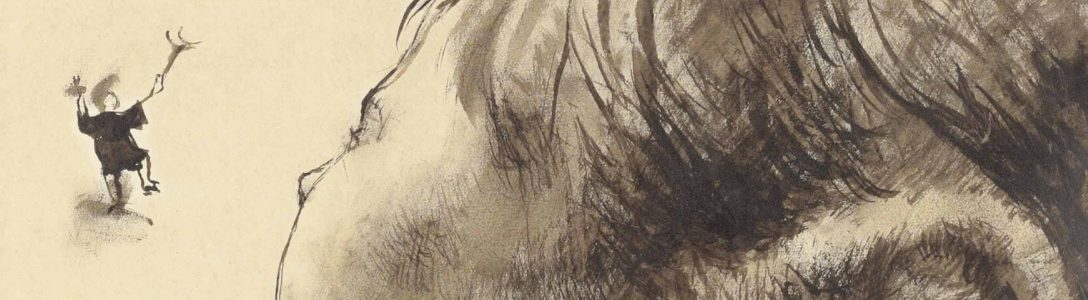
Moby Dick — Ricardo Martinez

Ricardo-Martinez-017

(Via, more).

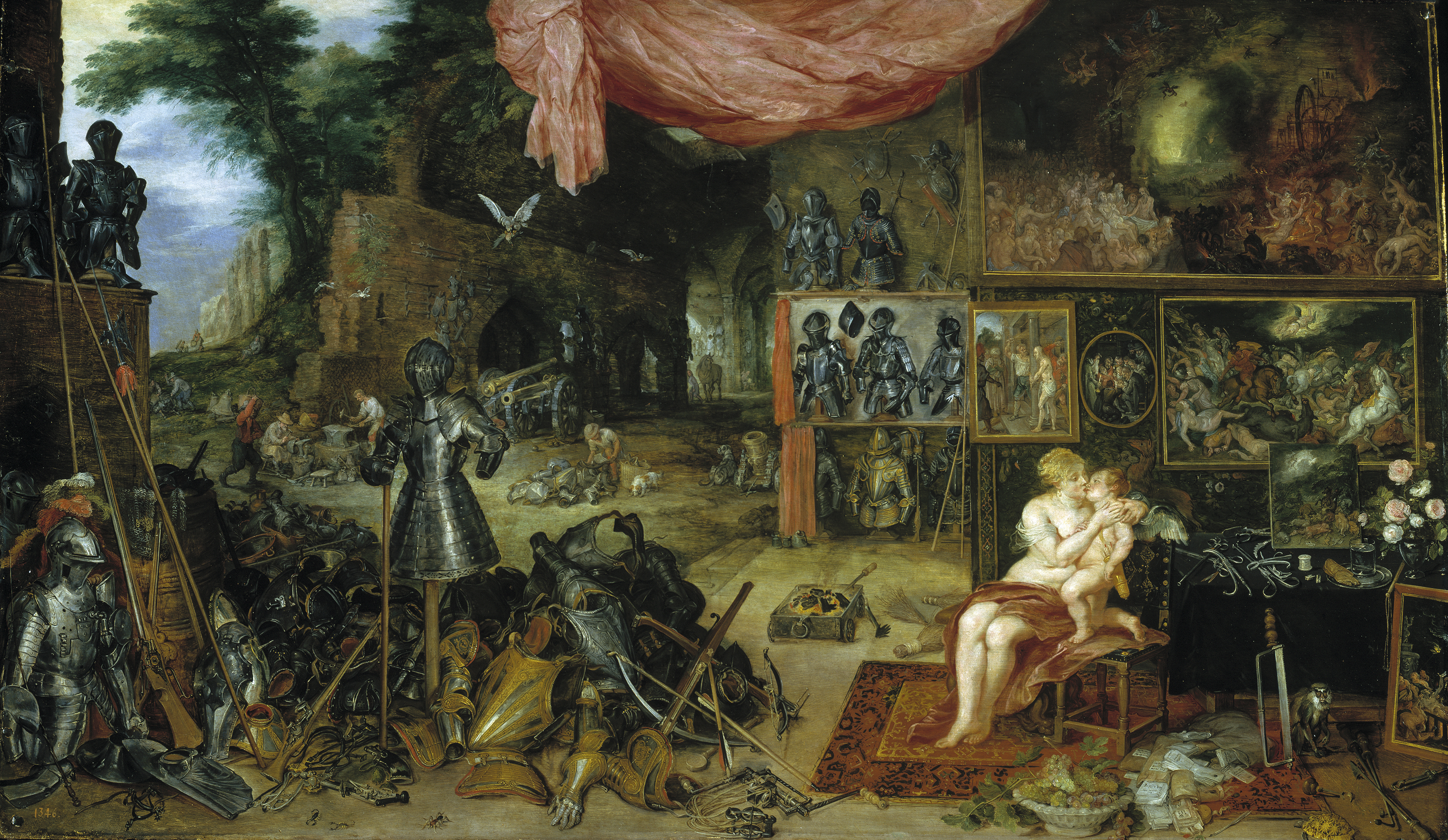
Allegory of Touch — Jan Bruegel the Elder & Peter Paul Rubens

Jan_Brueghel_Touch_Prado

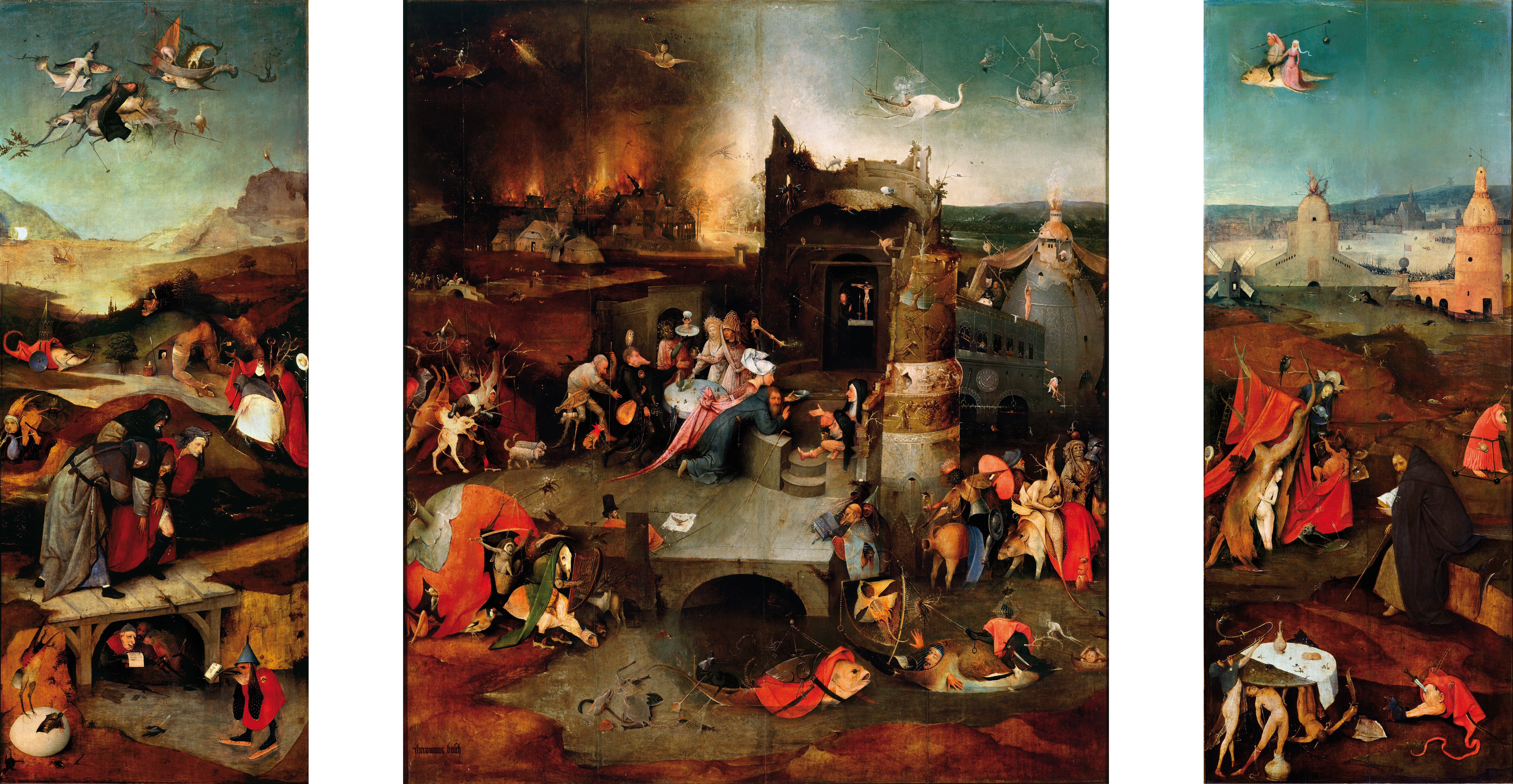
The Temptation of St. Anthony (Detail) — Hieronymus Bosch

5

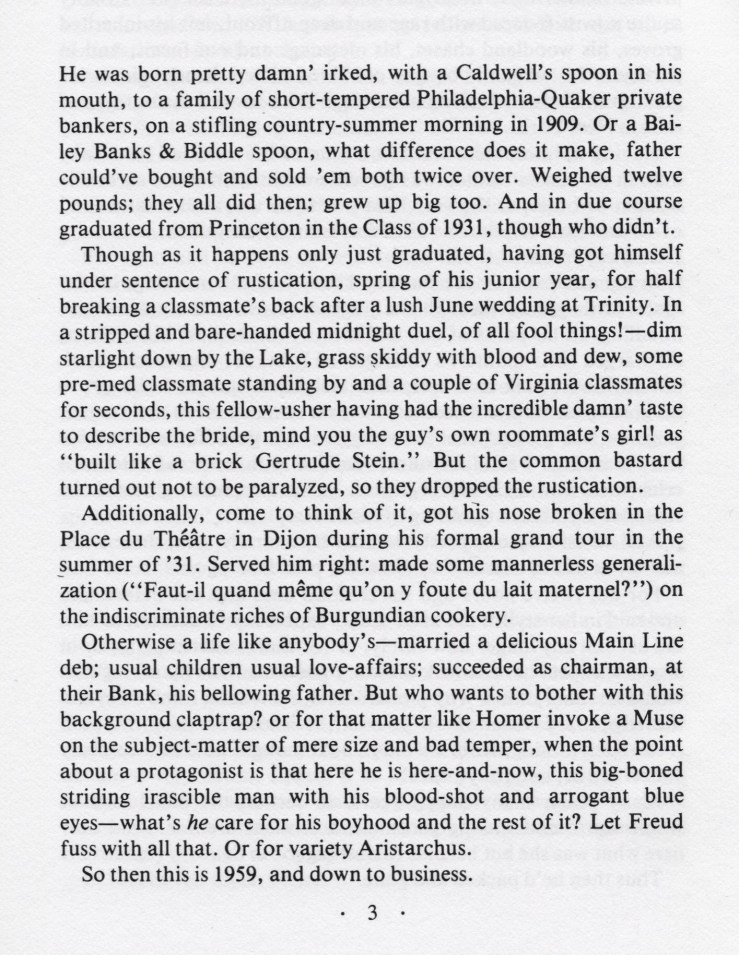
The first page of W.M. Spackman’s novel An Armful of Warm Girl

IMG_3950.JPG

The Ruins of the Kreuzkirche, Dresden — Bernardo Bellotto

“I want to plant some object in the world” — William H. Gass

I want to plant some object in the world. Now it happens to be made of signs, which may lead people to think, because it’s made of signs, that it’s pointing somewhere. But actually I’ve gone down the road and collected all sorts of highway signs, made a piece of sculpture out of these things that says Chicago, 35,000 miles. What I hope, of course, is that people will come along, gather in front of the sculpture and take a look at it—consequently, forgetting Chicago. I want to add something to the world. Now, what kind of object? Old romantic that I am, I would like to add objects to the world worthy of love. I think that the things one loves, most particularly in other people, are quite beyond anything they communicate or merely “mean.” Planting those objects is a moral activity, I suppose. You certainly don’t want to add objects to the world that everybody will detest: “Another slug made by Bill Gass.” That’s likely to be their attitude, but you don’t hope for it. The next question is, why is it that one wants this thing loved? My particular aim is that it be loved because it is so beautiful in itself, something that exists simply to be experienced. So the beauty has to come first.

From a fantastic 1978 conversation between John Gardner and William H. Gass.

Postcard for L’Avenç — Ramón Casas

L'avenç casas

The Temptation of St. Anthony (Detail) — Hieronymus Bosch

4

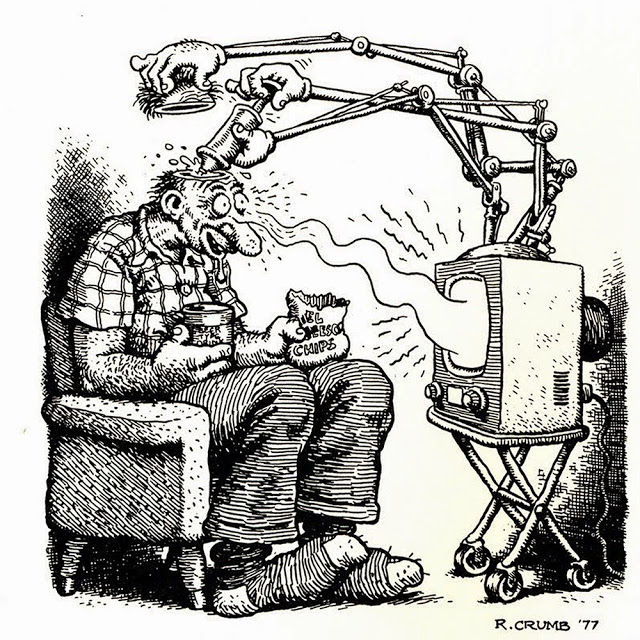
Television — Robert Crumb

robert-crumb-1977_baja2

“Go read Jacques Derrida or the like, something to break your brain on” | Gordon Lish’s Chicken Soup Recipe

Get lost for two hours. Go read Jacques Derrida or the like, something to break your brain on and convince you that mind is nothing in the comfort department compared to the things of the spirit, which is what is going on in back in the kitchen. And down’t worry about setting a timer. The fevers sailing the ethers will call you back the instant you’re wanted.

From “Not Just Any Soup,” Gordon Lish’s recipe for chicken noodle soup, published in The New York Times in 1977.

Before you can get lost in Derrida (or the like) for a few hours, you’ve got to fill an 11″ by 5″ pot with three inches of water and inch of beer. Set the heat to low and add “scrubbed carrots…chopped chive, slivered celery, sliced onion, minced garlic, ground dill, paprika, Dijon mustard, pepper, salt, a dash of cinnamon.”

How much of each? Lish is unwilling to list amounts: “Amounts is for the insurance business…The heart with good posture doesn’t stoop to check amounts.”

Add the chicken (sans fat and skin), cover, lower to a simmer, and get lost for two hours.

After you’ve read Derrida (or the like) for two hours, add the noodles — “the slenderest money can buy” — and take another hour off. To kill the time, Lish prescribes Jack Gilberts’ Views of Jeopardy — “the last poems the English language needed”).

Once that hour’s passed, stir the mixture again, thoroughly: “Lid off, the eucharist rolled over in his languid waters so that the bottom shall be the top.” Put the lid back on and wait for eight hours. Lish advises using the time to think.

Huge thanks to David Winters for sharing the recipe with me; David found the piece as part of a great big important research thing he’s doing on Lish (he also interviewed Lish for the project, so we’ll have that to look forward to—but it’s not going to be in his new book, Infinite Fictions, new from Zero this January).

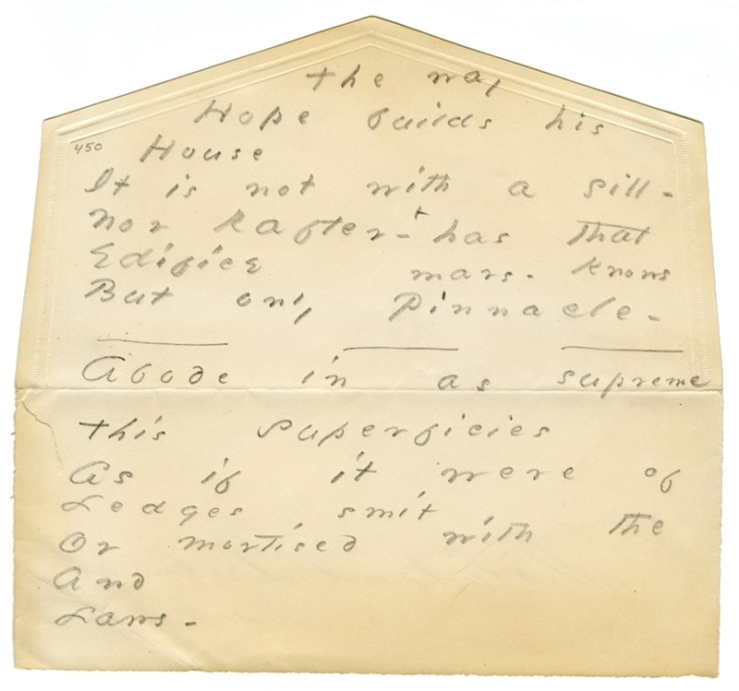
“The way hope builds his house” — Emily Dickinson (Manuscript)

10668241386_308e0495b3_b

Read Donald Barthelme’s short story, “The Phantom of the Opera’s Friend”

 “The Phantom of the Opera’s Friend”
by
Donald Barthelme

I have never visited him in his sumptuous quarters five levels below the Opera, across the dark lake.

But he has described them. Rich divans, exquisitely carved tables, amazing silk and satin draperies. The large, superbly embellished mantelpiece, on which rest two curious boxes, one containing the figure of a grasshopper, the other the figure of a scorpion…

He can, in discoursing upon his domestic arrangements, become almost merry. For example, speaking of the wine he has stolen from the private cellar of the Opera’s Board of Directors:

“A very adequate Montrachet! Four bottles! Each director accusing every other director! I tell you, it made me feel like a director myself! As if I were worth two or three millions and had a fat, ugly wife! And the trout was admirable. You know what the Poles say—fish, to taste right, must swim three times: in water, butter, and wine. All in all, a splendid evening!”

But he immediately alters the mood by making some gloomy observation. “Our behavior is mocked by the behavior of dogs.”

It is not often that the accents of joy issue from beneath that mask.

Monday. I am standing at the place I sometimes encounter him, a little door at the rear of the Opera (the building has 2, 531 doors to which there are 7, 593 keys). He always appears “suddenly”—a coup de theatre that is, to tell the truth, more annoying than anything else. We enact a little comedy of surprise.

“It’ s you!”

“Yes. ”

“What are you doing here?”

“Waiting. ”

But today no one appears, although I wait for half an hour. I have wasted my time. Except—

Faintly, through many layers of stone, I hear organ music. The music is attenuated but unmistakable. It is his great work Don Juan Triumphant. A communication of a kind.

I rejoice in his immense, buried talent.

(Read the rest here).