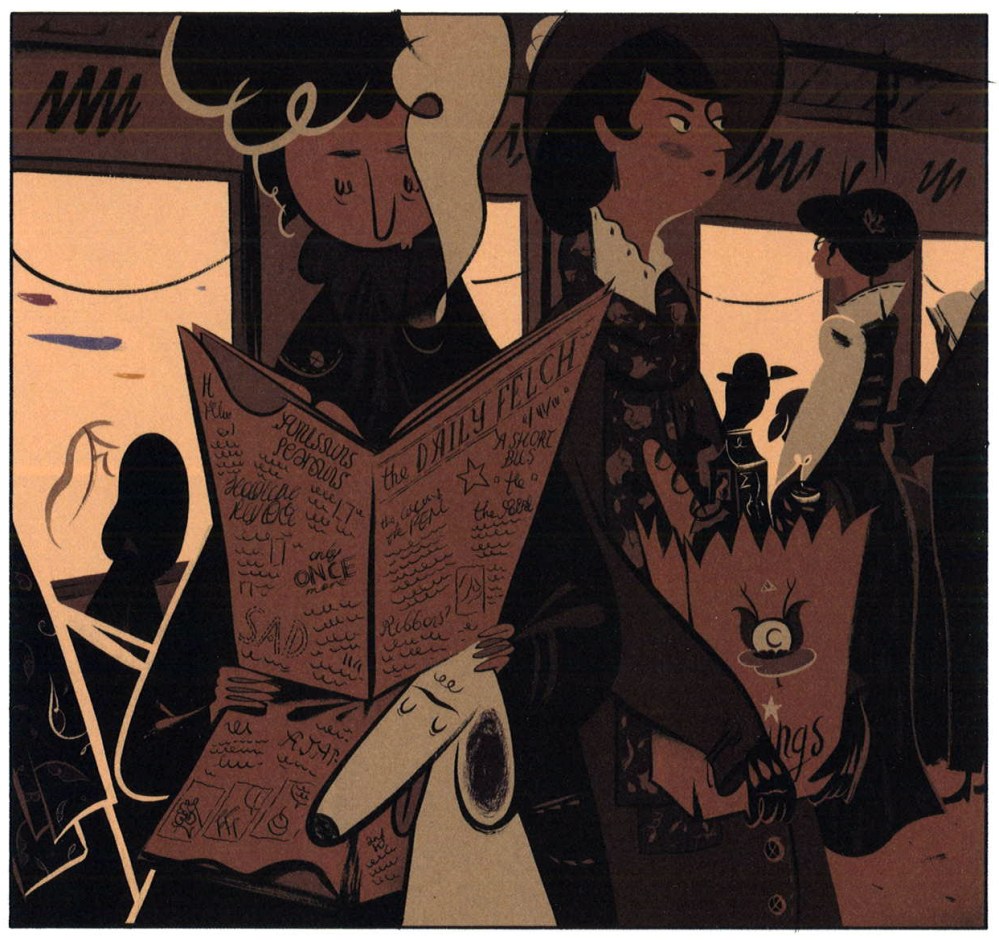
Bus Ride Two — Roman Muradov

(From Roman Muradov’s novella (In a Sense) Lost and Found).

The Short and Curlies, A Short Film by Mike Leigh

“Translation is dead. Long live translation!”

After my interview with Ilan Stavans for Biblioklept (Part 1; Part 2), I began working with him on Words in Transit: The Cultures of Translation, a year-long ‘festival’ of translation taking place at Amherst College. Events include a series of talks with translators, a Translation Film Series at the nearby cinema, a performance of monologues by ELL students, theatre and music performances, and more. Throughout the year, we are maintaining a blog devoted to translation at the Amherst College website. I will be posting excerpts from the blog here. 

Melih Levi, an Amherst student and Turkish translator, wrote this first blog post on the philosopher José Ortega y Gasset and poet Orhan Vali Kanik. Read below or check it out here. — Ryan Mihaly

Whenever I start thinking about translation as an enterprise, José Ortega y Gasset’s words come to my mind: “Translation is dead. Long live translation!” This playful maxim outlines the problems of translation in two different ways. First and foremost, it is a farewell to the practice of translation as we know it. The modern age and the technological advancements of today challenge the traditional practice of translation where translators work their way diligently through each word in a given text. Certainly, it is impossible to categorize all forms of traditional translation as one; after all, there can never be a single attitude towards translation. But if we look at how widely and deeply the print culture is influenced by the rapid technological changes of our times, it is perhaps acceptable to say that the cultures of translation, as we know it, are swiftly changing. The old ways are almost “dead.” But does this mean that there won’t be a new culture of translation in the future? Certainly not. Even if Google Translate ends up becoming a major tool in tomorrow’s translation world, a culture will develop. This is one of the ways in which Gasset’s maxim informs translation.

JoseOrtegayGasset.jpg
José Ortega y Gasset 

The second reading of Gasset’s words is perhaps more relevant and important. Gasset is thinking about the fate of literary works in general. That is, he is laying out his idea of what happens to a work when it goes through the process of translation. According to him, the work has to die before it can start to breathe again, in a different language or in a different medium. Thus, a translator is at once a gravedigger and a creator. Gasset poses a pivotal question: “Isn’t the act of translating necessarily a utopian task?”

Continue reading ““Translation is dead. Long live translation!””

“Talent” — Anton Chekhov

“Talent”

by

Anton Chekhov

AN artist called Yegor Savvitch, who was spending his summer holidays at the house of an officer’s widow, was sitting on his bed, given up to the depression of morning. It was beginning to look like autumn out of doors. Heavy, clumsy clouds covered the sky in thick layers; there was a cold, piercing wind, and with a plaintive wail the trees were all bending on one side. He could see the yellow leaves whirling round in the air and on the earth. Farewell, summer! This melancholy of nature is beautiful and poetical in its own way, when it is looked at with the eyes of an artist, but Yegor Savvitch was in no humour to see beauty. He was devoured by ennui and his only consolation was the thought that by to-morrow he would not be there. The bed, the chairs, the tables, the floor, were all heaped up with cushions, crumpled bed-clothes, boxes. The floor had not been swept, the cotton curtains had been taken down from the windows. Next day he was moving, to town.

His landlady, the widow, was out. She had gone off somewhere to hire horses and carts to move next day to town. Profiting by the absence of her severe mamma, her daughter Katya, aged twenty, had for a long time been sitting in the young man’s room. Next day the painter was going away, and she had a great deal to say to him. She kept talking, talking, and yet she felt that she had not said a tenth of what she wanted to say. With her eyes full of tears, she gazed at his shaggy head, gazed at it with rapture and sadness. And Yegor Savvitch was shaggy to a hideous extent, so that he looked like a wild animal. His hair hung down to his shoulder-blades, his beard grew from his neck, from his nostrils, from his ears; his eyes were lost under his thick overhanging brows. It was all so thick, so matted, that if a fly or a beetle had been caught in his hair, it would never have found its way out of this enchanted thicket. Yegor Savvitch listened to Katya, yawning. He was tired. When Katya began whimpering, he looked severely at her from his overhanging eyebrows, frowned, and said in a heavy, deep bass:

“I cannot marry.”

“Why not?” Katya asked softly.

“Because for a painter, and in fact any man who lives for art, marriage is out of the question. An artist must be free.” Continue reading ““Talent” — Anton Chekhov”

The Garden of Death — Hugo Simberg

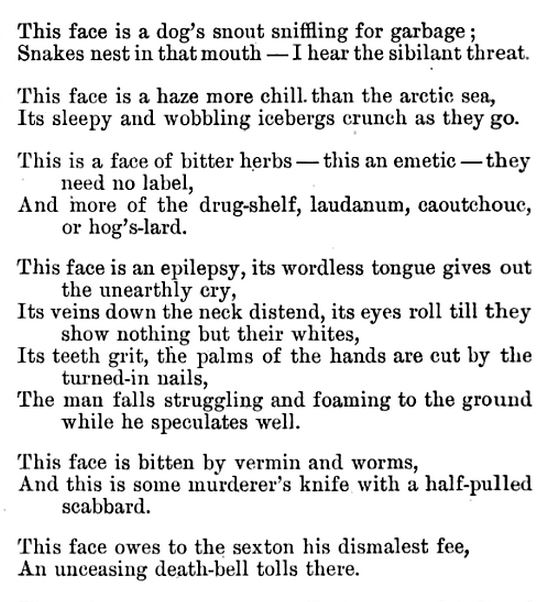
Snakes nest in that mouth (Walt Whitman)

Capture

The Mystical Body Defined — David Ruhlman

3. The mystical body defined

Detail from Descent of Christ into Limbo — Bartolomé Bermejo

tumblr_n98tp0Mwrr1sdtln4o1_1280

William Friedkin Picks DVDs from the Criterion Collection Closet

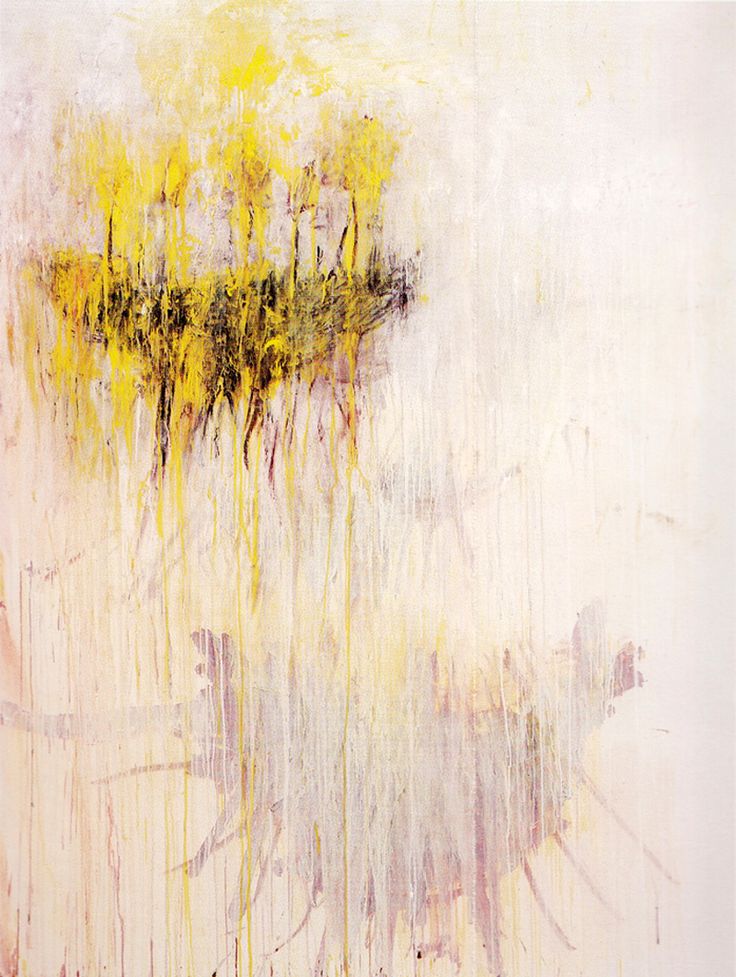
Coronation of Sesostris — Cy Twombly

cy

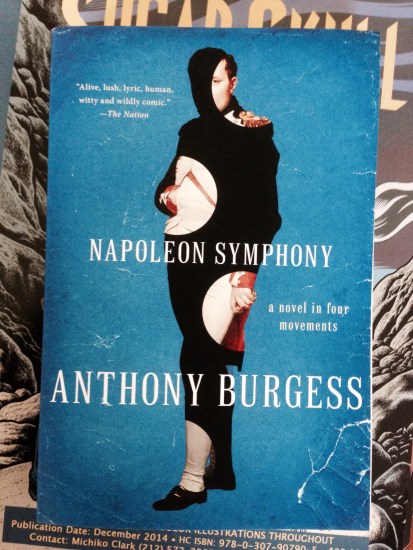
Anthony Burgess’s Napoleon Symphony (Book Acquired, 10.02.2014)

IMG_3446

Anthony Burgess’s 1974 novel Napoleon Symphony gets the trade paperback reissue treatment from Norton. Their blurb:

Anthony Burgess draws on his love of music and history in this novel he called “elephantine fun” to write.

A grand and affectionate tragicomic symphony to Napoleon Bonaparte that teases and reweaves Napoleon’s life into a pattern borrowed—in liberty, equality, and fraternity—from Beethoven’s Third “Eroica” Symphony, in this rich, exciting, bawdy, and funny novel Anthony Burgess has pulled out all the stops for a virtuoso performance that is literary, historical, and musical.

David Lynch To Bring Back Twin Peaks


After hinting a few days ago that he might be reviving his cult classic Twin Peaks—

—David Lynch dropped this:

David Lynch and Mark Frost will return to writing, producing, and directing new episodes of Twin Peaks, which will run on Showtime. The new season of Twin Peaks will take place 25 years after the end of season 2. So maybe we’ll finally get to see what happened with Agent Cooper and BOB and the Black Lodge…

tp

The Farmers and the Newspaper — Albert Anker

Adam and Eve (Unfinished) — Gustav Klimt

“Ligeia” — Edgar Allan Poe

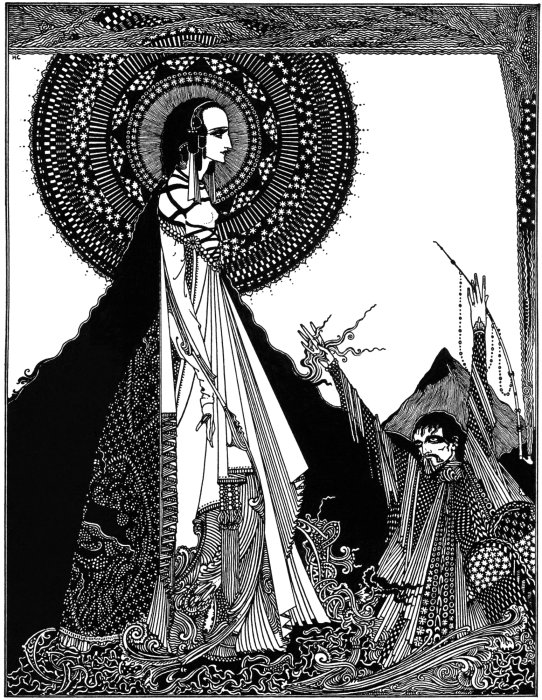
Ligeia-Clarke

“Ligeia”

by

Edgar Allan Poe

(Illustration by Harry Clarke)

And the will therein lieth, which dieth not. Who knoweth the mysteries of the will, with its vigor? For God is but a great will pervading all things by nature of its intentness. Man doth not yield himself to the angels, nor unto death utterly, save only through the weakness of his feeble will.—Joseph Glanvill.

I cannot, for my soul, remember how, when, or even precisely where, I first became acquainted with the lady Ligeia. Long years have since elapsed, and my memory is feeble through much suffering. Or, perhaps, I cannot now bring these points to mind, because, in truth, the character of my beloved, her rare learning, her singular yet placid cast of beauty, and the thrilling and enthralling eloquence of her low musical language, made their way into my heart by paces so steadily and stealthily progressive that they have been unnoticed and unknown. Yet I believe that I met her first and most frequently in some large, old, decaying city near the Rhine. Of her family—I have surely heard her speak. That it is of a remotely ancient date cannot be doubted. Ligeia! Ligeia! in studies of a nature more than all else adapted to deaden impressions of the outward world, it is by that sweet word alone—by Ligeia—that I bring before mine eyes in fancy the image of her who is no more. And now, while I write, a recollection flashes upon me that I have never known the paternal name of her who was my friend and my betrothed, and who became the partner of my studies, and finally the wife of my bosom. Was it a playful charge on the part of my Ligeia? or was it a test of my strength of affection, that I should institute no inquiries upon this point? or was it rather a caprice of my own—a wildly romantic offering on the shrine of the most passionate devotion? I but indistinctly recall the fact itself—what wonder that I have utterly forgotten the circumstances which originated or attended it? And, indeed, if ever she, the wan and the misty-winged Ashtophet of idolatrous Egypt, presided, as they tell, over marriages ill-omened, then most surely she presided over mine.

There is one dear topic, however, on which my memory falls me not. It is the person of Ligeia. In stature she was tall, somewhat slender, and, in her latter days, even emaciated. I would in vain attempt to portray the majesty, the quiet ease, of her demeanor, or the incomprehensible lightness and elasticity of her footfall. She came and departed as a shadow. I was never made aware of her entrance into my closed study save by the dear music of her low sweet voice, as she placed her marble hand upon my shoulder. In beauty of face no maiden ever equalled her. It was the radiance of an opium-dream—an airy and spirit-lifting vision more wildly divine than the phantasies which hovered vision about the slumbering souls of the daughters of Delos. Yet her features were not of that regular mould which we have been falsely taught to worship in the classical labors of the heathen. “There is no exquisite beauty,” says Bacon, Lord Verulam, speaking truly of all the forms and genera of beauty, “without some strangeness in the proportion.” Yet, although I saw that the features of Ligeia were not of a classic regularity—although I perceived that her loveliness was indeed “exquisite,” and felt that there was much of “strangeness” pervading it, yet I have tried in vain to detect the irregularity and to trace home my own perception of “the strange.” I examined the contour of the lofty and pale forehead—it was faultless—how cold indeed that word when applied to a majesty so divine!—the skin rivalling the purest ivory, the commanding extent and repose, the gentle prominence of the regions above the temples; and then the raven-black, the glossy, the luxuriant and naturally-curling tresses, setting forth the full force of the Homeric epithet, “hyacinthine!” I looked at the delicate outlines of the nose—and nowhere but in the graceful medallions of the Hebrews had I beheld a similar perfection. There were the same luxurious smoothness of surface, the same scarcely perceptible tendency to the aquiline, the same harmoniously curved nostrils speaking the free spirit. I regarded the sweet mouth. Here was indeed the triumph of all things heavenly—the magnificent turn of the short upper lip—the soft, voluptuous slumber of the under—the dimples which sported, and the color which spoke—the teeth glancing back, with a brilliancy almost startling, every ray of the holy light which fell upon them in her serene and placid, yet most exultingly radiant of all smiles. I scrutinized the formation of the chin—and here, too, I found the gentleness of breadth, the softness and the majesty, the fullness and the spirituality, of the Greek—the contour which the god Apollo revealed but in a dream, to Cleomenes, the son of the Athenian. And then I peered into the large eyes of Ligeia. Continue reading ““Ligeia” — Edgar Allan Poe”

The Bus — Paul Kirchner

Riveted — Kenton Nelson

1305878102349