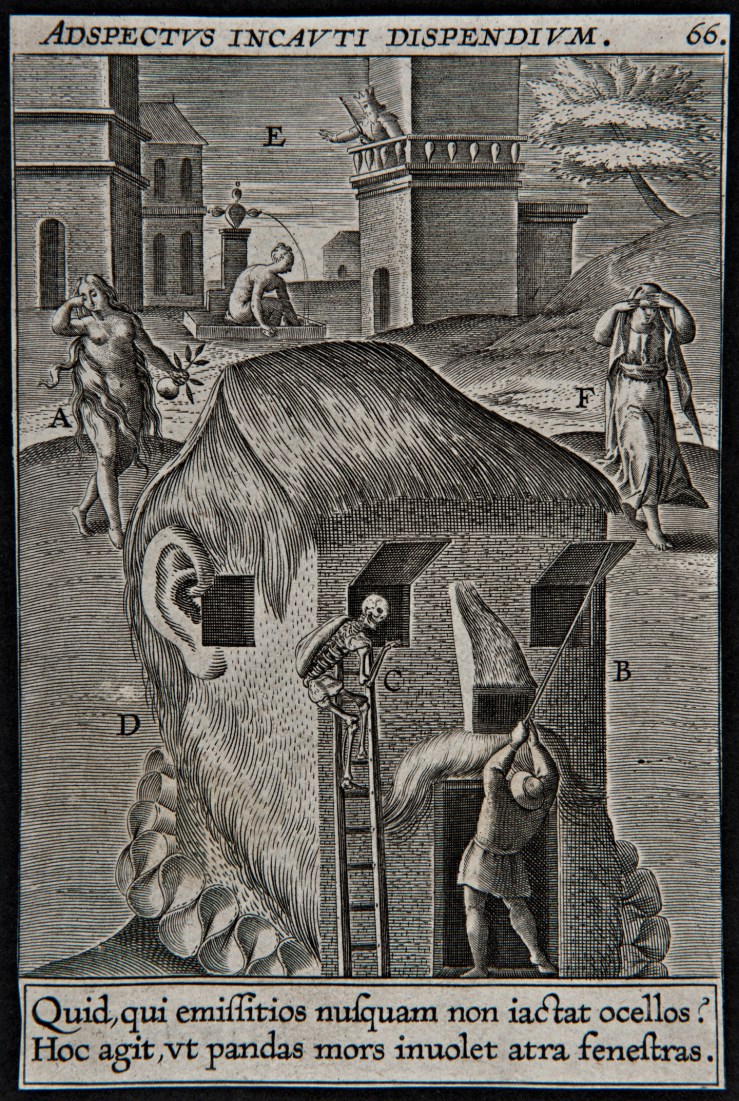
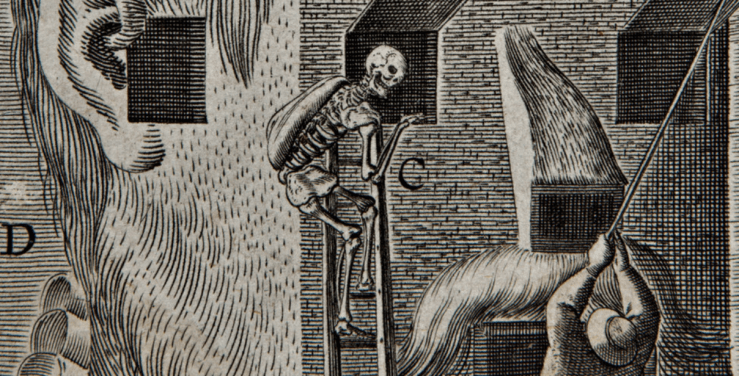
Engraving from Verdicus Christianus (A True Christian), for the chapter Adspectus Incauti Dispendium (The Cost of Careless Looking), 1601, by Theodoor Galle (1671-1733)

Engraving from Verdicus Christianus (A True Christian), for the chapter Adspectus Incauti Dispendium (The Cost of Careless Looking), 1601, by Theodoor Galle (1671-1733)
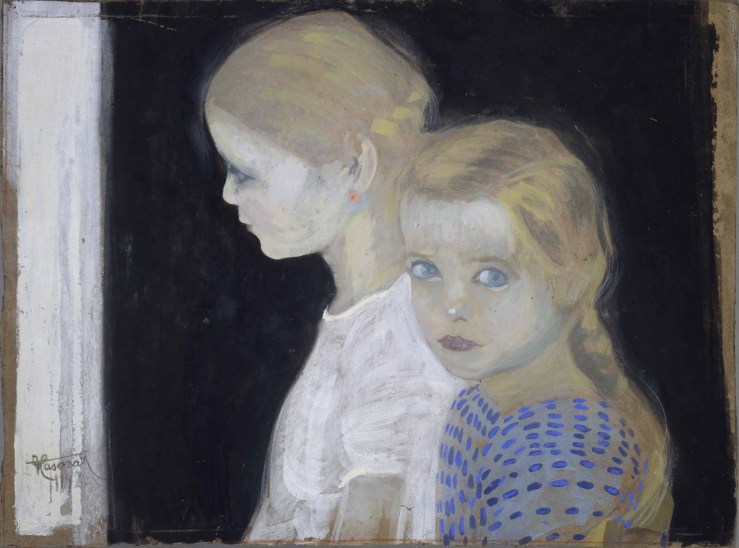

Two Girls, 1912 by Felice Casorati (1883–1963)

Rambling Preamble
Phantom Thread (2017) is the eighth feature film by writer-director Paul Thomas Anderson. I have been a fan of Anderson’s work since I saw Boogie Nights (1997) in my freshman year of college, and have watched each of his subsequent films in the theater. The theater is the proper place to watch Anderson’s lush, luscious films, although they are also so strong as narratives that they hold up just fine on, say, a 19″ Toshiba television with a built-in VCR, which is how I repeatedly watched Blockbuster-remaindered cassettes of Boogie Nights and Magnolia (1999) circa 1998-2001. But again: The theater is the proper place to see an Anderson film, and Phantom Thread is exceptionally lovely on the big screen—one doesn’t so much watch it as imbibe it, or perhaps, in a reversal of that metaphor, sink into it. What I’m saying is: Watch Phantom Thread in the theater.
Is “Watch it in the theater” not enough in the way of argument, reader? Perhaps you want, like, details?
Here are some details I knew going in to the film (I generally try to avoid reviews and any press on any film I plan to see): The film was written and directed by Paul Thomas Anderson; the film stars Daniel Day-Lewis portraying a fashion designer; the film is set sometime in the 1950s.
My wife and I went to see the film yesterday afternoon and we loved it, then discussed it at length at dinner, and then again this morning over breakfast (perhaps prompted by “breakfast” itself, one of the film’s motifs). It’s a strange, beautiful, perplexing romantic comedy that will disarm and unsettle audiences. I can’t wait to see it again.
The Plot and the Major Characters
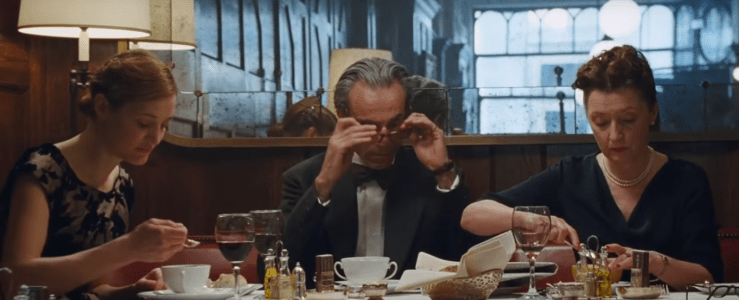
1950s. London and countryside environs. Reynolds Jeremiah Woodcock (Daniel Day-Lewis) is a famous fashion designer who dresses the highest of high in European society. He and his sister Cyril (Lesley Manville) run the House of Woodcock, following a precise, obsessive routine. At the film’s outset, Reynolds meets Alma (Vicky Krieps), a waitress in a countryside restaurant. He asks her to dinner that night, and from there the two enter into a strange relationship. The film’s trajectory explores the conflicts and confluences of that strange relationship, tracing how Reynolds’ and Alma’s romance intertwines with Cyril, business, design, and art. (Oh. And Reynolds’ and Cyril’s dead mother).
Cinematography, Score, Costume Design and Set Design
Gorgeous. Like I said, go see the film—the aesthetics are marvelous, rich, sumptuous. I’ve been writing about Paul Thomas Anderson as an auteur (and will continue to do so), but his production team is fantastic, and I think there’s an implicit argument in Phantom Thread itself against the whole auteur concept. (If you listen to or read interviews with Anderson, he will often use the pronoun “We” when discussing his work).

Phantom Thread’s Place in Paul Thomas Anderson’s Filmography
Phantom Thread might be Anderson’s “best” film to date: it is certainly one of the best-acted, best-shot, and best-directed, and its editing and pace move with a more precise rhythm than his looser and more sprawling films. I loved it, but it’s not necessarily my favorite Anderson film. If pressed to choose a favorite, I might point to the weird sprawl of Inherent Vice (2014) or the perfect imperfection of The Master (2012)—or just settle on There Will Be Blood (2007). Many Anderson fans point to Anderson’s shortest film, Punch-Drunk Love (2002) as his best.
In some ways, Phantom Thread has more in common with Punch-Drunk Love than his other films. They are both romantic comedies featuring emotionally-challenged leads who find their way to a strange resolution. In any case, Phantom Thread is an engaging character study focused on just a few intense personalities—like The Master, Punch-Drunk Love, or There Will Be Blood. It’s more focused in its vision than Boogie Nights or Magnolia, and more emotionally “true” than Anderson’s first feature, Hard Eight (1996). Those first three films seem to me particularly beholden to Martin Scorsese and Robert Altman, but Phantom Thread continues to show Anderson overcoming his anxiety of influence. (Although I’ll admit that I was occasionally reminded of Scorsese’s The Age of Innocence (1993) while watching Phantom Thread—probably because of the luxuriant imagery. And Daniel Day-Lewis. Anderson’s film is superior).
The Goddamn Movie Trailer
The discussion of the film that follows contains spoilers, including descriptions of the film’s ending
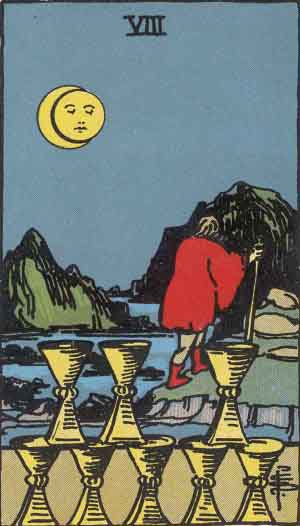
“The Significance of the Number 8 in Blood Meridian“ is a compelling analysis by William Wickey. Wickey lists numerous examples of the number in McCarthy’s (anti)Western, and touches on the number as a motif connected to gnosticism, tarot, and more.
From the beginning of Wickey’s essay:
The first “major” example of eight occurs in Chapter V when Sproule and the kid stumble across a tree hung with dead babies in a mountain pass after the destruction of Captain White’s war party at the hands of The Comanches.
“The way narrowed through the rocks and by and by they came to a bush that was hung with dead babies. / They stopped side by side reeling in the heat. These small victims, seven, eight of them had holes punched in their under jaws and were hung so by their throats from the broken stobs of mesquite to stare eyeless at the naked sky.” (57)
This grizzly scene sets the tone for subsequent uses of eight in the novel. Every major appearance of eight implies death.
A very similar description follows in the same chapter, describing a group of delirious Mexican soldiers that save Sproule and the kid’s lives by giving them water.
“The refugees stood by the side of the road. The riders looked burnt and haggard coming up out of the sun and they sat their horses as if they had no weight at all. There were seven, eight of them. They wore broadbrimmed hats and leather vests and they carried escopetas across the pommels of the saddles and as they rode past the leader nodded gravely to them from the captain’s horse and touched his hatbrim and they rode on. (63)
Only a few days prior, these eight horses carried the only mounted survivors of the Commanche attack. Their former riders, including the captain, are now dead, presumably at the hands of these Mexican soldiers, having just escaped death at the hands of the Commanches.
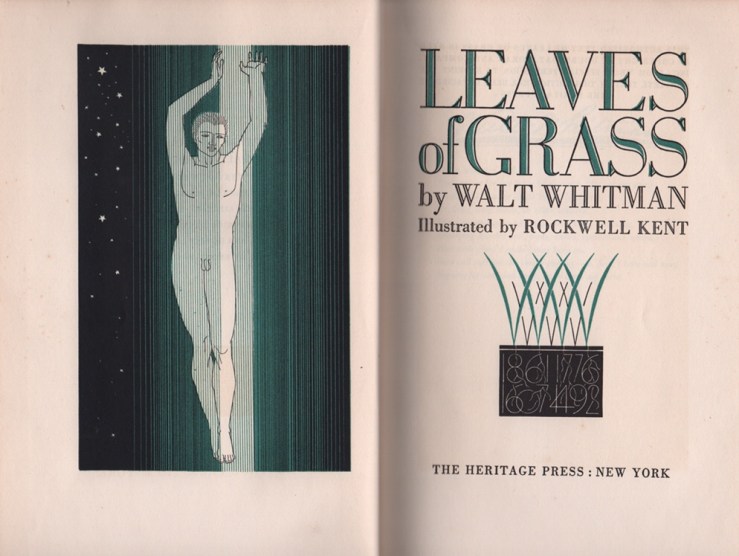
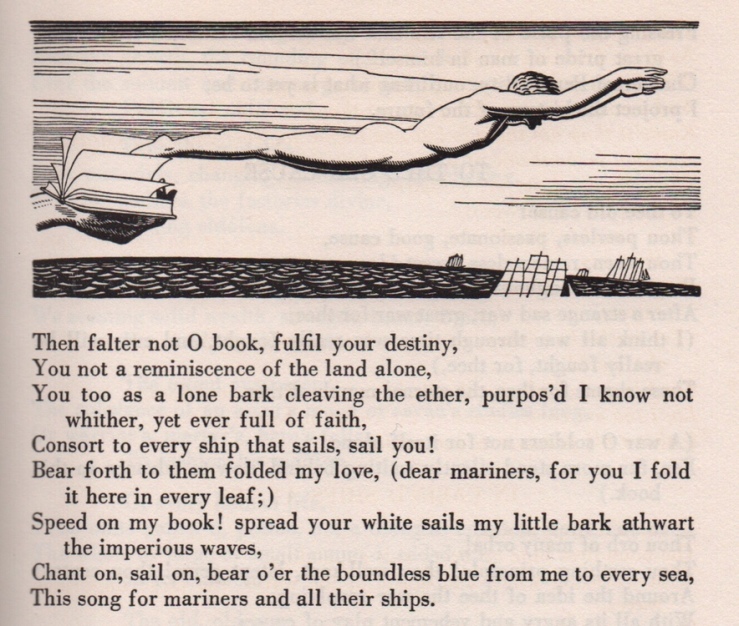
I couldn’t pass up on this illustrated Heritage Press copy of Leaves of Grass. I’m not sure of the exact date of publication, but this nice long post on the book suggests it was likely published in 1950 and designed in the mid-thirties.

My daughter and I were browsing the poetry section of our favorite used bookshop—quite randomly actually—and she pulled this volume of Leaves of Grass downward like a lever, pretending it might open a secret passage. It didn’t open a secret passage, but when she pushed it back again, I saw Kent’s name on the spine. I love Kent’s work, and I’m a huge Whitman fan, and my copy of Leaves of Grass is literally falling apart. Plus only $10 and I had plenty of store credit…so…
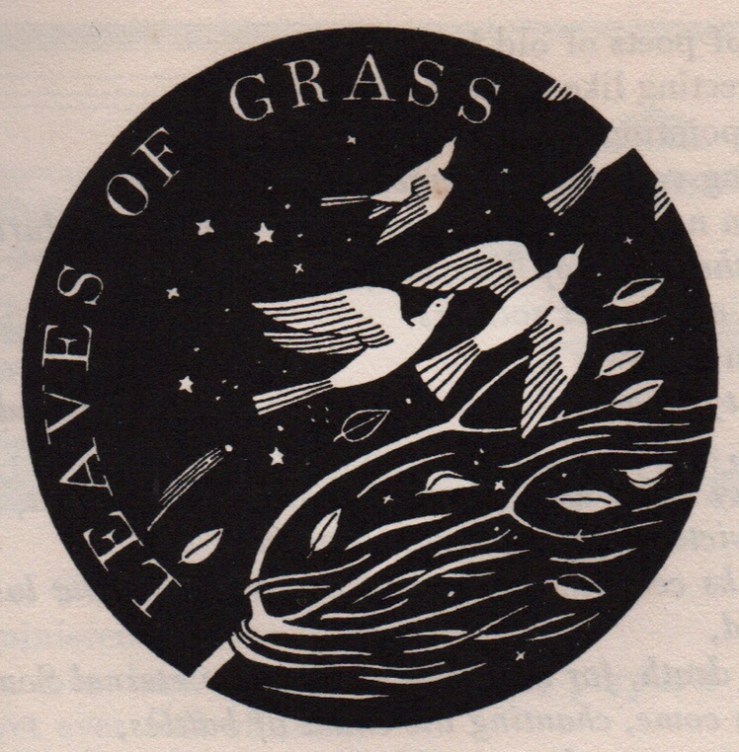
I’ll share some of the illustrations and verses over the next few months—a nice excuse to go through Leaves of Grass again.

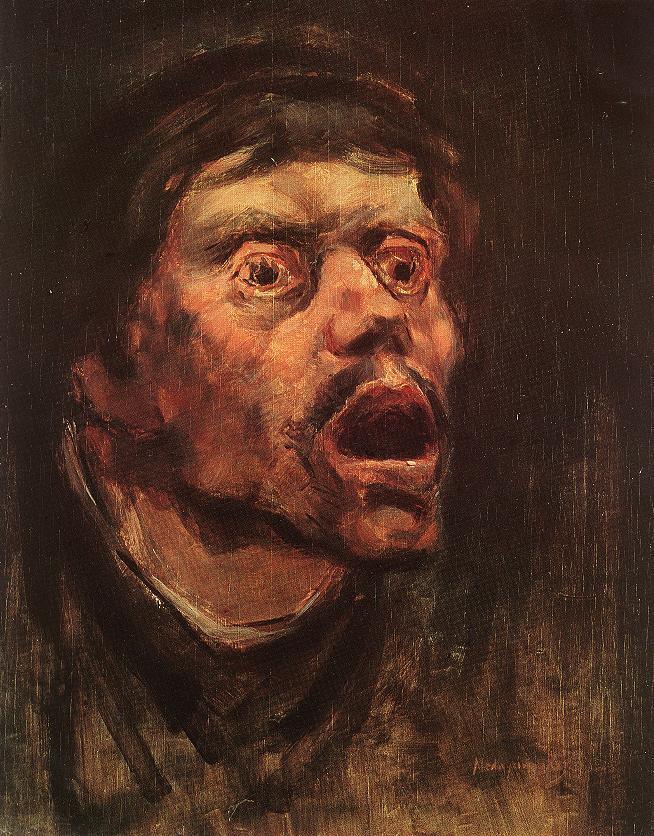
Head of a Tramp, 1896 by Laszlo Mednyanszky (1852-1919)

So after maybe one tumbler of scotch too many, I finally broke down and just ordered a copy of Thomas S. Klise’s out-of-print cult novel The Last Western (1974) online. I’d been looking for it in used bookshops for awhile after reading it as a pirate ebook earlier this year. I’ll admit I’m a bit disappointed in the quality of this mass market paperback I paid fifteen U.S. dollars for, but it’s nice to have the novel to check against the ebook (like, if I ever get off my ass to really write about it). The Last Western is a prescient, zany, often sad political/religious thriller set in a kinda-sorta future—a dystopia just a shade off from our own current dystopia. The central figure, Willie, is a multiracial baseball phenom who eventually becomes the Pope. Despite its clean, lucid, straightforward prose style, Klise’s novel definitely has a heavy 70s vibe to it; fans of Vonnegut and Ishmael Reed would likely dig The Last Western. Its later cult fame seems to stem from its resonance with Infinite Jest, a novel that resembles it in several ways (although Wallace said he’d never heard of it). Anyway, I’ve said this before, but I think that some brave indie should reprint The Last Western so folks like me could buy nice new crisp well-bound copies.

Vignette, 2003 by Kerry James Marshall (b. 1955)
 Biblioklept