
Untitled (Pinball Machine), 1971 (from Troubled Waters) by William Eggleston (b. 1939)
Untitled (Pinball Machine), 1971 (from Troubled Waters) by William Eggleston (b. 1939)
Mercutio. Among his virtues, I admire above all his lightness in a world of brutality, his dreaming imagination – as the poet of Queen Mab – and at the same time his wisdom, as the voice of reason amid the fanatical hatreds of Capulets and Montagues. He sticks to the old code of chivalry at the price of his life, perhaps just the sake of style, and yet he is a modern man, skeptical and ironic – a Don Quixote who knows very well what dreams are and what reality is, and he lives both with open eyes.
From The New York Times 1985 obituary of Italo Calvino. The obituary is here citing an interview Calvino did with The New York Times Book Review in late 1984.

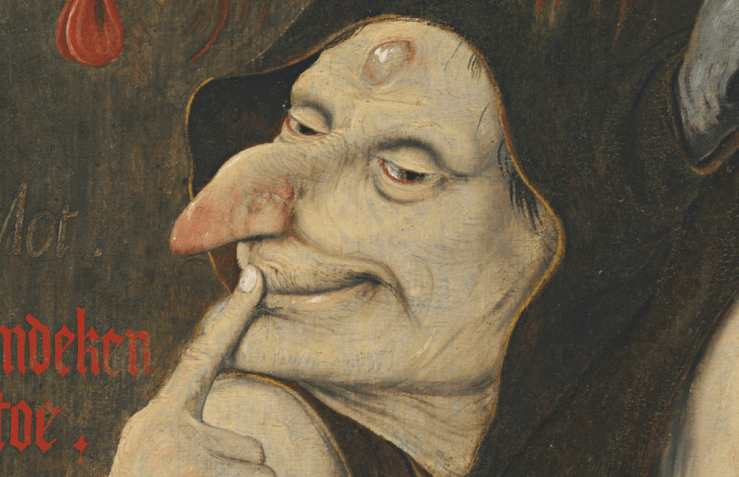
An Allegory of Folly, early 16th century by Quentin Matsys (1456/1466–1530)

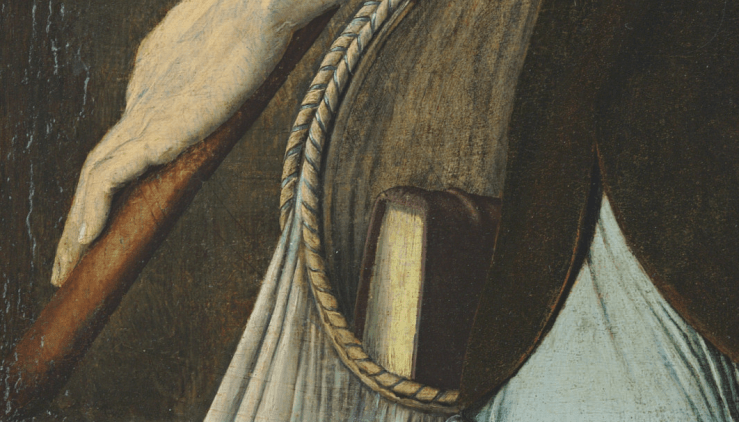


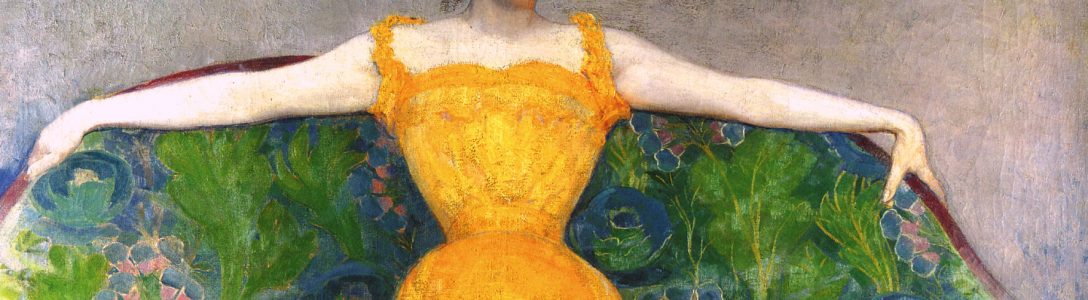
The Reader, 1861 by Edouard Manet (1832-1883)
RIP Tom Clark, 1941-2018
The American poet Tom Clark died in the first hour of Saturday, August 18th, 2018 in Berkely California. The cause of the death happened a few hours earlier, late Friday night, as a motorist collided his sedan into Tom Clark as Clark tried to cross the street. Clark was 77.
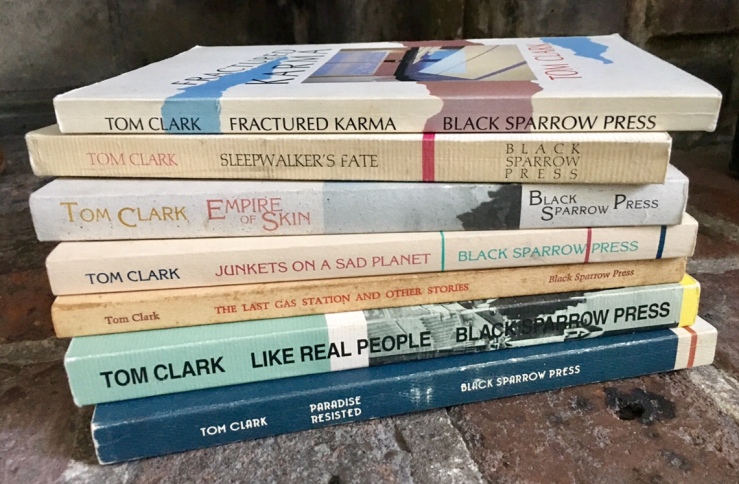
Tom Clark authored over two dozen poetry collections, many published by Black Sparrow Press. He also wrote a number of literary biographies, including a pair on Jack Kerouac, bios of Robert Creeley and Charles Olson, and a biography of John Keats called Junkets from a Sad Planet that is actually a series of poems. (But also actually a biography of Keats). Clark was the poetry editor for The Paris Review from 1963-1973 (maybe you read his interview with Allen Ginsberg there). Clark was also a blogger—an excellent blogger. He updated his blog a few hours before the car collision that killed him.
I first read Tom Clark in the middle of September, 2013. I read Fractured Karma (1990) and I had never heard of him before. I know the time specifically not because I have a good memory (I don’t), but because I wrote about it then:
I picked up Tom Clark’s Fractured Karma two weeks ago somewhat randomly. My local bookshop had reorganized some shelves, putting all the Black Sparrow titles together. Fractured Karma must have been on top, because I don’t see how else I would’ve picked up a book with the word “karma” in the title. The book opened to this page:
That’s all there is on that page, and something about it—the form, the phrasing—cracked me up. It’s part of a long poem called “He was born blind” about the British comedy actor George Formby. The poem is amazing: I read it there in the store. It reminded me immediately of David Markson’s notecard novels—something about how Clark includes so much reality into his poem. But there’s also this perceptive (if oblique) sense of humor behind it all. I ended up devouring the book, reading the whole thing that weekend. It was one of those holy shit reading moments, frankly. Once I finish typing this I’m going to go pick my kids up and we’re going to go to the bookstore and I’m going to get another Tom Clark book and read it this weekend.
I actually did go to the bookstore after writing that post and pick up another book by Clark, Sleepwalker’s Fate (1992). The store had several books by Clark, and I wasn’t sure which one to get. I remember that the title Sleepwalker’s Fate stood out, so I picked it up and thumbed through it, and I remember reading the poem “Terminator Too” there in the store—it did something electric to me—the goofy title, the winking irony, but also the earnestness of the poem, which paraphrases a few lines from Wordsworth’s Preface to Lyrical Ballads. Here it is:
“Terminator Too” by Tom Clark—
Poetry, Wordsworth
wrote, will have no
easy time of it when
the discriminatingpowers of the mind
are so blunted that
all voluntary
exertion dies, andthe general
public is reduced
to a state of near
savage torpor, morose,stuporous, with
no attention span
whatsoever; nor will
the tranquil rustlingof the lyric, drowned out
by the heavy, dull
coagulation
of persons in cities,where a uniformity
of occupations breeds
cravings for sensation
which hourly visualcommunication of
instant intelligence
gratifies like crazy,
likely survive this age.
Sleepwalker’s Fate is a good starting place to read Tom Clark’s poetry, as are Fractured Karma and the collection Paradise Revisited (1984). Here’s one from Paradise Revisited:
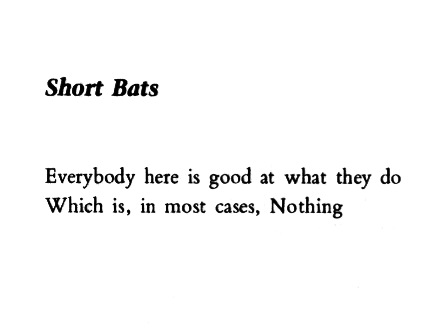
The later poetry collection Like Real People (1995) is also pretty great. It includes this humdinger:

Like Real People also includes a series of autobiographical sketches and stories told in an engaging but straightforward manner. The epilogue there is particularly good—Clark mulls over what it means to write an autobiography, straining against his anxieties over framing his own life stories. Tellingly, he lards the essay with quotes and ideas from other folks. Clark’s poetry often takes on the form of translation, citation, history, or reinterpretation (as we see in “Terminator Too,” above), and works like Empire of Skin (1997) and Junkets on a Sad Planet (1994) are particularly ambitious. Empire of Skin is a series of poems that take on the history of the American fur trade through a lens critical of Manifest Destiny. Junkets on a Sad Planet is an impressionistic series of riffs on Keats’ short life (“junkets” is a pun). From Junkets—
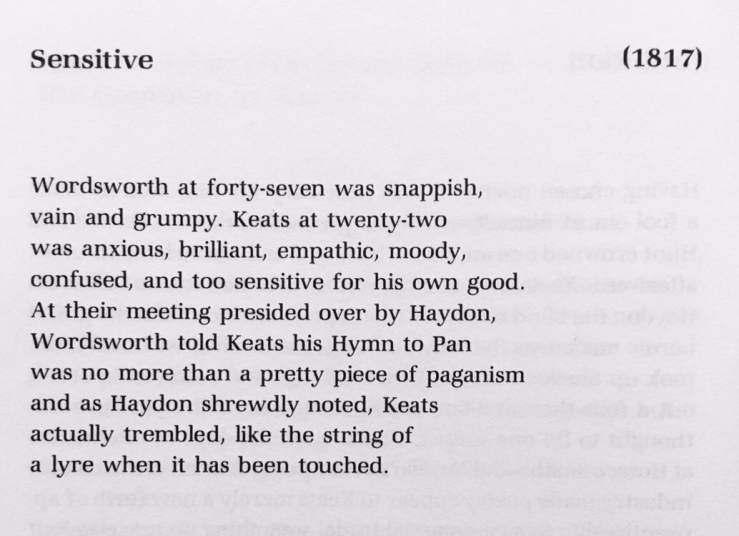
What a lovely condensation of biography, history, and poetic anxiety!
I’ll close with one of my favorite Clark poems, “Heavy,” which discharges poetic anxiety. Clark dedicated the poem to Jack Kerouac and Charles Olson—the gods in the first line, perhaps?–figures he would later write biographies on.
Peace be with Tom Clark.

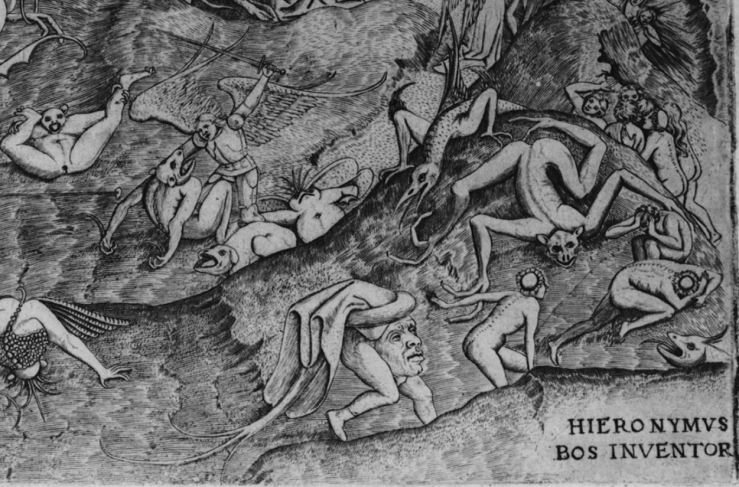
The Last Judgment (detail) by Alart du Hameel (c. 1478-c. 1506)
[Editorial note: The following citations come from one-star Amazon reviews George Eliot’s novel Middlemarch (I loved Middlemarch, by the way). I’ve preserved the reviewers’ original punctuation and spelling. More one-star Amazon reviews.].
too literary
No… just.. no
fancy words
a driveling tale
verbage is archaic
too many characters
characters seem fake
author of dubious character
Could not relate to characters
All of the characters are flawed
goes off on philosophical tangents
the sentences run on and on and on
I’m an avid reader and love many of the classics
a maze of literary, historical and mythological references
author whose moral frame of reference is so small-minded
Middlemarch is about a small town called Middlemarch
you won’t be able to fit it in your purse
This is trash, and bordering on fraud
the language should be readable
she can beat you into submission
This book was a book club read
BIG, FREAKING PLOT HOLE
I enjoy English literature
perpetual pontification
This is a Huge book
Sooooo wordy
100s of pages
Good ghod
lacks wit
Yuk
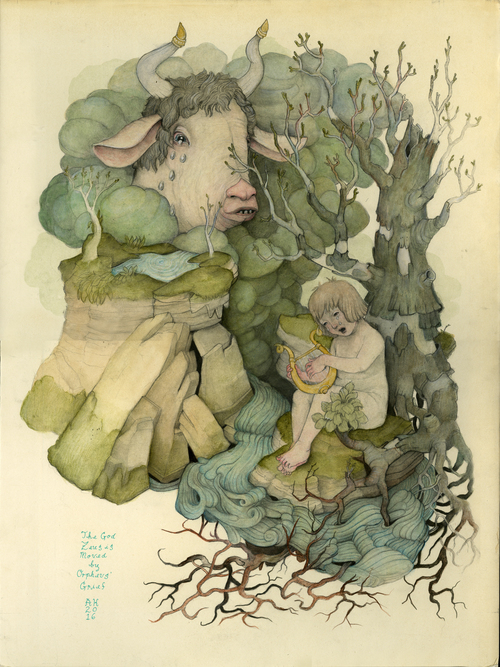
The God Zeus Is Moved by Orpheus’ Grief, 2016 by Alex Kuno
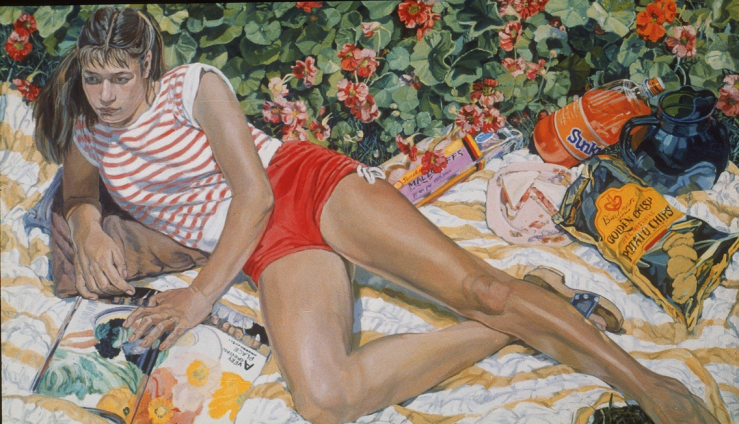
Darlene Reading, 1982 by Janet Fish (b. 1938)
“The Policemen’s Ball”
by
Donald Barthelme
Horace, a policeman, was making Rock Cornish Game Hens for a special supper. The Game Hens are frozen solid, Horace thought. He was wearing his blue uniform pants.
Inside the Game Hens were the giblets in a plastic bag. Using his needlenose pliers Horace extracted the frozen giblets from the interior of the birds. Tonight is the night of the Policemen’s Ball, Horace thought. We will dance the night away. But first, these Game Hens must go into a three-hundred-and-fifty-degree oven.
Horace shined his black dress shoes. Would Margot “put out” tonight? On this night of nights? Well, if she didn’t– Horace regarded the necks of the birds which had been torn asunder by the pliers. No, he reflected, that is not a proper thought. Because I am a member of the force. I must try to keep my hatred under control. I must try to be an example for the rest of the people. Because if they can’t trust us. . .the blue men. . .
In the dark, outside the Policemen’s Ball, the horrors waited for Horace and Margot.
Margot was alone. Her roommates were in Provincetown for the weekend. She put pearl-colored lacquer on her nails to match the pearl of her new-bought gown. Police colonels and generals will be there, she thought. The Pendragon of the Police himself. Whirling past the dais, I will glance upward. The pearl of my eyes meeting the steel gray of high rank.
Margot got into a cab and went over to Horace’s place. The cabdriver was thinking: A nice-looking piece. I could love her.
Horace removed the birds from the oven. He slipped little gold frills, which has been included in the package, over the ends of the drumsticks. Then he uncorked the wine, thinking: This is a town without pity, this town. For those whose voices lack the crack of authority. Luckily the uniform. . . Why won’t she surrender her person? Does she think she can resist the force? The force of the force?
“These birds are delicious.”
Driving Horace and Margot smoothly to the Armory, the new cabdriver thought about basketball.
Why do they always applaud the man who makes the shot?
Why don’t they applaud the ball?
It’s the ball that actually goes into the net.
The man doesn’t go into the net.
Never have I seen a man going into the net.
Twenty thousand policemen of all grades attended the annual fete. The scene was Camelot, with gay colors and burgees. The interior of the Armory had been roofed with lavish tenting. Police colonels and generals looked down on the dark uniforms, white gloves, silvery ball gowns.
“Tonight?”
“Horace, not now. This scene is so brilliant. I want to remember it.”
Horace thought: It? Not me?
The Pendragon spoke. “I ask you to be reasonable with the citizens. They pay our salaries after all. I know they are difficult sometimes, obtuse sometimes, even criminal sometimes, as we often run across in our line of work. But I ask you despite all to be reasonable. I know it is hard. I know it is not easy. I know that for instance when you see a big car, a ’70 Biscayne hardtop, cutting around a corner at a pretty fair clip, with three in the front and three in the back, and they are all mixed up, ages and sexes and colors, your natural impulse is to– I know your first thought is, All those people! Together! And your second thought is, Force! But I must ask you in the name of force itself to be restrained. For force, that great principle, is most honored in the breach and the observance. And that is where you men are, in the breach. You are fine men, the finest. You are Americans. So for the sake of America, be careful. Be reasonable. Be slow. In the name of the Father and the Son and of the Holy Ghost. And now I would like to introduce Vercingetorix, leader of the firemen, who brings us a few words of congratulation from that fine body of men.”
Waves of applause for the Pendragon filled the tented area.
“He is a handsome older man,” Margot said.
“He was born in a Western state and advanced to his present position through raw merit,” Horace told her.
The government of Czechoslovakia sent observers to the Policemen’s Ball. “Our police are not enough happy,” Colonel-General Cepicky explained. “We seek ways to improve them. This is a way. It may not be the best of all possible ways, but. . . Also I like to drink the official whiskey! It makes me gay!”
A bartender thought: Who is that yellow-haired girl in the pearl costume? She is stacked.
The mood of the Ball changed. The dancing was more serious now. Margot’s eyes sparkled from the jorums of champagne she had drunk. She felt Horace’s delicately Game Hen-flavored breath on her cheek. I will give him what he wants, she decided. Tonight. His heroism deserves it. He stands between us and them. He represents what is best in society: decency, order, safety, strength, sirens, smoke. No, he does not represent smoke. Great billowing oily black clouds. That Vercingetorix has a noble look. With whom is Vercingetorix dancing, at present?
The horrors waited outside patiently. Even policemen, the horrors thought. We get even policemen, in the end.
In Horace’s apartment, a gold frill was placed on a pearl toe.
The horrors had moved outside Horace’s apartment. Not even policemen and their ladies are safe, the horrors thought. No one is safe. Safety does not exist. Ha ha ha ha ha ha ha ha ha ha!
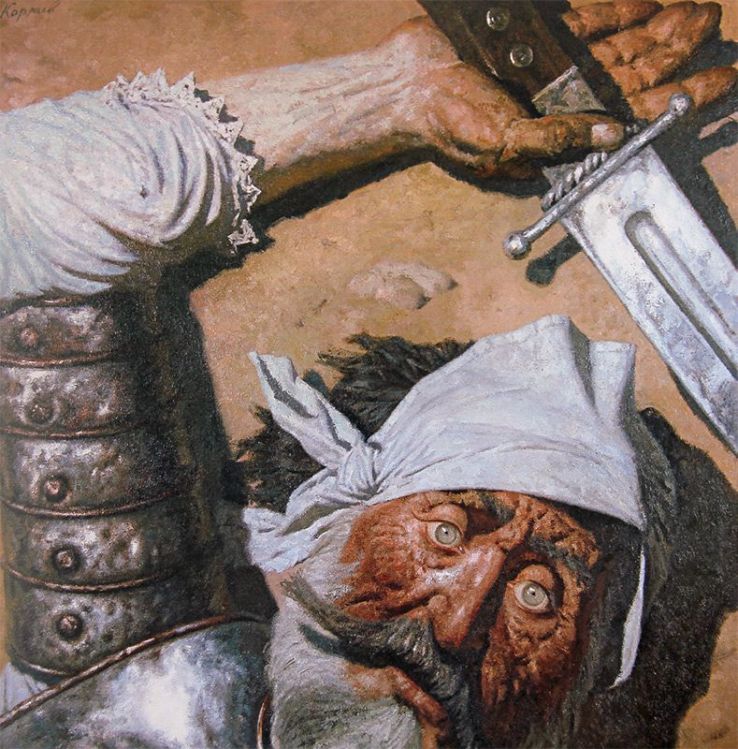
Don Quixote Defeated, 1990 by Gely Korzhev (1925-2012)

Hoge Raad (High Council), 2015 by Helen Verhoeven (b. 1974)

The Last Judgment (detail) by Alart du Hameel (c. 1478-c. 1506)
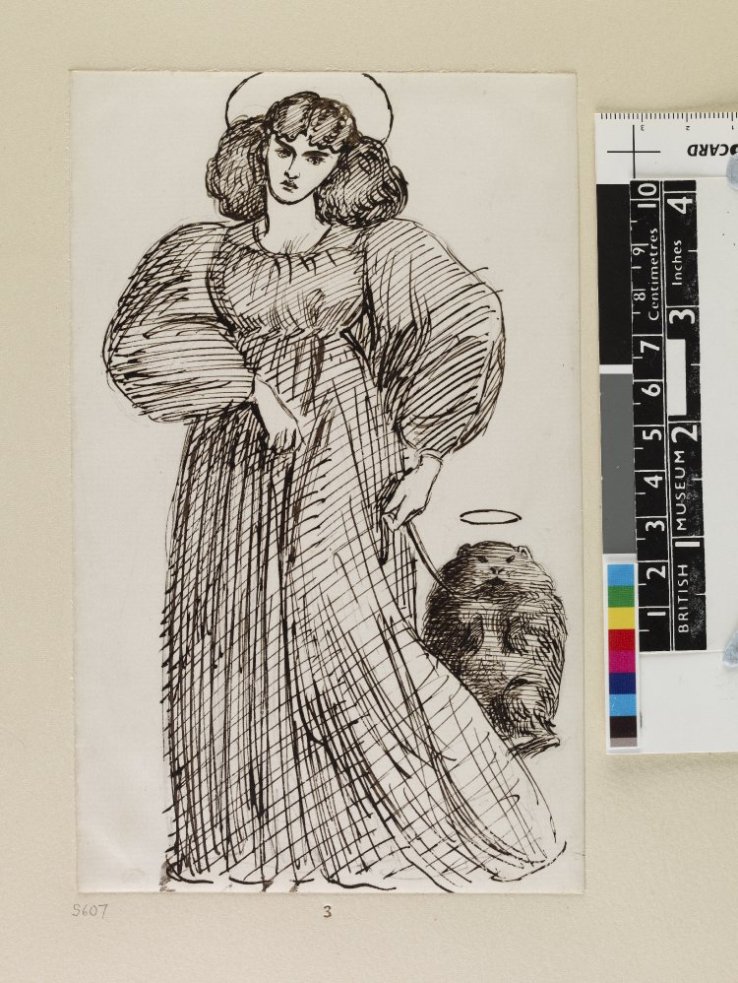
From Angus Trumble’s lecture “Rossetti’s Wombat: A Pre-Raphaelite Obsession in Victorian England”:
Rossetti finally arranged to buy a wombat, again through Jamrach, when at length a suitable specimen became available. This wombat arrived in September 1869, when he was away in Scotland. Rossetti was recovering from a kind of breakdown, largely precipitated by failing eyesight, insomnia, drugs and above all his growing infatuation with Jane Morris, the wife of his old friend and protégé [William Morris] from the Oxford Union days.
A remarkable drawing of Jane Morris and the wombat in the British Museum illustrates the degree to which lover and pet merged in Rossetti’s mind as objects of sanctification. Each of them wears a halo. But Jane has the wombat on a leash, and it seems clear that Rossetti also used his pet wombat as a cruelly comical emblem for Jane’s long-suffering, cuckolded husband. Since university days Morris was known to his friends as ‘Topsy’; the name Rossetti chose for his Wombat was ‘Top’.
Still shaky, Rossetti could not wait to get back to Chelsea from freezing Scotland. He wrote to Janethe following mock-heroic lines:
Oh! How the family affections combat
Within this heart; and each hour flings a bomb at
My burning soul; neither from owl nor from bat
Can peace be gained, until I clasp my wombat!
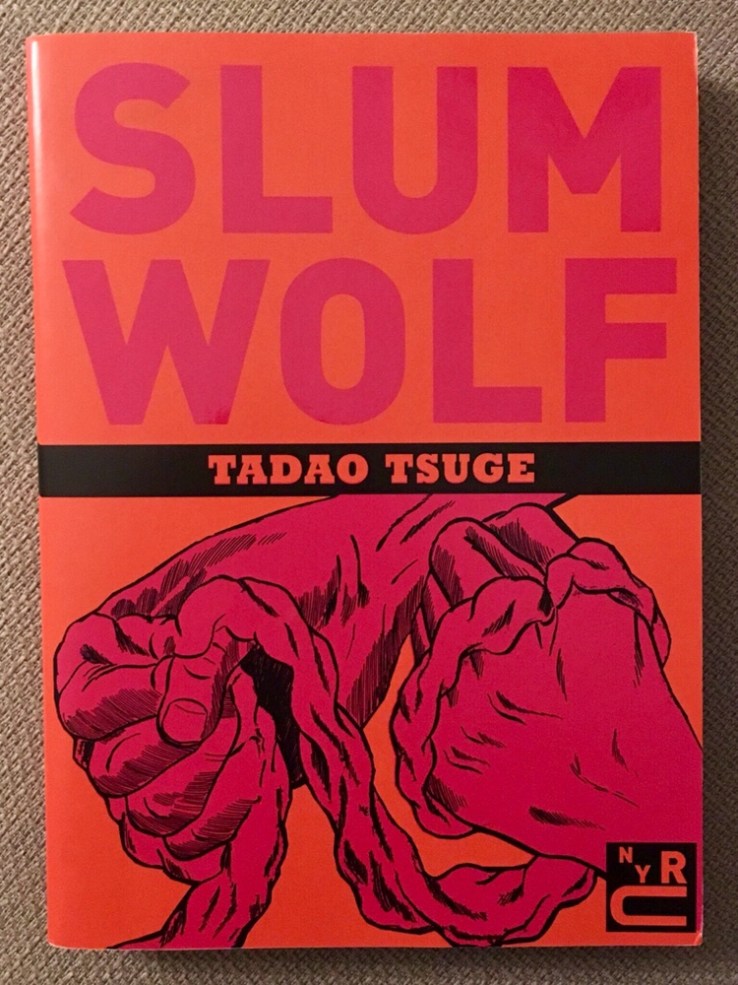
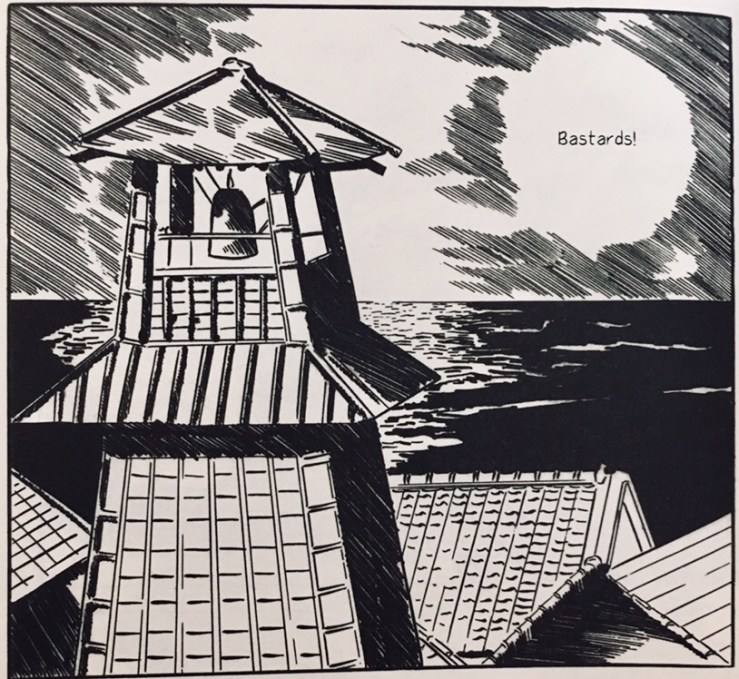
The New York Review of Books’ NYRC imprint has put together Slum Wolf, a collection of Tadao Tsuge’s stories new in English translation by Ryan Holmberg (who provides a long afterword to the volume).
Tadao Tsuge is one of the pioneers of alternative manga, and one of the world’s great artists of the down-and-out. Slum Wolf is a new selection of his stories from the late Sixties and Seventies, never before available in English: a vision of Japan as a world of bleary bars and rundown flophouses, vicious street fights and strange late-night visions. In assured, elegantly gritty art, Tsuge depicts a legendary, aging brawler, a slowly unraveling businessman, a group of damaged veterans uniting to form a shantytown, and an array of punks, pimps, and drunks, all struggling for freedom, meaning, or just survival.
I read “Bum Mutt” this afternoon and it was pretty weird and dark.
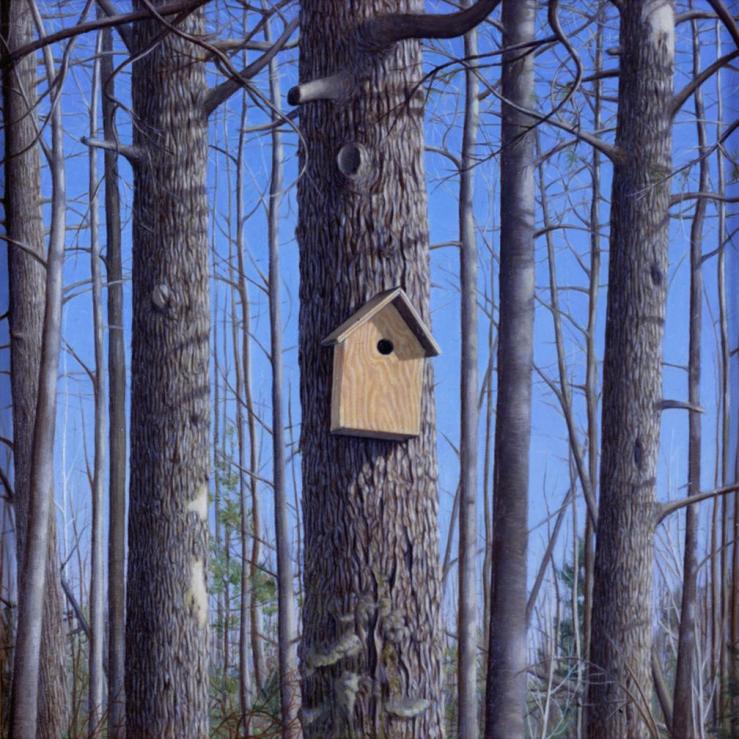
HOME, 1989 by Joe Houston (b. 1962)
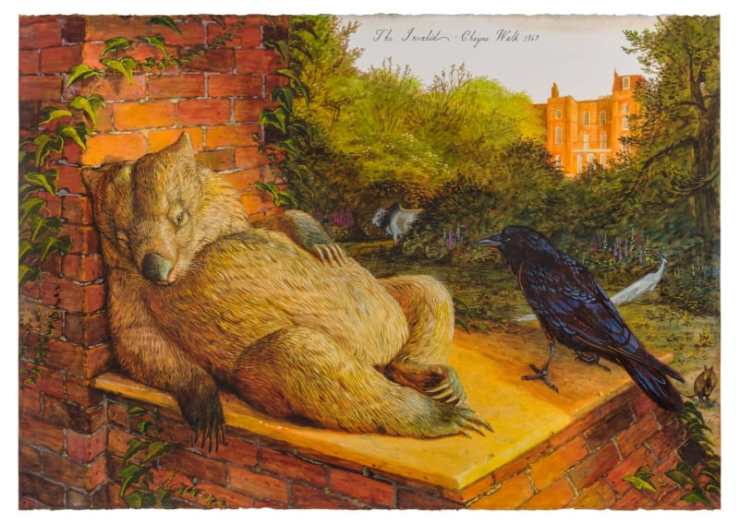
The Invalid – Cheyne Walk 1869, 2017 by Walton Ford (b. 1960)
The painting refers to the pet wombat of the Pre-Raphaelite painter Dante Gabriel Rossetti’s pet wombat Top, who died not long after Rossetti acquired the poor marsupial. From Angus Trumble’s fantastic lecture “Rossetti’s Wombat: A Pre-Raphaelite Obsession in Victorian England”:
In September 1869, Dante Gabriel Rossetti bought the first of two pet wombats….In the 1860s, Rossetti often took his friends to visit the wombats at the zoo, sometimes for hours on end. On one occasion Rossetti wrote to Ford Madox Brown: ‘Dear Brown: Lizzie and I propose to meet Georgie and Ned [the Burne-Jones] at 2 pm tomorrow at the Zoological Gardens—place of meeting, the Wombat’s Lair.’ In this period a number of new wombats arrived at the Regent’s Park Zoo: a rare, hairy-nosed wombat on 24 July 1862, and two common wombats despatched from the Melbourne Zoo on 18 March 1863. As well, Rossetti made regular visits with his brother, William Michael, to the Acclimatisation Society in London and its counterpart in Paris, to keep an eye on the hairy-nosed wombats residing in both places. This was no passing fancy.
Earlier, in 1862, Rossetti had moved to Tudor House, at 16 Cheyne Walk, Chelsea. Spacious, with plenty of room for family and friends including George Meredith and the deeply unattractive poet and semi-professional sadomasochist Algernon Charles Swinburne—who liked to slide naked down the banisters—the house had four-fifths of an acre of garden, with lime trees and a big mulberry. As soon as he arrived, Rossetti began to fill the garden with exotic birds and animals. There were owls, including a barn owl called Jessie, two or more armadillos, rabbits, dormice and a racoon that hibernated in a chest of drawers. There were peacocks, parakeets, and kangaroos and wallabies, about which we know frustratingly little. There was a Canadian marmot or woodchuck, a Pomeranian puppy called Punch, an Irish deerhound called Wolf, a Japanese salamander and two laughing jackasses. We know the neighbours were tolerant up to a point but Thomas Carlyle, for one, was driven mad by the noise. At length there was a small Brahmin bull that had to go when it chased Rossetti around the garden, and, in September 1869, a long-awaited wombat.
Shortly before this date there had been a number of animal deaths at Cheyne Walk, so Rossetti raised the animal-collecting stakes considerably. …His object was to purchase a young African elephant, but he balked at the price of £400. Rossetti’s income for 1865 was £2000.
…Soon, however, Top the wombat was ailing. William Michael wrote: ‘The wombat shows symptoms of some malady of the mange-kind, and he is attended by a dog doctor.’ The next day: ‘Saw the wombat again at Chelsea. I much fear he shows already decided symptoms of loss of sight which effects so many wombats.’ At length, on 6 November, the wombat died. Rossetti had him stuffed and afterwards displayed in the front hall.
Rossetti’s famous self-portrait with Top, the deceased wombat, is satirical but was apparently prompted by genuine grief. The accompanying verses are bleak indeed:
I never reared a young wombat
To glad me with his pin-hole eye,
But when he most was sweet and fat
And tailless, he was sure to die!
 Biblioklept