Mass-market Monday | Ivan Ângelo’s The Celebration

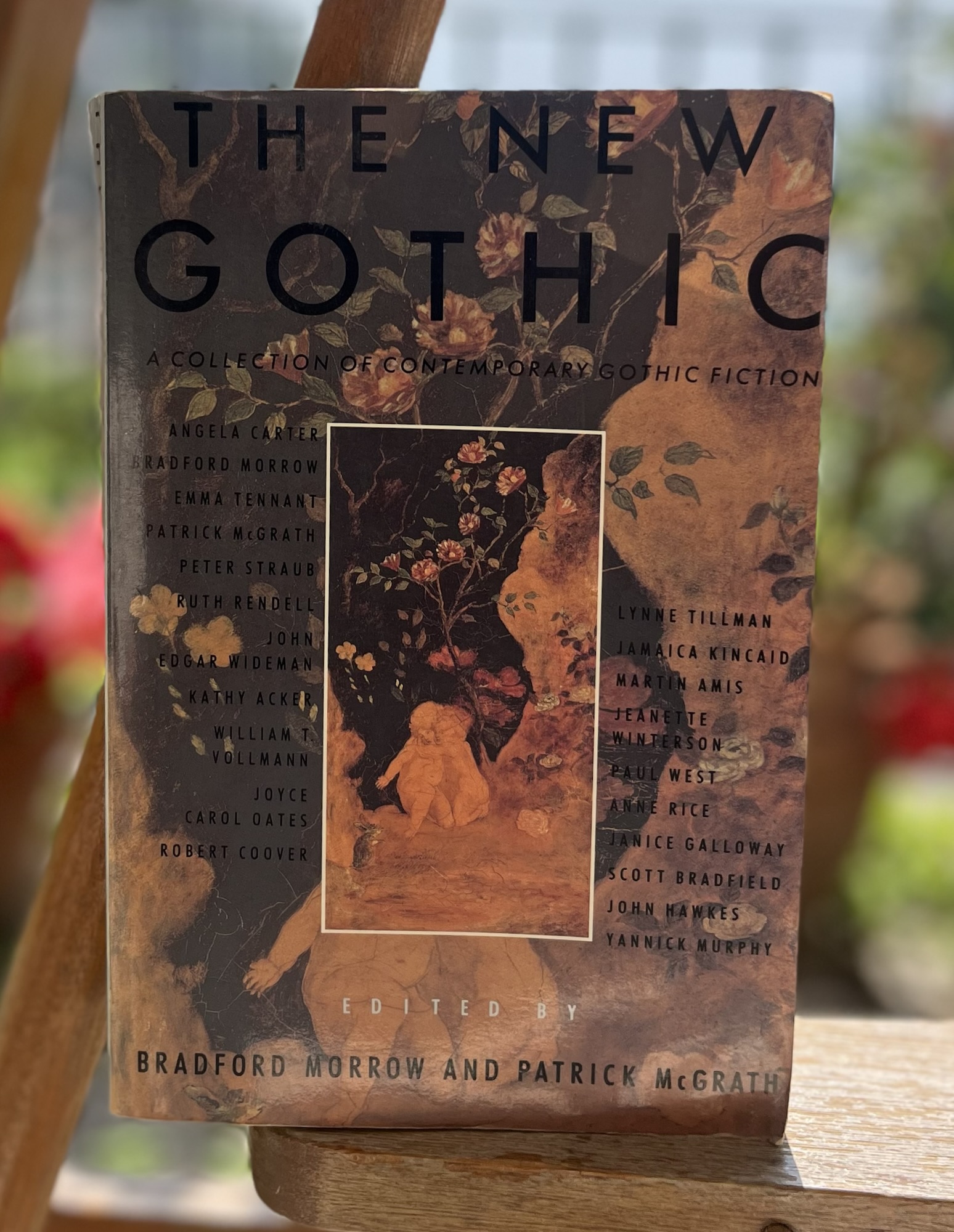
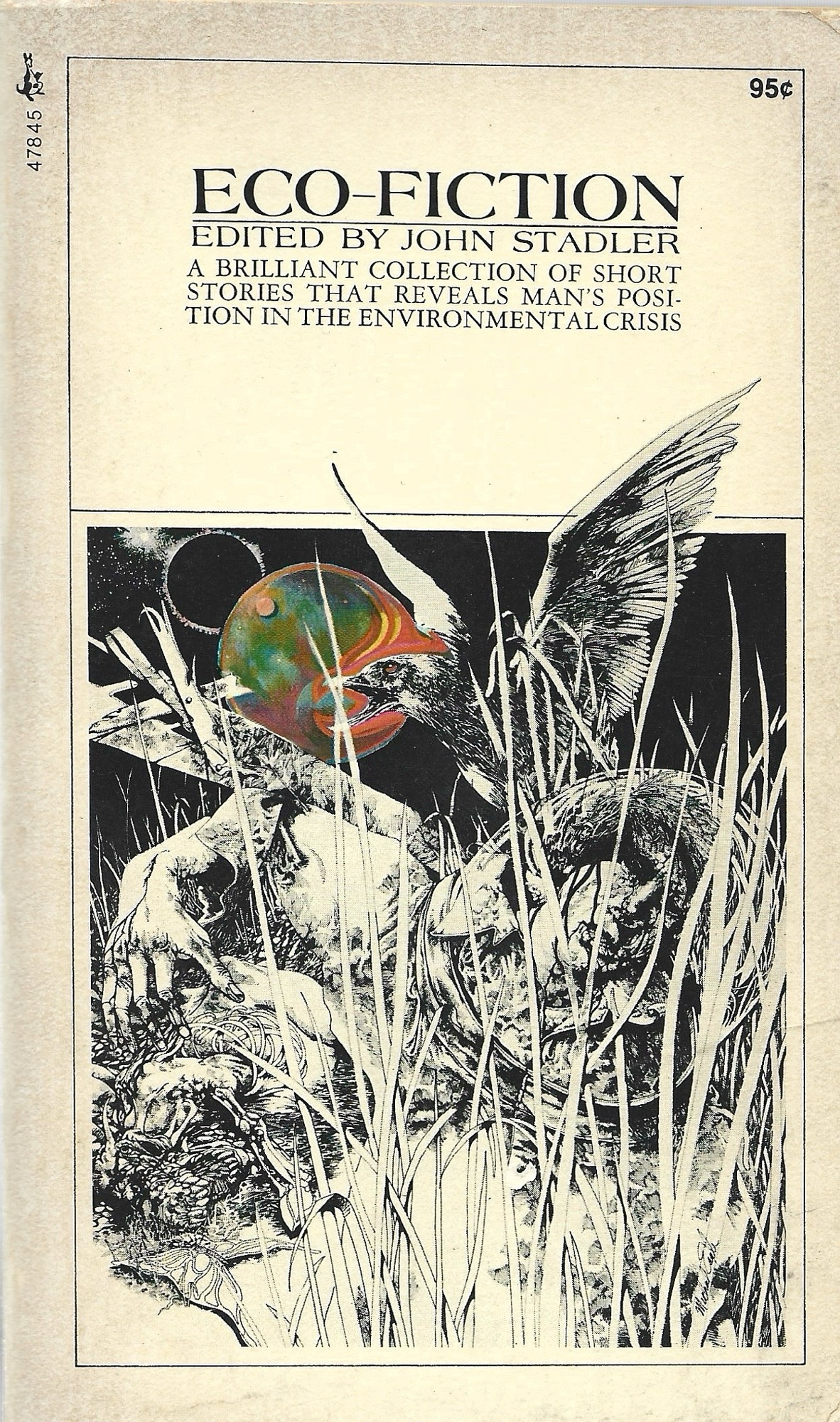
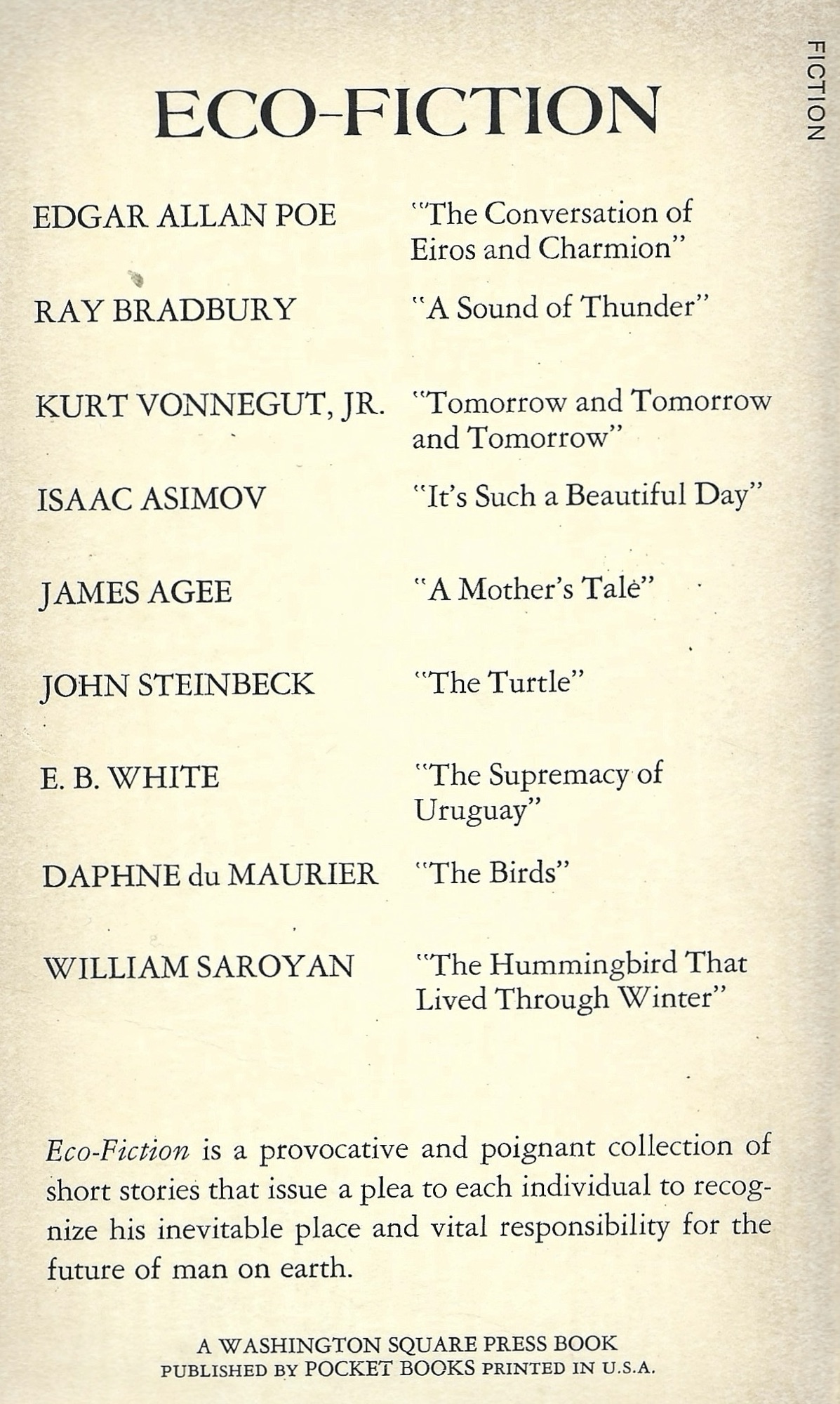
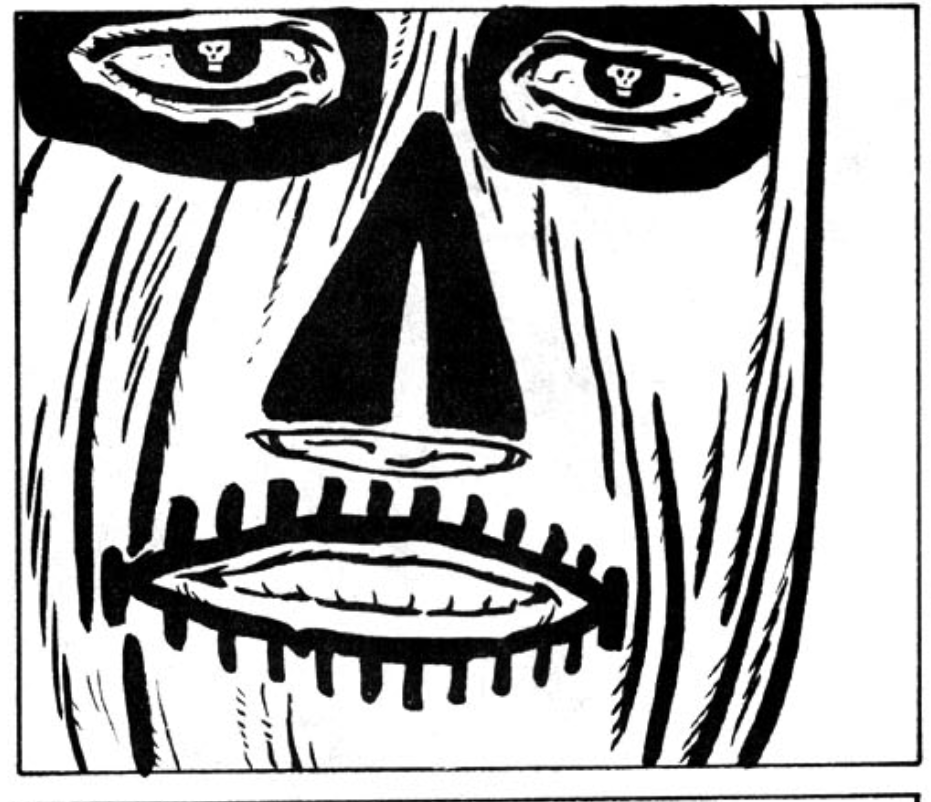
The Celebration, 1975, Ivan Ângelo. Translation by Thomas Colchie. Avon Bard (1982). No cover designer or artist credited. 223 pages.

From Theodore McDermott’s review of The Celebration in Context:

You can see something of Borges in The Celebration: in the way that the central event of the book—the event that gives it its title—is absent from its pages. You can see something of Cortázar in the way the chronology coils around and crosses over itself. You can see something of Nabokov in the fictional annotations that retell the story from an entirely new vantage, implying an endless number of other versions as yet untold. You can see something of Barth in the stylistic variations. You can see something of Machado de Assis, Osman Lins, and Ignacio Loyola Brandao in the peculiarly Brazilian integration of remarkable formal innovation and social and political engagement.
You can see all of this, but what’s most apparent, and most important, is that Ângelo has written a book unlike any other.

Weed | From William Burroughs’ novel Junky

 Tea heads are not like junkies. A junkie hands you the money, takes his junk and cuts. But tea heads don’t do things that way. They expect the peddler to light them up and sit around talking for half an hour to sell two dollars’ worth of weed. If you come right to the point, they say you are a “bring down.” In fact, a peddler should not come right out and say he is a peddler. No, he just scores for a few good “cats” and “chicks” because he is viperish. Everyone knows that he himself is the connection, but it is bad form to say so. God knows why. To me, tea heads are unfathomable.

There are a lot of trade secrets in the tea business, and tea heads guard these supposed secrets with imbecilic slyness. For example, tea must be cured, or it is green and rasps the throat. But ask a tea head how to cure weed and he will give you a sly, stupid look and come-on with some double-talk. Perhaps weed does affect the brain with constant use, or maybe tea heads are naturally silly.

The tea I had was green so I put it in a double boiler and set the boiler in the oven until the tea got the greenish-brown look it should have. This is the secret of curing tea, or at least one way to do it.

Tea heads are gregarious, they are sensitive, and they are paranoiac. If you get to be known as a “drag” or a “bring down,” you can’t do business with them. I soon found out I couldn’t get along with these characters and I was glad to find someone to take the tea off my hands at cost. I decided right then I would never push any more tea.

In 1937, weed was placed under the Harrison Narcotics Act. Narcotics authorities claim it is a habit-forming drug, that its use is injurious to mind and body, and that it causes the people who use it to commit crimes. Here are the facts: Weed is positively not habit-forming. You can smoke weed for years and you will experience no discomfort if your supply is suddenly cut off. I have seen tea heads in jail and none of them showed withdrawal symptoms. I have smoked weed myself off and on for fifteen years, and never missed it when I ran out. There is less habit to weed than there is to tobacco. Weed does not harm the general health. In fact, most users claim it gives you an appetite and acts as a tonic to the system. I do not know of any other agent that gives as definite a boot
to the appetite. I can smoke a stick of tea and enjoy a glass of California sherry and a hash house meal.

I once kicked a junk habit with weed. The second day off junk I sat down and ate a full meal. Ordinarily, I can’t eat for eight days after kicking a habit.

Weed does not inspire anyone to commit crimes. I have never seen anyone get nasty under the influence of weed. Tea heads are a sociable lot. Too sociable for my liking. I cannot understand why the people who claim weed causes crime do not follow through and demand the outlawing of alcohol. Every day, crimes are committed by drunks who would not have committed the crime sober.

There has been a lot said about the aphrodisiac effect of weed. For some reason, scientists dislike to admit that there is such a thing as an aphrodisiac, so most pharmacologists say there is “no evidence to support the popular idea that weed possesses aphrodisiac properties.” I can say definitely that weed is an aphrodisiac and that sex is more enjoyable under the influence of weed than without it. Anyone who has used good weed will verify this statement.

You hear that people go insane from using weed. There is, in fact, a form of insanity caused by excessive use of weed. The condition is characterized by ideas of reference. The weed available in the U.S. is evidently not strong enough to blow your top on and weed psychosis is rare in the States. In the Near East, it is said to be common. Weed psychosis corresponds more or less to delirium tremens and quickly disappears when the drug is withdrawn. Someone who smokes a few cigarettes a day is no more likely to go insane than a man who takes a few cocktails before dinner is likely to come down with the D.T.’s.

One thing about weed. A man under the influence of weed is completely unfit to drive a car. Weed disturbs your sense of time and consequently your sense of spatial relations. Once, in New Orleans, I had to pull over to the side of a road and wait until the weed wore off. I could not tell how far away anything was or when to turn or put on the brakes for an intersection.

From William S. Burroughs’ novel Junky.

“Two for the Road” — John Ashbery

“Two for the Road”

by

John Ashbery


Did you want it plain or frosted? (Plain vanilla or busted?)

I bet you’ve been writing again. She reached under her skirt. Why don’t you let a person see it? Naw, it’s no good. Just some chilblains that got lodged in my fingertips. Who said so? I’ll tell you if it’s any good or not, if you’ll stop covering it with your hand.

For Pete’s sake-

We had forgotten that it was noon, the hour when the ravens emerge from the door beside the huge clock face and march around it, then back inside to the showers. Oh, where were you going to say let’s perform it?

I thought it was evident from my liquor finish steel.

Oh right, you can certainly have your cocktail, it’s my shake, my fair shake. Dust-colored hydrangeas fell out of the pitcher onto the patio.

Darned if someone doesn’t like it this way and always knows it’s going to happen like this when it does. But let me read to you from my peaceful new story:

“Then the cinnamon tigers arose and there was peace for maybe a quarter of a century. But you know how things always turn out. The dust bowl slid in through the French doors. Maria? it said. Would you mind just coming over here and standing for a moment. Take my place. It’ll only be for a minute. I must go see how the lemmings are doing. And that is how she soiled herself and brought eternal night upon our shy little country.”

In which Robert Coover admits to shoplifting William Gaddis’s The Recognitions

It was the grad-school summer of ’60, I was lingering in Chicago past quarter’s end to edit the university calendar, earn some pennies to help pay the obstetrician who would deliver our firstborn in August, subletting a friend’s basement flat, and using the down time to do a lot of reading, which that summer of occasional light fingered forays into bookstores (I have done penance through the years since, buying more than I can possibly read) included, simultaneously, two big fat novels: Saul Bellow’s Adventures of Augie March (Bellow was already a Chicago legend and I was a fan of Dangling Man and Victim) and William Gaddis’s The Recognitions (he was unknown to me, recommended by some forgotten person), with the immediate consequence that I found Bellow’s Chicago saga of Augie humping the old fellow to the local whorehouses a boisterous treat, a tale I felt as if my own (just look out the window, there they go), whereas the Gaddis book was difficult to get into (all that talk, I kept losing my place); but as the month wore on, Augie’s tale paled even as it moved south into the sun and soon the book got tossed in disappointment across the room, while in Gaddis’s great universal satire the characters behind the voices (all that talk!) had come vividly alive, and the likes of Basil Valentine and Esther and Wyatt, Stanley, Esme and Otto, and Recktall Brown (Recktall Brown!) and Agnes Deigh and the Town Carpenter had moved into the basement flat with me, companions for life, far from noble though they mostly were and failing even to last the book out, their lives eclipsed by chatter’s echoey art.

From “William Gaddis: A Portfolio,” published in Conjunctions no. 41 (2003).

Near Miss — Jed Webster Smith

Near Miss, 2025 by Jed Webster Smith (b. 1992)

Cristina Peri Rossi’s The Ship of Fools is a surreal novel of exile and dislocation

The Ship of Fools by Cristina Peri Rossi, first published in 1984 and released in English translation by Psiche Hughes in 1989, is a novel of dislocation—political, psychological, and existential. Its protagonist, Ecks, drifts from place to place in a world that feels suspended between dream and memory, never quite solid: “He felt he was travelling not in space but backwards in time.” That sense of slippage—temporal, emotional, narrative—is central to the book’s effect.

Plot is secondary, if it exists at all. The novel drifts like a bottle at sea: beautiful, opaque, marked by the presence of something urgent inside—but sealed, floating, unmoored. Like Renata Adler’s Speedboat or Ann Quin’s Passsages, this is a novel that prefers jump cuts to journeys, broken signals to neat resolutions. It unfolds in fragments, circular musings, moments of stasis that shimmer with strange possibility. At one point, a character suggests that “conversation is more a question of style than ideas,” a description of the novel itself. Style is idea in The Ship of Fools. The syntax itself seems to think.

There are recurring characters, loose thematic arcs, and strange moments of connection, but the novel often seems to turn away from linearity. It’s what the book itself calls “a story without progress,” or perhaps a tapestry of passing encounters and unresolved longings. There’s a Bolañoesque sense of drift to it, too—a wandering narrator collecting impressions like scars, haunted by disappearances that resist explanation. At the same time, there’s something in the intensity of The Ship of Fools—its visceral depictions of trauma and social rupture—that evokes the furious lyricism of Fernanda Melchor’s Hurricane Season. Both authors understand that political horror isn’t always best addressed by realism—it seeps in more disturbingly through atmosphere, voice, and repetition.

Peri Rossi was herself an exile, having fled the civic-military dictatorship of Uruguay in 1972. She fled the regime, first to Barcelona and later Paris, and this personal history pulses quietly through every page. The Ship of Fools isn’t autobiographical in the conventional sense, but its texture is soaked with the disorienting logic of exile: the sense of being always elsewhere, never quite present, both seen and unseen.

One of the pleasures of The Ship of Fools is the way it captures fleeting impressions in striking, lyrical language. Descriptions of people and places often feel like fragments from a half-remembered dream. The narrator describes a girl “bursting with youth; with that radiant beauty which, more than a quality of feature or of line, is the result of organic perfection that only later would begin to fall apart, breaking its essential but precarious harmony.” Elsewhere, the sea is evoked with the precision of a surrealist painting: “Green eyes and wide sea, swinging hips and plunging necklines. The sea was rolling like the water in a glass. Or the ship was. The ship was a glass floating on the high tide.” It’s not hard to imagine Jodorowsky filming this image—bodies on a tilting horizon, symbolic without being decipherable.

Beneath the dreamlike surface runs a steady current of political urgency. Ecks is an exile, and many of the novel’s characters—some named, some merely sketched—are displaced or disappeared. “To disappear is no longer voluntary,” the narrator tells us, “but acquires passive form: ‘We are being disappeared.’” It’s a haunting line that collapses grammar and violence in a single breath. One character, laboring in a sinister “camp for the disappeared,” wonders “if there was still any point in measuring time by the clock, when it seemed like ten years to him and twenty to his friend suffering agonies about him.” These grim lines are delivered without sentimentality, but with unmistakable clarity. The book never lectures. It haunts instead.

The novel’s philosophical core is found in its reflections on art, memory, and identity. One of the longest and most striking passages describes the medieval Tapestry of Creation:

There the missing parts unfurl, fragments intimating the larger harmony of the universe. What we love in any structure is a vision of the world that gives order to chaos, an hypothesis which is comprehensible and restores our faith, atoning for our having fled and scattered before life’s brutal disorder. We value in art the exercise of mind and emotion that can make sense of the universe without reducing its complexity. Immersed in such art one could live one’s life, engaged in a perfectly rational discourse whose meaning cannot be questioned because it resides in an image containing the whole universe.

What surprises and will always surprise is the notion that a single mind could conceive of such a convincing and pleasing structure, moreover a happy one, a structure which as well as being a metaphor is also a reality.

This longing for order—however temporary or illusory—is deeply felt throughout the novel, even as its own structure resists resolution. The moment we seek meaning, it slips sideways. Identity, like narrative, fractures under pressure.

That same ambiguity runs through the book’s treatment of gender. Lucía, one of the more vivid figures in Ecks’s drifting life, is described as “dressed in men’s clothes,” her appearance perfectly androgynous. Ecks is both drawn to and overwhelmed by her. “He saw the unfolding of two parallel worlds… yet inseparably connected in such a way that the triumph of one would cause the death of both.” Later, another character remarks, “Don’t we all attribute ourselves a sex? And spend our lives proving it?” Gender is not a stable identity but a performative act—one repeated until it congeals into something that passes for truth.

Memory and history, too, are always in motion. “Ship captains and sailors of the past were those who best knew the universe,” the narrator reflects. Their journals once held the world’s accumulated knowledge: “One referred…to these journals” to understand distant plants, animals, and stars. But now, “they stopped writing and their main tasks became trade and war…Their journeys are now shorter and safer. But also less interesting.” It’s a quiet lament for a world that’s abandoned curiosity for control.

Ecks himself seems increasingly hollowed out by this world. “I stopped my work. Since then wheat and chaff have mixed. Under the grey sky the horizon is a smudge, and no voice answers.” His sense of loss—of self, of direction, of connection—is profound. “I shall lose,” he thought, and then: “I’ve already lost.” Like a Bolaño narrator spiraling through half-empty towns or an Ann Quin character trying to read meaning into chaos, he is less a man than a vessel for disappearance.

And yet, The Ship of Fools still finds a kind of poetry in this fragmentation:

Dreams have their own logic; only in the ambiguity of daylight do we need to reason and compare, to pin down the weft of things. Dreams are so persuasive, they need no argument.

Peri Rossi’s novel lives in that twilight logic, where estrangement becomes its own kind of truth. Exile, here, is not just a matter of borders—it is a way of seeing. “Those who live always in the same place… do not realize that to be a stranger is a temporary situation, one that can be altered; in fact they assume that some men are strangers and others not. They believe that one is born — and does not become — a stranger.” In The Ship of Fools, everyone becomes a stranger, even to themselves.

In the end, the novel is both deeply political and deeply personal. It captures what it feels like to live under systems that make life feel increasingly unreal, to grasp for meaning in a world of exiles and silence, to lose and keep losing—and yet keep imagining, keep remembering, keep writing. Our days, the novel suggests, “are no different from the past, except in the number of tyrants, their systematic methods and the cold logic with which they lead the world to madness.”

Although it is often bitterly funny, The Ship of Fools is not a cheerful book. But it lingers like a half-remembered dream, like the texture of a forgotten language, like a map you keep reading even after the landmarks have vanished. Very highly recommended.

Make Way for the Head — Lorenzo Tonda

Make Way for the Head, 2024 by Lorenzo Tonda (b. 1992)

Lucky day | Stray thoughts on the announcement of Thomas Pynchon’s novel Shadow Ticket

Panel from Nancy, Ernie Bushmiller, 23 Oct.1954

For about a decade, a common social media joke (common enough among a certain stripe of nerd) has run something like, Thomas Pynchon seems to be writing the U.S.A. reality right now; another common (enough) social media rejoinder amounts to something like, No way Pynchon would write this reality—too sloppy, too lazy, too obvious. Too stupid. 

I just deleted an entire paragraph on Too stupid. I think we’re all attuned to the unfunny absurdity of the zeitgeist, and I think that as zany and goofy as Pynchon is in his byzantine plots, he wouldn’t muck with, say, RFK’s kid’s brain worm telling him to remove fluoride and bring back the plague. Just too stupid! And the stupidity is all bound up in evil, cruelty, pain. I hate it! Maybe you hate it too. The news, whatever “the news” means, seems to be uniformly bad. One might apply this statement throughout history, I suppose, so maybe I just mean: It (all of it) just gets worse.

So I take any good news as a gift.

And on Wednesday morning there was some, at least in my book, very good news: Penguin Random House announced a new novel from Thomas Pynchon. I had not expected another novel from Pynchon, who will turn 88 next month. If I’m really honest, I might have expected, like, a different headline about Pynchon.

The new novel, to be published this fall, is titled Shadow Ticket. Shadow Ticket is a rad title for a novel! I’ve had it rattling around my head. Pynchon has a history of using phrases from his novels for titles of future books, but as far as I can tell by searching ebooks, the phrase shadow ticket doesn’t appear in his published oeuvre. Simple internet searches for the phrase return publisher Penguin Random House’s announcement of the novel Shadow Ticket by Thomas Pynchon; the OED database has nothing. Unlike inherent vice or leading edgeshadow ticket seems to have no clear corollary to the uh, real world.

Perhaps the title might be a reference to the shadowy voyage of the novel’s purported protagonist, Hicks McTaggart, whom the blurb (presumably penned by TP) declares finds himself “shanghaied onto a transoceanic liner, ending up eventually in Hungary where there’s no shoreline.” I suppose that’s one kind of shadow ticket.

There’s a lot of predictably Pynchonesque picaresquery in the blurb: an “heiress of a Wisconsin cheese fortune,” “swing musicians, practitioners of the paranormal, outlaw motorcyclists,” and pastries. The novel is set in 1932 and the blurb notes that Hicks will find himself “entangled with Nazis, Soviet agents, British counterspies.” The blurb also tells us that Hicks is “a one-time strikebreaker turned private eye” — one of Them, or at least, a one-time agent of Them. Perhaps Shadow Ticket might read as a bridge between Pynchon’s grand opuses on the emerging 20th-century—the critique of labor and capital in Against the Day segueing into the explosion of Gravity’s Rainbow. 

But we’ll just have to wait. The announcement for Shadow Ticket came on a week of lucky days for me, or lucky-feeling days, I suppose I mean. I watched my alma mater’s basketball team win the national championship for the third time on Monday night — I’d watched almost all of their games since November — and woke up on Tuesday feeling elated (I also won my work’s March Madness pool). News of forthcoming albums by bands I’d loved in my youth like Pulp, Stereolab, and Tortoise also gave me that odd feeling of something to look forward to, something on the horizon that wasn’t just more horrible shit.

And I can wait in hope, I suppose, or at least in absurd appreciation like Sluggo in Ernie Bushmiller’s Nancy strip of 23 Oct. 1954, who finds surreal intercession in the form of a potted plant descending from the heavens to land upon his bald crown. I too wish I could crack this walnut.

Untitled (Lion) — Milton Glaser

Untitled (illustration for “The Big Cats,” Esquire, April, 1961) by Milton Glaser (1929-2020)

“Two Old-Timers” — F. Scott Fitzgerald

“Two Old-Timers”

by

F. Scott Fitzgerald


PHIL MACEDON, once the Star of Stars, and Pat Hobby, script writer, had collided out on Sunset near the Beverly Hills Hotel. It was five in the morning and there was liquor in the air as they argued and Sergeant Gaspar took them around to the station house. Pat Hobby, a man of forty-nine, showed fight, apparently because Phil Macedon failed to acknowledge that they were old acquaintances.

He accidentally bumped Sergeant Gaspar who was so provoked that he put him in a little barred room while they waited for the Captain to arrive.

Chronologically Phil Macedon belonged between Eugene O’Brien and Robert Taylor. He was still a handsome man in his early fifties and he had saved enough from his great days for a hacienda in the San Fernando Valley; there he rested as full of honors, as rollicksome and with the same purposes in life as Man o’ War.

With Pat Hobby life had dealt otherwise. After twenty-one years in the industry, script and publicity, the accident found him driving a 1935 car which had lately become the property of the Acme Loan Co. And once, back in 1928, he had reached a point of getting bids for a private swimming pool.

He glowered from his confinement, still resenting Macedon’s failure to acknowledge that they had ever met before.

“I suppose you don’t remember Coleman,” he said sarcastically. “Or Connie Talmadge or Bill Corker or Allan Dwan.”

Macedon lit a cigarette with the sort of timing in which the silent screen has never been surpassed, and offered one to Sergeant Gaspar.

“Couldn’t I come in tomorrow?” he asked. “I have a horse to exercise—”

“I’m sorry, Mr. Macedon,” said the cop— sincerely for the actor was an old favorite of his, “The Captain is due here any minute. After that we won’t be holding you.”

“It’s just a formality,” said Pat, from his cell.

“Yeah, it’s just a—” Sergeant Gaspar glared at Pat, “It may not be any formality for you. Did you ever hear of the sobriety test?”

Macedon flicked his cigarette out the door and lit another.

“Suppose I come back in a couple of hours,” he suggested.

“No,” regretted Sergeant Gaspar. “And since I have to detain you, Mr. Macedon, I want to take the opportunity to tell you what you meant to me once. It was that picture you made, The Final Push, it meant a lot to every man who was in the war.”

“Oh, yes,” said Macedon, smiling.

“I used to try to tell my wife about the

war—how it was, with the shells and the machine guns—I was in there seven months with the 26th New England—but she never understood. She’d point her finger at me and say ‘Boom! you’re dead,’ and so I’d laugh and stop trying to make her understand.”

“Hey, can I get out of here?” demanded Pat.

“You shut up!” said Gaspar fiercely. “You probably wasn’t in the war.”

“I was in the Motion Picture Home Guard,” said Pat, “I had bad eyes.”

“Listen to him,” said Gaspar disgustedly, “That’s what all them slackers say. Well, the war was something. And after my wife saw that picture of yours I never had to explain to her. She knew. She always spoke different about it after that—never just pointed her finger at me and said ‘Boom!’ I’ll never forget the part where you was in that shell hole. That was so real it made my hands sweat.”

“Thanks,” said Macedon graciously. He lit another cigarette, “You see, I was in the war myself and I knew how it was. I knew how it felt.”

“Yes sir,” said Gaspar appreciatively, “Well, I’m glad of the opportunity to tell you what you did for me. You—you explained the war to my wife.”

“What are you talking about?” demanded Pat Hobby suddenly, “That war picture Bill Corker did in 1925?”

“There he goes again,” said Gaspar. “Sure

—The Birth of a Nation. Now you pipe down till the Captain comes.”

“Phil Macedon knew me then all right,” said Pat resentfully, “I even watched him work on it one day.”

“I just don’t happen to remember you, old man,” said Macedon politely, “I can’t help that.”

“You remember the day Bill Corker shot that shell hole sequence don’t you? Your first day on the picture?”

There was a moment’s silence.

“When will the Captain be here?” Macedon asked.

“Any minute now, Mr. Macedon.”

“Well, I remember,” said Pat, “—because I was there when he had that shell hole dug. He was out there on the back lot at nine o’clock in the morning with a gang of hunkies to dig the hole and four cameras. He called you up from a field telephone and told you to go to the costumer and get into a soldier suit. Now you remember?”

“I don’t load my mind with details, old man.”

“You called up that they didn’t have one to fit you and Corker told you to shut up and get into one anyhow. When you got out to the back lot you were sore as hell because your suit didn’t fit.”

Macedon smiled charmingly.

“You have a most remarkable memory. Are you sure you have the right picture and the right actor?” he asked.

“Am I !” said Pat grimly, “I can see you right now. Only you didn’t have much time to complain about the uniform because that wasn’t Corker’s plan. He always thought you were the toughest ham in Hollywood to get anything natural out of—and he had a scheme. He was going to get the heart of the picture shot by noon—before you even knew you were acting. He turned you around and shoved you down into that shell hole on your fanny, and yelled ‘Camera.’ ”

“That’s a lie,” said Phil Macedón, “I got down.”

“Then why did you start yelling?” demanded Pat. “I can still hear you: ‘Hey, what’s the idea!

Is this some ………….. gag? You

get me out of here or I’ll walk out on you!’

“—and all the time you were trying to claw your way up the side of that pit, so damn mad you couldn’t see. You’d almost get up and then you’d slide back and lie

there with your face working—till finally you began to bawl and all this time Bill had four cameras on you. After about twenty minutes you gave up and just lay there, heaving. Bill took a hundred feet of that and then he had a couple of prop men pull you out.”

The police Captain had arrived in the squad car. He stood in the doorway against the first grey of dawn.

“What you got here, Sergeant? A drunk?”

Sergeant Gaspar walked over to the cell, unlocked it and beckoned Pat to come out. Pat blinked a moment—then his eyes fell on Phil Macedón and he shook his finger at him.

“So you see I do know you,” he said. “Bill Corker cut that piece of film and titled it so you were supposed to be a doughboy whose pal had just been killed. You wanted to climb out and get at the Germans in revenge, but the shells bursting all around and the concussions kept knocking you back in.”

“What’s it about?” demanded the Captain.

“I want to prove I know this guy,” said Pat, “Bill said the best moment in the picture was when Phil was yelling ‘I’ve already broken my first finger nail!’ Bill titled it ‘Ten Huns will go to hell to shine your shoes!”

“You’ve got here ‘collision with alcohol,’ ” said the Captain looking at the blotter, “Let’s take these guys down to the hospital and give them the test.”

“Look here now,” said the actor, with his flashing smile, “My name’s Phil Macedón.”

The Captain was a political appointee and very young. He remembered the name and the face but he was not especially impressed because Hollywood was full of has-beens.

They all got into the squad car at the door.

After the test Macedón was held

at the station house until friends could arrange bail. Pat Hobby was discharged but his car would not run, so Sergeant Gaspar offered to drive him home.

“Where do you live?” he asked as they started off.

“I don’t live anywhere tonight,” said Pat. “That’s why I was driving around. When a friend of mine wakes up I’ll touch him for a couple of bucks and go to a hotel.” “Well now,” said Sergeant Gaspar, “I got a couple of bucks that ain’t working.”

The great mansions of Beverly Hills slid by and Pat waved his hand at them in salute.

“In the good old days,” he said, “I used to be able to drop into some of those houses day or night. And Sunday mornings—”

“Is that all true you said in the station,” Gaspar asked, “—about how they put him in the hole?” “Sure, it is,” said Pat. “That guy needn’t have been so upstage. He’s just an old timer like me.”

Owl with Two Chicks Sitting on Branch — Henry de Groux

Owl with Two Chicks Sitting on Branch, 1893 by Henry de Groux (1866–1930)

“On the Beach,” a very short story by Stephen Dixon

“On the Beach”

by

Stephen Dixon


Eva, Olivia and Eric are on a beach trying to drag a rowboat into the water. “This thing will never budge,” Eric says. “My father could make it budge,” Eva says. “Here she goes again,” Olivia says. “No, let her, what?” Eric says. “My father was so strong he could lift it on his back and carry it into the water. He’d need both arms and it’d be heavy but he could do it.” “I’m sure he could. Or push, even, or at least drag it into the water by himself, but I can’t, honey. I’m simply not as strong as your father was.” “As my father is. My father’s very strong.” “As he is then. As you say. I’ve heard of his physical exploits—how strong he was, I’m saying.” “She knows what exploits are,” Olivia says. “You don’t have to teach it to either of us. I know the word and I’ve told her the word.” “I didn’t realize that. For you see, I didn’t know that word till I was twice your age, maybe three times. How old are you? I’m only kidding. I know how old. I even know how old both of you are put together. A hundred six, right. No. But good for you—both of you for knowing so many big impressive words. Like ‘impressive.’ You know that word too, right?” “Right.” “Sure, just as my father knows all those words and more,” Eva says. “He knows words that haven’t even been born yet. Like kakaba. Like oolemagoog.” “He does? He knows those? Wow. Very impressive. Anyway, I’d hoped we got past that subject. I said that to myself. But if we didn’t, some men are just stronger than others. That’s a fact. I’d be the last to deny it. You both know what ‘deny’ means, I know. And some men are smarter than others. And kinder and nicer than others and have more hair and so on. But I bet no man has more than two arms. Anyone want to bet?” “My father’s stronger, nicer, kinder than others and much much more than that,” Eva says. “He’s taller than most others. And handsome. Much more than any others. His photos say so. Others say so.” “Well that’s a good thing for a man to be,” Eric says. “For an older woman to be too,” Olivia says. “That’s what Mother says.” “Good. She knows. She’s smart. Me, I was never considered handsome. That should come as no surprise to you two, as it doesn’t to your mother. Not handsome even when I was a young man, an older woman, a small piggy, or even now as a fairly not-so-young-maybe-even-old hog. Most of that was supposed to be funny. Why aren’t you laughing?” “Because it wasn’t funny and we’re talking about someone else now, right, Olivia?” “I don’t know,” Eva says. “Daddy. All that he is.” “Okay,” Eric says, “I’ll bite. Meaning, well, just that I’m all pointy ears and curly tail uncoiled and extended snout—I want to know. What else was he? Is he. Sorry. But tell me.” “Funny,” Eva says. “He’s more funny than anyone alive. Sometimes people died laughing at things he said. But really, with big holes in their chests and all their bones broken and blood.” “Yes, that’s true,” Olivia says, “the streets covered with broken laughed-out dead bodies, for funniest is what he is and always was. And liveliest too. A real live wire, our father. You’re excellent, Eric—honestly, this is not to go stroke-stroke to you. And lively and smart, but not at all handsome, and kind and wonderful in some ways and we love you, we truly do, even if what Eva said and how she acted just now, but you’re not livelier than our dad. No sir. Our real dad was live-ly! Oh boy was he. A real live wire. He was also so sad. We shouldn’t leave that out if we want to be fair. A real sad wire. ‘Mr. Sad Wire’ we should’ve called him, right, Eva? If you could have talked then. For you couldn’t even say three words in a row that made sense. No sentence-sense I used to say about her then, Eric.” “I could so say sad wire.” “Hey, stop a moment, for where are we?” Eric says. “Was? Is? Which one is he?” “Is,” Eva says. “Daddy’s definitely an ‘is.’ And sometimes when I hear from him, like I did just yesterday, I say ‘Daddy Live Wire, Daddy Sad Wire, how dost your farting grow?’ Because that’s what he also does best—just ask Olivia.” “That’s right, she’s a true bird, we have to be fair,” Olivia says. “He was probably the world’s greatest most productive farter for more years in a row than anybody and still is.” “Is for sure,” Eva says. “The whole world knows of him. He’s been in newspapers, on TV. People have died from it everywhere, and not happy laughing deaths. In planes and parks. Hundreds of dead bodies in your way sometimes. Flat on the ground, piled ten deep sometimes, black tongues hanging out, their own hands around their necks. Vultures in trees all around but refusing to pick at them the smell’s so bad. And much worse. I won’t even go into it more. Like whole cities dying, dogs and cats too—not a single breathing thing left alive. Maybe that’s an exaggeration. Rats always survive. But ‘Killer Dad’s been at it again,’ I always say to Olivia when we see this, and that time we walked through that ghost city. It doesn’t hurt us because we got natural, natural…what is it again we got, Olivia?” “Impunity. Immunity. Ingenuity. That’s us. We never even smell it when we’re in the midst of it but we can see when we see all this that it can only be he who did it.” “You girls are really funny today,” Eric says. “Inherited from him, no doubt.” “Oh no we didn’t,” Olivia says. “He inherited it from us, didn’t you know? Something strange happened in life when we were born. But everything he’s best at he got from us, or almost. We’re sad live wires or lively dad wires or just mad love wires. That’s because we brought up our father and are still doing it yet. Now that’s a real switch, isn’t it, Eva, bringing up your own dad? How’d we do it?” “I’m not sure, but that’s for sure what we’re doing. We didn’t want to, we had our own lives to bring up, but we had no choice, right, Olivia?” “No, why?” “No, you.” “He was left on our doorstep, right? Came in a shoe box with a note glued to it saying…what?” “It said ‘Feeling blue? Nothing in life’s true? Cat’s got your goo? So do something different in your loo today. Bring up your own dad. But don’t leave him in a shoe box for squirrels to build their nests in on top of him. Take him out, brush him off, give him a good cleaning. Treat him as good as you would your best pair of party shoes.’ Wasn’t that what it said, Olivia?” “Or was it a hat box he came in? ‘Put him on your bean against the sun, sleet and rain and your brain will seem much keener.’ No, that wasn’t it. ‘Treat him as gently as you would your own mentally…’ I forget everything it said. But we did. And I know it was some kind of box.” “A suggestion box. A lunch box. ‘What’s inside is nutritious and suspicious. Open hungrily and with care.’ And when we’ve brought him up all the way, Eric, I’m afraid the sad news is you’ll have to move out. Because he’ll be moving back in, all grown up then. Because no bigamists allowed in our family, right, Olivia?” “Right, Eva.” “So?” “So maybe in yours, Eric, it’s allowed, but not in ours. Family honor. Horses’ code. New York telephone directory. We’re very sorry. Unbreakable rule. But let’s stop, Eva. I’ve spun out and so have you. And we’re not being nice to Eric who’s been so nice to us. Renting this boat. Helping us push it into the water. Doing most of the work. Probably getting a heart attack from it. Dying for us just so we can have some summer fun.” “Hey, don’t worry about me, kids. Let it out. Have it out. Thrash it to me. Money and abuse are no object. Listen, I know how you’re both feeling, but you have to know I also of course wish he had never died.” “He never did, how can you say that?” Eva says. “Whatever. And easy as it is for me to say this after the fact and much as I would have missed if he had lived—I’ll be straightforward with you—I didn’t know him but have heard so many wonderful things about him that I only wish I had.” “Had what?” Olivia says. “That he can’t be replaced. By me. I know that. Never deluded myself otherwise. And that I wish I’d known him.” “So, it can be arranged,” Eva says, “can’t it, Olivia?” “Let’s stop—really. We’re spoiling our day and being extra extra lousy to Eric.” “Okay, he’s dead, heave-ho, hi-heave, what d’ya say, Joe, bury the problem? For what I want most now is to get out there to fish, splash and row.” “Well,” Eric says, “it seems we’ll have to wait for a couple of strapping guys to come along and help us or come back when the tide comes in. Anyone think to bring that card with the tide times?” “Daddy will come help,” Eva says. “Sometimes it only takes one and he’s the one. So hey, hi, daddy of mine, come and pull our boat into the water. You’ll see. I’ve wished. Daddy come now,” and she sits down hard in the sand, puts her thumb in her mouth and sucks it while she twiddles her hair in back and looks off distantly. “Eva, get up, get up quickly, you hear me?” Olivia says. “You’re scaring the shit out of us.”

Early Spring — Max Klinger

Early Spring, 1897 by Max Klinger (1857-1920)

Thomas Pynchon’s new novel Shadow Ticket to publish in October, 2025

Reading is a means of listening | Ursula K. Le Guin

Reading is a means of listening.

Reading is not as passive as hearing or viewing. It’s an act: you do it. You read at your pace, your own speed, not the ceaseless, incoherent, gabbling, shouting rush of the media. You take in what you can and want to take in, not what they shove at you fast and hard and loud in order to overwhelm and control you. Reading a story, you may be told something, but you’re not being sold anything. And though you’re usually alone when you read, you are in communion with another mind. You aren’t being brainwashed or co-opted or used; you’ve joined in an act of the imagination.

I know no reason why our media could not create a similar community of the imagination, as theater has often done in societies of the past, but they’re mostly not doing it. They are so controlled by advertising and profiteering that the best people who work in them, the real artists, if they resist the pressure to sell out, get drowned out by the endless rush for novelty, by the greed of the entrepreneurs.

Much of literature remains free of such co-optation, in part because a lot of books were written by dead people, who by definition are not greedy. And many living poets and novelists, though their publishers may be crawling abjectly after bestsellers, continue to be motivated less by the desire for gain than by the wish to do what they’d probably do for nothing if they could afford it, that is, practice their art—make something well, get something right. Literature remains comparatively, and amazingly, honest and reliable.

Books may not be “books,” of course, they may not be ink on wood pulp but a flicker of electronics in the palm of a hand. Incoherent and commercialised and worm-eaten with porn and hype and blather as it is, electronic publication offers those who read a strong new means of active community. The technology is not what matters. Words are what matter. The sharing of words. The activation of imagination through the reading of words.

The reason literacy is important is that literature is the operating instructions. The best manual we have. The most useful guide to the country we’re visiting, life.

From “The Operating Instructions,” a talk given by Ursula K. Le Guin at a meeting of Oregon Literary Arts in 2002, as reproduced in Words Are My Matter.

Mass-market Monday | Thomas M. Disch’s 334

334, 1972, Thomas M. Disch. Avon Bard (1974). No cover designer or artist credited. 269 pages.

Disch’s dystopian novel 334 is comprised of five separate but related novellas. The stories are set in and around the year 2025. Here’s “The Teevee,” the first vignette of the last novella in the collection, 334:

“The Teevee (2021)”

Mrs. Hanson liked to watch television best when there was someone else in the room to watch with her, though Shrimp, if the program was something she was serious about—and you never knew from one day to the next what that might be—, would get so annoyed with her mother’s comments that Mrs. Hanson usually went off into the kitchen and let Shrimp have the teevee to herself, or else to her own bedroom if Boz hadn’t taken it over for his erotic activities. For Boz was engaged to the girl at the other end of the corridor and since the poor boy had nowhere in the apartment that was privately his own except one drawer of the dresser they’d found in Miss Shore’s room it seemed the least she could do to let him have the bedroom when she or Shrimp weren’t using it.

With Boz when he wasn’t taken up with l‘amour, and with Lottie when she wasn’t flying too high for the dots to make a picture, she liked to watch the soaps. As the World Turns. Terminal Clinic. The Experience of Life. She knew all the ins and outs of the various tragedies, but life in her own experience was much simpler: life was a pastime. Not a game, for that would have implied that some won and others lost, and she was seldom conscious of any sensations so vivid or threatening. It was like the afternoons of Monopoly with her brothers when she was a girl: long after her hotels, her houses, her deeds, and her cash were gone, they would let her keep moving her little lead battleship around the board collecting her $200, falling on Chance and Community Chest, going to Jail and shaking her way out. She never won but she couldn’t lose. She just went round and round. Life.

But better than watching with her own children she liked to watch along with Amparo and Mickey. With Mickey most of all, since Amparo was already beginning to feel superior to the programs Mrs. Hanson liked best—the early cartoons and the puppets at five-fifteen. She couldn’t have said why. It wasn’t just that she took a superior sort of pleasure in Mickey’s reactions, since Mickey’s reactions were seldom very visible. Already at age five he could be as interior as his mother. Hiding inside the bathtub for hours at a time, then doing a complete U-turn and pissing his pants with excitement. No, she honestly enjoyed the shows for what they were—the hungry predators and their lucky prey, the good-natured dynamite, the bouncing rocks, the falling trees, the shrieks and pratfalls, the lovely obviousness of everything. She wasn’t stupid but she did love to see someone tiptoeing along and then out of nowhere: Slam! Bank! something immense would come crashing down on the Monopoly board scattering the pieces beyond recovery. “Pow!” Mrs. Hanson would say and Mickey would shoot back, “Ding-Dong!” and collapse into giggles. For some reason “Ding-Dong!” was the funniest notion in the world.

“Pow!”

“Ding-Dong!” And they’d break up.

Untitled — Anas Albraehe

Untitled, 2024 by Anas Albraehe (b. 1991)