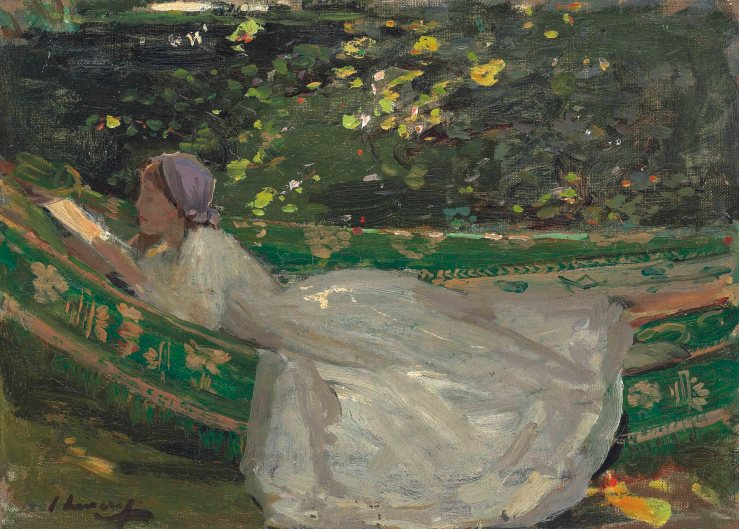
The Florist — André Marchand

7f9b32ae8a9a9540927ff8c80651f2a38424097a

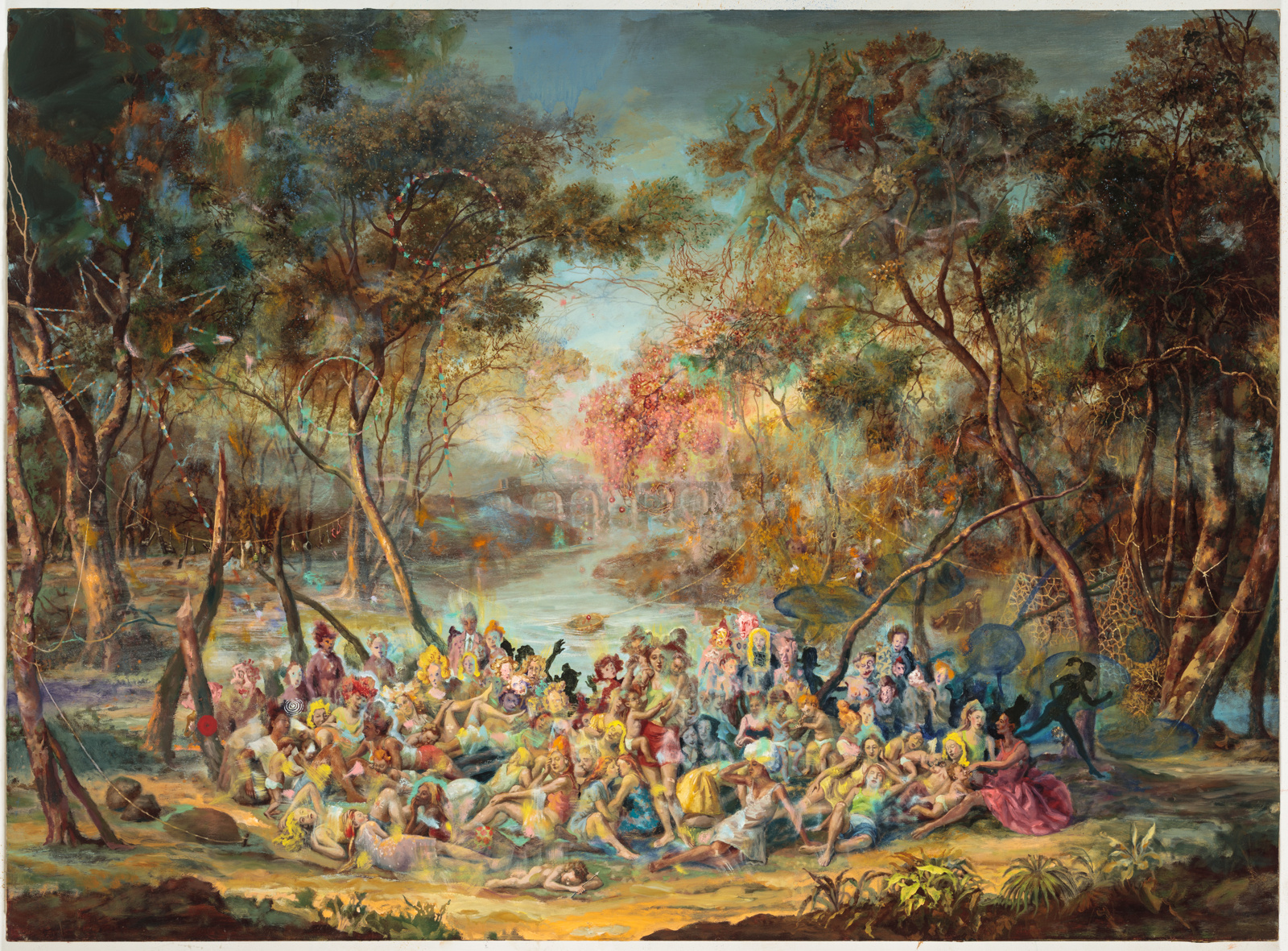
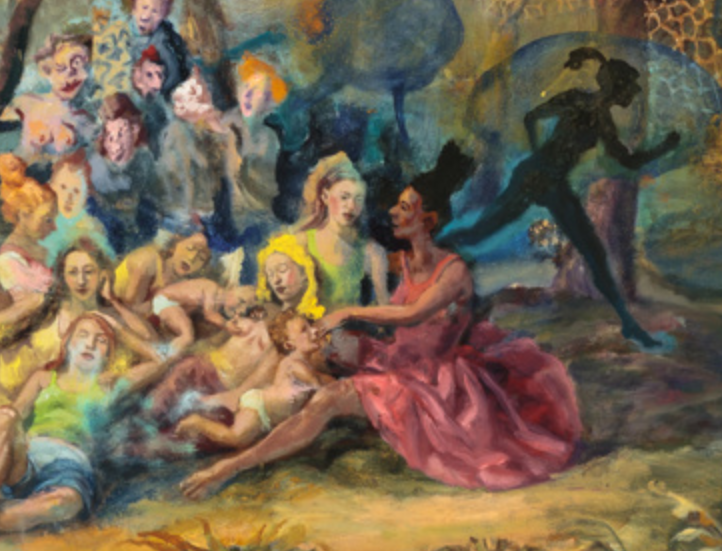
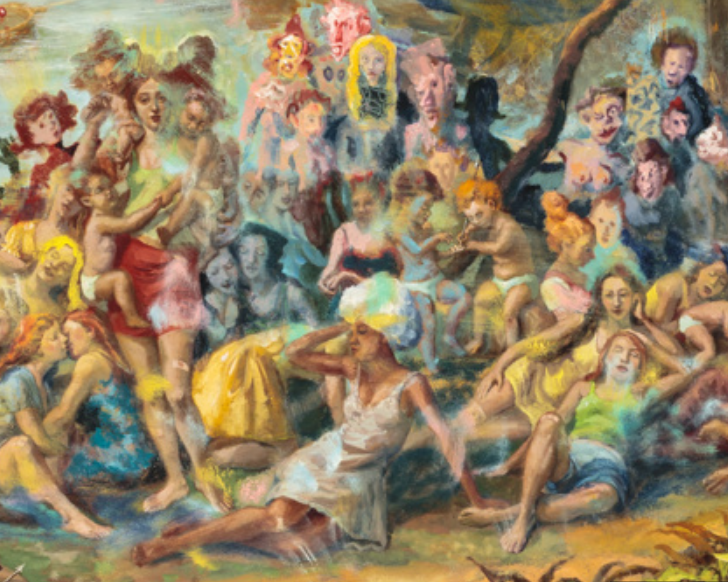
The Florist, 1937 by André Marchand (1907–1997)

Read James Purdy’s short story “Summer Tidings”

“Summer Tidings”

by

James Purdy


There was a children’s party in progress on the sloping wide lawn facing the estate of Mr Teyte and easily visible from there despite the high hedge. A dozen school-aged children, some barely out of the care and reach of their nursemaids, attended Mrs Aveline’s birthday party for her son Rupert. The banquet or party itself was held on the site of the croquet grounds, but the croquet set had only partially been taken down, and a few wickets were left standing, a mallet or two lay about, and a red and white wood ball rested in the nasturtium bed. Mr Teyte’s Jamaican gardener, bronzed as an idol, watched the children as he watered the millionaire’s grass with a great shiny black hose. The peonies had just come into full bloom. Over the greensward where the banquet was in progress one smelled in addition to the sharp odour of the nasturtiums and the marigolds, the soft perfume of June roses; the trees have their finest green at this season, and small gilt brown toads were about in the earth. The Jamaican servant hardly took his eyes off the children. Their gold heads and white summer clothing rose above the June verdure in remarkable contrast, and the brightness of so many colours made his eyes smart and caused him to pause frequently from his watering. Edna Gruber, Mrs Aveline’s secretary and companion, had promised the Jamaican a piece of the ‘second’ birthday cake when the banquet should be over, and told him the kind thought came from Mrs Aveline herself. He had nodded when Edna told him of this coming treat, yet it was not the anticipation of the cake which made him so absent-minded and broody as it was the unaccustomed sight of so many young children all at once. Edna could see that the party had stirred something within his mind for he spoke even less than usual to her today as she tossed one remark after another across the boundary of the privet hedge separating the two large properties.

More absent-minded than ever, he went on hosing the peony bed until a slight flood filled the earth about the blooms and squashed onto his open sandals. He moved off then and began sprinkling with tempered nozzle the quince trees. Mr Teyte, his employer and the owner of the property which stretched far and wide before the eye with the exception of Mrs Aveline’s, had gone to a golf tournament today. Only the white maids were inside his big house, and in his absence they were sleeping most of the day, or if they were about would be indifferently spying the Jamaican’s progress across the lawn, as he laboured to water the already refreshed black earth and the grass as perfectly green and motionless as in a painted backdrop. Yes, his eyes, his mind were dreaming today despite the almost infernal noise of all those young throats, the guests of the birthday party. His long black lashes gave the impression of having been dampened incessantly either by the water from the hose or some long siege of tears.

Mr Teyte, if not attentive or kind to him, was his benefactor, for somehow that word had come to be used by people who knew both the gardener and the employer from far back, and the word had come to be associated with Mr Teyte by Galway himself, the Jamaican servant. But Mr Teyte, if not unkind, was undemonstrative, and if not indifferent, paid low wages, and almost never spoke to him, issuing his commands, which were legion, through the kitchen and parlour maids. But once when the servant had caught pneumonia, Mr Teyte had come unannounced to the hospital in the morning, ignoring the rules that no visits were to be allowed except in early evening, and though he had not spoken to Galway, he had stood by his bedside a few moments, gazing at the sick man as if her were inspecting one of his own ailing riding horses.

But Mrs Aveline and Edna Gruber talked to Galway, were kind to him. Mrs Aveline even ‘made’ over him. She always spoke to him over the hedge every morning, and was not offended or surprised when he said almost nothing to her in exchange. She seemed to know something about him from his beginnings, at any rate she knew Jamaica, having visited there three or four times. And so the women – Edna and Mrs Aveline – went on speaking to him over the years, inquiring of his health, and of his tasks with the yard, and so often bestowing on him delicacies from their liberal table, as one might give tidbits to a prized dog which wandered in also from the great estate.

The children’s golden heads remained in his mind after they had all left the banquet table and gone into the interior of the house, and from thence their limousines had come and taken them to their own great houses. The blonde heads of hair continued to swim before his eyes like the remembered sight of fields of wild buttercups outside the great estate, stray flowers of which occasionally cropped up in his own immaculate greensward, each golden corolla as bright as the strong rays of the noon sun. And then the memory came of the glimpsed birthday cake with the yellow centre. His mouth watered with painful anticipation, and his eyes again filled with tears.

Read the rest of “Summer Tidings” at Granta

It’s for You, Dear — Danny Galieote

dg-itsforyoudear

It’s for You, Dear by Danny Galieote (b. 1968)

Catherine — Jansson Stegner

0KRagGVsWD

Catherine, 2016 by Jansson Stegner (b. 1972)

Visit — Susanne Kühn

besuch12_klein-1024x549

Visit, 2012 by Susanne Kühn (b. 1969)

Throughout the Neighborhood — Tia Peltz

21829712

Tia Peltz (1923-1999)

Three Women in a Courtyard — Kent Monkman

km_three_women_in_a_courtyard_2018

Three Women in a Courtyard, 2018 by Kent Monkman (b. 1965)

In the Intermission — Vasily Meshkov

25919890

In the Intermission, 1932 by Vasily Meshkov (1867-1946)

On the Beach — Boris Talberg

b04fc8e4ea7e

On the Beach, c. 1970s by Boris Talberg (1930-1984)

Blog about some books acquired, 17 July 2019 (and some Poe and Whitman illustrations)

img_3158

Despite having a pretty large TBR stack, I killed this afternoon’s spare hour at my favorite used bookstore. This particular bookstore is a maze of used books, labyrinthine walls of books, with ever-mutating shelves growing from the floor all the way up to the ceiling. I confess I don’t always stoop low—I get old, I get dizzy—but stooping low to look for something else (which I now misremember; I get old) I found a big fat stack of copies of John Kennedy Toole’s cult novel A Confederacy of Dunces. Which I have never read. Which was recommended to me twenty years ago when I wasn’t so old, when I was way into Vonnegut, Burroughs, Hemingway. Which was recommended to me by someone who had made me read Tom Robbins. Which was why I didn’t bother to read A Confederacy of Dunces. I’ve always sort of assumed that I’d missed my window with this one—not sure why—-like that I should’ve read it before I was thirty. Anyone, I threw it out on twitter and some smart folks gave me the go ahead. So we’ll see.

I also found a copy of The Bridge of Beyond by Simone Schwarz-Bart. Again, I wasn’t looking for this book. Actually, I found this Heinemann Caribbean Writers Series edition quite by accident, but recalled the NYRB edition (both are translated by Barbara Bray) and picked it up. I usually am not a big fan of photographs of people on covers, but I really like this one.  I’ll steal NRYB’s blurb:

This is an intoxicating tale of love and wonder, mothers and daughters, spiritual values and the grim legacy of slavery on the French Antillean island of Guadeloupe. Here long-suffering Telumee tells her life story and tells us about the proud line of Lougandor women she continues to draw strength from. Time flows unevenly during the long hot blue days as the madness of the island swirls around the villages, and Telumee, raised in the shelter of wide skirts, must learn how to navigate the adversities of a peasant community, the ecstasies of love, and domestic realities while arriving at her own precious happiness. In the words of Toussine, the wise, tender grandmother who raises her, “Behind one pain there is another. Sorrow is a wave without end. But the horse mustn’t ride you, you must ride it.”

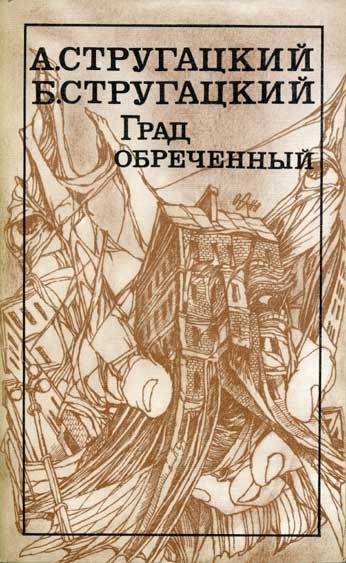
My good luck streak of finding old massmarket paperback copies of Strugatsky brothers novels continued when I found Prisoners of Power (English translation by Helen Saltz Jacobson).

I also found myself intrigued by some large illustrated editions of Melville and Poe, although I resisted picking them up. I really love the simple design of this 1931 omnibus Romances of Herman Melville—

As far as I could tell, the publishers failed to credit the edition’s illustrator, but he signed it—Edward S. Annison.

img_3147

The editors of an oversized 1973 David R. Godine edition of Poe’s only novel, The Narrative of Arthur Gordon Pym did bother to name the illustrator: Gerry Hoover. Hoover’s illustrations are pretty creepy:

img_3152img_3151img_3150

Okay—maybe the last one isn’t creepy. But the tortoise’s grimacing beak is intense.

Two Sisters — John D. Graham

0_22d22d_ef10c861_orig

Two Sisters, 1944 by John D. Graham (1881–1961)

The Lovers — Liu Xiaodong

0_20e622_74d82e34_orig

The Lovers, 1995 by Liu Xiaodong (b. 1963)

“The Song of the Demented Priest” — John Berryman

“The Song of the Demented Priest”

by

John Berryman


I put those things there.—See them burn.
The emerald the azure and the gold
Hiss and crack, the blues & greens of the world
As if I were tired. Someone interferes
Everywhere with me. The clouds, the clouds are torn
In ways I do not understand or love.

Licking my long lips, I looked upon God
And he flamed and he was friendlier
Than you were, and he was small. Showing me
Serpents and thin flowers; these were cold.
Dominion waved & glittered like the flare
From ice under a small sun. I wonder.

Afterward the violent and formal dancers
Came out, shaking their pithless heads.
I would instruct them but I cannot now,—
Because of the elements. They rise and move,
I nod a dance and they dance in the rain
In my red coat. I am the king of the dead.

Salome Sphinx — Nikolai Kalmakov

0_a71af_ec6074a8_xl

Salome Sphinx, 1928 by Nikolai Kalmakov (1873-1955)

The Death Bed — James Pryde

E0848

The Death Bed, 1913 by James Pryde (1866–1941)

Robert Coover’s short story “Hulk”

“Hulk”

by

Robert Coover


Hulk, in a fit of pique (can’t help it), beats up an old lady who gets in his way, and suddenly his role in the world zigs from hero to villain. Fake distinction. He can always zag back. If they want him to be a bad guy, he’ll do it, but he could do either, or both at the same time. He’s good at them.

To tell the truth (which he always does), he probably likes being a bad guy best. As a hero, he was supposed to save lives, but was anyone except himself really worth it? As a bad guy, he’s free to take lives without remorse, and more or less at random. Which is easier. No pretending. More fun. He’s grown old and fat and is not so great for the hero part anyway. The amazing thing is, everyone still loves him. He understands that. He loves himself.

The only one who won’t admit he loves him and can get away with it is Sam. Sam’s an old buddy. Well, not a buddy exactly. His uncle doesn’t have buddies. More like a family business partner. He runs the corporation, which Sam says is in a gutter fight over what’s left of the Earth’s goods before it all ends catastrophically. His uncle sometimes takes Hulk on as a kind of enforcer. Mr Fixit. Nasty work, but it unleashes him. And it’s for a good cause. Sam calls Hulk a bloated, blank-brained, shit-green abomination, and says he is embarrassed to be anywhere near him, but Hulk knows he’s only kidding. Stupidity is a handicap, Sam always says with a big toothy smile, little tuft of white beard wagging, his finger pointing straight at Hulk like a command: Absolute stupidity rules!

His pal Cap says the Sam may be a ruthless sonofabitch, but he’s also a true-blue patriot who always gave him room to swing, when he could still do that and not fall down. The old fellow’s Captain America costume doesn’t fit him anymore; it bags in the seat, bulges in the middle, hangs like limp rags over his bony shoulders. Thanks to cataract operations, his sight’s back, some of it, but his wits are still missing. Remembers old World War II comic book fantasies better than he remembers five minutes ago. Something off about his smell, too. Good guy, though. Sentinel of Liberty. They both had tyrannical alcoholic fathers and are, consequently, both teetotalers. They understand each other, to the extent that Cap can understand anything. When rage invades Hulk and makes him lose it, Cap’s still there for him. Hero, villain, Cap doesn’t give a shit.

Read the rest of “Hulk” at Granta.

Untitled (Tree) — Hans-Georg Rauch

rauschenberg

From HG Rauch’s En Masse (Collier, 1975).