


W Tumanie (In the Dust Storm), 1893-1894 by Jacek Malczewski
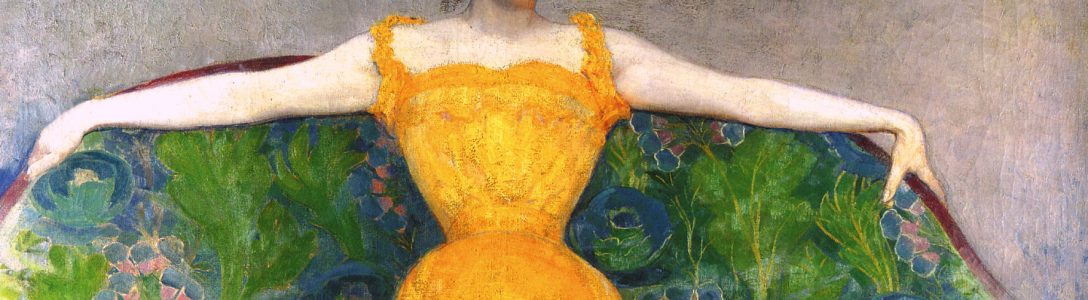
W Tumanie (In the Dust Storm), 1893-1894 by Jacek Malczewski

Rainsong, 2015 by Martin Wittfooth (b. 1981)


The Great Day of His Wrath, c. 1853 by John Martin (1789-1854)
“Game”
by
Donald Barthelme
Shotwell keeps the jacks and the rubber ball in his attaché case and will not allow me to play with them. He plays with them, alone, sitting on the floor near the console hour after hour, chanting “onesies, twosies, threesies, foursies” in a precise, well-modulated voice, not so loud as to be annoying, not so soft as to allow me to forget. I point out to Shotwell that two can derive more enjoyment from playing jacks than one, but he is not interested. I have asked repeatedly to be allowed to play by myself, but he simply shakes his head. “Why?” I ask. “They’re mine,” he says. And when he has finished, when he has sated himself, back they go into the attaché case.
It is unfair but there is nothing I can do about it. I am aching to get my hands on them.
Shotwell and I watch the console. Shotwell and I live under the ground and watch the console. If certain events take place upon the console, we are to insert our keys in the appropriate locks and turn our keys. Shotwell has a key and I have a key. If we turn our keys simultaneously the bird flies, certain switches are activated and the bird flies. But the bird never flies. In one hundred thirty-three days the bird has not flown. Meanwhile Shotwell and I watch each other. We each wear a .45 and if Shotwell behaves strangely I am supposed to shoot him. If I behave strangely Shotwell is supposed to shoot me. We watch the console and think about shooting each other and think about the bird. Shotwell’s behavior with the jacks is strange. Is it strange? I do not know. Perhaps he is merely a selfish bastard, perhaps his character is flawed, perhaps his childhood was twisted. I do not know.
Each of us wears a .45 and each of us is supposed to shoot the other if the other is behaving strangely. How strangely is strangely? I do not know. In addition to the .45 I have a .38 which Shotwell does not know about concealed in my attaché case, and Shotwell has a .25 caliber Beretta which I do not know about strapped to his right calf. Sometimes instead of watching the console I pointedly watch Shotwell’s .45, but this is simply a ruse, simply a maneuver, in reality I am watching his hand when it dangles in the vicinity of his right calf. If he decides I am behaving strangely he will shoot me not with the .45 but with the Beretta. Similarly Shotwell pretends to watch my .45 but he is really watching my hand resting idly atop my attaché case, my hand resting atop my attaché case, my hand. My hand resting idly atop my attaché case. Continue reading ““Game” — Donald Barthelme”
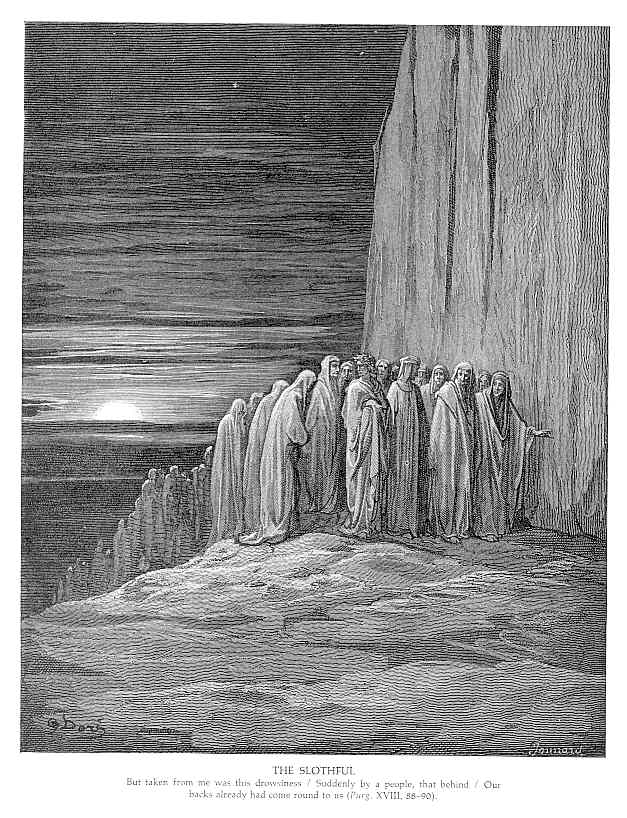
The Slothful, 1838 by Gustave Dore (1832-1883)

Bat, 1951 by Germaine Richier (1902-1959)
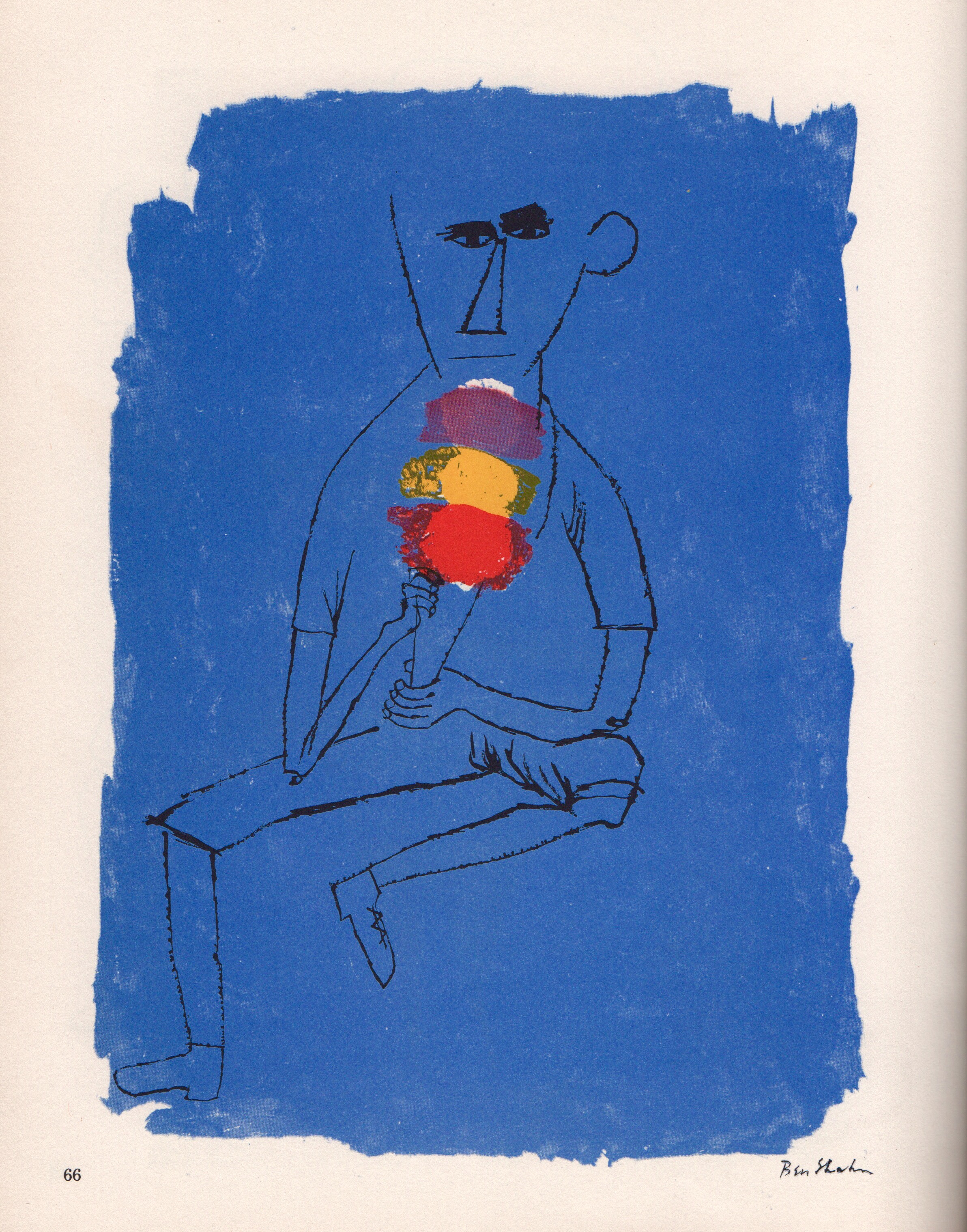
Triple Dip, 1952 by Ben Shahn (1898–1969). From Ben Shahn: His Graphic Art, George Braziller, Inc., NY 1957.
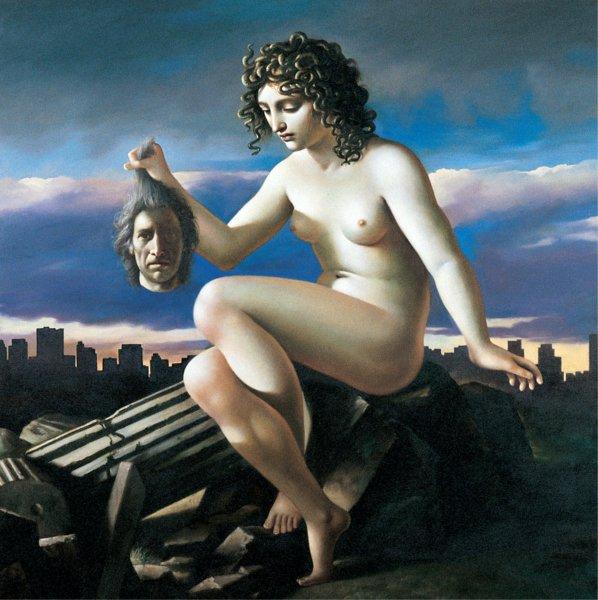
Allegoria della critica (Allegory of Criticism), 2005 by Carlo Maria Mariani (b. 1931)
All of the times that Flannery O’Connor mentions Carson McCullers in her letters collected in The Habit of Being: Letters of Flannery O’Connor:
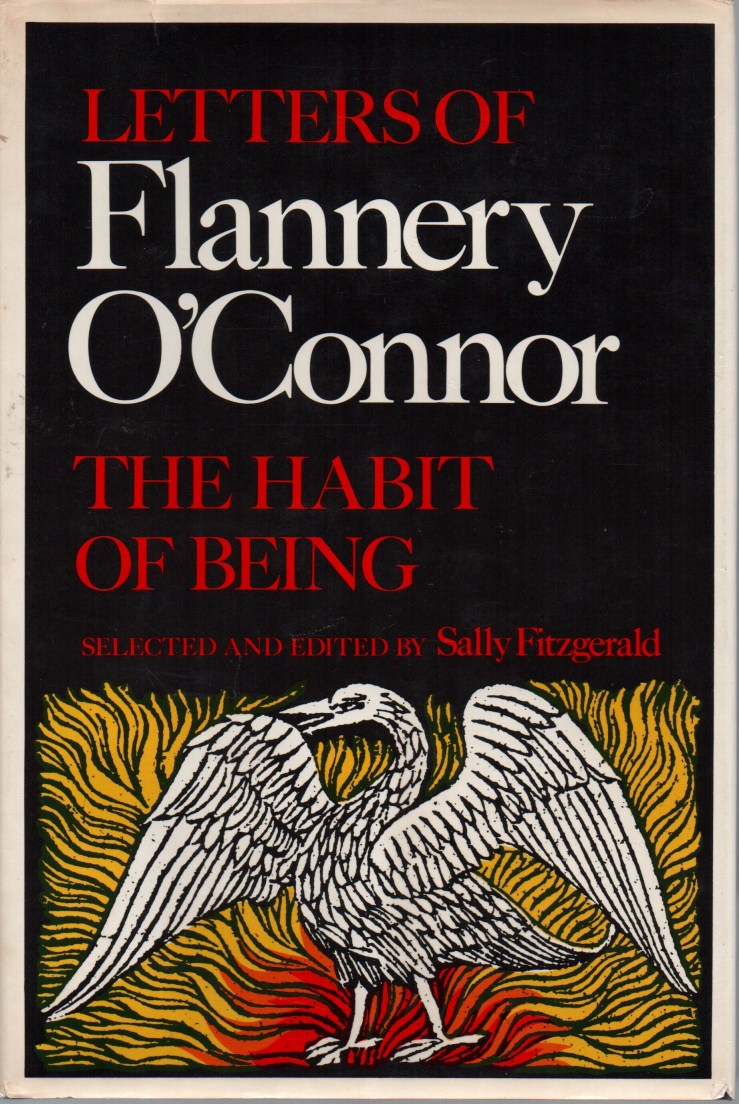
I read in the paper that Carson McCullers is going to have a play shortly to be called The Square Root of Wonderful—a title that makes me cringe. (8 Oct. 1957)
…Paul Levine [is] preparing a book on 6 writers—McCullers, Capote, Buechner, Bellow, Salinger, and me… (25 June 1960)
I haven’t read [Frederick] Buechner myself, but if I was writing it I would throw out Capote in favor of Malamud and Carson McCullers in favor of [J.F.] Powers. (9 July 1960)
Last week Houghton Mifflin sent me a book called Clock Without Hands by Carson McCullers. This long-awaited-by-the-faithful book will come out in September. I believe it is the worst book I have ever read. It is incredible…It must signal the complete disintegration of this woman’s talent. I have forgotten how the other three were, but they were at least respectable from the writing standpoint. (26 July 1961)
If you ever go to the Albee-McCullers [play] let me know what you think about it? … Did you ever consider Wise Blood as a possibility for dramatizing? If the times were different I would suggest that, but I think it would just be taken for the super-grotesque sub-Carson McCullers sort of thing that I couldn’t stand the sight or sound of. (5 Nov. 1963)
I was interested in the reviews of the Carson McCullers adaptation. I dislike intensely the work of Carson McCullers but it is interesting to see what is made of it in the theatre, and by Edward Albee at that. (28 Nov. 1963)

Between Right and Wrong, 2007 by Samuel Bak (b. 1933)


Le Déjeuner sur l’herbe est fini (The Luncheon on the Grass Is Finished), 2015 by Susannah Martin (b. 1964)


Untitled, 2003 by Marcel Dzama (b. 1974)

This one looks pretty cool. The Book of Emma Reyes, an epistolary “memoir,” is new in hardback from Penguin, in English translation by Daniel Alarcón. Here’s Penguin’s blurb/bio:
This astonishing memoir was hailed as an instant classic when first published in Colombia in 2012, nearly a decade after the death of its author, who was encouraged in her writing by Gabriel García Márquez. Comprised of letters written over the course of thirty years, and translated and introduced by acclaimed writer Daniel Alarcón, it describes in vivid, painterly detail the remarkable courage and limitless imagination of a young girl growing up with nothing.
Emma Reyes was an illegitimate child, raised in a windowless room in Bogotá with no water or toilet and only ingenuity to keep her and her sister alive. Abandoned by their mother, she and her sister moved to a Catholic convent housing 150 orphan girls, where they washed pots, ironed and mended laundry, scrubbed floors, cleaned bathrooms, sewed garments and decorative cloths for the nuns—and lived in fear of the Devil. Illiterate and knowing nothing of the outside world, Emma escaped at age nineteen, eventually establishing a career as an artist and befriending the likes of Frida Kahlo and Diego Rivera as well as European artists and intellectuals. The portrait of her childhood that emerges from this clear-eyed account inspires awe at the stunning early life of a gifted writer whose talent remained hidden for far too long.

The fact is I wanted to write long before I had anything to say. I don’t find this condition at all unusual in young writers, good or bad. A sort of attuned restlessness. Often it is simply an overriding need to talk. A sort of transcribed logorrhea, worse than decent gossip. I’ve taught these people, forever blasting away in wretched detail, solidly in love with their own noise. I must say, I was never infatuated with my own voice. It was the ideal inner voices that took me, and they came from everywhere, especially Hemingway, Joyce, Henry Miller, and later, Flannery O’Connor. Like many Mississippians, I shied away from Faulkner, who was at once remote and right there in your own backyard, the powerful resident alien. Having read a little of him, I sensed I would be overcome by him, and had a dread, in fact, that he might be the last word. That I would wind up a pining third-rate echo, like many another Southerner. Then T.S. Eliot, especially “Prufrock.” But the earliest great howler who made me want to make the team was the badly forgotten Dylan Thomas, whose voice seemed available everywhere in English departments in the ’50s and ’60s. It seemed to me a fine thing to get drunk and just start being Welsh and crowing surrealism, as I perceived it. Put that against the sullen bitchery of Holden Caulfield, which charmed almost everybody my age, and you would be cooking. Miles Davis might one day shake your hand. He was God, and that would be very nice.
From Barry Hannah’s essay “Why I Write”; read the whole thing at The Oxford American.
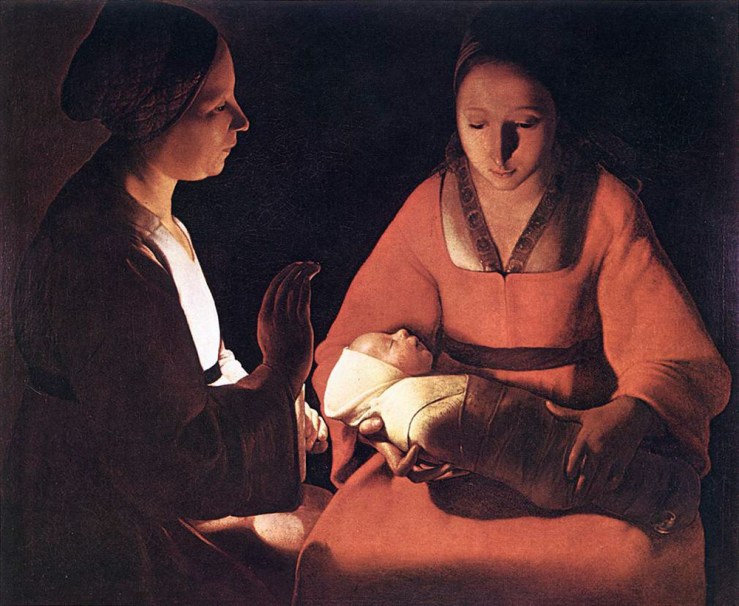
The Newborn, c. 1640-1649 by Georges de la Tour (1593-1652)
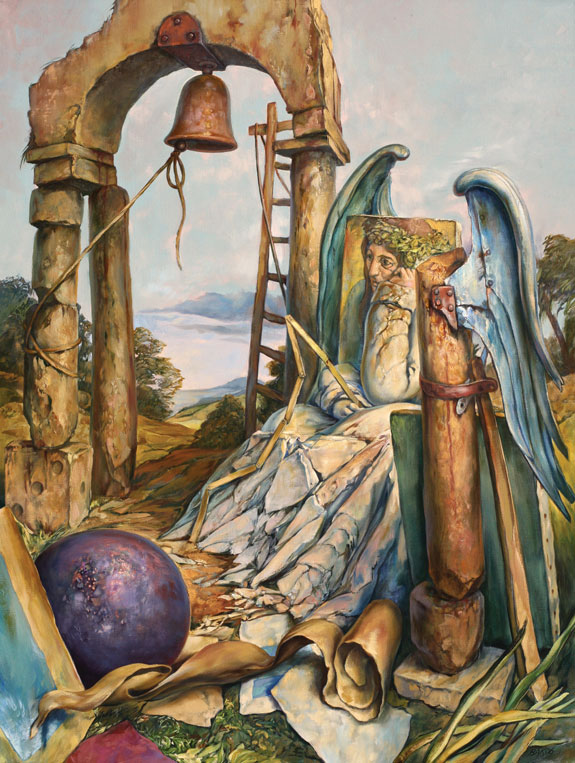
Guardian of Suspended Warnings, 2006 by Samuel Bak (b. 1933)

