The Mérode Altarpiece — Robert Campin

A Coffee Chronology

A COFFEE CHRONOLOGY

Giving dates and events of historical interest in legend, travel, literature, cultivation, plantation treatment, trading, and in the preparation and use of coffee from the earliest time to the present

(From William H. Ukers’s All About Coffee, 1922)

900[L]—Rhazes, famous Arabian physician, is first writer to mention coffee under the name bunca or bunchum.[M]

1000[L]—Avicenna, Mahommedan physician and philosopher, is the first writer to explain the medicinal properties of the coffee bean, which he also calls bunchum.[M]

1258[L]—Sheik Omar, disciple of Sheik Schadheli, patron saint and legendary founder of Mocha, by chance discovers coffee as a beverage at Ousab in Arabia.[M]

1300[L]—The coffee drink is a decoction made from roasted berries, crushed in a mortar and pestle, the powder being placed in boiling water, and the drink taken down, grounds and all.

1350[L]—Persian, Egyptian, and Turkish ewers made of pottery are first used for serving coffee.

1400–1500—Earthenware or metal coffee-roasting plates with small holes, rounded and shaped like a skimmer, come into use in Turkey and Persia over braziers. Also about this time appears the familiar Turkish cylinder coffee mill, and the original Turkish coffee boiler of metal.

1428–48—Spice grinder to stand on four legs first invented; subsequently used to grind coffee.

1454[L]—Sheik Gemaleddin, mufti of Aden, having discovered the virtues of the berry on a journey to Abyssinia, sanctions the use of coffee in Arabia Felix.

1470–1500—The use of coffee spreads to Mecca and Medina.

1500–1600—Shallow iron dippers with long handles and small foot-rests come into use in Bagdad and in Mesopotamia for roasting coffee.

1505[L]—The Arabs introduce the coffee plant into Ceylon.

1510—The coffee drink is introduced into Cairo.

1511—Kair Bey, governor of Mecca, after consultation with a council of lawyers, physicians, and leading citizens, issues a condemnation of coffee, and prohibits the use of the drink. Prohibition subsequently ordered revoked by the sultan of Cairo.

1517—Sultan Selim I, after conquering Egypt, brings coffee to Constantinople.

1524—The kadi of Mecca closes the public coffee houses because of disorders, but permits coffee drinking at home and in private. His successor allows them to re-open under license.

1530[L]—Coffee drinking introduced into Damascus.

1532[L]—Coffee drinking introduced into Aleppo.

1534—A religious fanatic denounces coffee in Cairo and leads a mob against the coffee houses, many of which are wrecked. The city is divided into two parties, for and against coffee; but the chief judge, after consultation with the doctors, causes coffee to be served to the meeting, drinks some himself, and thus settles the controversy.

Continue reading “A Coffee Chronology”

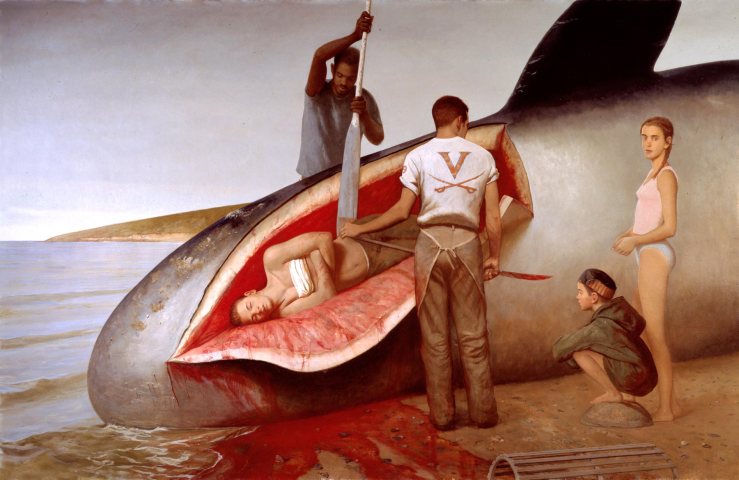
Leviathan — Bo Bartlett

2000-leviathan-lg

“All Things Decay and Die” — Robert Herrick

Screenshot 2015-05-11 at 8

Critical Mass (Gravity’s Rainbow)

“I think that there is a terrible possibility now, in the World. We may not brush it away, we must look at it. It is possible that They will not die. That it is now within the state of Their art to go on forever—though we, of course, will keep dying as we always have. Death has been the source of Their power. It was easy enough for us to see that. If we are here once, only once, then clearly we are here to take what we can while we may. If They have taken much more, and taken not only from Earth but also from us—well, why begrudge Them, when they’re just as doomed to die as we are? All in the same boat, all under the same shadow… yes… yes. But is that really true? Or is it the best, and the most carefully propagated, of all Their lies, known and unknown?

“We have to carry on under the possibility that we die only because They want us to: because They need our terror for Their survival. We are their harvests… .

“It must change radically the nature of our faith. To ask that we keep faith in Their mortality, faith that They also cry, and have fear, and feel pain, faith They are only pretending Death is Their servant—faith in Death as the master of us all—is to ask for an order of courage that I know is beyond my own humanity, though I cannot speak for others… . But rather than make that leap of faith, perhaps we will choose instead to turn, to fight: to demand, from those for whom we die, our own immortality. They may not be dying in bed any more, but maybe They can still die from violence. If not, at least we can learn to withhold from Them our fear of Death. For every kind of vampire, there is a kind of cross. And at least the physical things They have taken, from”“Earth and from us, can be dismantled, demolished—returned to where it all came from.

“To believe that each of Them will personally die is also to believe that Their system will die—that some chance of renewal, some dialectic, is still operating in History. To affirm Their mortality is to affirm Return. I have been pointing out certain obstacles in the way of affirming Return…”

From pages 539-40 of Thomas Pynchon’s novel Gravity’s Rainbow.

The sermon is from a Jesuit, one Father Rapier, and takes place in one of GR’s stranger episodes (which is really saying something, that adjective there). Before the sermon—a “Critical Mass,” our narrator takes unusual pains to make sure that we get it, that we understand that the Jesuit is here to preach “against return. Here to say that critical mass cannot be ignored. Once the technical means of control have reached a certain size, a certain degree of being connected one to another, the chances for freedom are over for good.”

Compare the Jesuit’s notation of “once, only once” to the passage on pages 412-13 on Kekulé, the snake that eats its own tale: “…a quote from Rilke: ‘Once, only once…’ One of Their favorite slogans. No return, no salvation, no Cycle—”. The sermon also echoes the They/We riff on page 521.

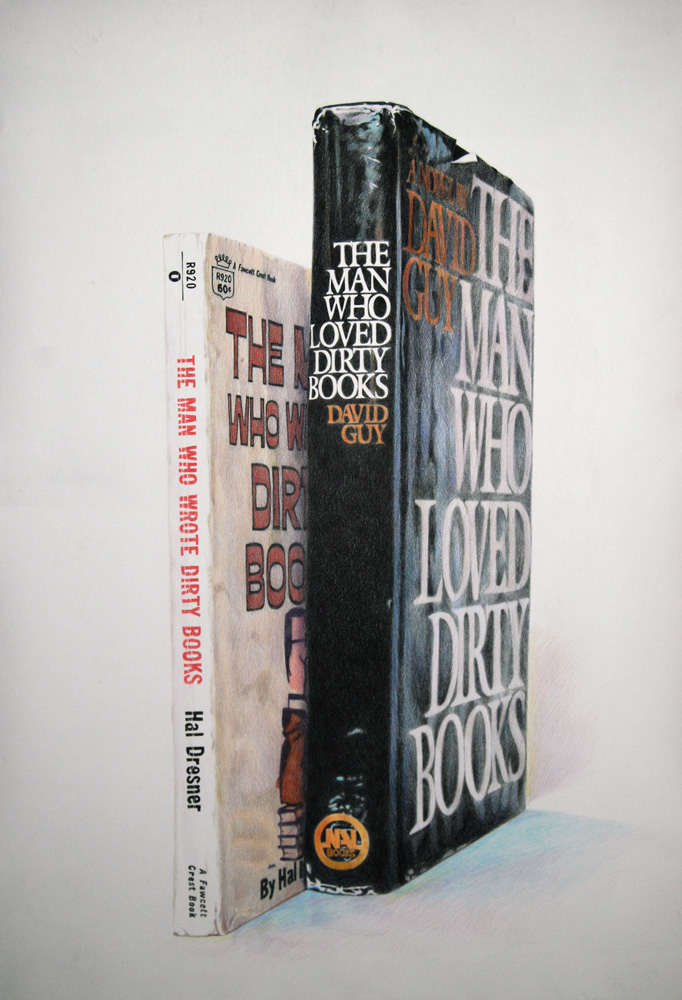
A Dirty Pair — Eric Yahnker

2011_ADirtyPair

May 11, 1838 entry from Nathaniel Hawthorne’s Note-Books

May 11, 1838.–At Boston last week. Items:–A young man, with a small mustache, dyed brown, reddish from its original light color. He walks with an affected gait, his arms crooked outwards, treading much on his toes. His conversation is about the theatre, where he has a season ticket,–about an amateur who lately appeared there, and about actresses, with other theatrical scandal.–In the smoking-room, two checker and backgammon boards; the landlord a great player, seemingly a stupid man, but with considerable shrewdness and knowledge of the world.– F—-, the comedian, a stout, heavy-looking Englishman, of grave deportment, with no signs of wit or humor, yet aiming at both in conversation, in order to support his character. Very steady and regular in his life, and parsimonious in his disposition,–worth $50,000, made by his profession.–A clergyman, elderly, with a white neck-cloth, very unbecoming, an unworldly manner, unacquaintance with the customs of the house, and learning them in a childlike way. A ruffle to his shirt, crimped.–A gentleman, young, handsome, and sea-flushed, belonging to Oswego, New York, but just arrived in port from the Mediterranean: he inquires of me about the troubles in Canada, which were first beginning to make a noise when he left the country,–whether they are all over. I tell him all is finished, except the hanging of the prisoners. Then we talk over the matter, and I tell him the fates of the principal men,–some banished to New South Wales, one hanged, others in prison, others, conspicuous at first, now almost forgotten.–Apartments of private families in the hotel,–what sort of domesticity there may be in them; eating in public, with no board of their own. The gas that lights the rest of the house lights them also, in the chandelier from the ceiling.–A shabby-looking man, quiet, with spectacles, at first wearing an old, coarse brown frock, then appearing in a suit of elderly black, saying nothing unless spoken to, but talking intelligently when addressed. He is an editor, and I suppose printer, of a country paper. Among the guests, he holds intercourse with gentlemen of much more respectable appearance than himself, from the same part of the country.–Bill of fare; wines printed on the back, but nobody calls for a bottle. Chairs turned down for expected guests. Three-pronged steel forks. Cold supper from nine to eleven P.M. Great, round, mahogany table, in the sitting-room, covered with papers. In the morning, before and soon after breakfast, gentlemen reading the morning papers, while others wait for their chance, or try to pick out something from the papers of yesterday or longer ago. In the forenoon, the Southern papers are brought in, and thrown damp and folded on the table. The eagerness with which those who happen to be in the room start up and make prize of them. Play-bills, printed on yellow paper, laid upon the table. Towards evening comes the “Transcript.”

From Nathaniel Hawthorne’s American Note-Books.

Mother and Child — Egon Schiele

The Mother Conspiracy (Gravity’s Rainbow)

Otto is earnestly explaining his views on the Mother Conspiracy. It’s not often a sympathetic girl will listen. The Mothers get together once a year, in secret, at these giant conventions, and exchange information. Recipes, games, key phrases to use on their children. “What did yours use to say when she wanted to make you feel guilty?”

“‘I’ve worked my fingers to the bone!’” sez the girl.

“Right! And she used to cook those horrible casseroles, w-with the potatoes, and onions—”

“And ham! Little pieces of ham—”

“You see, you see? That can’t be accidental! They have a contest, for Mother of the Year, breast-feeding, diaper-changing, they time them, casserole competitions, ja—then, toward the end, they actually begin to use the children. The State Prosecutor comes out on stage. ‘In a moment, Albrecht, we are going to bring your mother on. Here is a Luger, fully loaded. The State will guarantee you absolute immunity from prosecution. Do whatever you wish to do—anything at all. Good luck, my boy.’ The pistols are loaded with blanks, natürlich, but the unfortunate child does not know this. Only the mothers who get shot at qualify for the finals.

Here they bring in psychiatrists, and judges sit with stopwatches to see how quickly the children will crack. ‘Now then, Olga, wasn’t it nice of Mutti to break up your affair with that long-haired poet?’ ‘We understand your mother and you are, ah, quite close, Hermann. Remember the time she caught you masturbating into her glove? Eh?’ Hospital attendants stand by to drag the children off, drooling, screaming, having clonic convulsions. Finally there is only one Mother left on stage. They put the traditional flowered hat on her head, and hand her the orb and scepter, which in this case are a gilded pot roast and a whip, and the orchestra plays Tristan und Isolde.

From Thomas Pynchon’s novel Gravity’s Rainbow.

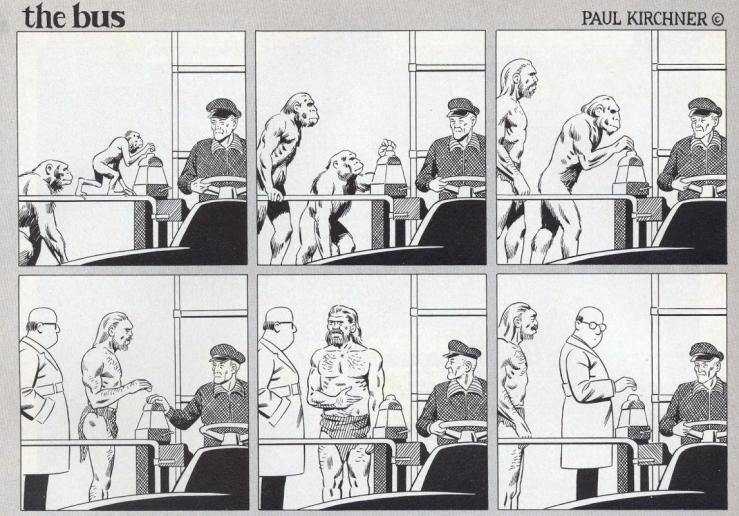
The Bus — Paul Kirchner

GyUprmZ - Imgur

Portrait of the Artist’s Mother

Portrait of the Artist’s Mother — Vincent van Gogh
The Artist’s Mother — Pierre-Auguste Renoir
Portrait of the Artist’s Mother — Camille Pissarro

Continue reading “Portrait of the Artist’s Mother”

“Mothers” — William Gaddis

“Mothers” by William Gaddis

When Ralph Waldo Emerson informed—or rather, perhaps, warned us—that we are what our mothers made us, we might dismiss it as received opinion and let it go at that, like the broken clock which is right twice a day, like the self-evident answer contained in Freud’s oft-quoted query “What do women want?” when, as nature’s handmaid, she must want what nature wants which is, quite simply, More. But which woman? Whose mother, Emerson’s? A woman so in thrall to religion that we confront another dead end; or Freud’s? or even one’s own, even mine, offering an opportune bit of wisdom to those of us engaged in the creative arts, where paranoia is almost an occupational hazard: “Bill, just try to remember,” she said, “there is much more stupidity than there is malice in the world,” an observation lavish with possibilities recalling Anatole France finding the fool more dangerous than the rogue because “the rogue does at least take a rest sometimes, the fool never.”

This is hardly to see stupidity and malice as mutually exclusive: look at your morning paper, where their combined forces explode exponentially (women and children first) from Bosnia to Belfast, unlike the international “intelligence community” so self-contained in its malice-free exercises that it generally ensnares only its own dubious cast of players. Of further importance is the distinction between stupidity and ignorance, since ignorance is educable, while stupidity’s self-serving mission is the cultivation and exploitation of ignorance, as politicians are keenly aware.

How, then, might Emerson’s mother have seen herself stumbling upon Thomas Carlyle’s vision of her son as a “hoary-headed and toothless baboon”? Or Freud’s, in the gross unlikelihood of her reading the Catholic World’s review of her son’s book Moses and Monotheism as “poorly written, full of repetitions . . . and spoiled by the author’s atheistic bias and his flimsy psychoanalytic fancies”? Goethe’s Wilhelm Meister dismissed as “sheer nonsense” by the Edinburgh Review and, a good century later, the hero of Saul Bellow’s Dangling Man ridiculed as a “pharisaical stinker” in Time magazine, John Barth’s The End of the Road recommended by Kirkus Reviews “for those schooled in the waste matter of the body and the mind,” and William Faulkner’s Absalom, Absalom! shrugged off as the “final blowup of what was once a remarkable, if minor, talent” by The New Yorker magazine where, just forty years later, “a group of avant-garde critics has put forward the idea that books should be made unreadable. This movement has manifest advantages. Being unreadable, the text repels reviewers, critics, anthologists, academic literati, and other parasitical forms of life,” indicting the author of the novel J R wherein “to produce an unreadable text, to sustain this foxy purpose over 726 pages, demands rare powers. Mr. Gaddis has them.” “You’re a fool, a fool!” the distraught mother of Dostoevski’s ill-fated hero Nikolay Stavrogin cries out at the “parasitical forms of life” surrounding her. “You’re all ungrateful fools. Give me my umbrella!”

(“Mothers” is collected in The Rush to Second Place).

The Guest — Francesco Balsamo

opere05

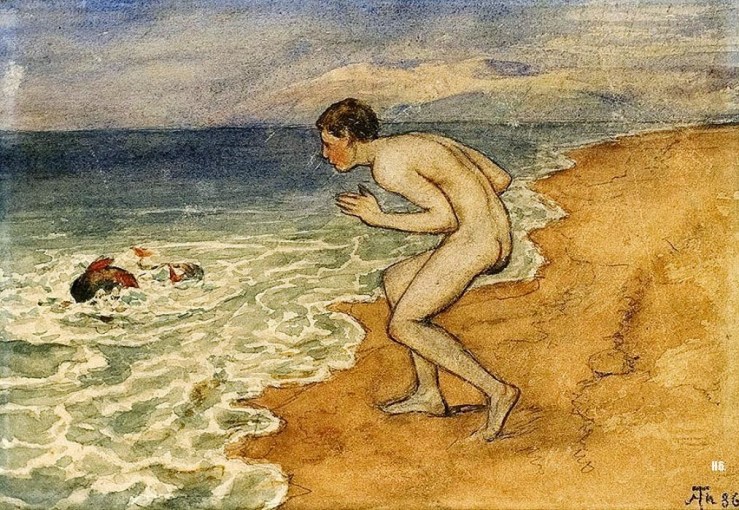
On the Beach — Hans Thoma

On the beach. 1886. Hans Thoma

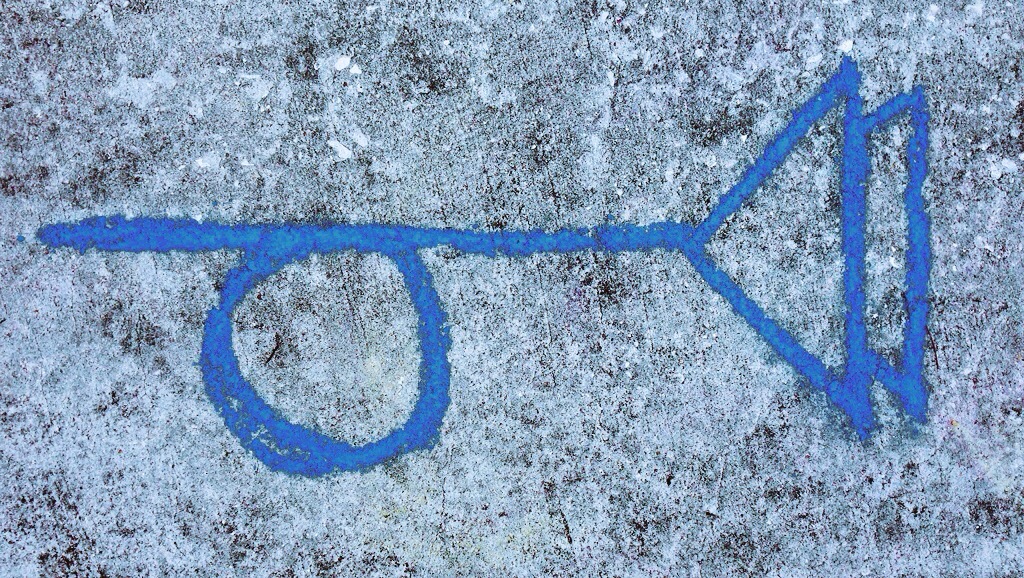
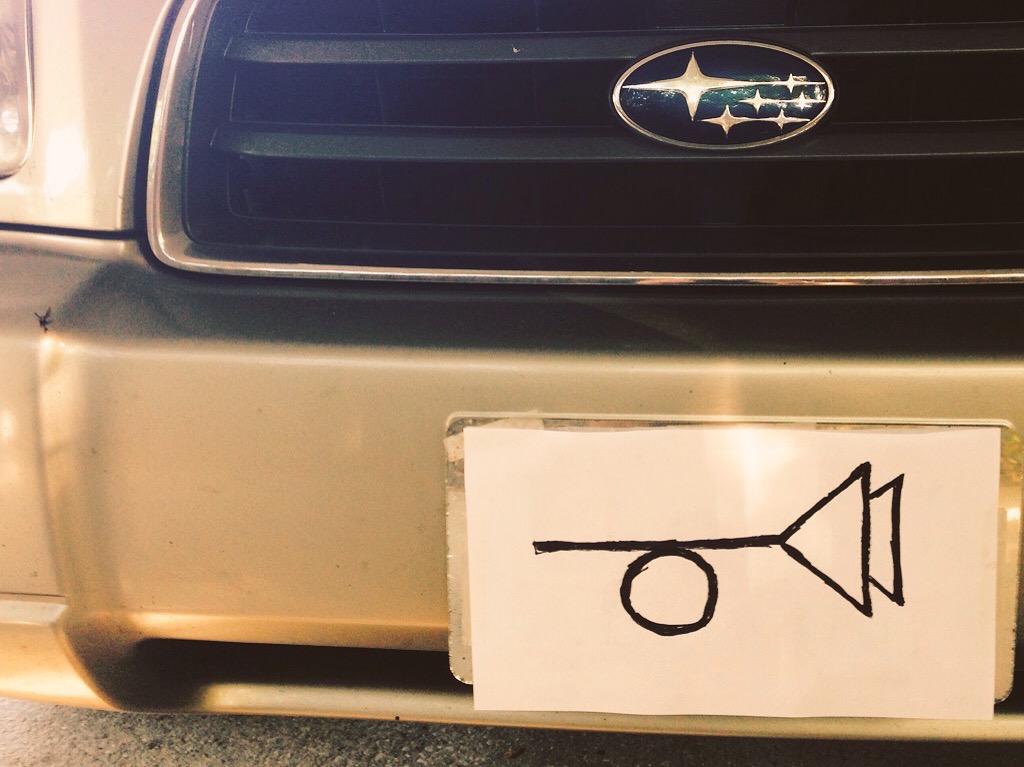
Pynchon in Public, 8 May 2015


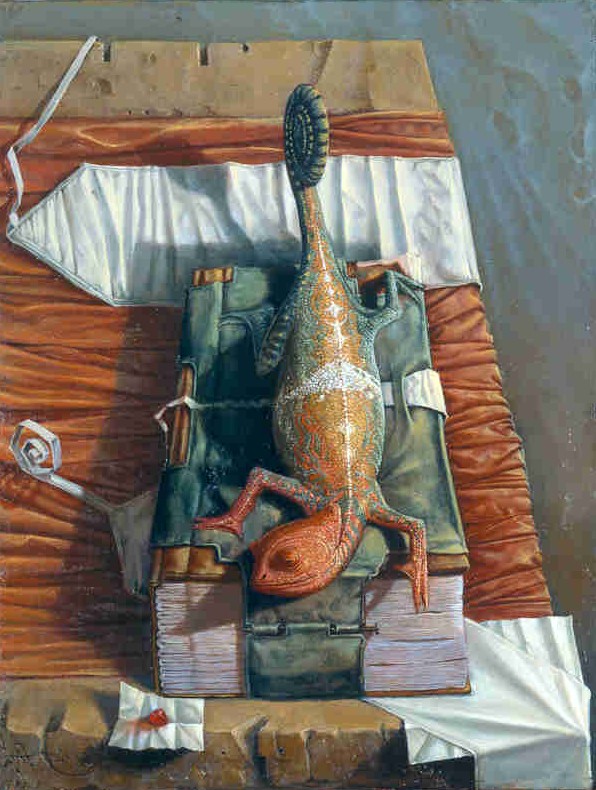
Chameleon with a Grain of Pomegranate — Agostino Arrivabene

tumblr_lxi0pf85ce1qhvnw6o1_1280