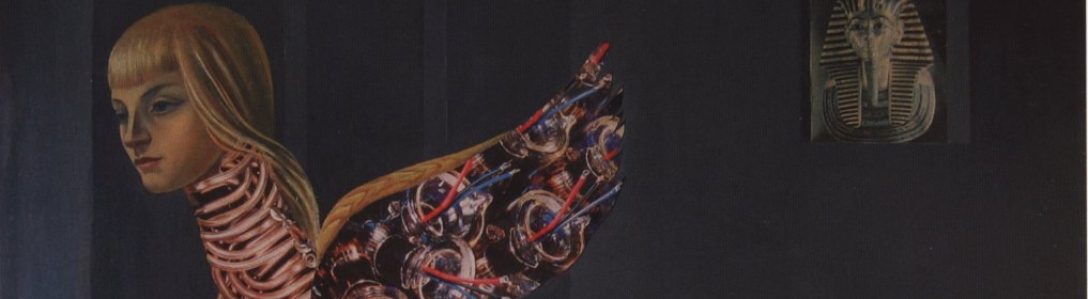
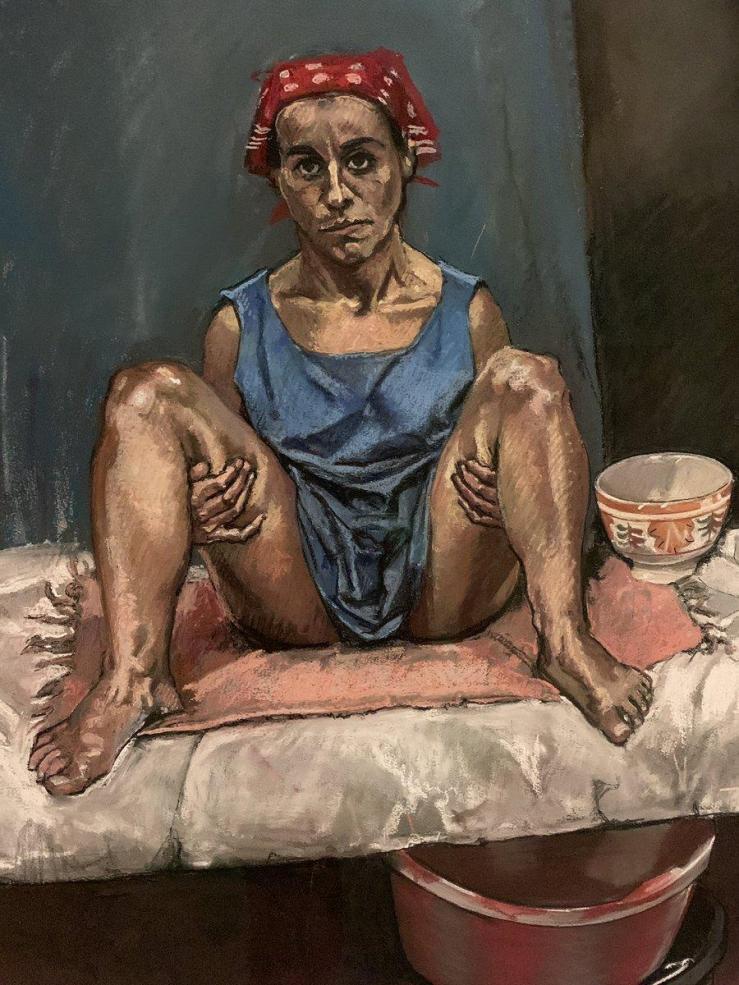
Symptoms of Paralytic Shellfish Poisoning — David Pettibone

Symptoms of Paralytic Shellfish Poisoning, 2020 by David Pettibone (b. 1980)

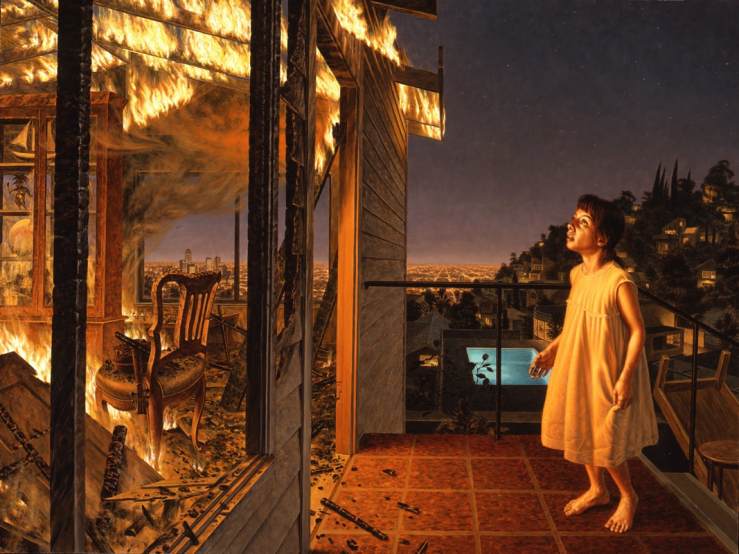
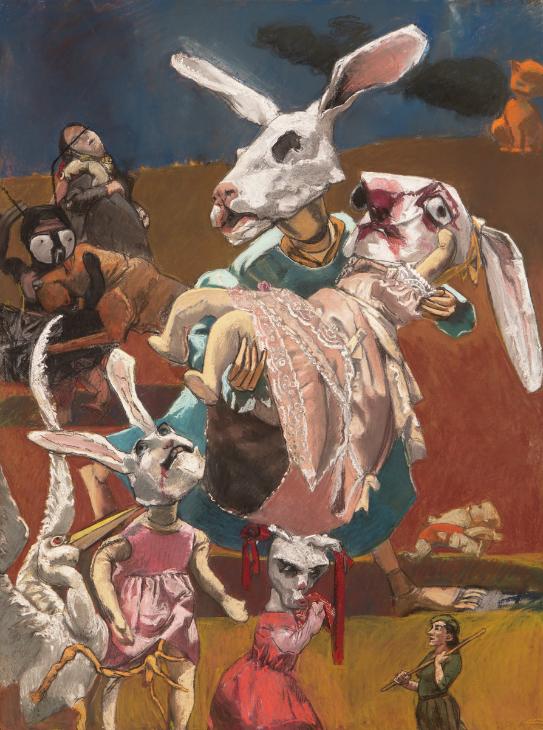
Poised — Anthony Goicolea

Poised, 2017 by Anthony Goicolea (b. 1971)

“The River of Bees” — W.S. Merwin

“The River of Bees”

by

W.S. Merwin


In a dream I returned to the river of bees
Five orange trees by the bridge and
Beside two mills my house
Into whose courtyard a blindman followed
The goats and stood singing
Of what was older

Soon it will be fifteen years

He was old he will have fallen into his eyes

I took my eyes
A long way to the calendars
Room after room asking how shall I live

One of the ends is made of streets
One man processions carry through it
Empty bottles their
Image of hope
It was offered to me by name

Once once and once
In the same city I was born
Asking what shall I say

He will have fallen into his mouth
Men think they are better than grass

I return to his voice rising like a forkful of hay

He was old he is not real nothing is real
Nor the noise of death drawing water

We are the echo of the future

On the door it says what to do to survive
But we were not born to survive
Only to live

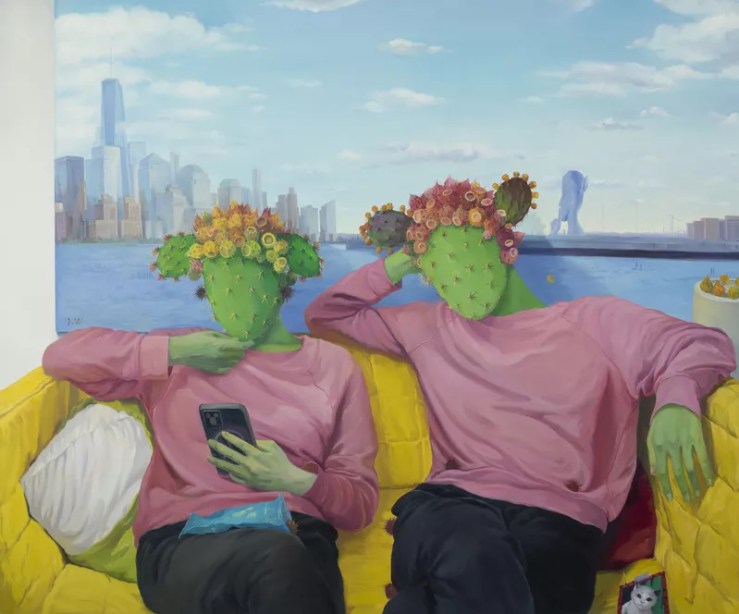
Basement Scene with Conduit — Rhys Ziemba

Basement Scene with Conduit by Rhys Ziemba

A few sentences on every Thomas Pynchon novel to date

Today, 8 May 2022, is Thomas Ruggles Pynchon’s 85th birthday. Some of us nerds celebrate the work of one of the world’s greatest living authors with something called Pynchon in Public Day. In the past I’ve rounded up links to Pynchon stuff on Biblioklept and elsewhere. To celebrate, here are short riffs on Pynchon’s eight novels:

V. (1963)

I reread Pynchon’s first novel for the first time last year and found it far more achieved than I had remembered. For years I’ve always recalled it as a dress rehearsal for the superior and more complex Gravity’s Rainbow. And while V. certainly points in GR’s direction, even sharing some characters, it’s nevertheless its own entity. I first read V. as a very young man, and as I recall, thought it scattershot, zany, often very funny, but also an assemblage of set pieces that fail to cohere. Rereading it two decades later I can see that there’s far more architecture to its plot, a twinned, yoyoing plot diagrammed in the novel’s title. The twin strands allow Pynchon to critique modernism on two fronts, split by the world wars that mark the first half of the twentieth century. It’s a perfect starting point for anyone new to Pynchon, and its midpoint chapter, “Mondaugen’s Story,” is as good as anything else he’s written.

The Crying of Lot 49 (1966)

Pynchon’s shortest novel is not necessarily his most accessible: Crying is a dense labyrinth to get lost in. At times Pynchon’s second novel feels like a parody of L.A. detective noir (a well he’d return to in Inherent Vice), but there’s plenty of pastiche going on here as well. For example, at one point we are treated to a Jacobean revenge play, The Courier’s Tragedy, which serves as a kind of metatextual comment on the novel’s plot about a secret war between secret armies of…letter carriers. The whole mailman thing might seem ridiculous, but Pynchon’s zaniness is always doubled in sinister paranoia: The Crying of Lot 49 is a story about how information is disseminated, controlled, and manipulated. Its end might frustrate many readers. We never get to hear the actual crying of lot 49 (just as we never discover the “true” identity of V in V.): fixing a stable, centered truth is an impossibility in the Pynchonverse.

Gravity’s Rainbow (1973)

Unbelievably rich, light, dark, cruel, loving, exasperating, challenging, and rewarding, Pynchon’s third novel is one of a handful of books that end up on “difficult novel” lists that is actually difficult. The difficulty though has everything to do with how we expect a novel to “happen” as we read—Gravity’s Rainbow is an entirely new thing, a literature that responds to the rise of mass media as modernist painters had to respond to the advent of photography and moving pictures. The key to appreciating and enjoying Gravity’s Rainbow, in my estimation, is to concede to the language, to the plasticity of it all, with an agreement with yourself to immediately reread it all.

Vineland (1990)

It took Pynchon a decade and a half to follow up Gravity’s Rainbow. I was a boy when Vineland came out—it was obviously nowhere on my radar (I think my favorite books around this time would probably have been The Once and Future King, The Lord of the Rings trilogy, and likely a ton of Dragonlance novels). I do know that Vineland was a disappointment to many fans and critics, and I can see why. At the time, novelist David Foster Wallace neatly summed it up in a letter to novelist Jonathan Franzen: “I get the strong sense he’s spent 20 years smoking pot and watching TV.” Vineland is angry about the Reagan years, but somehow not angry enough. The novel’s villain Brock Vond seems to prefigure the authoritarian police detective Bigfoot Bjornsen of Inherent Vice, but Pynchon’s condemnation of Vond never quite reconciles with his condemnation of the political failures of the 1960s.  Vineland is ultimately depressing and easily my least-favorite Pynchon novel, but it does have some exquisite prose moments.

Mason & Dixon (1997)

If Mason & Dixon isn’t Pynchon’s best book, it has to be 1A to Gravity’s Rainbow’s 1. The novel is another sprawling epic, a loose, baggy adventure story chronicling Charles Mason and Jeremiah Dixon’s Enlightenment effort to survey their bit of the Western World. Mason & Dixon presents an initial formal challenge to its reader: the story is told in a kind of (faux) 18th-century vernacular. Diction, syntax, and even punctuation jostle the contemporary ear. However, once you tune your ear to the (perhaps-not-quite-so-trustworthy) tone of Rev. Wicks Cherrycoke (who tells this tall tall tale), Mason & Dixon somehow becomes breezy, jaunty, even picaresque. It’s jammed with all sorts of adventures: the talking Learned English Dog, smoking weed with George Washington, Gnostic revelations, Asiatic Pygmies who colonize the missing eleven days lost when the British moved from the Julian to the Gregorian calendar…Wonderful stuff. But it’s really the evocation of a strange, hedged, incomplete but loving friendship that comes through in Mason & Dixon.

Against the Day (2006)

Oof. She’s a big boy. At over a thousand pages, Against the Day is Pynchon’s longest novel. Despite its size, I think Against the Day is the best starting point for Pynchon. It offers a surprisingly succinct and clear summation of his major themes, which might be condensed to something like: resist the military-industrial-entertainment-complex, while also showing off his rhetorical power. It’s late period Pynchon, but the prose is some of his strongest stuff. The songs are tight, the pastiche is tighter, and the novel’s epic sweep comes together in the end, resolving its parodic ironies with an earnest love that I believe is the core of Pynchon’s worldview. I forgot to say what it’s about: It’s about the end of the nineteenth century, or, more accurately, the beginning of the twentieth century.

Inherent Vice (2009)

Inherent Vice is a leaner work than its two predecessors, but could stand to be leaner still. The book pushes towards 400 pages but would probably be stronger at 200—or 800. I don’t know. In any case, Inherent Vice is a goofy but sinister stoner detective jaunt that frags out as much as its protagonist, PI Doc Sportello. Paul Thomas Anderson’s film adaptation finds its way through those fragments to an end a bit different from Pynchon’s original (which is closer to an echo of the end of The Crying of Lot 49)—PTA’s film finds its emotional resolution in the restoration of couple—not the main couple, but adjacent characters—an ending that Pynchon pulled in his first novel V.

Bleeding Edge (2013)

While Bleeding Edge was generally well received by critics, it’s not as esteemed as his major works. I think that the novel is much, much better than its reputation though (even its reputation among Pynchon fans). Pynchon retreads some familiar plot territory—this is another detective novel, like Crying and Inherent Vice—but in many ways he’s doing something wholly new here: Bleeding Edge is his Dot Com Novel, his 9/11 Novel, and his New York Novel. It’s also probably his domestic novel, and possibly (dare I?) his most autobiographical, or at least autobiographical in the sense of evoking life with teenagers in New York City, perhaps drawing on material from his own life with wife and son in the city. It’s good stuff, but I really hope we get one more.

[Ed. note–Biblioklept ran a version of this post on 8 May 2021.]

The Mother Conspiracy (Gravity’s Rainbow)

Otto is earnestly explaining his views on the Mother Conspiracy. It’s not often a sympathetic girl will listen. The Mothers get together once a year, in secret, at these giant conventions, and exchange information. Recipes, games, key phrases to use on their children. “What did yours use to say when she wanted to make you feel guilty?”

“‘I’ve worked my fingers to the bone!’” sez the girl.

“Right! And she used to cook those horrible casseroles, w-with the potatoes, and onions—”

“And ham! Little pieces of ham—”

“You see, you see? That can’t be accidental! They have a contest, for Mother of the Year, breast-feeding, diaper-changing, they time them, casserole competitions, ja—then, toward the end, they actually begin to use the children. The State Prosecutor comes out on stage. ‘In a moment, Albrecht, we are going to bring your mother on. Here is a Luger, fully loaded. The State will guarantee you absolute immunity from prosecution. Do whatever you wish to do—anything at all. Good luck, my boy.’ The pistols are loaded with blanks, natürlich, but the unfortunate child does not know this. Only the mothers who get shot at qualify for the finals.

Here they bring in psychiatrists, and judges sit with stopwatches to see how quickly the children will crack. ‘Now then, Olga, wasn’t it nice of Mutti to break up your affair with that long-haired poet?’ ‘We understand your mother and you are, ah, quite close, Hermann. Remember the time she caught you masturbating into her glove? Eh?’ Hospital attendants stand by to drag the children off, drooling, screaming, having clonic convulsions. Finally there is only one Mother left on stage. They put the traditional flowered hat on her head, and hand her the orb and scepter, which in this case are a gilded pot roast and a whip, and the orchestra plays Tristan und Isolde.

From Thomas Pynchon’s novel Gravity’s Rainbow.

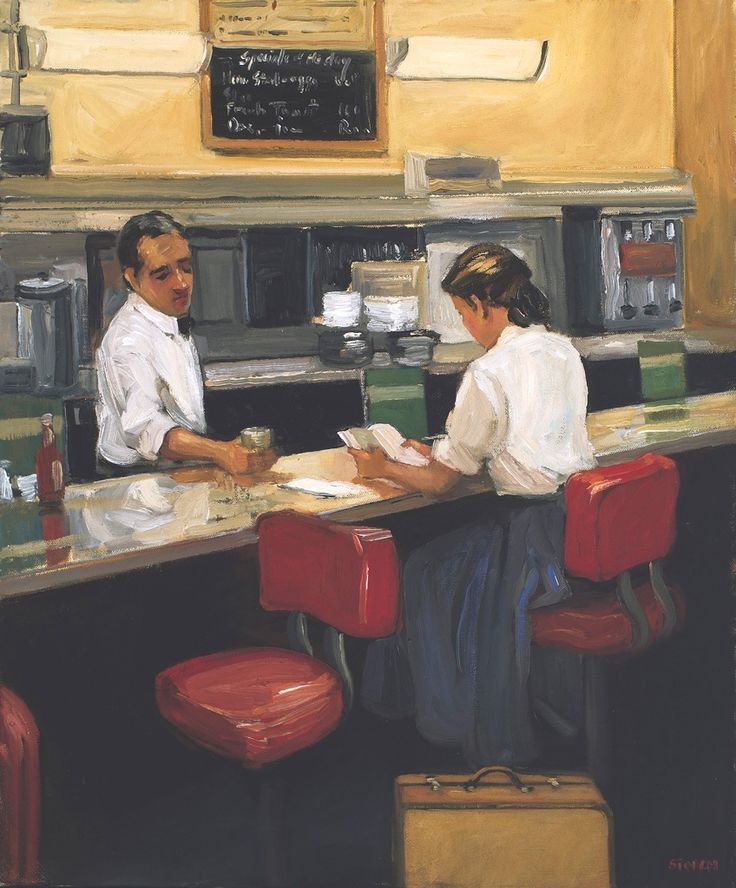
Sink and Mirror — Antonio López García

Sink and Mirror, 1967, by Antonio López García (b. 1936)

Open Book on Tablecloth — Ithell Colquhoun

Open Book on Tablecloth, c.1927-30 by Ithell Colquhoun (1906-1988)

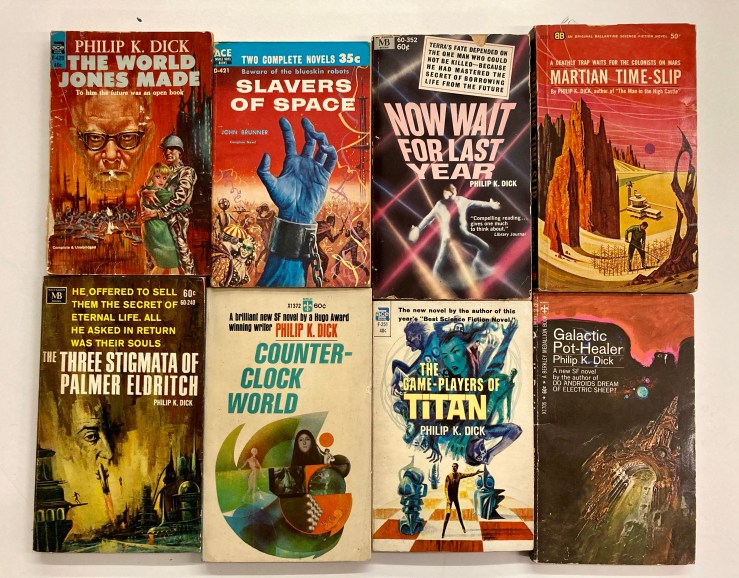
Percy’s Ruins, Reed’s Spring (Books acquired, 5 May 2022)

A few years ago I passed up on a hardback first-edition copy of Walker Percy’s weird dystopian Southern Gothic Love in the Ruins, and have regretted it ever since, or at least ever since I read a run of his novels back in 2020. I wound I’m reading a digital copy of Love from my local library, loved it, and would put it up there with Lancelot as his best, knowing damn well I still haven’t read The Last Gentleman or The Thanatos Syndrome. (The Thanatos Syndrome sounds like the name of a bad novel in a dystopian parody novel or film.) The cover for this edition of Love in the Ruins is by Janet Halverson.

I’ve read nine of Ishmael Reed’s first ten novels, but I still haven’t read Japanese by Spring, his ninth work, a campus novel that parodies America’s ever-ongoing culture wars. I picked up this first-edition hardback today. Before I even opened the copy, I wondered if it belonged to the same dude who I’ve managed to cop so many used postmodern novels of the past three decades. This guy—I won’t write his name out here—this guy put stamps or stickers of his name and address in the books he bought, I guess, and I ended up picking up a lot of them used over the years: Ishmael Reed, Stanley Elkin, Don DeLillo…I was thinking about maybe writing the guy? Anyway, sure enough, this copy of Japanese by Spring included a sticker bearing this guy’s name and the same address. I did a basic internet search and it looks like he’s moved, but not far, and that he’s (probably) eighty years old. I guess I’d just want to say Thanks is all.

Careful Honey, He’s Anti-Choice — Sharon Niemczyk


Careful Honey, He’s Anti-Choice, 1981 by Sharon Niemczyk

They support any dogmatic religious system that tends to stupefy and degrade the worshipers | William S. Burroughs


Kim now realizes that they can take over bodies and minds and use them for their purposes. So why do they always take over stupid, bigoted people or people who are retarded or psychotic? Obviously they are looking for dupes and slaves, not for intelligent allies. In fact their precise intention is to destroy human intelligence, to blunt human awareness and to block human beings out of space. What they are launching is an extermination program. And anyone who has sufficient insight to suspect the existence of a they is a prime target.

He listed the objectives and characteristics of the aliens…

1. They support any dogmatic religious system that tends to stupefy and degrade the worshipers. They support the Slave Gods. They want blind obedience, not intelligent assessment. They stand in the way of every increase in awareness. They only conceded a round earth and allowed the development of science to realize the even more stupefying potential of the Industrial Revolution.

2. They support any dogmatic authority. They are the arch-conservatives.

3. They lose no opportunity to invert human values. They are always self-righteous. They have to be right because in human terms they are wrong. Objective assessment drives them to hysterical frenzy.

4. They are parasitic. They live in human minds and bodies.

5. The Industrial Revolution, with its overpopulation and emphasis on quantity rather than quality, has given them a vast reservoir of stupid bigoted uncritical human hosts. The rule of the majority is to their advantage since the majority can always be manipulated.

6. Their most potent tool of manipulation is the word. The inner voice.

7. They will always support any measures that tend to stultify the human host. They will increase the range of arbitrary and dogmatic authority. They will move to make alcohol illegal. They will move to regulate the possession of firearms. They will move to make drugs illegal.

8. They are more at home occupying women than men. Once they have a woman, they have the male she cohabits with. Women must be regarded as the principal reservoir of the alien virus parasite. Women and religious sons of bitches. Above all, religious women.

From The Place of Dead Roads by William S. Burroughs.

A hiatus of disinterest | Burroughs meets Beckett (again)

I recall a personal visit to Beckett. John Calder, my publisher and Beckett’s, was the intermediary for a short, not more than half an hour audience. This was in Berlin. Beckett was there directing one of his new plays. Allen Ginsberg, Susan Sontag and myself were there for a reading. Also present in the visiting party were Fred Jordan and Professor Hoellerer, a professor of English literature at Berlin University.

Beckett was polite and articulate. It was, however, apparent to me at least that he had not the slightest interest in any of us, nor the slightest desire to ever see any of us again. We had been warned to take our own liquor as he would proffer none. So we had brought along a bottle of whisky. Beckett accepted a small drink which he sipped throughout the visit. Asking the various participants first what Beckett said, and what the whole conversation was about seems to elicit quite different responses. Nobody seems to remember at all clearly. It was as if we had entered a hiatus of disinterest. I recall that we did talk about my son’s recent liver transplant and the rejection syndrome. I reminded Beckett of our last meeting in Maurice Girodias’ restaurant On this occasion we had argued about the cut-ups, and I had no wish to renew the argument. So it was just ‘yes’, ‘Maurice’s restaurant’. Allen, I believe, asked Beckett if he had ever given a reading of his work. Beckett said ‘No’.

There was some small talk about the apartment placed at his disposal by the Academy: a sparsely furnished duplex overlooking the Tiergarten. I said the zoo was very good, one of the best, with nocturnal creatures in dioramas, like their natural habitat. They even have flying foxes. Beckett nodded, as if willing to take my word for this. I think there was some discussion of Susan Sontag’s cancer. I looked at my watch. Some one asked Allen or Fred for the time. We got up to go. Beckett shook hands politely.

From William S. Burroughs’ essay “Beckett and Proust.” Collected in The Adding Machine. 

There were a number of these antivaccination cults, a self-limiting phenomenon | William S. Burroughs

Kim remembers his first adolescent experiment with biologic warfare. Smallpox was the instrument, the town of Jehovah across the river, his target. Their horrid church absolutely spoiled his sunsets, with its gilded spire sticking up like an unwanted erection, and Kim vowed he would see it leveled.

It was dead easy. The townspeople were antivaccinationists…”polluting the blood of Christ,” they called it. Around the turn of the century there were a number of these antivaccination cults, a self-limiting phenomenon since all the cultists contracted smallpox sooner or later.
So Kim simply jogged the arm of destiny, you might say, by distributing free illustrated Bibles impregnated with smallpox virus to the townspeople of Jehovah. The survivors moved out. Kim bought the land and used the church to test his homemade flamethrower. He found the plan in Boy’s Life…a weed killer, they called it. Well, rotten weeds, you know…
From The Place of Dead Roads by William S. Burroughs.

May Day — Julie Heffernan

May Day, 1997 by Julie Heffernan (b. 1956)

This year

Osprey’s Nest — Neil Welliver

Osprey’s Nest, 1980 by Neil Welliver (1929-2005)

Burning House, Night, with Fireman — Lois Dodd

Burning House, Night, with Fireman, 2007 by Lois Dodd (b. 1927)