Slavoj Žižek on Occupy Wall Street, Communism, and Not Wanting To Be Perceived as a Nostalgic Idiot

(See also).

I Am The Night — Brandon Bird

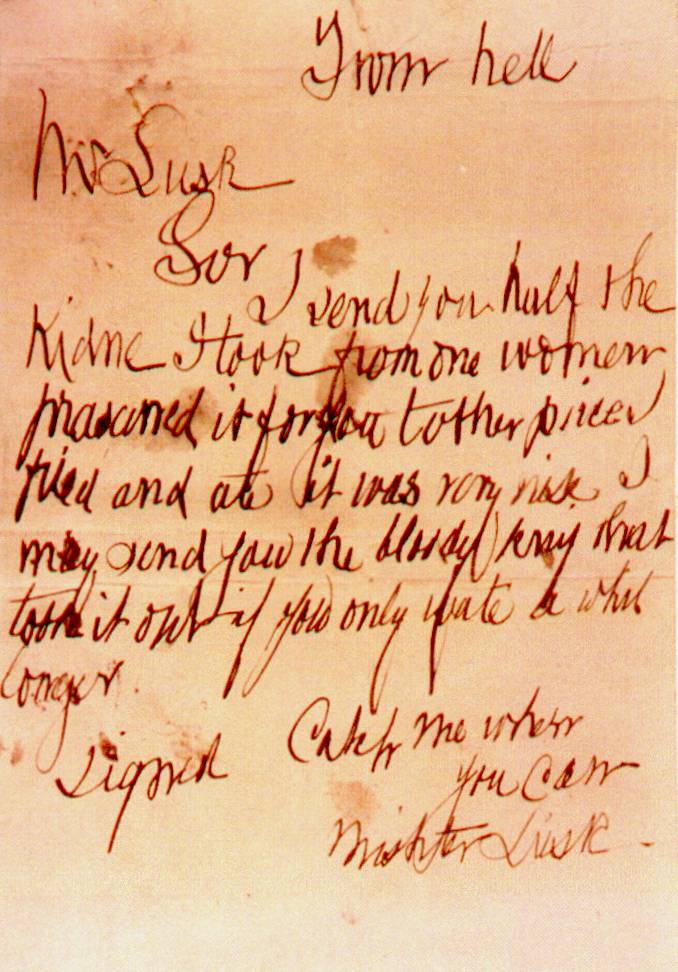
From Hell Letter

(Read our review of From Hell by Alan Moore and Eddie Campbell)


“Imagine You’re a Hyper-Educated Avant Gardist” — David Foster Wallace on David Lynch (Video)

Begins at 4:oo. (Transcript).

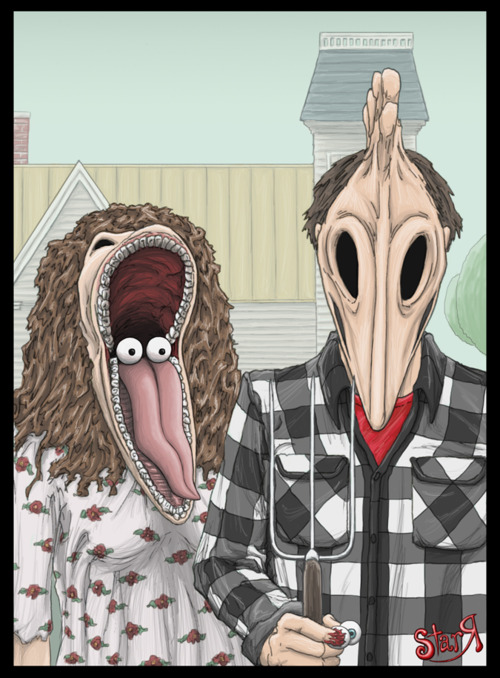
American Gothic, Beetlejuice Style (Or Beetlejuice, American Gothic Style) — Dick Starr

Smaug Flies Round the Mountain — An Illustration by J.R.R. Tolkien

(More).

Werner Herzog Talks About Making Nosferatu

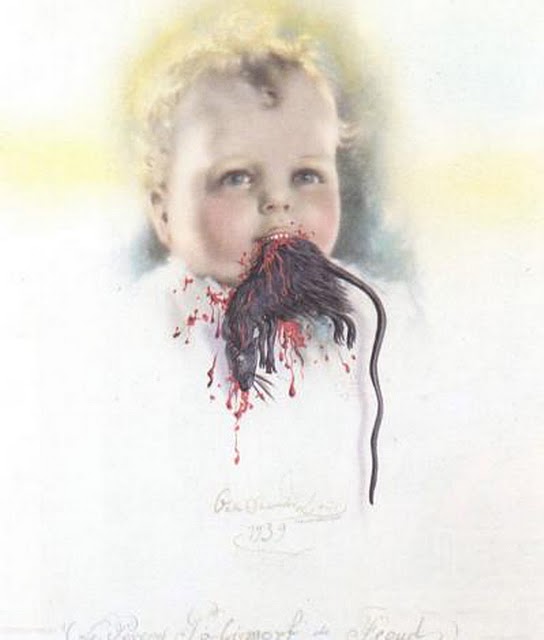
Freud’s Perverse Polymorph — Salvador Dali

Cosby Nightmarez

“The Rules” — William T. Vollmann’s Prescription to Heal Diseased Writing

William T. Vollmann’s essay “American Writing Today” was published over 20 years ago in Conjunctions, but it’s still relevant today (I read it in the indispensable Vollmann reader Expelled from Eden, but you can read the entire essay online). Concerned with the solipsism and insularity of contemporary American writing, Vollmann tells us:  “I now propose to set forth our responsibility, and some rules for reform. This first requires that I set right all the woes of the world.” The second sentence’s naked irony punctures the seriousness of the project proposed by the first sentence; this is classic Vollmann—earnest, ironic, and self-effacing at all times. Here are Vollmann’s rules, which are somehow both tongue-in-cheek and totally sincere at the same time:

1. We should never write without feeling.

2. Unless we are much more interesting than we imagine we are, we should strive to feel not only about Self, but also about Other. Not the vacuum so often between Self and Other. Not the unworthiness of Other. Not the Other as a negation or eclipse of Self. Not even about the Other exclusive of Self, because that is but a trickster-egoist’s way of worshiping Self secretly. We must treat Self and Other as equal partners. (Of course I am suggesting nothing new. I do not mean to suggest anything new. Health is. more important than novelty.)

3. We should portray important human problems.

4. We should seek for solutions to those problems. Whether or not we find them, the seeking will deepen the portrait.

5. We should know our subject, treating it with the respect with which Self must treat Other. We should know it in all senses, until our eyes are bleary from seeing it, our ears ring from listening to it, our muscles ache from embracing it, our gonads are raw from making love to it. (If this sounds pompous, it is perhaps because I wear thick spectacles.)

6. We should believe that truth exists.

7. We should aim to benefit others in addition to ourselves.

“Love Can Be Terribly Obscene” — D.H. Lawrence on Edgar Allan Poe

D.H. Lawrence on Edgar Allan Poe. From Studies in American Literature

Poe had experienced the ecstasies of extreme spiritual love. And he wanted those ecstasies and nothing but those ecstasies. He wanted that great gratification, the sense of flowing, the sense of unison, the sense of heightening of life. He had experienced this gratification. He was told on every hand that this ecstasy of spiritual, nervous love was the greatest thing in life, was life itself. And he had tried it for himself, he knew that for him it was life itself. So he wanted it. And he would have it. He set up his will against the whole of the limitations of nature.

This is a brave man, acting on his own belief, and his own experience. But it is also an arrogant man, and a fool.

Poe was going to get the ecstasy and the heightening, cost what it might. He went on in a frenzy, as characteristic American women nowadays go on in a frenzy, after the very same thing: the heightening, the flow, the ecstasy. Poe tried alcohol, and any drug he could lay his hand on. He also tried any human being he could lay his hands on.

His grand attempt and achievement was with his wife; his cousin, a girl with a singing voice. With her he went in for the intensest flow, the heightening, the prismayic shades of ecstasy. It was the intensest nervous vibration of unison, pressed higher and higher in pitch, till the blood-vessels of the girl broke, and the blood began to flow out loose. It was love. If you call it love.

Love can be terribly obscene.

It is love that causes the neuroticism of the day. It is love that is the prime cause of tuberculosis.

The nerves that vibrate most intensely in spiritual unisons are the sympathetic ganglia of the breast, of the throat, and the hind brain. Drive this vibration over-intensely, and you weaken the sympathetic tissues of the chest – the lungs – or of the throat, or of the lower brain, and the tubercles are given a ripe held.

But Poe drove the vibrations beyond any human pitch of endurance.

Being his cousin, she was more easily keyed to him.
Killer Lampshade

(See also).

Bertrand Russell Explains How Smoking Saved His Life

Derrida Talks About Stupidity

Books Acquired, 10.22.2011

20111023-103958.jpg

I was too busy on Saturday to document the books that arrived at Biblioklept World Headquarters, but here they are of a Sunday, both sporting impeccable design and, uh, burgundy.

Richard Locke’s Critical Children (Columbia UP) examines childhood in a number of novels, including Dickens, Twain, Peter Pan,Lolita, Catcher in the Rye, and The Turn of the Screw. Here’s Locke, synthesizing these figures in Holden Caulfield—

Salinger’s most famous character, sixteen-year-old Holden, is a holy rebel who combines elements of Oliver Twist and the Artful Dodger, Huckleberry Finn and Peter Pan. Like Oliver, Holden can be said to represent “the principle of Good surviving through every adverse circumstance, and triumphing at last.” Like the Artful Dodger, he is a quick-tongued urban trickster. Like Peter Pan, he mocks his own conventional (and comfortably affluent) society and wants to never grow up. But his most celebrated ancestor is Huckleberry Finn. Salinger transforms Huck the frontier fugitive into Holden the prep-school dropout: both boys’ famously provocative colloquial voices embody their quests for American freedom and authenticity.


20111023-104321.jpg

I can’t overstate the aesthetic pleasure I take in Def Jam Recordings:  The First 25 Years of the Last Great Record Label by Bill Adler and Dan Charnas. It’s huge—thick and big and crammed with photos and interviews and memories—all kinds of great stuff. It makes sense of course that Def Jam, a label as much about style as it was about music, would produce such a beautiful book, but this beast surpasses the expectations most of us might have for a coffee table book: it also functions as an oral history of the people, music, fashion, politics, money, and culture of Def Jam—the influence of which on popular culture simply cannot be underestimated. Full review forthcoming, but two random pics for now—


20111023-104019.jpg

20111023-104026.jpg


William S. Burroughs Talks About Allen Ginsberg

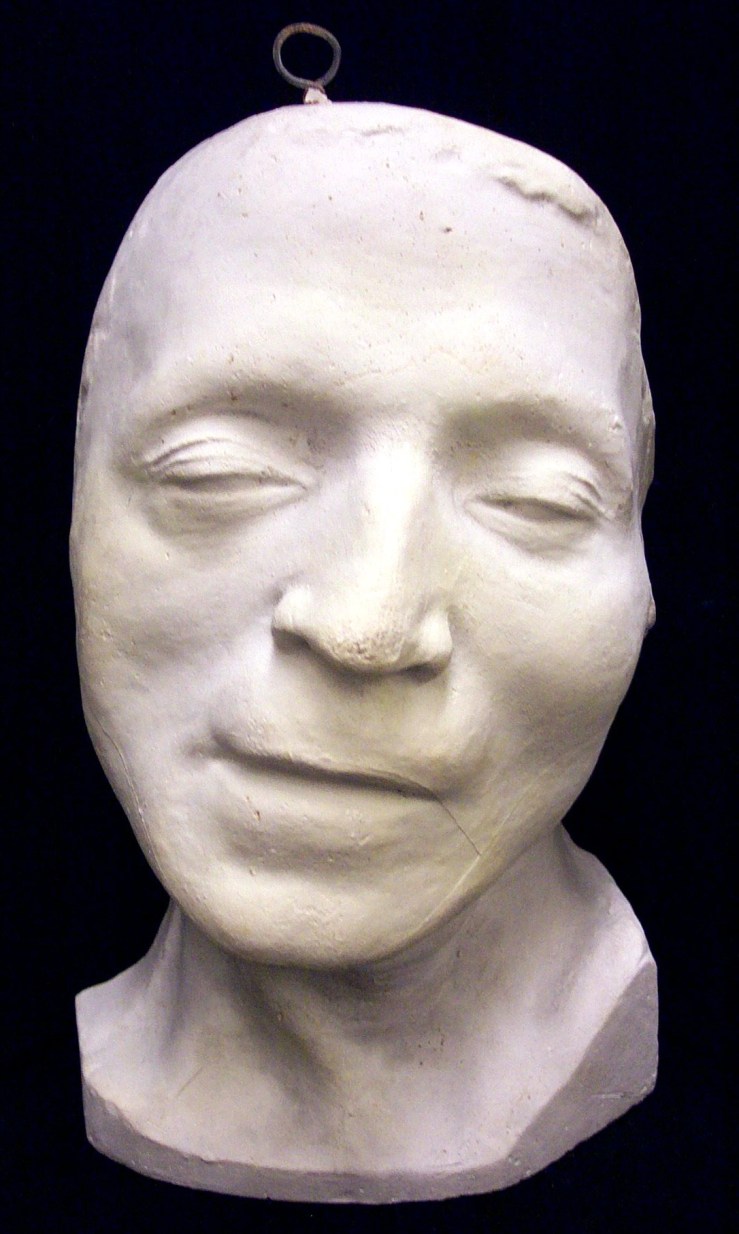
Jean-Paul Marat’s Death Mask