“Backbone” — David Foster Wallace

The New Yorker has published an excerpt from David Foster Wallace’s The Pale King under the title “Backbone.” Many fans might have already heard the piece — and in Wallace’s own voice even — as it was part of the Lannan recordings and has been transcribed at least twice (although it appears one of those transcriptions has been taken down). (There’s also this fragment, by the way). Anyway, a taste–

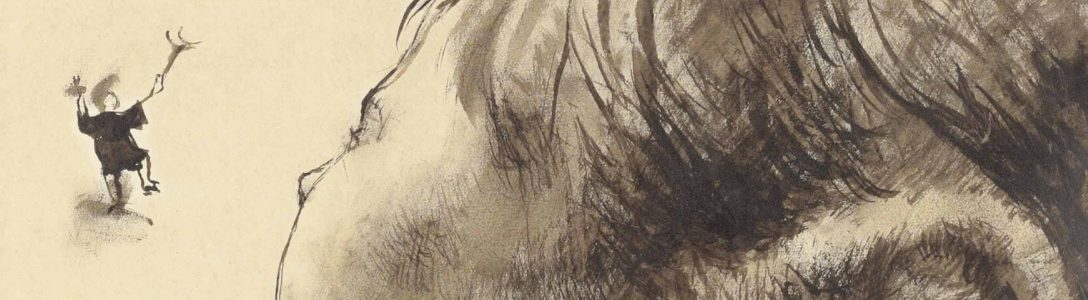
Every whole person has ambitions, objectives, initiatives, goals. This one particular boy’s goal was to be able to press his lips to every square inch of his own body.

His arms to the shoulders and most of his legs beneath the knee were child’s play. After these areas of his body, however, the difficulty increased with the abruptness of a coastal shelf. The boy came to understand that unimaginable challenges lay ahead of him. He was six.

There is little to say about the original animus or “motive cause” of the boy’s desire to press his lips to every square inch of his own body. He had been housebound one day with asthma, on a rainy and distended morning, apparently looking through some of his father’s promotional materials. Some of these survived the eventual fire. The boy’s asthma was thought to be congenital.
Roland Barthes on the Labyrinth Metaphor

Roland Barthes on labyrinth-as-metaphor. From The Preparation of the Novel

. . . let’s imagine a Labyrinth without a central quid (neither Monster nor Treasure), so one that’s a-centric, which basically means a labyrinth without a final signified  to discover → Now, that might be the Metaphor for Meaning, in that it disappoints → Interpretation (detours, investigations, orientations) like a kind of mortal game, possibly with nothing at the center; here, again, the path would be equivalent to the goal–but only if you manage to get out (Rosenstiehl: the only mathematical problem presented by the labyrinth is how to find a way out). Imagine Theseus not finding the Minotaur at the center and yet sill turning back in the direction of . . . Ariadne, Love, Infidelity, “Life to no avail.”

“Crazy Sunday” — F. Scott Fitzgerald

“Crazy Sunday” by F. Scott Fitzgerald-

It was Sunday–not a day, but rather a gap between two other days. Behind, for all of them, lay sets and sequences, the long waits under the crane that swung the microphone, the hundred miles a day by automobiles to and fro across a county, the struggles of rival ingenuities in the conference rooms, the ceaseless compromise, the clash and strain of many personalities fighting for their lives. And now Sunday, with individual life starting up again, with a glow kindling in eyes that had been glazed with monotony the afternoon before. Slowly as the hours waned they came awake like “Puppenfeen” in a toy shop: an intense colloquy in a corner, lovers disappearing to neck in a hall. And the feeling of “Hurry, it’s not too late, but for God’s sake hurry before the blessed forty hours of leisure are over.”

Joel Coles was writing continuity. He was twenty-eight and not yet broken by Hollywood. He had had what were considered nice assignments since his arrival six months before and he submitted his scenes and sequences with enthusiasm. He referred to himself modestly as a hack but really did not think of it that way. His mother had been a successful actress; Joel had spent his childhood between London and New York trying to separate the real from the unreal, or at least to keep one guess ahead. He was a handsome man with the pleasant cow-brown eyes that in 1913 had gazed out at Broadway audiences from his mother’s face.

When the invitation came it made him sure that he was getting somewhere. Ordinarily he did not go out on Sundays but stayed sober and took work home with him. Recently they had given him a Eugene O’Neill play destined for a very important lady indeed. Everything he had done so far had pleased Miles Calman, and Miles Calman was the only director on the lot who did not work under a supervisor and was responsible to the money men alone. Everything was clicking into place in Joel’s career. (“This is Mr. Calman’s secretary. Will you come to tea from four to six Sunday–he lives in Beverly Hills, number–.”)

Continue reading ““Crazy Sunday” — F. Scott Fitzgerald”

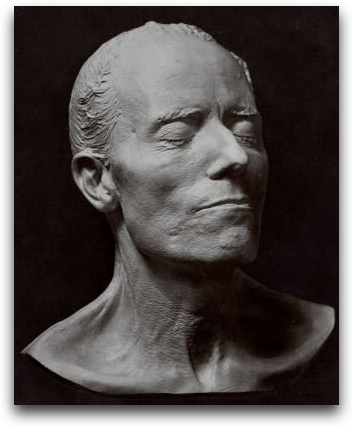
Mahler’s Death Mask

See Lego Versions of Your Favorite Authors

See Lego versions of your favorite authors at Flavorwire (via @RhysTranter).
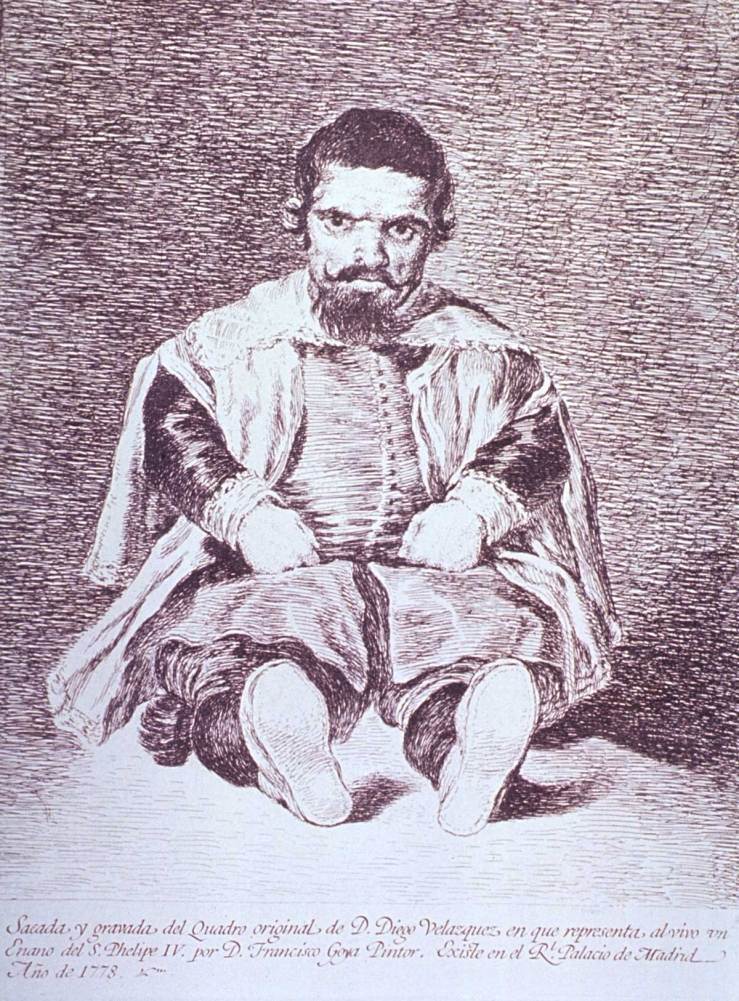
A Dwarf — Goya (After Velazquez)

“Too Sophisticated for the Sophisticated” — Slavoj Žižek On Charlie Chaplin’s City Lights

From The Pervert’s Guide to Cinema.

Judith Butler on the Kafka Trial

At The London Review of BooksJudith Butler weighs in on the ongoing trial in Tel Aviv over who can claim ownership to several boxes of recently discovered manuscripts by Franz Kafka. An excerpt–

I have tried to suggest that in Kafka’s parables and other writings we find brief meditations on the question of going somewhere, of going over, of the impossibility of arrival and the unrealisability of a goal. I want to suggest that many of these parables seem to allegorise a way of checking the desire to emigrate to Palestine, opening instead an infinite distance between the one place and the other – and so constitute a non-Zionist theological gesture.

We might, finally, consider this poetics of non-arrival as it pertains to Kafka’s own final bequest. As should be clear by now, many of Kafka’s works are about messages written and sent where the arrival is uncertain or impossible, about commands given and misunderstood and so obeyed in the breach or not obeyed at all. ‘An Imperial Message’ charts the travels of a messenger through several layers of architecture, as he finds himself caught up in a dense and infinite grid of people: an infinite barrier emerges between the message and its destination. So what do we say about the request that Kafka made of Brod before he died? ‘Dearest Max, My last request: Everything I leave behind me … to be burned unread.’ Kafka’s will is a message sent, to be sure, but it does not become Brod’s will; indeed Brod’s will, figuratively and literally, obeys and refuses Kafka’s will (some of the work will remain unread, but none of it will be burned, at least not by Brod).

(Via The Casual Optimist).

“I don’t ask for joy. I don’t feel joy” — The Paris Review Interviews Louis-Ferdinand Céline

From The Paris Review’s interview with Louis-Ferdinand Céline–

INTERVIEWER

If you could have it all over again, would you pick your joys outside literature?

CÉLINE

Oh, absolutely! I don’t ask for joy. I don’t feel joy. To enjoy life is a question of temperament, of diet. You have to eat well, drink well, then the days pass quickly, don’t they? Eat and drink well, go for a drive in the car, read a few papers, the day’s soon gone. Your paper, some guests, morning coffee, my God, it’s lunchtime when you’ve had your stroll, eh? See a few friends in the afternoon and the day’s gone. In the evening, bed as usual and shut-eye. And there you are. And the more so with age, things go faster, don’t they? A day’s endless when you’re young, whereas when you grow old it’s very soon over. When you’re retired, a day’s a flash; when you’re a kid it’s very slow.


Sam Lipsyte on Teaching Creative Writing

Sam Lipsyte discusses teaching creative writing at Financial Times (yeah, Financial Times, I know).  A few excerpts–

When you teach creative writing, you are already on the defensive. People love to poke you in the chest and cry, “But you can’t teach writing!” This is precisely what I think about automobile driving but I let them rant while I rub the sore part where they poked me. I don’t know why people get so worked up about this subject. Nobody has asked them to teach creative writing or even to learn it. Apprenticeship, the sharing of history and technique, has always been a central feature of art-making. Yet people cling to a romantic idea of the self-made genius toiling away in a garret or napping undisturbed in a sleep module. . . .

You can teach sex, can’t you? Why can’t you teach writing? Most people need to be taught sex. That’s why there are books such as the Kama Sutra and The Joy of Sex, not to mention people, like your best friend’s older sister, or places, like the neighbour’s garage. Nothing’s more natural, and more dependent on natural talent for its most transcendent demonstrations, but sex is still best if taught properly. So, what’s so crazy about passing along a few literary tricks and reading tips?

“A Fable for the Living” — Single Sentence Animation

Info–

Kim Young Ha animates this otherworldly sentence from Kevin Brockmeier’s “A Fable for the Living,” featured in Electric Literature No. 5. The sentence reads: “She watched them flare and shimmer through their skin, their bones going off like bombs, every limb a magnificent firework of carbon, phosphorus, and calcium.” Single Sentence Animations are creative collaborations. The writer selects a favorite sentence from his or her work and the animator creates a short film in response. Electric Literature is an anthology of short fiction dedicated to reinvigorating the short story using new media and innovative distribution. Visit us at http://www.electricliterature.com/

Emily Dickinson’s Handwritten Manuscript for “Wild Nights — Wild Nights!”

Emily Dickinson's "Wild Nights -- Wild Nights!" Manuscript

Here is the poem (sexy good times!)–

Wild Nights – Wild Nights!
Were I with thee
Wild Nights should be
Our luxury!

Futile – the Winds –
To a Heart in port –
Done with the Compass –
Done with the Chart!

Rowing in Eden –
Ah, the Sea!
Might I but moor – Tonight –
In Thee!

Henry Miller Asleep and Awake (1975 Documentary)

“A Poem About Baseballs” — Denis Johnson

“A Poem About Baseballs” by Denis Johnson–

for years the scenes bustled
through him as he dreamed he was
alive. then he felt real, and slammed
awake in the wet sheets screaming
too fast, everything moves

too fast, and the edges of things

are gone. four blocks away
a baseball was a dot against
the sky, and he thought, my
glove is too big, i will
drop the ball and it will be
a home run. the snow falls

too fast from the clouds,
and night is dropped and
snatched back like a huge

joke. is that the ball, or is
it just a bird, and the ball is
somewhere else, and i will
miss it? and the edges are gone, my

hands melt into the walls, my
hands do not end where the wall

begins. should i move
forward, or back, or will the ball
come right to me? i know i will
miss, because i always miss when it
takes so long. the wall has no

surface, no edge, the wall
fades into the air and the air is
my hand, and i am the wall. my
arm is the syringe and thus i
become the nurse, i am you,

nurse. if he gets
around the bases before the
ball comes down, is it a home
run, even if i catch it? if we could

slow down, and stop, we
would be one fused mass careening
at too great a speed through

the emptiness. if i catch
the ball, our side will
be up, and i will have to bat,
and i might strike out.


Bloomsday Budget

An economic summary (perhaps) of Ulysses. From “Ithaca”–

Compile the budget for 16 June 1904. DEBIT
1 Pork Kidney
1 Copy FREEMAN’S JOURNAL
1 Bath And Gratification
Tramfare
1 In Memoriam Patrick Dignam
2 Banbury cakes
1 Lunch
1 Renewal fee for book
1 Packet Notepaper and Envelopes
1 Dinner and Gratification
1 Postal Order and Stamp
Tramfare
1 Pig’s Foot
1 Sheep’s Trotter
1 Cake Fry’s Plain Chocolate
1 Square Soda Bread
1 Coffee and Bun
Loan (Stephen Dedalus) refunded

BALANCE

L. s. d.
0—0—3
0—0—1
0—1—6
0—0—1
0—5—0
0—0—1
0—0—7
0—1—0
0—0—2
0—2—0
0—2—8
0—0—1
0—0—4
0—0—3
0—0—1
0—0—4
0—0—4
1—7—0
0-17—5
2-19—3
CREDIT
Cash in hand
Commission recd. Freeman’s Journal
Loan (Stephen Dedalus)

L. s. d.
0—4—9
1—7—6
1—7—0

2-19—3

Romantic Remixes: We Look at Jane Goes Batty and The Raven’s Bride

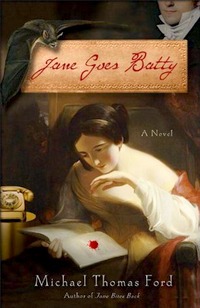
In the past few years we’ve seen a spate of books where public domain characters and historical figures feature in supernatural tales, usually written in an ironic, or at least parodic mode. It seems like a heavy percentage of these books are mixed up somehow with Jane Austen, whose legacy has become grist for a literary cottage industry, with a new “re-imagining” of Pride and Prejudice or Sense and Sensibility coming out every season. Last year, Michael Thomas Ford offered the public the mix of Jane Austen and vampires we had been so desperately clamoring for, Jane Bites Back. By way of a little more context (and pure laziness), I’ll quote Biblioklept’s review of Ford’s novel–
Jane Bites Back reveres its subject, Jane Austen, even as it blatantly cashes in on the very trend that it satirizes. The book’s program shouldn’t be confused with the absurdity behind Sense and Sensibility and Seamonsters (which we liked) or the wackiness of Pride and Prejudice and Zombies (which we didn’t like), but it does adhere to the same sense of fun. Ford seems to delight in corny, over the top passages, and we’ll take it for granted that his literary tongue is in his cheek . . .

Ford’s inevitable sequel Jane Goes Batty arrives this month, and showcases a willingness to take vamp-camp into new directions. Plot: big time Hollywood folks are out to “sex up” Jane’s latest manuscript; Jane’s editor decides to become an agent and leaves her with Jessica Abernathy (evil nemesis in Batty); Jane has to run constant interference on her wacky/charming friend Lord Byron (also a vampire, of course); etc., etc., etc. The most ridiculous/campiest plot device of all though is that Jane is converting to Judaism to please her boyfriend Walter’s judgmental mom. Yes. That’s right. We also learn that Jane played Magenta in a traveling production of The Rocky Horror Picture Show in the seventies, a minor detail to be sure, but one that seems to reinforce Ford’s whimsical kitsch. Batty aims for a kind of sassy brevity in its scene constructions, and while its certainly not a book for me, I think that those who want to see Jane Austen as a 21st century vampire will probably enjoy it quite a bit. Jane Goes Batty is new in trade paperback from Ballantine.

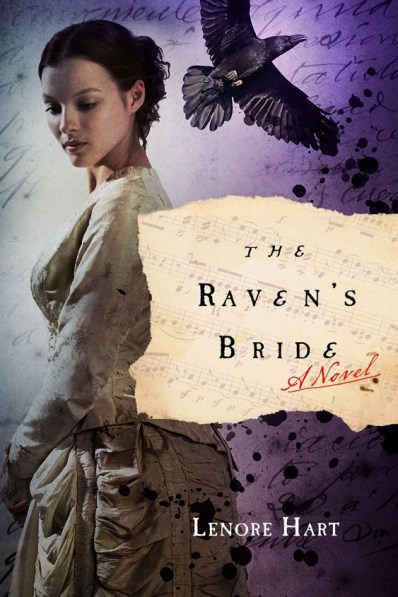
Lenore Hart’s novel The Raven’s Bride tells the story of the marriage of Edgar Allan Poe from the viewpoint of his child-bride/cousin Virginia “Sissy” Clemm. The decidedly tragic arc of their union is set against a supernatural backdrop — and an often morose tone. While The Raven’s Bride takes liberties with history, it seems well-researched and faithful enough to its subject. Compared to Ford’s campy take on the supernatural, Hart’s novel seems a bit too self-serious, but again, I’m hardly the audience for this book. Still, I suppose the tale of an alcoholic horror writer’s incestuous/underage marriage might have been easy fodder to exploit, yet Hart focuses a keen sensitivity on her characters, particularly her narrator Sissy, Poe’s muse demystified. While Poe buffs will know how the story turns out, those interested in reviewing Poe’s marriage through a new perspective may want to check out The Raven’s Bride, new in trade paperback from St. Martin’s Griffin.

“The Moving Waters of Gustav Klimt” — Lawrence Ferlinghetti

“The Moving Waters of Gustav Klimt,” a poem by Lawrence Ferlinghetti —

Who are they then
these women in this painting
seen so deeply long ago
Models he slept with
or lovers or others
he came upon
catching them as they were
back then
dreamt sleepers
on moving waters
eyes wide open
purple hair streaming
over alabaster bodies
in lavender currents

Dark skein of hair blown back
from a darkened face
an arm flung out
a mouth half open
a hand
cupping its own breast
rapt dreamers
or stoned realists
drifting motionless
lost sisters or
women-in-love
with themselves or others –
pale bodies wrapt
in the night of women
lapt in light
in ground swells of
dreamt desire
dreamt delight

Still strangers to us
yet not
strangers
in that first night
in which we lose ourselves

And know each other