
Biggie Smalls is basically a metaphor for America. This painting is by Kehinde Wiley. We love it.

Biggie Smalls is basically a metaphor for America. This painting is by Kehinde Wiley. We love it.
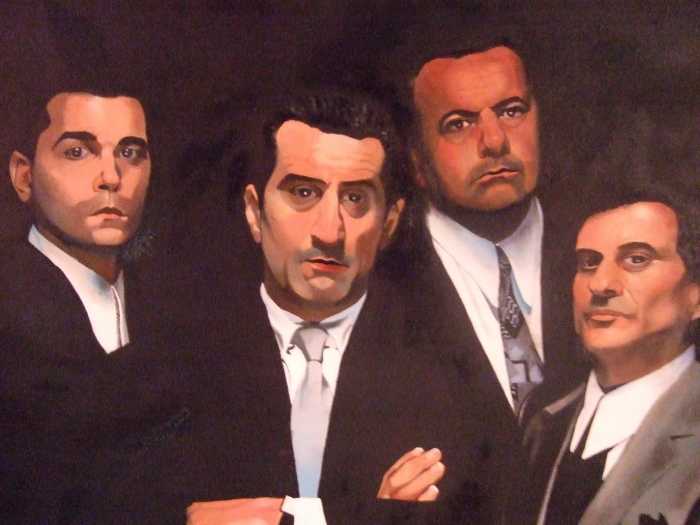
Who is more heroic or more American than Henry Hill, Jimmy Conway, Paulie Cicero, or Tommy DeVito? No
one, that’s who! Also, for that matter, is there anyone more American than Joe Pesci? No way, Jose! Painting by William Parsons.
Okay well so, we’re more or less “off” this week, because we love America sooooooooo much that we’re going on vacation. Still, because we are totally American, which is to say totally industrious, and because “the U.S. is the greatest, best country god has ever given man on the face of the Earth,” we’ll be leaving you with a series of fantastic images of great American heroes over the next week, starting with this stunning portrait of Superman himself, Christopher Reeve, by talented painter Adam Brooks. Great stuff.

“Landscape with the Fall of Icarus” by William Carlos Williams
According to Brueghel
when Icarus fell
it was spring
a farmer was ploughing
his field
the whole pageantry
of the year was
awake tingling
near
the edge of the sea
concerned
with itself
sweating in the sun
that melted
the wings’ wax
unsignificantly
off the coast
there was
a splash quite unnoticed
this was
Icarus drowning

“Musée de Beaux Arts” by W.H. Auden
About suffering they were never wrong,
The Old Masters: how well, they understood
Its human position; how it takes place
While someone else is eating or opening a window or just walking dully along;
How, when the aged are reverently, passionately waiting
For the miraculous birth, there always must be
Children who did not specially want it to happen, skating
On a pond at the edge of the wood:
They never forgot
That even the dreadful martyrdom must run its course
Anyhow in a corner, some untidy spot
Where the dogs go on with their doggy life and the torturer’s horse
Scratches its innocent behind on a tree.
In Brueghel’s Icarus, for instance: how everything turns away
Quite leisurely from the disaster; the ploughman may
Have heard the splash, the forsaken cry,
But for him it was not an important failure; the sun shone
As it had to on the white legs disappearing into the green
Water; and the expensive delicate ship that must have seen
Something amazing, a boy falling out of the sky,
had somewhere to get to and sailed calmly on.
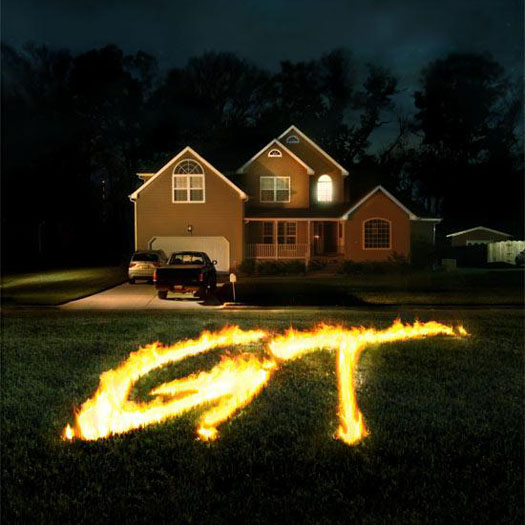
The new Girl Talk album, Feed the Animals just came out via Illegal Art. It’s about time. We were almost ready to remove Night Ripper from the Subaru’s six-disc changer where it’s been firmly lodged for almost two years, so this is fantastic news. We just finished listening to Feed the Animals (are we said animals?) and there’s much to love here; we particularly like the emphasis on classic pop hits. Excellent craftsmanship. Our friend Jordan, sequestered in pristine Singapore, hipped us to the release, which he describes as “slower paced [with] more power-hits,” adding that “he uses whoomp-there it is…. finally.” Finally.
The wankers at the American Film Institute just released their lists of top ten films by “genre” (full lists after the jump). Everyone loves to quibble with lists, and there’s plenty weird with theirs. First off, “Animation” is a medium, not a genre. That’s like calling comic books a genre, or TV a genre. But whatever. Also, Shrek on anyone’s top ten is always a bad sign–still, they give Blue Velvet its due and give Groundhog Day some props). What I thought was really odd was that AFI finds room to recognize a “Sports” genre (and on that end, are Raging Bull and Caddyshack really sports movies?), and even a “Courtroom Drama” genre, but doesn’t make a list of the great horror films. Why?
Here’s our list of the great American horror films. We’re sure we’re forgetting a bunch. This blog has been a slapdash affair lately.

1. Night of the Living Dead (the original)
2. Psycho (clearly, not Van Sant’s remake)
3. Alien
4. The Shining
5. Dawn of the Dead (the original)
6. Rosemary’s Baby
7. Re-animator
8. The Thing (John Carpenter)
9. Evil Dead 2
10. Texas Chainsaw Massacre (the original)

If you had a million years to do it in, you couldn’t rub out even half the ‘Fuck you’ signs in the world. It’s impossible. –Holden Caulfield in The Catcher in the Rye
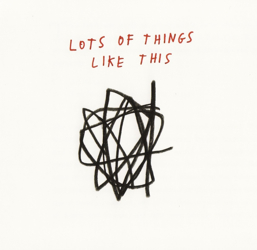
Royal Art Lodge piece from Lots of Things Like This, a slim volume of pictures with words (or words with pictures?) included with McSweeney’s #27 (two other books comprise the issue: a volume of short stories including pieces by Jim Shepard and Stephen King, and a really cool notebook of weird doodles and crazy thoughts by Art Spiegelman). Other artists represented in Lots of Things Like This include Magritte, Goya, Warhol, Raymond Pettibon, Jeffrey Brown, Leonard Cohen, David Mamet, David Berman, Basquiat, and more.
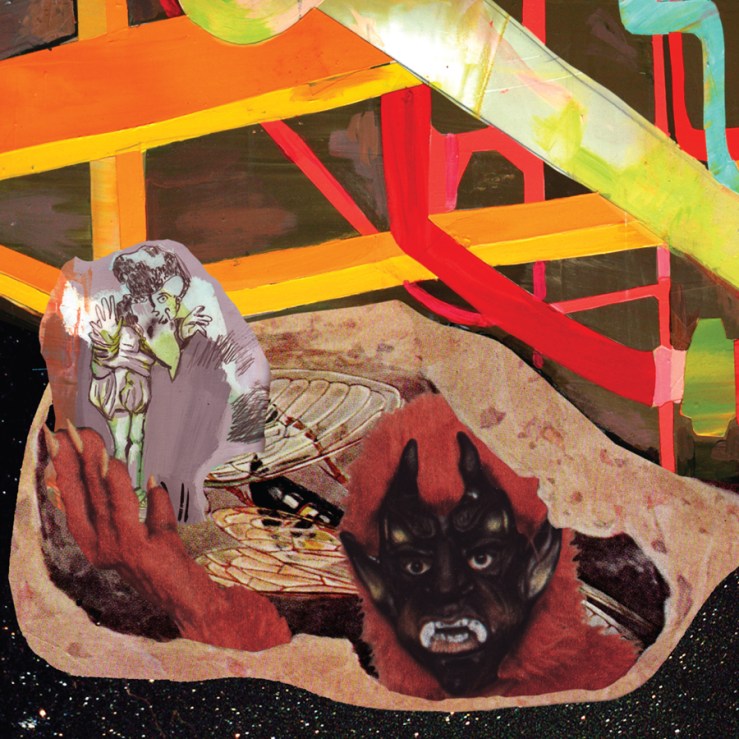
The first five seconds of “Soldier’s Grin,” the first track on At Mount Zoomer, Wolf Parade’s second LP, consist of a spindly synth and guitar duet that announces the program of the rest of the album: tight, lyrical, melodic prog-punk-pop that gets plenty of mileage out of old keyboards and crunchy guitars. This welding of synth with indie-rock guitar reflects the split songwriting duties of Wolf Parade. Like its predecessor, 2005’s Apologies to the Queen Mary, the new record is split almost evenly into songs written and sung by keyboardist Spencer Krug or guitarist Dan Boeckner. The slight stylistic differences between Boeckner’s and Krug’s songs are unified on Zoomer by drummer Arlen Thompson’s big, warm production. Songs like “Call it a Ritual” and “Bang Your Drum” propel on tense, jumpy punk rhythms before letting loose into brief moments of pop satisfaction–a formula that worked so well for the band on Queen Mary. The best moments of the record come though when they try something new. On longer songs like “Fine Young Cannibals” and epic album-closer “Kissing the Beehive” Wolf Parade play with trickier melodies and leave more open space in their music, letting the rhythms and melodies coalesce into tight, beautiful pockets that aren’t overwhelmed by big synths or vocal growls. That’s not to say there isn’t something sublime about thicker numbers like “The Grey Estates,” a keyboard-driven ditty that recalls The Cars, or “Language City,” a song that channels (if not flat out rips off) The Moody Blues’s “Your Wildest Dreams.” Still, there are a few missteps here: “California Dreamer” aims for motortik tension but falls instead into annoying territory, and the first half of Krug’s “An Animal in Your Care” is the worst in indulgent glam-emo. However, “Animal” picks up in its second half, evolving into a crisp stomping guitar and piano workout–but on an album with only nine songs, each one should be perfect. Ultimately, Zoomer won’t disappoint its intended audience. Wolf Parade make the best sort of indie rock comfort food, the kind that recalls the classic bands of the genre (Pixies, Sonic Youth) while also hearkening to the earlier days of college rock (Talking Heads, Television). Really, nothing here pushes boundaries–Wolf Parade’s biggest trick is making you forget that what you’re listening to is really as safe as milk.
At Mount Zoomer will be released June 17 from Sub Pop records.
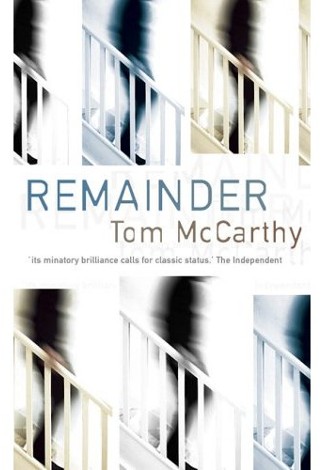
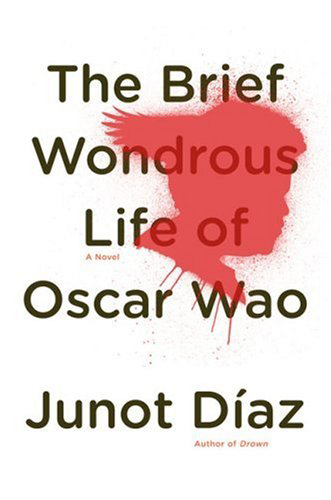
The current issue of The Believer features the results of the reader’s poll, as well as the editor’s top pick, for the best books published in 2007. The editors chose Tom McCarthy’s Remainder, which we haven’t read, and the readers picked Junot Díaz’s The Brief Wondrous Life of Oscar Wao, probably because the hero is such a nerd. The list follows with our comments; titles are linked to our reviews.
Perhaps no comedy best exemplifies “the little film that could” syndrome as does Mike Judge’s Office Space. Although Office Space died in the theaters, this movie about three fed up cubicle drones quickly regained a second life as a cult film classic before eventually becoming a quotable cultural touchstone on par with Caddyshack. Judge’s next film Idiocracy followed the same pattern, and while it’s not likely to ever hold the same prestige as Office Space, movies like Super Troopers and Wet Hot American Summer continue to show us that a film can die at the box office but have a second life as a cult favorite. We present to you five future classic comedies, all underappreciated, all worth watching.
1. Beerfest (2006)
Drunken Lizard’s Beerfest details the experiences of two brothers and their friends who travel to Germany to enter an underground beer-drinking competition in order to restore both familial and patriotic glory. Despite the silly premise, the movie is nonetheless an epic adventure story that dutifully moves through each phase of Joseph Campbell’s hero’s journey. It’s also, of course, very, very funny.
2. Hot Rod (2007)
Hot Rod was in the theaters for about five minutes last year and was unfairly criticized for being derivative of every other sports spoof ever made. Sure, Andy Samberg was following a model that anyone who’s ever seen a Will Ferrell comedy will be familiar with, but it’s the small touches, the strange little nuances that make the delicious dumbness of Rod Kimble’s sorry attempts at dare-devilry so funny. Ian McShane (Deadwood‘s Swedgin) is fantastic as the malevolent stepfather and Chris Parnell is too fucking funny in his bit part.
3. I Think I Love My Wife (2007)
Everyone knows that Chris Rock is hilarious, so why did no one go see I Think I Love My Wife? Well, it could be that the story of an African-American executive who feels constricted by his upper-middle class lifestyle, kids, wife, etc. and daydreams of having sex with lots and lots of other women simply couldn’t find it’s niche; I Think I Love My Wife is a cult film with no cult. In an interview with the AV Club last year, co-writer Louis CK says that he warned director/writer/star that the film would be a mistake to make. I think he’s wrong. Although the film is very much a monoglossic, one-voice escapade–this is Rock’s tale, of course–that voice is funny and insightful, and often says things that most married men are apt to feel on a daily basis (but not me, honey!)
4. Crank (2006)
Crank should be taught in film classes. In the most wonderfully stupid plot imaginable, professional assassin Jason Statham (who’s made a career out of these kinds of roles, it seems) is injected with a lethal poison. Here’s the twist: if his heart rate drops too low, he’ll die! For the next 90 minutes, he engages in every kind of adrenaline-jumping escapade imaginable including drinking lots of Red Bull, snorting mounds of cocaine, driving really, really fast, and, uh, fighting all the time. Lots and lots of fighting. In one memorable scene, Statham publicly schtups his annoying girlfriend while a busload of Japanese tourists cheers him on. Why this film didn’t win an Oscar, I’ll never understand.
5. Southland Tales (2006)
I’ve already reviewed Southland Tales but it belongs on this list. For all its many, many faults, Richard Kelly’s sprawling opus is a weird, sardonic mess of smart satire and goonish toilet humor, the kind of movie that seems to be mocking both itself as well as its audience at every turn. Not everyone will get this movie, but there are some of you out there who will love it even as it bewilders you.
No summer reading is complete without imbibing the variegated prose of an anthology. The following are the literary equivalents of skillfully-detailed mixtapes, made by a friend who wishes to communicate only that he or she has your best interest at heart.
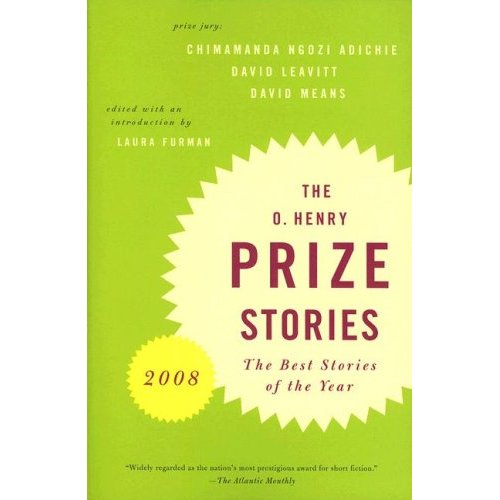


The 2008 O. Henry Prize Stories anthology is a great way to play catch up on all of the reading you missed last year. Culled from publications like Zoetrope, Harper’s, Granta, and Tin House, this anthology features established masters like William Gass and Alice Munro along with newer voices. There are plenty of highlights and no duds. Sharon Cain’s “The Necessities of Certain Behaviors” explores an amorphous world of gender-bending, while Stephen Millhauser’s “A Change in Fashion” imagines a new mode where women cover every inch of their flesh from the gaze of men. Lore Segal’s “Other People’s Deaths” perfectly captures the painful awkwardness and shame we experience when encountering, um, other people’s deaths. Similarly, the title of Tony Tulathimutte’s “Scenes from the Life of the Only Girl in Water Shield, Alaska” is spot-on, and Gass’s contribution, “A Little History of Modern Music,” is the funniest monologue we’ve read all year. But our favorite in the collection has to be Edward P. Jones’s “Bad Neighbors,” which examines the changing fortunes of an African-American neighborhood in Washington, D.C. A great collection, and if a story disappoints you, there’ll be three to make up for it.
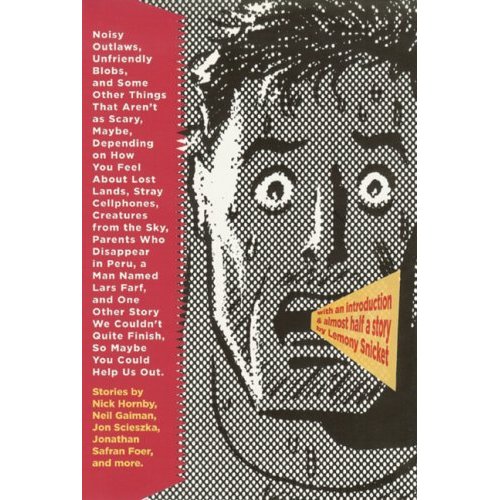
In the ultimate in lazy reviewing, we will let the title of McSweeney’s kids anthology Noisy Outlaws, Unfriendly Blobs, and Some Other Things That Aren’t as Scary, Maybe, Depending on How You Feel About Lost Lands, Stray Cellphones, Creatures from the Sky, Parents Who Disappear in Peru, a Man Named Lars Farf, and One Other Story We Couldn’t Quite Finish, So Maybe You Could Help Us Out stand as its own summary. However, this is a beautiful book with lots of lovely pictures, and the collection is worth it for Nick Hornby’s story alone. Good stuff.
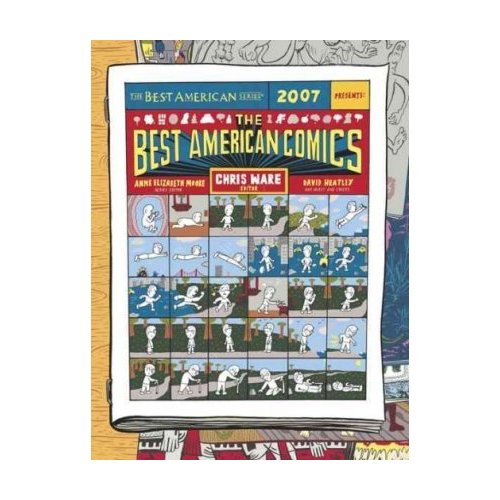
Edited by superstar Chris Ware, The Best American Comics 2007 serves as a delicious tasting menu of some of the best comix published in the past few years. Although hardcore comix fans will no doubt have already read the selections from Charles Burns’s Black Hole and Adrian Tomine’s Optic Nerve, there’s plenty here for aficionados and newbies alike.
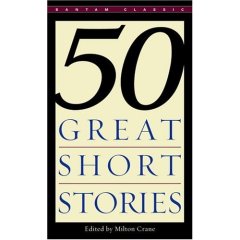
Chances are you’ve read a number of the canonical texts in 50 Great Short Stories, but it’s also likely you haven’t read them in years. We’ve had this book for years, and have revisited often to indulge in old favorites for new inspiration. Classics like Shirley Jackson’s “The Lottery” and Hemingway’s “The Three-Day Blow” nestle up against lesser-reads like Edmund Wilson’s “The Man Who Shot Snapping Turtles” and Francis Steegmuller’s “The Foreigner.” And have you read Flannery O’Connor’s “A Good Man is Hard to Find” since high school? No? Shame on you! What about Carson McCuller’s “The Jockey”? Dorothy Parker? Kipling? Consider it a light crash course in great literature.
Summer lovin’: have a blast. You don’t have to read harlequin schlock to get romantically fulfilled on the beach this year.
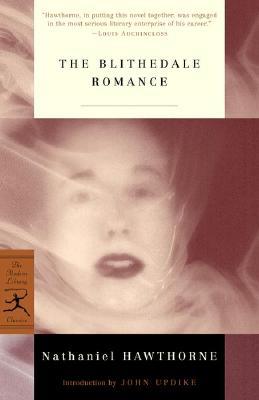
Why not start with an overlooked, under-read classic from American Renaissance master Nathaniel Hawthorne. The Blithedale Romance is a fictionalized account of Hawthorne’s time on Brooke Farm–here called Blithedale–an attempt at a utopian commune founded by artists and free-thinkers. Free lovin’, amorous passions, and, uh, farming. Great stuff–and romance is right in the title.

For lighter yet still substantial fare, check out Lara Vapnyar’s Broccoli and Other Tales of Food and Love, a delicious collection of snack-sized short stories (please, please, please forgive this awful extended metaphor). Sly, smart, and occasionally sexy, Vapnyar’s tales of dislocated immigrants continue to linger on the palate long after they’ve been digested (sorry!). The recipe section at the end is the sweetest dessert (ok, I swear I’m done now).
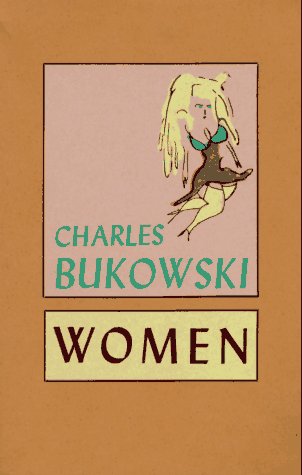
If you like your love stories rougher around the edges, check out Charles Bukowski’s only masterpiece, Women. This rambling novel follows alter-ego Henry Chinaski’s late-in-life successful turn with the ladies. Ugly, unforgiving, honest, and hilarious, Women is one of my favorite books. Also, unlike Henry Miller’s Tropic books, you’ll actually finish this one.
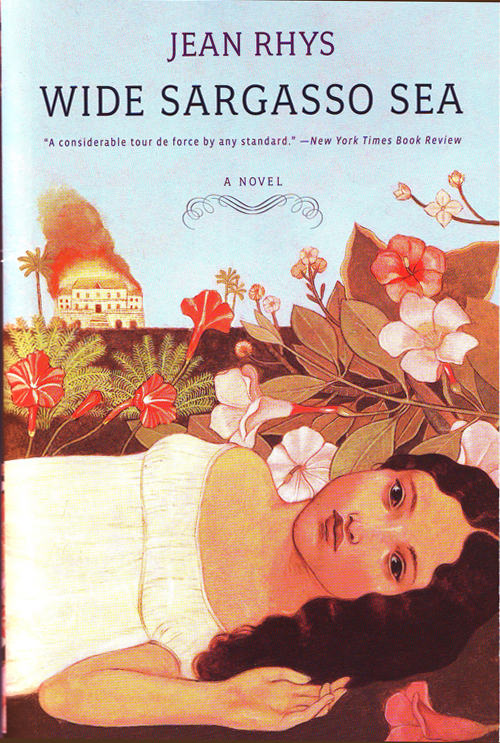
We finally read Charlotte Brontë’s Jane Eyre last summer, and believe it or not, the book is pretty great. Truly a romantic classic, but also a fine comment on gender, class, and social mores in general. And if you like it, check out Jean Rhys’s Wide Sargasso Sea, which tackles the back-story of a certain crazy lady in the attic who didn’t exactly get a voice in Jane Eyre.
Finally, if you want to get very specific, don’t hesitate to search the Romantic Circles website. Plenty of resources and lots of electronic texts: your source for all things Blake, Wordsworth, Coleridge, Shelley, Keats, and more. Good stuff.
Indulge yourself this summer by taking a fantastic voyage–literary or literally. To help you get started, check out the following tales of adventure.
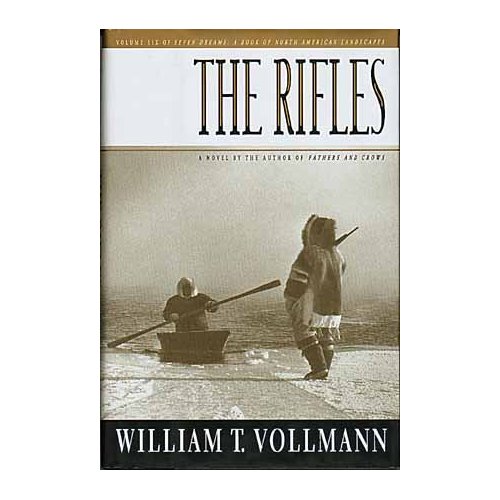
William Vollman’s The Rifles, part of his as-yet-unfinished Seven Dreams series is a brilliant engagement of history, colonialism, identity, and all of those Big Profound Issues that we so adore in our modern literature. It’s also a really cool adventure story, the tale of John Franklin’s nineteenth-century exploration of Inuit territory. Sad, beautiful, breathtaking.
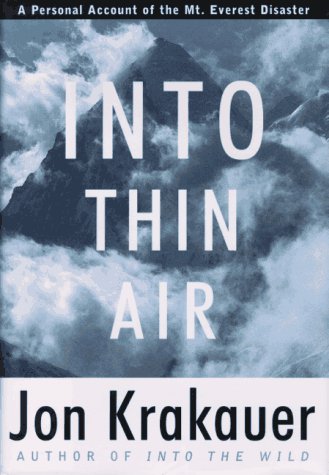
If you prefer your adventure tales uncomplicated by postmodern gambits, check out John Krakauer’s Into Thin Air, a journalistic account of the writer’s 1996 ascent of Mt. Everest, and the disasters that befell his expedition. The word “harrowing” fits well, gentle readers.
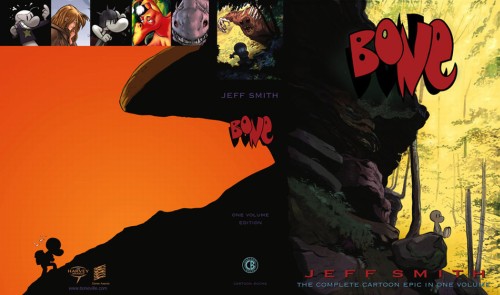
On the lighter-but-not-too-much-lighter side, Jeff Smith’s self-published comic Bone is fantastic; even better, you can get the entire 1300 page run of the whole series in Bone: One Volume Edition. We use the word “delightful” here in an absolutely unpejorative sense, friends: the adventures of Fone Bone, his cousins Phoney Bone and Smiley Bone, and Thorn, Granma Rose, and the Red Dragon are epic in scope yet retain an honest humor that will keep in the most cynical folks laughing. A major literary accomplishment that has been unjustly overlooked.

Also somewhat overlooked is Herman Melville’s Benito Cereno. In Bone, protagonist Fone Bone lugs around a massive copy of Melville’s masterpiece Moby-Dick everywhere he goes–and while that book is undoubtedly a desert island classic, Benito Cereno is an underappreciated gem of a tale. Revealing the strange secret at the heart of this book would spoil it, so suffice to say that the short novel enigmatically investigates slavery and colonialism in ways that beg for closer analysis. Good stuff.
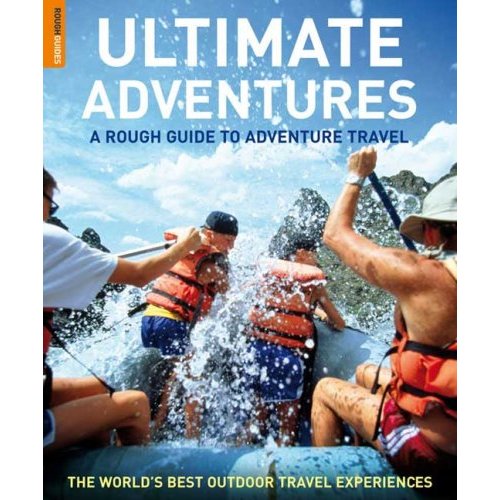
Perhaps, though, you beg for the real thing. In that case, we recommend Ultimate Adventures (from Rough Guides) for all your camel-trekking-in-the-Sahara, rock-climbing-at-Joshua-tree, Pacuare-River-rafting needs. Beautiful photography and tantalizing descriptions are coupled with informative “Need to Know” sections that spell out the who-what-when-where-and-how that will help you get your adventure under way.
Also in the exploratory vein, Where to Go When: The Americas, from DK’s Eyewitness Travel, serves as a kind of travel almanac–the kind that makes you wish you were very, very rich with an excess of free time. If that were the case, you’d be spending nine days in May on the Amazon River, spotting pink river dolphins, gorgeous macaws, and darling squirrel monkeys instead of reading this blog right now. Even if you’re not excessively rich with nothing more pressing to do other than trek the Alaskan fjords, The Americas is fun daydreaming material–perhaps the realist response to Vollman’s Seven Dreams. In any case, Ultimate Adventures and The Americas both come out at the end of this summer, giving you plenty of time to plan that awesome adventure getaway for next year.

The end of the Memorial Day weekend marks the beginning of summer, and with it, summer reading. This week Biblioklept will offer up some swell reading suggestions that will both entertain you and make you a better human being (seriously). In advance of that, let’s start with a silly question: just what is “summer reading” and how is it different–or is it different–than any other type of reading?
We’ll divide summer reading into two distinct camps: there’s elective summer reading, which we will henceforth call beach reading (no beach need be involved, as we will soon see), and then there’s the summer reading forced upon young people, henceforth known as the mandatory summer reading list. Let’s look at mandatory reading first, and then quickly dismiss it.
The lists. Oh the lists. We imagine most of our audience has been through the whole mandatory summer reading drill: schlepping around Barnes & Noble (or B. Dalton, back in the day), diligent Mom with said list clutched in hand, the embarrassment of the whole thing summed up in the piles of A Raisin in the Sun and A Separate Peace displayed in the aisles, the sullen look of an emerging sophomore gripping various honeybee-colored editions of Cliff’s Notes, the indignant cries of younger siblings, also forced to read, your never-read copy of My Side of the Mountain foisted upon them. The list seems impossible: A Portrait of the Artist as a Young Man? The Aeneid? Tess of the D’Ubervilles? Christ on crutches! Almost everything else in the bookstore seems doubly alluring by comparison. We want to read what we want to read, not what you tell us we want to read
This isn’t to suggest that a codified summer reading list should be done away with, of course. Summer reading helps to keep young people’s minds engaged during a time when they’d otherwise, let’s face it, consume naught but the cotton candy fare of Grand Theft Auto and Flavor of Love. Without the rigors of summer reading, students would return to school in the fall with their mind-muscled atrophied, puny, impotent. Still, having someone mandate what you should read is never fun. We had to go back years later, on our own, to appreciate much of what was forced upon us in youth.
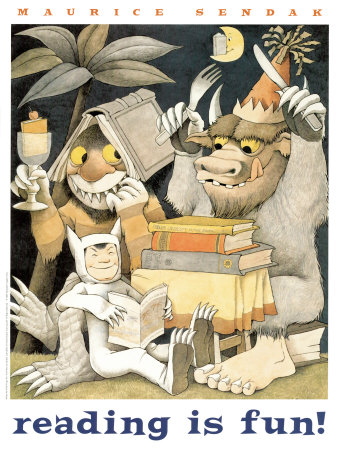
That said, summer is a fine time to go back to those very lists. Just because you didn’t “get” Don Quixote when you were fifteen (and really, why would you have?) doesn’t mean that you won’t find it hilarious now that you’re older and your frames of reference have so greatly expanded. Ditto Moby-Dick, The Turn of the Screw, Walden, et al. There’s no rule that what we are calling here “beach reads” have to be light and fluffy. Still.
Ideas of just what constitutes beach reading, are, of course varied. But for many of us, beach reading implies a book that we can read on the beach or by the pool or swaying in a hammock in our backyard. Beach reading is a book that we can still follow after three beers on the porch. Beach reading can be trashy and lurid; beach reading can be literary junk food. Beach reading is genre fiction in cheap mass produced paperbacks, the kind of books we’re happy to leave at the condo when we’re through with them. Someone else will find them, digest them along with a blender of margaritas. At the same time, for a lot of us beach reading is the time to play catch up with all those books that have been stacking up in the margins of our homes, neglected, unread. In any case, summer is a time that many of us put renewed energies into pursuing the endangered pastime of reading, and over the next week Biblioklept aims to aid the cause.

“Manet’s Olympia”
She reclines, more or less.
Try that posture, it’s hardly languor.
Her right arm sharp angles.
With her left she conceals her ambush.
Shoes but not stockings,
how sinister. The flower
behind her ear is naturally
not real, of a piece
with the sofa’s drapery.
The windows (if any) are shut.
This is indoor sin.
Above the head of the (clothed) maid
is an invisible voice balloon: Slut.
But. Consider the body,
unfragile, defiant, the pale nipples
staring you right in the bull’s-eye.
Consider also the black ribbon
around the neck. What’s under it?
A fine red threadline, where the head
was taken off and glued back on.
The body’s on offer,
but the neck’s as far as it goes.
This is no morsel.
Put clothes on her and you’d have a schoolteacher,
the kind with the brittle whiphand.
There’s someone else in this room.
You, Monsieur Voyeur.
As for that object of yours
she’s seen those before, and better.
I, the head, am the only subject
of this picture.
You, Sir, are furniture.
Get stuffed.

From the OED:
“A writer of satires or lampoons; applied to Timon of Phlius (268 BC).
1845 LEWES Hist. Philos. I. 77 His state of mind is finely described by Timon the sillograph. 1849 GROTE Hist. Greece II. xxxvii. IV. 526 The sillograph Timon of the third century B.C.
So sillographer, sillographist.
1656 BLOUNT Glossogr., Sillographer, a writer of scoffs, taunts and revilings; such was Timon. 1775 ASH, Sillographist. 1845 Encycl. Metrop. X. 393/1 Menippus indeed, in common with the Sillographers, seems to have introduced much more parody than even the earliest Roman Satirists.”
Famous sillographers include:
Timon of Philius (as noted above)
41 & 42. Jonathan Donahue and Grasshopper.
Mercury Rev released three perfect albums–Yerself Is Steam, Bocces, and See You on the Other Side–before releasing Deserter’s Song, a beautiful last gasp from a dying band. They should’ve stopped there, but Jonathan Donahue and Grasshopper kept the dream alive for two more albums, the less said about which the better (hopefully they’ve quit for good). Mercury Rev’s guitars flirted furiously with the thin line between dream and nightmare, evoking beauty and terror and sheer joy. What great stuff.
43. Martin Carr.
The Boo Radleys also released a number of great albums, notably Giant Steps and Wake Up! before eventually exhausting their Beatlesque bag of tricks. Carr’s songs are gorgeous and hold up better than most other bands from the Brit shoegaze era.
44. Christian Fennesz.
Fennesz’s Endless Summer is really a guitar album, a beautiful layering of textures and rhythms with melodies that stick in your head years later. I thought his follow up Venice was just as good, and, if you can find it, his live, improvised collaboration with Sparklehorse is sheer sonic brilliance.
45. Robbie Robertson.
Robbie Robertson was in The Band. So. Yeah.
46. Jeff Lynne.
Man, ELO are, like, too good. How’s that for a review? My favorite liner notes ever are on the back of ELO’s Greatest Hits, where Jeff Lynne makes it unequivocally clear that, yes, he is the mastermind behind the whole damn ship and shebang.
47. John Frusciante.
I don’t really like the Red Hot Chili Peppers, but I love a few of their songs. Frusciante’s got a lovely, lyrical style, the perfect counterpoint to Flea’s melodic and funky bass lines.
48. Adrian Belew.
It’s almost unfair that King Crimson should have Robert Fripp and Adrian Belew. I actually like Belew’s solo stuff more than Fripp’s. It’s all good.
49. George Harrison.
It’s probably a good idea to put at least one of the Beatles on this list.
50. Izzy Stradlin.
Why not? Fuck Slash.
 Biblioklept