1. Rent or queue up Michael Bay’s 2007 “live action” version of Transformers (NOTE: this “How to” addresses the 2007 version of Transformers, not the superior 1986 animated version).
2. Put the DVD in the DVD player.
3. Go directly to the chapter selection menu.
4. Select chapter 18.
5. Begin watching the movie. Disregard the clunky, superfluous plot that’s been leading up to this over the past hour and forty minutes. It doesn’t matter if you don’t know what’s going on. You’ve gotten to the part of the movie that you want to see–giant robots fighting giant robots. Additionally, don’t worry about who the characters are. You can figure it out pretty easily, if you like–they’re all types (stereo- or arche-). Alternately, don’t even worry about who the characters are.
6. Enjoy the mayhem and violence and spectacle of Transformers.
7. Now, as a form of penance, watch a movie by Akira Kurosawa, Peter Greenaway, Nic Roeg, Werner Herzog, Pedro Almodovar, David Lynch, or any other director worth a damn.
Sure, founding member Peter Green had a pretty cool guitar style, but really, Lindsay Buckingham and Stevie Nicks made Fleetwood Mac. Buckingham’s guitars achieve a strange, almost paradoxical tone: hard rock chunkiness by way of New Wave-thin; Brian Wilson-influenced melodies by way of punk rock; songs that ache with classic pop harmony but still remain unavoidably dark. Coke-fueled Rumours secured an already great legacy, but my favorite Mac album is, of course, their WhiteAlbum, Tusk.
I hate to admit it, but I prefer this version of “Go Your Own Way” (dig the percussive guitar solo at the end)–
–to this one from the 70s. You tell me which is better.
Genre-defying Junior Brown built his own guitar/steel guitar hybrid, “Big Red,” an improbably shrewd instrument of shred. Brown’s eclectic mix of country, blues, rock and roll, hillbilly, and even classical playing has probably kept him off of more radio stations than is fair, but his brilliant music has led to a huge following. Observe:
Self-confessed one-time Deadhead, Lee Renaldo was the “old guy” in Sonic Youth from the outset. I’ve always imagined that his sense of melody and his quiet, intense disposition are what anchored Thurston Moore’s manic tendencies and Kim Gordon’s dour art poses. Plus, I’ve always liked Renaldo’s solo stuff the best. And then, of course, there’s the Reed Richards look he’s been kickin’ for the past couple of years.
When Les Paul was injured in a terrible car accident in 1948, he had his arm set at a permanent right angle so that he could still play guitar. Now that’s dedication. Les Paul’s flashy, futuristic multi-layered tracks still sound ahead of their time.
Ben Chasny is heir to a tradition that began with Robbie Basho and John Fahey. As Six Organs of Admittance, he makes strange, beautiful psychedelic music that mixes tropes of Western folk with the exotic motifs of Eastern ragas. Very heady stuff. His new album, Shelter from the Ash, set to drop any day now from Drag City records, picks right up where last year’s gorgeous Sun Awakens left off. Great stuff.
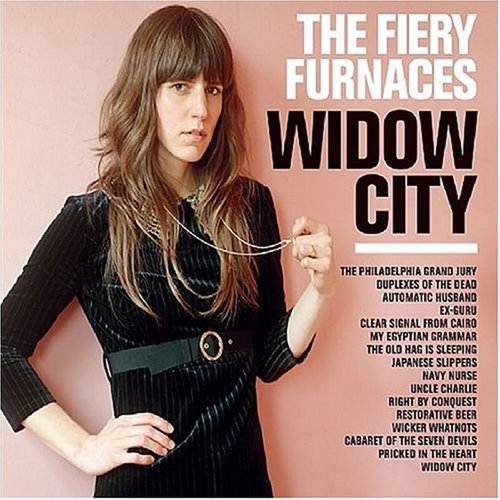
Fiery Furnaces latest, Widow City drops today. I love it. It’s really good rocknroll. It’s great. You should buy it. You’ll love it. Or maybe you hate music? You don’t hate music, do you? Then prove it, sucker.
Also out today: the Vintage paperback edition of Dave Egger’s sorta fictionalized memoir What Is the What? I haven’t read this yet, but my copy should be showing up by next week via Amazon. So I can’t say if you should buy it or not. A lot of folks tend to hate on Eggers without having read his work (I’ve seen people on the net identify his writing as extremely ironic: all one has to do is read A Heartbreaking Work of Staggering Genius (an overrated, completely self-indulgent, but still enjoyable read) to see that this guy is completely earnest. But: many who have read Eggers hate on him as well. So. Granted: McSweeney’s tends to be pretty hipster-smartassed-ironic at times. Still. Earnest, people, earnest). I think it’ll be pretty good though. Will let you know.
If you’re ordering all this stuff online, you might as well pre-order the paperback printing of Chris Adrian’s The Children’s Hospital: it drops later this month. I read it and loved it, despite the fact that my edition was hardback (I find hardback books, particularly those of epic length, awfully difficult to read). You can read all about my love for The Children’s Hospitalhere.
And while I’m completely shilling for McSweeney’s, and championing capitalism in general, I should point out that the October issue of The Believer has a pretty cool interview with Animal Collective’s Panda Bear (or maybe he’s just Panda Bear’s Panda Bear, after the shining genius of Person Pitch) as well as a great essay weighing psychoanalysis against neuroscience. But this is really just a segue to an attempt to redeem my rapacious shilling for the industrial-military complex that is propped up on book and CD and magazine sales. Said segue:
You can read the aforementioned essay without shelling out eight bucks by simply going here, to The Believer‘s website. The current issue’s interview with Optic Nerve writer-artist Adrian Tomine is also up.
But “So what?” you say, “there are plenty of interviews and essays out there. Who cares? Give me something substantial!”
Something substantially funny: Clarke and Michael, the not-so-real-life (but-maybe-sort-of-real-life?) adventures of Clarke and Michael as they shop their screenplay around LA. I love this show.
Also, great archive of free e-books here, if you’re into permanent eye damage.
Finally, you probably don’t know about this yet: Biblioklept has a major scoop: British band Radio Heads plans to release their new album, In Rainbows, tomorrow, for free (technically, you can pay what you want to for it. Which, if you are like me, is probably nothing).
That’s right, folks: you can get music on the internet for free. More italics to emphasize this point. You can get that Radio Heads album here starting tomorrow October 10th.
First off–yes, the entire list could be comprised of Dylan songs. I choose this one simply because it’s one of my favorites, and also from the first Dylan album I ever bought. Dylan visits a psychiatrist and tells him about the awful dreams he’s been having. Dylan is “down in the sewer with some little lover” when the bomb goes off; upon surfacing he discovers a post-apocalyptic world where the survivors aren’t to friendly–in fact, he’s even accused of being a Commie at one point. Even the abandoned Cadillac he finds–a “good car to drive after a war”–brings him no pleasure, and in his loneliness, he takes to calling the automated time update service, but it’s no longer being updated. The doctor cuts him off, saying that he’s been having similar dreams, only he was the only one left alive in his dreams. Dylan ends the song by declaring “I’ll let you be in my dreams if I can be in yours,” the subtlest anti-war slogan I’ve ever heard.
2. Stephen Malkmus, “Jenny and the Ess-Dog”
The tragic story of Jennifer, an 18 year “rich girl,” and her 31 year old boyfriend, “the Ess-dog, or Sean if you wish.” The Ess-Dog plays in a 60s cover band, drives a Volvo, and loves to play frisbee with their dog Trey (um, shades of Malkmus himself?) They love to make out to Dire Straits’ Brothers in Arms and do cocaine (Trey observes their “baby talk voices and post Class-A nasal drip”). Of course, such a romance can’t last: Jenny heads up to college in Boulder and pledges Kappa; the poor Ess-Dog starts waiting tables and even “sells his guitar.” Sad, sad, sad.
3. Roy Orbison, “Running Scared”
In just three verses and under two and a half minutes, Orbison captures all of the paranoia, fear, and triumph of teenage romance. The narrator is always “running scared, feeling low,” afraid that his girl’s ex might show up and try to get her back. Sure enough, his shaky confidence is put to the test: the ex shows up, “so sure of himself, his head up in the air.” The poor narrator’s heart is breaking, but in the final glorious moments, his girl chooses to stay with him. Classic.
4. Kate Bush, “Wuthering Heights”
So you’ve always wanted to read Emily Brontë’s Gothic romance Wuthering Heights but you just don’t have the time? And you don’t even have time to read the Sparknotes version? Or even the Wikipedia entry? Well, never fear–singer-songwriter/space alien Kate Bush recorded a chilling version of the story (okay a tiny little fragment of the story), told from the perspective of poor dead Cathy, pining for Heathcliff–the adoptive brother she spurned (ooh! Incest! uh…sorta). Even if it’s just a take on one part of the novel, it’s still a good story, a great song, and a truly ethereal vocal.
Pretty much every song by my favorite band Fiery Furnaces is some kind of zany adventure narrative, full of places and names and numbers. Blueberry Boat in particular has any number of good narratives–the title track, “Chris Michaels,” “Quay Cur”–but my personal favorite is the rivalry between two brothers at the end of “Chief Inspector Blancheflower.” “Blancheflower,” like many Furnaces’ songs, is a suite; the final segment of the suite is cleverly framed within the rest of the narrative as part of a story told over a “Woodpecker cider with a local fratricider” to the previous narrator. Despite “Mom’s oxycontin and the Amstel light,” the narrator finds that he’s doing all of the talking during a visit to his “younger brother Michael,” prompting him to get “both remotes and turn off the DVD” and confront his brother. It turns out that little Michael is now dating the narrator’s ex, Jenny. “My Jenny?” he asks, dumbfounded, to which little brother replies: “You know damn well she ain’t your Jenny no more.” He confronts Jenny the next day outside her “dad’s bakery,” accusing her of messing with Michael’s head as “some kind of revenge” against him. In the end though, it’s futile. He winds up at a bar, telling the story to the previous narrator.
6. De La Soul, “Millie Pulled a Pistol on Claus”
Dillon, the seemingly benevolent social worker who mentors the fellas in De La Soul, is actually a monster who molests his teenage daughter Millie. She takes her revenge at the local mall, coldly executing her pop who is volunteering as Santa Claus: “Millie bucked him with the quickness/ It was over.” Classic track, classic album.
Unfortunately, no vid for “Millie,” but you can still enjoy “A Rollerskating Jam Named “Saturdays”” (with a sweet Chicago sample, to boot):
7. Public Enemy, “Black Steel in the Hour of Chaos”
“I got a letter from the government the other day/ I opened and read it/ It said they were suckers/ They wanted me for their army or whatever/ Picture me givin’ a damn–I said never.” This is possibly the best opening in the history of rap, but Chuck D only keeps upping the ante: the narrator soon realizes that “the suckers had authority,” and before you can blink, he’s “sittin’ in the state pen,” planning his escape. He attacks a “C-O,” steals his gun, and goes on a prison rampage, “52 brothers” behind him. The faithful S1Ws arrive (with bazookas!) to escort the escapees to northern freedom. Great stuff.
Tricky’s version is pretty good too:
8. Leonard Cohen, “The Partisan”
Cohen adapted “The Partisan” from an old WWII French Resistance song, “La Complainte du Partisan” by Emmanuel D’Astier de la Vigerie and Anna Marly. The historical significance only adds to the song’s haunting melody and diffident spirit. “The Partisan” recounts the sad story of a freedom fighter who has lost his wife and children, but keeps on fighting. “There were three of us this morning,” he says, ominously adding, “I’m the only one this evening.” Grim stuff.
9. Johnny Cash, “Cocaine Blues”
“Cocaine Blues” begins with narrator Willy Lee telling us: “I took a shot of cocaine and I shot my woman down” for messing around on him. He sleeps on the murder, then wakes up the next morning and “takes a shot of cocaine” before taking off. Unfortunately, the cops catch up with him down in Juarez, Mexico. He’s sent to trial, and the “little judge” hands him his sentence “in about five minutes”–“99 years in the Folsom pen.” He laments that he can’t forget the day he “shot that bad bitch down,” warning the listener to “lay off that whiskey, and let that cocaine be.”
I couldn’t find footage of Cash doing the song, but this isn’t so bad:
And if you insist on seeing Cash sing a narrative song:
10. Tom Waits, “Christmas Card from a Hooker in Minneapolis”
The saddest Christmas song ever begins with a junkie whore’s plaintive salutation to her ex-lover: “Hey Charlie I’m pregnant.” She goes on to explain that life now isn’t so bad: her old man, who “works out at the track” knows that the kid isn’t his but promises to “raise him up like he would his own son”; he even gives her a ring that was “worn by his mother” and takes her out dancing “every Saturday night.” Still though, things aren’t great. The hapless narrator delivers one of the saddest lines in any song I’ve ever heard: “I still have that record of Little Anthony and the Imperials/ But someone stole my record player/ How do you like that?” Things get even sadder when the narrator laments: “I wish I had all the money we used to spend on dope.” By the end of the song she comes clean, admitting that she doesn’t have a husband, and that she’s writing because she needs to borrow money. It turns out she’s in prison, and she’ll be “eligible for parole come Valentine’s Day.”
11. New Order, “Love Vigilantes”
“Love Vigilantes” is now over twenty years old and just as relevant as it ever was. This is a love song, a protest song, and a ghost story all in one. The biggest irony isn’t the O. Henry-by-way-of-Poe twist ending, it’s the discrepancy between the ebullient rhythm and pop melody of the music clashing against the mournful lyrics.
12. Belle and Sebastian, “Jonathan David”
On the surface, “Jonathan David” appears to be a song about two guys who like the same girl: “I know you like her/ Well I like her too/ I know she likes you.” However, pick up the Biblical allusion to find the subtext. The narrator says, “I was Jonathan to your David/ You’re still king.” In the Old Testament Book of Samuel, Jonathan takes an extreme liking to future-king David, pledging his undying service to the handsome young hero. For centuries, whether the relationship was platonic, romantic, or sexual has been under debate. Read more here. In the light of the Book of Samuel, Belle and Sebastian’s “Jonathan David” is still about a friendship split by a girl, only it becomes clear now that the narrator is really in love with his friend. In typical B&S fashion, the narrator wavers between hope and despair, declaring at one point that “It’s not like we’ll be parted/ It’s not like we’ll never know love,” before ending on a melancholy note: “You and her in the local newspaper/ You will be married and you’ll be gone.” In the end, his adolescent homosexual infatuation has to give way to public expectation (“local newspaper”), and the simple fact that his friend digs girls.
K is for King Richard III, the misanthropic Machiavellian megolomaniacal hero of Shakespeare’s Richard III. Marvel as cruel Richard psychotically removes all those who stand in between him and the throne of England, including his own little nephews. At the same time, sympathize for poor “deformed, unfinish’d” Richard, whose hunchedback and game leg have kept him from any saucy fun with the ladies. Throughout his ambitious quest, Richard wavers from a proto-Iago, devilishly–gleefully even–manipulating the hapless pawns around him, to a manic depressive unhorsed on the battlefield, less than half a man. Poor guy.
Check out Sir Ian McKellen (y’know, Gandalf) doing Richard III in the 1995 film version set in a fictional fascist England of the 1930s. Because, um, Shakespeare’s like, um, better when recontextualized.
UNF English Professor and super smart genius Sam Kimball will give a talk entitled “When Does Jesus Smile?” on October 11, at 7:00 pm in the UNF Gallery. In the talk, Dr. Kimball will explain the thesis and outline the content of his new book, The Infanticidal Logic of Evolution and Culture. Dr. Kimball has also promised to try to answer the question posed in the title of his presentation.
Dr. Kimball specializes in psychoanalysis and deconstruction. He’s an expert in sci-fi movies and Greek myths, etymology and pop culture, nineteenth-century American literature and Derrida (basically, all that is cool). Dr. Kimball tends to produce disciples instead of students. He’s consistently challenging, bewildering, enlightening, and affirming, one of those teachers who manages to turn a “no” into a “yes.” Plus, his initials spell “A.S.K.” So there’s that. The UNF Gallery isn’t that big, and space will undoubtedly fill up quickly. Check it out if you can.
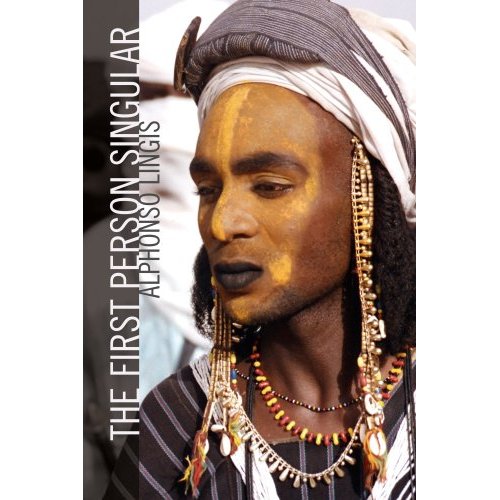
American philosopher and noted writer Alphonso Lingis will deliver a talk on “War and Splendor” at the University of North Florida, in Jacksonville, Florida, at 7:30 pm on Wednesday, October 3rd. Dr. Lingis is Professor Emeritus of Philosophy at Pennsylvania State University; his writing lyrically bridges the gaps between the liberal arts of anthropology and philosophy. Dr. Lingis’s current work, including his latest book, The First Person Singular, has focused on his travels to developing nations in Africa, South America, and Asia. By all accounts, Dr. Lingis is a fascinating speaker whose use of costumes, make-up, and music during his “lectures” creates an air of performance art. You can read more about Alphonso Lingis here. If you have the time, I highly recommend checking out Lingis’s paper “Our Uncertain Compassion.” Go here to reserve free tickets to see Dr. Lingis speak (your receipt will also provide directions. This promises to be both enlightening and entertaining–don’t miss it!
Jacksonville readers can look forward to more engaging speakers at UNF over the month of October, including resident genius Dr. Samuel Kimball and PBS documentary maker Ken Burns. Updates and info forthcoming.
I found this on the floor of my classroom; I’m assuming it’s a student’s response to a prompt given by the social studies teacher who has my classroom while I’m on my planning period. I don’t know the student. What follows is the student’s response, verbatim:
“I think the US should blow up Iraq because Iraq is hating on the US and they would do whatever it takes to blow up us and we all are beefin.”
Clearly, this kid is savvy enough to work for the Bush administration.
The first line of Joyce’s Finnegans Wake in comics form. Part II here (but, um, there’s like more to the book, of course), and check out the rest of Galumph’s comic book poetry (“Tales of Adventure & Girls–Stories to Make You Sad”).
Although he only played on the first two Allman Brothers albums (“only” does not seem an appropriate modifier here, given how goddamn great those albums are), Duane Allman left behind an enormous legacy in rock and soul music, appearing on singles by King Curtis, Otis Redding, Aretha Franklin, Clarence Carter, along with many others. He also dueled with Eric Clapton on “Layla” (my theory: everything awesome on that track has to do with Allman) and whatever else is on that Derek and the Dominoes album. Allman’s early death by motorcycle accident may have cemented a romantic legacy, but my gut feeling is that he would have been more Neil Young (consistent and relevant) and less fat Elvis (uhmmm…you get the idea) had he had time to produce more music.
Bailey’s avant garde approach to acoustic (and, to a lesser extent, electric) guitar stands out as one of the most challenging and wholly original styles on this list. Bailey is certainly a Not For Everyone type of guitarist: on first listen his music may sound like a stuttering and spewing mess, a series of discontinuous notes that aggravates the ear and angers the blood. But Bailey’s style–besides influencing everyone from Sonic Youth to Fred Frith to Keiji Haino–manages to eschew all the wankery inherent in “free jazz,” replacing it with an odd mix of humor and soul.
Jim O’Rourke is responsible for three of my all-time-favorite-albums: Bad Timing, Eureka, and, along with cohort David Grubbs under the Gastr del Sol moniker, 1996’s Upgrade & Afterlife (an album that I rank along with Pet Sounds, Loveless, and Fear of Music as a slice of sonic perfection). Mr. O’Rourke has produced and mixed more worthy albums than I have space here to mention (although it’s worth pointing out that he is often credited as “saving” Wilco’s Yankee Hotel Foxtrot (see: documentary film I Am Trying to Break Your Heart)), and he was even asked to join Sonic Youth as a fifth member. He’s also done numerous soundtracks, including work with Biblioklept favorite Werner Herzog. Apparently Mr. O’Rourke has quit making albums and has decided to work on making movies instead. Note to Jim: please please please do another solo album–Loose Fur’s Born Again in the USA was good but not great, and we know you have more songs to share! But it seems that I forgot to mention his guitar playing: this is getting long, so suffice to say, he’s better than Slash–a lot better.
O’Rourke plays “The Workplace” (from the EP Halfway to a Threeway) live:
David Pajo was in Slint. He also played guitar for Tortoise on the sublime Millions Now Living Will Never Die album. He’s also one of Will Oldham’s finest partners, adding the guitars for a number of Oldham/Bonnie ‘Prince’ Billy albums, including ‘klept fave Ease Down the Road. I could end there, but Pajo is also the mastermind behind Aerial M and Papa M, two bands responsible for some of the finest “post-rock” this side of the nineties. When Pajo joined Billy Corgan’s ill-fated “comeback” band Zwan (along with Matt Sweeney, of all people), I actually took the time to listen (it wasn’t half bad, really). One of those guys who makes everything he touches a little bit better.
Cool video for “Krusty” from Pajo’s 2001 album, Whatever, Mortal. “Krusty” sounds more like it should come from Pajo’s finest work, ’99’s Live from a Shark Cage–
Dick Dale, surf-rock king, blah blah blah. Dick Dale invented the genre from scratch it seems, providing a template not only for a myriad of copycats from the Ventures to Man or Astroman?, but also some of the basis for flashy heavy metal soloing. And while I’m not a big fan of the genre of “surf rock” anymore (thanks in large part to the mid-nineties overkill of bands like Man or Astroman?), I have to respect Dick Dale’s panache, his verve, and his sheer virtuoso talent on his instrument. Oh, and he’s better than Slash.
“Misirlou” (aka the soundtrack to that ass-rape scene from Pulp Fiction)
Last night, instead of finishing up James Joyce’s Dubliners like I should have, I watched the season premiere of the third season of It’s Always Sunny in Philadelphia. I started watching this show last year; the FX network (on which the show airs) employed the excellent strategy of running season one reruns after season two episodes, and I quickly got hooked. Sunny follows the nefarious schemes and haphazard adventures of a gang of Philadelphia friends who are not real big on brotherly love. They own a bar that no one seems to go to, the typical site of many a scene. They drink like fish and smoke like chimneys, and are generally a detestable (or lovable, depending on your inclination) group of ne’er-do-wells (the quartet from Seinfeld have nothing on the Sunny gang when it comes to petty meanness, despicable dishonesty, and downright criminal behavior).
Last night’s episodes (it looks like FX will run two new episodes back-to-back, insuring that I’ll be groggy for my 5:30am wake-up call every Friday) were hilarious, particularly the season opener “The Gang Finds a Dumpster Baby.” Interestingly, both of the new episodes contained acid-trip sequences, which is always great in a situation comedy (a pistol-waving, balls-tripping Danny DeVito in the second season three episode, “The Gang Gets Invincible” plays like a classic Hunter S. Thompson moment).
I highly recommend this TV show: it’s frequently tasteless and always funny. Check out this clip from “The Gang Gives Back.”
So today Biblioklept turns a healthy one year old. When I wrote that very first post about A Raisin in the Sun, I had no inkling of the vast riches on my horizon. Ahhh…simple youth. Them were the days, etc. etc. etc.
I’ll celebrate this momentous occasion by recounting my recent trip to my favorite used book sellers, where I loaded up on more than I can possibly read in 2007. Eidetic readers may recall my last book buying spree: I’m happy to report I read 5.5 out of 7 of the books bought on that trip (I’m only counting half of The Portable Faulkner): that’s almost 79%! Not bad. Because that’s what reading’s all about: percentages and stats. Like baseball.
The goods:
Finnegans Wake, James Joyce
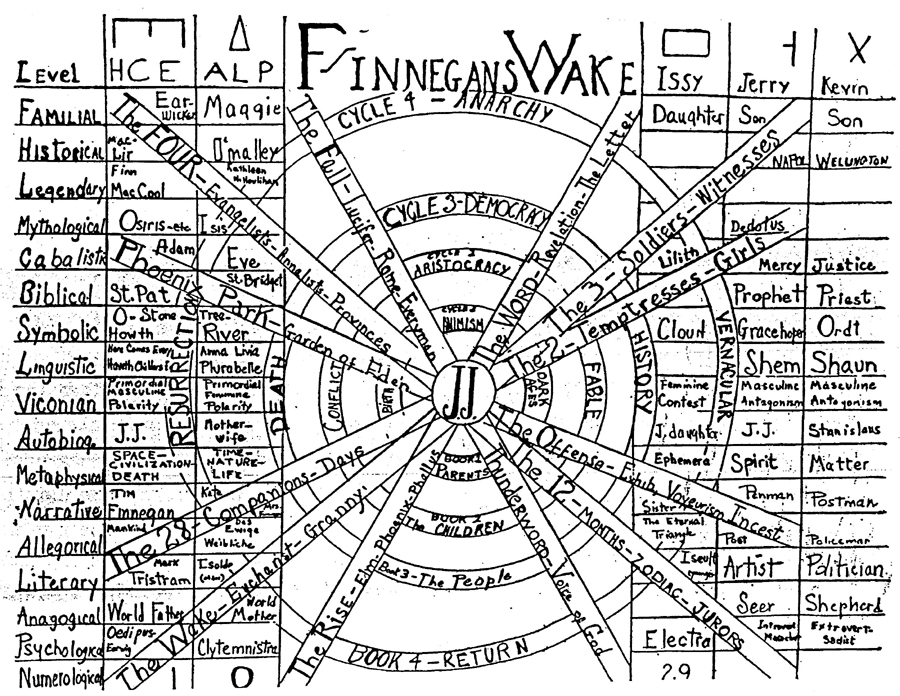
I’ve been dipping into the select chapters of FW included in The Portable Joyce for a few years now. I’m currently enrolled in a Joyce seminar but we won’t be reading more than a sentence or two of the book. My professor described it as a “vortex, a black hole from which no one returns.” He said this with a smile and meant it in good humor but maybe he has a point. The book is possibly probably incomprehensible unless you’re someone like, say, Terrence McKenna or L. Moholy-Nagy (whose graphic organizer for FW appears below) or Joseph Campbell.
I recently listened to a series of lectures given by Joseph Campbell on Joyce; Campbell suggests that FW is the dream that happens after Molly and Leopold Bloom fall asleep at the end of Ulysses. Campbell also posits that Joyce has a final book planned that would finish the four book cycle that began with Portrait; he thinks that the book would be very simple and clear and probably short, and would be thematically based on the mother-as-ocean. Campbell’s lectures are brilliant, beautiful, human, and humorous, and best of all, they are enlightening. Besides explicating the book as a whole, he also guides his audience through select sentences of FW in ways that make you go “!!!” Brilliant stuff.
You and I both know that I will probably never read this book in its entirety. That’s okay. It’s a vortex of fun.
The Amazing Adventures of Kavalier and Clay, Michael Chabon
I almost bought this book in the central train station in Rome two summers ago; I bought Eugenides’s somewhat disappointing novel Middlesex instead, because my wife had more interest in it. I’ve actually started the book already (despite having a ton of Joyce and Joyce-related academic crap to read); it’s pretty good. I’ll probably finish it if I can keep up this pace.
Gun, With Occasional Music, Jonathan Lethem
It’s no secret that we’re big fans of Mr. Lethem around the ‘klept. This is supposed to be a mystery novel involving memory-annihilating drugs and thug kangaroos. My plan is to read this over the Thanksgiving break.
Vanished Splendors: A Memoir, Balthus (with Alan Vircondolet)
As with most of the books that I end up buying in labyrinthine used books stores, I found this by mistake. For some reason it was mixed in with children’s hardback picture books. Balthus is one of my favorite painters of all time, so of course I had to buy his memoir. The chapters are short, vague, and achronological, making this a book that you can just pick up and read at random (kinda like Finnegan’s Wake).
Nightfall: Country Lake, David Cunningham and Whistling Thorn, Helen Cowcher
If I wasn’t so lazy I’d go heat up the ole scanner and show you some of the beautiful images in these “children’s books.” I find that lots of children’s “picture” books tend to be condescending or just plain stupid, and finding good ones is not easy. I spent over 40 minutes plumbing through dusty boxes before coming across these two. David Cunningham’s gentle and dark-hued watercolor depictions of a lake at night are deep and soothing, as is the simple text that accompanies the illustrations. Cowcher’s Whistling Thorn details the evolution of acacia, giraffes, and rhinos. Lovely stuff.
Slow Century, Pavement (DVD)
I never look at the used DVDs; I have a Netflix account, library card, and a program called DVDShrink, so if I want to own a DVD it’s a pretty simple operation. Still, there are rare cases where I want the packaging, usually music films like Sonic Youth’s Corporate Ghost DVD. Like the Balthus book, I happened across this two-disc Pavement film among the children’s books. I’d seen it before: the hour long documentary is really good, and the videos are excellent. The concerts…well, I dunno. I’m not really into that kind of thing, unless Martin Scorsese and The Band are involved.
From said documentary: Pavement destroys Lollapalooza in West Virginia:
I think that’s it for this recent trip.
Now, I would be remiss if I didn’t include a book theft in our birthday edition, so here goes.
There really isn’t much to this story, and I’m actually deeply ashamed of this one. No irony, no joke. Most of the book thefts I discuss on this site are books that I’ve borrowed and never returned or books that I’ve purloined that no one was going to read anyway. This one is a straight-up theft from an indie book store. Ouch.
When I was a young stupid college freshman (note the defensive tone)–it was my first semester in fact–I had to go to a certain Gainesville book store to buy my course texts. They seemed outrageously overpriced and I was outraged, despite the stipend the state of Florida was giving me as part of my scholarship to buy books (I thought of this as beer money). In order to “get even” with these high prices, I not-so-subtly swiped a copy of Nabokov’s Laughter in the Dark: I simply picked it up after I’d paid for my course texts, walked out of the store with it, got on my bicycle, road home, and never read it. That was about ten years ago. Mea culpa. I’ve never done anything like that since, and, like I said, I feel bad about it now, so bad that every time I pick up the book to give it a shot, a small shudder of shame creeps through me and I put it down.
So there you go: new books and a book theft. Here’s to another year of cranky commentary with elitist overtones.
1. Brainstorm: Good writing always starts by brainstorming. You need to figure out the Official Editorial Position Pitchfork will be taking on the artist being reviewed: are they an old favorite trying something new? Are they an old favorite that are not doing something new? Were they once-loved but now no one’s sure how to feel about them? Figure out how your audience should feel about the album ahead of time, as this will make it easier to review the album when you actually listen to it. Remember, millions of kids are reading the site everyday; they need to know who to think is cool and who to think is washed-up and who to never give a chance to at all (it might be worth pointing out that the Official Editorial Position should be neatly summed up in the album’s 0.0-10 “score,” making it easier for the semi-literate to quickly figure out how they should feel about the album).
2. Research: Okay, you can go ahead and listen to the album now that you know how to feel about it. While you’re killing time, troll the internet for any juicy or salacious info on the artist in question that might come in handy: is there a gimmick or an angle to the artist? Are they fat? Black? Brother-sister team? Crazy? People nowadays want more from their indie music than just good tunes. Figure it out (conversely, maybe the fact that the artist is “trad” indie–four-on-the-floor white guys–could be your angle. Just sayin’).
3. Outline: If you don’t outline your writing, you’ll end up with an amorphous blob of a review. You probably have less than 800 words, and you don’t want to waste them on peripheral and superfluous info, like a description of the music or the lyrics. If you need help developing your outline, refer to the steps below.
4. Introduction: Normally when one writes, it’s a good idea to introduce the subject with a thesis right away, so that the reader knows what’s going on. However, Pitchfork’s Editorial Staff clearly sees itself as continuing the tradition of the Lester Bangs school of music criticism; therefore, it’s a good idea to start off your review with a tedious personal anecdote or seemingly unnecessary condensation of the band’s history up until now. You can even wax pseudo-intellectual on some of that deconstruction shit you learned in college, especially if you’re reviewing superior music that no one can understand because it’s so superior and odd and seemingly unmusical to those who just don’t get it (noise music, f’r’instance). You need to contextualize the Official Editorial Position right away. This is where that research will come in handy. It’s also good to be cryptic and vague about your position on the actual music–that’s what the album’s score is for, after all.
5. Body: Again, normally when one writes, the body of the essay should contain specific evidence that supports the thesis proposed in the introduction. However, if you’ve written your introduction properly, you shouldn’t have a clear thesis and therefore you don’t have to worry about supporting it. This frees you up to riff on whatever you feel like–social trends that are bugging you, a movie you recently saw, girl trouble, politics–whatever. It’s important to come off as cool and hip and authoritative here. If you get around to it, you can talk about a song or two, and even some of the lyrics or music. Just be careful not to go overboard describing the way the music sounds (which shouldn’t be too difficult, because describing music in words is actually not so easy).
6. Conclusion: Is it even possible to write a real conclusion in this post-modern world? Challenge your readers by finally giving them a thesis of some kind. This will insure that they’ll have to go back through the review to figure out what you were trying to say (as if that Official Editorial Position album score wasn’t enough). Or, better yet, leave them hanging–give them a question to chew on, or a quote or something. That’s some deep shit, man.
7. Diction: Remember, you’re writing for a hip internet site and your vocabulary needs to reflect that. Whenever possible use verbs that “pop”–don’t worry about how inappropriate or unfitting they may seem, if they invoke a strange action, especially one that doesn’t seem to go with listening to music, go with it. Also, don’t waste your time describing the musicality of the album when Pitchfork has already created its own lexicon to help you. Using vague adjectives like “sun-kissed” and “art-damaged” will lend authenticity to your review and make your readers nod their heads knowingly.
8. Score: As I mentioned, Pitchfork reviews score the album on a 0.0-10 scale. Although no one really understands this sliding scale, it’s important to note that most people won’t really read your review: they’ll look at the score and skim it (hence the need for all that diction that “pops”). Still, it seems like any score below a 7.0 is not passing; 8.5 or higher is reserved for the cream of the crop. Special cases may call for a 0.0, like the review of the Flaming Lips’ album Zaireeka, an album that must be played on four CD players at once (of course this album warranted a 0.0; who could possibly take the time to find three friends with CD players, share the communal experience of quadrophonic sound the Lips intended–actually listen to the album–and write a review in time for a deadline? Not possible). Save 0.0s for Big Editorial Statements (I’m reminded of the “we don’t love you anymore” message sent to Sonic Youth after NYC Ghosts & Flowers). Similarly, really high scores should be reserved for Grand Artistic Statements by new bands that no one will care about next year.
9. Parting Thoughts: Remember, have fun with it, but not too much fun–after all you’re writing for the hippest music site there is, one that even has it’s own weekend festival dealie now. So just remain calm, cool, and collected–you have the weight of the Official Editorial Position behind you, so you’re allowed to let a nasty, hipper-than-thou attitude seep into your criticism. Finally, as was elaborated repeatedly above, whatever you do, don’t focus too much on the music at hand. Got it? Now you too can earn the fame, fortune, and crazy free sex that every aspiring Pitchfork writer deserves.
I should go on record: Talking Heads are probably my all-time favorite band. When they first started putting out records in the late 70s, the dominant sound on the radio was macho cock-rock; electric twelve-bar blues smothered in wailing and moaning. According to Head’s bassist Tina Weymouth in the liner notes to Sand in the Vaseline, Byrne hated that heavy sound; he wanted his guitar to be as thin, jangly, precise, and rhythmic as possible. Weymouth goes on to point out that Byrne was very proud of his guitar sound, and thought that critics too-often overlooked it, concentrating instead on his odd lyrics and odder dance moves. I think that Byrne doesn’t get enough credit for defining the “indie-jangle” sound: aided by Eno’s treatments, Byrne’s rapid guitar strokes and minimal melodies helped create a template that bands like R.E.M., The Chills, The Feelies, and Luna would continue to refine.
You start a conversation, you can’t even finish it…
Peter Buck was the guy who took jangle to new realms, inflecting his playing with impossible nuance that extended R.E.M.’s sound beyond their basic four-on-the-floor line-up. His spare solos (when there were solos) never impinged on the song’s structure or Michael Stipe’s cryptic vocal, and his mastery of a multitude of other instruments (mandolin, anyone?) helped turn simple pop into musical puzzles. So what if they suck now.
“And that guitar player was no saint”–Mr. Malkmus, “Unseen Power of the Picket Fence”
Responsible for some of the finest cock-rock ever put to tape, Jimmy Page was a real-deal rock star. Don’t believe me? Read Hammer of the Gods. And if you still can’t forgive some of the wankery Led Zep were inadvertently responsible for, remember that this guy was a latter day acolyte of Aleister Crowley. So there’s that.
Who is Jack Rose? I’m not really sure, but he’s unreal on the fretboard. When I first heard Raag Manifestos I flipped my proverbial wig: what was this guy doing? Was this contemporary? Was this ancient? Who is Jack Rose? Like Glenn Jones, Rose is keeping Fahey’s torch burning, playing the finest, ramblingest, finger-pickingest steel-guit-blues-via-raga out there today. But still, who is Jack Rose?
Two words: Dickey Betts. Two words: Allman Brothers. Two words: “Ramblin’ Man.” Two words: Jacksonville native. That’s eight words! Eight words!
About twelve years ago, I went to see Bob Dylan play here in Jacksonville. My uncle had seen Dylan the night before in Tampa. He called me to tell me that Dickey Betts had shown up and played for half the set; it was, of course, just too dang awesome. We waited and waited for Dylan to introduce special secret guest Dickey Betts. I mean, he was from here, ferchrissakes. But that never happened. Regret for something never promised.
After three months of summer vacation, I had to go back to work on Monday. Yet even as I write this, the immortal classic Back to School airs on Comedy Central, reminding me of my commitment to education. Any moment now, Kurt Vonnegut will show up to help Thornton Melon pass Dr. Turner’s English class (weird convergence: ten years after Back to School, Keith Gordon–Jason Melon, the diver, Rodney’s kid–directed a version of Vonnegut’s Mother Night. My college roommate and I watched it when it came out, but I don’t really remember any of it).
Anyway, I promise to recover and get back to the semi-daily blogging (any semi-day now): I’ve been reading Joyce’s Ulysses; I’ve also read a couple of graphic novels; I’m hoping to get around to watching Inland Empire and letting you know what I think. So there’s that.
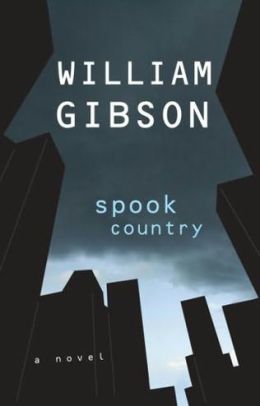
For now, AV Club has a pretty good interview with ‘klept favorite William Gibson up today. We forgive him for All Tomorrow’s Parties. And Idoru. And even the Johnny Mnemonic movie. Who knows–maybe his upcoming novel Spook Country won’t be half bad.







 Biblioklept