I wanted to film freedom and filth | Agnès Varda on making Vagabond

RIP Agnès Varda, 1928-2019

The Visionary — Serafino Macchiati

a85bce0bfda674e47375c39b9eacc7ce

The Visionary, 1904 by Serafino Macchiati (1861-1916)

Antoine Volodine interviewed at the Evergreen Review

Antoine Volodine is interviewed by Andrew Wilson at The Evergreen Review. The interview focuses on Volodine’s 1990 novel Lisbon, Last Frontier. (Wilson’s translation of the first chapter of Lisbon, Last Frontier was recently published in The Evergreen Review). The interview touches on a number of subjects, including Volodine’s invented genre, post-exoticism. From the interview:

AW: Is post-exoticism simply anti-exoticism?

AV: Yes, what’s important in post-exoticism is that it does away with exoticism. You suggested anti-exoticism, and it could just as well have been anti-exoticism, in as much as what characterizes exoticism is the absolute distinction between the metropolis and the margin, between the center and the periphery. With exoticism, there is an interest in the margins–the writer lives on the margins–but it’s all for the sake of the center. In exoticism, one describes the margins with ideas that come from the center, whereas in our books, the characters—who are dying, or perhaps already dead, who are birds, or animals, or insane—have no center, or rather it is their margin that is the center—the center no longer exists. For us, mental derangement doesn’t refer to a discourse of normality outside of it. In the books, it is present, and it is the center, it is what’s creating the world. In Lisbon, Last Frontier, it’s Ingrid Vogel who creates the world. The reader might think she’s completely mad, schizophrenic, paranoid, but, in fact, the book never refers to an outside normality, from which one could judge Ingrid’s experience. Yes, the book enters her imaginary; yes, it creates imaginary spaces for her to inhabit, but it never refers to a normality outside of her. And it’s through this precise mechanism that the books are on the margins, in the dustbin (to borrow an expression from Lisbon, Last Frontier); it’s in this way that they are dustbin literature, a literature from elsewhere, and that’s what comes into being with post-exoticism. That’s what’s important I think: a literature that doesn’t refer to normality, that doesn’t refer to the center. In that sense it’s more anti-exoticism… but of course I’m not going to change it now. It’s too late; it’s post-exoticism until the end!

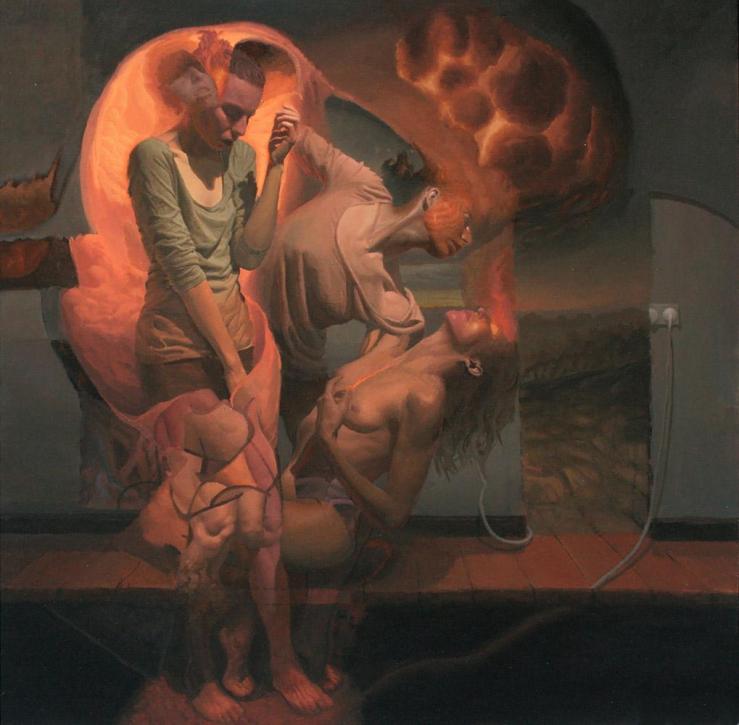
Contingent — Lukifer Aurelius

lukifer-aurelius-contingent-120cm-120cm-oil-on-aluminium-panel_1024x1024

Contingent by Lukifer Aurelius

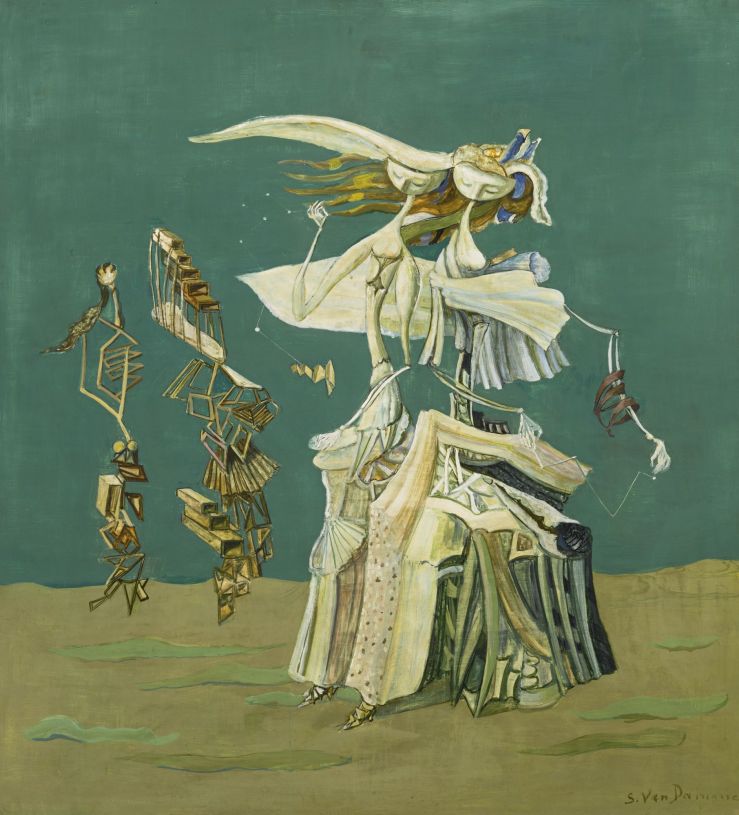
Balanced — Suzanne Van Damme

a4d040667294646a52bf7ba680309a1a

Equilibre (Balanced), 1946 by Suzanne Van Damme (1901-1986)

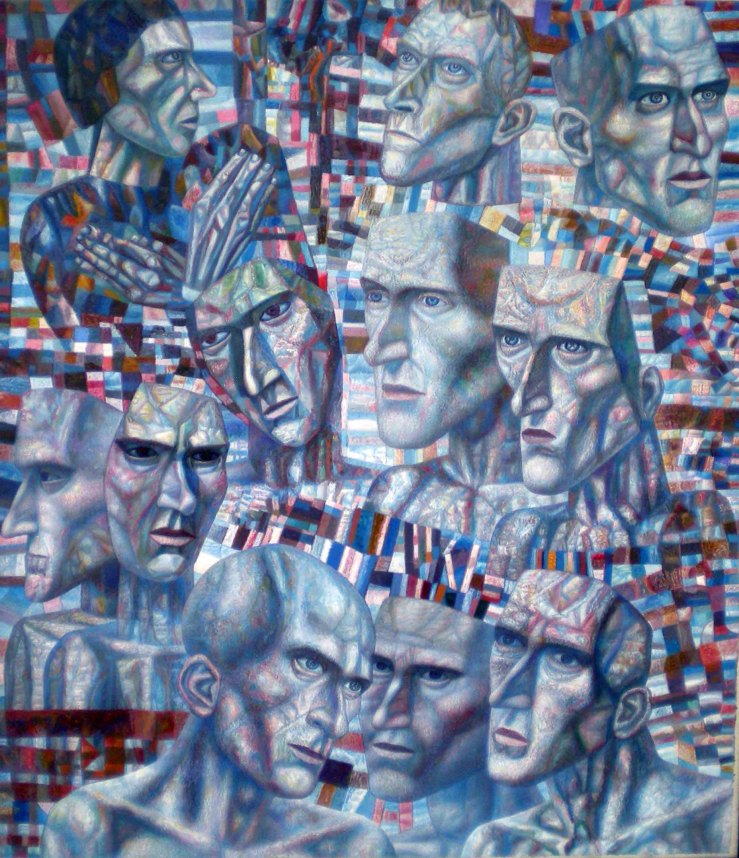
Eleven Heads — Pavel Filonov

eleven-heads-1935

Eleven Heads, 1935 by Pavel Filonov (1883-1941)

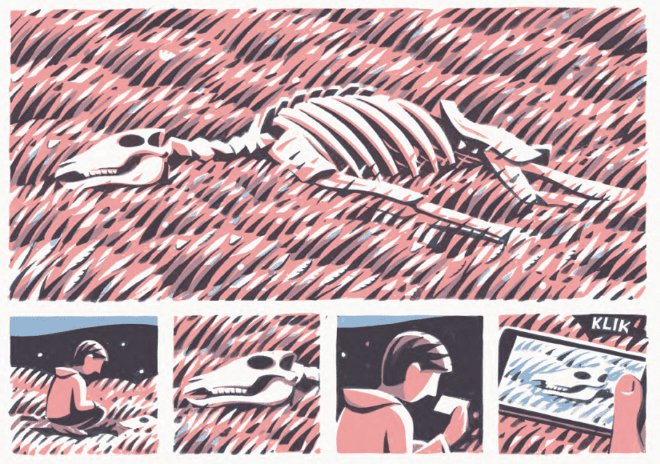
Jon McNaught’s graphic novel Kingdom reviewed

kingdom7

My review of Jon McNaught’s newest book Kingdom is live now at The Comics Journal.

First two paragraphs:

Not much happens in Jon McNaught’s latest graphic novel Kingdom. A mother takes her son and daughter to Kingdom Fields Holiday Park, a vacation lodge on the British coast. There, they watch television, go to a run-down museum, play on the beach, walk the hills, and visit an old aunt. Then they go home. There is no climactic event, no terrible trial to endure. There is no crisis, no trauma. And yet it’s clear that the holiday in Kingdom Fields will remain forever with the children, embedded into their consciousness as a series of strange aesthetic impressions. Not much happens in Kingdom, but what does happen feels vital and real.

“Life, friends, is boring,” the poet John Berryman wrote in his fourteenth Dream Songbefore quickly appending, “We must not say so / After all, the sky flashes, the great sea yearns.” In Kingdom, McNaught creates a world of flashing sky and yearning sea, natural splendor populated by birds and bats, mice and moths. In Kingdom Fields, waves crash in gorgeous dark blues, the sun rises in golden pinks, rain teems down in violet swirls, and the wind breezes through meadows of grass. It’s all very gorgeous, and the trio of main characters spend quite a bit of the novel ignoring it. The narrator of John Berryman’s fourteenth Dream Song understood the transcendental promise of nature’s majesty, yet also understood that “the mountain or sea or sky” alone are not enough for humans—that we are of nature and yet apart from it.

Read the rest at the Comics Journal.

kingdom8

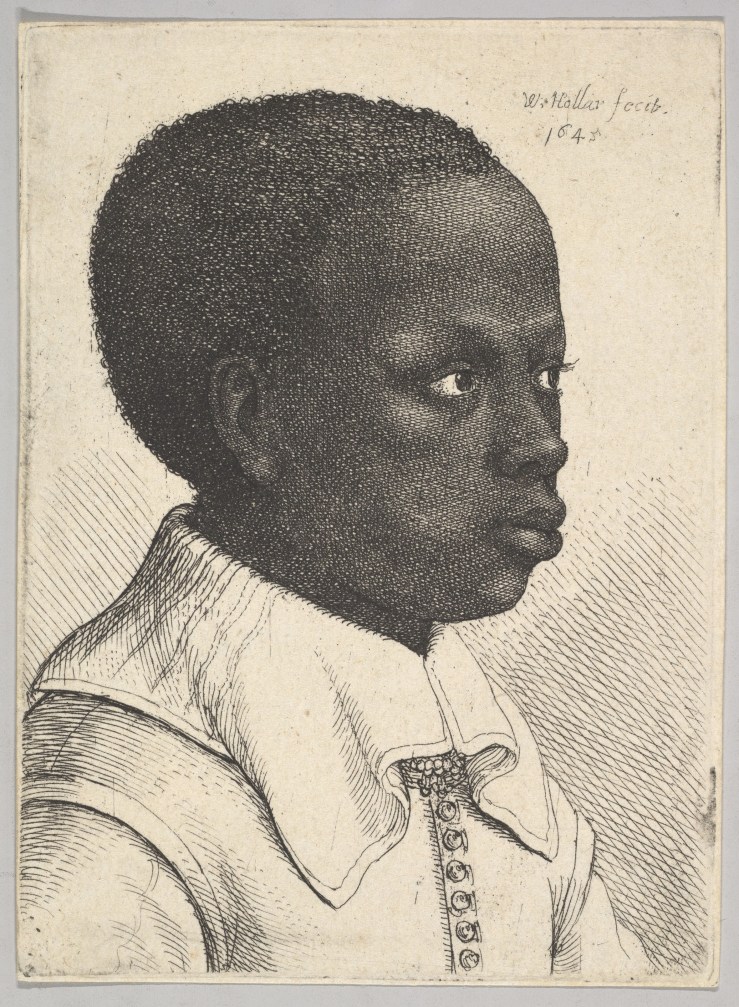
Boy in Profile — Wenceslaus Hollar

dp823969Screenshot 2019-03-26 at 3.26.06 PM

Boy in Profile, 1645 by Wenceslaus Hollar (1607–1677)

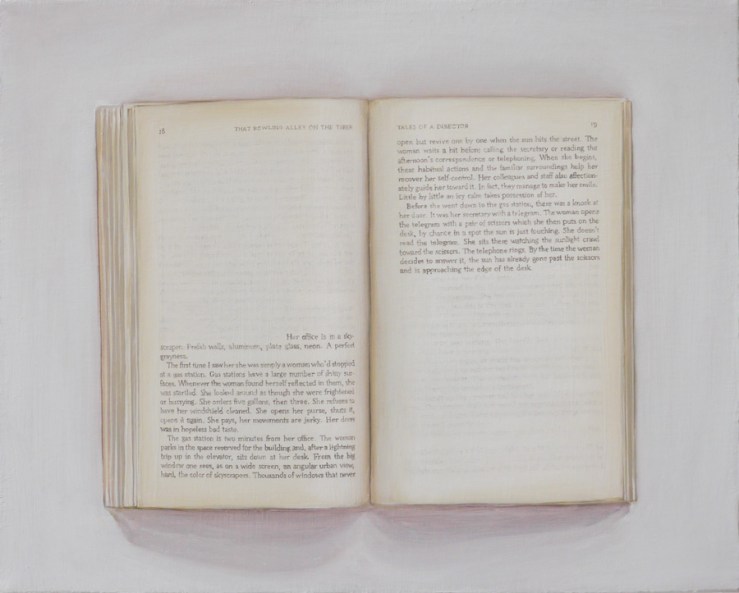
Two Telegrams (Antonioni) — Jen Mazza

MazzaScissorsWeb

Two Telegrams (Antonioni), 2013 by Jen Mazza (b. 1972)

Only the girl has woven a ruse in which she is seen beside her beloved

ddce8e97707db4e2ed8bffe1ab27356e

Under the orders of the Great Master, they’re embroidering the earth’s mantle, seas, mountains, and living things. Only the girl has woven a ruse in which she is seen beside her beloved.

c88dfd7bf5f2cdf78971920dbb659cc7

Remedios Varo’s description of her painting The Embroidering of the Earth’s Mantle (1961). From the collection Letters, Dreams & Other Writings. Translated by Margaret Carson. From Wakefield Press.

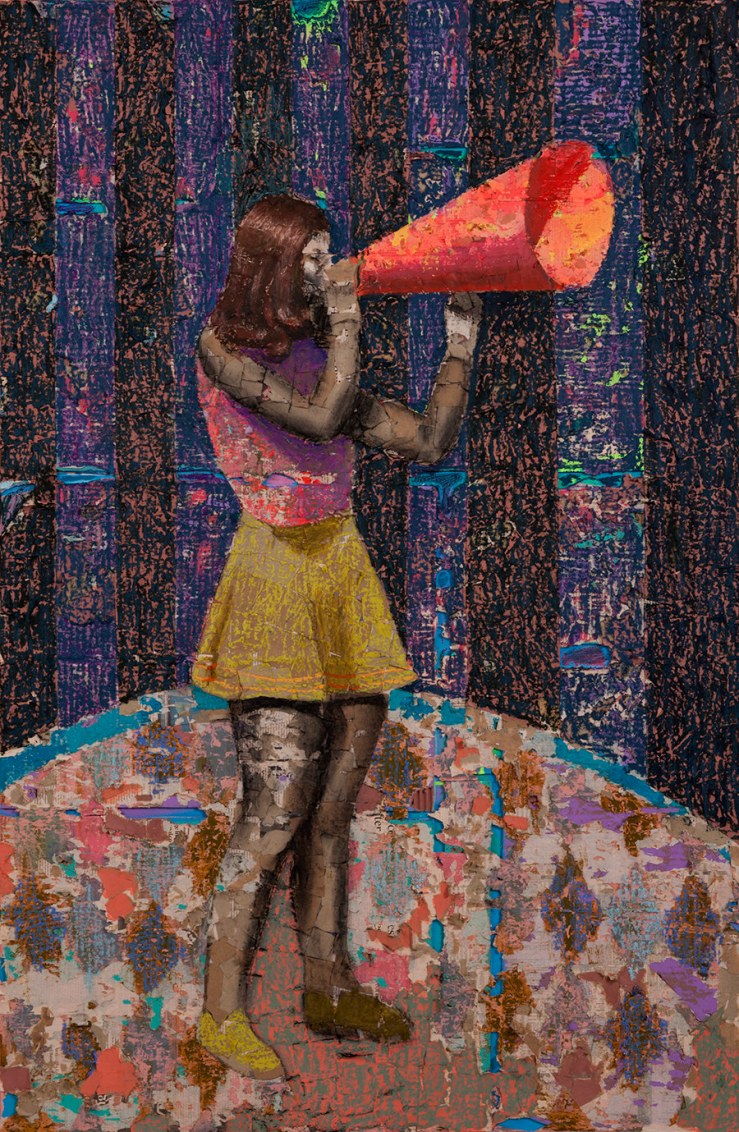
Figure with Horn — Derek Fordjour

772

Figure with Horn2017 by Derek Fordjour (b. 1974)

The Split — Alexander Boghossian

ab

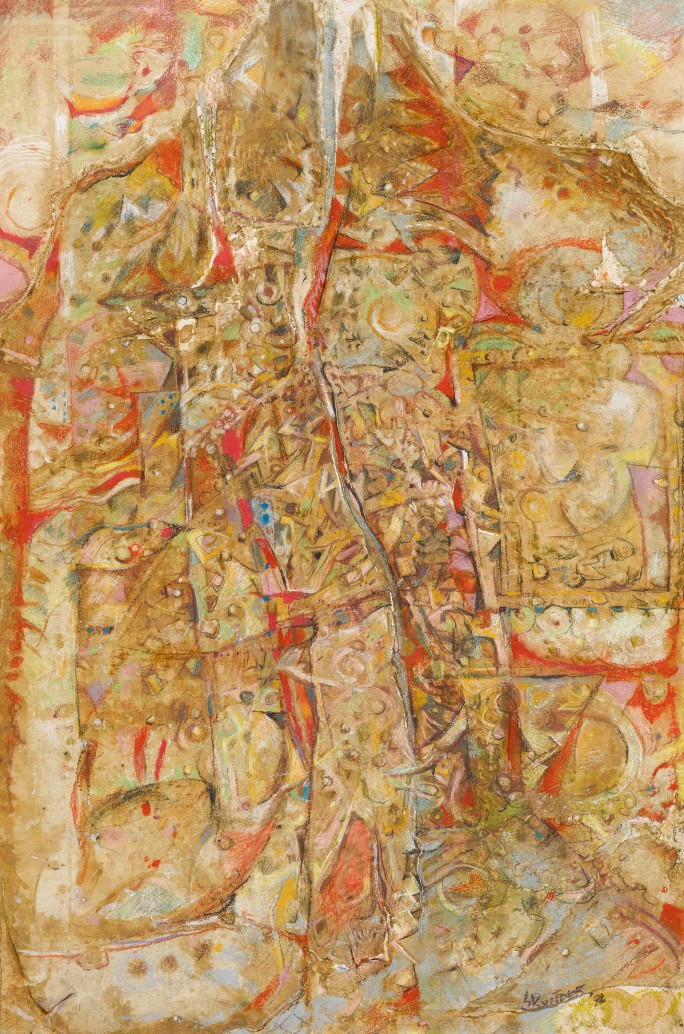
The Split, 1992 by Alexander Boghossian (1937-2003)

An Arm for an Eye — Elizabeth Glaessner

2017_an20arm20for20an20eye_72x72_0

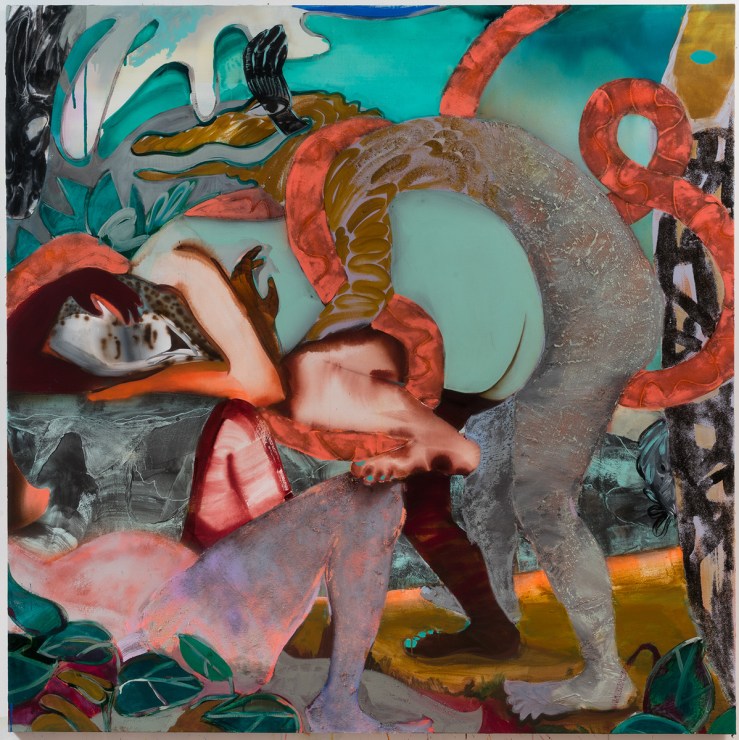
An Arm for an Eye, 2017 by Elizabeth Glaessner (b. 1984)

Stupid poets!

img_2479

Via–

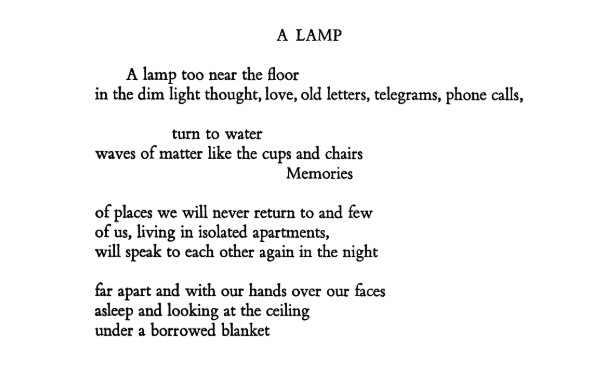
“A Lamp” — Tom Clark

tom clark

Glory of Spring (Radiant Spring) — Charles Burchfield

tumblr_o65tahvm7r1rkla8lo1_1280

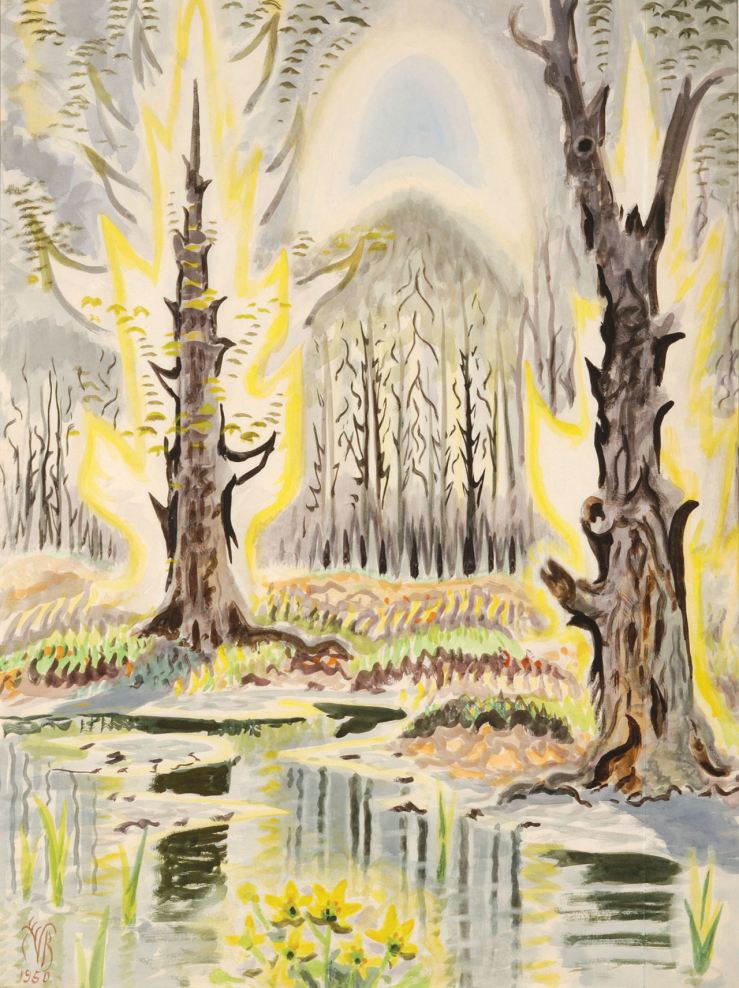
 Glory of Spring (Radiant Spring), 1950 by Charles Burchfield (1893-1967)

The Spring Witch — George Wilson

SPRING WITCH

The Spring Witch, c. 1880 by George Wilson (1848-1890)