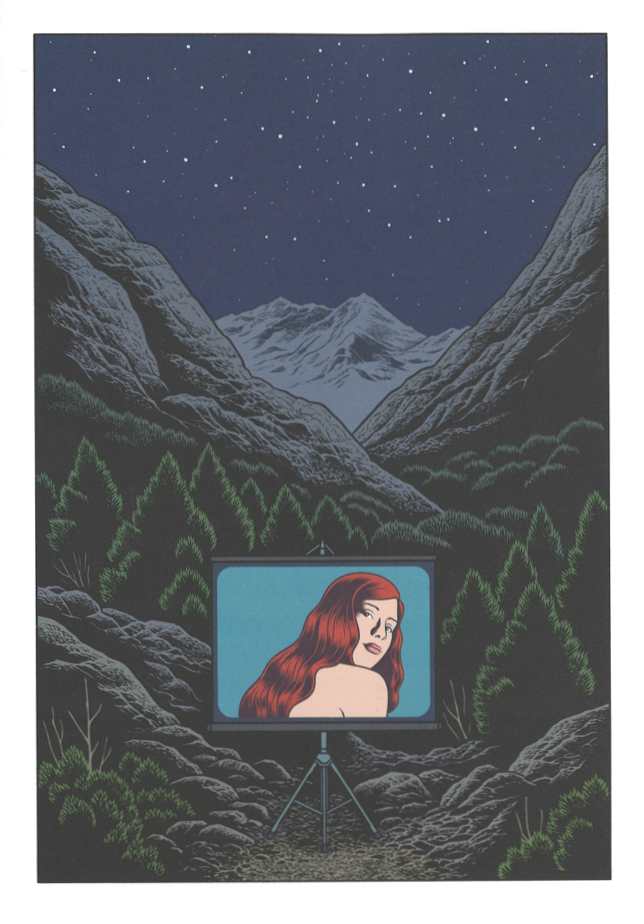
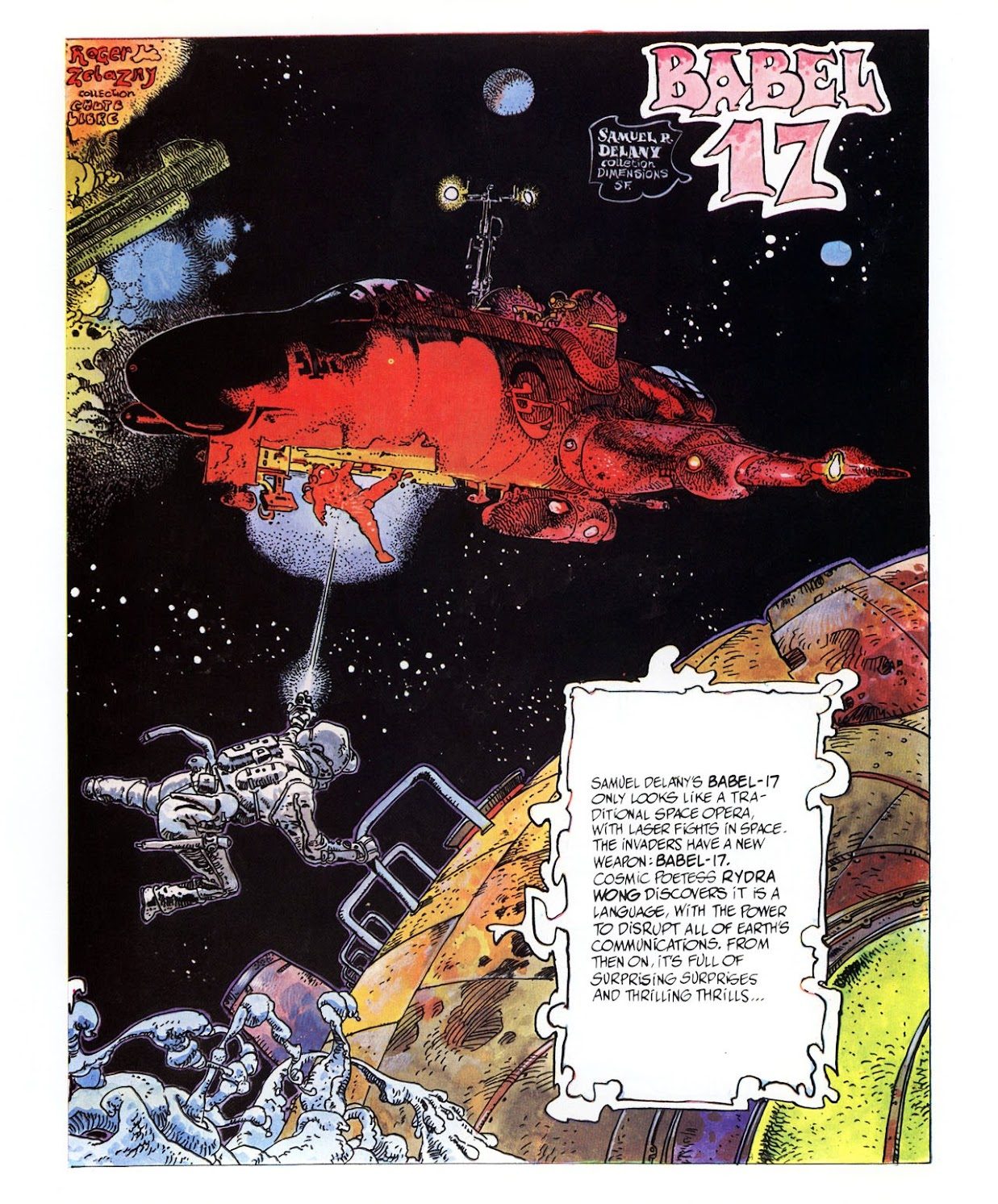
Cover illustration for the French translation of Kurt Vonnegut’s novel Player Piano, 1975 by Moebius (Jean Giraud, 1938–2012)

Cover illustration for the French translation of Kurt Vonnegut’s novel Player Piano, 1975 by Moebius (Jean Giraud, 1938–2012)

Nude with Book, 1940 by Zinaida Serebriakova (1884-1967)


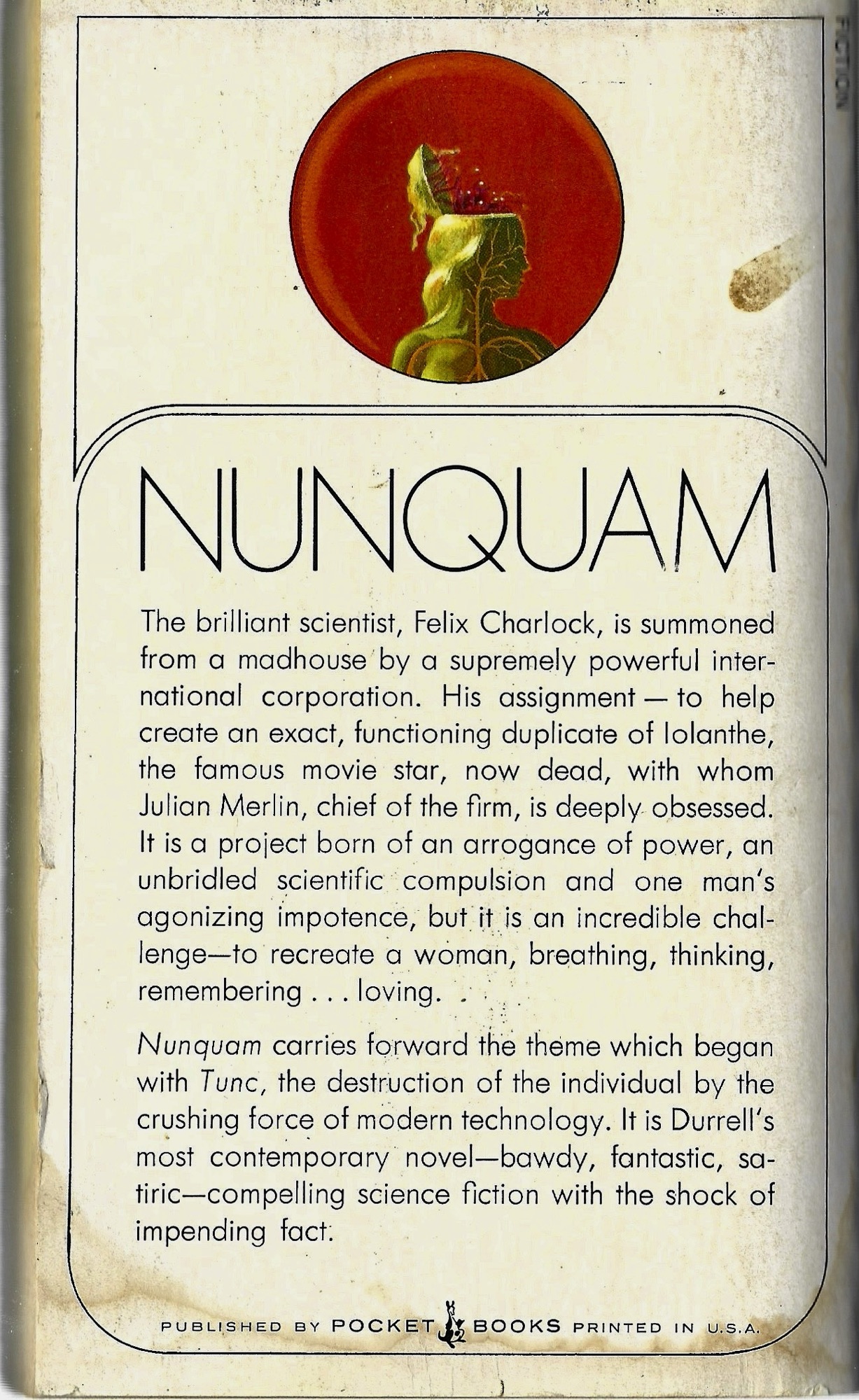
In Dubious Battle, John Steinbeck. Penguin Books (1979). Cover design by Neil Stuart. 313 pages.
John Steinbeck’s underrated and under-read novel In Dubious Battle seems like a good Labor Day mass-market pick. Perhaps Steinbeck’s most radical novel, In Dubious Battle details the fight for better working conditions during the Great Depression in California’s fruit orchards. The hero is young Jim Nolan who joins a labor strike organized by the Communist Party (one of the Party’s officials is named Harry Nilson). Jim is taken under the wing of the veteran organizer Mac McLeod; the pair drive a plot that focuses on the sometimes violent conflict between the workers and the landowners, who use the police and hired thugs to attempt to break the strike. Steinbeck, as is often the case with his serious novels, caps In Dubious Battle with a devastating conclusion, the final line a howl that does not end, its dash carrying the battle into the future, our own future: “Comrades! He didn’t want nothing for himself—“

And Life Anew, 1940 by Rita Kernn-Larsen (1904-1998)

An illustrated manuscript page from Alasdair Gray’s novel Lanark. From the Glasgow University Library Special Collections Department.

Afterword, 2009 by Chester Arnold (b. 1952)

Sante Sangre, c. 1982 by Moebius (Jean Giraud, 1938–2012)

The Reader (Marie Fantin Latour, the Artist’s Sister), 1861 by Henri Fantin-Latour (1836-1904)
Blossoming Almond Branch in a Glass with a Book, 1888 by Vincent van Gogh (1853–1890)

Without Even Looking by Nigel Van Wieck (b. 1947)

Old Man Reading, 1882 by Vincent van Gogh (1853–1890)

Annie Reading, 1961 by Lucian Freud (1922-2011)

The Magdalene Reading, 1445 by Rogier van der Weyden (c. 1399-1464)

The Living End, Stanley Elkin. First Warner Books printing (1980). Cover art by Don Ivan Punchatz; cover design by Gene Light; cover type by Richard Nebiola. 141 pages.
An excerpt from The Living End:
God gave a gala, a levee at the Lord’s.
All Heaven turned out.
“Gimme,” He said, that old time religion.” His audience beamed. They cheered, they ate it up. They nudged each other in Paradise.
“What did I tell you?” He demanded over their enthusiasm.
“It’s terrific, isn’t it? I told you it would be terrific. All you ever had to do was play nice. Are you disappointed? Is this Heaven? Is this God’s country? In your wildest dreams-let Me hear it. Good-in your wildest dreams, did you dream such a Treasury, this museum Paradise? Did you dream My thrones and dominions, My angels in fly-over? My seraphim disporting like dolphins, tumbling God’s sky in high Heaven’s high acrobacy? Did you imagine the miracles casual as card tricks, or ever suspect free lunch could taste so good? They should see you now, eh? They should see you now, trembling in rapture like neurological rut. Delicious, correct? Piety a la mode! That’s it, that’s right. Sing hallelujah! Sing Hizzoner’s hosannas, Jehovah’s gee whiz! Well,” God said, .1 that’s enough, that will do.” He looked toward the Holy Family, studying them for a moment.
“Not like the creche, eh?” He said.
“Well is it? Is it?” He demanded of Jesus.
“No,” Christ said softly.
“No,” God said, “not like the creche. just look
at this place- the dancing waters and indirect lighting. I could put gambling in here, off-track betting. Oh, oh, My costume jewelry ways, My game show vision.Well, it’s the public. You’ve got to give it what it wants. Yes, Jesus?”
“Yes,” Jesus said.
“It just doesn’t look lived in, is that what you think
“Call on someone else,” Christ said.
“Sure,” God said.
“I’m Hero of Heaven. I call on Myself.”
That was when He began His explanations. He revealed the secrets of books, of pictures and music, telling them all manner of things-why marches were more selfish than anthems, lieder less stirring than scat, why landscapes were to be preferred over portraits, how statues of women were superior to statues of men but less impressive than engravings on postage. He explained why dentistry was a purer science than astronomy, biography a higher form than dance. He told them how to choose wines and why solos were more acceptable to Him than duets. He told them the secret causes of inflation-“It’s the markup,” He said-and which was the best color and how many angels could dance on the head of a pin. He explained why English was the first language at Miss Universe pageants and recited highlights from the eighteen-minute gap.
Mary, wondering if she showed yet, was glad Joseph was seated next to her. Determined to look proud, she deliberately took her husband’s hand. So rough, she thought, such stubby fingers. He explained why children suffered and showed them how to do the latest disco steps. He showed them how to square the circle, cautioning afterwards that it would be wrong.
He revealed the name of Kennedy’s assassin and told how to shop for used cars.

I’ll be adding to these and then doing more the next time (?!) I read Gravity’s Rainbow.*
Pages 82-83: The White Visitation, etc.
Page 103: Black Markets, King Kong, etc.
Pages 148-49: Preterite/Elect, Lurianic Kabbalah, Uncanny X-Men, etc.
Page 203: Rainbows, Fuck-yous, Plastic Man, etc.
Pages 204-05: Paper, mise en abyme, a silkenness of girls, etc.
Page 256: “Real America,” Hughes contra Whitman, BANZAI!, etc.
Pages 257-58: The War, nimbus clouds, Zoot Suit Riot!, etc.
Page 299: Tannhäuser, horny expectations, etc.
Page 364: Knights and fools, dendrites and axons, etc.
Pages 412-13: Ouroboros, organic chemistry, tarot, etc.
Page 419: Innocence, experience, Wm Blake, Wagner’s Ring cycle, etc.
Page 539: Critical Mass, Weismann’s tarot reading, Rilke, hymns, etc.
Pages 627-28: Optimum time, barrage balloons, Wall of Death, etc.
Pages 712-13: The Man has a branch office in each of our brains. We might be freaks, but We are not doomed and We are not Their pets.

A Maze of Death, Philip K. Dick. Dawn Books, first Daw printing (1983). Cover art by Bob Pepper. 191 pages.
In my review of Philip K. Dick’s 1970 novel, I wrote that A Maze of Death is
…a mishmash of metaphysical mumbo jumbo, filtered through touches of space opera and good old fashioned haunted housery. A Maze of Death is a messy space horror that threatens to leave its readers unsatisfied right up until the final moments wherein it rings its sad coda, a reverberation that nullifies all its previous twists and turns in a soothing wash of emptiness. Not the best starting place for PKD, but I’m very glad I read it.

A Feast of Snakes, Harry Crews. Ballantine Books, first edition, first printing (1978). No cover artist credited. 165 pages.
While the cover designer and artist aren’t credited, there is a signature on the back which I believe is “Gentile.” If anyone has a guess as to the artist’s full name I’d be happy to hear it.
From the novel: not quite a recipe for snakes:
When they got to his purple double-wide, Joe Lon skinned snakes in a frenzy. He picked up the snakes by the tails as he dipped them out of the metal drums and swung them around and around his head and then popped them like a cowwhip, which caused their heads to explode. Then he nailed them up on a board in the pen and skinned them out with a pair of wire pliers. Elfie was standing in the door of the trailer behind them with a baby on her hip. Full of beer and fascinated with what Joe Lon could feel—or thought he could—the weight of her gaze on his back while he popped and skinned the snakes. He finally turned and looked at her, pulling his lips back from his teeth in a smile that only shamed him.
He called across the yard to her. “Thought we’d cook up some snake and stuff, darlin, have ourselves a feast.”
Her face brightened in the door and she said: “Course we can, Joe Lon, honey.”
Elfie brought him a pan and Joe Lon cut the snakes into half-inch steaks. Duffy turned to Elfie and said: “My name is Duffy Deeter and this is something fine. Want to tell me how you cook up snakes?”
Elfie smiled, trying not to show her teeth. “It’s lots of ways. Way I do mostly is I soak’m in vinegar about ten minutes, drain’m off good, and sprinkle me a little Looseanner redhot on’m, roll’m in flour, and fry’m is the way I mostly do.”