

Category: Art
Under the Skin Riff
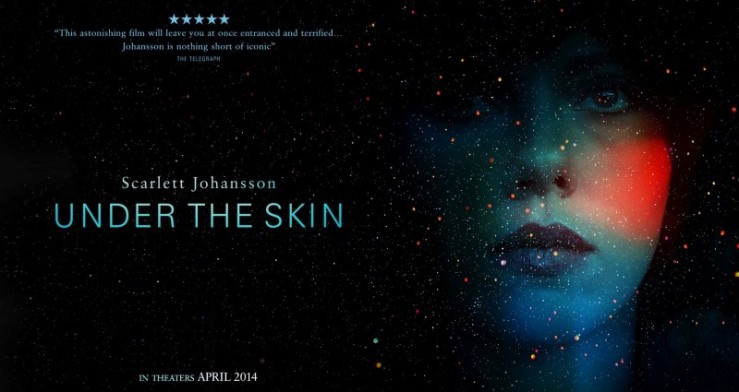
1. I hadn’t read a review of Under the Skin until after I watched it, but I had gleaned an idea of it based on taglines and posters—something like “Scarlett Johansson as a sexy alien seducing men in Scotland.”
2. That is not what the film is.
3. Under the Skin is an aesthetic experience. Now, this phrase, aesthetic experience, this phrase is extremely pretentious, and the way I’ve used it here also strikes me as pretentious, and even worse, not particularly clear. Any film could be described as an aesthetic experience. Films are, after all, simply light and sound.
4. Under the Skin is best experienced as light and sound—as aesthetic.
5. I’ve neglected to mention the film’s director, Jonathan Glazer, who directed another film I love, Sexy Beast.
6. For Under the Skin, Glazer adapted Michel Faber’s novel of the same name. I haven’t read the book, but a cursory cruise over its Wikipedia page suggests that Glazer dissolved most of the plot, keeping just the frame, or the idea of a frame for his film.
7. What I liked most about Under the Skin: The film is not really about anything. The film just happens.
8. Point 7 is a terrible description! Of course the film is about something—but its themes and motifs are overdetermined and underexplained—or not explained at all.
9. There is very little dialogue in the film—no exposition or explanation for what’s happening, let alone a conversation that might guide the audience to how to think or feel about what’s happening.
10. (Okay: This is not entirely true, but it is mostly true. There is a key conversation, if it can be called that, between Johansson’s unnamed character and a man with a deformed face).
11. The bits of dialogue that do evince often seem unscripted and random. The men Johansson’s character picks up speak in thick Scottish accents, their voices often obscured behind a din of traffic, buzz of music, or the thick glass windows of the van she drives around in.
12. (A favorite moment of auditory distortion in Under the Skin: In a domestic scene, in a kitchen, cleaning up, a man turns on his radio and just-barely tunes in a station. Deacon Blue’s “Real Gone Kid” plays through a hazy crackle. Lovely).
13. The sound mixing in the film is beautiful—waves crashing, the clip-clop of horse hooves on a high road, the wind blowing heavy through tall evergreens—these auditory cues mix in with Mica Levi’s creepy, lush score, which channels Krzysztof Komeda’s work and Bernard Herrmann’s Psycho score through Portishead and Loveless

14. Sound and light—those shots: Cinematographer Daniel Landin is the secret star of the film. Every shot is gorgeous, painterly, and if Glazer often allows a scene to linger just past an acceptable threshold, it’s because he’s in love with the film’s dark beauty.
15. (And/or: Glazer lets his shots linger so long to provoke the viewer into a kind of hypnotic discomfort).
16. The film’s early visual references to Kubrick’s 2001 are a bit on-the-nose—too on-the-nose, too expected. As the film progresses, the shots take their cues not from Kubrick’s sci-fi classic, but his most painterly film, Barry Lyndon.
17. (Under the Skin also reminded me of Upstream Color, Moon, The Man Who Fell to Earth, Tree of Life, and Morvern Callar).
18. The film is best enjoyed, as I’ve said, as an aesthetic experience, art, if that’s the word you like. I think that viewers who attempt to impose their own narrative logic on the film will attune their energy to the wrong frequency. Let the aesthetic happen.
19. (The beach sequence in this film is one of the best scenes I’ve watched in a long, long time).
20. I have completely and purposefully neglected to mention anything about the plot, because I do not think the plot, in the sense of plot-as-arrangement-of-action matters to the film. The film’s aesthetic is the plot.
21. And Under the Skin’s aesthetic is the film’s theme. This film is about seeing, hearing. Touch, taste, smell.
You can boil that down to whichever theory floats your boat—the male gaze, alienation, othering, sexual subversion, radical feminism, etc.—but I think that imposing any schema, any deep reading here, may be a way of anesthetizing the film’s aesthetic.
22. Highly recommended.
Model Writing Postcards — Carl Larsson

Young Girl Reading — Alfred Stevens

Summer Night — Albert Bloch

Greens (Werner’s Nomenclature of Colours)

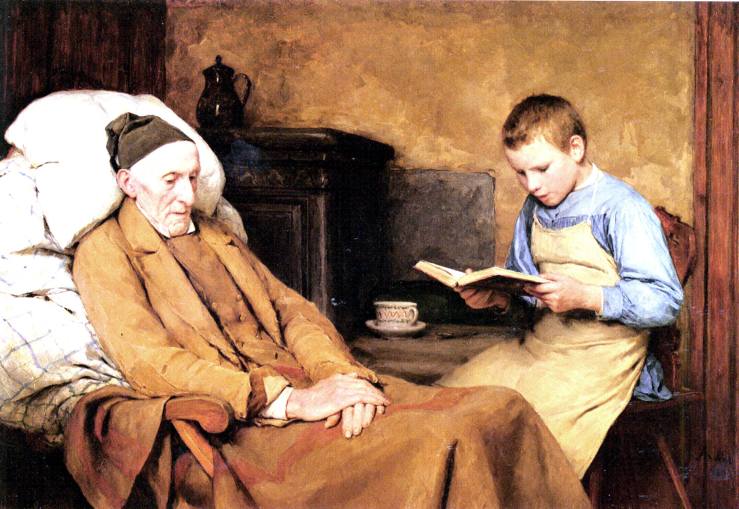
Grandfather’s Devotion — Albert Anker
Dusk (A Round of Croquet) — Pierre Bonnard

The Spring Witch — George Wilson

Screen Test: Nico — Andy Warhol

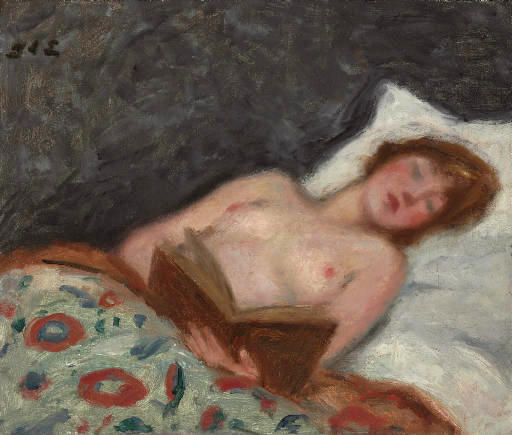
Woman Reading — Georges d’Espagnat
Carpenter’s Workshop, Seen from the Artist’s Studio — Vincent van Gogh

Kevin Thomas Discusses His Illustrated Book Reviews with Biblioklept
 Kevin Thomas’s new book Horn! (from OR Books) collects the book reviews he’s been doing for the past few years at the Rumpus. Kevin reviews new books (and occasionally reissues) in comic strip form. Over a series of emails, Kevin talked with me about his process, how he got started, the books that have stuck with him the most over the years, and his theory that The Life Aquatic with Steve Zissou is a secret remake of Three Amigos! Find Kevin on Goodreads,Twitter, and Tumblr.
Biblioklept: You’ve been reviewing books at The Rumpus for a couple of years now in your strip Horn! How did the strip start? Did it start with The Rumpus, or before?
Kevin Thomas: I had been making these primitive autobiographical webcomics under the “Horn!” moniker for about a year when The Rumpus Book Club started. One of the selling points of the book club was that if you reviewed a book and the editors liked it, they’d publish it on the site. So I dedicated one comic a month to reviewing these books, and after the third submission was accepted, The Rumpus asked me if I wanted to make it a regular strip.

Biblioklept: What other kinds of comics did you make before that? Did you have any training or background in cartooning?
KT: No, I was trained, to put it generously, to be a composer. Before that I wanted to be a poet. I had great teachers in both of those fields, but never even thought about taking a studio art class. Maybe the fact that I hadn’t yet tried and failed at comics was what drew me to it. Continue reading “Kevin Thomas Discusses His Illustrated Book Reviews with Biblioklept”
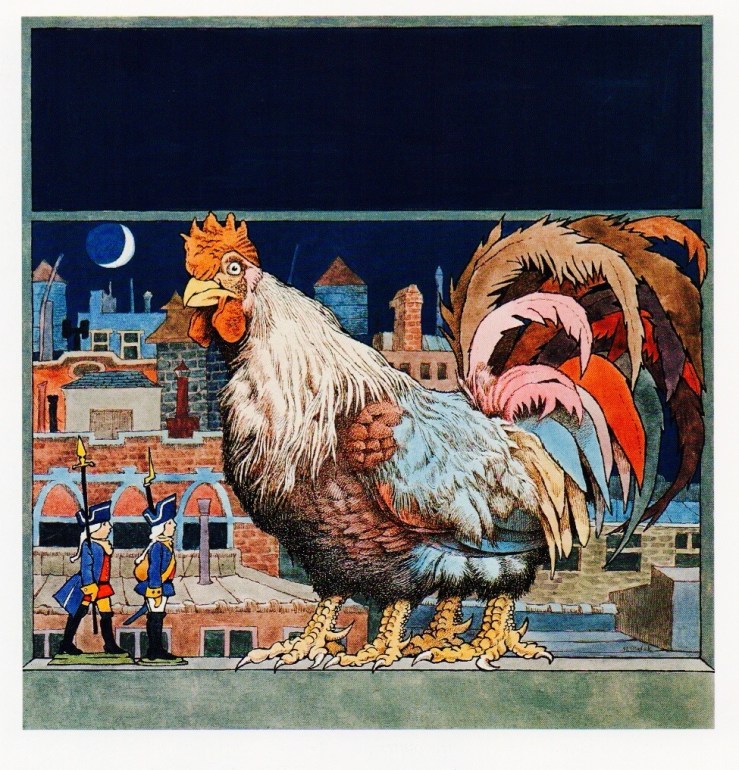
Kenny’s Window — Maurice Sendak
Woman at Diner — Vincent Giarrano

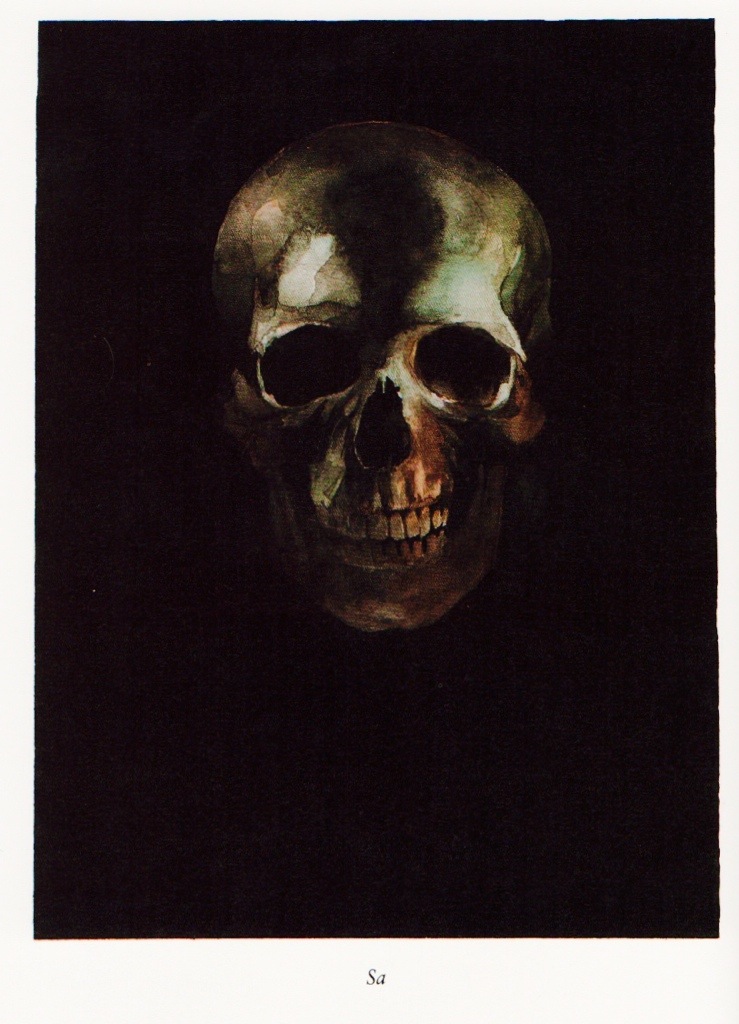
Sa — Barry Moser
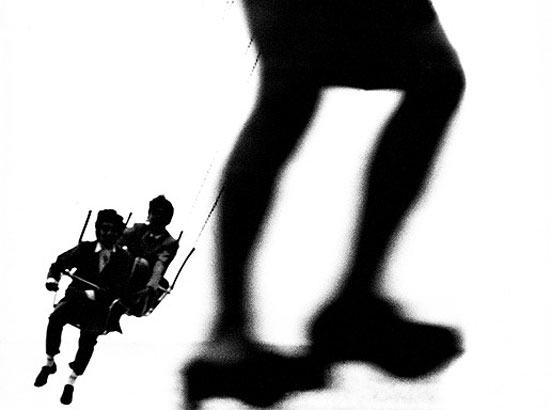
Past — Mario Giacomelli
 Biblioklept