Category: Art
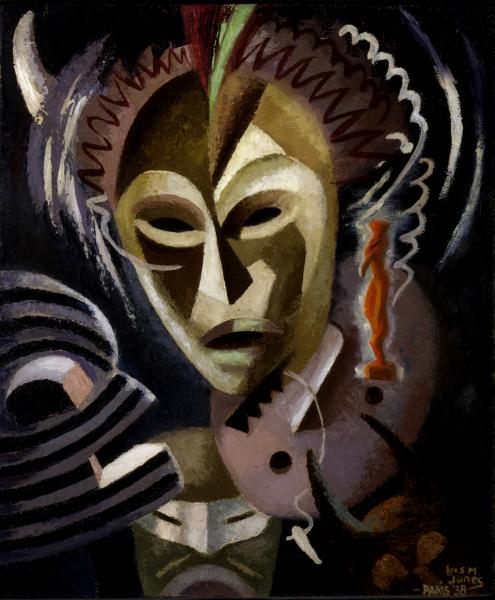
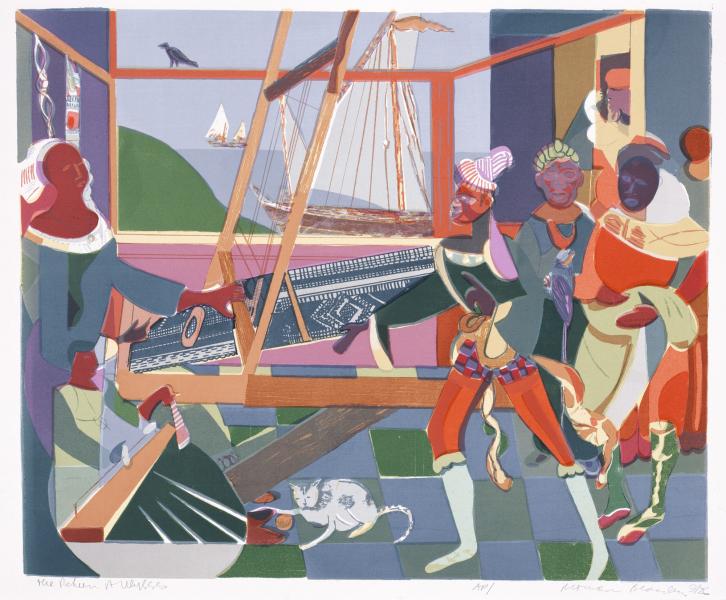
Les Fétiches — Loïs Mailou Jones
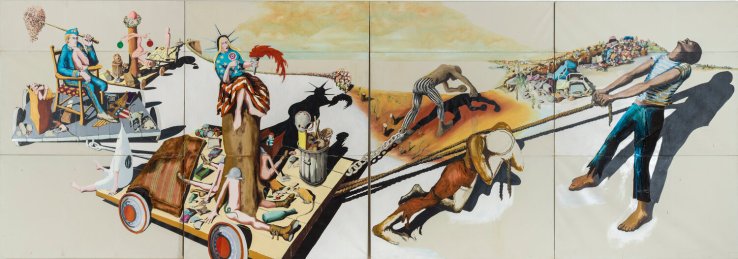
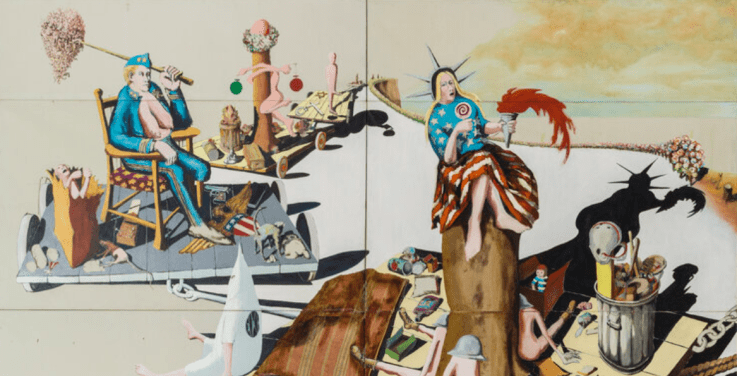
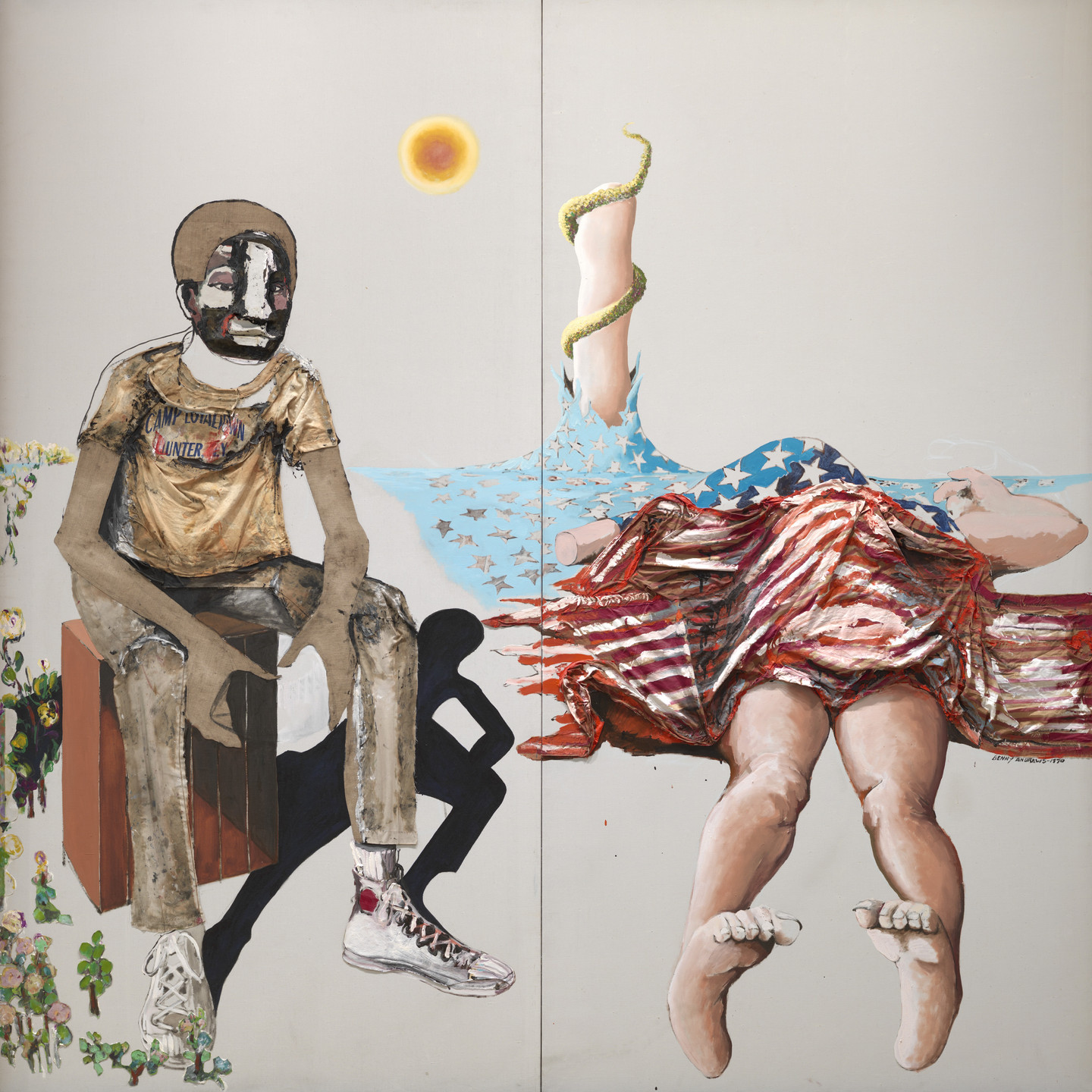
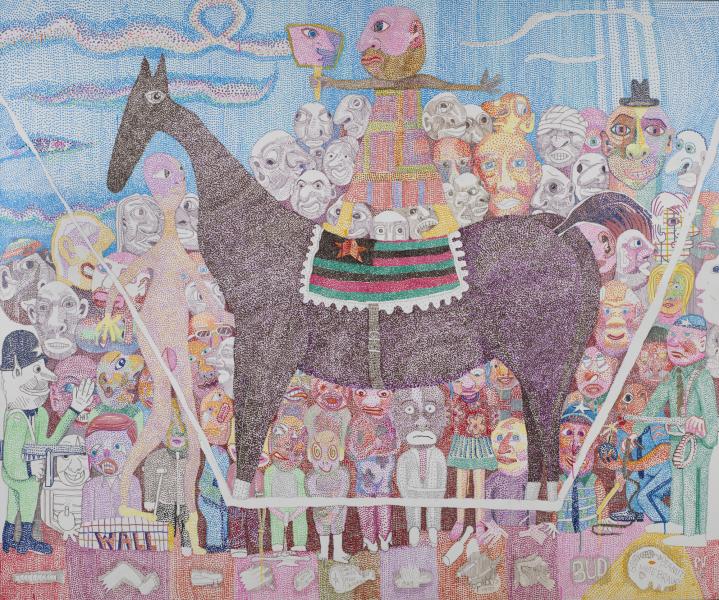
Trash — Benny Andrews
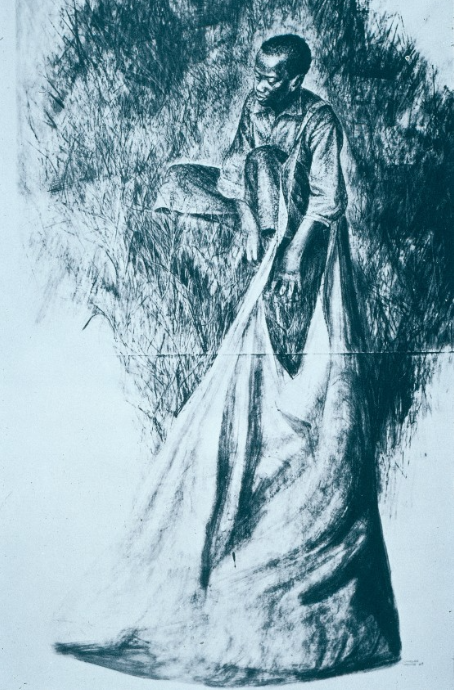
Mother and Son — Lamar Peterson

Mother and Son, 2004 by Lamar Peterson (b. 1974)
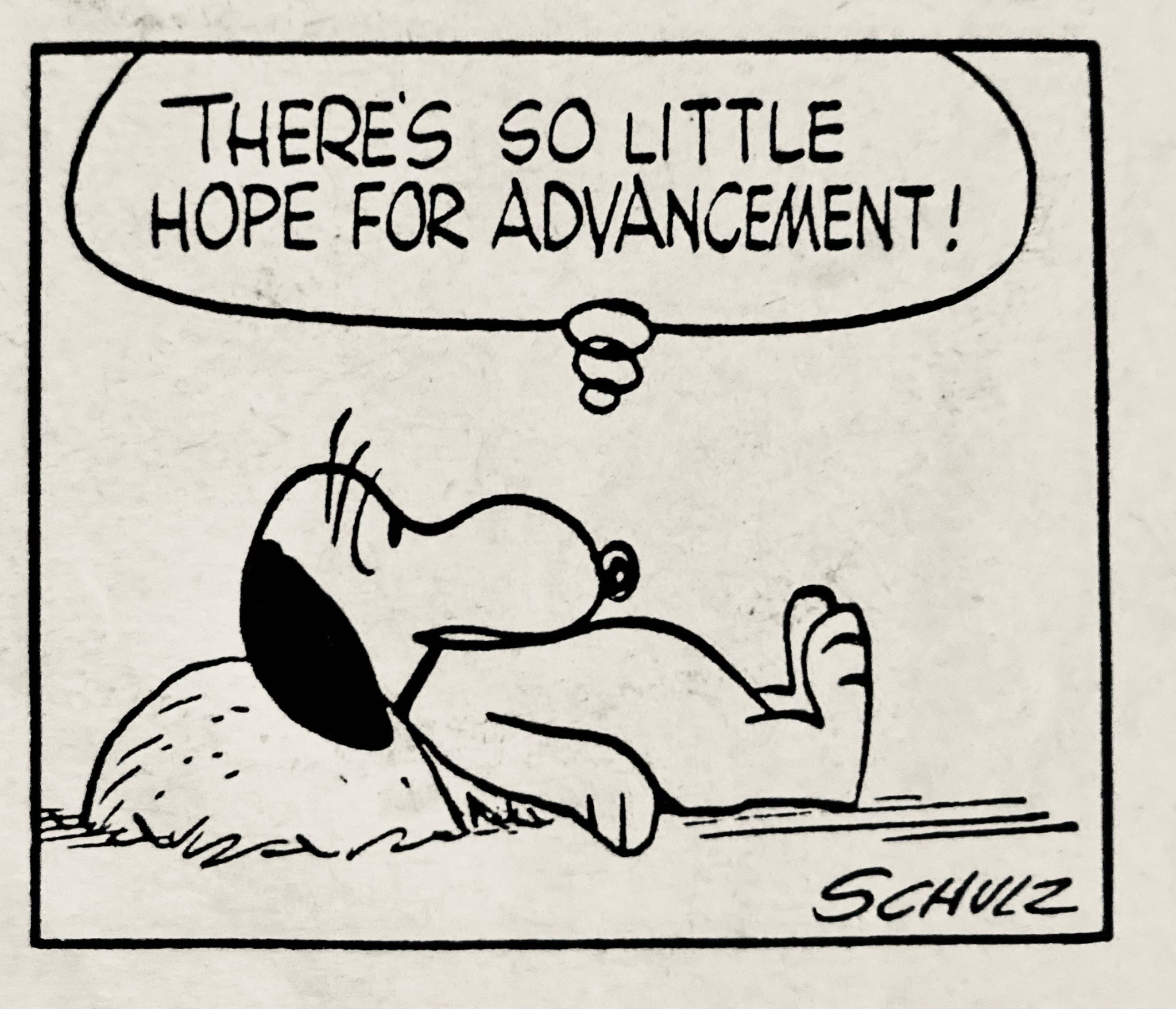
Little hope (Peanuts)

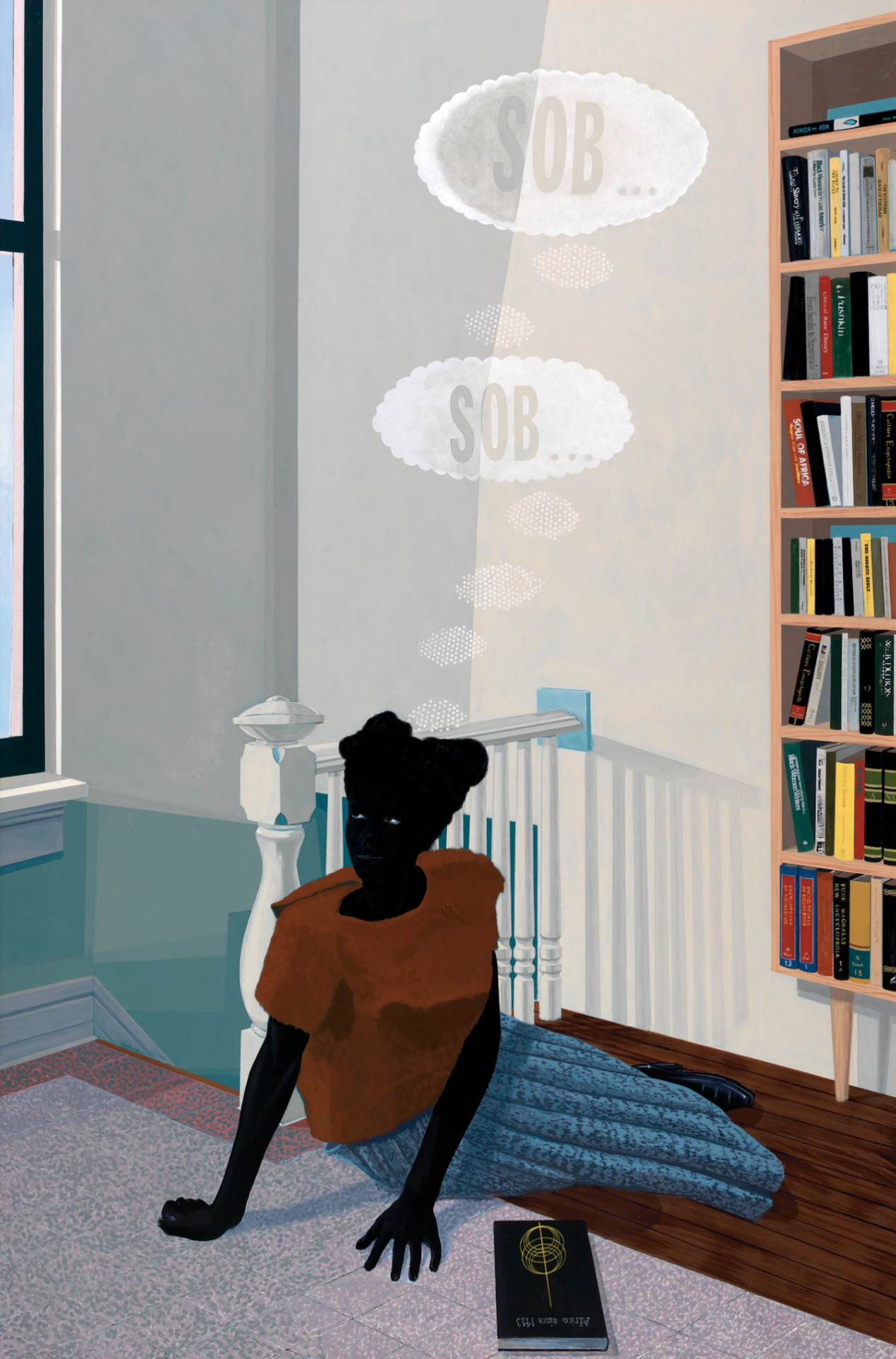
SOB, SOB — Kerry James Marshall

SOB, SOB, 2003 by Kerry James Marshall (b. 1955)
“Basil Valentine, Last of the Alchemists, First of the Chemists” — James J. Walsh
Th
by
James J. Walsh, K.C.St.G., M.D. Ph.D., LL.D., Litt.D., Sc.D.
from
Old Time Makers of Medicine, 1911
“Fieri enim potest ut operator erret et a via regia deflectat, sed ut erret natura quando recte tractatur fieri non potest.”
“For it is quite possible that the physician should err and be turned aside from the straight (royal) road, but that nature when she is rightly treated should err is quite impossible.”
This is one of the preliminary maxims of a treatise on medicine written by a physician born not later than the first half of the fifteenth century, and who may have lived even somewhat earlier. We are so prone to think of the men of that time as utterly dependent on authority, not daring to follow their own observation, suspecting nature, and almost sure to be convinced that only by going counter to her could success in the treatment of disease be obtained, that it is a surprise to most people to find how completely the attitude of mind, that is supposed to be so typically modern in this regard, was anticipated full four centuries ago. There are other expressions of this same great physician and medical writer, Basil Valentine, which serve to show how faithfully he strove with the lights that he had to work out the treatment of patients, just as we do now, by trying to find out nature’s way, so as to imitate her beneficent processes and purposes. It is quite clear that he is but one of many faithful, patient observers and experimenters—true scientists in the best sense of the word—who lived in all the centuries of the Middle Ages.
Speculations and experiments with regard to the elixir of life, the philosopher’s stone, and the transmutation of metals, are presumed to have filled up all the serious interests of the alchemists, supposed to be almost the only scientists of those days. As a matter of fact, however, men were making original observations of profound significance, and these were considered so valuable by their contemporaries that, though printing had not yet been invented, even the immense labor involved in the manifold copying of large folio volumes by the slow hand process did not suffice to deter them from multiplying the writings of these men so numerously that they were preserved in many copies for future generations, until the printing press came to perpetuate them.
Of this there is abundant evidence in the preceding pages as regards medicine, and, above all, surgery, while a summary of accomplishments of workers in other departments will be found in Appendix II, “Science at the Medieval Universities.”
At the beginning of the twentieth century, with some of the supposed foundations of modern chemistry crumbling to pieces under the influence of the peculiarly active light thrown upon our nineteenth century chemical theories by the discovery of radium, and our observations on radio-active elements generally, there is a reawakening of interest in some of the old-time chemical observers, whose work used to be laughed at as so unscientific, or, at most, but a caricature of real science, and whose theory of the transmutation of elements into one another was considered so absurd. It is interesting in the light of this to recall that the idea that the elementary substances were essentially distinct from each other, and that it would be impossible under any circumstances to convert one element into another, belongs entirely to the nineteenth century. Even so deeply scientific a mind as that of Newton, in the preceding century, could not bring itself to acknowledge the tradition, that came to be accepted subsequent to his time, of the absurdity of metallic transformation. On the contrary, he believed quite formally in transmutation as a basic chemical principle, and declared that it might be expected to occur at any time. He had seen specimens of gold ores in connection with metallic copper, and concluded that this was a manifestation of the natural transformation of one of these yellow metals into the other.
With the discovery that radium transforms itself into helium, and that, indeed, all the so-called radioactivities of the heavy metals are probably due to a natural transmutation process constantly at work, the ideas of the older chemists cease entirely to be a subject for amusement. The physical chemists of the present day are very ready to admit that the old teaching of the absolute independence of something over seventy elements is no longer tenable, except as a working hypothesis. The doctrine of “matter and form,” taught for so many centuries by the scholastic philosophers, which proclaimed that all matter is composed of two principles, an underlying material substratum, and a dynamic or informing principle, has now more acknowledged verisimilitude, or lies at least closer to the generally accepted ideas of the most progressive scientists, than it has at any time for the last two or three centuries. Not only the great physicists, but also the great chemists, are speculating along lines that suggest the existence of but one form of matter, modified according to the energies that it possesses under a varying physical and chemical environment. This is, after all, only a restatement in modern times of the teaching of St. Thomas of Aquin, in the thirteenth century.
It is not surprising, then, that there should be a reawakening of interest in the lives of some of the men, who, dominated by some of the earlier scholastic ideas, by the tradition of the possibility of finding the philosopher’s stone, which would transmute the baser metals into the precious metals, devoted themselves with quite as much zeal as any modern chemist to the observation of chemical phenomena. One of the most interesting of these—indeed, he might well be said to be the greatest of the alchemists—is the man whose only name that we know is that which appears on a series of manuscripts written in the High German dialect of the end of the fifteenth and the beginning of the sixteenth century. That name is Basil Valentine, and the writer, according to the best historical traditions, was a Benedictine monk. The name Basil Valentine may only have been a pseudonym, for it has been impossible to trace it among the records of the monasteries of the time. That the writer was a monk, however, there seems to be no room for doubt, for his writings give abundant evidence of it, and, besides, in printed form they began to have their vogue at a time when there was little likelihood of their being attributed to a monastic source, unless an indubitable tradition connected them with some monastery. Continue reading ““Basil Valentine, Last of the Alchemists, First of the Chemists” — James J. Walsh”
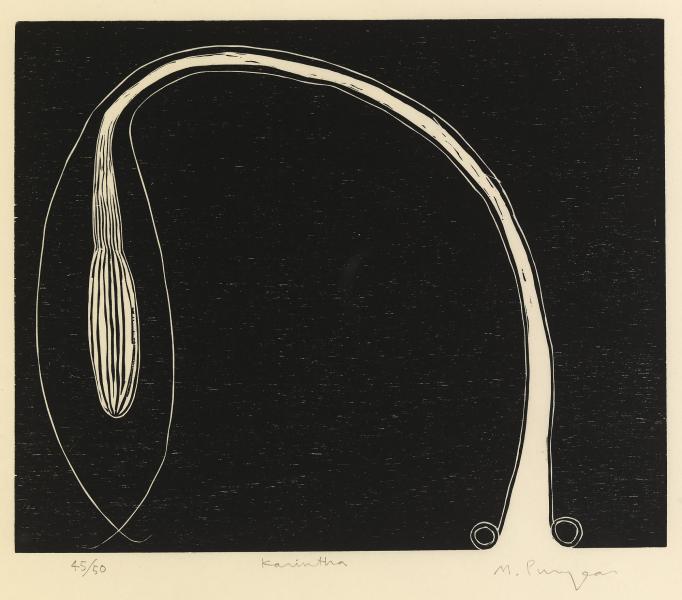
Karintha — James Puryear

Karintha, from the portfolio Cane, 2000 by James Puryear (b. 1941)
“Karintha”
by
Jean Toomer
from Cane
Her skin is like dusk on the eastern horizon,
O can’t you see it,
O can’t you see it,
Her skin is like dusk on the eastern horizon
. . . When the sun goes down.
Men had always wanted her, this Karintha, even as a child, Karintha carrying beauty, perfect as dusk when the sun goes down. Old men rode her hobby-horse upon their knees. Young men danced with her at frolics when they should have been dancing with their grown-up girls. God grant us youth, secretly prayed the old men. The younger fellows counted the time to pass before she would be old enough to mate with them. This interest of the male, that wishes to ripen a growing thing too soon, could mean no good to her. Continue reading “Karintha — James Puryear”
No More Games — Benny Andrews

No More Games, 1970 by Benny Andrews (1930-2006)
The Mind Is Its Own Place — Jennifer Packer

The Mind Is Its Own Place, 2020 by Jennifer Packer (b. 1984)
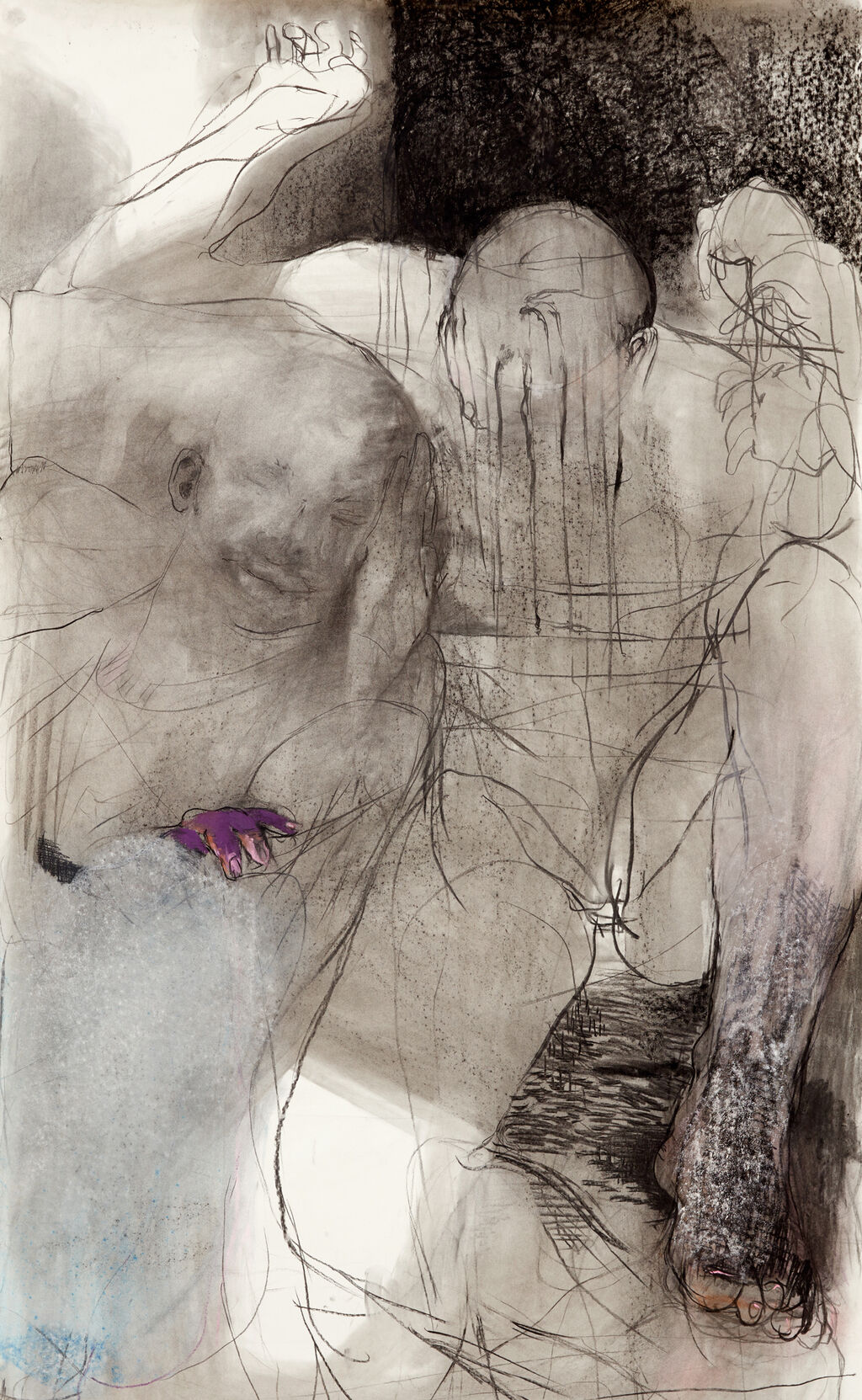
A Foolish Trick — Peter Williams

A Foolish Trick, 2018 by Peter Williams (1952-2021)
Lavender Embrace — Jordan Casteel

Lavender Embrace, 2018 by Jordan Casteel (b. 1989)
Untitled — Beauford Delaney

Untitled (Man in African Dress), 1972 by Beauford Delaney (1901–1979)
A review of Yellow Back Radio Broke-Down, Ishmael Reed’s syncretic Neo-HooDoo revenge Western

Ishmael Reed’s second novel Yellow Back Radio Broke-Down tells the story of the Loop Garoo Kid, a “desperado so onery he made the Pope cry and the most powerful of cattlemen shed his head to the Executioner’s swine.”
The novel explodes in kaleidoscopic bursts as Reed dices up three centuries of American history to riff on race, religion, sex, and power. Unstuck in time and unhampered by geographic or technological restraint, historical figures like Lewis and Clark, Thomas Jefferson, John Wesley Harding, Groucho Marx, and Pope Innocent (never mind which one) wander in and out of the narrative, supplementing its ironic allegorical heft. These minor characters are part of Reed’s Neo-HooDoo spell, ingredients in a Western revenge story that is simultaneously comic and apocalyptic in its howl against the dominant historical American narrative. Yellow Back Radio Broke-Down is a strange and marvelous novel, at once slapstick and deadly serious, exuberant in its joy and harsh in its bitterness, close to 50 years after its publication, as timely as ever.
After the breathless introduction of its hero the Loop Garoo Kid, Yellow Back Radio Broke-Down initiates its plot. Loop’s circus troupe arrives to the titular city Yellow Back Radio (the “nearest town Video Junction is about fifty miles away”), only to find that the children of the town, “dressed in the attire of the Plains Indians,” have deposed the adults:
We chased them out of town. We were tired of them ordering us around. They worked us day and night in the mines, made us herd animals harvest the crops and for three hours a day we went to school to hear teachers praise the old. Made us learn facts by rote. Lies really bent upon making us behave. We decided to create our own fiction.
The children’s revolutionary, anarchic spirit drives Reed’s own fiction, which counters all those old lies the old people use to make us behave.
Of course the old—the adults—want “their” land back. Enter that most powerful of cattlemen, Drag Gibson, who plans to wrest the land away from everyone for himself. We first meet Drag “at his usual hobby, embracing his property.” Drag’s favorite property is a green mustang,
a symbol for all his streams of fish, his herds, his fruit so large they weighed down the mountains, black gold and diamonds which lay in untapped fields, and his barnyard overflowing with robust and erotic fowl.
Drag loves to French kiss the horse, we’re told. Oh, and lest you wonder if “green” here is a metaphor for, like, new, or inexperienced, or callow: No. The horse is literally green (“turned green from old nightmares”). That’s the wonderful surreal logic of Reed’s vibrant Western, and such details (the novel is crammed with them) make Yellow Back Radio Broke-Down a joy to read.
Where was I? Oh yes, Drag Gibson.
Drag—allegorical stand-in for Manifest Destiny, white privilege, capitalist expansion, you name it—Drag, in the process of trying to clear the kids out of Yellow Back Radio, orders all of Loop’s troupe slaughtered.
The massacre sets in motion Loop’s revenge on Drag (and white supremacy in general), which unfolds in a bitter blazing series of japes, riffs, rants, and gags. (“Unfolds” is the wrong verb—too neat. The action in Yellow Back Radio Broke-Down is more like the springing of a Jack-in-the-box).
Loop goes about obtaining his revenge via his NeoHooDoo practices. He calls out curses and hexes, summoning loas in a lengthy prayer. Loop’s spell culminates in a call that goes beyond an immediate revenge on Drag and his henchmen, a call that moves toward a retribution for black culture in general:
O Black Hawk American Indian houngan of Hoo-Doo please do open up some of these prissy orthodox minds so that they will no longer call Black People’s American experience “corrupt” “perverse” and “decadent.” Please show them that Booker T and MG’s, Etta James, Johnny Ace and Bojangle tapdancing is just as beautiful as anything that happened anywhere else in the world. Teach them that anywhere people go they have experience and that all experience is art.
So much of Yellow Back Radio Broke-Down is turning all experience into art. Reed spins multivalent cultural material into something new, something arguably American. The title of the novel suggests its program: a breaking-down of yellowed paperback narratives, a breaking-down of radio signals. Significantly, that analysis, that break-down, is also synthesized in this novel into something wholly original. Rhetorically, Yellow Back Radio Broke-Down evokes flipping through paperbacks at random, making a new narrative; or scrolling up and down a radio dial, making new music from random bursts of sound; or rifling through a stack of manic Sunday funnies to make a new, somehow more vibrant collage.
Perhaps the Pope puts it best when he arrives late in the novel. (Ostensibly, the Pope shows up to put an end to Loop’s hexing and vexing of the adult citizenry—but let’s just say the two Holy Men have a deeper, older relationship). After a lengthy disquisition on the history of hoodoo and its genesis in the Voudon religion of Africa (“that strange continent which serves as the subconscious of our planet…shaped so like the human skull”), the Pope declares that “Loop Garoo seems to be practicing a syncretistic American version” of the old Ju Ju. The Pope continues:
Loop seems to be scatting arbitrarily, using forms of this and that and adding his own. He’s blowing like that celebrated musician Charles Yardbird Parker—improvising as he goes along. He’s throwing clusters of demon chords at you and you don’t know the changes, do you Mr. Drag?
The Pope here describes Reed’s style too, of course (which is to say that Reed is describing his own style, via one of his characters. The purest postmodernism). The apparent effortlessness of Reed’s improvisations—the prose’s sheer manic energy—actually camouflages a tight and precise plot. I was struck by how much of Yellow Back Radio Broke-Down’s apparent anarchy resolves into a bigger picture upon a second reading.
That simultaneous effortlessness and precision makes Reed’s novel a joy to jaunt through. Here is a writer taking what he wants from any number of literary and artistic traditions while dispensing with the forms and tropes he doesn’t want and doesn’t need. If Reed wants to riff on the historical relations between Indians and African-Americans, he’ll do that. If Reed wants to assess the relative values of Thomas Jefferson as a progressive figure, he’ll do that. If Reed wants to attack his neo-social realist critics, he’ll do that. If Reed wants to critique the relationship between militarism and science, he’ll do that. If Reed wants to tell some really dirty jokes about a threesome, he’ll do that. And you can bet if he wants some ass-kicking Amazons to show up at some point, they’re gonna show.
And it’s a great show. Yellow Back Radio Broke-Down begins with the slaughter of a circus troupe before we get to see their act. The real circus act is the novel itself, filled with orators and showmen, carnival barkers and con-artists, pistoleers and magicians. There’s a manic glee to it all, a glee tempered in anger—think of George Herriman’s Krazy Kat, or Thomas Pynchon’s zany rage, or Robert Downey Sr.’s satirical film Putney Swope.
Through all its anger, Yellow Back Radio Broke-Down nevertheless repeatedly affirms the possibility of imagination and creation—both as cures and as hexes. We have here a tale of defensive and retaliatory magic. Yellow Back Radio Broke-Down is the third novel of Reed’s novels I’ve read (after Mumbo Jumbo and The Free-Lance Pallbearers), and my favorite thus far. Frankly, I needed the novel right now in a way that I didn’t know that I needed it until I read it; the contemporary novel I tried to read after it felt stale and boring. So I read Yellow Back Radio Broke-Down again. The great gift here is that Reed’s novel answers to the final line of Loop’s prayer to the Loa: “Teach them that anywhere people go they have experience and that all experience is art.” Like the children of Yellow Back Radio, Reed creates his own fiction, and invites us to do the same. Very highly recommended.
[Ed. note — Biblioklept first published this review in February of 2017.]
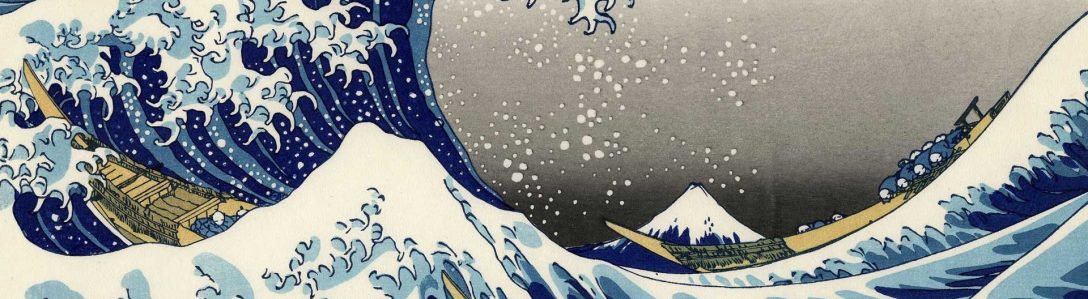
Return of Ulysses — Romare Bearden

Return of Ulysses, 1976 by Romare Bearden (1911-1988)
Saturday’s Child — Charles White

Saturday’s Child, 1965 by Charles White (1918-1979)
The Three Marys — Henry Ossawa Tanner

The Three Marys, 1910 by Henry Ossawa Tanner (1859-1937)