Shifting the Gaze — Titus Kaphar

cur.2017.34_jack_shainman_gallery

Shifting the Gaze, 2017 by Titus Kaphar (b. 1976)

The Veil — Louise Bonnet

2542a624ec2c163e8aa03e51bd9a1c70

The Veil, 2017 by Louise Bonnet (b. 1970)

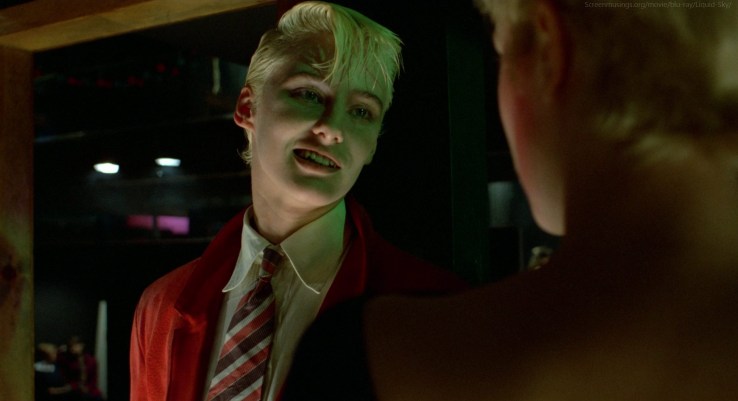
51 still frames from Slava Tsukerman’s Liquid Sky

Liquid-Sky-001Liquid-Sky-006Liquid-Sky-014Liquid-Sky-016Liquid-Sky-022Liquid-Sky-025Liquid-Sky-026Liquid-Sky-028Liquid-Sky-029Liquid-Sky-032Liquid-Sky-036Liquid-Sky-040 Continue reading “51 still frames from Slava Tsukerman’s Liquid Sky”

Three Books (Books acquired, 31 July 2020)

2020-08-02_185600_1

The Dead Father by Donald Barthelme. Mass market paperback from Pocket Books (S&S), 1976. Cover art and design uncredited.

2020-08-02_185600

Unspeakable Practices, Unnatural Acts by Donald Barthelme. Mass market paperback from Bantam, 1969. Cover art and design uncredited.

I found a lovely copy of Donald Barthelme’s story collection Come Back, Dr. Caligari! a few weeks ago, and I’m pretty sure these two guys are twin triplets with that guy. (I found Caligari under “Classic Literature” in my local favorite sweetass bookstore; found these two in “General Fiction.”) No artist credited, which is a shame. I already own a copy of The Dead Father—maybe Barthelme’s best “novel”?—but I couldn’t pass up the mass market edition. I live with myself, but. I’ve read everything in Unspeakable —think — but again, great edition. This is probably the best starting point for Barthelme, with no fewer than five perfect or near-perfect short stories: “The Indian Uprising,” “The Balloon,” “Robert Kennedy Saved from Drowning,” “Game,” and “See the Moon?”

2020-08-02_185600_2

Epitaph of a Small Winner by Machado de Assis. English translation by William L. Grossman. Mass market paperback from Avon-Bard, 1978. Cover art and design uncredited.

I’m a huge fan of these Bard-Avon Latin American editions, and although this cover isn’t one of their weirdest, it’s not bad. I’m not sure if Grossman’s translation is the one to tackle, but I’m up for it.

“August” — Mary Oliver

“August”

by

Mary Oliver


Our neighbor, tall and blonde and vigorous, the mother
of many children, is sick. We did not know she was sick,
but she has come to the fence, walking like a woman
who is balancing a sword inside of her body, and besides
that her long hair is gone, it is short and, suddenly, gray.
I don’t recognize her. It even occurs to me that it might
be her mother. But it’s her own laughter-edged voice,
we have heard it for years over the hedges.

All summer the children, grown now and some of them
with children of their own, come to visit. They swim,
they go for long walks at the harbor, they make
dinner for twelve, for fifteen, for twenty. In the early
morning two daughters come to the garden and slowly
go through the precise and silent gestures of T’ai Chi.

They all smile. Their father smiles too, and builds
castles on the shore with the children, and drives back to
the city, and drives back to the country. A carpenter is
hired—a roof repaired, a porch rebuilt. Everything that
can be fixed.

June, July, August. Every day, we hear their laughter. I
think of the painting by van Gogh, the man in the chair.
Everything wrong, and nowhere to go. His hands over
his eyes.


800px-van_gogh_-_trauernder_alter_mann

Watch Robert Enrico’s short film adaptation of Ambrose Bierce’s “The Mockingbird”


“The Mockingbird”

by

Ambrose Bierce


The time, a pleasant Sunday afternoon in the early autumn of 1861. The place, a forest’s heart in the mountain region of southwestern Virginia. Private Grayrock of the Federal Army is discovered seated comfortably at the root of a great pine tree, against which he leans, his legs extended straight along the ground, his rifle lying across his thighs, his hands (clasped in order that they may not fall away to his sides) resting upon the barrel of the weapon. The contact of the back of his head with the tree has pushed his cap downward over his eyes, almost concealing them; one seeing him would say that he slept.

Private Grayrock did not sleep; to have done so would have imperiled the interests of the United States, for he was a long way outside the lines and subject to capture or death at the hands of the enemy. Moreover, he was in a frame of mind unfavorable to repose. The cause of his perturbation of spirit was this: during the previous night he had served on the picket-guard, and had been posted as a sentinel in this very forest. The night was clear, though moonless, but in the gloom of the wood the darkness was deep. Grayrock’s post was at a considerable distance from those to right and left, for the pickets had been thrown out a needless distance from the camp, making the line too long for the force detailed to occupy it. The war was young, and military camps entertained the error that while sleeping they were better protected by thin lines a long way out toward the enemy than by thicker ones close in. And surely they needed as long notice as possible of an enemy’s approach, for they were at that time addicted to the practice of undressing–than which nothing could be more unsoldierly. On the morning of the memorable 6th of April, at Shiloh, many of Grant’s men when spitted on Confederate bayonets were as naked as civilians; but it should be allowed that this was not because of any defect in their picket line. Their error was of another sort: they had no pickets. This is perhaps a vain digression. I should not care to undertake to interest the reader in the fate of an army; what we have here to consider is that of Private Grayrock. Continue reading “Watch Robert Enrico’s short film adaptation of Ambrose Bierce’s “The Mockingbird””

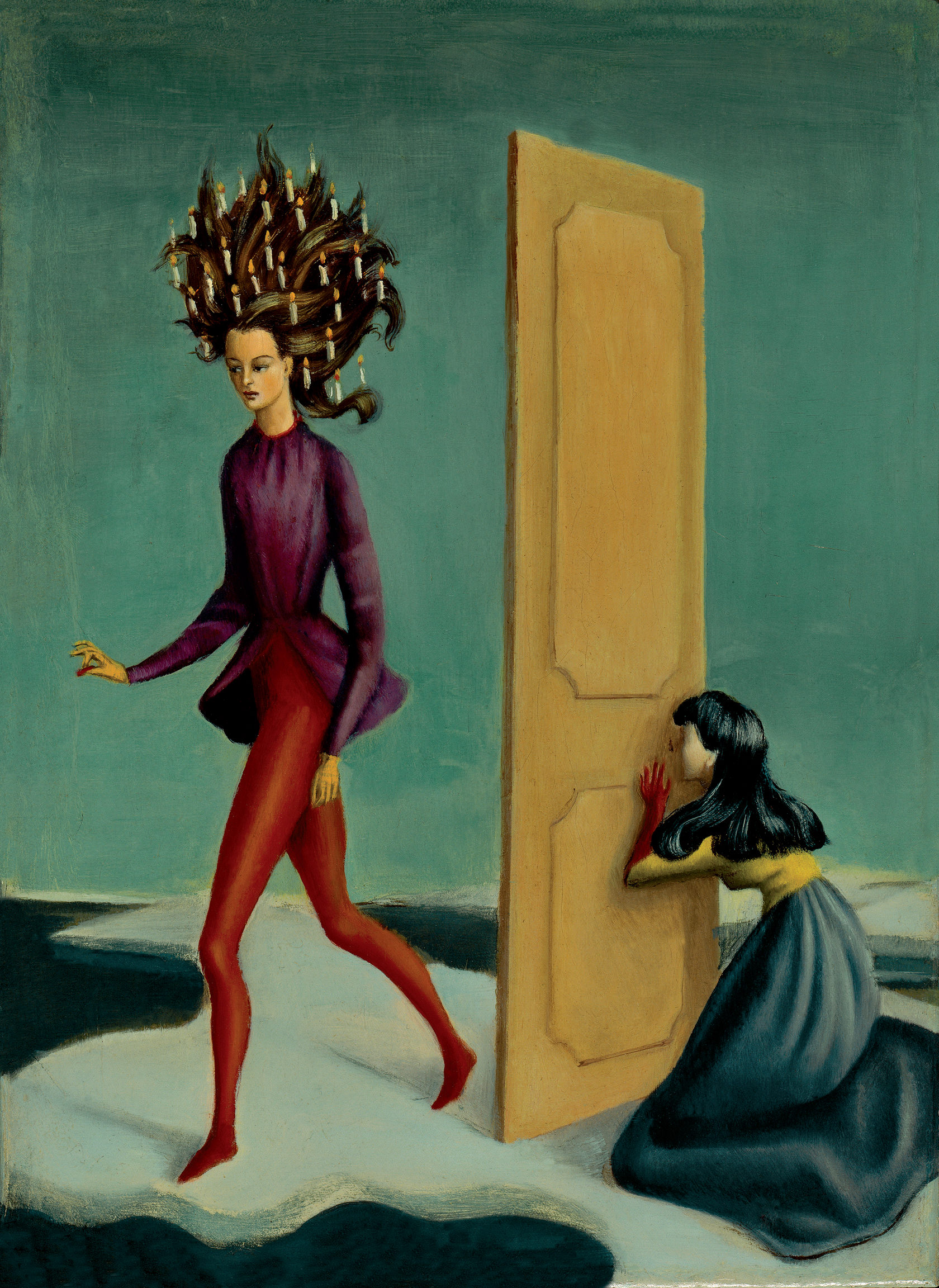
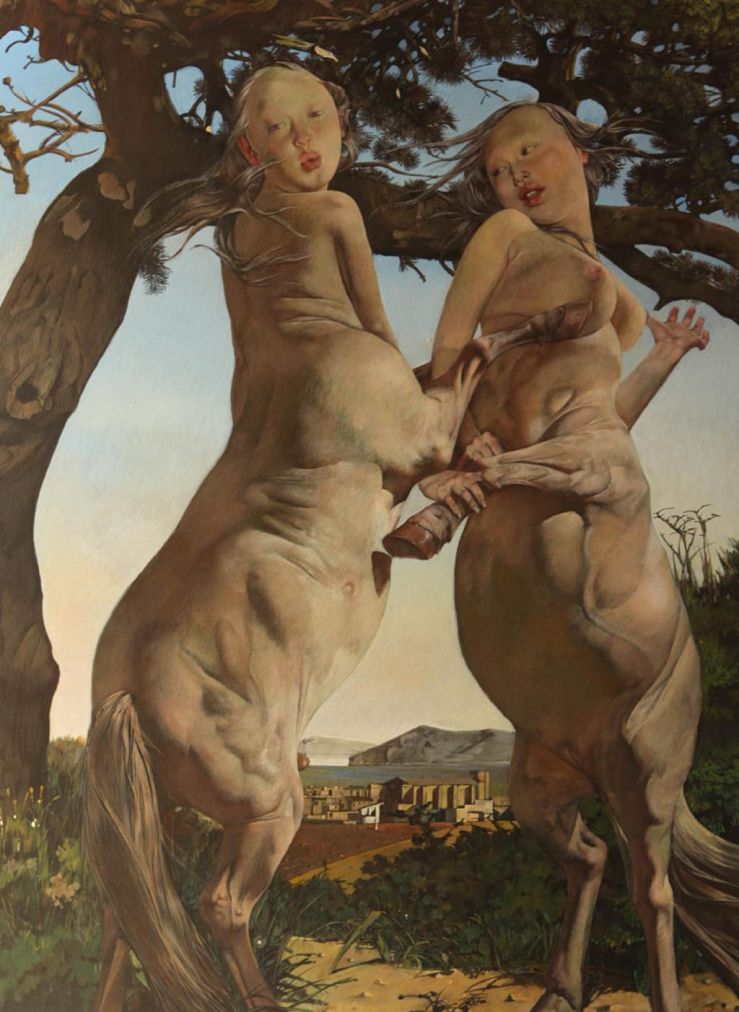
Two Women — Leonor Fini

8

Two Women, 1939 by Leonor Fini (1908–1996)

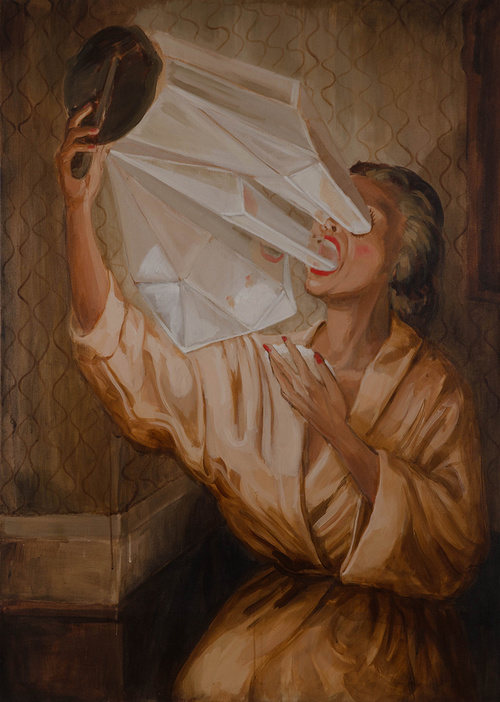
Mirror — Lucia Dovičáková

lucia-dovicakova

Mirror, 2011 by Lucia Dovičáková (b. 1981)

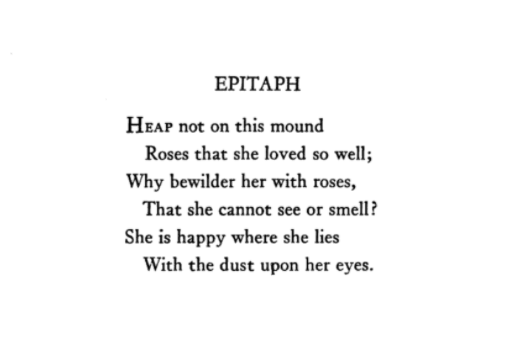
“Epitaph” — Edna St. Vincent Millay

Screenshot 2020-07-27 at 10.49.39 AM

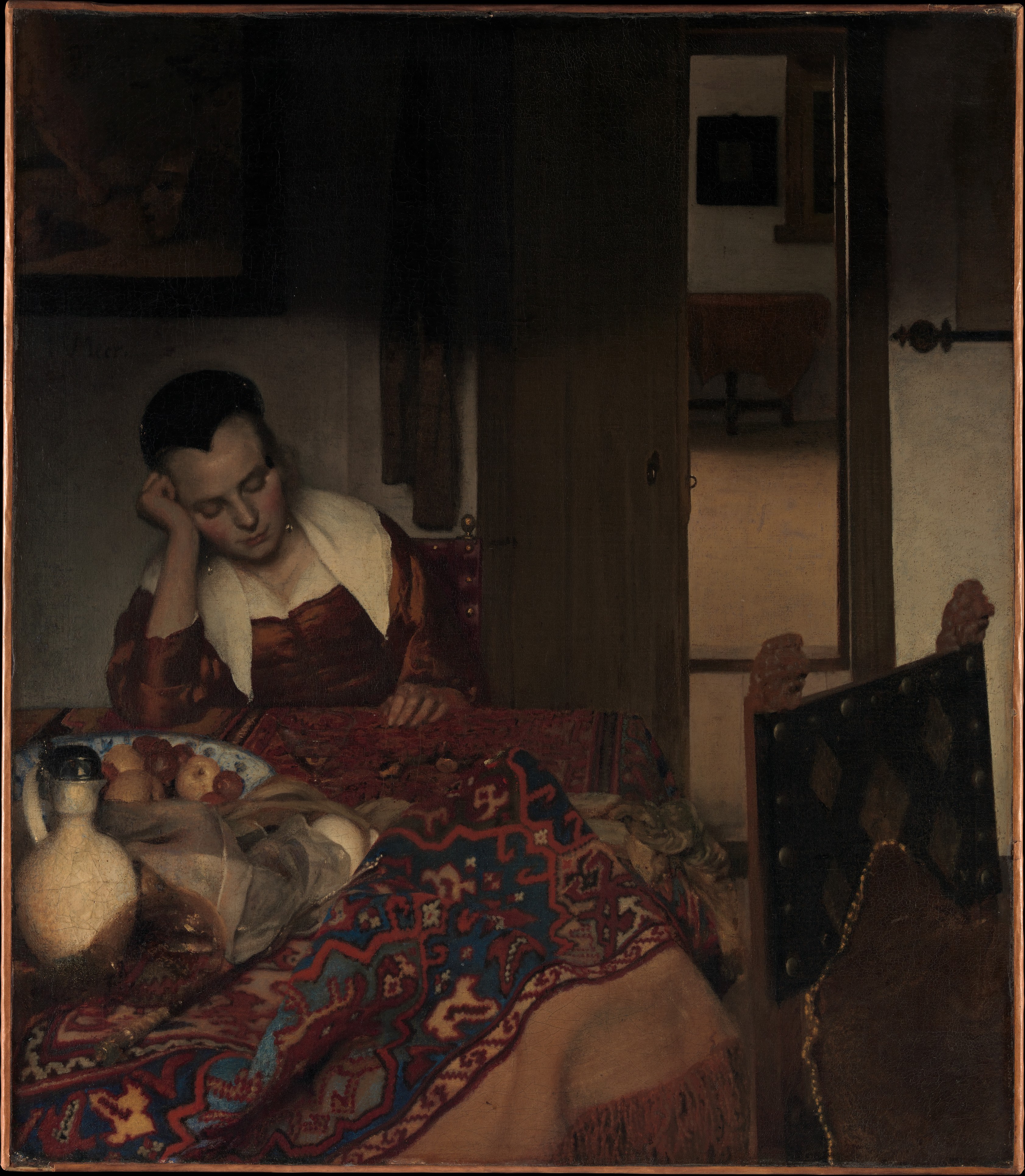
A Maid Asleep — Johannes Vermeer

dp355525

A Maid Asleep, c. 1657 by Johannes Vermeer (1632–1675)

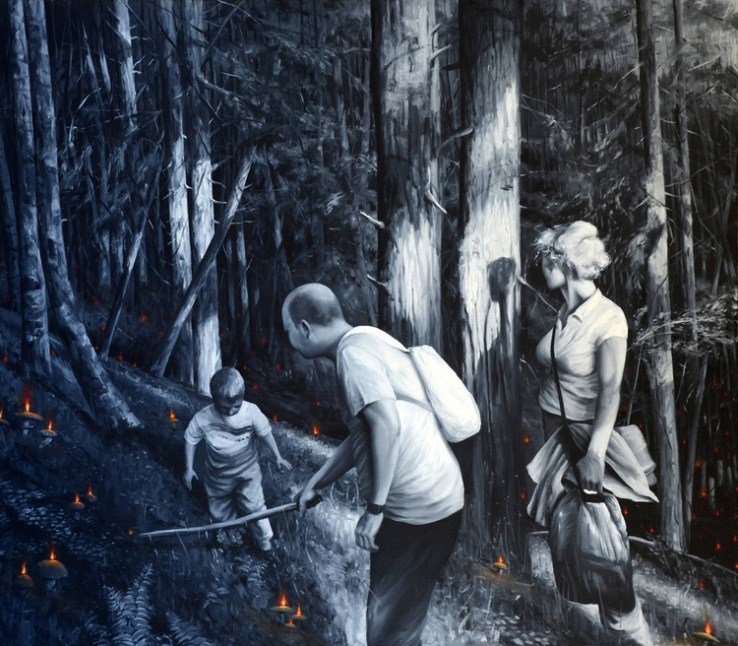
Burning Mushrooms — Robert Bielik

robert-bielik-Horiace-hriby

Burning Mushrooms, 2008 by Robert Bielik (b. 1963)

My Waltz — Wei Dong

e1cf8cab9ff0a7f92b316c97d7ddca7b

My Waltz, 2010 by Wei Dong (b. 1968)

The Sorceress — Allan Douglas Davidson

1721355

The Sorceress, 1912 by Allan Douglas Davidson (1873‑1932)

Unit 2 — Mikey Yates

yates2cmikey_3

Unit 2 by Mikey Yates

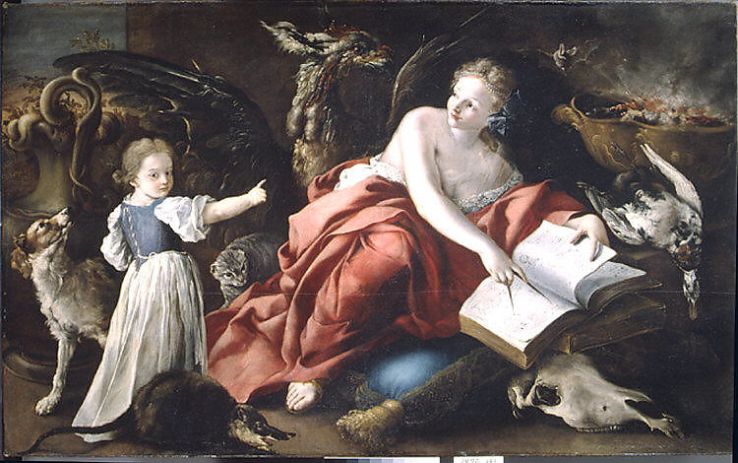
An Allegory — Domenico Guidobono

main-image (1)

An Allegory, c. 1720 by Domenico Guidobono (1668–1746)

“All art constantly aspires towards the condition of music”

Read “Details of a Sunset,” a short story by Vladimir Nabokov

“Details of a Sunset”

by

Vladimir Nabokov


The last streetcar was disappearing in the mirrorlike murk of the street and, along the wire above it, a spark of Bengal light, crackling and quivering, sped into the distance like a blue star.

“Well, might as well just plod along, even though you are pretty drunk, Mark, pretty drunk….”

The spark went out. The roofs glistened in the moonlight, silvery angles broken by oblique black cracks.

Through this mirrory darkness he staggered home: Mark Standfuss, a salesclerk, a demigod, fair-haired Mark, a lucky fellow with a high starched collar. At the back of his neck, above the white line of that collar, his hair ended in a funny, boyish little tag that had escaped the barber’s scissors. That little tag was what made Klara fall in love with him, and she swore that it was true love, that she had quite forgotten the handsome ruined foreigner who last year had rented a room from her mother, Frau Heise.

“And yet, Mark, you’re drunk….”

That evening there had been beer and songs with friends in honor of Mark and russet-haired, pale Klara, and in a week they would be married; then there would be a lifetime of bliss and peace, and of nights with her, the red blaze of her hair spreading all over the pillow, and, in the morning, again her quiet laughter, the green dress, the coolness of her bare arms. Continue reading “Read “Details of a Sunset,” a short story by Vladimir Nabokov”